
Boxxi signature cuisine · European inspiration
Tuscan-style T-bone steak with fennel and beans
Grilled fennel brings a sweet note and aroma to the T-bone, pairing well with the thyme in the beans. After resting, we slice the meat and serve it with warm bread. It makes a hearty Tuscan-inspired supper to share.
The time includes preheating the grill, par-cooking and grilling the fennel, preparing the meat and resting it. We allow extra time for a heavier Chianina cut depending on its thickness; if it is over 7 cm thick, we add 20–30 minutes. Meat cooking times are estimates and it may be ready sooner or later depending on thickness and the chosen doneness.
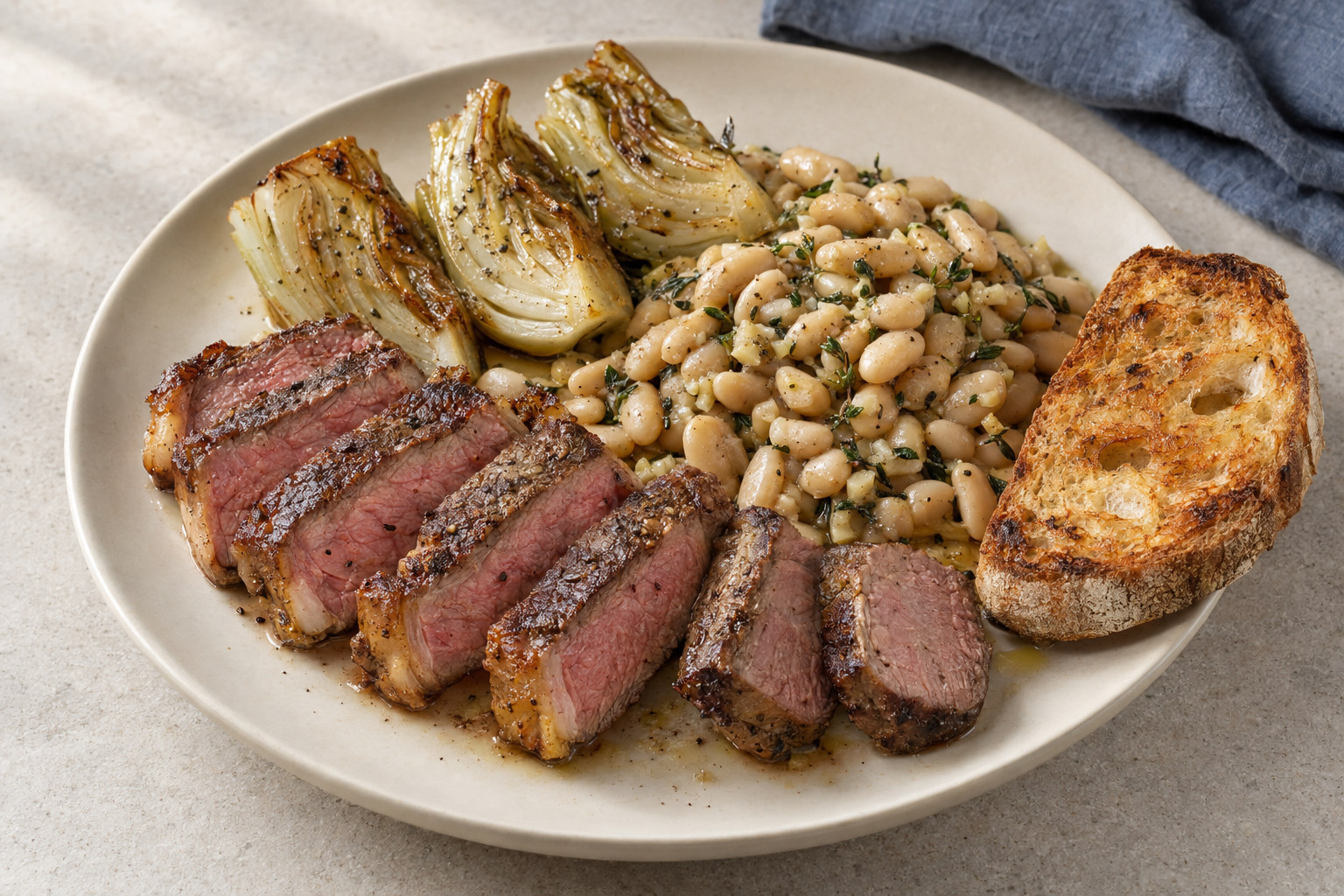
Bold grilled beef, tender white beans and sweet fennel, with lemon, garlic and thyme.
Step-by-step method
What you will need
- kitchen scales
- thin-probe thermometer
- knife, clean chopping board and tongs
- lidded grill with an indirect zone of at least 35 × 30 cm and a separate direct-heat zone for searing
- grill thermometer
- 3 l saucepan for the fennel
- 2 l saucepan for the beans
- colander, barbecue tongs and foil
- heatproof bowl for the fennel
- two hob rings for the beans and reheating the fennel in its original pan
Choosing how well to cook your steak
Before cooking, we choose how well we would like our meat done. This guide describes culinary levels of doneness and approximate temperatures at the centre of the meat after resting. These are not pan or oven temperatures or food safety recommendations. For whole beef steaks, the United States Department of Agriculture (USDA) recommends a minimum internal temperature of 63 °C before removing the meat from the heat, followed by at least 3 minutes of resting.
| Doneness | Temperature after resting | What to expect |
|---|---|---|
| Rare | 52 °C | Rare. The centre is red, and the meat is very tender and juicy. |
| Medium Rare | 55 °C | Medium rare. The centre is warm and reddish-pink, and the meat is tender and juicy. |
| Medium | 60 °C | Medium. The centre remains pink, and the meat has a firmer bite. |
| Medium Well | 65 °C | Medium well. Only a faint pink strip remains in the centre; the meat is firmer and less juicy. |
| Well Done | 71 °C | Well done. There is no pink in the centre, and the meat is firm and less juicy. |
- We measure the temperature at the centre of the thickest part of the meat. We insert the probe from the side, avoiding bone and pockets of fat. Colour is only a guide; we rely on the thermometer.
- As a rule, we take the meat off the pan or grill, or out of the oven, when it is 2–3 °C below our chosen temperature after resting. Thick cuts and intense heat can cause a greater temperature rise during resting. We check it regularly and follow the individual recipe.
- We rest the meat for the time given in the recipe. If the temperature stops rising before reaching our chosen value, we briefly return the meat to a gentle heat and check again.
- Cooking times are a guide. If we prefer our meat less well done, we start checking its temperature earlier. For a higher degree of doneness, we allow more time over a gentler heat as needed, so the outside does not burn.
Before we start
We par-cook and grill the fennel before the meat. We start warming the beans when the temperature inside the cooler muscle of the first steak to be finished is about 12 °C below its chosen post-rest target. For a cut up to 3 cm thick, we prepare them before searing. We reheat the fennel and toast the bread while the meat rests.
Prepare the steak and par-cook the fennel
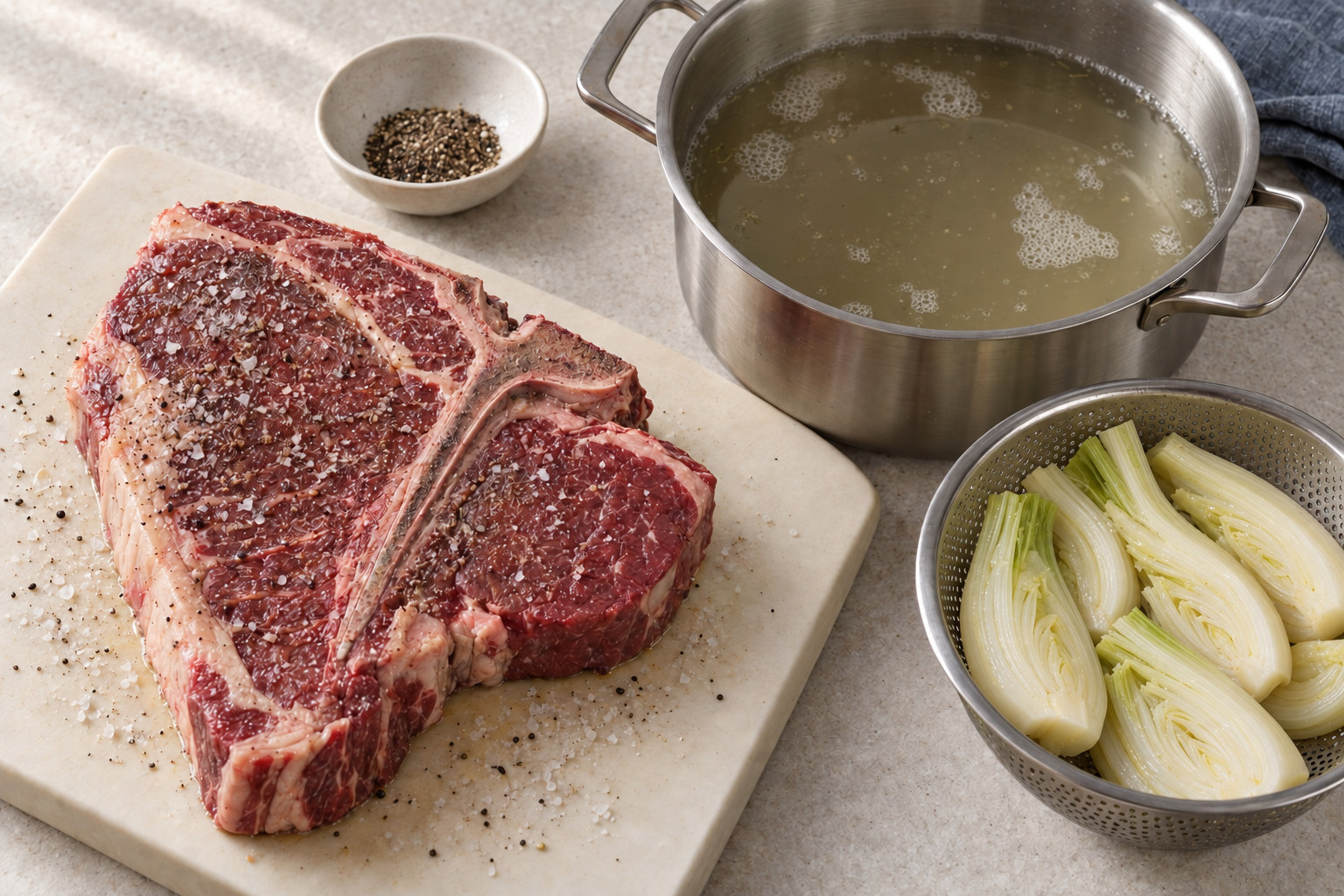
We choose the doneness using the guide above the method. We use one whole 800 g Wolowina or Red+White T-bone. Alternatively, we can use one whole 1,200 g Chianina for two generous portions with the smaller side serving listed below. We pat the meat dry and make enough room on the grill for the whole steak. We season it with ¾ teaspoon salt in total, or 1 teaspoon for Chianina. If we plan to finish with Icelandic salt, we reduce this regular salt by one small pinch; the seasoning for the sides stays the same. We keep the meat in the fridge until grilling. We wash the fennel and remove any damaged outer parts. We cut each bulb lengthways into 6 wedges, leaving them joined at the root. We simmer them gently in 1.5 l water with ¾ teaspoon salt for 5–6 minutes. We drain and dry them. We preheat the grill for two-zone cooking and maintain 160–180 °C under the lid.
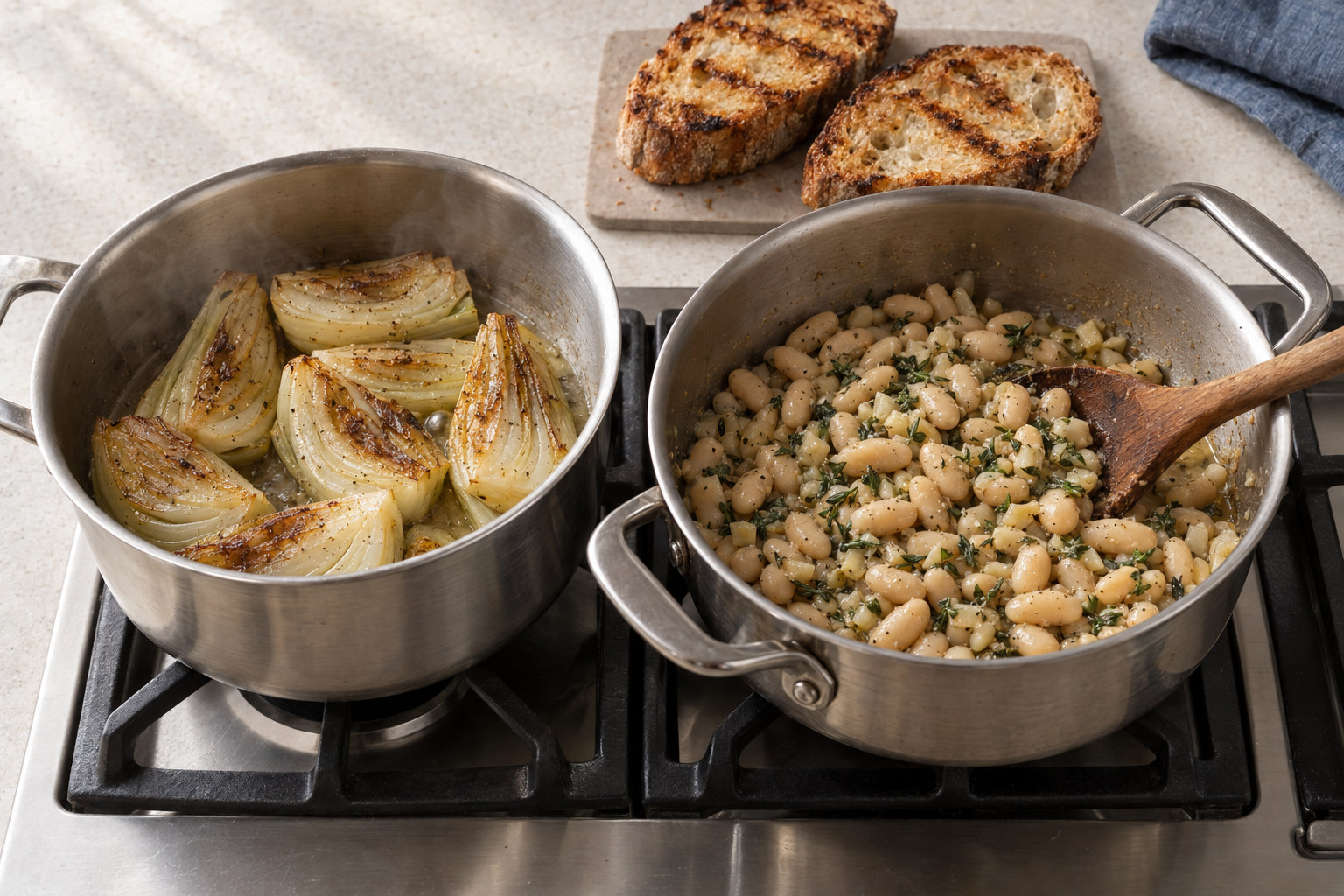
The fennel holds together but is beginning to soften in the centre.
Grill the fennel, then sear the steak
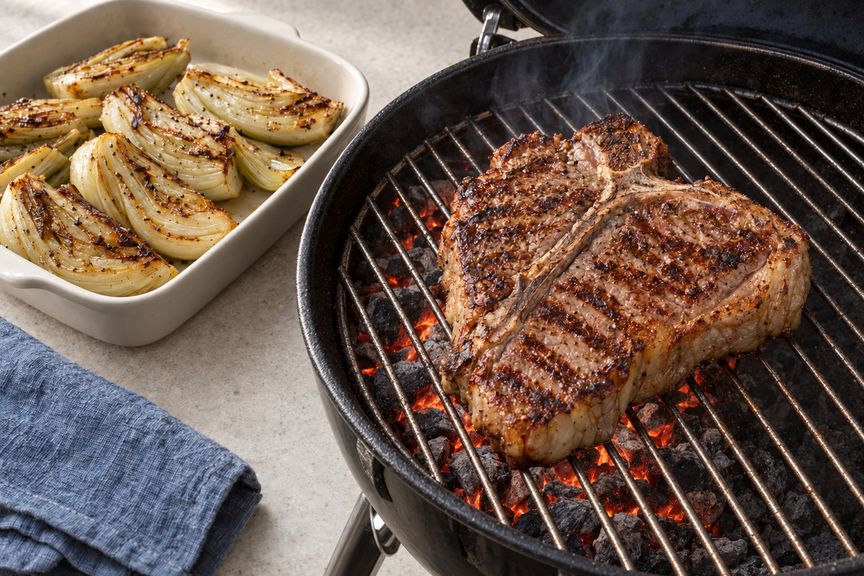
We brush the fennel with 1 teaspoon of the measured olive oil and grill both cut sides over direct heat until golden, about 3–4 minutes in total. We turn the wedges as they cook. We transfer them to a bowl, cover and set them aside away from the grill. We brush the steak with the rapeseed oil set aside for the meat and sear it for about 2–3 minutes on each broad side, briefly searing the meaty edges too. We monitor the temperature of both muscles from the start and shorten the searing time if needed to avoid exceeding our chosen doneness. We move the meat to the indirect zone, with the tenderloin farther from the heat, and close the grill lid.
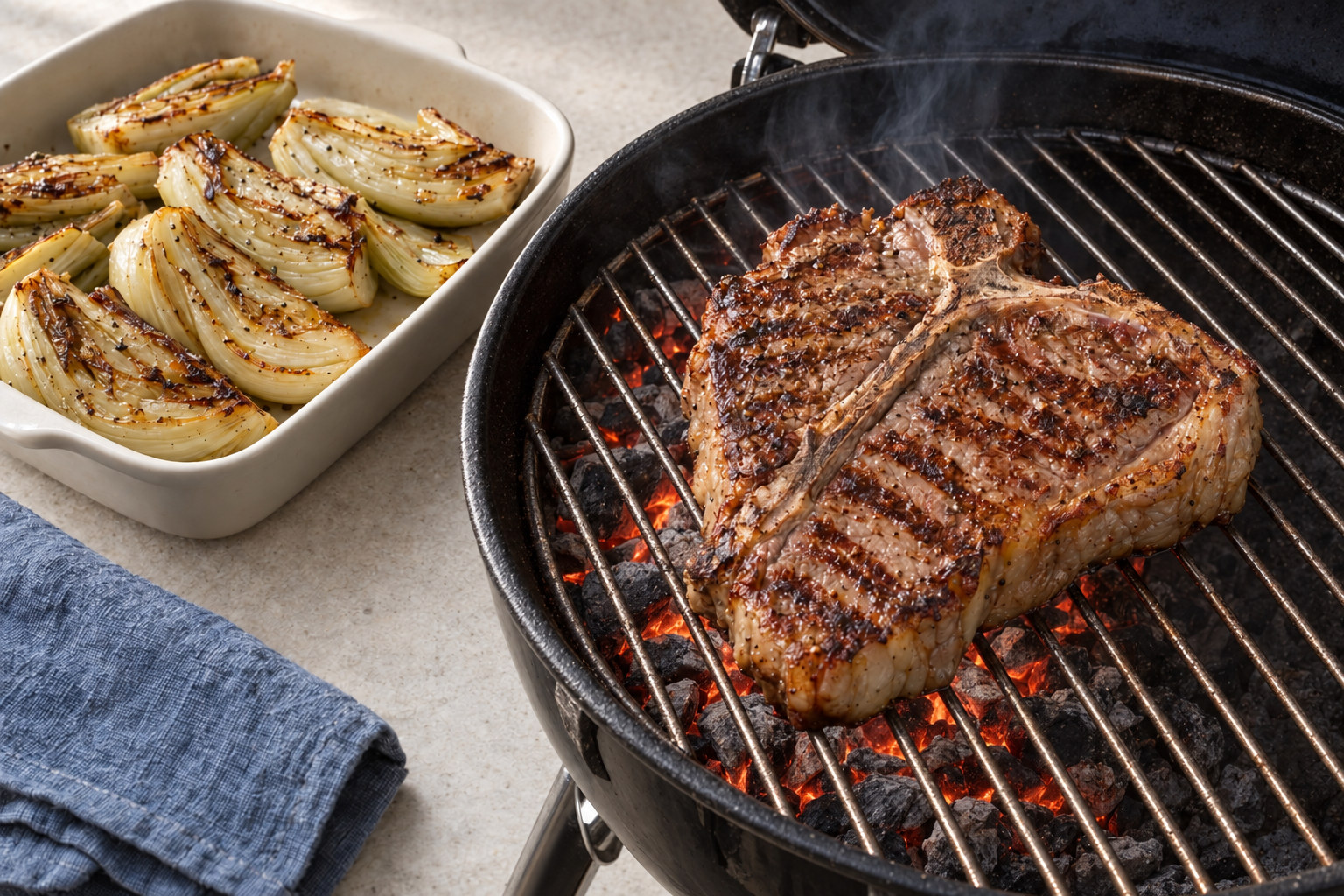
The crust is browned, and no flames flare beneath the meat while it cooks over indirect heat.
Finish the T-bone over indirect heat
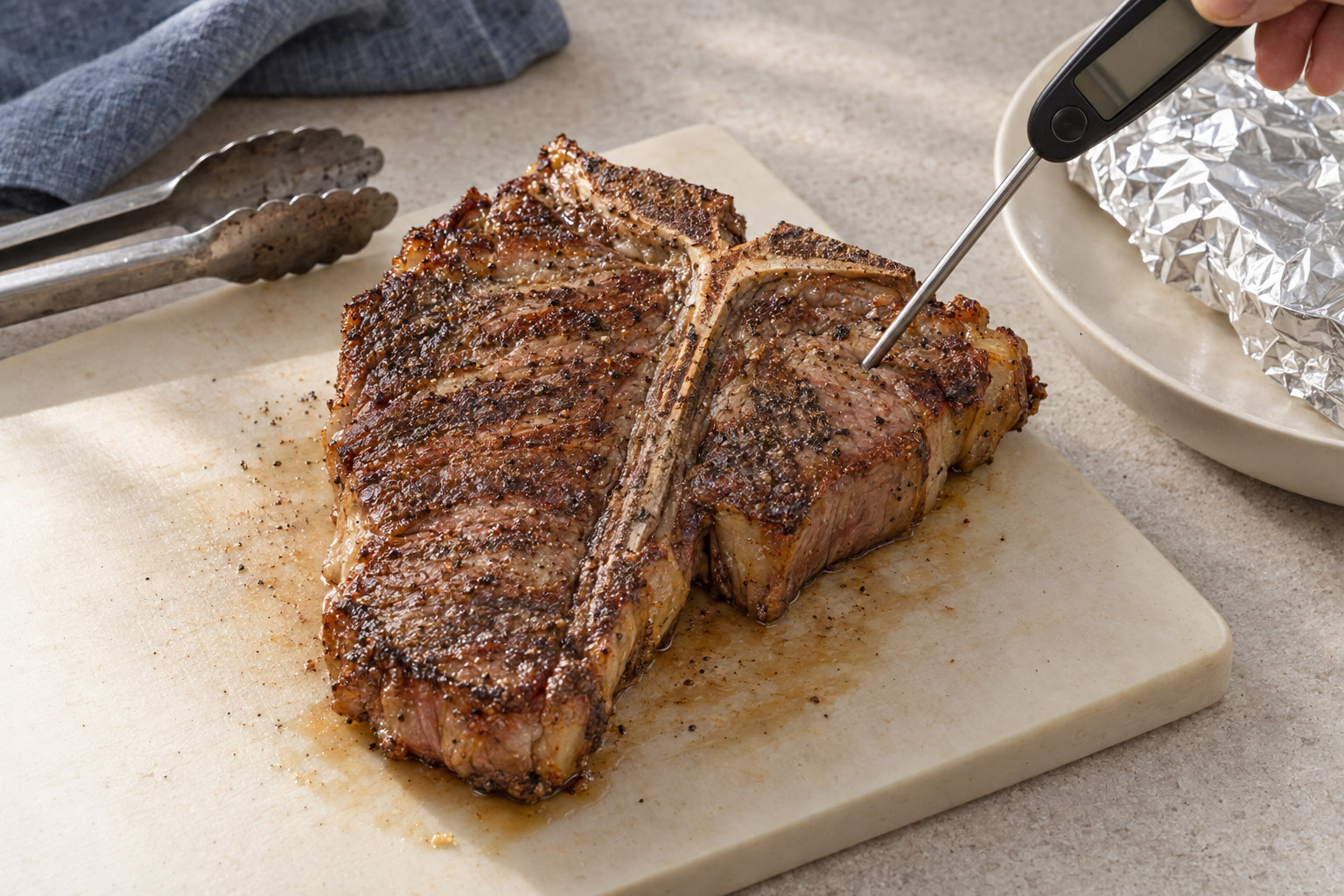
We leave the T-bone whole on the bone. We insert the probe from the side into the centre of the striploin and tenderloin, away from bone and pockets of fat. We monitor both muscles throughout, checking more often as they approach the target. A thin cut may not need any further cooking. As a guide, a 3–5 cm steak takes 15–35 minutes over indirect heat, a 5–7 cm steak takes 30–60 minutes, and a thick 1,200 g Chianina may take up to 70 minutes. We may reach a lower level of doneness sooner. We turn the faster-heating tenderloin farther from the heat and, if needed, loosely shield it with a double layer of foil. We keep the whole steak in the indirect zone. We usually take it off when the temperature in the cooler muscle is 2–3 °C below the chosen post-rest target. The temperature may rise more in a thick cut, so we keep checking it. The tenderloin may end up more cooked than the striploin. We rest the meat for 8–10 minutes on a clean, warm plate away from the heat, loosely covered with foil. We keep monitoring both muscles as it rests. If the temperature has stopped rising and the meat has not reached our chosen doneness, we return the whole cut briefly to gentle heat, turn the warmer muscle away from the heat and check both again. Then we add pepper to taste.
The smaller muscle may be more cooked, so the two parts can differ in colour when sliced.
Warm the sides and toast the bread
Towards the end of cooking the meat, we heat the remaining olive oil in a saucepan. We peel and chop the garlic and strip the leaves from the washed thyme. We add them to the pan and stir for 30 seconds. We add 300 g drained beans, or 200 g for Chianina, pour in 50 ml water and add a pinch of salt. We cover and warm gently for 7–10 minutes until they reach 70 °C, then hold them at that temperature for 2 minutes. If they need to wait before serving, we keep them covered above 63 °C for no more than 30 minutes. While the meat rests, we return the fennel to its original saucepan with the remaining 20 ml water. We cover and warm it over low heat for 6–8 minutes. Then we leave it covered on the still-warm, switched-off hob ring for no more than 15 minutes. While the meat rests, we briefly toast the bread on a clean part of the grill.
The beans have a little sauce, and the fennel is hot through to the core.
Slice the steak and serve
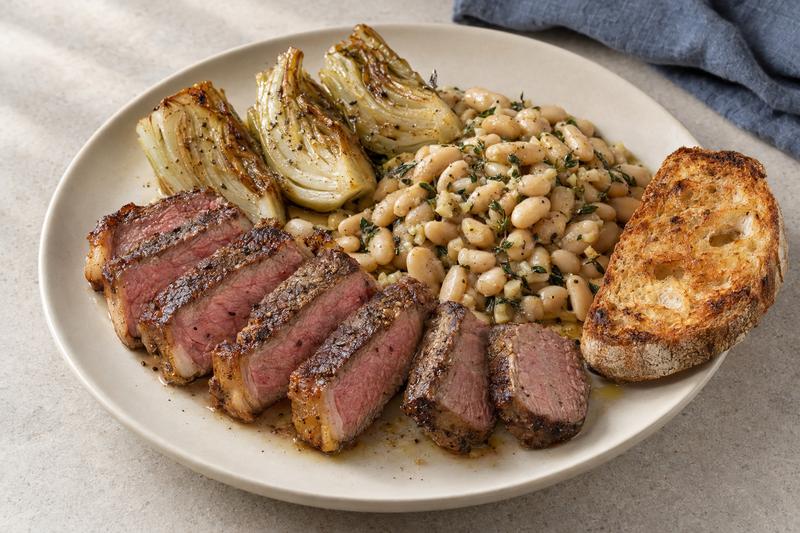
We divide the lemon juice between the beans and fennel. We cut the meat away from both sides of the bone and slice it across the grain. We divide both muscles, the beans, fennel and bread between two plates. We add any juices from the resting plate to the meat. If we reduced the regular salt to finish with Saltverk salt, we taste the meat with the sides and juices. Just before serving, if needed, we divide one small pinch of Saltverk Icelandic flake salt with Arctic thyme over the meat. It replaces some of the regular salt we left out at the start. If the bite is salty enough, we add no more salt.
Tips from our kitchen
- We finish a thick steak away from direct heat. First, we brown the surface over the direct flame.
What to watch out for
- We do not move the whole steak over direct heat just because the striploin is warming more slowly.
How we serve it
- We separate the rested meat from the bone and divide it evenly among the chosen number of portions. We serve it with the sides.
Ingredient swaps
white beans
the same drained weight of butter beans We warm the beans briefly as directed and stir them gently.
Ingredient notes
- The pack contains one whole 800 g Wolowina steak. A T-bone consists of striploin and a smaller tenderloin joined by a bone. Before cooking, we measure the steak’s thickness and dimensions.
- The pack contains one whole 800 g Red+White BMS 3 steak. A T-bone consists of striploin and a smaller tenderloin joined by a bone. Before cooking, we measure the steak’s thickness and dimensions.
- The pack contains one whole 1,200 g Chianina IGP Fiorentina steak. A T-bone consists of striploin and a smaller tenderloin joined by a bone. Before cooking, we measure the steak’s thickness and dimensions.
During preparation
- We keep the meat in the fridge until cooking. After handling raw meat, we wash our hands and utensils; we use a clean chopping board for the cooked meat.
- Using a clean thermometer, we check the centre of the striploin and tenderloin separately, away from bone and pockets of fat. If cooking more than one steak, we check each one separately. We do not judge the temperature by the meat’s colour.
Our inspiration
In Florence, Fiorentina can refer to a football club or a famous steak. On the plate, it is a thick beef cut on a T-shaped bone, with tenderloin on one side and striploin on the other. Chianina is one of the breeds often used for this steak. Our grilled version with fennel and beans takes loose inspiration from that style of serving.
Similar recipes
Recipe for 4 people
Step-by-step method
Choosing how well to cook your steak
Before cooking, we choose how well we would like our meat done. This guide describes culinary levels of doneness and approximate temperatures at the centre of the meat after resting. These are not pan or oven temperatures or food safety recommendations. For whole beef steaks, the United States Department of Agriculture (USDA) recommends a minimum internal temperature of 63 °C before removing the meat from the heat, followed by at least 3 minutes of resting.
| Doneness | Temperature after resting | What to expect |
|---|---|---|
| Rare | 52 °C | Rare. The centre is red, and the meat is very tender and juicy. |
| Medium Rare | 55 °C | Medium rare. The centre is warm and reddish-pink, and the meat is tender and juicy. |
| Medium | 60 °C | Medium. The centre remains pink, and the meat has a firmer bite. |
| Medium Well | 65 °C | Medium well. Only a faint pink strip remains in the centre; the meat is firmer and less juicy. |
| Well Done | 71 °C | Well done. There is no pink in the centre, and the meat is firm and less juicy. |
- We measure the temperature at the centre of the thickest part of the meat. We insert the probe from the side, avoiding bone and pockets of fat. Colour is only a guide; we rely on the thermometer.
- As a rule, we take the meat off the pan or grill, or out of the oven, when it is 2–3 °C below our chosen temperature after resting. Thick cuts and intense heat can cause a greater temperature rise during resting. We check it regularly and follow the individual recipe.
- We rest the meat for the time given in the recipe. If the temperature stops rising before reaching our chosen value, we briefly return the meat to a gentle heat and check again.
- Cooking times are a guide. If we prefer our meat less well done, we start checking its temperature earlier. For a higher degree of doneness, we allow more time over a gentler heat as needed, so the outside does not burn.
Before we start
We par-cook and grill the fennel before the meat. We start warming the beans when the temperature inside the cooler muscle of the first steak to be finished is about 12 °C below its chosen post-rest target. For a cut up to 3 cm thick, we prepare them before searing. We reheat the fennel and toast the bread while the meat rests. For two 800 g steaks, we compare their thickness and chosen doneness. If they finish at different times, we share one rested steak between two complete plates, with half the sides. We serve one Chianina cut for four together.
Prepare the steak and par-cook the fennel
We choose the doneness using the guide above the method. We use two whole 800 g Wolowina or Red+White T-bone steaks. Alternatively, we can use just one whole 1,200 g Chianina cut, slice it and share it among four people, keeping the sides at their full quantities. We pat the meat dry and make enough room on the grill for all the whole steaks. We season them with 1½ teaspoons salt, or 1 teaspoon for Chianina. If we plan to finish with Icelandic salt, we reduce this regular salt by two small pinches; the seasoning for the sides stays the same. We keep the meat in the fridge until grilling. We wash the fennel and remove any damaged outer parts. We cut each bulb lengthways into 6 wedges, leaving them joined at the root. We simmer them gently in 2.5 l water with salt for 5–6 minutes. We drain and dry them. We preheat the grill for two-zone cooking and maintain 160–180 °C under the lid.
The fennel holds together but is beginning to soften in the centre.
Grill the fennel, then sear the steak
We brush the fennel with 2 teaspoons of the measured olive oil and grill both cut sides over direct heat until golden, about 3–4 minutes in total. We turn the wedges as they cook. We transfer them to a bowl, cover and set them aside away from the grill. We brush the steak with the rapeseed oil set aside for the meat and sear it for about 2–3 minutes on each broad side, briefly searing the meaty edges too. We monitor the temperature of both muscles from the start and shorten the searing time if needed to avoid exceeding our chosen doneness. We move the meat to the indirect zone, with the tenderloin farther from the heat, and close the grill lid.
The crust is browned, and no flames flare beneath the meat while it cooks over indirect heat.
Finish the T-bone over indirect heat
We leave the T-bone whole on the bone. We insert the probe from the side into the centre of the striploin and tenderloin, away from bone and pockets of fat. We monitor both muscles throughout, checking more often as they approach the target. A thin cut may not need any further cooking. As a guide, a 3–5 cm steak takes 15–35 minutes over indirect heat, a 5–7 cm steak takes 30–60 minutes, and a thick 1,200 g Chianina may take up to 70 minutes. We may reach a lower level of doneness sooner. For four portions, we do not estimate the time for one 1,200 g cut from that for two 800 g steaks; thickness and temperature determine it. We turn the faster-heating tenderloin farther from the heat and, if needed, loosely shield it with a double layer of foil. We keep the whole steak in the indirect zone. We usually take it off when the temperature in the cooler muscle is 2–3 °C below the chosen post-rest target. The temperature may rise more in a thick cut, so we keep checking it. The tenderloin may end up more cooked than the striploin. We rest the meat for 8–10 minutes on a clean, warm plate away from the heat, loosely covered with foil. We keep monitoring both muscles as it rests. If the temperature has stopped rising and the meat has not reached our chosen doneness, we return the whole cut briefly to gentle heat, turn the warmer muscle away from the heat and check both again. Then we add pepper to taste.
The smaller muscle may be more cooked, so the two parts can differ in colour when sliced.
Warm the sides and toast the bread
Towards the end of cooking the meat, we heat the remaining olive oil in a saucepan. We peel and chop the garlic and strip the leaves from the washed thyme. We add them to the pan and stir for 30 seconds. We add 650 g drained beans, pour in 90 ml water and add ¼ teaspoon salt. We cover and warm gently for 7–10 minutes until they reach 70 °C, then hold them at that temperature for 2 minutes. If they need to wait before serving, we keep them covered above 63 °C for no more than 30 minutes. While the meat rests, we return the fennel to its original saucepan with the remaining 30 ml water. We cover and warm it over low heat for 6–8 minutes. Then we leave it covered on the still-warm, switched-off hob ring for no more than 15 minutes. While the meat rests, we briefly toast the bread on a clean part of the grill. If the two steaks finish at different times, we divide the beans, fennel and all their reheating ingredients in half. We warm each half as directed for the corresponding steak, so the prepared sides do not wait too long.
The beans have a little sauce, and the fennel is hot through to the core.
Slice the steak and serve
We divide the lemon juice between the beans and fennel. We cut the meat away from both sides of the bone and slice it across the grain. We divide both muscles, the beans, fennel and bread between four plates. We add any juices from the resting plate to the meat. If the two steaks finish at different times, we serve two plates at a time, with half the lemon juice and bread. If we reduced the regular salt to finish with Saltverk salt, we taste the meat with the sides and juices. Just before serving, if needed, we divide two small pinches of Saltverk Icelandic flake salt with Arctic thyme over the meat. It replaces some of the regular salt we left out at the start. If the bite is salty enough, we add no more salt.