
Boxxi signature cuisine · European inspiration
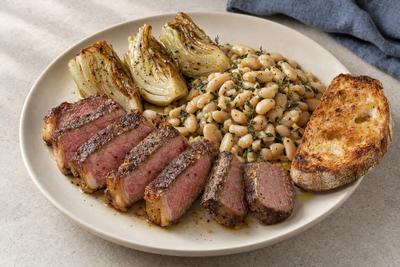
T-bone steak with béarnaise sauce, chips and salad
A slice of steak, a golden chip and buttery tarragon béarnaise: we set aside a relaxed evening at the hob for this combination. We serve the whole T-bone sliced, with freshly whisked sauce and a leafy salad. It is a substantial meal where the sauce gets as much attention as the meat.
The time includes parboiling the chips, making the reduction, searing the whole steak, finishing it in the oven and resting it for 15–18 minutes while we prepare the sides and sauce. It depends on the actual thickness: above 7 cm, we allow at least another 20–30 minutes and follow the thermometer. Meat cooking times are estimates; depending on thickness and desired doneness, it may finish sooner or later.
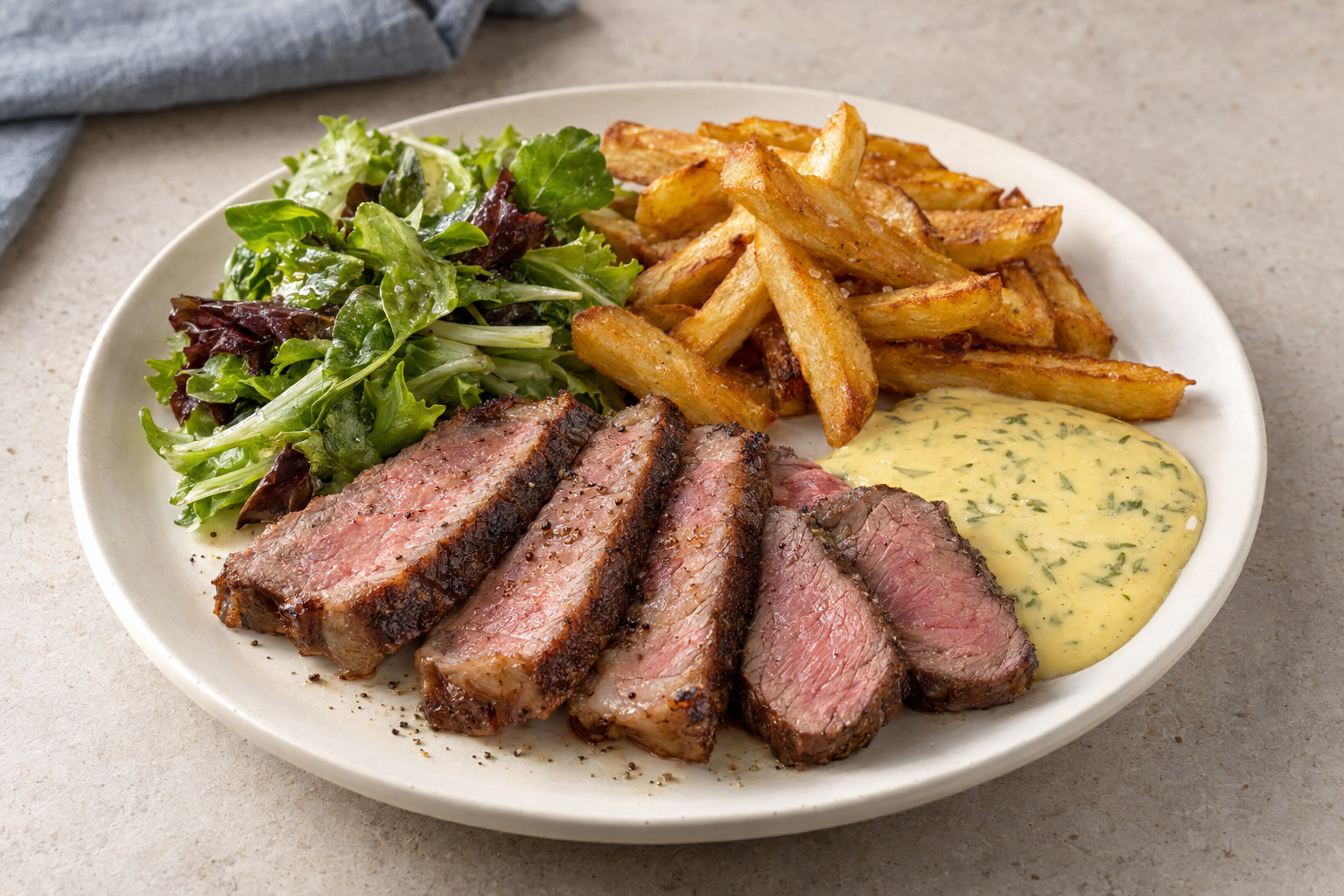
Wine vinegar’s acidity and the bold aroma of tarragon lift the rich butter sauce; seared meat and chips add crispness.
Step-by-step method
What you will need
- kitchen scales
- thin-probe thermometer and oven thermometer
- knife, clean board and tongs
- one wide heavy pan with a flat cooking surface of at least 30 × 30 cm for the whole steak and then the chips
- oven and a tray with a rack at least 35 × 30 cm that fits the whole steak
- 4 l pot for parboiling the potatoes, colander and shallow tray
- 2 l pot and heatproof bowl for a bain-marie
- 12–14 cm saucepan, sieve, whisk and bowl for the butter
- salad bowl, clean warm plate for resting the meat and foil
- 4 hob rings for the pans, bain-marie and melting the butter
Choosing how well to cook your steak
Before cooking, we choose how well we would like our meat done. This guide describes culinary levels of doneness and approximate temperatures at the centre of the meat after resting. These are not pan or oven temperatures or food safety recommendations. For whole beef steaks, the United States Department of Agriculture (USDA) recommends a minimum internal temperature of 63 °C before removing the meat from the heat, followed by at least 3 minutes of resting.
| Doneness | Temperature after resting | What to expect |
|---|---|---|
| Rare | 52 °C | Rare. The centre is red, and the meat is very tender and juicy. |
| Medium Rare | 55 °C | Medium rare. The centre is warm and reddish-pink, and the meat is tender and juicy. |
| Medium | 60 °C | Medium. The centre remains pink, and the meat has a firmer bite. |
| Medium Well | 65 °C | Medium well. Only a faint pink strip remains in the centre; the meat is firmer and less juicy. |
| Well Done | 71 °C | Well done. There is no pink in the centre, and the meat is firm and less juicy. |
- We measure the temperature at the centre of the thickest part of the meat. We insert the probe from the side, avoiding bone and pockets of fat. Colour is only a guide; we rely on the thermometer.
- As a rule, we take the meat off the pan or grill, or out of the oven, when it is 2–3 °C below our chosen temperature after resting. Thick cuts and intense heat can cause a greater temperature rise during resting. We check it regularly and follow the individual recipe.
- We rest the meat for the time given in the recipe. If the temperature stops rising before reaching our chosen value, we briefly return the meat to a gentle heat and check again.
- Cooking times are a guide. If we prefer our meat less well done, we start checking its temperature earlier. For a higher degree of doneness, we allow more time over a gentler heat as needed, so the outside does not burn.
Before we start
We parboil and dry the chips and make the sauce reduction. While the cooked meat rests, we fry the chips and whisk the béarnaise.
We prepare the whole steak and parboil the chips
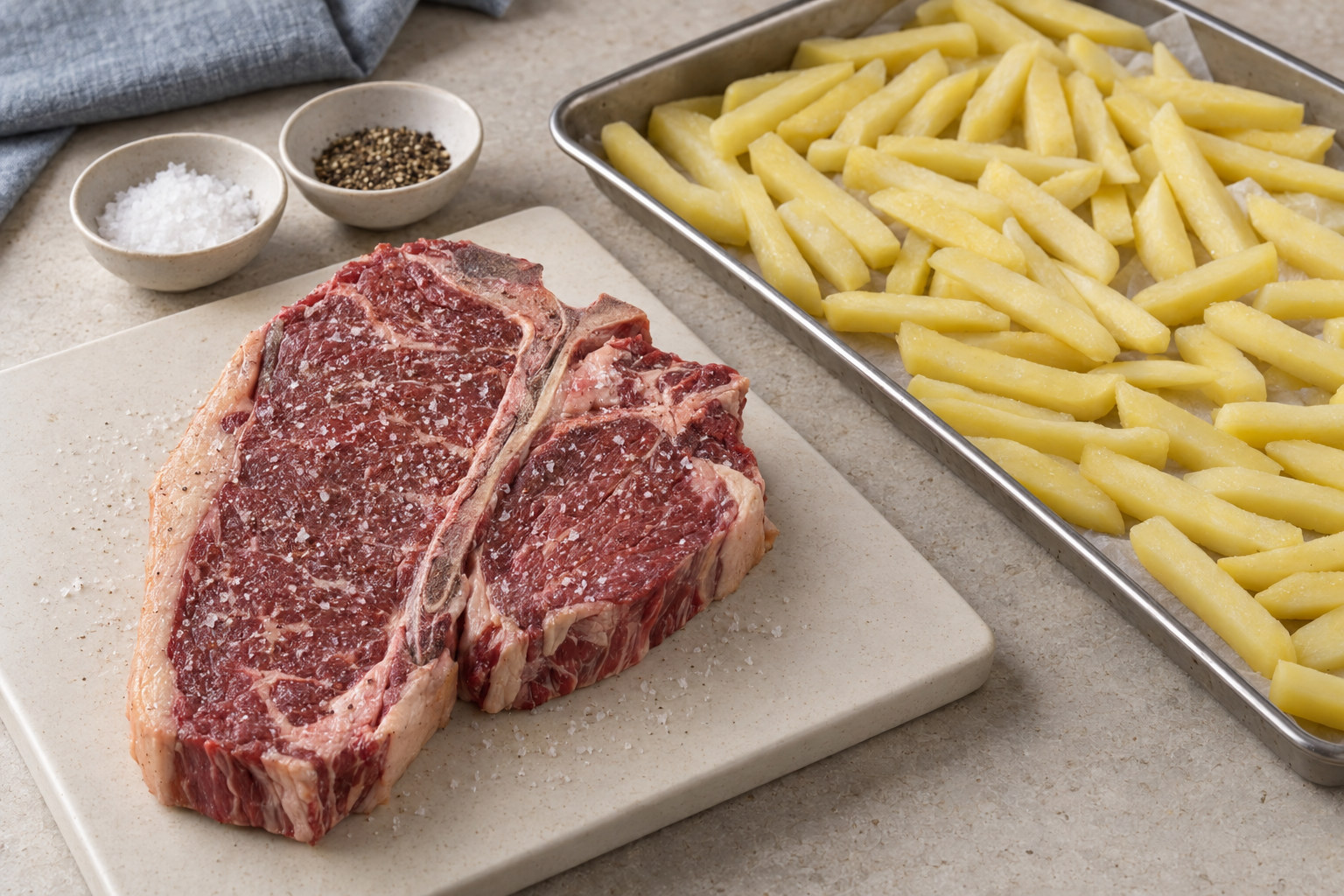
We choose the doneness from the guide above the method. We use one whole 800 g Wolowina or Red+White T-bone. Alternatively, we can choose one whole 1200 g Chianina for two generous servings with the smaller side dish described below. We leave the meat whole on the bone and pat it dry; both muscles must contact the pan during searing. We season it with a total of ¾ tsp salt, or 1 tsp for one Chianina. We keep the meat in the fridge until searing. We neither debone nor halve a cut thicker than 7 cm; it needs longer cooking. We peel and rinse the potatoes (500 g, or 300 g for Chianina) and cut them into 1 cm-thick chips. We bring water to the boil in a pot and gently simmer the chips for about 7–10 minutes, until a skewer enters easily but their edges hold their shape. We drain them carefully, spread them in one layer on a tray and leave them to dry for 10 minutes. They must be dry before frying. If we will not start frying within an hour, we refrigerate the tray of dried chips and take them out only when they go into the pan. We preheat the fan oven to 150 °C.
The parboiled chips are soft in the centre but do not fall apart.
We make the reduction and prepare the bain-marie
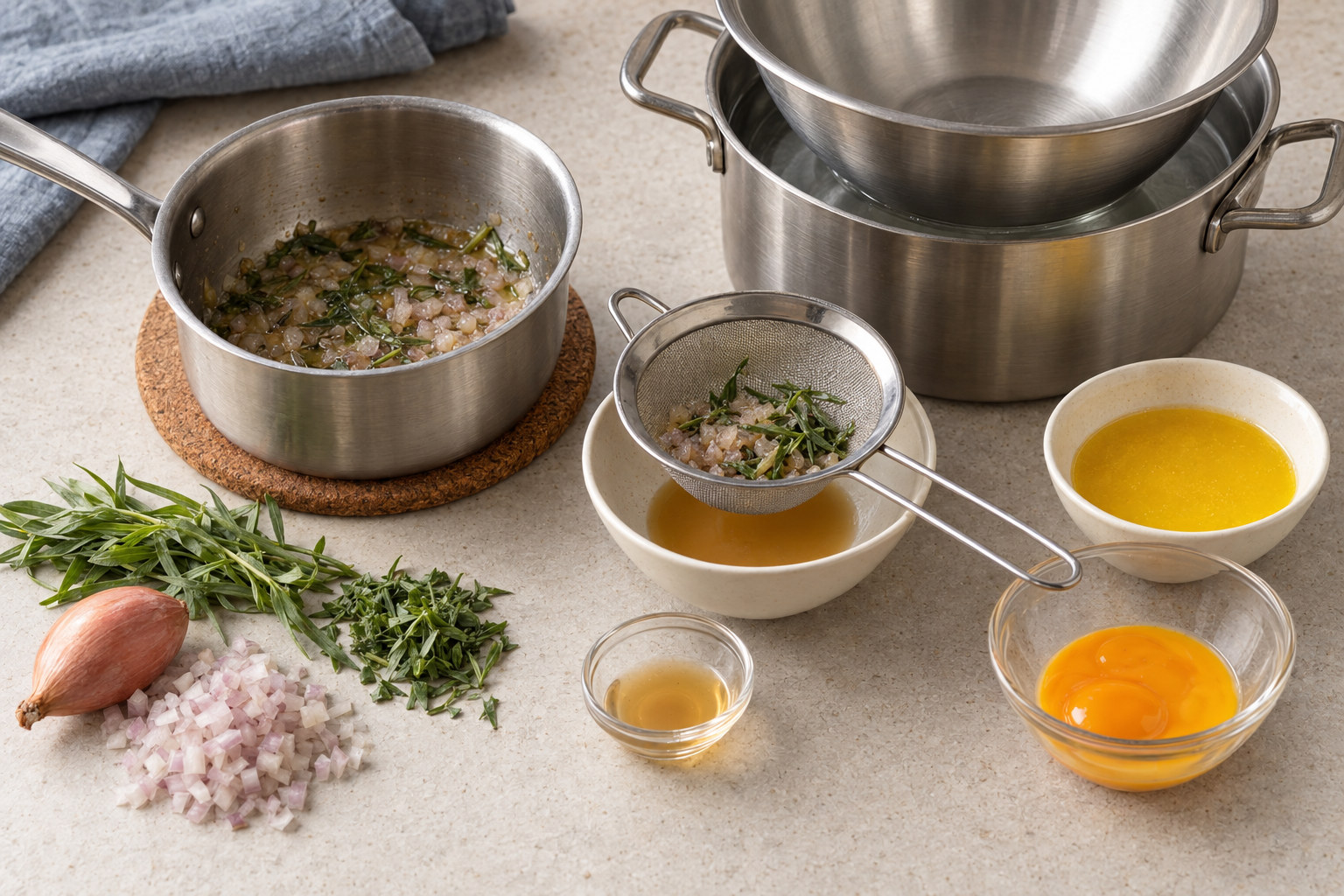
We peel and chop the shallot, and wash, dry and chop the tarragon. In a narrow 12–14 cm saucepan, we bring 22 ml vinegar, 30 ml water for the reduction, the chopped shallot and half the tarragon to a gentle simmer. We simmer for 6–10 minutes, strain and measure 10 ml reduction. If the volume is short after straining, we top it up with no more than 5 ml of the water reserved for the emulsion. We do not let the reduction boil dry. We leave it to cool. We melt the clarified butter shortly before whisking the sauce and keep it lukewarm, about 45–50 °C. We wash and thoroughly dry the salad but do not dress it yet. We prepare a bain-marie so the bowl does not touch the water. We make the reduction before searing the meat. We heat the bain-marie while melting the butter; for a cut up to 3 cm thick, we prepare both bath and butter before searing. After moving the meat to the oven, we wipe the dark browned bits from the pan and ready it for the chips.
The reduction is acidic and aromatic; the yolks are still in the fridge.
We sear the whole T-bone and finish it in the oven
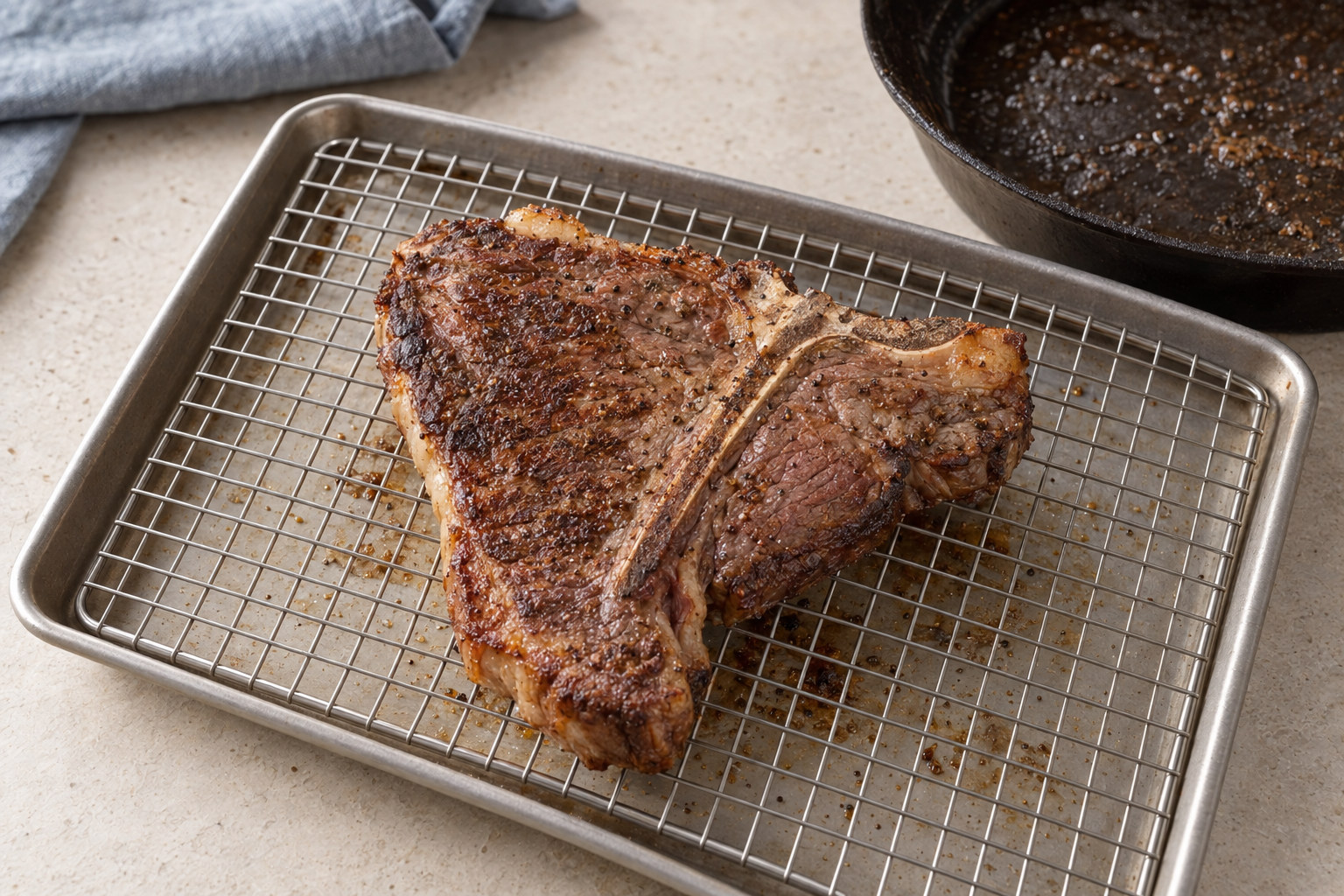
We make sure the fan oven is at 150 °C. We heat all the oil for the meat in a wide pan. We sear the whole steak for roughly 2–3 minutes on each broad side and 30–60 seconds on the meaty edges. We hold it with tongs so both muscles brown; we do not cut away the bone. We move the meat to a rack over a tray, with the smaller tenderloin towards a cooler part of the oven. If the probe shows it is heating quickly, we shorten the initial sear to avoid overshooting the chosen doneness. We insert the probe from the side into the centre of both striploin and tenderloin, away from bone and pockets of fat. We measure both muscles from the start of searing and regularly thereafter, more often near the target temperature. We aim the faster-heating tenderloin towards the cooler edge of the pan or oven. If needed, we turn the whole piece and loosely shield the tenderloin with a double layer of foil. A thin cut may be ready after searing; we then skip the oven. For a 3–5 cm cut, we allow roughly 15–35 minutes in the oven; for 5–7 cm, 30–60 minutes; and for a thick 1200 g Chianina, up to 70 minutes. Above 7 cm, we may need another 20–30 minutes; lower doneness may be reached sooner. We normally take each whole steak out when the cooler muscle is 2–3 °C below the chosen target after resting. A thick cut can rise further, so we measure it throughout. The tenderloin may end up more cooked than the striploin. We rest the meat for 15–18 minutes on a clean warm plate away from the heat, loosely covered with foil. We monitor both muscles during the rest. If the temperature stops rising before the meat reaches the chosen doneness, we briefly return the whole piece to gentle heat, point the warmer muscle away from the heat and measure both again. We cut the meat from the bone only when serving.
We fry the chips and whisk the béarnaise
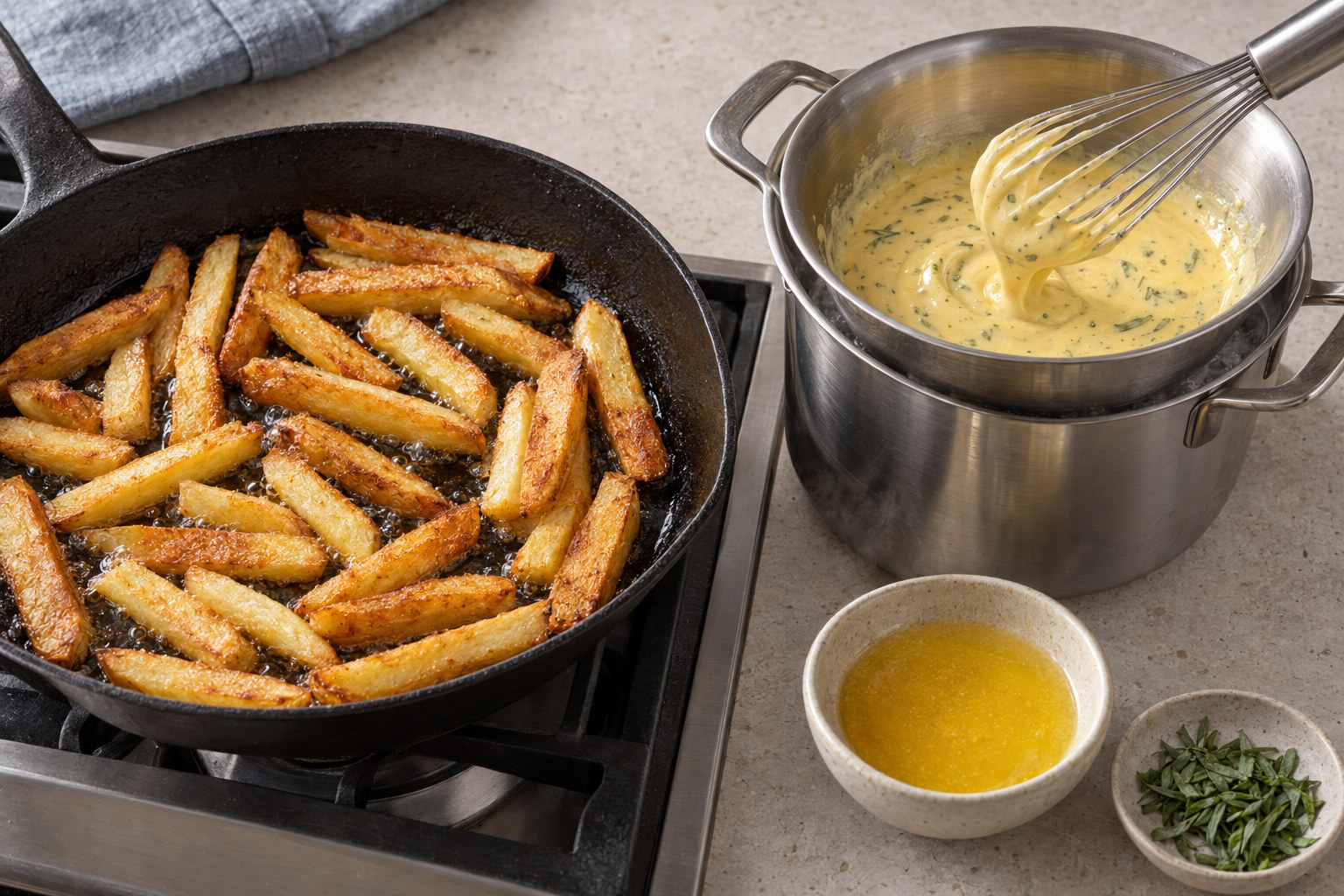
Once all the meat is resting, we heat 3½ tbsp of the olive oil for the potatoes in the pan, or 2 tbsp for Chianina. We add the well-dried parboiled chips in a single layer with gaps between them. We fry over medium to medium-high heat for about 10–14 minutes. We do not move them for the first 3 minutes; then we turn them onto other sides every 2–3 minutes. We season the golden, hot-through chips with ½ tsp salt, or ¼ tsp for Chianina, and set them aside uncovered. After the first turn of the chips, we begin the sauce beside the pan. Steam is already rising gently from the bain-marie and the butter is lukewarm. We turn the chips several times while whisking, briefly lifting the bowl off the bath each time. We mix the yolks with the cooled reduction and at least 8 ml of the remaining water for the emulsion. We keep the remaining water in reserve. Over the gently steaming bain-marie, we whisk for 4–6 minutes until the foam is thick enough to leave a trail behind the whisk. We keep the yolk mixture at 60–65 °C and do not let it exceed 68 °C. We remove the bowl and, whisking continuously, add the lukewarm clarified butter first drop by drop, then in a thin stream. We add the remaining tarragon and a pinch of salt. If the sauce is too thick, we thin it with a little of the remaining water. We keep it over the switched-off lukewarm bain-marie and serve within 20 minutes. We neither reheat nor store leftover sauce.
The chips are hot through and browned on several sides; the sauce is glossy with no separated fat.
We slice the rested meat and serve
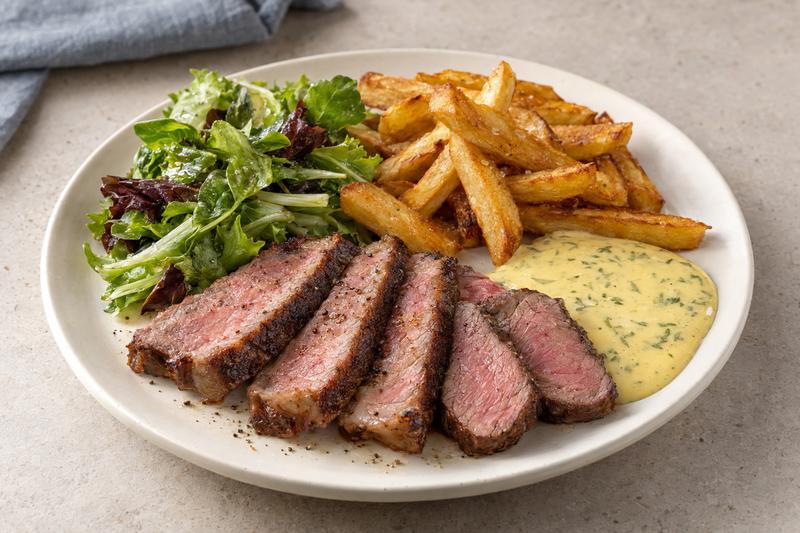
We mix a dressing from 2 tsp oil, 8 ml vinegar and a small pinch of salt, then lightly coat the salad with it. Only after at least 15 minutes of resting do we run the knife along both sides of the bone, remove the striploin and tenderloin and slice them across the grain. We add pepper to taste and divide all the meat evenly between 2 warmed plates. We serve with hot chips, salad and fresh béarnaise.
We pour the sauce beside the meat and leave some chips unsauced so they stay crisp.
Tips from our kitchen
- We check that the equipment fits the actual whole T-bone. We leave the bone between both muscles until after resting; a thick cut needs longer in the oven.
- We obtain unsweetened pasteurised egg yolks ahead of time. We expect a catering pack and keep any remainder according to the manufacturer’s instructions.
What to watch out for
- We whisk the béarnaise only while the whole cooked steak rests. When turning the chips, we briefly lift the bowl off the bain-marie so the unstirred yolks do not curdle.
- The tenderloin and striploin may not reach the same doneness. We probe both muscles and shield the tenderloin in time; we do not divide the raw steak to finish it faster.
How we serve it
- Only after resting do we cut the striploin and tenderloin from the bone. We slice them across the grain and divide all the meat among the servings. We serve the chips and salad with freshly made béarnaise.
Ingredient swaps
unsalted clarified butter
ordinary butter clarified in advance We clarify about 85 g butter for two or 155 g for four servings, then weigh out the required 65 or 120 g pure fat. If the yield is lower, we make up the difference. We allow another 10–15 minutes.
Ingredient notes
- The pack contains one whole 800 g Wolowina steak. A T-bone has striploin and a smaller tenderloin joined by the bone. We measure the steak’s thickness and dimensions before cooking.
- The pack contains one whole 800 g Red+White BMS 3 steak. A T-bone has striploin and a smaller tenderloin joined by the bone. We measure the steak’s thickness and dimensions before cooking.
- The pack contains one whole 1200 g Chianina IGP Fiorentina steak. A T-bone has striploin and a smaller tenderloin joined by the bone. We measure the steak’s thickness and dimensions before cooking.
- We keep the rest of the box for another meal. We source the side dishes and remaining ingredients separately.
During preparation
- We keep the meat refrigerated until cooking. After handling raw meat, we wash our hands and utensils; we use a clean board for the cooked meat.
- We check the temperature with a clean thermometer in the centre of both striploin and tenderloin, away from bone and pockets of fat. If cooking several steaks, we check each separately. We do not judge temperature by the colour of the meat.
- We use unsweetened pasteurised yolks and a clean bowl and whisk for the sauce. We make it just before serving and do not keep leftovers.
Our inspiration
Béarnaise is close to hollandaise: both rely on combining egg yolks and butter. Tarragon and an acidic base give it its own character. We whisk the butter gradually into the yolk foam to make a smooth sauce instead of separating the fat.
Similar recipes
Recipe for 4 people
Step-by-step method
Choosing how well to cook your steak
Before cooking, we choose how well we would like our meat done. This guide describes culinary levels of doneness and approximate temperatures at the centre of the meat after resting. These are not pan or oven temperatures or food safety recommendations. For whole beef steaks, the United States Department of Agriculture (USDA) recommends a minimum internal temperature of 63 °C before removing the meat from the heat, followed by at least 3 minutes of resting.
| Doneness | Temperature after resting | What to expect |
|---|---|---|
| Rare | 52 °C | Rare. The centre is red, and the meat is very tender and juicy. |
| Medium Rare | 55 °C | Medium rare. The centre is warm and reddish-pink, and the meat is tender and juicy. |
| Medium | 60 °C | Medium. The centre remains pink, and the meat has a firmer bite. |
| Medium Well | 65 °C | Medium well. Only a faint pink strip remains in the centre; the meat is firmer and less juicy. |
| Well Done | 71 °C | Well done. There is no pink in the centre, and the meat is firm and less juicy. |
- We measure the temperature at the centre of the thickest part of the meat. We insert the probe from the side, avoiding bone and pockets of fat. Colour is only a guide; we rely on the thermometer.
- As a rule, we take the meat off the pan or grill, or out of the oven, when it is 2–3 °C below our chosen temperature after resting. Thick cuts and intense heat can cause a greater temperature rise during resting. We check it regularly and follow the individual recipe.
- We rest the meat for the time given in the recipe. If the temperature stops rising before reaching our chosen value, we briefly return the meat to a gentle heat and check again.
- Cooking times are a guide. If we prefer our meat less well done, we start checking its temperature earlier. For a higher degree of doneness, we allow more time over a gentler heat as needed, so the outside does not burn.
Before we start
We parboil and dry the chips and make the sauce reduction. While the cooked meat rests, we fry the chips and whisk the béarnaise. If serving in stages, we prepare both sauce and sides in halves.
We prepare the whole steak and parboil the chips
We choose the doneness from the guide above the method. We use two whole Wolowina or Red+White T-bones, each 800 g. Alternatively, we can choose just one whole 1200 g Chianina. After slicing, we divide it among four people and keep the full quantity of sides. We leave the meat whole on the bone and pat it dry; both muscles must contact the pan during searing. We season it with 1½ tsp salt, or 1 tsp for one Chianina. We keep the meat in the fridge until searing. We neither debone nor halve a cut thicker than 7 cm; it needs longer cooking. We peel and rinse 950 g potatoes and cut them into 1 cm-thick chips. We bring water to the boil in a pot and gently simmer the chips for about 7–10 minutes, until a skewer enters easily but their edges hold their shape. We drain them carefully, spread them in one layer on a tray and leave them to dry for 10 minutes. They must be dry before frying. If we will not start frying within an hour, we refrigerate the tray of dried chips and take them out only when they go into the pan. We preheat the fan oven to 150 °C.
The parboiled chips are soft in the centre but do not fall apart.
We make the reduction and prepare the bain-marie
We peel and chop the shallot, and wash, dry and chop the tarragon. In a narrow 12–14 cm saucepan, we bring 38 ml vinegar, 50 ml water for the reduction, the chopped shallot and half the tarragon to a gentle simmer. We simmer for 6–10 minutes, strain and measure 18 ml reduction. If the volume is short after straining, we top it up with no more than 8 ml of the water reserved for the emulsion. We do not let the reduction boil dry. We leave it to cool. We melt the clarified butter shortly before whisking the sauce and keep it lukewarm, about 45–50 °C. We wash and thoroughly dry the salad but do not dress it yet. We prepare a bain-marie so the bowl does not touch the water. We make the reduction before searing the meat. We heat the bain-marie while melting the butter; for a cut up to 3 cm thick, we prepare both bath and butter before searing. After moving the meat to the oven, we wipe the dark browned bits from the pans and ready them for the chips.
The reduction is acidic and aromatic; the yolks are still in the fridge.
We sear the whole T-bone and finish it in the oven
We make sure the fan oven is at 150 °C. We divide the oil for the meat between two wide pans and heat it. For a single Chianina, we use one pan and all the oil specified for that option. We sear each whole steak for roughly 2–3 minutes on each broad side and 30–60 seconds on the meaty edges. We hold it with tongs so both muscles brown; we do not cut away the bone. We move the meat to a rack over a tray, with the smaller tenderloin towards a cooler part of the oven. If the probe shows it is heating quickly, we shorten the initial sear to avoid overshooting the chosen doneness. We insert the probe from the side into the centre of both striploin and tenderloin, away from bone and pockets of fat. We measure both muscles from the start of searing and regularly thereafter, more often near the target temperature. We aim the faster-heating tenderloin towards the cooler edge of the pan or oven. If needed, we turn the whole piece and loosely shield the tenderloin with a double layer of foil. A thin cut may be ready after searing; we then skip the oven. For a 3–5 cm cut, we allow roughly 15–35 minutes in the oven; for 5–7 cm, 30–60 minutes; and for a thick 1200 g Chianina, up to 70 minutes. Above 7 cm, we may need another 20–30 minutes; lower doneness may be reached sooner. We normally take each whole steak out when the cooler muscle is 2–3 °C below the chosen target after resting. A thick cut can rise further, so we measure it throughout. The tenderloin may end up more cooked than the striploin. We rest the meat for 15–18 minutes on a clean warm plate away from the heat, loosely covered with foil. We monitor both muscles during the rest. If the temperature stops rising before the meat reaches the chosen doneness, we briefly return the whole piece to gentle heat, point the warmer muscle away from the heat and measure both again. We cut the meat from the bone only when serving. For four servings, we choose two steaks of similar thickness if possible. If they finish at different times, we serve each after its rest with a fresh half of the sides and sauce, as described in the next step.
We fry the chips and whisk the béarnaise
If the two steaks finish at different times, we first divide the chips, their oil and salt, the finished reduction and the other sauce ingredients in half, apart from the bain-marie water. During each steak’s rest, we fry one half of the chips in one pan and whisk a fresh half-batch of béarnaise in a clean bowl, following the method below. We keep the remaining yolks in the fridge. For half the servings, we use half of all the ingredient amounts below while keeping the same temperatures and times. The other steak continues to cook in the oven. If both finish together, or if we are cooking a single Chianina, we use the full amounts and both pans. When the relevant meat is resting, we heat the oil for the batch of chips we are making in the prepared pan or pans. We add the well-dried parboiled chips in a single layer with gaps between them. We fry over medium to medium-high heat for about 10–14 minutes. We do not move them for the first 3 minutes; then we turn them onto other sides every 2–3 minutes. We season the golden, hot-through chips with ¾ tsp salt and set them aside uncovered. After the first turn of the chips, we begin the sauce beside the pan. Steam is already rising gently from the bain-marie and the butter is lukewarm. We turn the chips several times while whisking, briefly lifting the bowl off the bath each time. We mix the yolks with the cooled reduction and at least 15 ml of the remaining water for the emulsion. We keep the remaining water in reserve. Over the gently steaming bain-marie, we whisk for 4–6 minutes until the foam is thick enough to leave a trail behind the whisk. We keep the yolk mixture at 60–65 °C and do not let it exceed 68 °C. We remove the bowl and, whisking continuously, add the lukewarm clarified butter first drop by drop, then in a thin stream. We add the remaining tarragon and a pinch of salt. If the sauce is too thick, we thin it with a little of the remaining water. We keep it over the switched-off lukewarm bain-marie and serve within 20 minutes. We neither reheat nor store leftover sauce.
The chips are hot through and browned on several sides; the sauce is glossy with no separated fat.
We slice the rested meat and serve
We mix a dressing from 1 tbsp oil, 14 ml vinegar and a pinch of salt, then lightly coat the salad with it. Only after at least 15 minutes of resting do we run the knife along both sides of the bone, remove the striploin and tenderloin and slice them across the grain. We add pepper to taste and divide all the meat evenly among 4 warmed plates. We serve with hot chips, salad and fresh béarnaise. If serving in stages, we divide the salad, dressing and pepper in half and serve 2 plates with each rested steak. We make the béarnaise fresh for each serving, as in the previous step.
We pour the sauce beside the meat and leave some chips unsauced so they stay crisp.