
Boxxi original cuisine · British fish and chips inspiration
Monkfish in a light batter with potatoes and pea purée
A light batter made with rice and wheat flour seals in the small, juicy pieces of monkfish. We roast potato wedges alongside and blend peas with butter and lemon. We serve the purée beside the fish so the golden coating stays crisp to the last bite.
We roast the potatoes before frying. Frying the three batches of fish takes about 15 minutes in total, including bringing the oil back up to temperature.
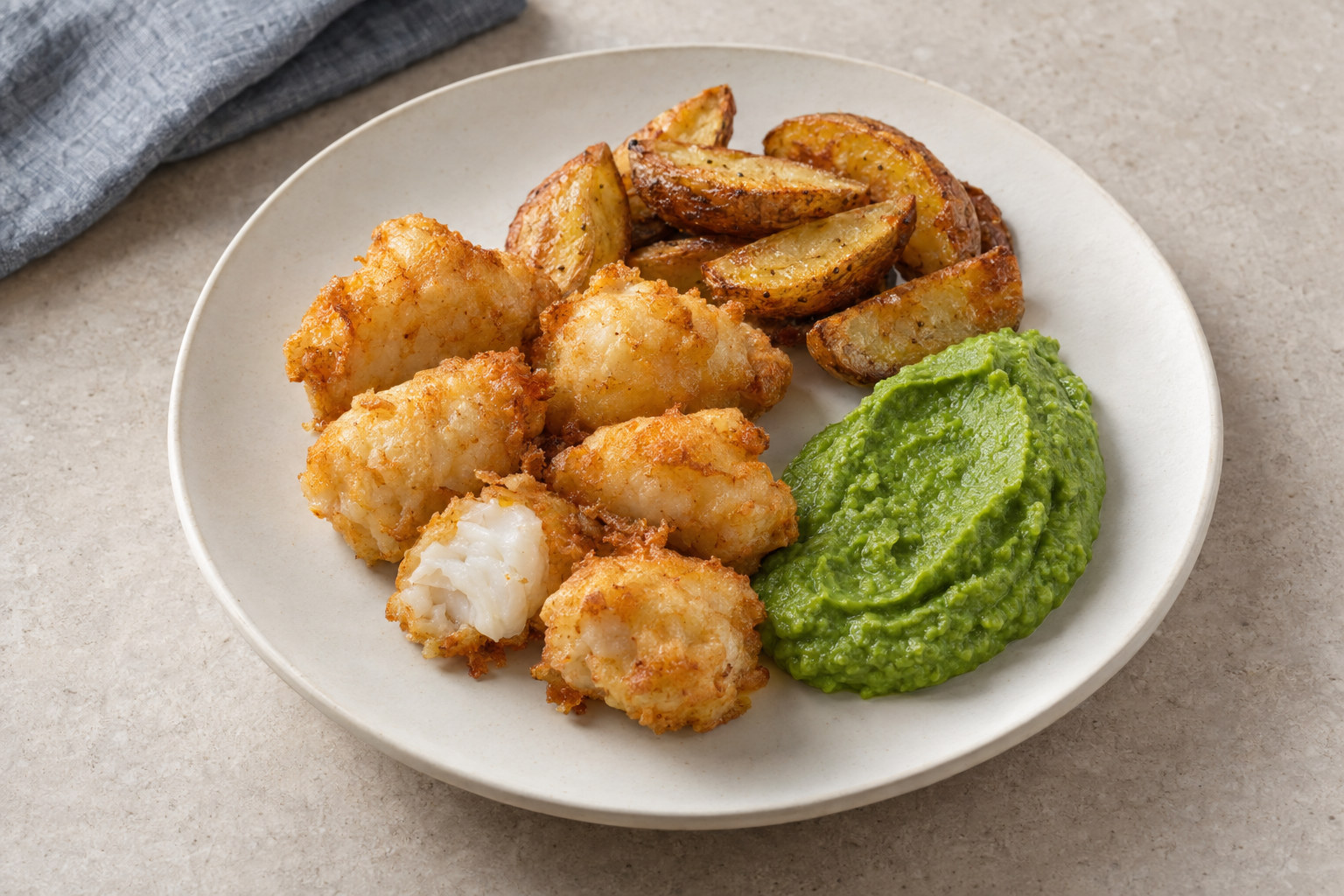
The light, crisp coating gives way to firm, juicy fish. Roast potatoes come with buttery pea purée lifted by fresh lemon acidity.
Step-by-step method
What you will need
- kitchen scales
- knife, chopping board and fish-bone tweezers
- probe thermometer
- fan oven
- 40 × 30 cm baking tray
- wire rack with a drip tray
- 3 l deep saucepan, 20 cm across
- thermometer suitable for oil
- 1 l saucepan
- stick blender
- slotted spoon
- kitchen paper
Before we start
We heat the oil towards the end of the potato cooking time. We mix the batter just before frying the first batch.
Roast the potato wedges
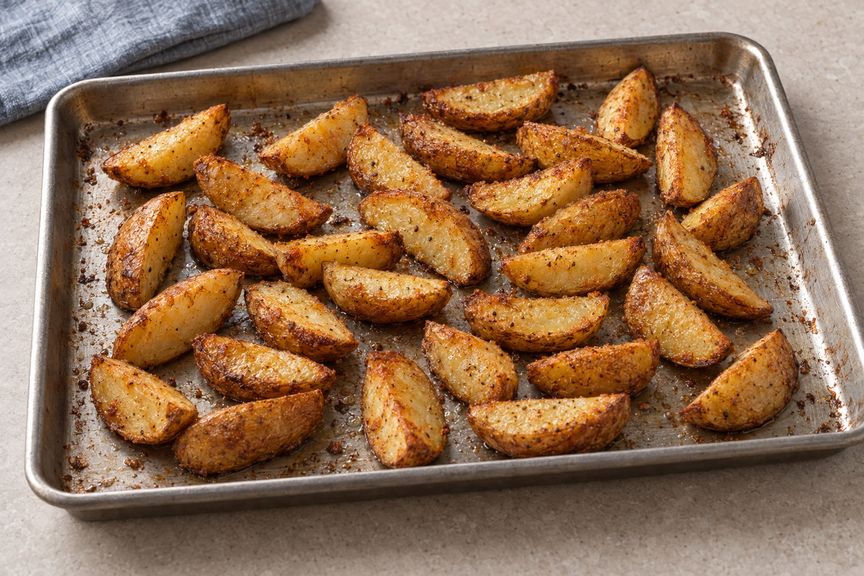
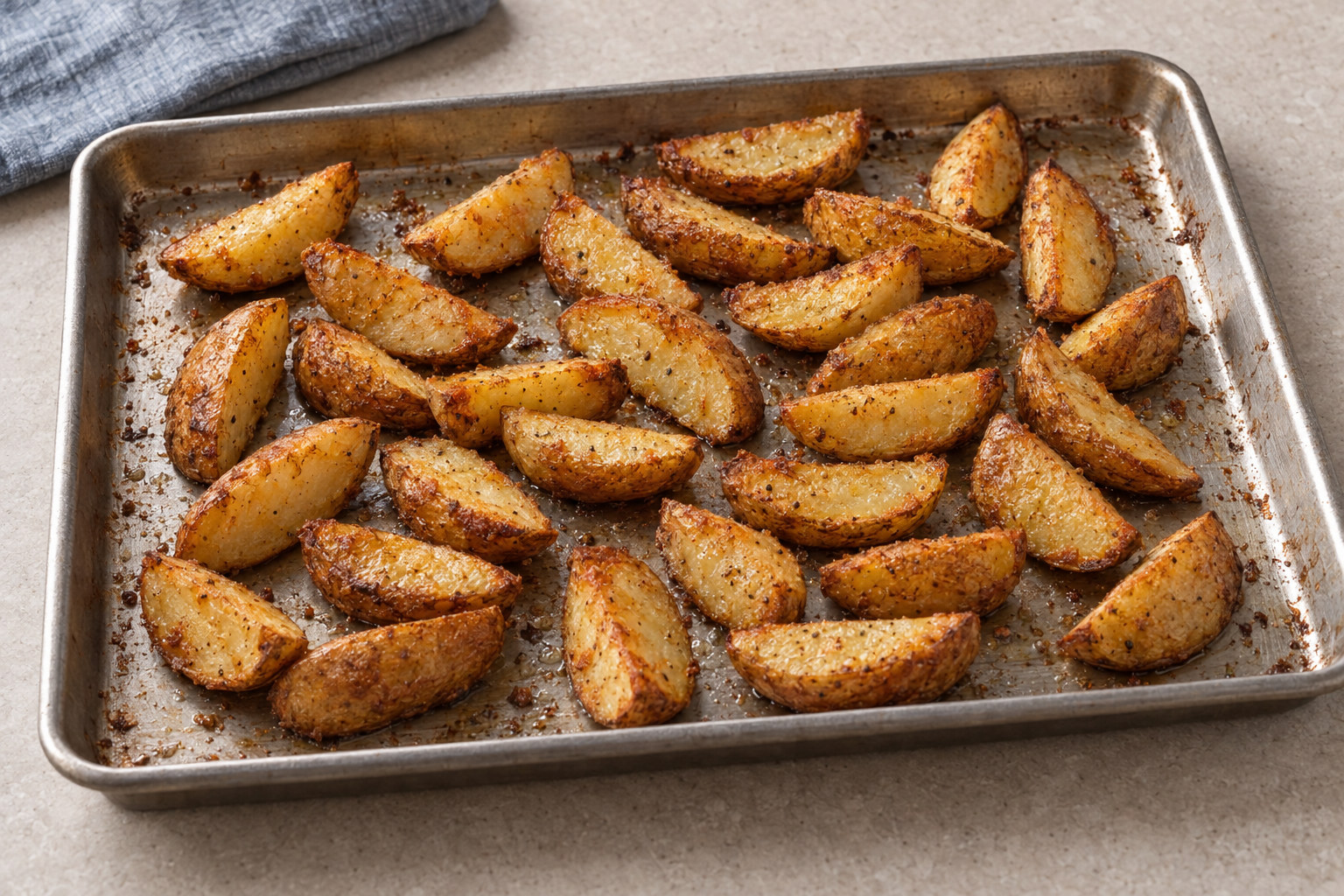
We preheat the fan oven to 220 °C. We wash the potatoes thoroughly and cut them into 2 cm wedges. We dry them, toss them with 1 tablespoon of oil and ¼ teaspoon of salt, then spread them on a tray and roast for 30–35 minutes, turning them after 20 minutes.
The surface is golden and a knife slides easily into the centre of the largest wedge.
Blend the peas
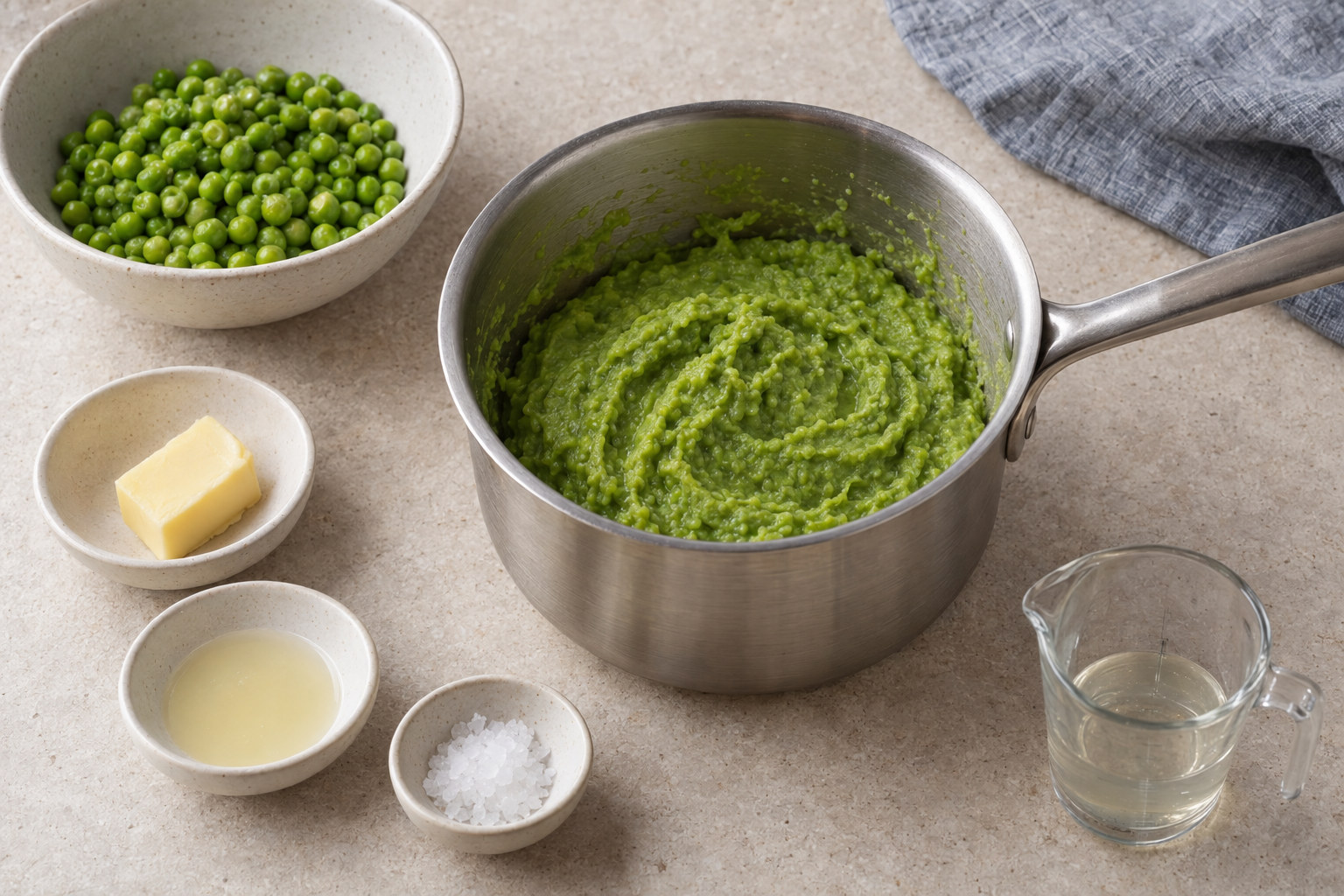
We simmer the peas in plenty of water for 4 minutes. We take out 30 ml of the cooking water and drain the rest. We blend the peas with the butter, lemon juice, a pinch of salt and the reserved water to make a thick purée. We cover it.
The purée holds a soft mound rather than running like soup.
Prepare the fish and oil
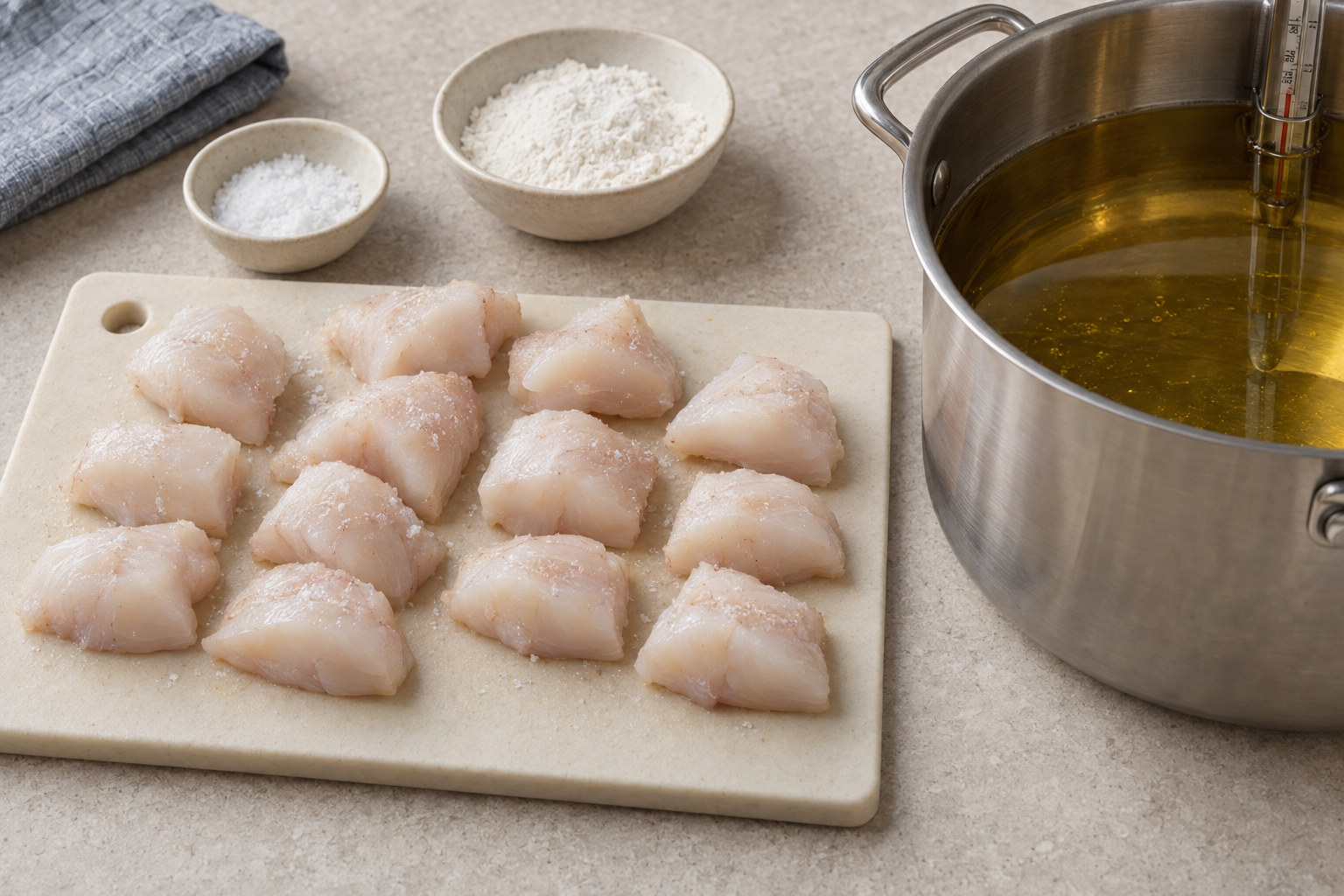
We carefully trim away any tough surface membrane from the fish. We cut each of the two portions into six pieces of roughly equal weight: twelve pieces in total, about 2.5–3 cm thick. We pat them dry and season with salt. We pour 1 l of oil into a deep 3 l saucepan, 20 cm across, and heat it to 175–180 °C. We take the cooked potatoes out and lower the oven to 100 °C. We briefly open the door to let excess heat escape. Only once the oven has cooled to 100 °C do we return the potatoes to the lower shelf and place the rack with its drip tray above them. We start frying only once the oven has reached that lower temperature.
The oil is about 3 cm deep; the tall saucepan leaves plenty of room to prevent it bubbling over.
Fry the fish in small batches
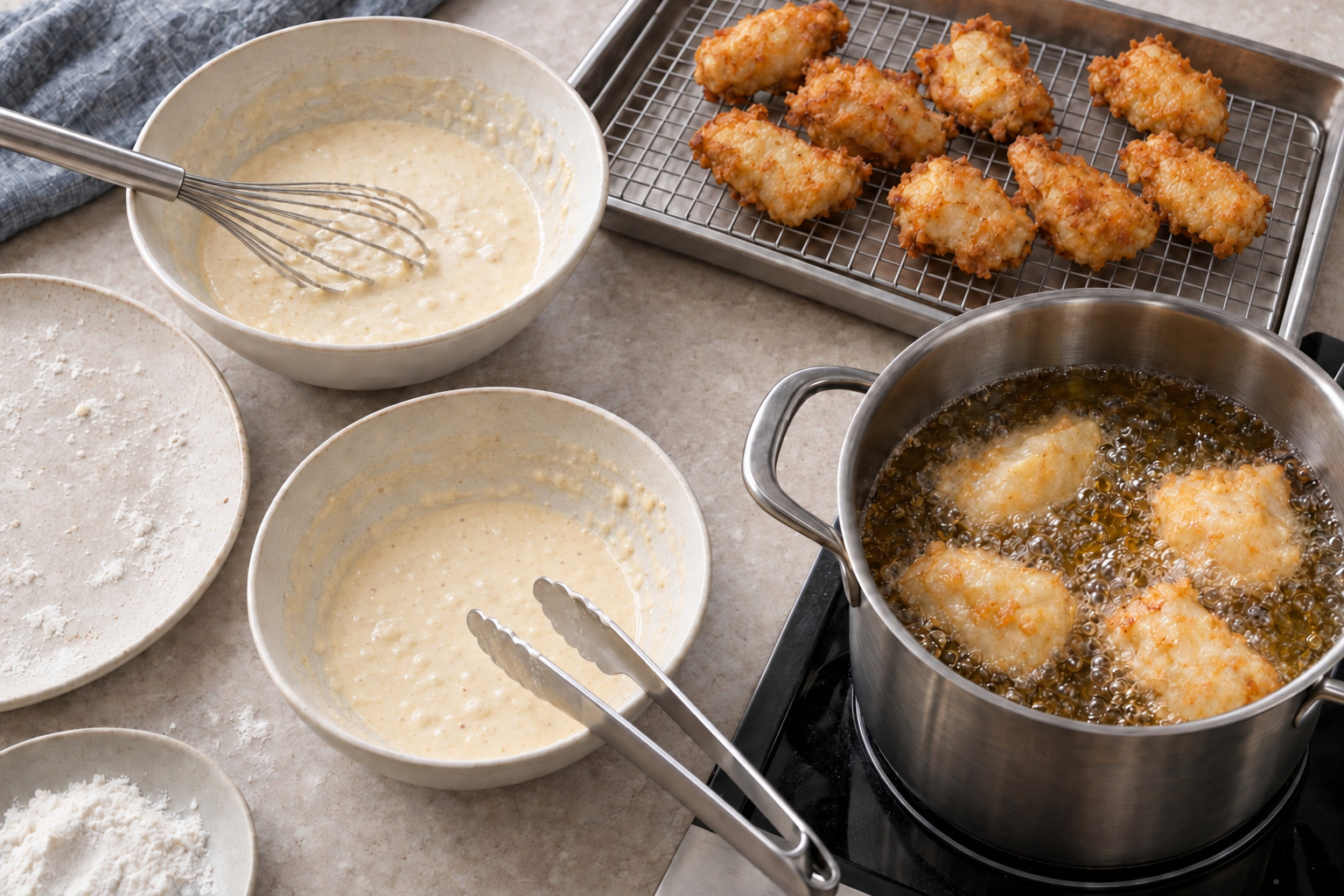
We briefly mix both flours for the batter with 120 ml cold sparkling water; a few small lumps are fine. We lightly dust the fish with the extra rice flour and coat it in the batter. We fry four pieces at a time, in three batches, for 4–5 minutes each at 175–180 °C. We check that the largest piece reaches 63 °C inside. Between batches, we let the oil return to the required temperature. We place the cooked pieces on the rack in the oven.
The batter is pale golden and crisp.
Serve the fish with its sides
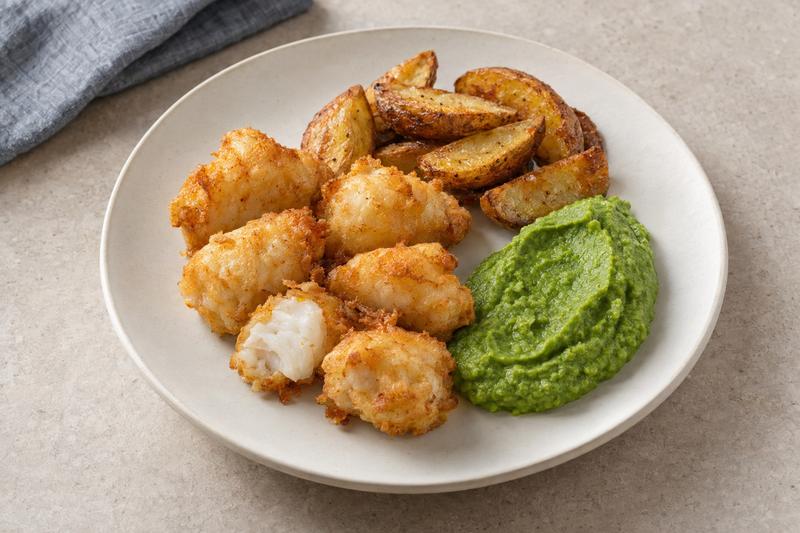
While frying the last batch, we gently reheat the purée for 2 minutes. We divide the potatoes between two plates and add six pieces of fish to each. We serve the purée alongside so it does not soften the coating. We serve at once.
We keep the first pieces on the rack only while the remaining batches fry, never covered.
Tips from our kitchen
- We use ordinary fine rice flour, not glutinous rice flour.
What to watch out for
- An overcrowded pan drops the oil temperature and makes the batter absorb fat.
How we serve it
- We serve six pieces of fish and roast potatoes on each plate. We put the pea purée alongside so the coating stays crisp.
Ingredient swaps
rice flour for the batter and dusting
For 2 servings, we use 40 g cornflour in the batter and 10 g plain wheat flour for dusting; for 4 servings, 80 g cornflour and 18 g flour. The coating will be lighter and more delicate. We do not substitute coarse maize flour for the starch.
Ingredient notes
- We use two or four 150 g portions of monkfish, skinned and boned. One 300 g pack serves two people. We carefully trim away any tough membrane.
During preparation
- We keep the fish in the fridge until needed. We inspect it and remove any remaining pin bones with tweezers. After handling raw fish, we wash our hands, board and utensils. During frying, the thickest part of the fish must reach at least 63 °C. We never leave hot oil unattended or put wet utensils into the pan. We fill the deep saucepan no more than one-third full with oil. If the oil catches fire, we smother it with a lid, never water.
Our inspiration
At London restaurant Sabor, chef Nieves Barragán Mohacho shows how the firm flesh of monkfish can make small fried bites. Her tempura batter includes beer, and she serves the bites as a starter with aioli and sorrel. We take inspiration from the bite-sized pieces and light coating; for a main course, we serve our sparkling-water and rice-flour batter with potatoes and peas.
Similar recipes
Recipe for 4 people
We roast the potatoes on two shelves. Frying the four batches of fish takes about 20–23 minutes, including bringing the oil back up to temperature.
Step-by-step method
Before we start
We keep the first batches of fish uncovered at 100 °C. We reheat the purée only while frying the last batch.
Roast the potato wedges
We wash the potatoes thoroughly and cut them into 2 cm wedges. We dry them, toss them with 2 tablespoons of oil and ½ teaspoon of salt, then roast them at 220 °C in the fan oven on two 40 × 30 cm trays for 35–40 minutes. Halfway through, we turn the wedges and swap the trays between shelves.
The surface is golden and a knife slides easily into the centre of the largest wedge.
Blend the peas
We simmer the peas in plenty of water for 4 minutes. We reserve 50 ml of the cooking water and drain the rest. We blend the peas with the butter, lemon juice, ¼ teaspoon of salt and the reserved water. We cover the purée and warm it briefly just before serving.
The purée holds a soft mound rather than running like soup.
Prepare the fish and oil
We carefully trim away any tough surface membrane from the fish. We cut the four portions into 24 similar pieces, about 25 g each and 2.5–3 cm thick. We pat them dry and season with salt. We heat 1.8 l of oil to 175–180 °C in a 6 l saucepan, 28 cm across. We take the cooked potatoes out and gather them onto one tray. We lower the oven to 100 °C and briefly open the door to let excess heat escape. Only once the oven has cooled to 100 °C do we return the potatoes to the lower shelf and place the rack with its drip tray above them. We start frying only once the oven has reached that lower temperature.
The oil is about 3 cm deep; the tall saucepan leaves plenty of room to prevent it bubbling over.
Fry the fish in small batches
We mix both flours for the batter with 230 ml cold sparkling water, without whisking for long. We lightly dust the fish with 18 g of rice flour and coat it in the batter. We fry six pieces at a time, in four batches, for 4–5 minutes each, until they reach 63 °C inside. Before each batch, we let the oil return to 175–180 °C. We keep the first batches uncovered on the rack in the oven; we do not stack them.
The batter is pale golden and crisp.
Serve the fish with its sides
While frying the last batch, we reheat the purée and arrange the potatoes on four plates. We add six pieces of fish and a quarter of the purée to each. We serve all the batches together, keeping the purée away from the coating.
We keep the first pieces on the rack only while the remaining batches fry, never covered.