
From the Boxxi kitchen · Our take on Lombard cooking
Monkfish with homemade pumpkin ravioli and orange butter
Thin egg pasta encloses roasted pumpkin with ricotta, Parmesan and a pinch of nutmeg. We serve the homemade ravioli with pan-fried monkfish and spinach leaves. A pale orange butter sauce, fragrant with freshly grated citrus zest, brings everything together.
We rest the dough for 30 minutes, preparing and cooling the pumpkin filling in the meantime.
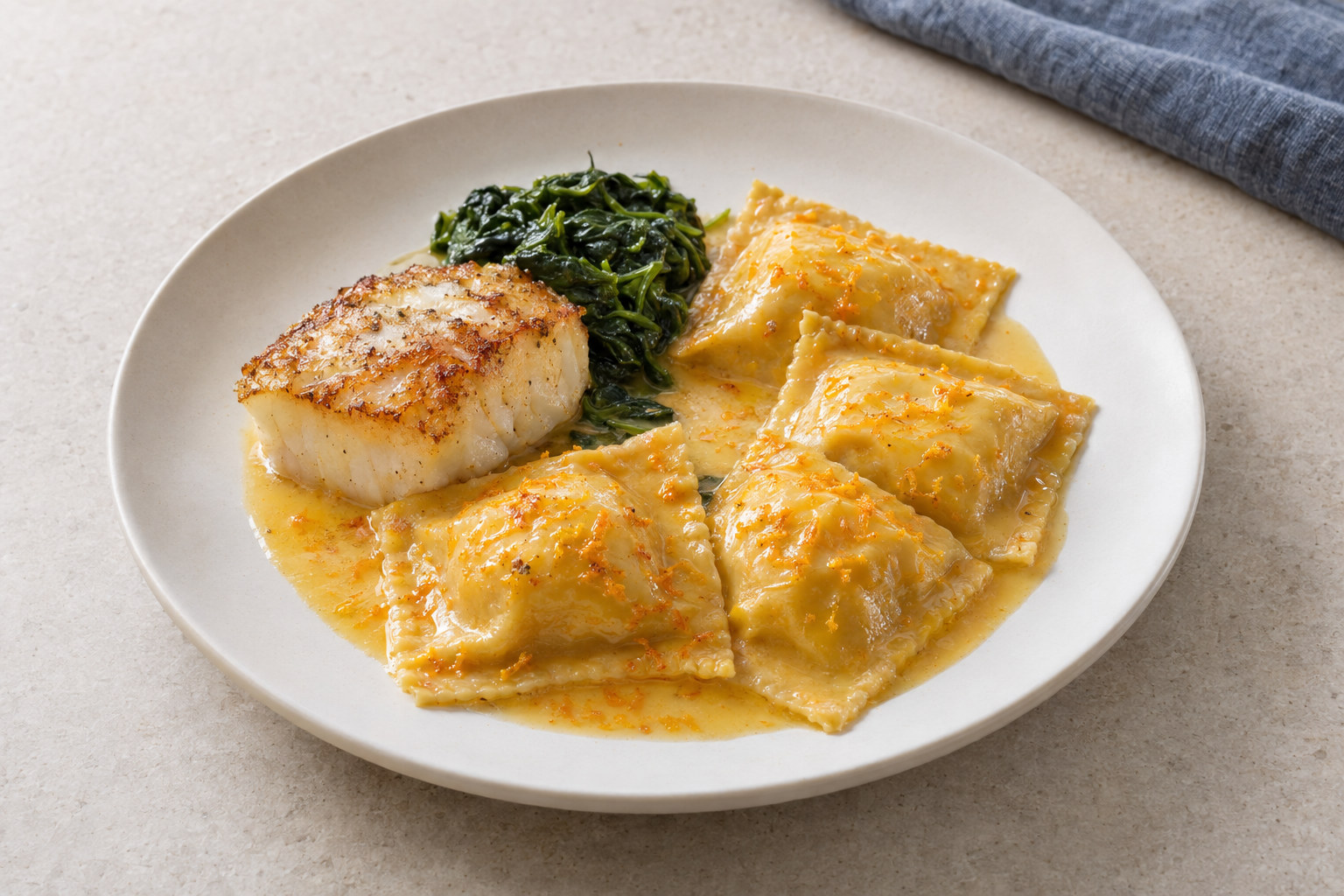
Cheese and butter soften the sweet pumpkin filling, while orange and lemon add a fresh tang. Firm monkfish and delicate spinach balance the soft filled pasta.
Step-by-step method
What you will need
- kitchen scales
- knife, chopping board and fish bone tweezers
- probe thermometer
- oven
- 30 × 25 cm tray lined with baking paper
- frying pan for reducing the pumpkin purée
- pasta machine or rolling pin
- pastry wheel
- cling film or a clean tea towel
- 4 l saucepan, at least 24 cm in diameter
- 26 cm frying pan for the fish
- 28 cm frying pan for the sauce
- 1 l saucepan for the spinach
- slotted spoon
- whisk
- fine grater
- three hob rings
Before we start
Before frying the fish, we have the ravioli shaped, the spinach drained and the orange butter made and lukewarm. We cook two batches of ravioli while frying the fish.
Roast the pumpkin and make the dough
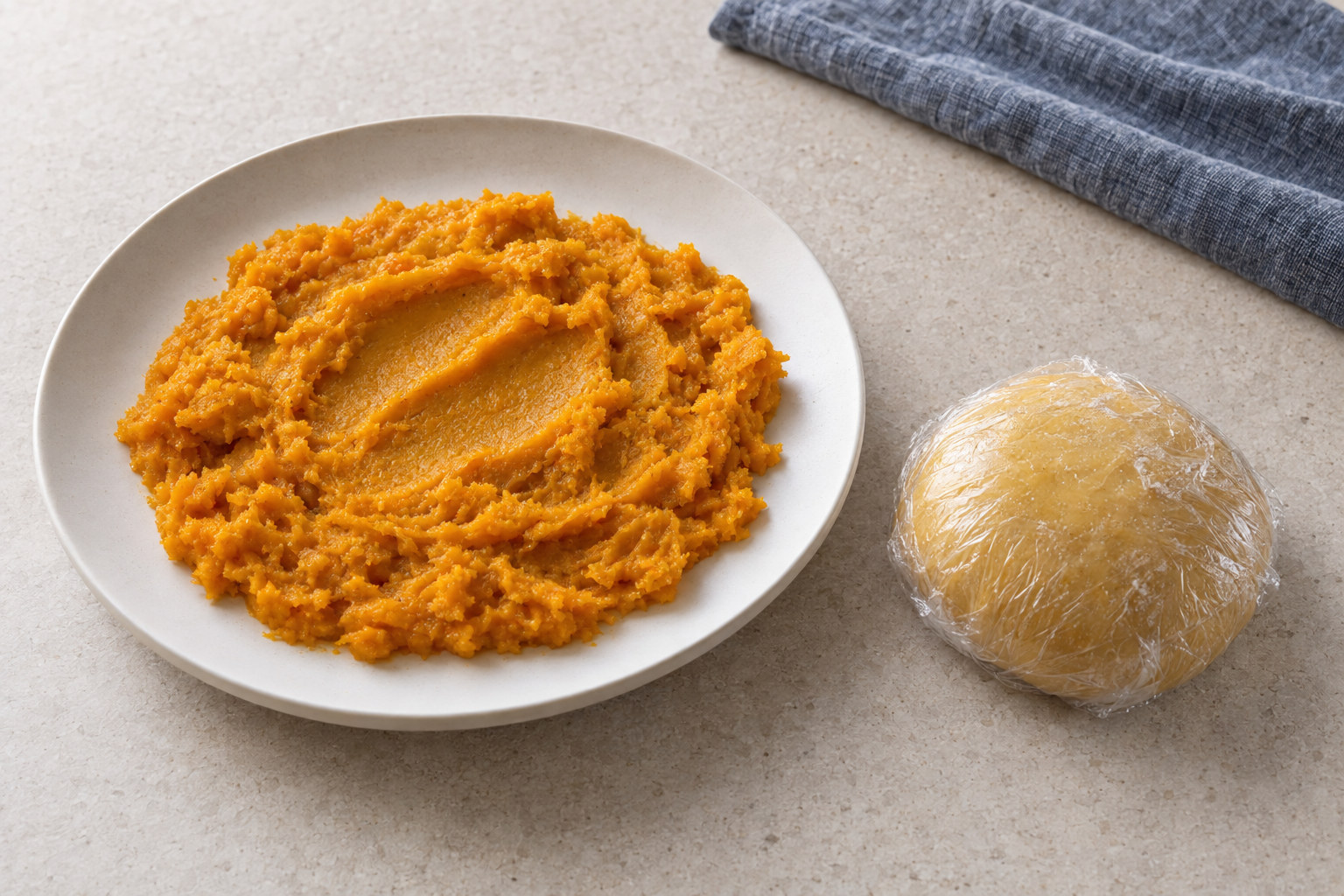
We preheat the oven to 190 °C. We wash, peel and deseed the pumpkin, then cut into 2 cm cubes. We toss with a teaspoon of oil and roast for 30–35 minutes until tender, without adding any liquid. Meanwhile, we combine 120 g flour with one large egg and knead for 8–10 minutes until smooth. We wrap the dough and leave to rest for 30 minutes. We mash the pumpkin and cook it in a dry frying pan for 5–8 minutes to drive off moisture and make a thick purée. We spread it on a plate and leave to cool for 15 minutes.
The purée holds a spoon mark without releasing water; the dough is supple.
Make the filling and roll the dough
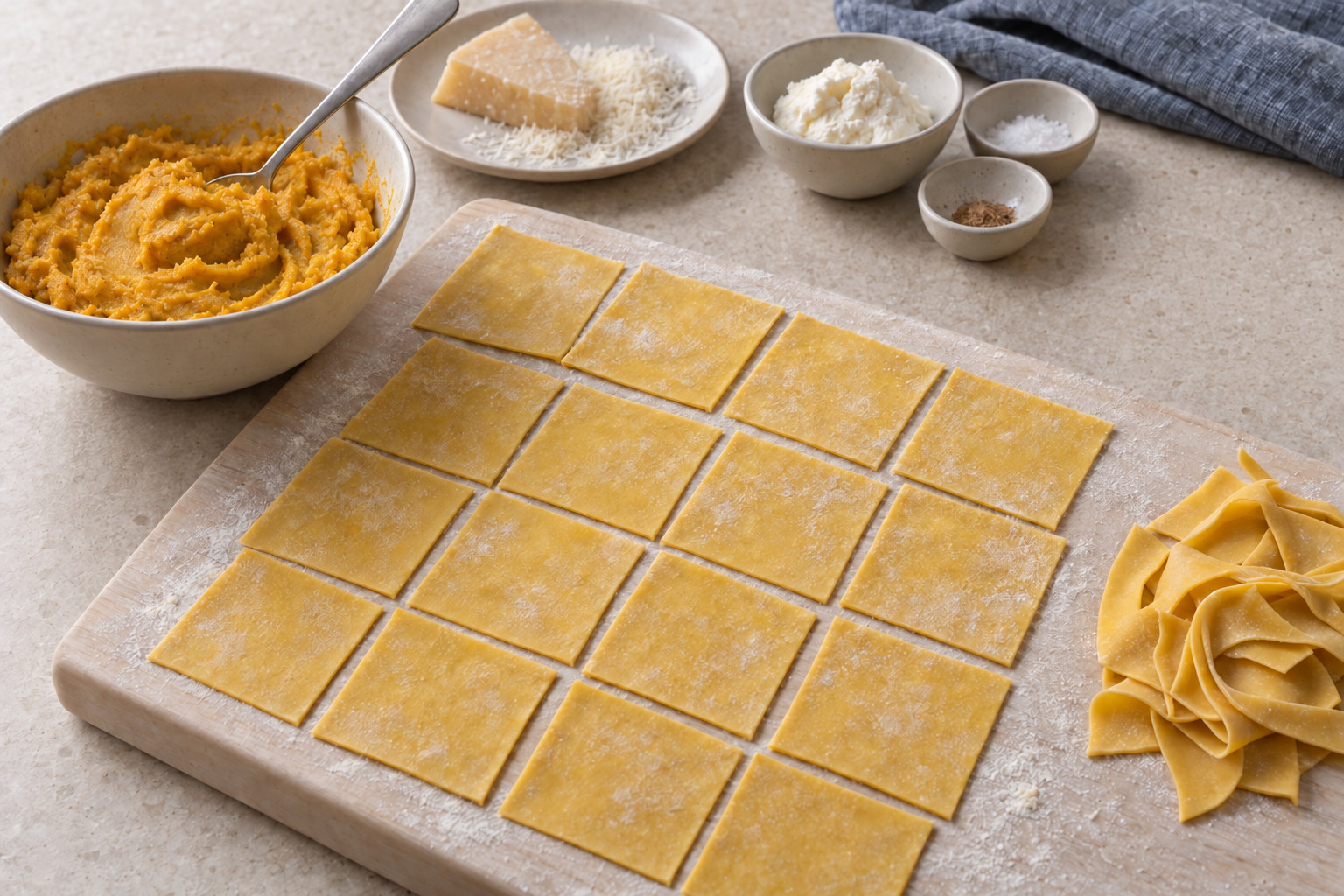
For the filling, we use 140 g cold, thick purée. We stir in the drained ricotta, finely grated Parmesan, salt and nutmeg. Working with half the dough at a time, we roll it with a pasta machine or rolling pin to 0.8–1 mm thick. We cut out sixteen 8 × 8 cm squares, stacking the trimmings and rolling them out once more. We dust only lightly with flour.
The filling is firm, smooth and cold and does not wet the surface of the dough.
Seal the ravioli and press the edges
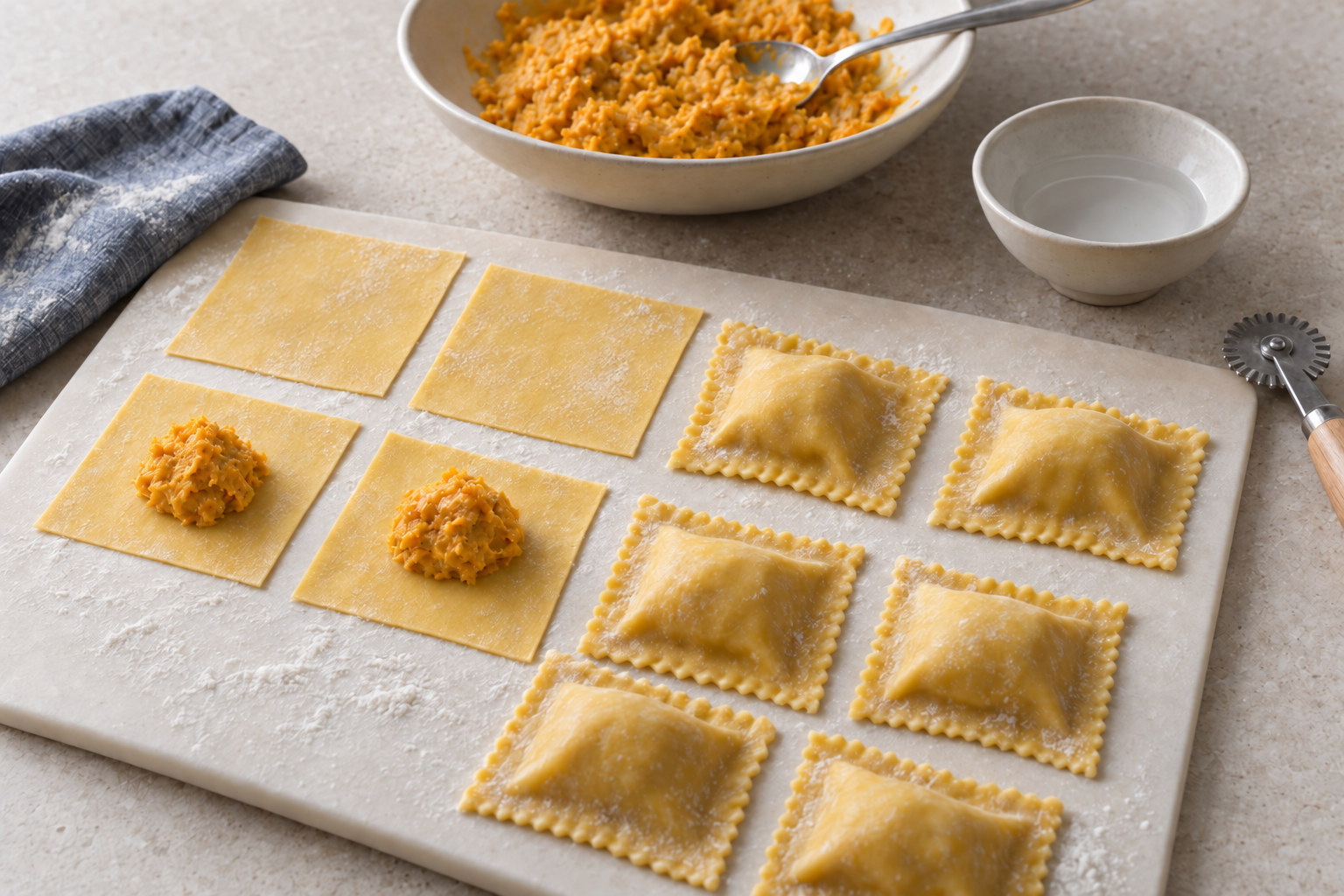
We divide the filling between the centres of eight squares. We lightly dampen the edges and cover with the remaining squares. Working outwards from the filling, we press out the air and firmly seal a border about 1 cm wide. We keep the ravioli covered on a floured tray. In a large pan, we heat salted water.
No large air pockets remain inside, and the filling stays out of the seam.
Prepare the spinach and butter and fry the fish
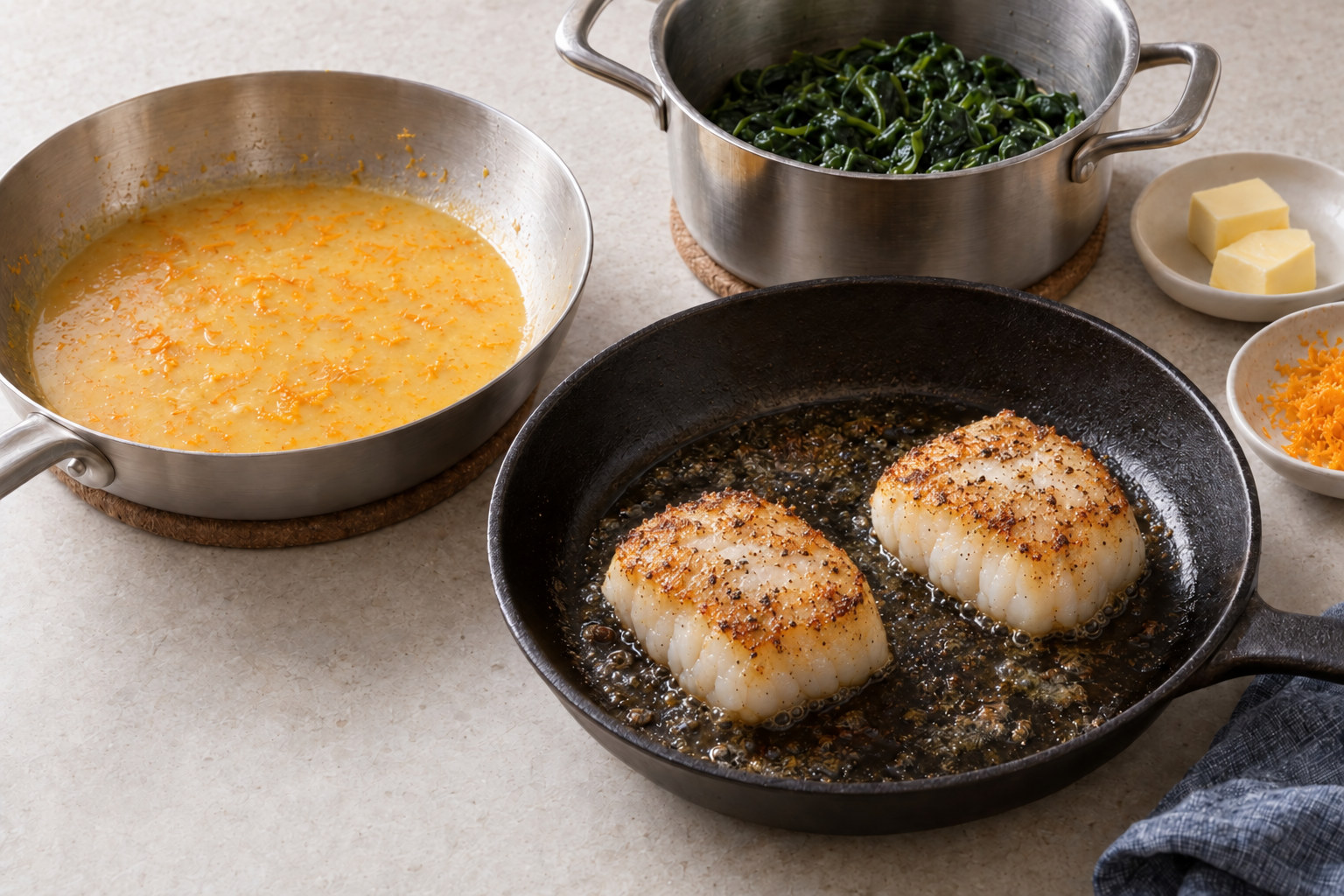
We strain the fresh orange juice and finely grate only the coloured zest from a well-washed orange. We wash the spinach and let it wilt in a small pan with a little water and a pinch of salt for 2–3 minutes, then drain and cover. In a wide 28 cm frying pan, we heat the orange and lemon juices with the zest and reduce gently for 2 minutes. We take the pan off the heat and gradually whisk in 40 g cold butter. We keep the sauce lukewarm at around 45–55 °C, returning the pan to the lowest heat for a few seconds as needed, without boiling. We carefully trim any tough membrane from the fish. We pat the two portions dry and salt them. In a second 26 cm frying pan, we fry them in two teaspoons of oil for 3 minutes on each side. We then lower the heat and cook for another 3–5 minutes until the centre reaches 63 °C. We leave to rest for 3 minutes. While the fish is frying, we cook the ravioli as described in the next step.
The monkfish turns lightly golden; we drain the spinach well.
Cook the ravioli and coat with sauce
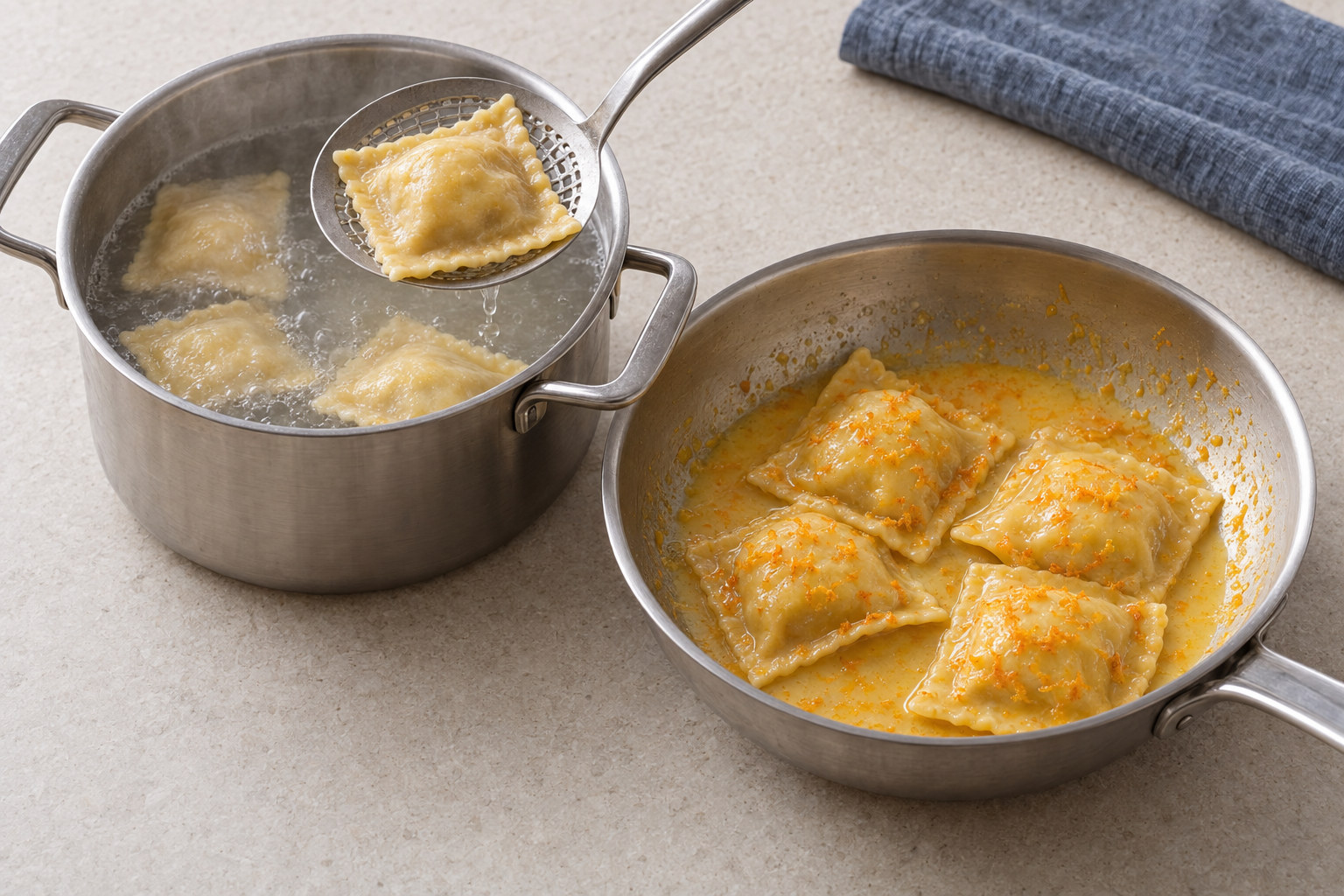
When we turn the fish for the first time, we add half the ravioli to gently boiling water. We cook for 4–5 minutes, until the pasta is tender even at the seams. We lift them with a slotted spoon into the lukewarm orange butter and cook the second half in the same way. We keep the first batch in the sauce only while the second batch cooks. We do not toss the ravioli; we turn them gently with a spoon and serve straight away.
The sauce stays pale and emulsified. We lift the ravioli gently rather than tossing them vigorously.
Serve four ravioli per person
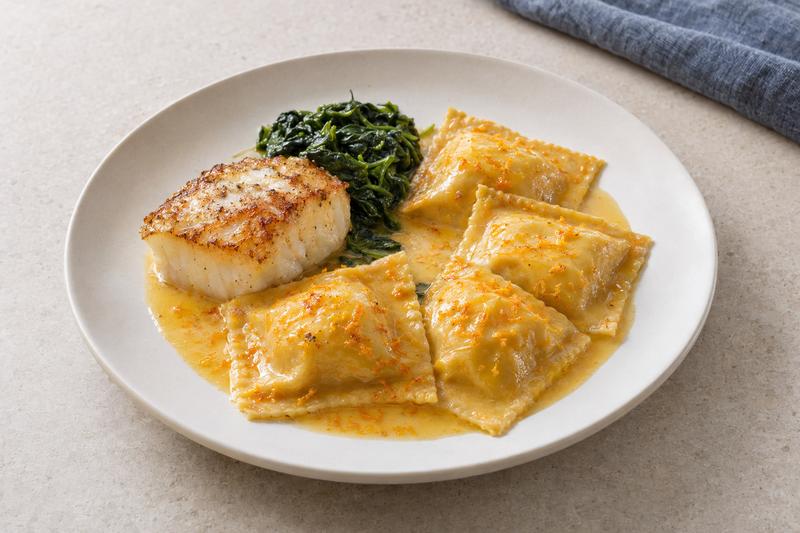
We put four ravioli, one portion of fish and half the drained spinach on each of two warmed plates. We add the remaining orange butter and serve immediately.
Tips from our kitchen
- The pumpkin purée should be thick and cold so the filling does not make the pasta soggy.
- When sealing the ravioli, we press out the air and firmly pinch the clean edges together.
What to watch out for
- Warm or runny pumpkin makes the dough wet. We fill it only with cooled filling that holds its shape in a mound.
How we serve it
- We put four ravioli, one portion of monkfish and drained spinach on each warmed plate. We spoon over the orange butter and serve immediately.
Ingredient swaps
Hokkaido
peeled butternut squash: 280 g for 2 servings, 500 g for 4 servings; after roasting, we cook off excess moisture and weigh out 140 g thick purée for 2 servings or 270 g for 4 servings Butternut squash tends to be wetter, so reducing it may take 5–10 minutes longer.
ricotta
well-drained full-fat quark: 40 g for 2 servings, 70 g for 4 servings The filling will be tangier and a little firmer.
Ingredient notes
- We use two or four 150 g portions of skinless, boneless monkfish. One 300 g pack serves two people. We carefully trim away any tough membrane.
During preparation
- We keep the fish in the fridge for now. We check it and remove any remaining bones with tweezers. After handling raw fish, we wash our hands, chopping board and utensils. During cooking, the thickest part of the fish must reach at least 63 °C.
Our inspiration
In the area between Mantua and Ferrara, pumpkin-filled pasta changes its filling and shape from place to place. Alongside curved tortelli, cooks make square parcels of egg pasta. These inspired our homemade ravioli with roasted pumpkin. We soften the filling with ricotta and pair it on the plate with monkfish and orange butter.
Similar recipes
Recipe for 4 people
We make 16 ravioli and cook them simultaneously in two wide pans. After frying, we finish the four fish portions in the oven. We rest the dough for 30 minutes and cool the filling before using it.
Step-by-step method
Before we start
We finish the spinach first. After frying, we transfer the fish to the oven and make the butter sauce on the freed-up hob ring. We cook all the ravioli at the same time in two pans. We warm and dry the plates beforehand.
Roast the pumpkin and make the dough
We wash, peel and deseed the pumpkin, then cut into 2 cm cubes. We roast them with two teaspoons of oil at 190 °C for 35–40 minutes. We knead 300 g flour and three eggs into a smooth dough, wrap and leave to rest for 30 minutes. We mash the pumpkin and cook in a dry, wide frying pan for 8–12 minutes to drive off moisture. We spread the purée in a thin layer on a plate; after another 20 minutes, it will be cold.
The purée holds a spoon mark without releasing water; the dough is supple.
Make the filling and roll the dough
We weigh out 270 g cold, thick purée and mix with the drained ricotta, finely grated Parmesan, salt and nutmeg. We roll the dough a quarter at a time to 0.8–1 mm thick and cut out 32 squares, 8 × 8 cm. We can roll out the trimmings once more or save them for noodles. We cover the finished sheets so they do not dry out.
The filling is firm, smooth and cold and does not wet the surface of the dough.
Seal the ravioli and press the edges
We divide the filling between the centres of sixteen squares. We lightly dampen the edges and cover with the remaining squares. We press out the air and firmly seal a border about 1 cm wide. We keep the ravioli covered on floured trays. We heat water in two wide pans, dividing the salt for the cooking water between them.
No large air pockets remain inside, and the filling stays out of the seam.
Prepare the spinach and fry the fish
We preheat the oven to 180 °C. We wash the spinach and first wilt it in a pan with a little water and a pinch of salt for 3 minutes, then drain and cover. We carefully trim any tough membrane from the fish, pat the four portions dry and salt them. In a 30 cm frying pan, we fry them in one and a half tablespoons of oil for 3 minutes on each side, leaving gaps between them. We transfer to a 30 × 25 cm baking tray and finish in the oven for about 6–10 minutes, until the centre of every portion reaches 63 °C. We then leave to rest for 3 minutes.
The monkfish turns lightly golden; we drain the spinach well.
Cook the ravioli and finish the butter sauce
We strain the fresh orange juice and finely grate only the coloured zest from a well-washed orange. Once the fish is in the oven, we heat the orange and lemon juices with the zest in a small saucepan and reduce gently for 2 minutes. We take off the heat and gradually whisk in 70 g cold butter. We keep the sauce lukewarm at around 45–55 °C without boiling. After the fish has baked for the first 4 minutes, we put eight ravioli in each pan. We boil gently for 4–5 minutes, until the pasta is tender even at the seams. We lift the ravioli straight onto warmed plates and immediately spoon over some sauce so they do not stick together. We check the fish temperature as it cooks and take it out as soon as it reaches 63 °C inside.
The sauce stays pale and emulsified. We lift the ravioli gently rather than tossing them vigorously.
Serve four ravioli per person
We leave four ravioli on each of the four warmed plates, add one portion of monkfish and a quarter of the drained spinach. We divide the remaining orange butter between them and serve immediately. We do not add the resting juices from the fish to the butter sauce.