
From the Boxxi kitchen · Japanese and European inspiration
Wagyu beef fillet with pan-fried polenta, mushrooms and pickled onion
Pan-fried polenta has golden edges and a soft centre. We serve chestnut mushrooms in their own juices alongside it so the crust stays crisp. Pink pickled onion adds a sweet-sour bite to the delicate Wagyu fillet. We allow time for the polenta to chill when planning this dinner.
The time includes 20 minutes of initial cooling and at least 60 minutes for the polenta to set in the fridge. The meat cooking time may vary with the chosen doneness; the thermometer is our guide.
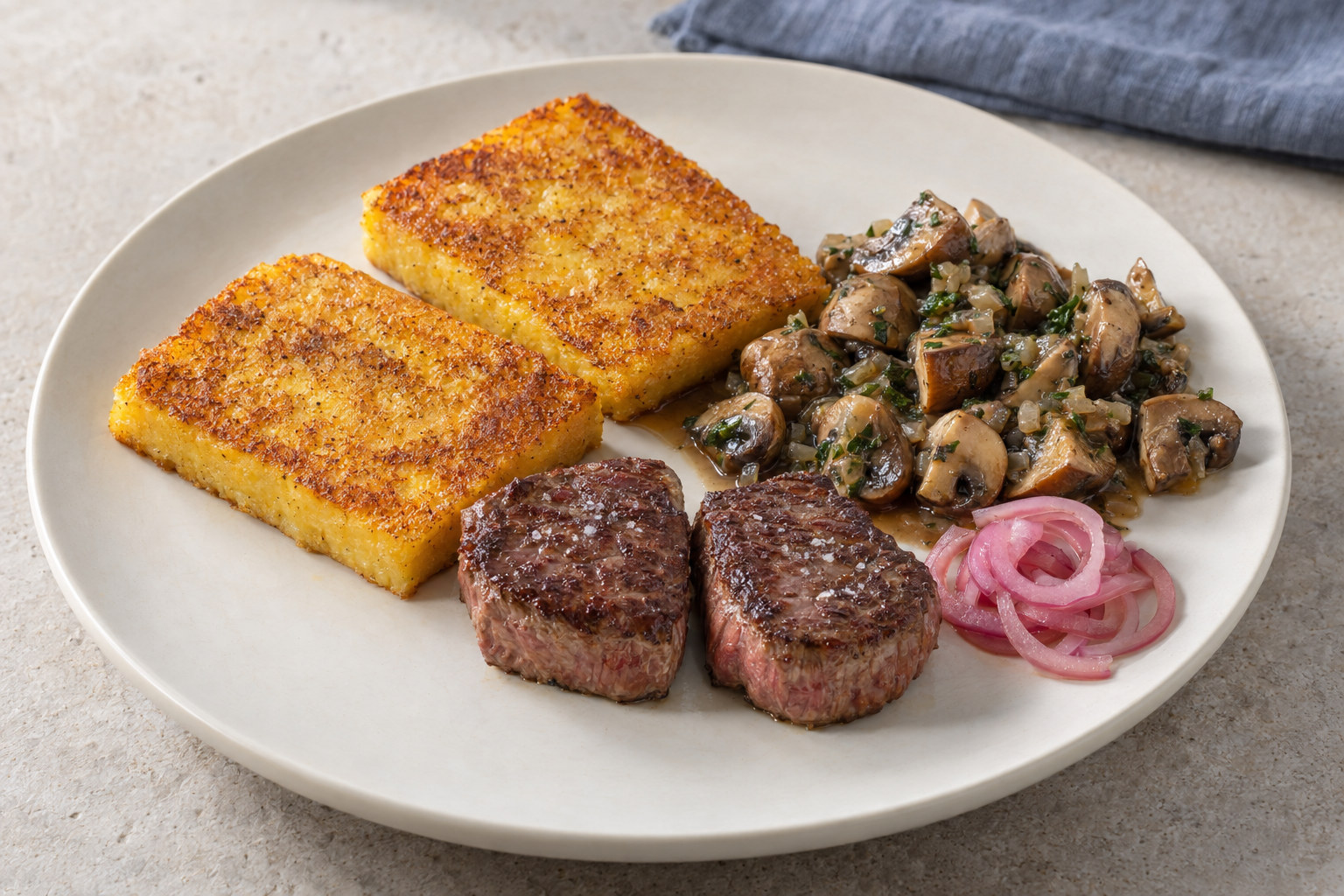
Buttery, tender beef, pan-fried corn polenta and juicy mushrooms with shallot. Pickled onion and lemon add acidity, while parsley brings a fresh aroma.
Step-by-step method
What you will need
- kitchen scales
- knife and chopping board
- probe thermometer with a thin probe
- tongs
- heatproof mug for the rendered fat
- 2 hob rings
- 2 l saucepan
- shallow 20 × 15 cm dish
- 1 l saucepan with lid and a heatproof bowl
- 28 cm non-stick frying pan with a 24 cm base
- 28 cm heavy frying pan with a 24 cm base
- oven, baking tray with a wire rack and 3 heatproof plates
Choosing how well to cook your steak
Before cooking, we choose how well we would like our meat done. This guide describes culinary levels of doneness and approximate temperatures at the centre of the meat after resting. These are not pan or oven temperatures or food safety recommendations. For whole beef steaks, the United States Department of Agriculture (USDA) recommends a minimum internal temperature of 63 °C before removing the meat from the heat, followed by at least 3 minutes of resting.
| Doneness | Temperature after resting | What to expect |
|---|---|---|
| Rare | 52 °C | Rare. The centre is red, and the meat is very tender and juicy. |
| Medium Rare | 55 °C | Medium rare. The centre is warm and reddish-pink, and the meat is tender and juicy. |
| Medium | 60 °C | Medium. The centre remains pink, and the meat has a firmer bite. |
| Medium Well | 65 °C | Medium well. Only a faint pink strip remains in the centre; the meat is firmer and less juicy. |
| Well Done | 71 °C | Well done. There is no pink in the centre, and the meat is firm and less juicy. |
- We measure the temperature at the centre of the thickest part of the meat. We insert the probe from the side, avoiding bone and pockets of fat. Colour is only a guide; we rely on the thermometer.
- As a rule, we take the meat off the pan or grill, or out of the oven, when it is 2–3 °C below our chosen temperature after resting. Thick cuts and intense heat can cause a greater temperature rise during resting. We check it regularly and follow the individual recipe.
- We rest the meat for the time given in the recipe. If the temperature stops rising before reaching our chosen value, we briefly return the meat to a gentle heat and check again.
- Cooking times are a guide. If we prefer our meat less well done, we start checking its temperature earlier. For a higher degree of doneness, we allow more time over a gentler heat as needed, so the outside does not burn.
Before we start
We prepare the polenta and mushrooms before the meat and keep them warm briefly. We cook the Wagyu last.
Cook and chill the polenta
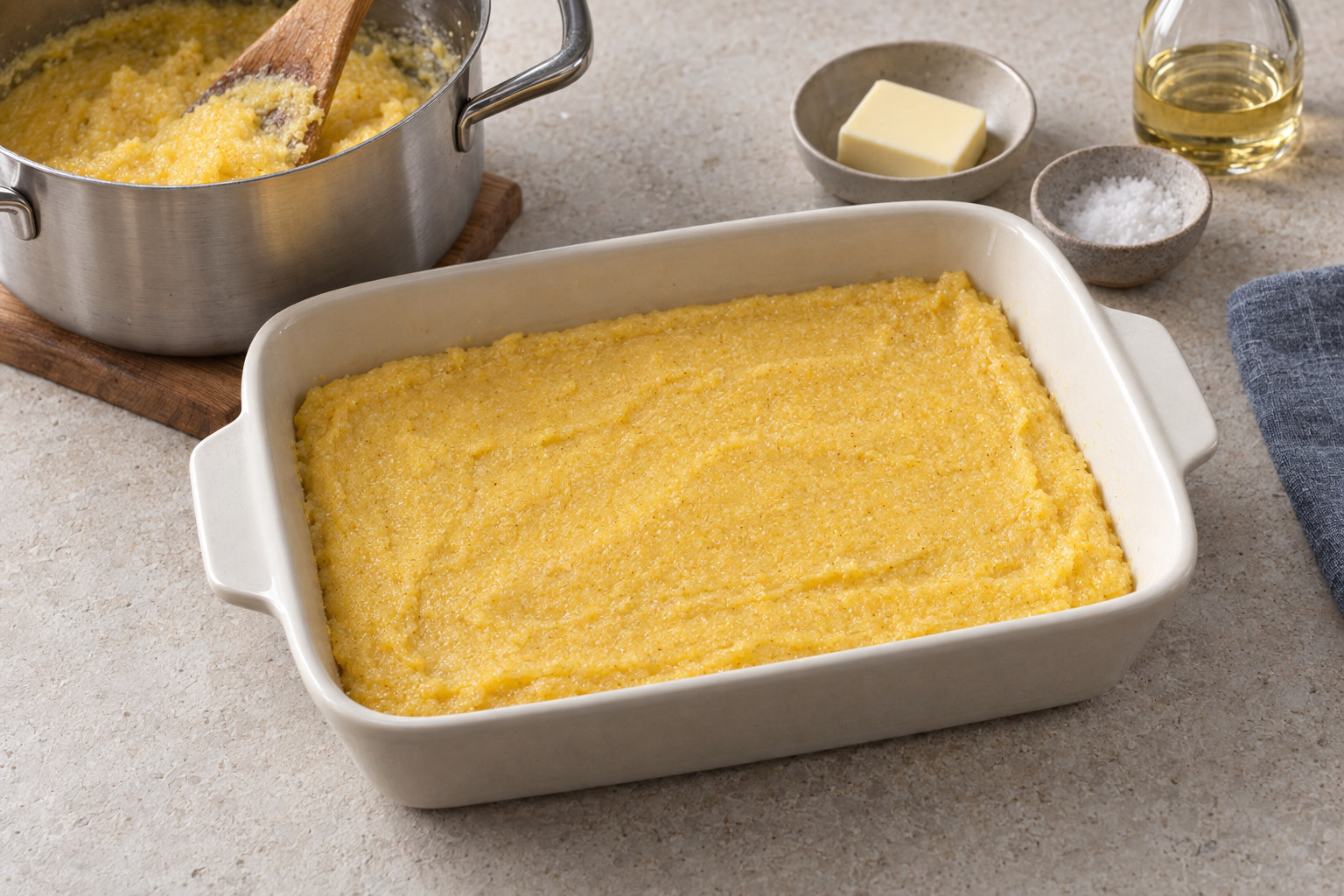
We bring the water and salt to the boil in a 2 l saucepan, pour in the polenta while stirring and cook according to the packet instructions, for about 3–5 minutes. We stir in the butter, pour into a 20 × 15 cm dish lightly greased with a teaspoon of oil and level it into a layer about 1.5 cm thick. We leave it to cool for 20 minutes, then chill for at least 60 minutes until set; it must slice cleanly.
We do not put hot polenta in a deep bowl; a shallow layer cools evenly.
Pickle the onion and prepare the meat
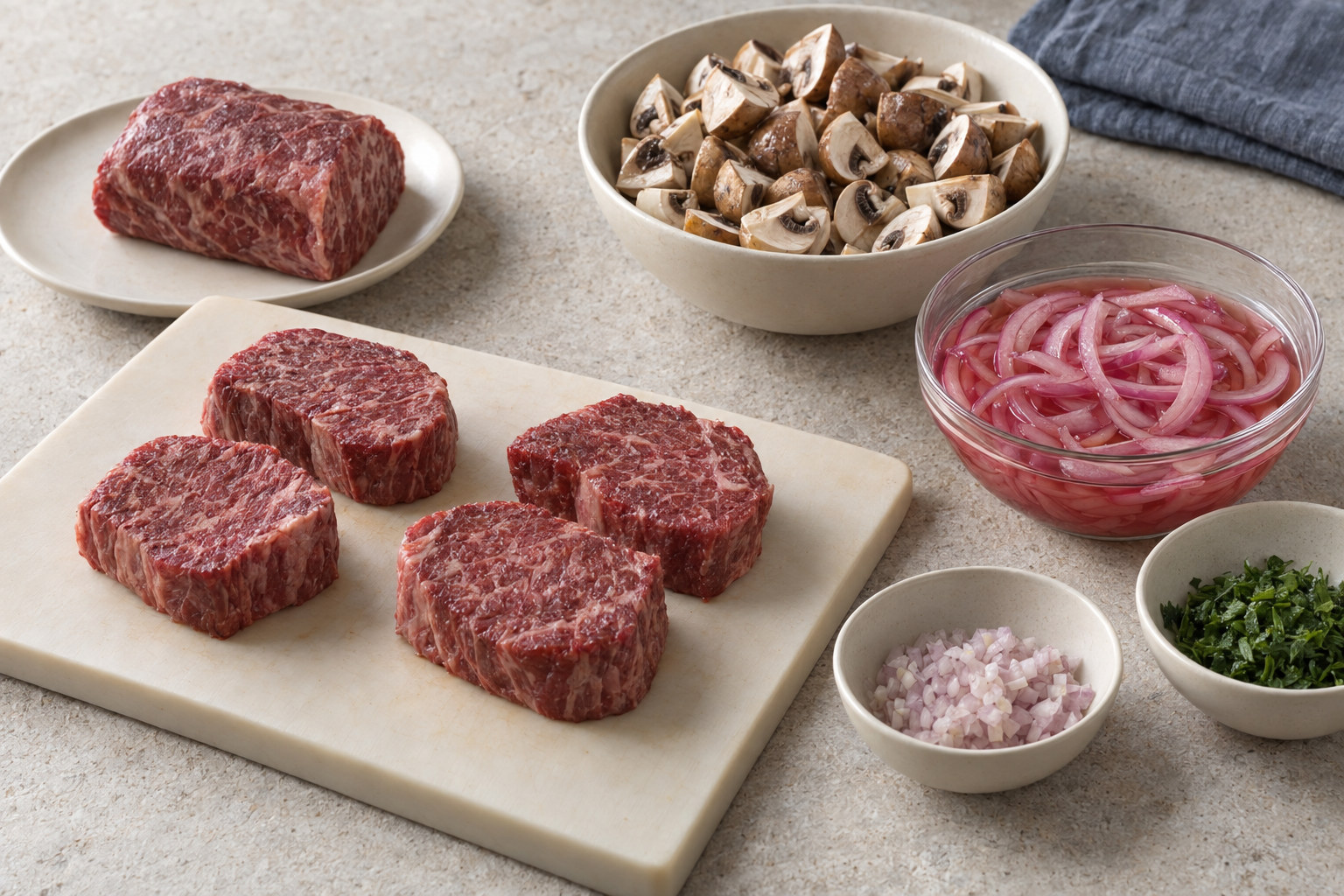
We peel the onion and cut it into 1 mm half-moons. In a small saucepan, we bring the vinegar, water, sugar and salt to the boil, pour over the onion in a heatproof bowl and leave to cool for 30 minutes. We first cut one 200 g piece of fillet across the grain into 1.5–2 cm slices. We cut larger slices into smaller pieces of about 50 g, usually 4 in total; the exact shape determines the number, with even thickness taking priority. We pat them dry and chill. We keep the second piece from the pack separate. We clean the mushrooms, peel the shallot and wash the parsley, then quarter the mushrooms and finely chop the shallot and parsley.
The onion softens but stays crunchy. We take it out of the pickling liquid before serving.
Pan-fry the polenta
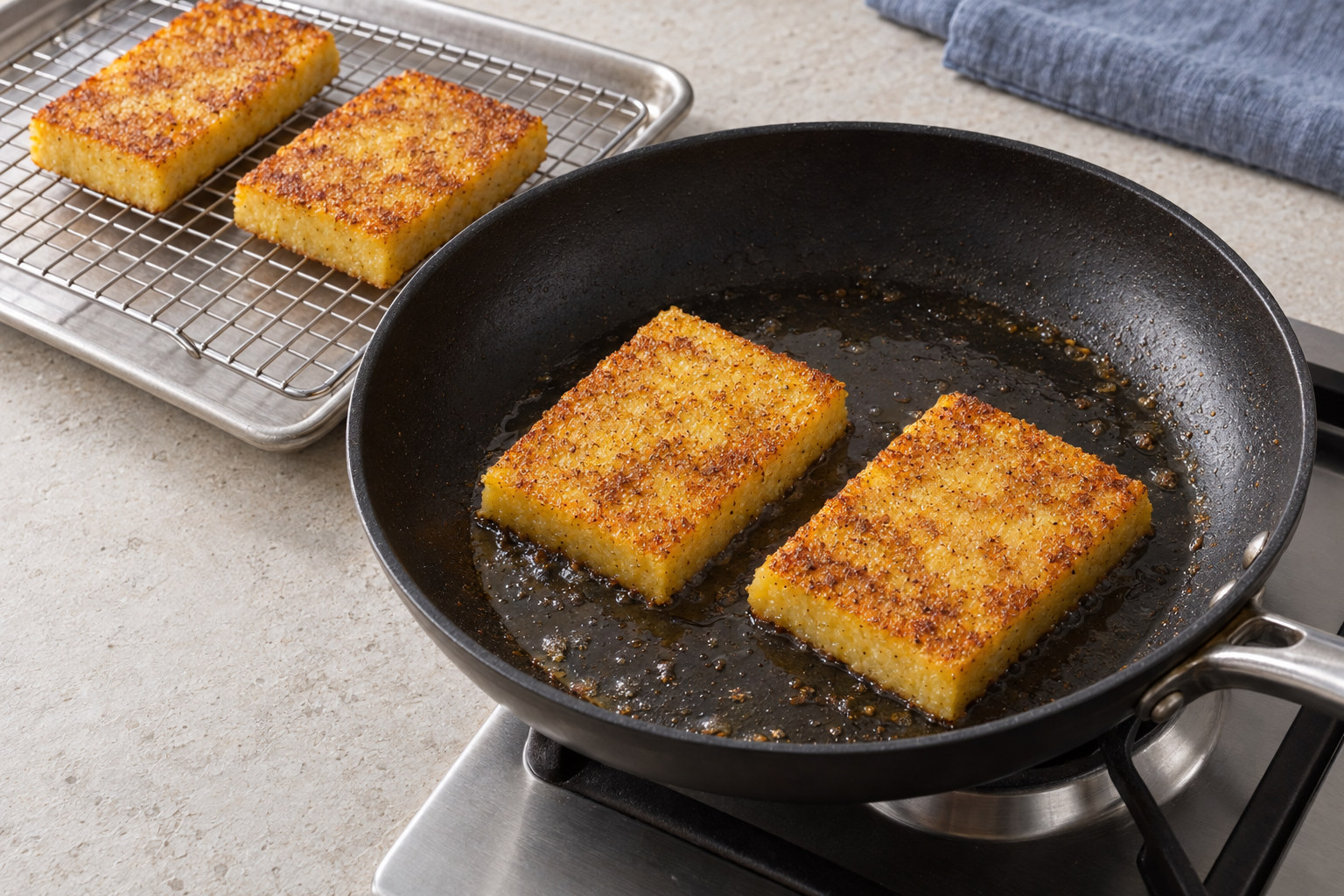
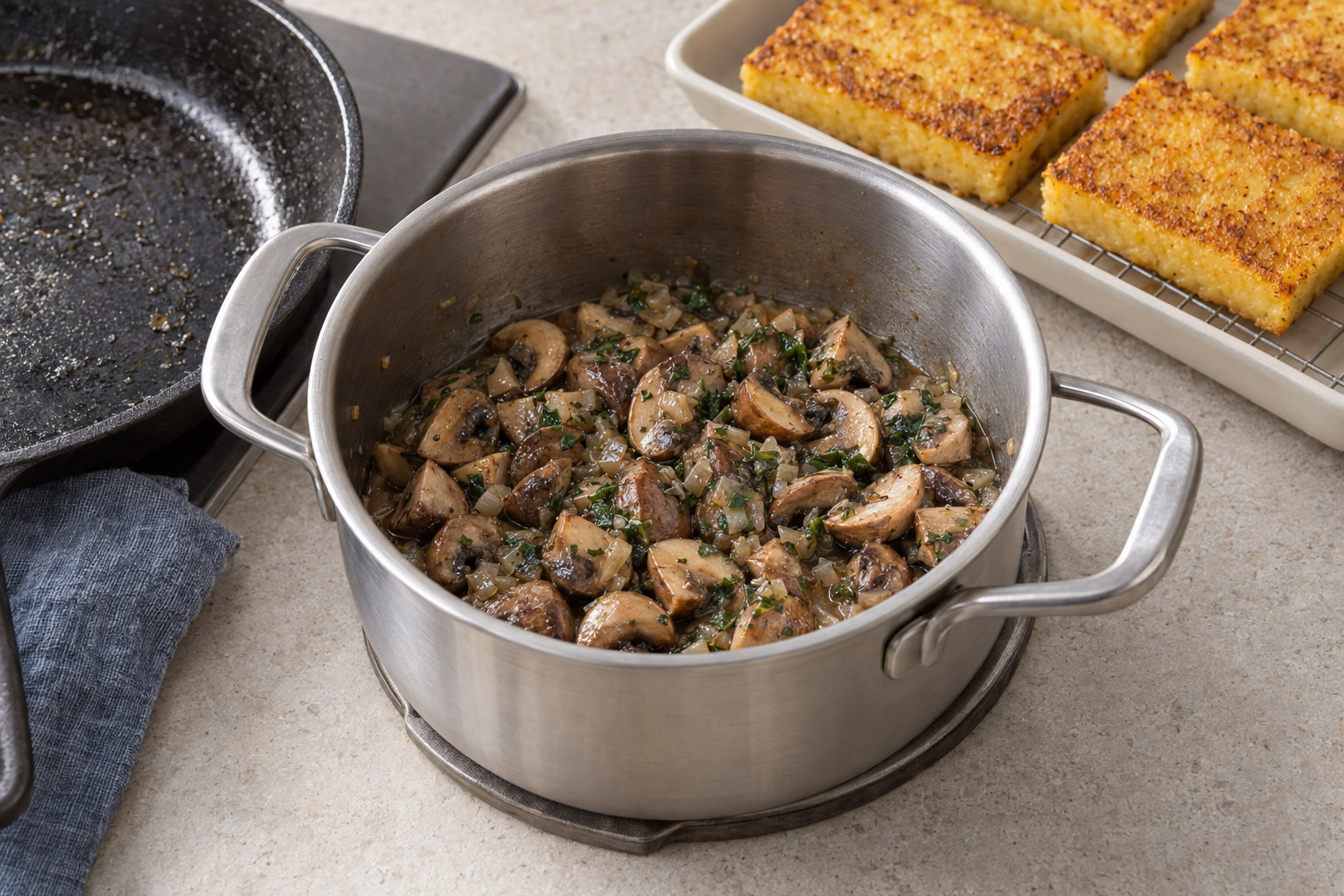
We preheat the oven to 90 °C and put in an empty baking tray with a wire rack and only the heatproof serving plates. We keep the plates for resting the meat outside the oven, just lukewarm. We turn out the set polenta and cut it into 4 rectangles measuring 10 × 7.5 cm. In a 28 cm non-stick frying pan with a 24 cm base, we cook 2 pieces in half the oil for 3–4 minutes on each side, then transfer them to the rack. We repeat with the rest. The first batch waits in the oven for no more than 30 minutes, including the time needed to cook the meat.
We leave gaps between the rectangles in the pan and turn them only once a crust has formed.
Finish the mushrooms at the same time
While the first batch of polenta cooks, we fry the mushrooms in the oil in the second 28 cm frying pan for 7–9 minutes. We add the shallot for 2 minutes, then the stock and salt, and simmer for 3–4 minutes until only a shallow layer of juices remains. As soon as the second batch of polenta is cooked, we transfer the mushrooms to a clean 1 l saucepan on the hob ring freed up by the polenta. We cover and keep hot over a low heat for no more than 15 minutes. We wipe out the mushroom pan and use it for the meat.
Cook the fillet
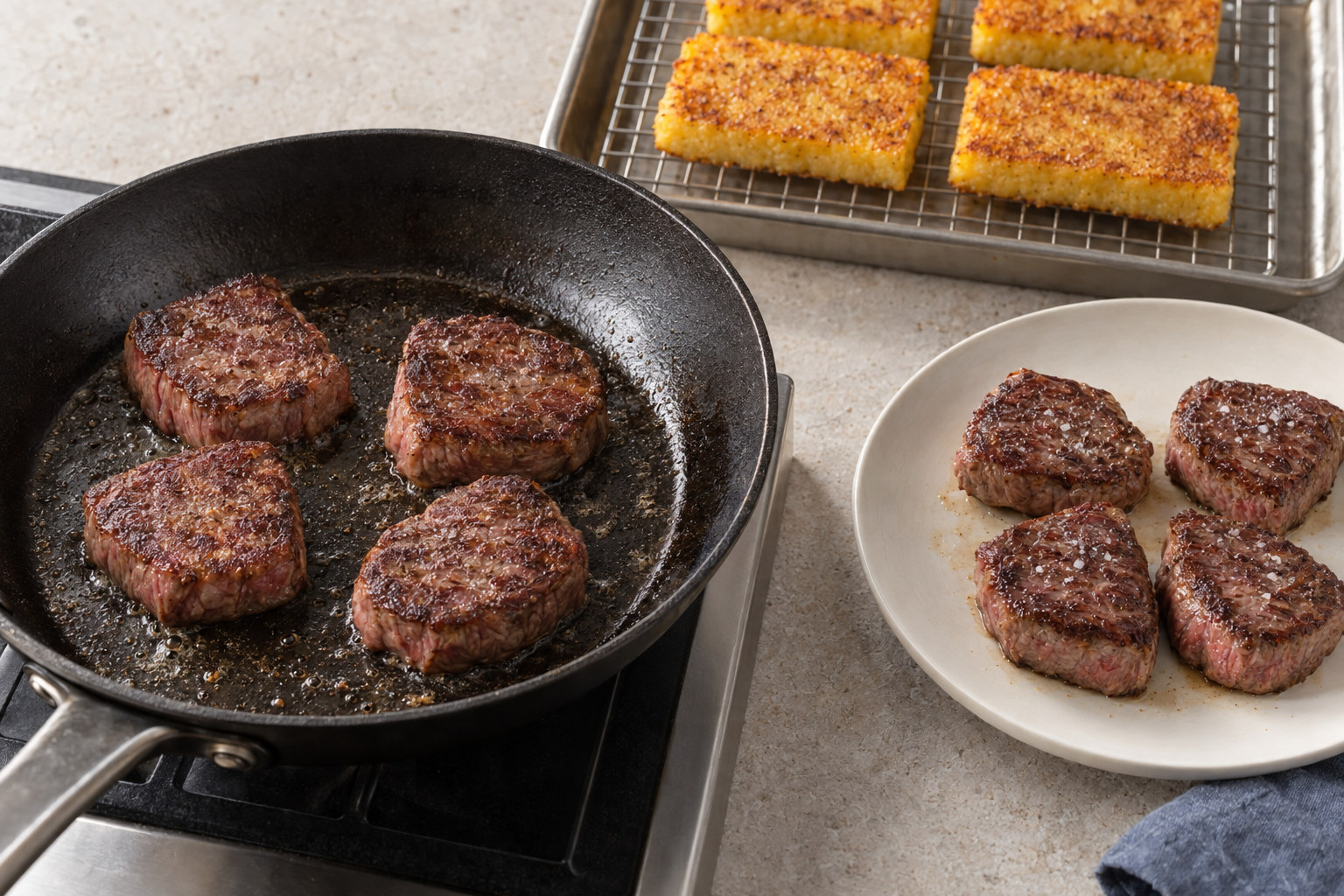
We choose the doneness using the table above the method. We heat a dry, heavy 28 cm frying pan over a medium-high heat for 2–3 minutes. We add all 200 g of meat in one layer with gaps between the pieces. We cook the slices for roughly 60–90 seconds on each broad side and briefly around the edges. After the first turn, we check the doneness with a thermometer, inserting the thin probe from the side into the centre of each slice. Once the surface has browned, we lower the heat and turn every 30 seconds as needed. We take the meat out of the pan about 2–3 °C below our chosen temperature, as it continues cooking while it rests. We usually allow 3–6 minutes in total, or up to 8 minutes for thicker slices; a rarer finish may need less time, while for a more cooked finish we continue over a gentler heat, guided by the thermometer. We leave only a thin layer of rendered fat in the pan and carefully pour the excess into a heatproof mug; we do not return it to the dish. We transfer the meat to a clean, lukewarm plate outside the oven, season with the prepared salt and leave to rest, loosely covered, for 3 minutes. If necessary, we briefly return the slices to the pan after resting to finish cooking.
We do not braise the meat further in the side dish.
Finish plating
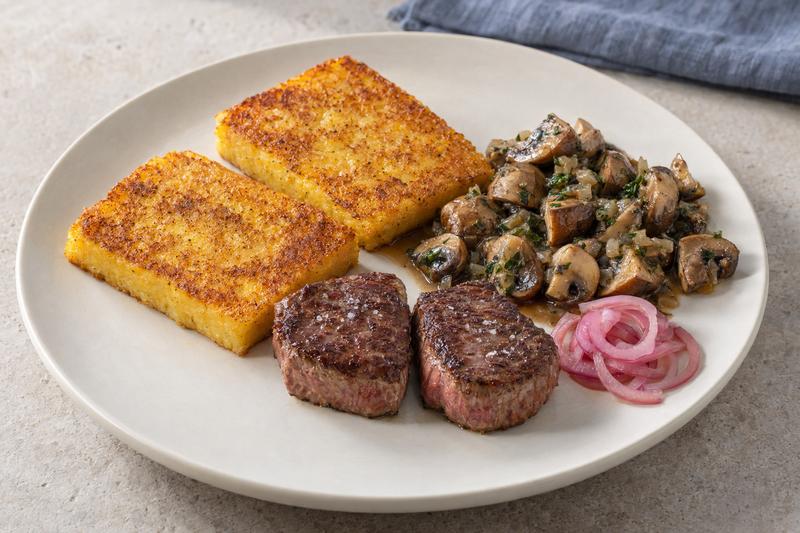
Off the heat, we stir the lemon juice and parsley into the mushrooms. On each plate, we put two rectangles of polenta, half the mushrooms and half the meat with its juices. We lift the onion out of the pickling liquid and divide it over the top; we do not use the remaining liquid.
We put the mushrooms and their juices alongside the polenta so its crust does not become soggy. We serve straight away.
Tips from our kitchen
- The polenta must hold its shape before we cut it; depending on the fridge temperature, it may need longer.
What to watch out for
- We do not wait until the polenta is done to start the mushrooms, or the first batch would have to wait too long.
How we serve it
- We plate the sides before adding the meat; we serve Wagyu in small bites.
Ingredient notes
- We divide one 200 g piece into smaller, evenly sized pieces according to its actual thickness. We do not press or pound the fillet; it is not interchangeable with a loin cut with a strip of fat.
During preparation
- We insert the thin probe from the side into the centre of each slice. We check our chosen doneness against the table, including during resting. We use separate clean utensils for raw and cooked meat.
Our inspiration
Polenta can change form during a single recipe: as it cools, soft corn porridge becomes a firm side dish that we can slice and pan-fry. Here, we pair its golden surface and soft centre with Wagyu. We put the mushrooms and their juices alongside so each part keeps its own texture.
Similar recipes
Recipe for 4 people
We chill the larger batch of polenta for at least 75 minutes, then pan-fry it in two batches using two pans at once. The meat cooking time may vary with the chosen doneness; the thermometer is our guide.
Step-by-step method
Choosing how well to cook your steak
Before cooking, we choose how well we would like our meat done. This guide describes culinary levels of doneness and approximate temperatures at the centre of the meat after resting. These are not pan or oven temperatures or food safety recommendations. For whole beef steaks, the United States Department of Agriculture (USDA) recommends a minimum internal temperature of 63 °C before removing the meat from the heat, followed by at least 3 minutes of resting.
| Doneness | Temperature after resting | What to expect |
|---|---|---|
| Rare | 52 °C | Rare. The centre is red, and the meat is very tender and juicy. |
| Medium Rare | 55 °C | Medium rare. The centre is warm and reddish-pink, and the meat is tender and juicy. |
| Medium | 60 °C | Medium. The centre remains pink, and the meat has a firmer bite. |
| Medium Well | 65 °C | Medium well. Only a faint pink strip remains in the centre; the meat is firmer and less juicy. |
| Well Done | 71 °C | Well done. There is no pink in the centre, and the meat is firm and less juicy. |
- We measure the temperature at the centre of the thickest part of the meat. We insert the probe from the side, avoiding bone and pockets of fat. Colour is only a guide; we rely on the thermometer.
- As a rule, we take the meat off the pan or grill, or out of the oven, when it is 2–3 °C below our chosen temperature after resting. Thick cuts and intense heat can cause a greater temperature rise during resting. We check it regularly and follow the individual recipe.
- We rest the meat for the time given in the recipe. If the temperature stops rising before reaching our chosen value, we briefly return the meat to a gentle heat and check again.
- Cooking times are a guide. If we prefer our meat less well done, we start checking its temperature earlier. For a higher degree of doneness, we allow more time over a gentler heat as needed, so the outside does not burn.
Before we start
We prepare the polenta and mushrooms before the meat and keep them warm briefly. We cook the Wagyu last.
Cook and chill the polenta
We bring the water and salt to the boil in a 3 l saucepan, pour in the polenta while stirring and cook according to the packet instructions, for about 3–5 minutes. We stir in the butter, pour into a 28 × 20 cm dish lightly greased with a teaspoon of oil and level it into a layer about 1.5 cm thick. We leave it to cool for 20 minutes, then chill for at least 75 minutes until set; it must slice cleanly.
We do not put hot polenta in a deep bowl; a shallow layer cools evenly.
Pickle the onion and prepare the meat
We peel the onion and cut it into 1 mm half-moons. In a small saucepan, we bring the vinegar, water, sugar and salt to the boil, pour over the onion in a heatproof bowl and leave to cool for 30 minutes. We first cut both 200 g pieces of fillet across the grain into 1.5–2 cm slices. We cut larger slices into smaller pieces of about 50 g, usually 8 in total; the exact shape determines the number, with even thickness taking priority. We pat them dry and chill. We clean the mushrooms, peel the shallots and wash the parsley, then quarter the mushrooms and finely chop the shallots and parsley.
The onion softens but stays crunchy. We take it out of the pickling liquid before serving.
Pan-fry the polenta
We preheat the oven to 90 °C and put in an empty baking tray with a wire rack and only the heatproof serving plates. We keep the plates for resting the meat outside the oven, just lukewarm. We cut the polenta into 8 rectangles measuring 7 × 10 cm. In two 28 cm non-stick frying pans with 24 cm bases, we cook 2 pieces in each pan, using half the oil between them, for 3–4 minutes on each side. We transfer them to the rack and repeat the second round with the remaining oil. The first batch waits for no more than 30 minutes, including the time needed for the meat.
We leave gaps between the rectangles in the pan and turn them only once a crust has formed.
Finish the mushrooms at the same time
While the first batch of polenta cooks, we fry the mushrooms in the oil in a deep 32 cm frying pan on the third hob ring for 9–12 minutes. We add the shallots for 3 minutes, then the stock and salt, and simmer for 4–5 minutes until only a shallow layer of juices remains. We transfer to a clean 2 l saucepan, cover and keep hot over a low heat for no more than 15 minutes. Meanwhile, we place the two meat pans on the hob rings freed up by the polenta.
Cook the fillet
We choose the doneness using the table above the method. We heat both dry, heavy 28 cm frying pans over a medium-high heat for 2–3 minutes. We put 200 g of meat in each pan in one layer with gaps between the pieces, and cook in both pans at the same time. We cook the slices for roughly 60–90 seconds on each broad side and briefly around the edges. After the first turn, we check the doneness with a thermometer, inserting the thin probe from the side into the centre of each slice. Once the surface has browned, we lower the heat and turn every 30 seconds as needed. We take the meat out of the pan about 2–3 °C below our chosen temperature, as it continues cooking while it rests. We usually allow 3–6 minutes in total, or up to 8 minutes for thicker slices; a rarer finish may need less time, while for a more cooked finish we continue over a gentler heat, guided by the thermometer. We leave only a thin layer of rendered fat in the pan and carefully pour the excess into a heatproof mug; we do not return it to the dish. We transfer the meat to a clean, lukewarm plate outside the oven, season with the prepared salt and leave to rest, loosely covered, for 3 minutes. If necessary, we briefly return the slices to the pan after resting to finish cooking.
We do not braise the meat further in the side dish.
Finish plating
Off the heat, we stir the lemon juice and parsley into the mushrooms. On each plate, we put two rectangles of polenta, a quarter of the mushrooms and a quarter of the meat with its juices. We lift the onion out of the pickling liquid and divide it over the top; we do not use the remaining liquid.
We put the mushrooms and their juices alongside the polenta so its crust does not become soggy. We serve straight away.