
Boxxi original cuisine · Japanese and European inspiration
Wagyu beef tenderloin with bulgur, roasted pepper and herb dressing
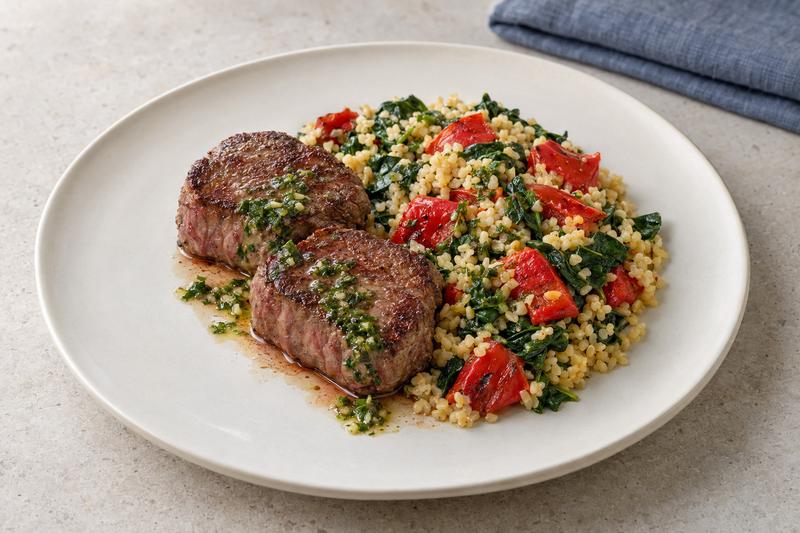
We pair buttery-tender Wagyu beef tenderloin with sweet roasted peppers and bulgur with baby spinach. Parsley, chives and lemon in the dressing bring freshness to the rich mouthful while the beef remains the leading flavour on this special plate.
We start cooking the bulgur while the peppers roast. We chop the herbs before the final sear. Searing time may vary with the chosen doneness; the thermometer decides.
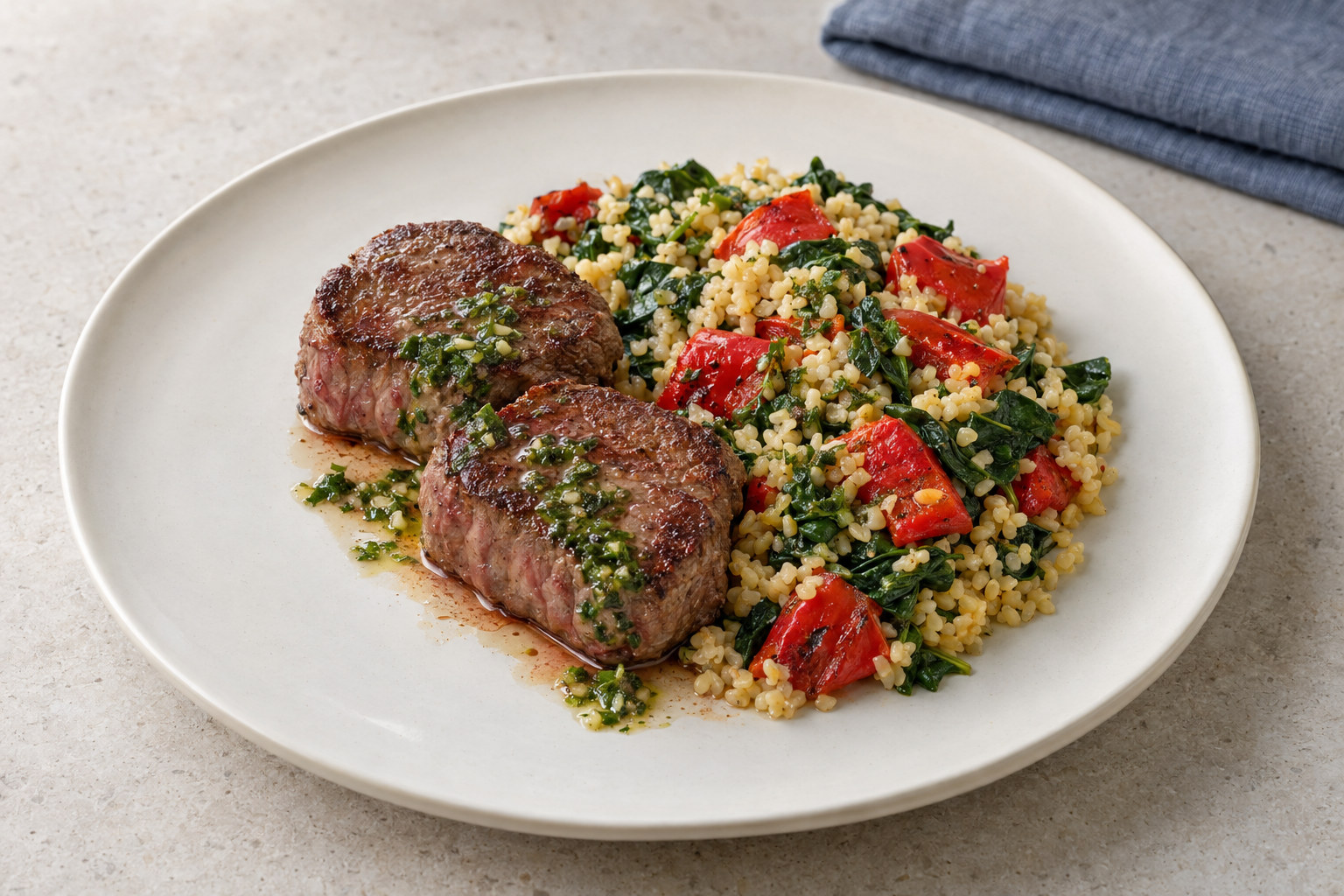
Tender, rich meat, sweet pepper and lightly nutty bulgur. The lemon dressing smells of fresh herbs and garlic.
Step-by-step method
What you will need
- kitchen scales
- knife and chopping board
- probe thermometer with a thin probe
- tongs
- heatproof cup for rendered fat
- 2 hob burners
- 1.5 l pot with a lid
- heavy 28 cm pan with a 24 cm base
- oven and 40×30 cm tray
- 3 heatproof plates
Choosing how well to cook your steak
Before cooking, we choose how well we would like our meat done. This guide describes culinary levels of doneness and approximate temperatures at the centre of the meat after resting. These are not pan or oven temperatures or food safety recommendations. For whole beef steaks, the United States Department of Agriculture (USDA) recommends a minimum internal temperature of 63 °C before removing the meat from the heat, followed by at least 3 minutes of resting.
| Doneness | Temperature after resting | What to expect |
|---|---|---|
| Rare | 52 °C | Rare. The centre is red, and the meat is very tender and juicy. |
| Medium Rare | 55 °C | Medium rare. The centre is warm and reddish-pink, and the meat is tender and juicy. |
| Medium | 60 °C | Medium. The centre remains pink, and the meat has a firmer bite. |
| Medium Well | 65 °C | Medium well. Only a faint pink strip remains in the centre; the meat is firmer and less juicy. |
| Well Done | 71 °C | Well done. There is no pink in the centre, and the meat is firm and less juicy. |
- We measure the temperature at the centre of the thickest part of the meat. We insert the probe from the side, avoiding bone and pockets of fat. Colour is only a guide; we rely on the thermometer.
- As a rule, we take the meat off the pan or grill, or out of the oven, when it is 2–3 °C below our chosen temperature after resting. Thick cuts and intense heat can cause a greater temperature rise during resting. We check it regularly and follow the individual recipe.
- We rest the meat for the time given in the recipe. If the temperature stops rising before reaching our chosen value, we briefly return the meat to a gentle heat and check again.
- Cooking times are a guide. If we prefer our meat less well done, we start checking its temperature earlier. For a higher degree of doneness, we allow more time over a gentler heat as needed, so the outside does not burn.
Before we start
We roast the peppers first and start cooking the bulgur after 10 minutes. Meanwhile, we finish the dressing, then sear the meat last.
We roast the peppers and prepare the meat
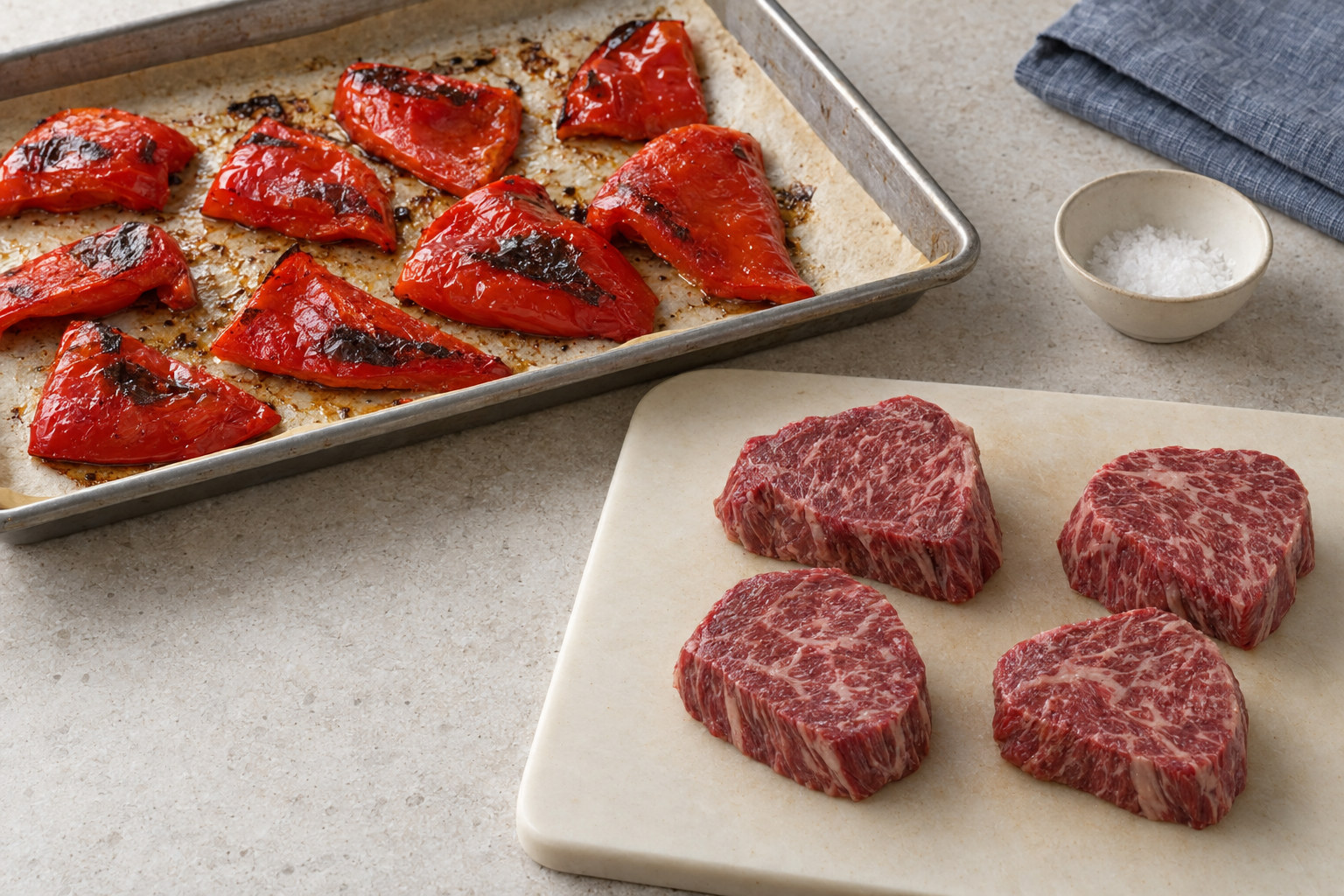
We heat the fan oven to 210 °C. We wash and deseed the peppers, cut them into quarters and toss with the oil and salt set aside for them. We spread them cut side down on a 40×30 cm tray and roast for 25–30 minutes. We first cut the one 200 g tenderloin piece across the grain into slices 1.5–2 cm thick. We halve larger slices into pieces of about 50 g, usually 4 in total; their actual shape determines the count, and even thickness matters most. We dry the pieces and put them in the fridge. We keep the second piece from the pack separate.
The peppers soften and brown in places; we do not need to peel them.
We cook the bulgur
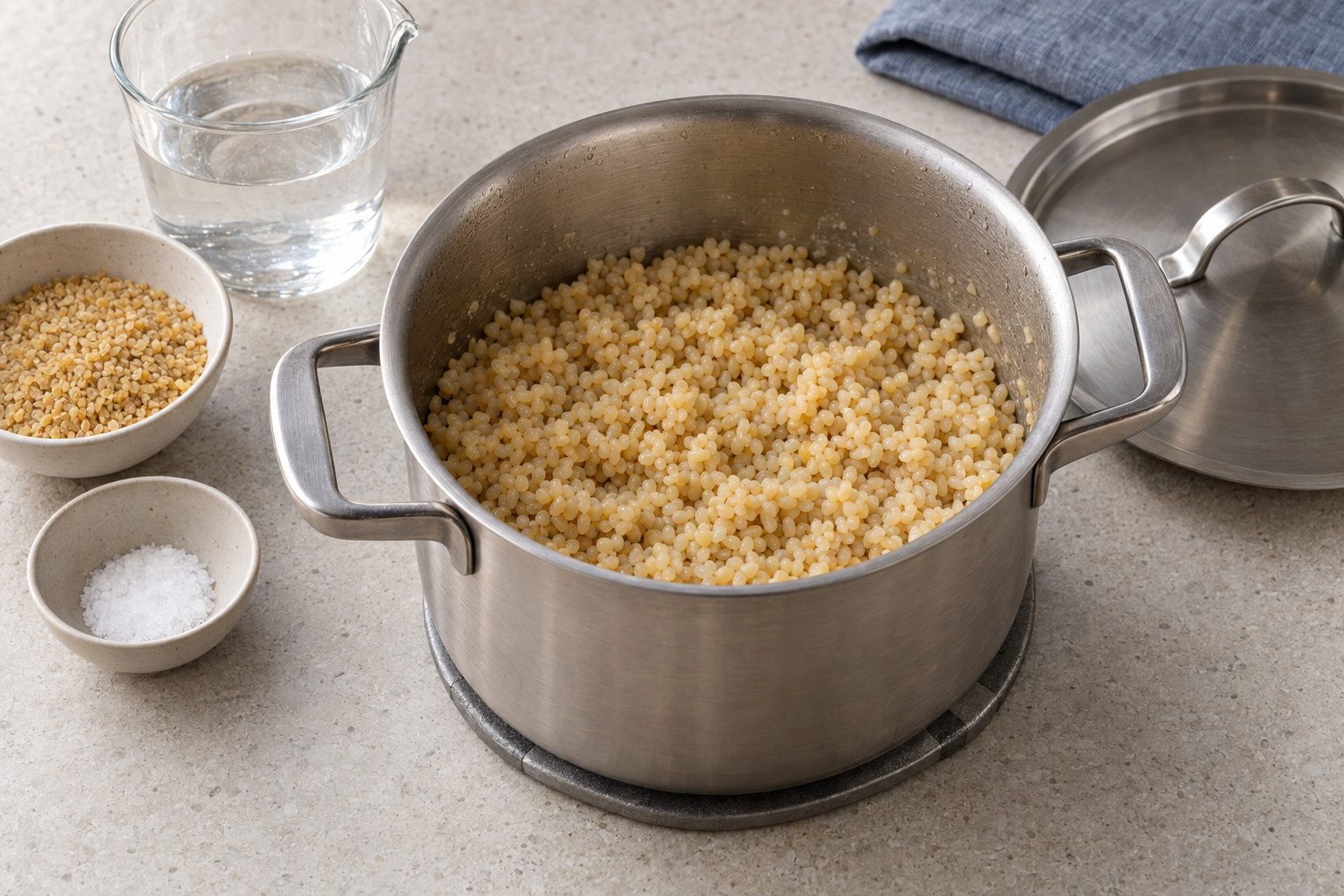
After the peppers have roasted for 10 minutes, we bring the bulgur to the boil with 280 ml water and the salt set aside for it. We cover, simmer gently for 10–12 minutes, take it off the heat and let it stand for 10 minutes.
We mix the dressing and side dish
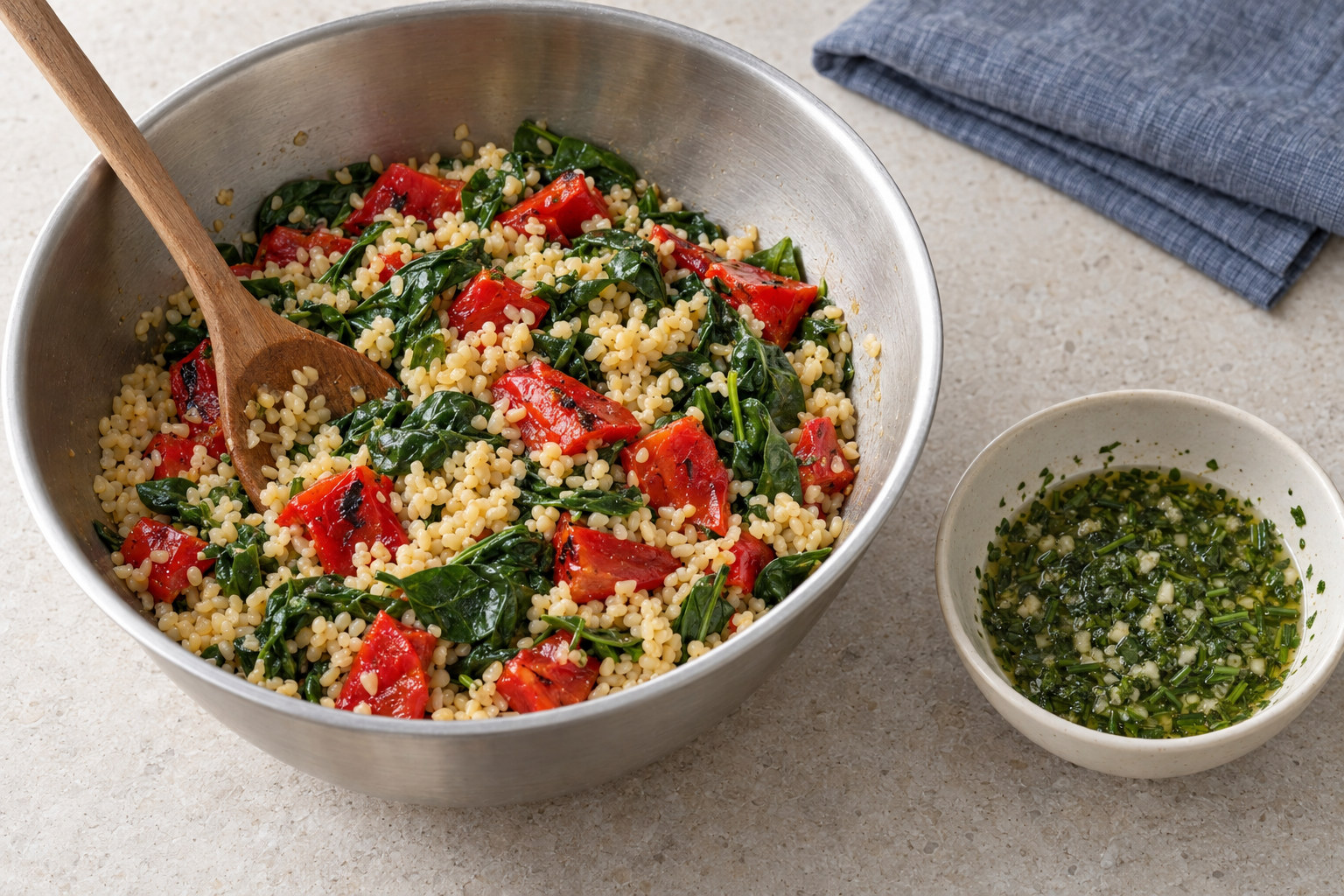
We wash and dry the parsley, chives and spinach and peel the garlic. We finely chop the parsley, chives and garlic, then mix them with lemon juice, olive oil, water and salt. We cut the roasted peppers into 2 cm pieces and fold them and the spinach gently into the cooked bulgur. We keep it covered for no more than 15 minutes. We turn off the oven, leave it open for 5 minutes, then put only the heatproof serving plates into the residual warmth. We keep the plates for resting the meat outside the oven, merely lukewarm. As the oven airs, we heat the pan for the meat and begin searing, so the bulgur does not wait unnecessarily.
The dressing stays raw; the spinach wilts in the heat of the bulgur.
We sear the meat
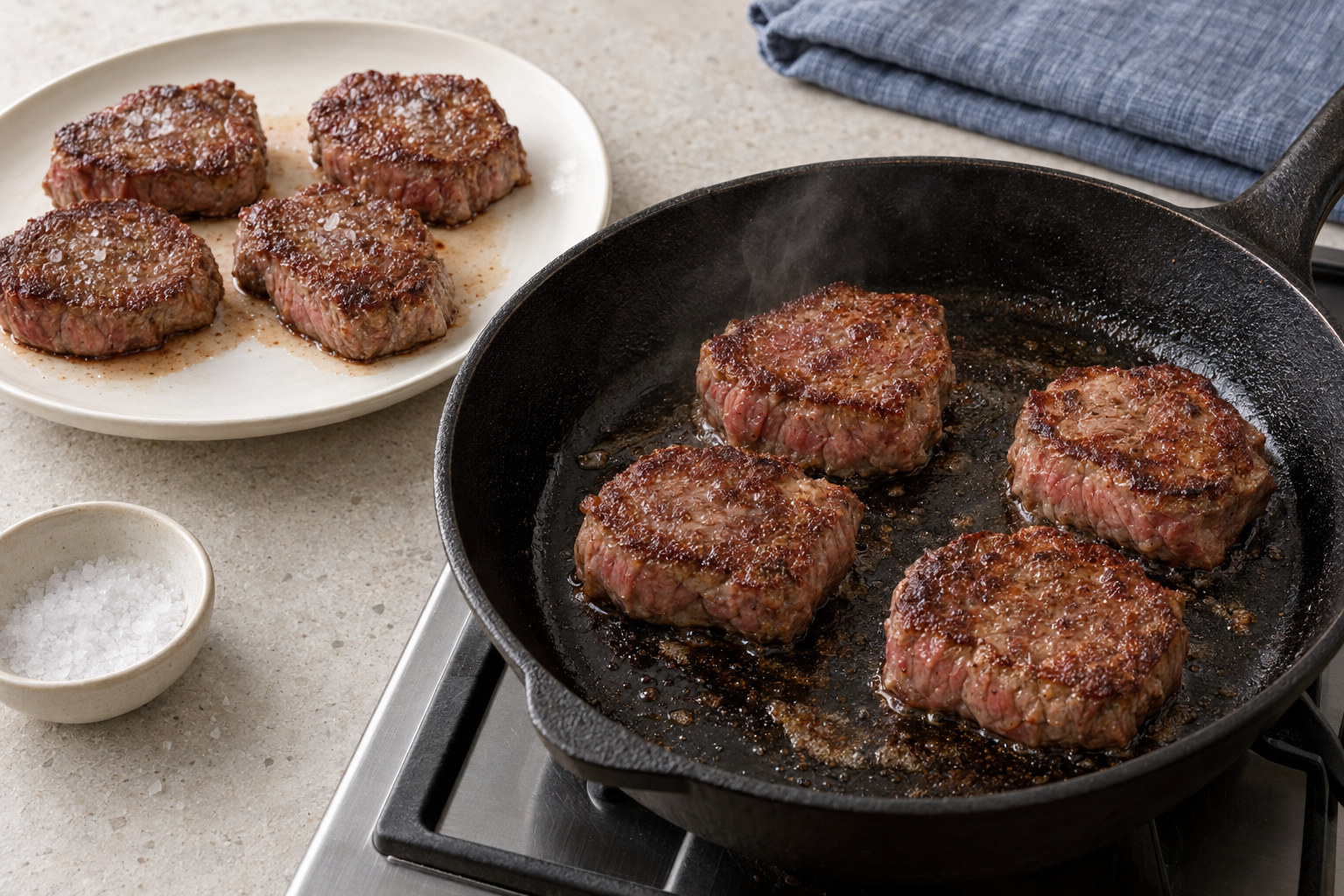
We choose the doneness using the table above the method. We heat a heavy 28 cm pan dry over medium-high heat for 2–3 minutes. We add all 200 g of meat in one layer, leaving gaps. We sear the slices for roughly 60–90 seconds on each broad side and briefly around the edges. After the first turn, we check doneness with a thermometer, inserting the thin probe from the side into the centre of every slice. Once the surface browns, we lower the heat and turn the slices every 30 seconds if needed. We remove the meat from the pan about 2–3 °C below our chosen temperature, because it continues to cook while resting. Total time is usually 3–6 minutes, up to 8 minutes for thicker slices; lower doneness may take less time, while higher doneness needs longer over gentler heat, guided by the thermometer. We leave only a thin layer of rendered fat in the pan and carefully pour the excess into a heatproof cup; we do not return it to the food. We transfer the meat to a clean lukewarm plate outside the oven, season it with the reserved salt and leave it loosely covered to rest for 3 minutes. If needed, we briefly cook the slices further after resting.
We do not braise the meat further in the side dish.
We serve with bulgur and dressing
We divide the bulgur between two plates, adding half the tenderloin and its resting juices to each. We spoon the herb dressing in small amounts over the side dish and some of the meat.
Tips from our kitchen
- We use both the leaves and tender parsley stems for the dressing.
What to watch out for
- We keep the cooked bulgur covered while searing the meat so it does not dry out.
How we serve it
- We portion the side dish before adding the meat; we serve the Wagyu in small bites.
Ingredient notes
- We divide one 200 g piece into smaller, even pieces according to its actual thickness. We do not press or pound the tenderloin; it is not interchangeable with a loin cut with a fat cap.
During preparation
- We insert the thin probe from the side into the centre of each slice. We check the chosen doneness against the table, including during resting. We use separate clean utensils for raw and cooked meat.
Our inspiration
An herb sauce for beef does not have to be cooked. Wagyu with chimichurri — parsley, coriander, garlic and vinegar — inspired us. In our dressing, lemon, parsley and chives provide the acidity and aroma, leaving room for fresh herbs alongside the sweet roasted pepper.
Similar recipes
Recipe for 4 people
We roast the peppers on two trays and sear the meat simultaneously in two pans so the pieces do not overlap. Searing time may vary with the chosen doneness; the thermometer decides.
Step-by-step method
Choosing how well to cook your steak
Before cooking, we choose how well we would like our meat done. This guide describes culinary levels of doneness and approximate temperatures at the centre of the meat after resting. These are not pan or oven temperatures or food safety recommendations. For whole beef steaks, the United States Department of Agriculture (USDA) recommends a minimum internal temperature of 63 °C before removing the meat from the heat, followed by at least 3 minutes of resting.
| Doneness | Temperature after resting | What to expect |
|---|---|---|
| Rare | 52 °C | Rare. The centre is red, and the meat is very tender and juicy. |
| Medium Rare | 55 °C | Medium rare. The centre is warm and reddish-pink, and the meat is tender and juicy. |
| Medium | 60 °C | Medium. The centre remains pink, and the meat has a firmer bite. |
| Medium Well | 65 °C | Medium well. Only a faint pink strip remains in the centre; the meat is firmer and less juicy. |
| Well Done | 71 °C | Well done. There is no pink in the centre, and the meat is firm and less juicy. |
- We measure the temperature at the centre of the thickest part of the meat. We insert the probe from the side, avoiding bone and pockets of fat. Colour is only a guide; we rely on the thermometer.
- As a rule, we take the meat off the pan or grill, or out of the oven, when it is 2–3 °C below our chosen temperature after resting. Thick cuts and intense heat can cause a greater temperature rise during resting. We check it regularly and follow the individual recipe.
- We rest the meat for the time given in the recipe. If the temperature stops rising before reaching our chosen value, we briefly return the meat to a gentle heat and check again.
- Cooking times are a guide. If we prefer our meat less well done, we start checking its temperature earlier. For a higher degree of doneness, we allow more time over a gentler heat as needed, so the outside does not burn.
Before we start
We roast the peppers on two oven levels. After 15 minutes, we start cooking the bulgur. Once mixed, we leave the finished side dish covered in the pot for no more than 15 minutes and do not reheat it vigorously.
We roast the peppers and prepare the meat
We heat the fan oven to 210 °C. We wash and deseed the peppers, cut them into quarters and toss with the oil and salt set aside for them. We spread them cut side down across two 40×30 cm trays and roast for 25–35 minutes, swapping the trays halfway through. We first cut both 200 g tenderloin pieces across the grain into slices 1.5–2 cm thick. We halve larger slices into pieces of about 50 g, usually 8 in total; their actual shape determines the count, and even thickness matters most. We dry the pieces and put them in the fridge.
The peppers soften and brown in places; we do not need to peel them.
We cook the bulgur
After the peppers have roasted for 15 minutes, we bring the bulgur to the boil with 520 ml water and the salt set aside for it. We cover, simmer gently for 10–12 minutes, take it off the heat and let it stand for 10 minutes.
We mix the dressing and side dish
We wash and dry the parsley, chives and spinach and peel the garlic. We finely chop the parsley, chives and garlic, then mix them with lemon juice, olive oil, water and salt. We cut the roasted peppers into 2 cm pieces and fold them and the spinach gently into the cooked bulgur. We keep it covered for no more than 15 minutes. We turn off the oven, leave it open for 5 minutes, then put only the heatproof serving plates into the residual warmth. We keep the plates for resting the meat outside the oven, merely lukewarm. As the oven airs, we heat both pans for the meat and begin searing, so the bulgur does not wait unnecessarily.
The dressing stays raw; the spinach wilts in the heat of the bulgur.
We sear the meat
We choose the doneness using the table above the method. We heat both heavy 28 cm pans dry over medium-high heat for 2–3 minutes. We put 200 g of meat in one layer with gaps in each pan. We sear the meat in both pans at the same time. We sear the slices for roughly 60–90 seconds on each broad side and briefly around the edges. After the first turn, we check doneness with a thermometer, inserting the thin probe from the side into the centre of every slice. Once the surface browns, we lower the heat and turn the slices every 30 seconds if needed. We remove the meat from the pan about 2–3 °C below our chosen temperature, because it continues to cook while resting. Total time is usually 3–6 minutes, up to 8 minutes for thicker slices; lower doneness may take less time, while higher doneness needs longer over gentler heat, guided by the thermometer. We leave only a thin layer of rendered fat in the pan and carefully pour the excess into a heatproof cup; we do not return it to the food. We transfer the meat to a clean lukewarm plate outside the oven, season it with the reserved salt and leave it loosely covered to rest for 3 minutes. If needed, we briefly cook the slices further after resting.
We do not braise the meat further in the side dish.
We serve with bulgur and dressing
We divide the bulgur between four plates, adding a quarter of the tenderloin and its resting juices to each. We spoon the herb dressing in small amounts over the side dish and some of the meat.