
Boxxi original · Italy – Sicilian inspiration
Olive oil-poached tuna with focaccia and caponata
We serve delicate tuna scented with lemon and thyme alongside punchy caponata and our own airy focaccia. Sweet and sour vegetables with olives and capers bring a lively flavour to each bite of fish. We save this menu for an unhurried day so the dough has plenty of time to rise.
About 4 hours in total, including folding, two rises and resting the bread; slower rising will extend the time.
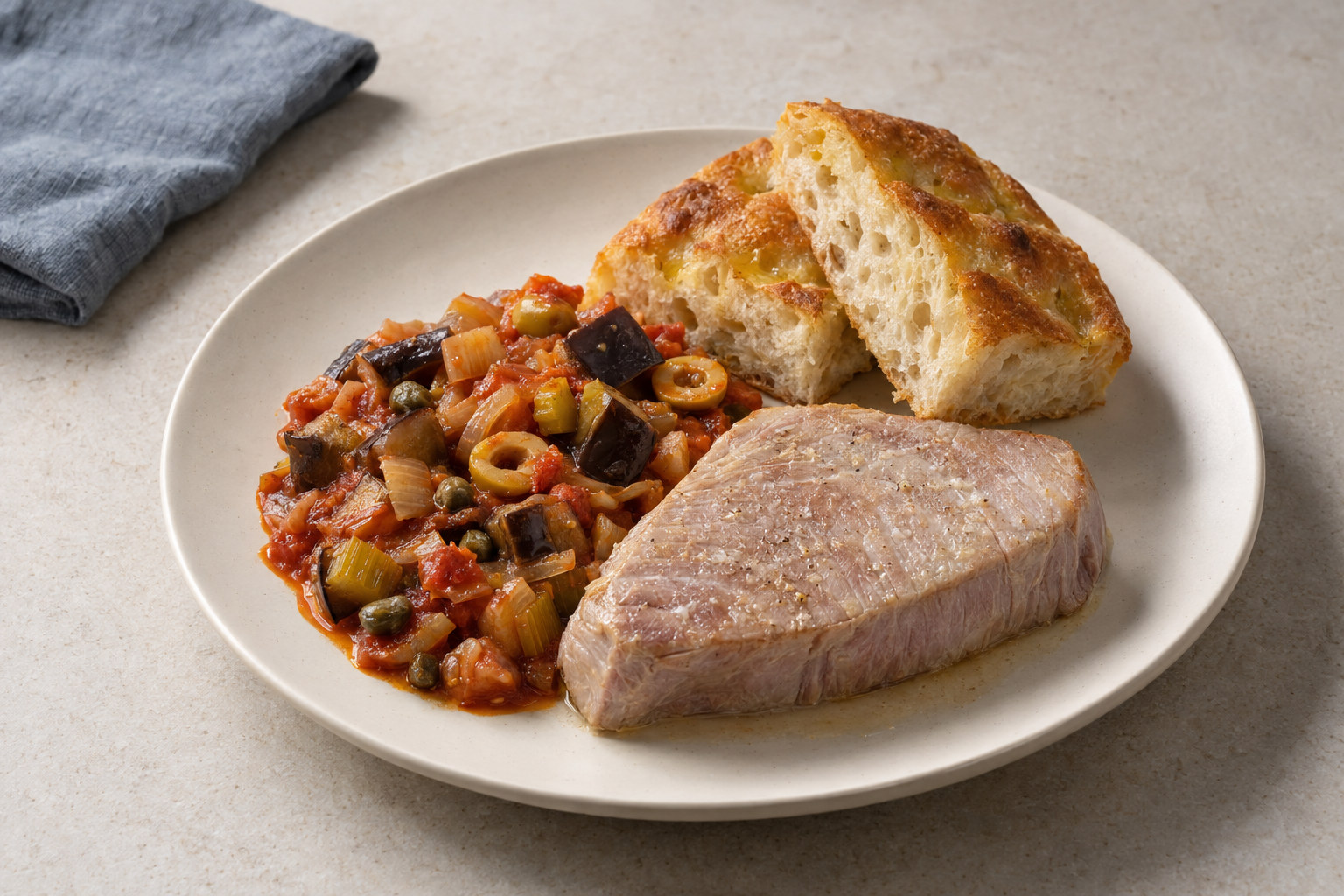
Delicate fish scented with olive oil and citrus zest, soft aubergine in sweet and sour juices, salty capers and fresh bread.
Step-by-step method
What you will need
- scales
- sharp knife and two clean chopping boards
- meat thermometer
- metal tin with a 14 × 20 cm inside base
- 2 litre bowl with a lid
- 28 cm frying pan with lid
- 1.5-litre saucepan with a flat, 16 cm inside base
- oven, wire rack, spatula and slotted spoon
- two hob burners
- shallow container for cooling the caponata if needed
Before we start
We start the caponata about 30 minutes after transferring the dough to the tin for its second rise. We bake the focaccia before cooking the fish. While it bakes, we heat the flavoured oil and put the tuna in as soon as we take the bread out of the oven.
Mix a springy dough
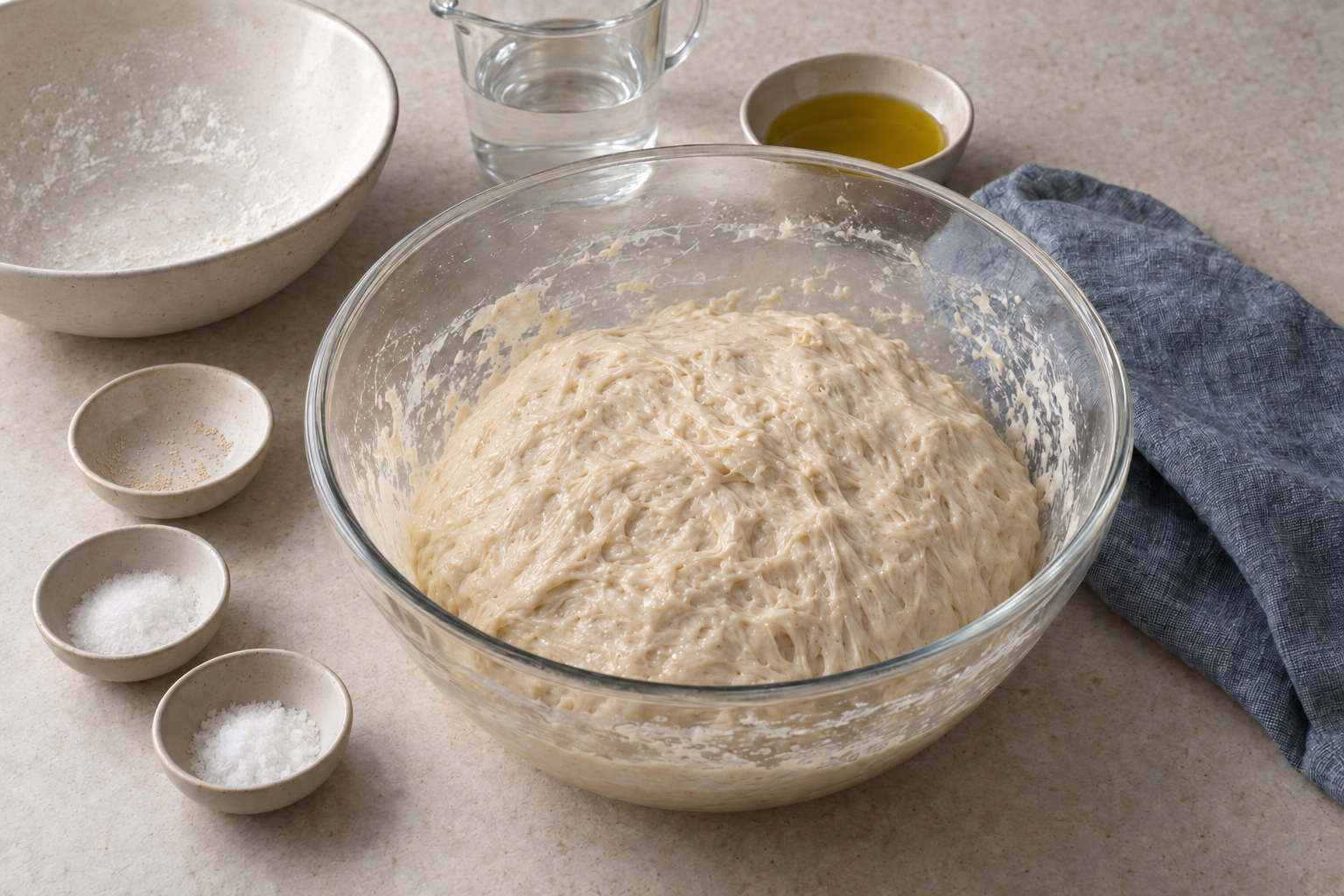
We mix the flour with 125 ml lukewarm water at about 25 °C, the yeast, ½ teaspoon salt, ½ teaspoon sugar and two teaspoons oil. We stir for two minutes until all the flour is incorporated. We cover the dough. At 15, 30, 45 and 60 minutes, we pull the dough from the edge with a damp hand and fold it towards the centre from all four sides. We then let it rise for another 60 minutes at 22–24 °C.
The loose dough gradually becomes springy and roughly doubles in size.
Let the focaccia finish rising
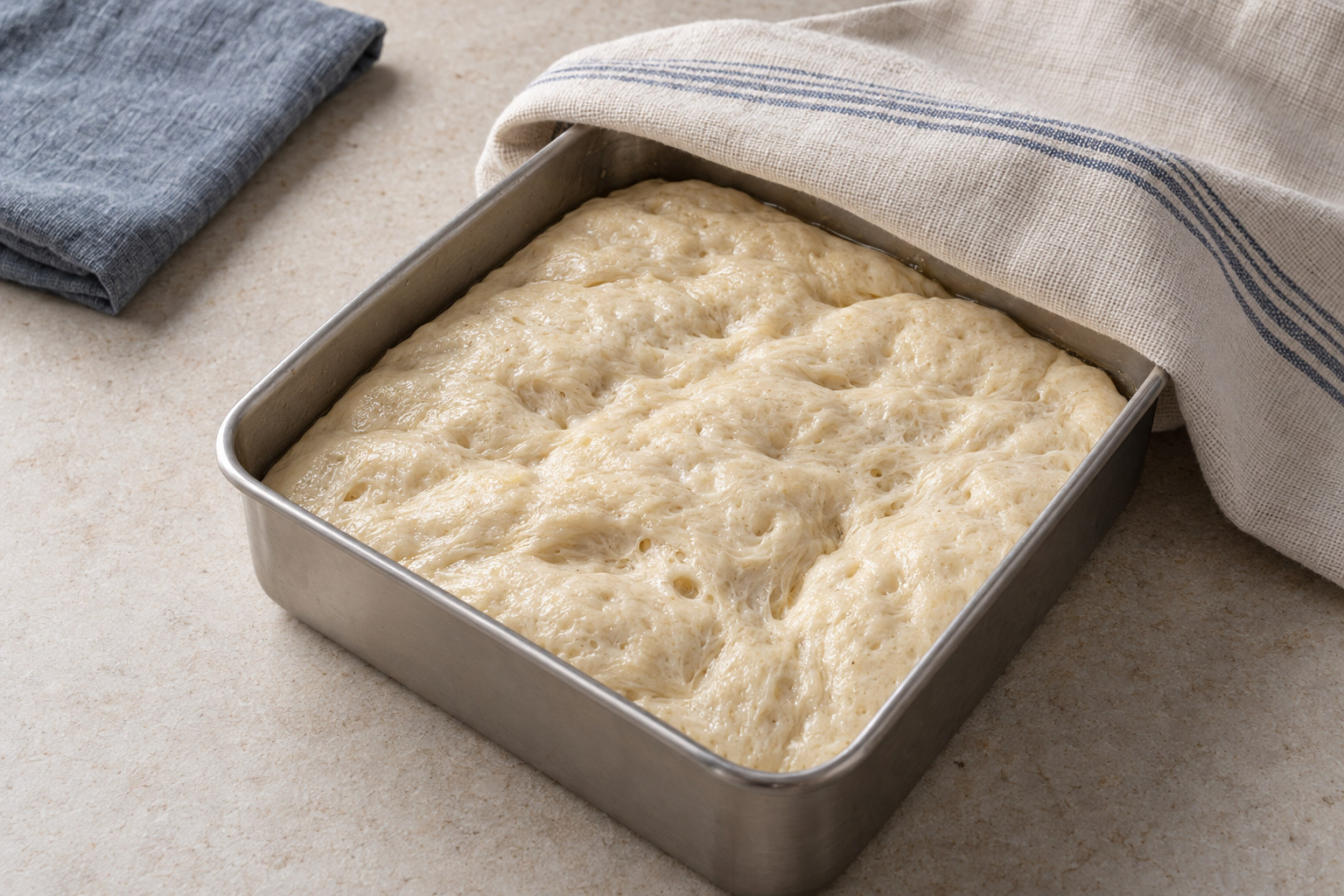
We grease a metal tin with a 14 × 20 cm inside base with one teaspoon oil. We carefully transfer the dough into it and spread it gently. We cover it and let it rise for 60–75 minutes at 22–24 °C; in a cooler kitchen we wait longer for visible bubbles. For the final 20 minutes, we preheat the oven to 230 °C, top and bottom heat.
The dough wobbles, is airy and fills the tin; we do not force it into the corners straight after transferring it.
Make the caponata
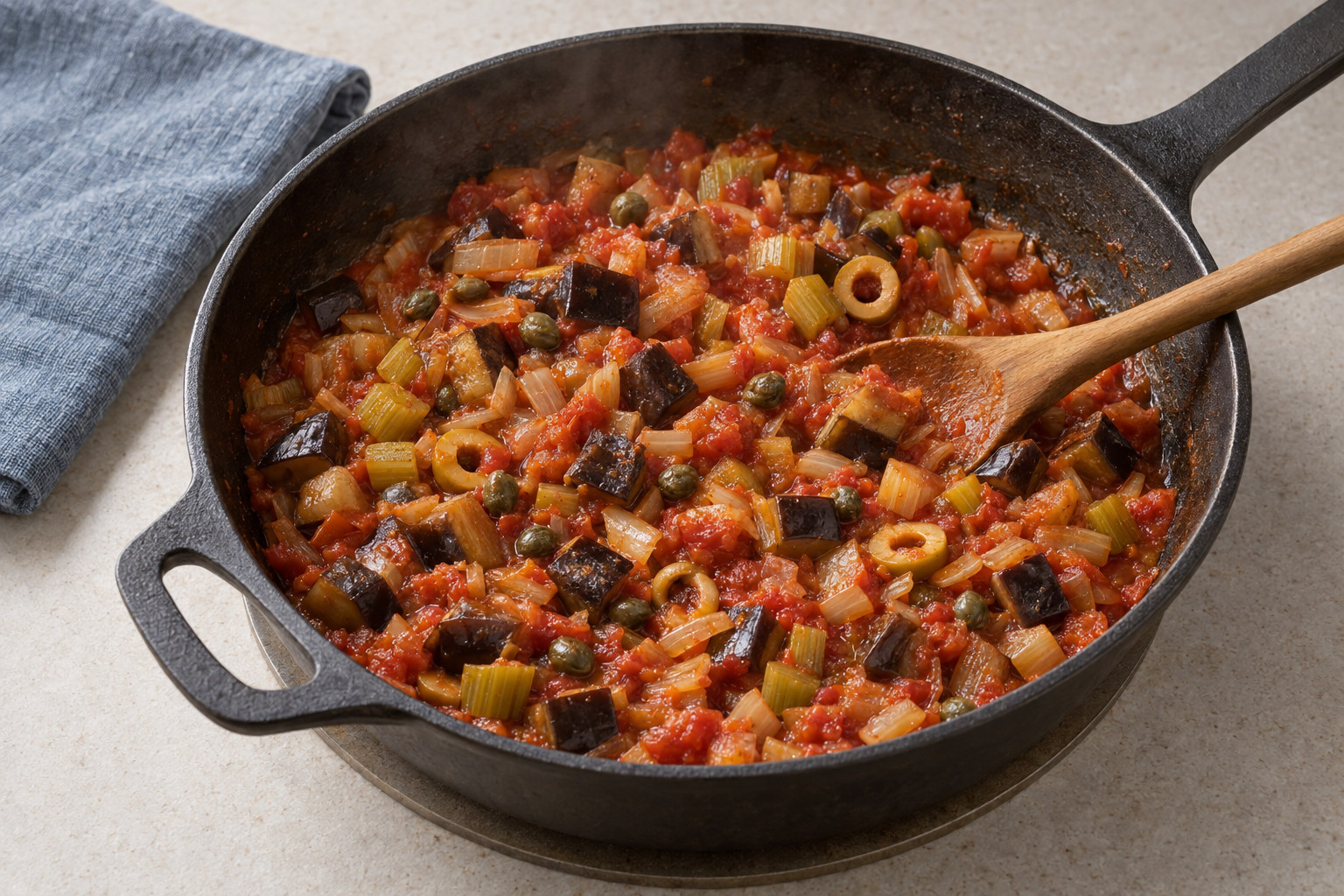
We wash the aubergine and celery and peel the onion. We drain the olives, rinse and drain the capers. About 30 minutes into the second rise, we cut the aubergine into 2 cm dice, the celery into 5 mm slices and finely chop the onion. We fry the aubergine in one tablespoon oil in a 28 cm pan for 8–10 minutes, then lift it out. We add one teaspoon oil, the onion and celery, and fry for 5 minutes. We pour in 50 ml water, cover and cook for 8 minutes. We add the passata, olives, capers, ¼ teaspoon salt and aubergine and simmer for 5 minutes. We add one tablespoon vinegar and 1½ teaspoons sugar, heat through for another 3 minutes and take off the heat.
The aubergine is soft inside but the celery retains a little bite. We cover the finished caponata; we allow no more than an hour between finishing and serving it. If the dough rises much more slowly, we spread the caponata in a shallow container and refrigerate after 15 minutes; while poaching the fish we cover it and heat it in a pan for 5–8 minutes until hot in the centre.
Bake the bread
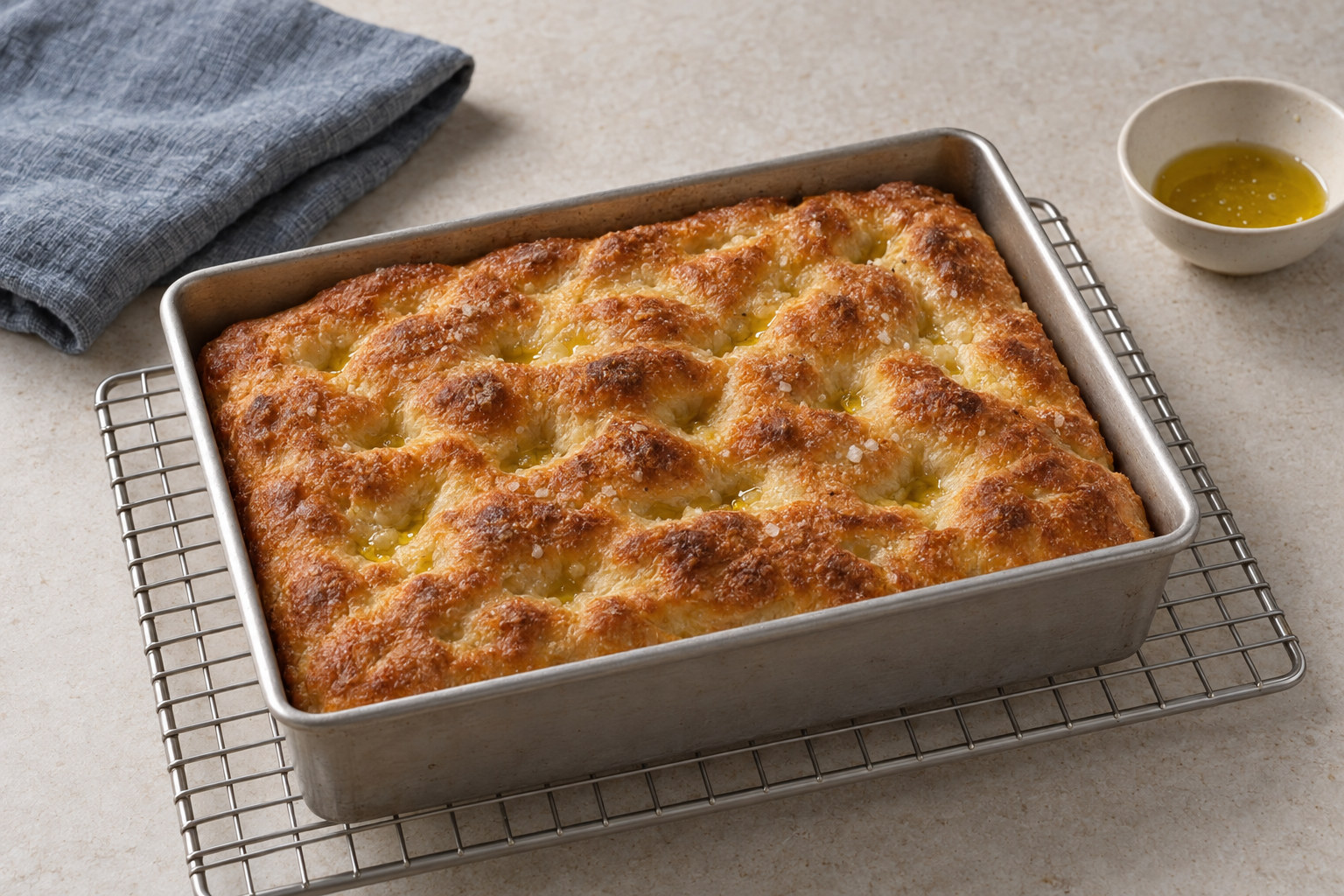
We brush the risen dough with one teaspoon oil and press dimples with our fingers almost to the bottom. We bake at 230 °C for 18–22 minutes until golden on top and firm and baked through underneath. We remove it from the tin onto a wire rack and let it rest for at least 15 minutes.
The crumb is no longer wet and does not stick together when sliced.
Scent the oil
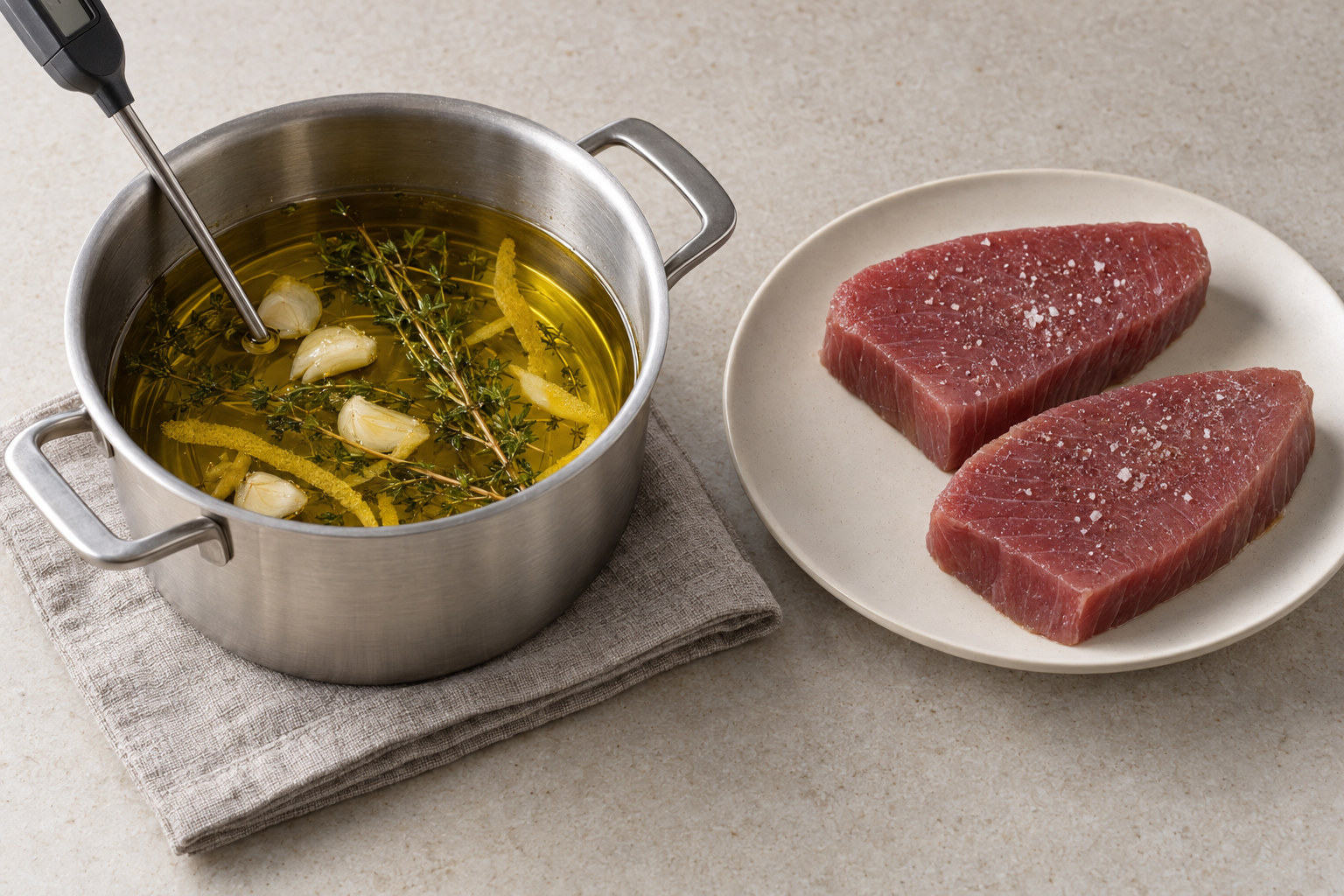
We wash the lemon and thyme and peel the garlic. With a peeler, we remove strips of yellow zest from the lemon. While the focaccia bakes, we pour 500 ml oil into a saucepan with a flat, 16 cm inside base. We add the lightly crushed garlic, thyme and strips of lemon zest. We heat the oil to 80–85 °C and hold it there for 10 minutes. We check it regularly with a thermometer; the garlic must not fry. We pat the tuna dry, divide it into 2 equal pieces 2 cm thick and season with ¼ teaspoon salt.
The chosen pan holds all the pieces in a single layer and the oil covers them once added. The garlic does not brown.
Gently poach the tuna
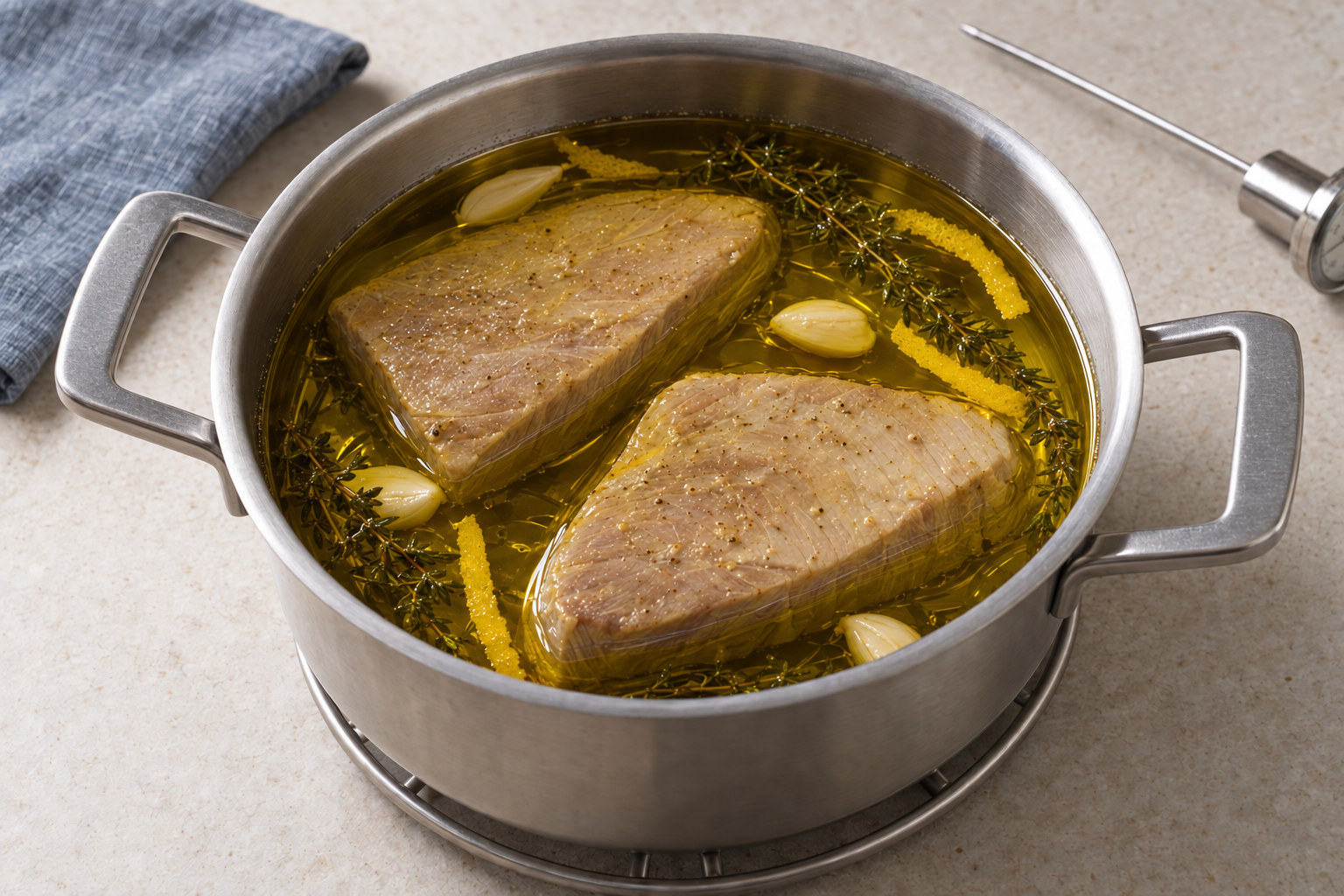
We put the fish in the oil and bring the bath back to 80–85 °C. We poach the 2 pieces for about 14–20 minutes, checking the centre after 12 minutes. As soon as a piece reaches 63 °C inside, we lift it out with a slotted spoon and let it drain for one minute.
The oil does not bubble as it would for frying; surface colour does not show whether the centre is done.
Serve the fish with bread and vegetables
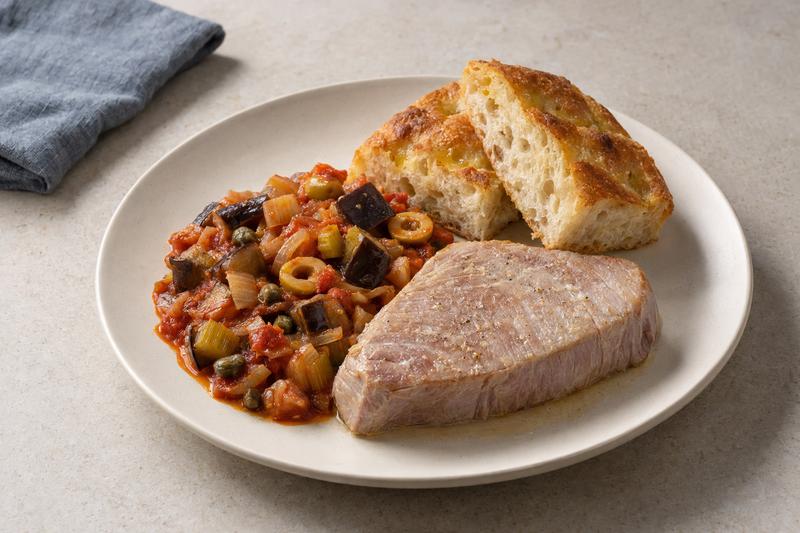
We divide the caponata between 2 plates, add one piece of tuna to each and cut the focaccia into four pieces, two per person. We do not add the herb stalks, garlic or poaching oil to the plates. We serve immediately.
Tips from our kitchen
- We watch the oil temperature throughout; it changes quickly in a small oil bath.
- We let the dough rise enough and wait for bubbles to appear. It rises more slowly in a cool kitchen.
What to watch out for
- We do not pour all the poaching oil onto the plates.
- We do not stir the caponata so vigorously that the aubergine turns to purée.
How we serve it
- We let the fish drain and serve it with warm caponata and warm focaccia. We do not pour the poaching oil onto the plate.
Ingredient swaps
Instant yeast
3.6 g fresh yeast for two or 6 g for four, mixed into the measured water Rising may take longer; we wait for the described volume.
Celery stalk
80 g fennel for two or 140 g for four, cut into thin slices The side dish will have a gentle aniseed fragrance.
Ingredient notes
- NATURAL tuna is unseasoned, skinless yellowfin tuna fillet. The retail pack weighs 1 kg.
During preparation
- We keep the fish refrigerated until cooking. We use a separate board for raw fish and clean utensils for the finished dish. We check doneness with a probe thermometer as described in the method. We serve the poached fish immediately; this method is not for preserving fish in oil at home.
Our inspiration
Caponata is a Sicilian vegetable side dish with a sweet and sour flavour from vinegar and sugar. Versions differ from town to town and family to family, so there is no single fixed set of ingredients. In ours, we let aubergine, olives and capers shine; the full-flavoured vegetable juices accompany gently poached tuna.
Similar recipes
Recipe for 4 people
Step-by-step method
Before we start
We start the caponata about 30 minutes after transferring the dough to the tin for its second rise. We bake the focaccia before cooking the fish. While it bakes, we heat the flavoured oil and put the tuna in as soon as we take the bread out of the oven.
Mix a springy dough
We mix the flour with 235 ml lukewarm water at about 25 °C, the yeast, one teaspoon salt, ½ teaspoon sugar and one tablespoon oil. We stir for two minutes until all the flour is incorporated. We cover the dough. At 15, 30, 45 and 60 minutes, we pull the dough from the edge with a damp hand and fold it towards the centre from all four sides. We then let it rise for another 60 minutes at 22–24 °C.
The loose dough gradually becomes springy and roughly doubles in size.
Let the focaccia finish rising
We grease a metal tin with a 20 × 28 cm inside base with two teaspoons oil. We carefully transfer the dough into it and spread it gently. We cover it and let it rise for 60–75 minutes at 22–24 °C; in a cooler kitchen we wait longer for visible bubbles. For the final 20 minutes, we preheat the oven to 230 °C, top and bottom heat.
The dough wobbles, is airy and fills the tin; we do not force it into the corners straight after transferring it.
Make the caponata
We wash the aubergine and celery and peel the onion. We drain the olives, rinse and drain the capers. About 30 minutes into the second rise, we prepare the vegetables. We cut the aubergine into 2 cm dice, the celery into 5 mm slices and finely chop the onion. In a 32 cm pan, we fry the aubergine in two 230 g batches, each in one tablespoon oil for 8–10 minutes; we lift it out. We fry the onion and celery in the remaining tablespoon oil for 6 minutes. We add 80 ml water, cover and cook for 10 minutes. We simmer the passata, olives, capers, ¼ teaspoon salt and aubergine with them for 6 minutes. We add two tablespoons vinegar and 2½ teaspoons sugar, then take it off the heat after 3 minutes.
The aubergine is soft inside but the celery retains a little bite. We cover the finished caponata; we allow no more than an hour between finishing and serving it. If the dough rises much more slowly, we spread the caponata in a shallow container and refrigerate after 15 minutes; while poaching the fish we cover it and heat it in a pan for 5–8 minutes until hot in the centre.
Bake the bread
We brush the risen dough with two teaspoons oil and press dimples with our fingers almost to the bottom. We bake at 230 °C for 20–25 minutes until golden on top and firm and baked through underneath. We remove it from the tin onto a wire rack and let it rest for at least 15 minutes.
The crumb is no longer wet and does not stick together when sliced.
Scent the oil
We wash the lemon and thyme and peel the garlic. With a peeler, we remove strips of yellow zest from the lemon. While the focaccia bakes, we pour 800 ml oil into a 22 cm shallow casserole. We add the lightly crushed garlic, thyme and strips of lemon zest. We heat the oil to 80–85 °C and hold it there for 10 minutes. We check it regularly with a thermometer; the garlic must not fry. We pat the tuna dry, divide it into 4 equal pieces 2 cm thick and season with ½ teaspoon salt.
The chosen pan holds all the pieces in a single layer and the oil covers them once added. The garlic does not brown.
Gently poach the tuna
We put the fish in the oil and bring the bath back to 80–85 °C. We poach all 4 pieces for about 14–20 minutes, checking the centre after 12 minutes. As soon as a piece reaches 63 °C inside, we lift it out with a slotted spoon and let it drain for one minute.
The oil does not bubble as it would for frying; surface colour does not show whether the centre is done.
Serve the fish with bread and vegetables
We divide the caponata between 4 plates, add one piece of tuna to each and cut the focaccia into 8 pieces, two per person. We do not add the herb stalks, garlic or poaching oil to the plates. We serve immediately.