
From the Boxxi kitchen · Italian inspiration
Pulled beef ravioli in onion broth
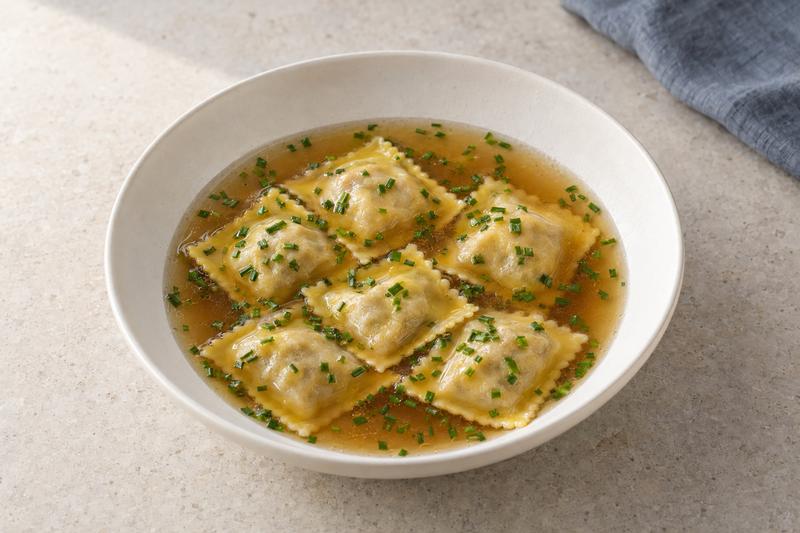
We serve homemade ravioli filled with ready-cooked pulled beef and ricotta in an amber onion broth. Tender pasta surrounds a firm meat filling, while slowly browned onions give the broth a sweet depth of flavour. A scattering of finely chopped chives finishes the dish.
We knead the dough while the broth simmers. The time includes a 30-minute rest for the dough and 20 minutes to chill the filling. We cook the ravioli in two batches.
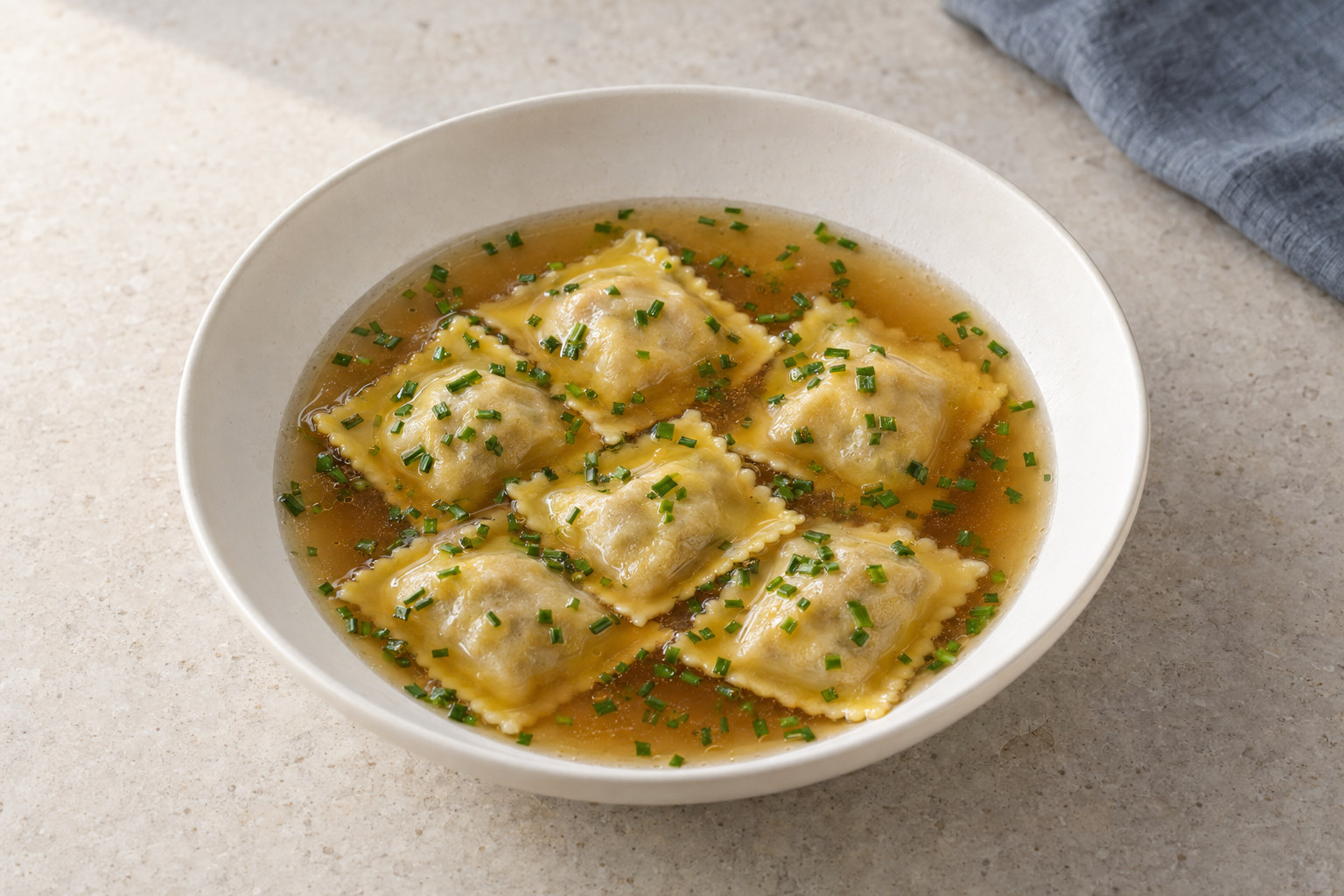
Mild ricotta rounds out the rich beef flavour inside the thin pasta. The clear broth is fragrant with browned onions and thyme, with lemon and chives adding a fresh finish.
Step-by-step method
What you will need
- kitchen scales
- knife and chopping board
- probe thermometer
- wide 3-litre saucepan
- 4-litre saucepan
- pasta machine
- rolling pin
- pastry wheel or plain-edged cutter
- ruler
- small pastry brush
- two fine sieves
- measuring jug
- slotted spoon
- tray
- two wide, deep bowls, 24–26 cm across and holding at least 1 litre each, and two lids
- fridge
Before we start
We start with the broth, chill the filling while the dough rests and uncover only a small part of the dough at a time while shaping.
Start the onion broth
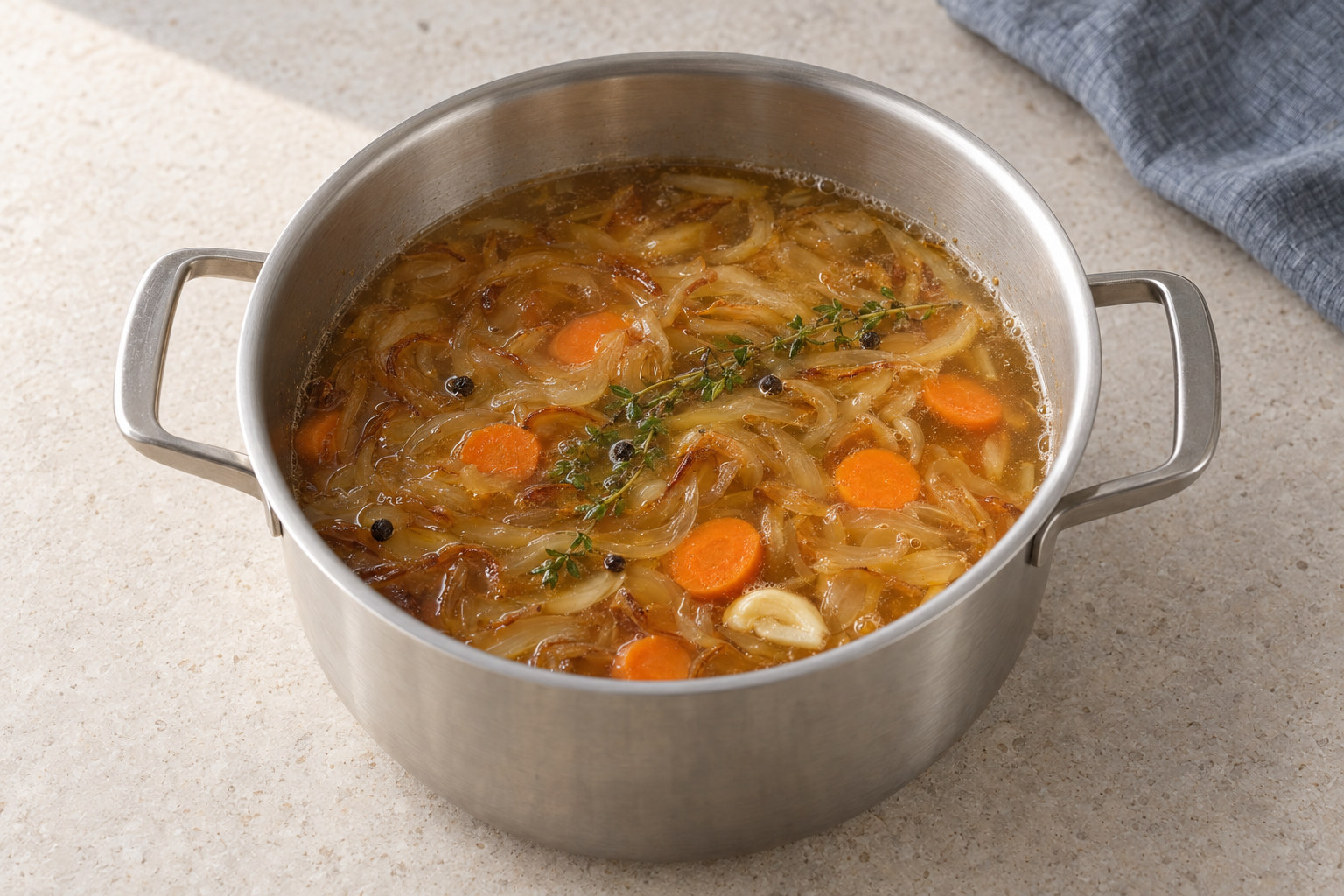
We peel the onions, carrot and garlic, then wash the thyme and strip off the leaves. We slice the onions into 3 mm half-moons and the carrot into 5 mm rounds. In a wide 3-litre saucepan, we heat two teaspoons of oil and cook the onions over a medium-low heat for 25–30 minutes until golden, stirring often. We add the carrot and crushed garlic and stir for 2 minutes. We pour in 1000 ml water, add the thyme and whole peppercorns, and simmer uncovered for 35 minutes.
The onions are golden brown and smell sweet, with no black edges; the broth is barely bubbling.
Make the dough and leave it to rest
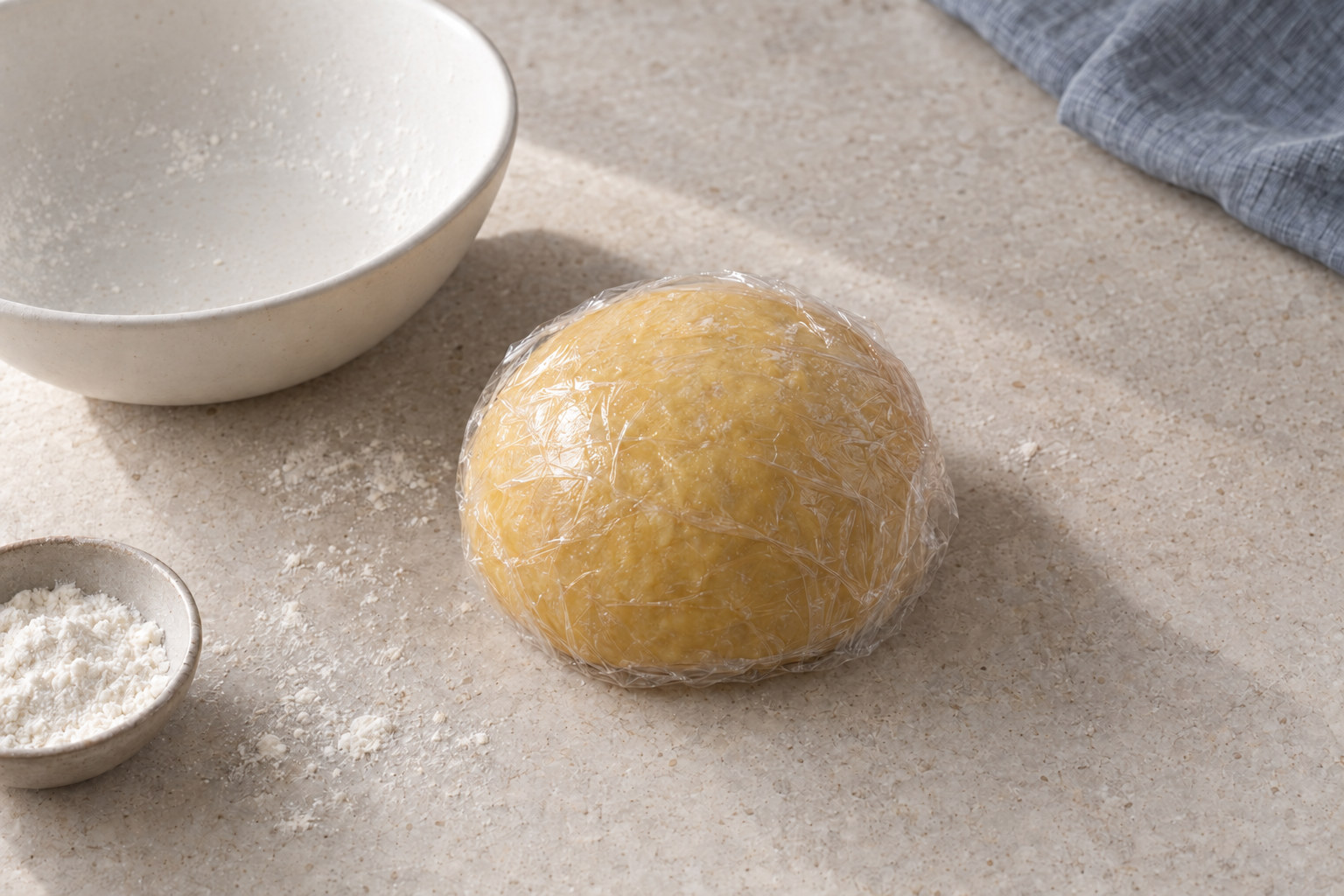
As soon as the broth starts simmering, we combine 200 g flour with 2 eggs. We knead for 10–12 minutes until smooth, wrap the dough and leave it to rest for 30 minutes.
The dough is smooth and elastic and does not stick when pressed with a dry finger.
Make the cold filling
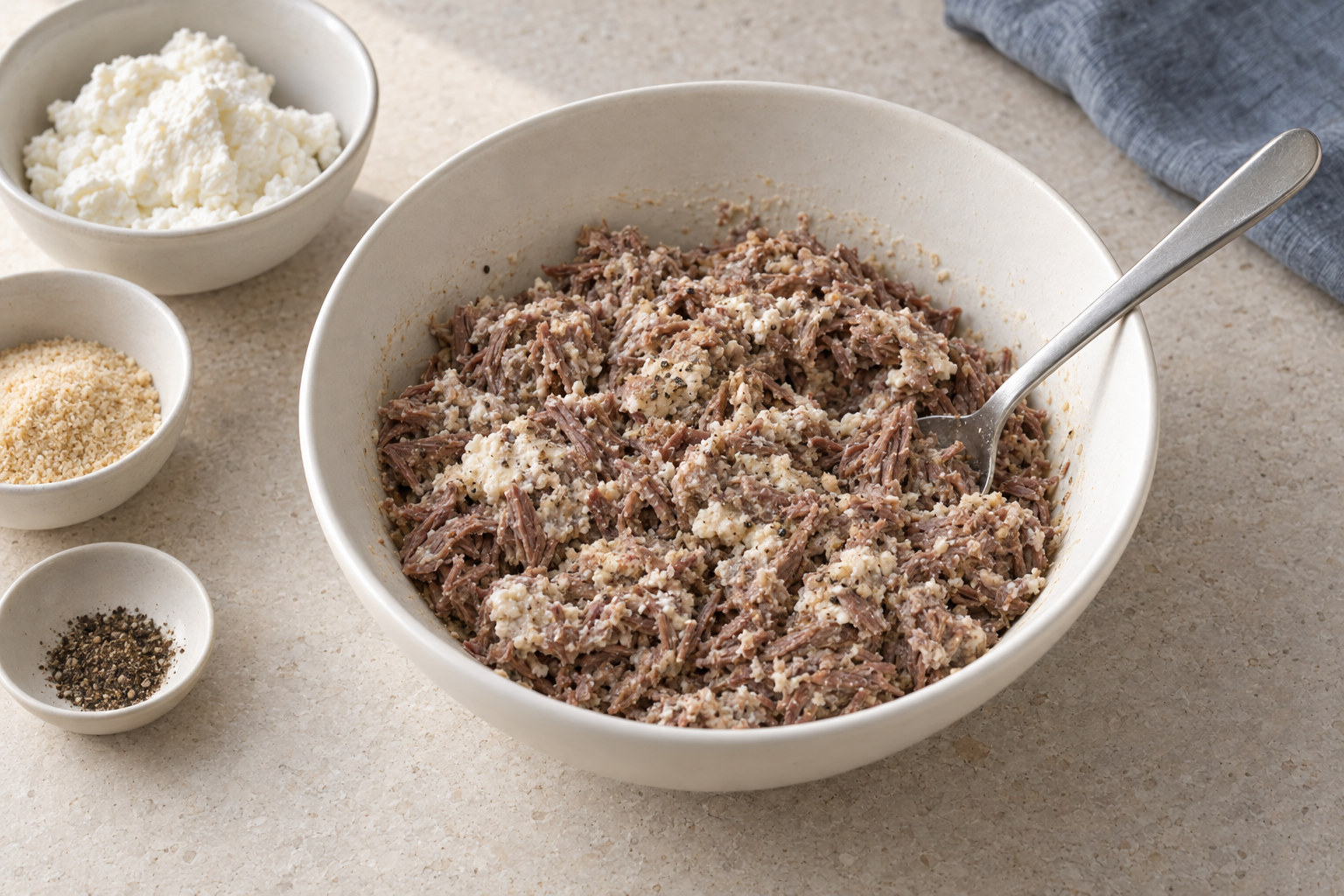
We put 250 g meat in a sieve over a bowl and leave any loose juices to drain for 5 minutes. We cover and refrigerate the juices for the broth, then press the meat lightly with a spoon to release any remaining liquid. It should stay juicy but no longer drip when pressed. We chop it into pieces no larger than 5 mm and mix with 70 g drained ricotta, 15 g breadcrumbs and the pepper. We cover and refrigerate for 20 minutes, keeping the rest of the 500 g pack chilled separately.
The filling holds a soft mound on a teaspoon without releasing liquid when pressed.
Shape the square ravioli
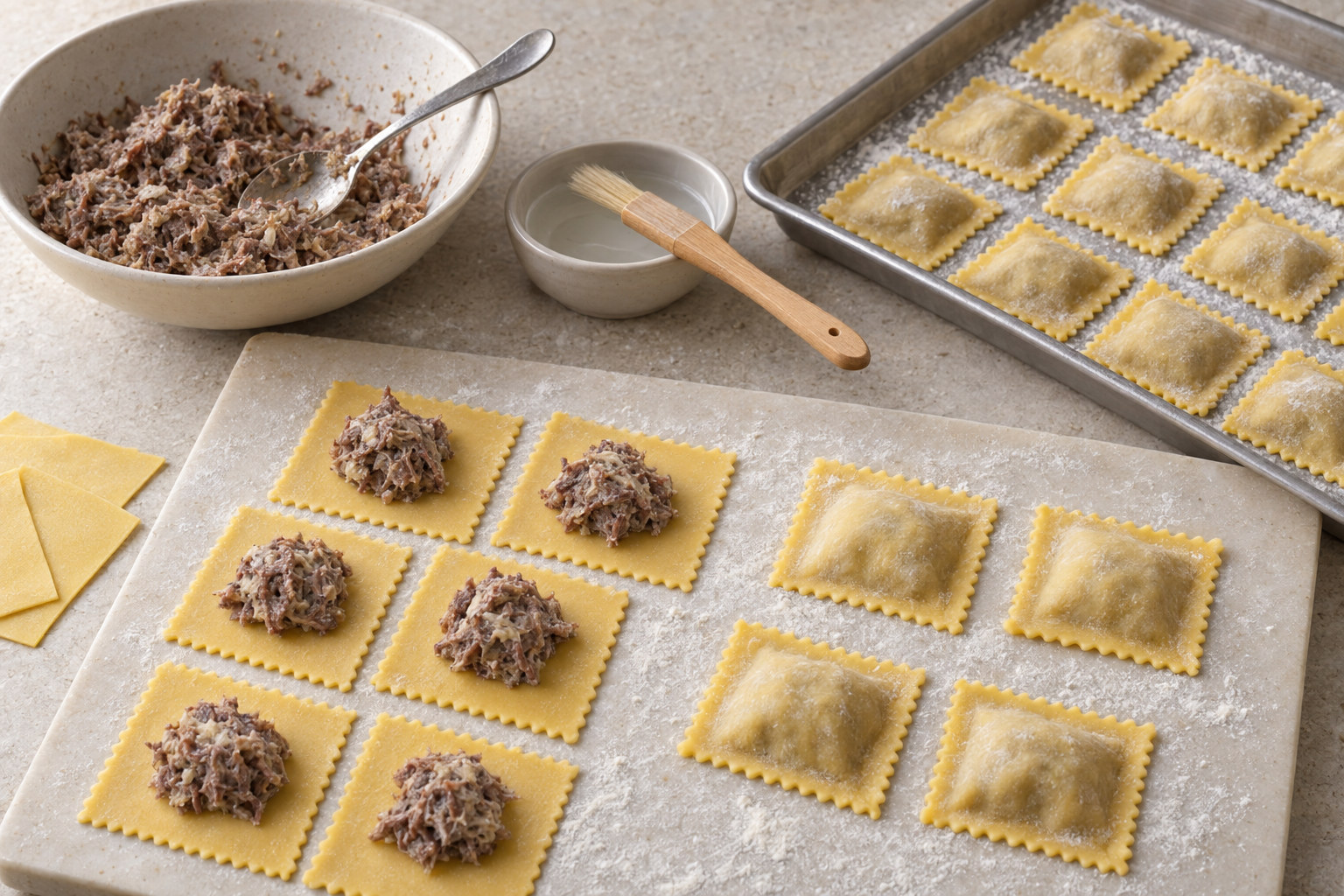
We divide the dough into four and roll out each piece into sheets about 1 mm thick. We use only a light dusting from the total 15 g flour set aside for this. We cut out 48 squares, 6 × 6 cm each, rerolling the clean trimmings once. We divide the filling evenly into 24 small mounds and place one on half of the squares, gently flattening each to no more than 4 cm across and about 1 cm high. We leave a border of at least 8 mm, dampen the edges lightly with water and cover with the remaining squares. We press out the air and seal firmly. We arrange the 24 ravioli in a single layer on a lightly floured tray and refrigerate.
The seams are clean, unbroken and free of filling, with no air pockets beneath the pasta around the filling.
Strain the broth
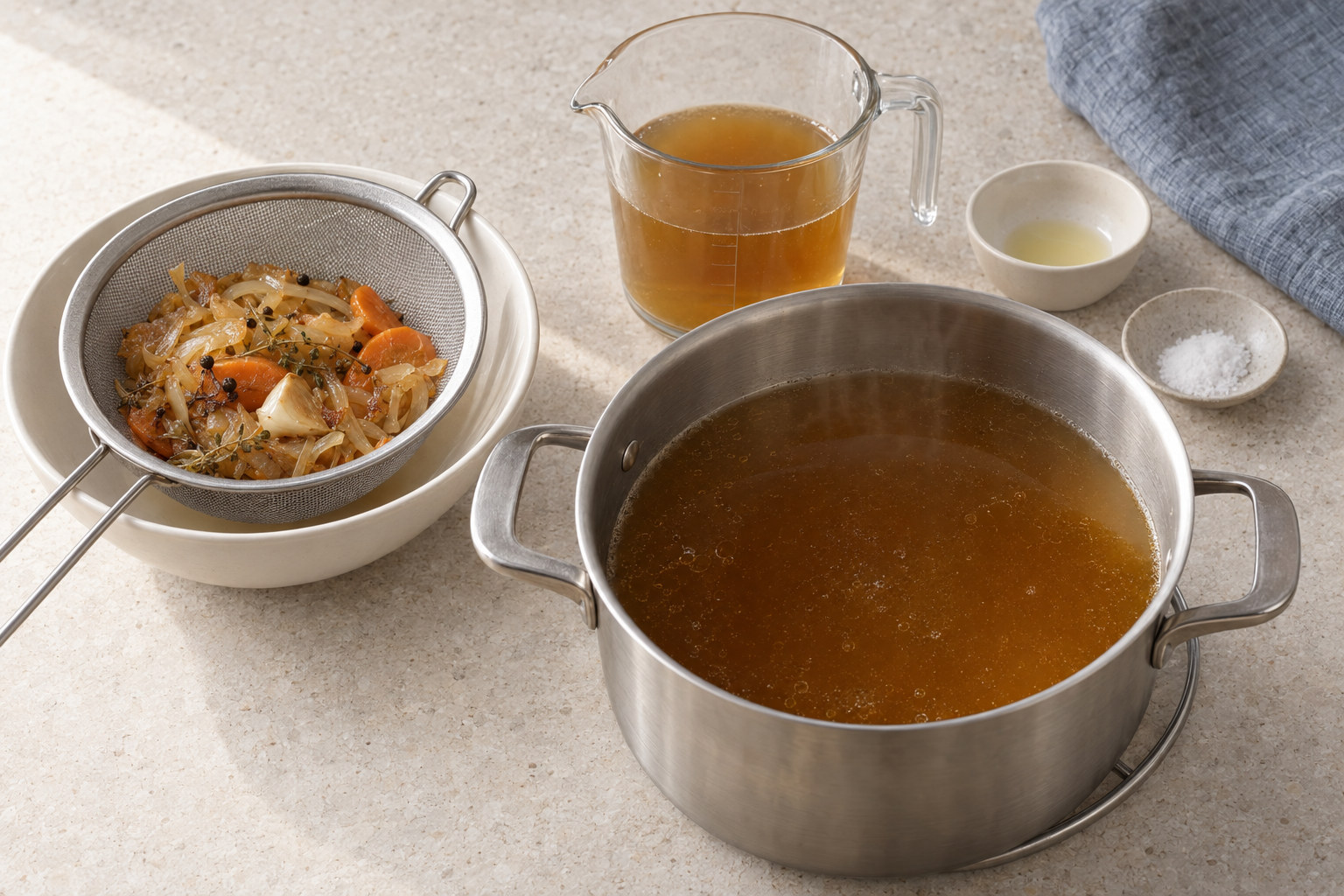
We strain the broth through a fine sieve without pressing the vegetables, then return it to the saucepan and add the reserved meat juices. We measure out 600 ml; if there is more, we simmer to reduce it, and if there is less, we add as much as needed from the reserved 200 ml water. We bring it briefly to the boil and keep it hot. In a 4-litre saucepan, we bring plenty of water to the boil. We stir two pinches of salt and 5 ml strained lemon juice into the finished broth; we add no salt to the filling.
The broth is clear and amber, with no pieces of onion. We add the lemon juice only at the end and neither thicken the broth nor add any extra salt.
Cook the ravioli and serve immediately
We wash and dry the chives, then chop them finely. We warm two deep plates with hot tap water and wipe them dry. We lower 12 ravioli into gently simmering unsalted water and cook for 5–7 minutes, depending on the pasta thickness. After 5 minutes, we use a thin probe to check the temperature at the centre of the filling in one raviolo: it must reach at least 74 °C, and the pasta seam must be tender. If it needs longer, we keep it simmering and check again, leaving the other ravioli in the water until cooked to the same point. Using a slotted spoon, we put 6 ravioli in each plate, add 100 ml hot broth to each and cover loosely. We cook the second 12 ravioli in the same way and divide them between the plates, 6 each. Each plate will have 12 ravioli and 300 ml broth in total. We add the remaining broth, scatter over the finely chopped chives and serve straight away.
Every raviolo is hot through the centre, with a tender pasta seam, and remains sealed. We keep the first batch in the broth only while the second batch cooks.
Tips from our kitchen
- We save the meat juices for the broth, keeping the filling firm without losing any flavour.
- We chop the meat very finely. Long strands could tear the pasta or get caught in the seams.
- We check one raviolo from the first batch after 5 minutes. If the seam is still firm or the centre is cool, we keep it simmering and adjust the next batch to the time it actually takes to cook.
What to watch out for
- We avoid dusting the seams heavily with flour or getting filling on them, otherwise they will open in the water.
- We do not keep the broth boiling hard throughout serving or leave the cooked ravioli sitting in it for long.
How we serve it
- We serve immediately in deep bowls, with twelve ravioli and 300 ml onion broth per person.
Ingredient swaps
ricotta
the same weight of well-drained full-fat quark The filling will be tangier; we use firm block quark and keep the same amount of breadcrumbs.
chives
finely chopped leaves from ¼ bunch flat-leaf parsley for both 2 and 4 servings The finish will be herbaceous, without the gentle onion sharpness.
Ingredient notes
- We use ready-cooked pulled beef in a 500 g pack. It contains 1.7 g salt per 100 g, so we do not salt the filling. We add only the salt listed in the recipe to the onion broth.
During preparation
- We use meat that is already cooked. Before reheating, we weigh out what we need, then cover the unused portion immediately and refrigerate at no more than 5 °C. We use it within 48 hours of opening the pack. We reheat the food to at least 74 °C at its coldest point. We keep the filling and shaped, uncooked ravioli in the fridge, taking out only what we need while shaping. We measure the filling temperature in one cooked raviolo; floating to the surface alone is not enough.
Our inspiration
We use the juices from the pulled beef in the broth and keep the meat inside the ravioli. This gives the ricotta filling a firm texture and the onion broth a fuller flavour. We chop the long strands finely so the pasta is easy to fill and seals neatly around the edges. Meat, tender pasta and hot broth come together again in the bowl.
Similar recipes
Recipe for 4 people
We shape 48 ravioli, chilling them as we go. To cook them, we use two saucepans at the same time, with two batches in each.
Step-by-step method
Before we start
We refrigerate the first tray of ravioli while finishing the second. We need three hob rings for the two saucepans and the hot broth.
Start the onion broth
We peel the onions, carrot and garlic, then wash the thyme and strip off the leaves. In a wide 5-litre saucepan, we heat one and a half tablespoons of oil. We slice the onions into 3 mm half-moons and cook over a medium-low heat for 35–40 minutes, stirring often from the bottom. We add the carrot cut into 5 mm rounds and the crushed garlic, then stir for 3 minutes. We pour in 1800 ml water, add the thyme and whole peppercorns, and simmer uncovered for 40 minutes.
The onions are golden brown and smell sweet, with no black edges; the broth is barely bubbling.
Make the dough and leave it to rest
While the broth simmers, we make the dough with 400 g flour and 4 eggs. We knead for 12–15 minutes, divide in two, wrap and leave to rest for 30 minutes.
The dough is smooth and elastic and does not stick when pressed with a dry finger.
Make the cold filling
We drain the meat from the whole 500 g pack over a bowl for 5 minutes, then cover and refrigerate the juices for the broth. We press the meat lightly with a spoon to release any remaining liquid. It should stay juicy but no longer drip when pressed. We chop it into pieces no larger than 5 mm and mix with 140 g drained ricotta, 30 g breadcrumbs and the pepper. We cover and chill for 20 minutes.
The filling holds a soft mound on a teaspoon without releasing liquid when pressed.
Shape the square ravioli
We work with an eighth of the dough at a time, rolling it into 1 mm sheets with a total of 25 g flour for dusting. We cut out 96 squares, 6 × 6 cm each, rerolling the trimmings once. We divide the filling evenly into 48 small mounds and place one on half of the squares, gently flattening each to no more than 4 cm across and about 1 cm high. We leave a border of at least 8 mm, dampen it lightly with water and cover with the remaining squares. We press out the air and seal the edges. We arrange the 48 ravioli on two lightly floured trays, refrigerating the first tray while finishing the second.
The seams are clean, unbroken and free of filling, with no air pockets beneath the pasta around the filling.
Strain the broth
We strain the broth without pressing the vegetables and add the reserved meat juices. We reduce it or top up from the reserved 300 ml water to give 1200 ml, bring to the boil and keep hot. In two 4-litre saucepans, we bring 3000 ml unsalted water to the boil in each. We stir ¼ teaspoon salt and 10 ml strained lemon juice into the finished broth; we add no salt to the filling.
The broth is clear and amber, with no pieces of onion. We add the lemon juice only at the end and neither thicken the broth nor add any extra salt.
Cook the ravioli and serve immediately
We wash and dry the chives, then chop them finely. We warm four deep plates and wipe them dry. In both saucepans at the same time, we cook 12 ravioli each in gently simmering unsalted water for about 5–7 minutes. After 5 minutes, we check one raviolo from each saucepan: the centre of the filling must reach at least 74 °C and the pasta seam must be tender. If it is not ready, we keep it simmering and check again, adjusting the cooking time for the second batch to the actual pasta thickness. We divide the first 24 ravioli between the plates, 6 each, add 100 ml hot broth to each and cover loosely. We cook the remaining 24 in the same way in the two saucepans, divide between the plates and add another 200 ml broth to each. We serve 12 ravioli per person, scattered with finely chopped chives.
Every raviolo is hot through the centre, with a tender pasta seam, and remains sealed. We keep the first batch in the broth only while the second batch cooks.