
Boxxi original cuisine · British-inspired
Pulled beef cottage pie with cheddar mash
Juicy pulled beef with carrots and peas sits beneath a golden potato topping. The beef is already cooked, so we make a vegetable base, a thick mash and bake everything together. We rake the mash with a fork and scatter over cheddar; the little ridges brown beautifully in the oven.
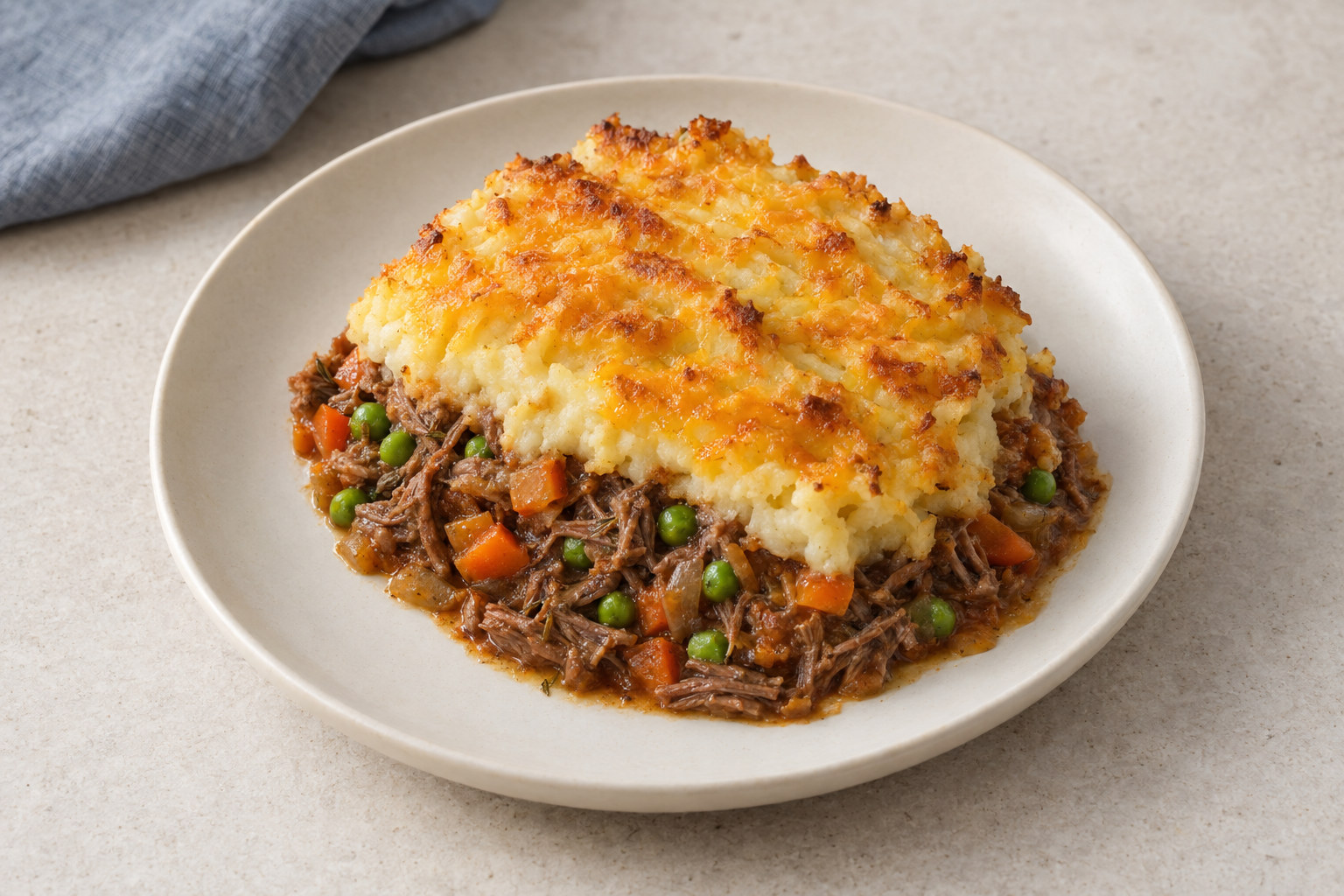
Buttery mash softens the rich beef, while carrots and peas add sweetness. Cheddar deepens the savoury flavour, and thyme perfumes the filling.
Step-by-step method
What you will need
- kitchen scales
- knife and chopping board
- probe thermometer
- 3 l saucepan
- 26 cm frying pan
- potato masher
- small saucepan for the milk
- 20 × 16 cm baking dish, at least 2 l
- oven
Before we start
We make the filling while the potatoes cook. We assemble both layers while they are hot.
We cook the potatoes
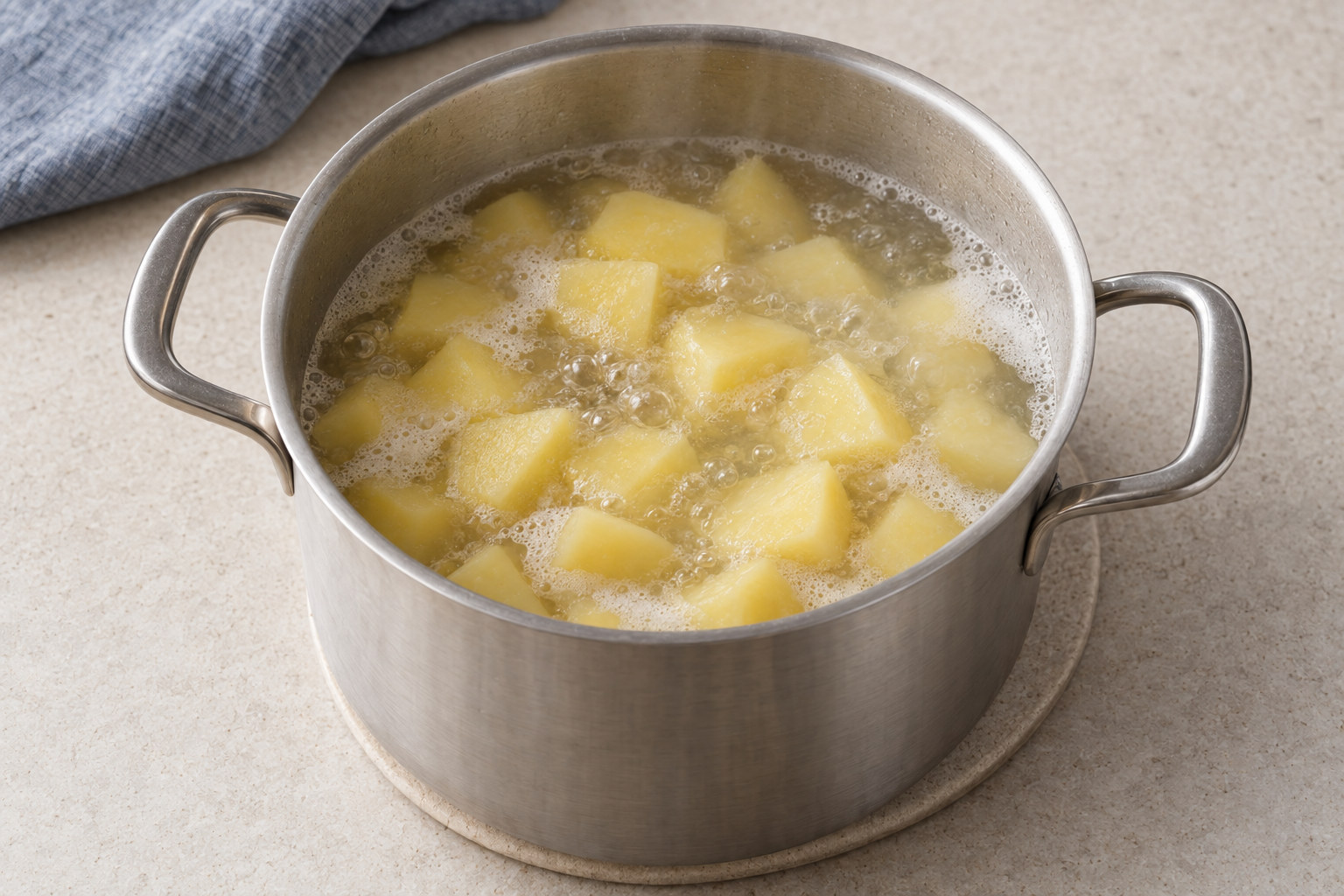
We preheat the conventional oven to 200 °C. We peel the potatoes and cut them into 3 cm cubes. In a 3 l pan, we cover them with unsalted water and bring it to the boil. From the start of a gentle boil, we cook for 15–18 minutes until tender.
A cube crushes easily with a fork; we do not add water to the mash.
We soften the vegetables with the purée
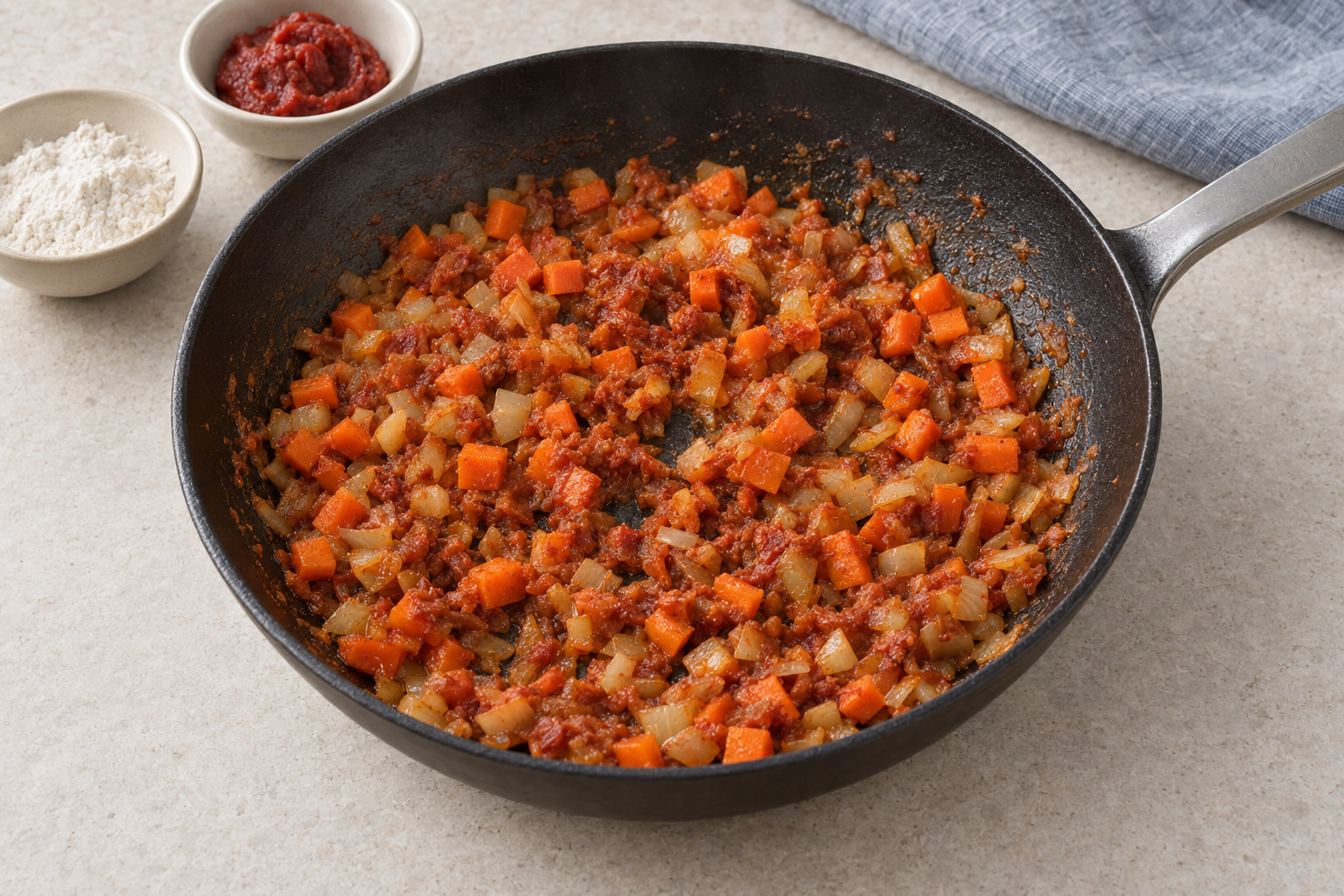
We peel the onion and carrot and cut them into 5 mm dice. In a 26 cm frying pan, we cook them in 2 tsp oil over a medium heat for 8 minutes. We stir in 20 g tomato purée and cook for 1 minute, then add 10 g flour and stir for another minute.
The vegetables soften; the flour and purée coat them lightly without catching.
We finish the beef filling
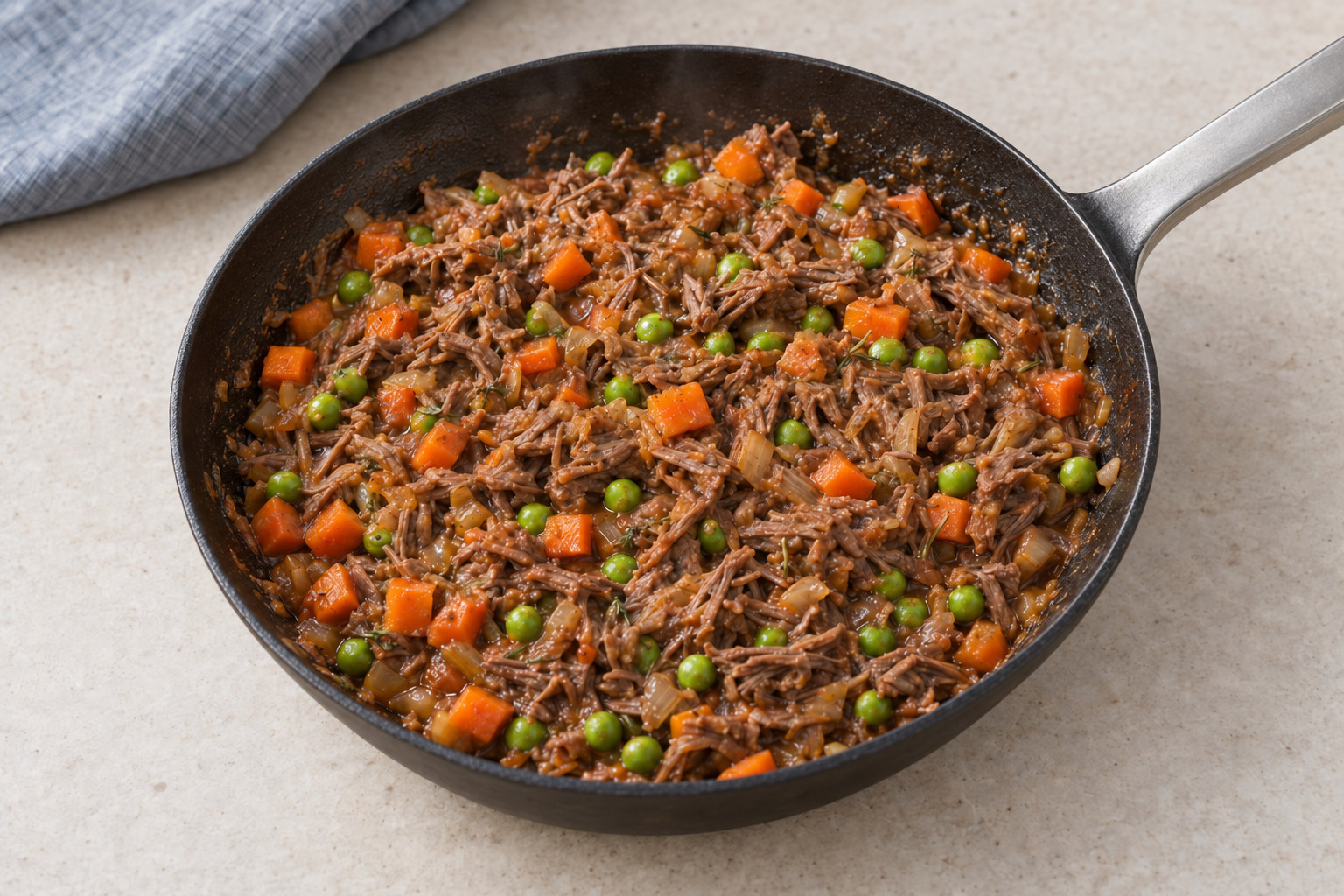
We wash and dry the thyme and strip off the leaves. Stirring, we pour in 150 ml water and simmer gently for 5 minutes. We add the peas, thyme, pepper and 250 g beef. We heat for another 6–8 minutes until the centre reaches at least 74 °C, letting any excess free water evaporate.
A line drawn with a spoon closes slowly; no clear water runs from the filling.
We make a thick mash
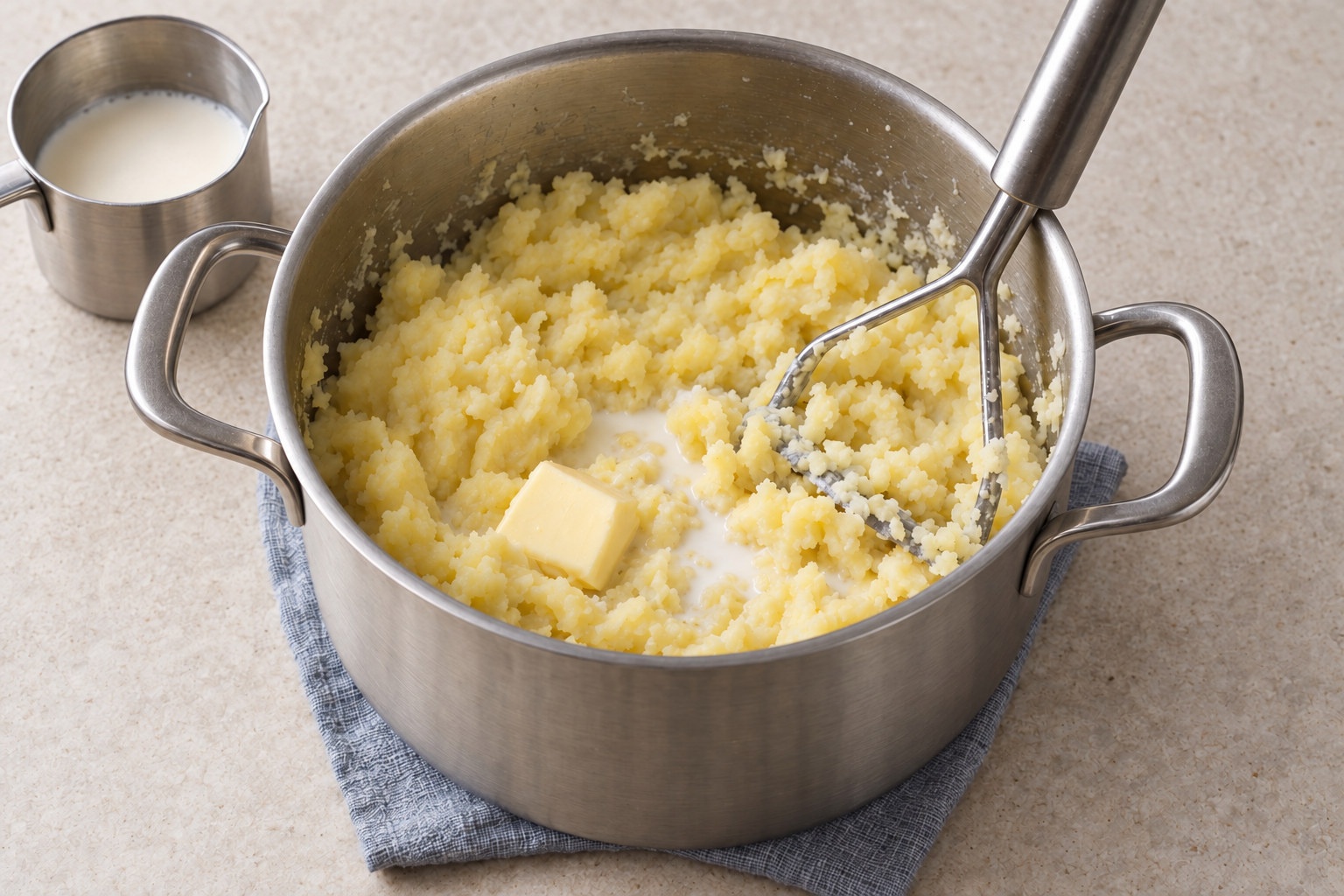
We drain the potatoes, return them to the warm pan for 1 minute and let them steam-dry. We mash by hand and stir in 1½ tbsp butter and 60 ml warmed milk. We add no salt.
The mash holds a soft mound and is neither runny nor sticky.
We assemble and bake
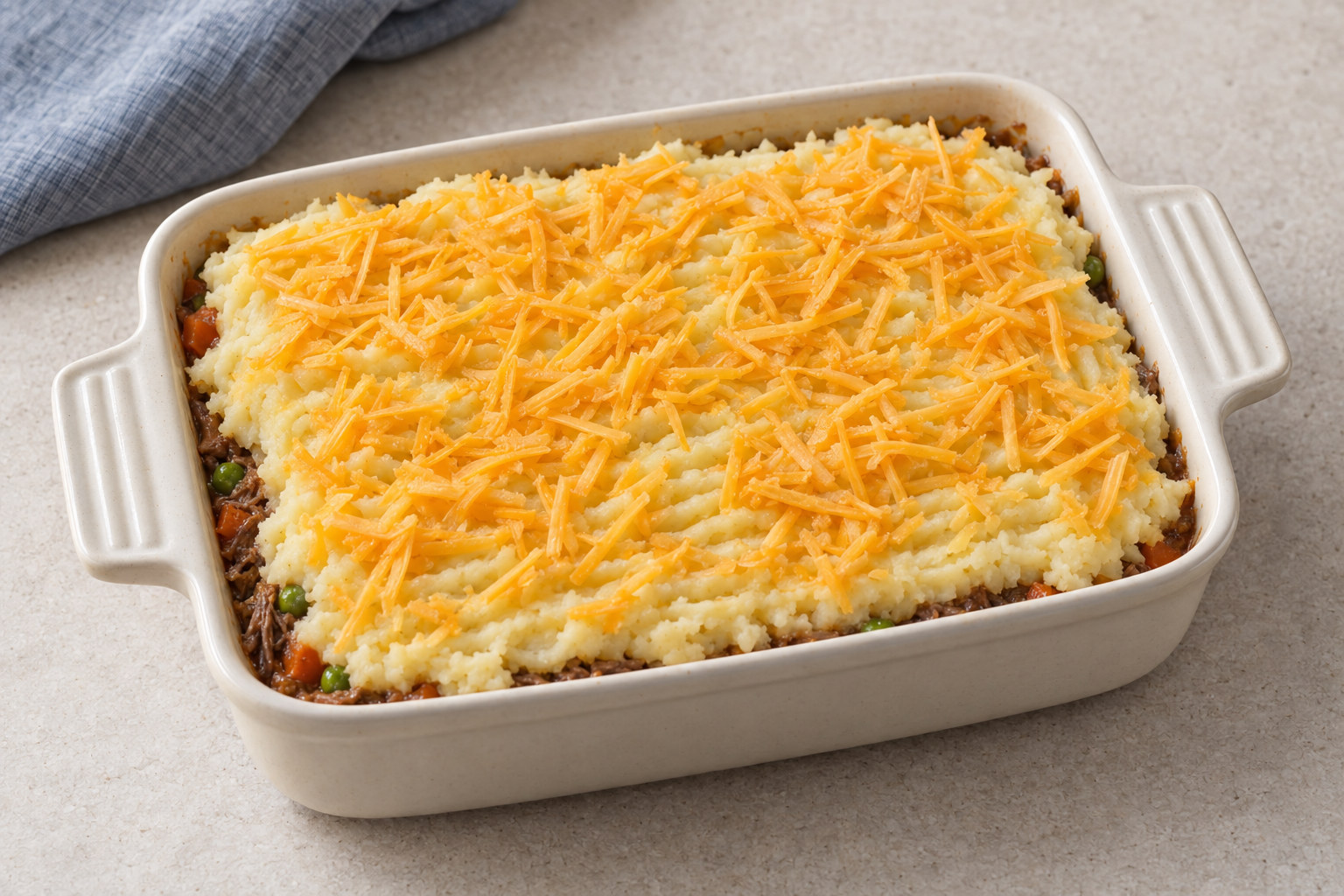
We spread the hot filling in a 20 × 16 cm dish of at least 2 l. We add the mash in small mounds and smooth it into an even layer. We make shallow ridges with a fork, scatter over 30 g finely grated Cheddar and bake for 20–25 minutes. We check that the centre of the finished pie has reached at least 74 °C.
The filling bubbles at the edges, and golden peaks form on the potato topping.
We rest and serve
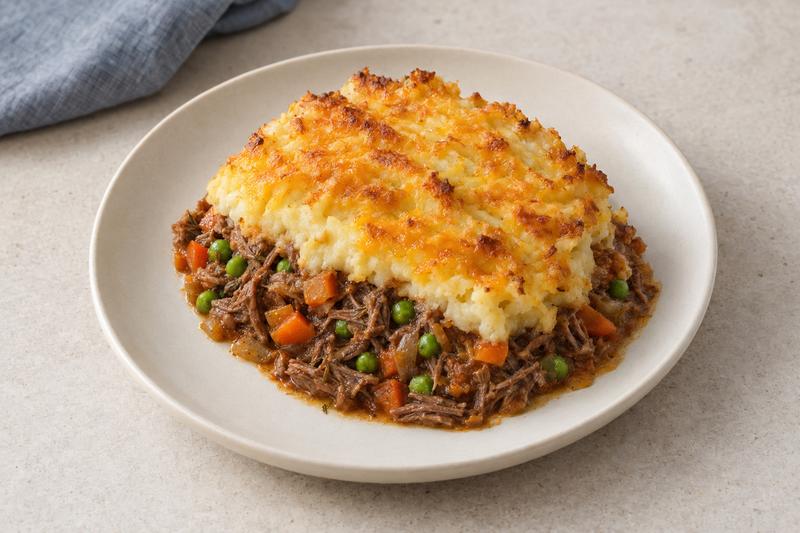
We leave the pie to stand for 5 minutes after taking it out. We divide it into 2 portions, serving from the bottom so each plate gets filling and mash.
Each portion is soft and juicy, with no watery puddle around it.
Tips from our kitchen
- We use cheddar only as a thin topping; we do not add salt to the filling or mash.
- We add the mash in small portions so we do not press it into the filling.
What to watch out for
- After draining, we let the potatoes steam-dry; otherwise the topping may spread while baking.
- We do not mistake a golden top for a hot centre; we check the centre with a probe.
How we serve it
- We serve the pie after a short rest; each portion includes both the beef filling and the potato topping.
Ingredient swaps
Cheddar
the same amount of Gouda The topping will be milder and less pronounced; we do not add extra salt.
peas
the same weight of small broccoli florets We add them to the filling with the beef and check that they have softened.
Ingredient notes
- We use ready-cooked pulled beef in a 500 g pack. It contains 1.7 g salt per 100 g, so we do not add more salt.
During preparation
- We use cooked meat. Before heating, we weigh out what we need, then cover the rest and refrigerate it at 5 °C or below straight away. We use it within 48 hours of opening. We reheat the dish to at least 74 °C at its coolest point.
Our inspiration
A potato topping gives cooked meat a new form. It seals in the juicy filling, and one generous spoonful brings up both meat and topping. For our beef version, we add only a thin layer of cheddar to the mash, so the golden ridges made with a fork stand out against the soft centre.
Similar recipes
Recipe for 4 people
Step-by-step method
Before we start
We mash the potatoes by hand. Before covering the filling with mash, we let any free water evaporate from the filling.
We cook the potatoes
We preheat the conventional oven to 200 °C. We peel the potatoes and cut them into 3 cm cubes. In a 4 l pan, we cover them with unsalted water and bring it to the boil. From the start of a gentle boil, we cook for 18–22 minutes until tender.
A cube crushes easily with a fork; we do not add water to the mash.
We soften the vegetables with the purée
We peel the onion and carrot and cut them into 5 mm dice. In a 30 cm frying pan, we cook them in 1½ tbsp oil over a medium heat for 10 minutes. We stir in 35 g tomato purée and cook for 1 minute, then add 18 g flour and stir for another minute.
The vegetables soften; the flour and purée coat them lightly without catching.
We finish the beef filling
We wash and dry the thyme and strip off the leaves. We pour in 260 ml water, stir and simmer gently for 6 minutes. We add the peas, thyme, pepper and 500 g beef. We heat the whole batch for 8–10 minutes until it reaches at least 74 °C throughout. We let the filling thicken until it will not run when served.
A line drawn with a spoon closes slowly; no clear water runs from the filling.
We make a thick mash
We drain the potatoes, return them to the warm pan for 2 minutes and let them steam-dry. We mash by hand and stir in 2½ tbsp butter and 110 ml warmed milk. We add no salt.
The mash holds a soft mound and is neither runny nor sticky.
We assemble and bake
We spread the hot filling in a 30 × 22 cm dish of at least 3 l. We add the mash in small mounds and smooth it into an even layer. We make shallow ridges with a fork, scatter over 55 g finely grated Cheddar and bake for 25–30 minutes. We check that the centre of the finished pie has reached at least 74 °C.
The filling bubbles at the edges, and golden peaks form on the potato topping.
We rest and serve
We leave the pie to stand for 5 minutes, divide it into four portions and serve at once, including all the beef and vegetables at the bottom of the dish.
Each portion is soft and juicy, with no watery puddle around it.