
From the Boxxi kitchen · Italian and French-inspired
Homemade tagliatelle with seafood, surimi and lemon sauce
We twirl homemade egg pasta ribbons coated in glossy lemon sauce with leek and a colourful mix of seafood and surimi around our forks. We set aside a leisurely afternoon to make, roll and cut the pasta ourselves, for tender ribbons with a pleasant bite.
We allow time to cook the squid and octopus until tender. If the pack confirms they are pre-cooked and they are already tender, we skip the long simmer and prepare the whole dish in about 145 minutes. Even this shorter time includes an hour of resting for the dough. We make the dough while the seafood cooks. We cook tough pieces for longer and add the prawns and other ready-to-eat ingredients only as we finish the sauce.
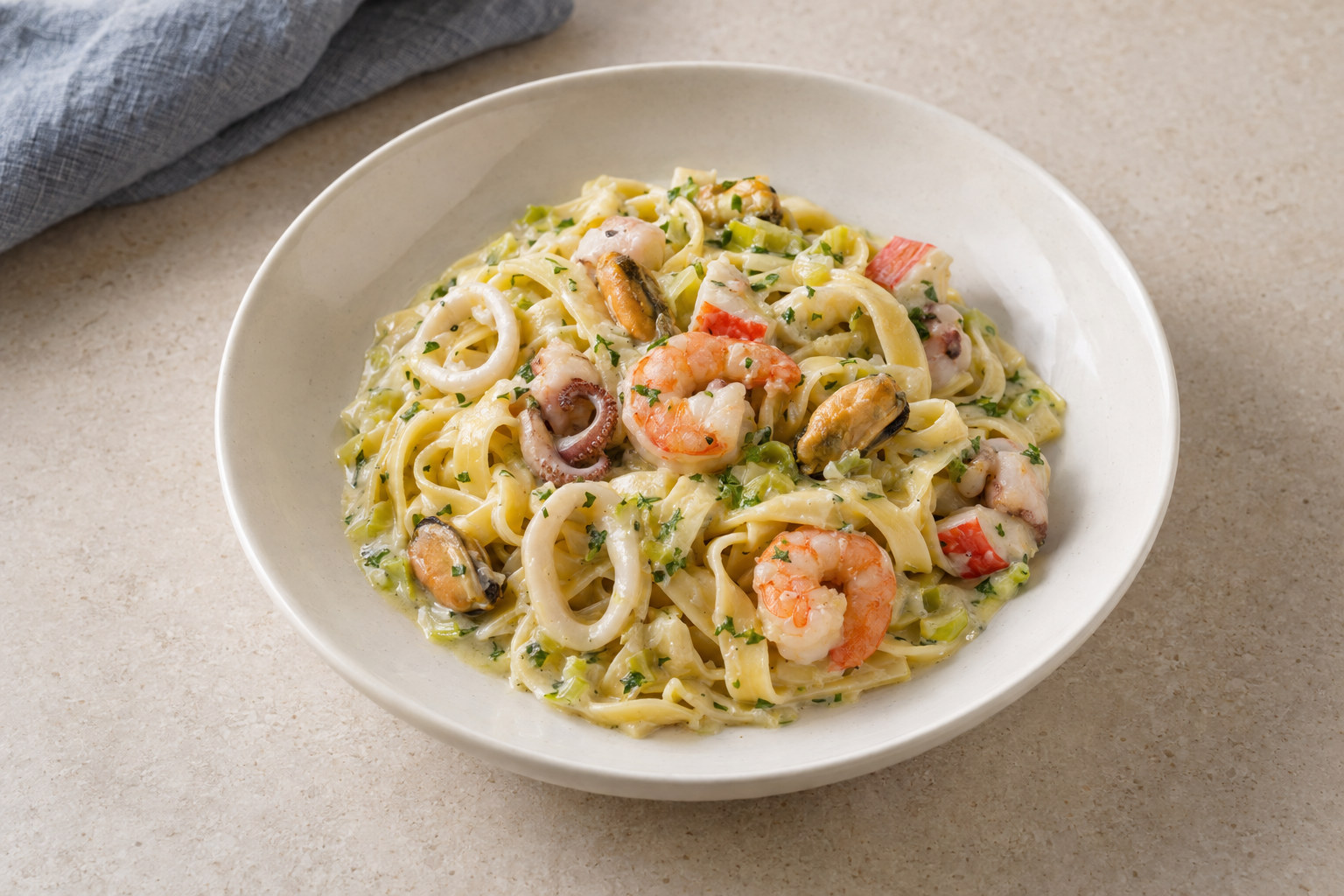
Butter and cream round out the flavour of the leek; lemon zest, juice and parsley add freshness.
Step-by-step method
What you will need
- kitchen scales
- knife and chopping board
- measuring jug
- probe thermometer
- 2 l lidded saucepan for the squid
- 1.5 l lidded saucepan for the octopus
- kettle for extra water
- sieve
- four bowls for separating the ingredients
- two clean shallow containers for the cooked squid and octopus
- tongs
- pasta machine
- rolling pin
- wrapping for resting the dough
- 1 tray, 40 × 30 cm
- baking paper
- deep 28 cm frying pan, at least 3 l
- 5 l pasta pan
- pasta tongs
- mug for the reserved cooking water
- oven for warming the plates
Before we start
We first cook the squid and octopus until tender, making the dough while they simmer. Before finishing the sauce, we warm the plates in the oven at 70 °C and bring the pasta water to the boil. We then cook the tagliatelle during the final minutes of making the sauce so we can combine both while hot. If the squid and octopus are pre-cooked and tender, we start with the dough.
Separate the mix into its components
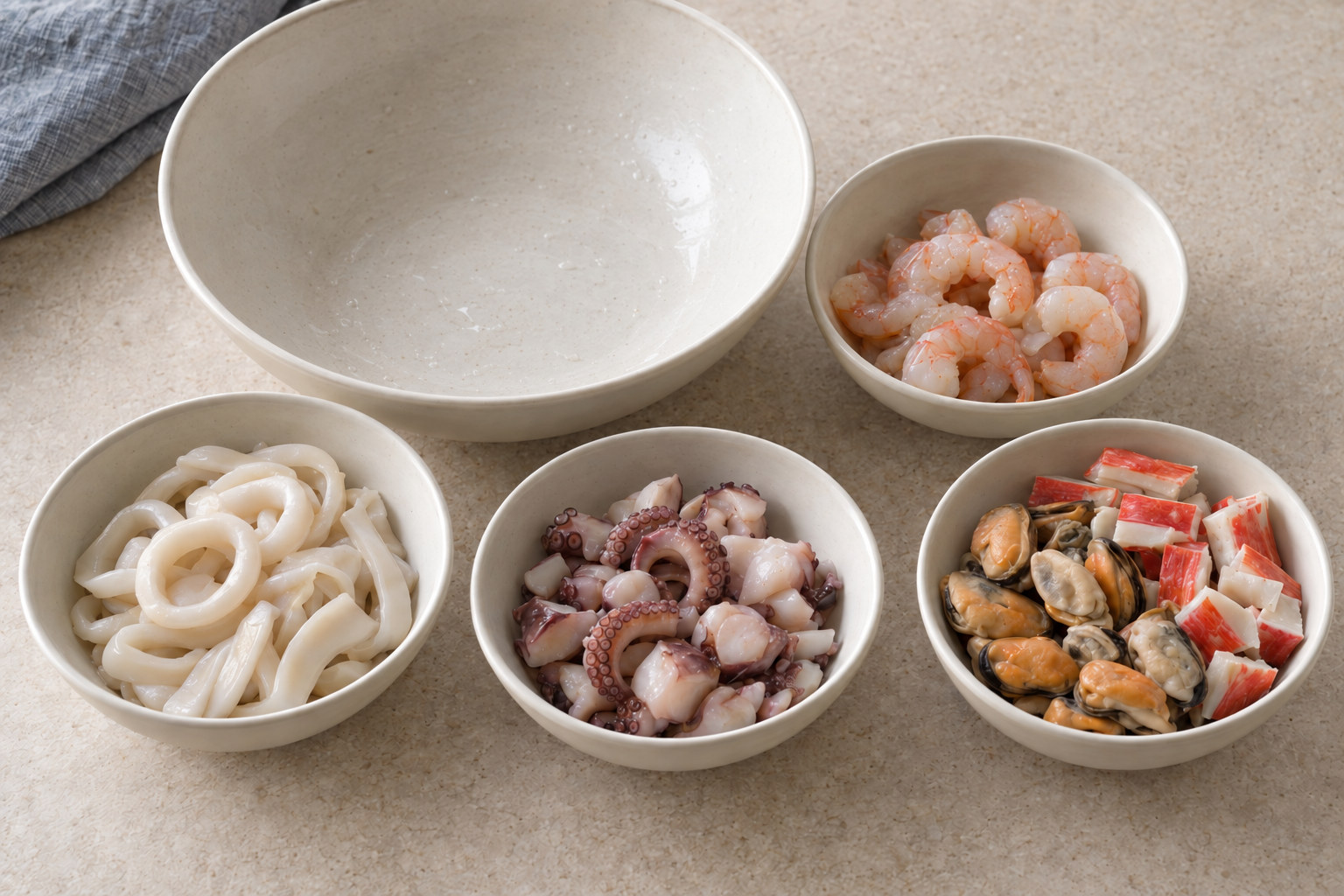
We prepare 400 g of the mix. We separate the squid, octopus and prawns, putting the ready-to-eat surimi and mussel meat in a fourth bowl. We check the label on the particular pack. If it explicitly confirms that the squid and octopus are pre-cooked and the pieces are already tender, we keep them covered and chilled and skip the long simmer in the next step. We separate cooked prawns from raw ones. If the label does not make this clear, we treat them as raw.
Red-and-white surimi is neither raw fish nor a prawn, so we add the components at different times. If we cannot tell them apart, we first check their identification on the pack.
Cook the squid and octopus until tender
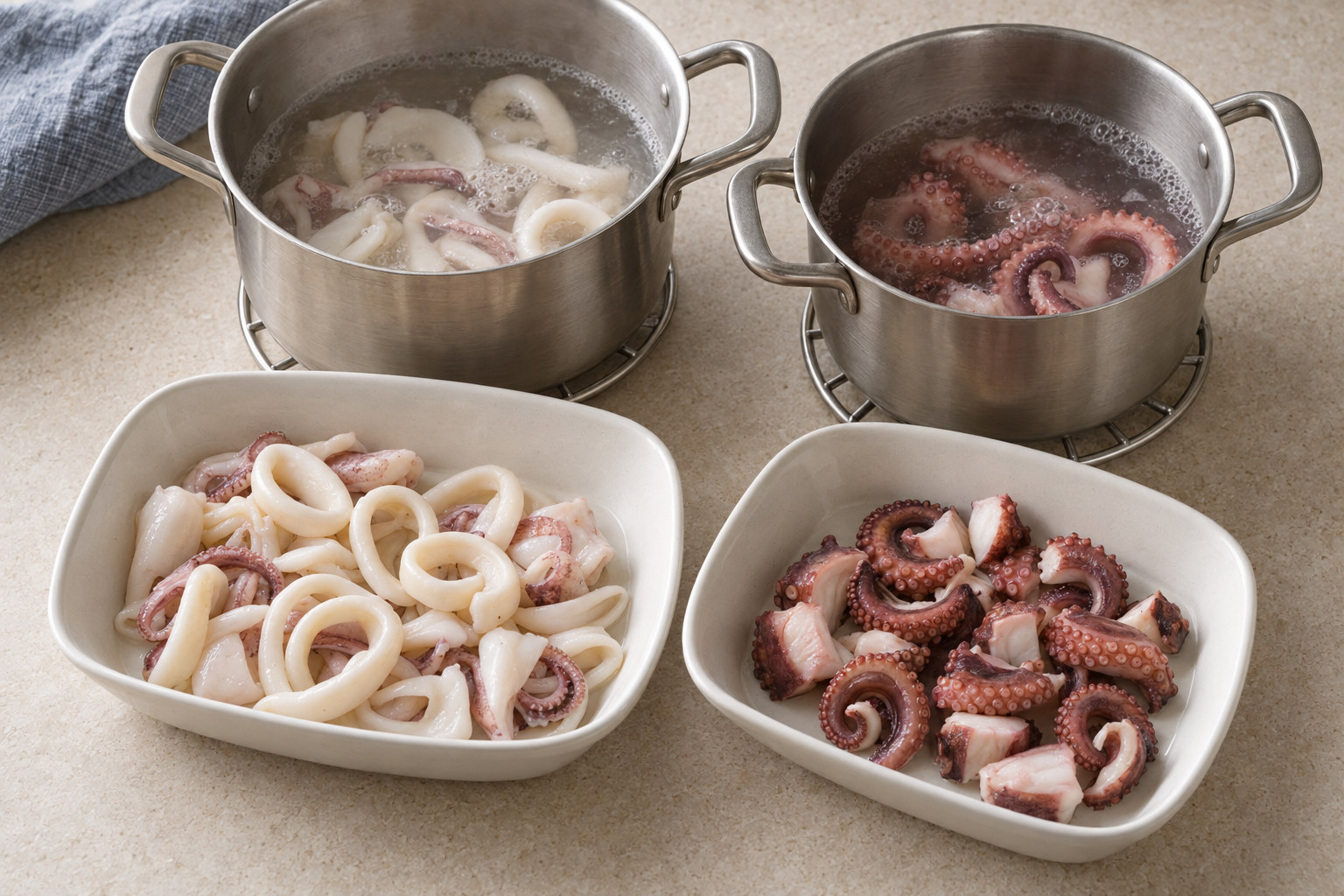
If the pack does not say the squid and octopus are pre-cooked, we put each type in a separate saucepan. We cover with unsalted water and bring to a very gentle simmer. We leave the lids slightly ajar and let the water barely bubble. From the 30-minute mark, we test each type separately for tenderness every 10–15 minutes. Cooking may take 75–100 minutes, but we remove tender pieces immediately; a knife should pass through easily without rubbery resistance. We do not wait for the other type. We top up with hot water as it evaporates so all the pieces remain submerged. We spread the cooked seafood in a single layer in a clean shallow container. We let the steam escape for no more than 10 minutes, then cover and refrigerate. We discard the cooking water. We finish the pasta and sauce once both squid and octopus are tender. If the pack confirms both are pre-cooked and they are tender, we skip this step.
We keep cooking any tough pieces and test them every 10 minutes. We do not add surimi, mussels or prawns to them.
Make and roll the pasta
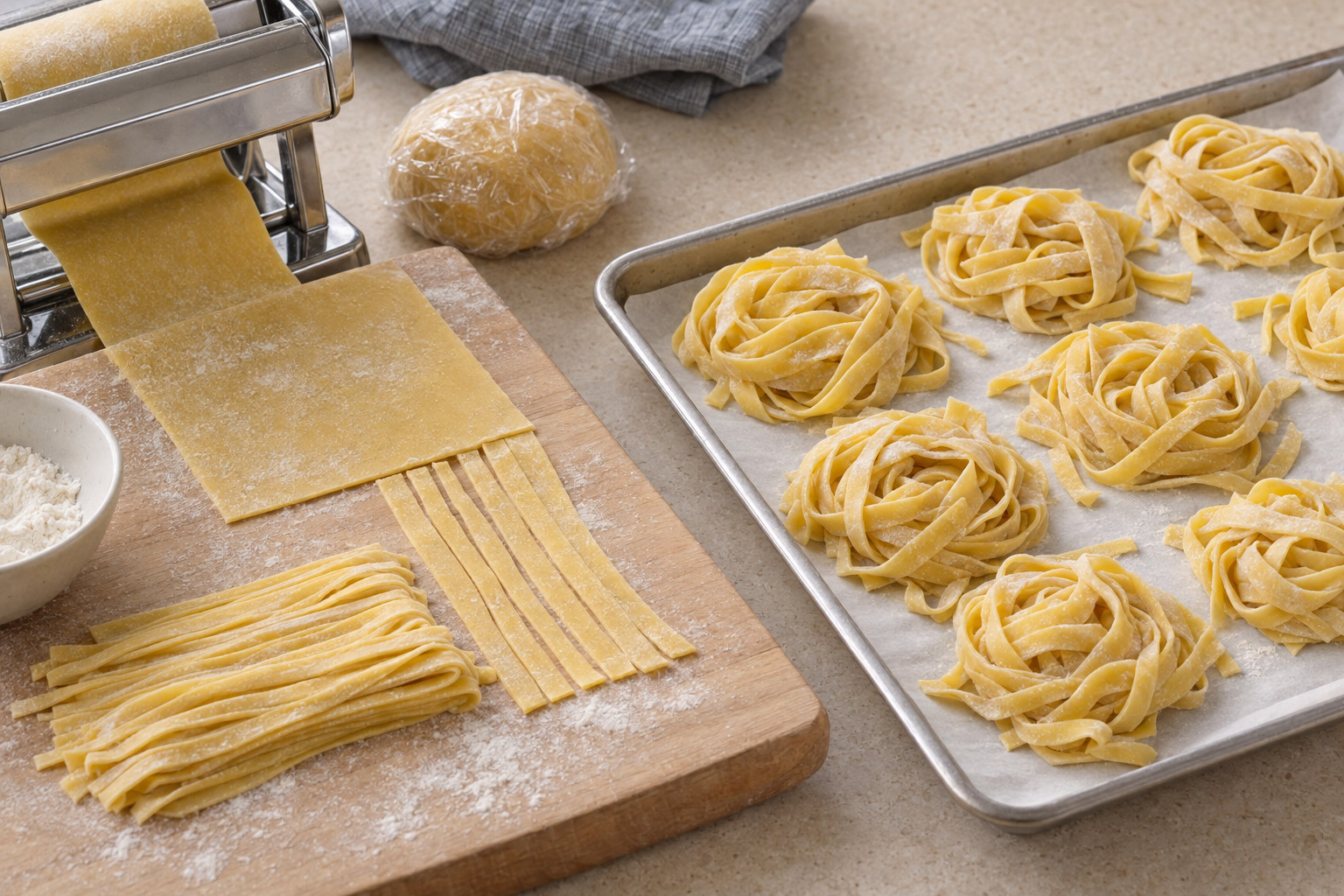
If the squid and octopus need the longer cooking time, we make the dough while they simmer. We combine 170 g flour with the eggs and two pinches of salt. We knead for 8–10 minutes, wrap and leave to rest in the fridge for an hour. We divide the dough into 2 pieces and roll them through the pasta machine into sheets about 0.8–1 mm thick, keeping the remaining pieces covered so they do not dry out. We cut the sheets into ribbons about 7 mm wide and roughly 25 cm long, dusting lightly as needed with the flour set aside for dusting. We coil the ribbons into loose nests and arrange on one tray lined with baking paper.
The dough is supple, not dry and crumbly; the ribbons lie loosely rather than sticking together in tight clumps.
Make the delicate leek sauce
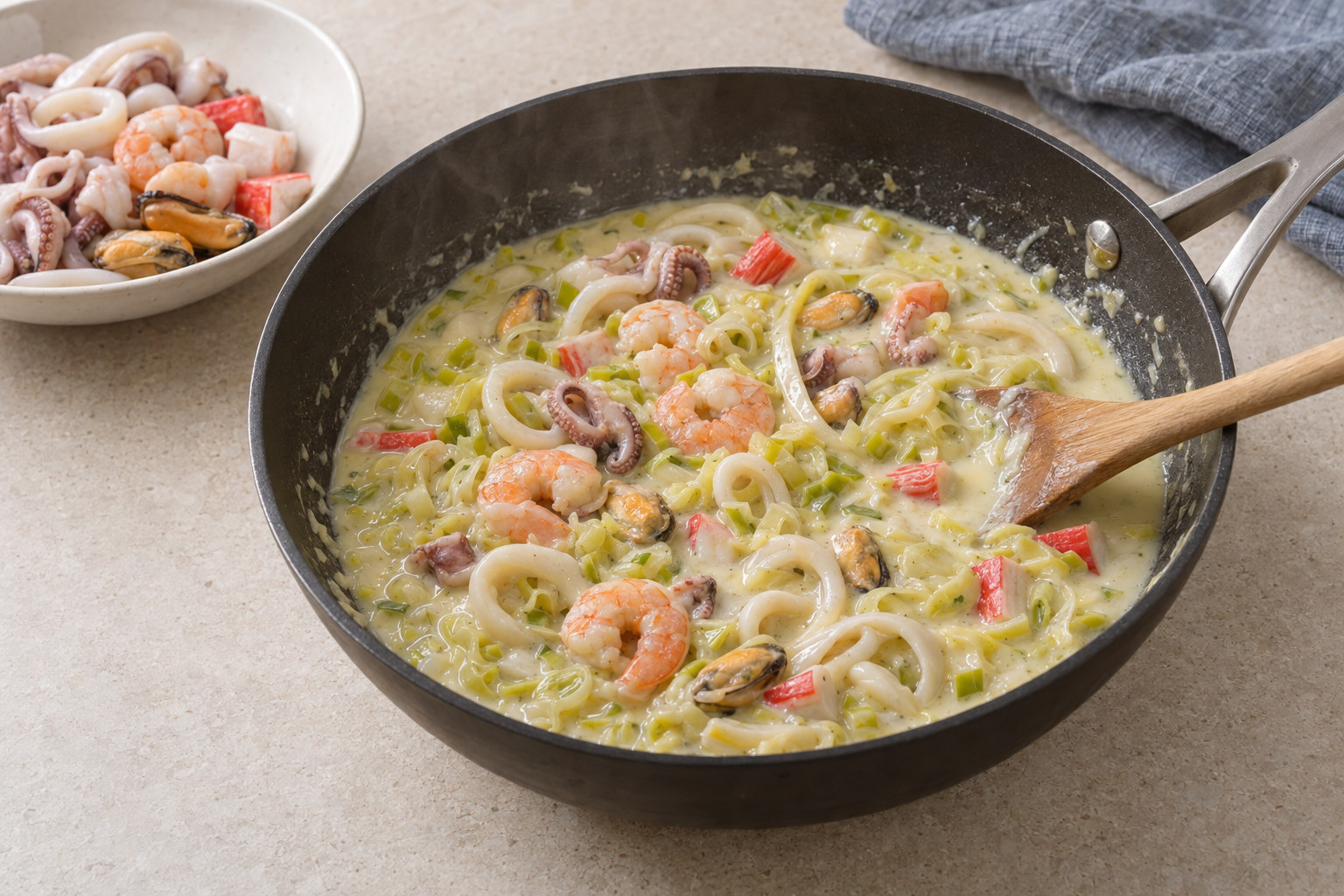
We have the cooked squid and octopus ready, with any prawns that need cooking kept separate from the ready-to-eat ingredients. We melt all the butter in a deep frying pan and gently cook the leek, cut into 3 mm half-rounds, for 6–8 minutes. We add 10 g flour, stir for a minute and gradually pour in all the unsalted stock. We simmer gently for 8 minutes, then stir in the cream, lemon zest and all the salt for the sauce. Before adding the seafood, we warm the plates in the oven at 70 °C; the pasta water must already be boiling. We first add any prawns not confirmed as cooked and simmer gently for about 3–5 minutes, until their centres are opaque and reach at least 63 °C. At the same time, we add the tender squid and octopus to heat through. We stir in the ready-to-eat surimi, mussels and any prawns confirmed as cooked only for the last 1–2 minutes, just to get them hot. Larger cold pieces must be hot inside too; we gently heat them a little longer if needed. If the label confirms that the whole mix is cooked and the squid and octopus are tender, we add all the components to the hot sauce only at the end, for about 2–3 minutes, just to heat through.
The sauce should be smooth, lightly thickened and still fluid.
Cook the tagliatelle and combine with the sauce
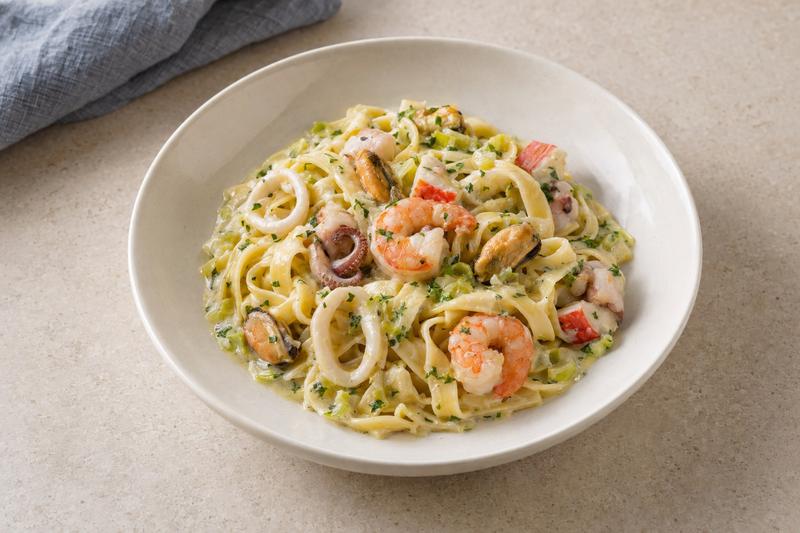
We start heating the water in a large pan while making the sauce. We add 1 ¼ teaspoons of salt to plenty of boiling water. During the last 2–3 minutes of finishing the sauce, we add all the ribbons to the water: if using raw prawns, only when their centres have almost lost their translucency; without raw prawns, at the same time as adding the cooked seafood ingredients. We gently separate the ribbons and cook for about 2–3 minutes, tasting one to check that it is springy with no raw flour taste. Before draining, we reserve 100 ml of the cooking water in a mug. We transfer the pasta into the just-finished sauce, add all the lemon juice and parsley and gently toss with tongs off the heat. As needed, we add some reserved water, a spoonful at a time; we do not use the rest. We divide between the warmed deep plates.
A thin, glossy layer of sauce coats the pasta. We do not cook it further once combined.
Tips from our kitchen
- We check the pack in advance to see which seafood is raw and which is pre-cooked, then choose the method accordingly.
- We cook the pasta only when the sauce is almost ready. The pasta cooking water helps loosen the sauce, so we add it gradually, a spoonful at a time.
What to watch out for
- We do not cook ready-to-eat surimi and mussels for the whole time alongside squid and octopus that are still tough.
- We do not leave the fresh ribbons standing in a colander after draining; we combine them with the sauce immediately.
How we serve it
- We immediately divide the pasta and sauce between warmed deep plates, distributing the seafood and surimi evenly.
Ingredient swaps
Homemade tagliatelle
150 g dried tagliatelle for two people or 280 g for four We omit the flour, eggs, dough salt and dusting flour, along with the hour of resting. We follow the pack instructions for cooking; the flavour will differ and preparation will be simpler.
Ingredient notes
- The mix is sold in a 1 kg pack and contains squid, surimi, octopus, mussels and prawns. The surimi and listed mussel meat are ready to eat; we check the label for the other ingredients. Unless pre-cooking of the squid and octopus is confirmed, we use the longer method described, checking each piece.
During preparation
- We use separate clean utensils for raw seafood and cooked food. Unless the prawns are confirmed as pre-cooked, we cook them to at least 63 °C inside; the flesh must no longer be translucent. We cook the squid and octopus until tender and add the ready-to-eat surimi and mussels only at the end.
Our inspiration
In Bologna, tagliatelle even have a gold standard. Since 1972, this model has marked the exact width of the traditional ribbon: about 7 mm before cooking and 8 mm afterwards. Even this tiny measurement is part of how the city protects its culinary traditions.
We cut equally wide ribbons from our own dough. This time, though, our lemon sauce with leek, seafood and surimi takes the place of Bolognese ragù.
Similar recipes
Recipe for 4 people
We allow time to cook the squid and octopus until tender. If the pack confirms they are pre-cooked and they are already tender, we skip the long simmer and prepare the whole dish in about 185 minutes. Even this shorter time includes an hour of resting for the dough. We make the dough while the seafood cooks. We cook tough pieces for longer and add the prawns and other ready-to-eat ingredients only as we finish the sauce.
Step-by-step method
Before we start
We first cook the squid and octopus until tender, making the dough while they simmer. Before finishing the sauce, we warm the plates in the oven at 70 °C and bring the pasta water to the boil. We then cook the tagliatelle during the final minutes of making the sauce so we can combine both while hot. If the squid and octopus are pre-cooked and tender, we start with the dough.
Separate the mix into its components
We prepare 800 g of the mix. We separate the squid, octopus and prawns, putting the ready-to-eat surimi and mussel meat in a fourth bowl. We check the label on the particular pack. If it explicitly confirms that the squid and octopus are pre-cooked and the pieces are already tender, we keep them covered and chilled and skip the long simmer in the next step. We separate cooked prawns from raw ones. If the label does not make this clear, we treat them as raw.
Red-and-white surimi is neither raw fish nor a prawn, so we add the components at different times. If we cannot tell them apart, we first check their identification on the pack.
Cook the squid and octopus until tender
If the pack does not say the squid and octopus are pre-cooked, we put each type in a separate saucepan. We cover with unsalted water and bring to a very gentle simmer. We leave the lids slightly ajar and let the water barely bubble. From the 30-minute mark, we test each type separately for tenderness every 10–15 minutes. Cooking may take 75–100 minutes, but we remove tender pieces immediately; a knife should pass through easily without rubbery resistance. We do not wait for the other type. We top up with hot water as it evaporates so all the pieces remain submerged. We spread the cooked seafood in a single layer in a clean shallow container. We let the steam escape for no more than 10 minutes, then cover and refrigerate. We discard the cooking water. We finish the pasta and sauce once both squid and octopus are tender. If the pack confirms both are pre-cooked and they are tender, we skip this step.
We keep cooking any tough pieces and test them every 10 minutes. We do not add surimi, mussels or prawns to them.
Make and roll the pasta
If the squid and octopus need the longer cooking time, we make the dough while they simmer. We combine 340 g flour with the eggs and a quarter of a teaspoon of salt. We knead for 8–10 minutes, wrap and leave to rest in the fridge for an hour. We divide the dough into 4 pieces and roll them through the pasta machine into sheets about 0.8–1 mm thick, keeping the remaining pieces covered so they do not dry out. We cut the sheets into ribbons about 7 mm wide and roughly 25 cm long, dusting lightly as needed with the flour set aside for dusting. We coil the ribbons into loose nests and arrange on two trays lined with baking paper.
The dough is supple, not dry and crumbly; the ribbons lie loosely rather than sticking together in tight clumps.
Make the delicate leek sauce
We have the cooked squid and octopus ready, with any prawns that need cooking kept separate from the ready-to-eat ingredients. We melt all the butter in a deep frying pan and gently cook the leek, cut into 3 mm half-rounds, for 6–8 minutes. We add 18 g flour, stir for a minute and gradually pour in all the unsalted stock. We simmer gently for 8 minutes, then stir in the cream, lemon zest and all the salt for the sauce. Before adding the seafood, we warm the plates in the oven at 70 °C; the pasta water must already be boiling. We first add any prawns not confirmed as cooked and simmer gently for about 3–5 minutes, until their centres are opaque and reach at least 63 °C. At the same time, we add the tender squid and octopus to heat through. We stir in the ready-to-eat surimi, mussels and any prawns confirmed as cooked only for the last 1–2 minutes, just to get them hot. Larger cold pieces must be hot inside too; we gently heat them a little longer if needed. If the label confirms that the whole mix is cooked and the squid and octopus are tender, we add all the components to the hot sauce only at the end, for about 2–3 minutes, just to heat through.
The sauce should be smooth, lightly thickened and still fluid.
Cook the tagliatelle and combine with the sauce
We start heating the water in a large pan while making the sauce. We add 2 ¼ teaspoons of salt to plenty of boiling water. During the last 2–3 minutes of finishing the sauce, we add all the ribbons to the water: if using raw prawns, only when their centres have almost lost their translucency; without raw prawns, at the same time as adding the cooked seafood ingredients. We gently separate the ribbons and cook for about 2–3 minutes, tasting one to check that it is springy with no raw flour taste. Before draining, we reserve 180 ml of the cooking water in a mug. We transfer the pasta into the just-finished sauce, add all the lemon juice and parsley and gently toss with tongs off the heat. As needed, we add some reserved water, a spoonful at a time; we do not use the rest. We divide between the warmed deep plates.
A thin, glossy layer of sauce coats the pasta. We do not cook it further once combined.