
Boxxi original cuisine · Greek and Mediterranean inspiration
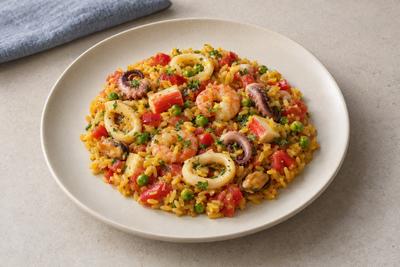
Tomato orzo with seafood, surimi and lemon
Small orzo pasta is coated in a thick tomato sauce with garlic and oregano. Seafood and surimi bring a mix of tender and firmer textures, while lemon and parsley freshen the plate. We make a satisfying meal for when we fancy pasta in a slightly different form.
The timing includes the long cooking of the squid and octopus if the pack does not confirm they are pre-cooked. If both are pre-cooked and tender, we skip the long simmer and make the whole dish in about 50 minutes. Tough pieces need longer cooking. We finish cooking raw prawns at the end and only heat the ready-cooked components through.
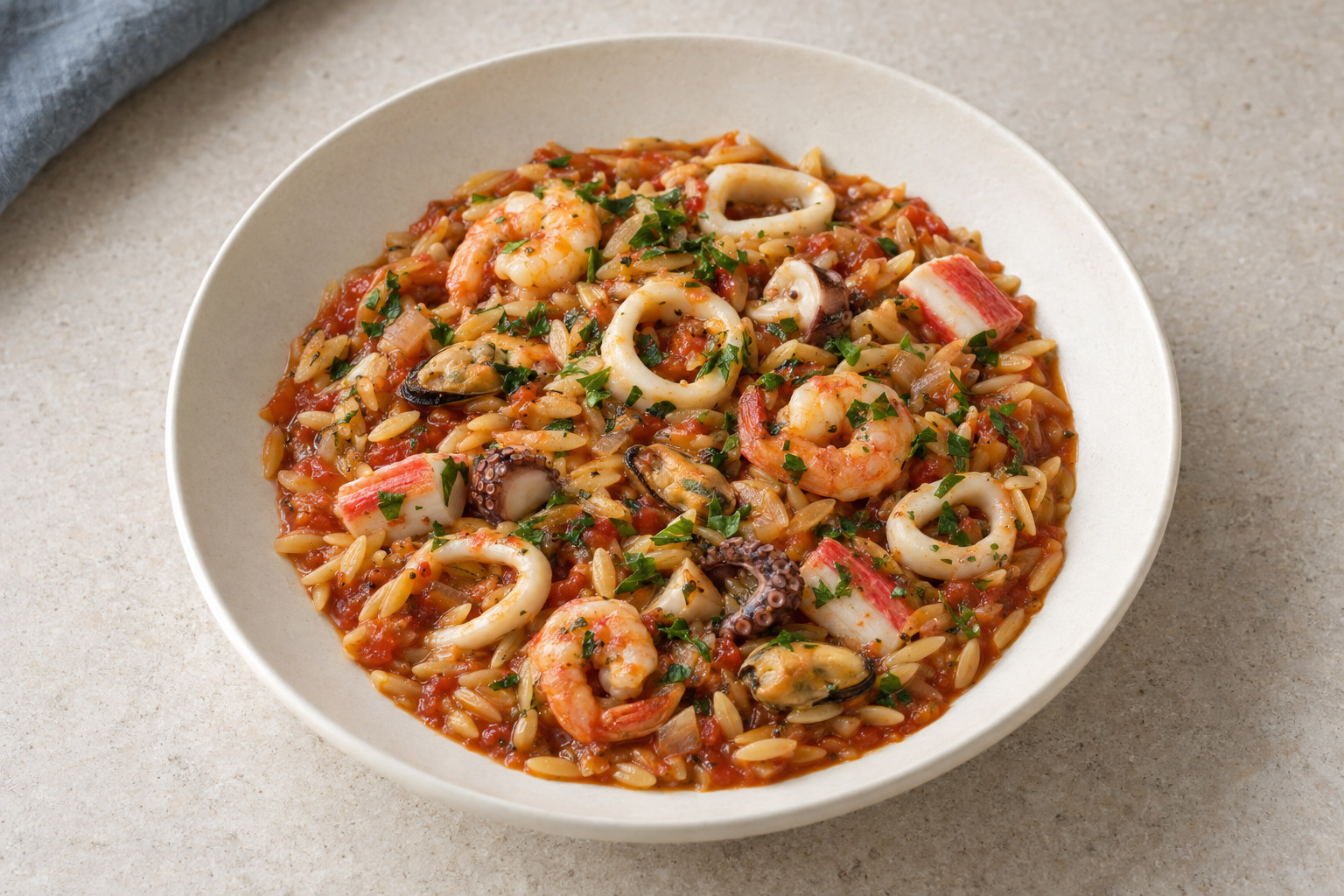
Sweet-and-sour tomatoes bring tender orzo together with seafood and mildly sweet surimi. Oregano and garlic make a fragrant base, and lemon brightens the flavour at the end.
Step-by-step method
What you will need
- kitchen scales
- knife and chopping board
- measuring jug
- probe thermometer
- 2 l saucepan with a lid for the squid
- 1.5 l saucepan with a lid for the octopus
- kettle for the reserve water
- sieve
- four bowls for the separate components
- two clean, shallow containers for the cooked cephalopods
- tongs
- deep frying pan, 28 cm and at least 3 l
Before we start
First, we cook the squid and octopus until tender. Only then do we start the orzo; we finish the pasta and seafood mix together in one deep pan.
Separate the seafood components
We measure out 400 g of the mix. We separate the squid, octopus and prawns; we put the ready-to-eat surimi and mussel meat in a fourth bowl. We check the label on this particular pack. If it explicitly confirms that the cephalopods are pre-cooked and they are already tender, we keep them covered in the fridge and skip the long simmer in the next step. We separate cooked prawns from raw ones. If the label does not make this clear, we treat them as raw.
Red-and-white surimi is not raw fish or prawns, so we add the components at different times. If we cannot identify them, we first check their labelling on the pack.
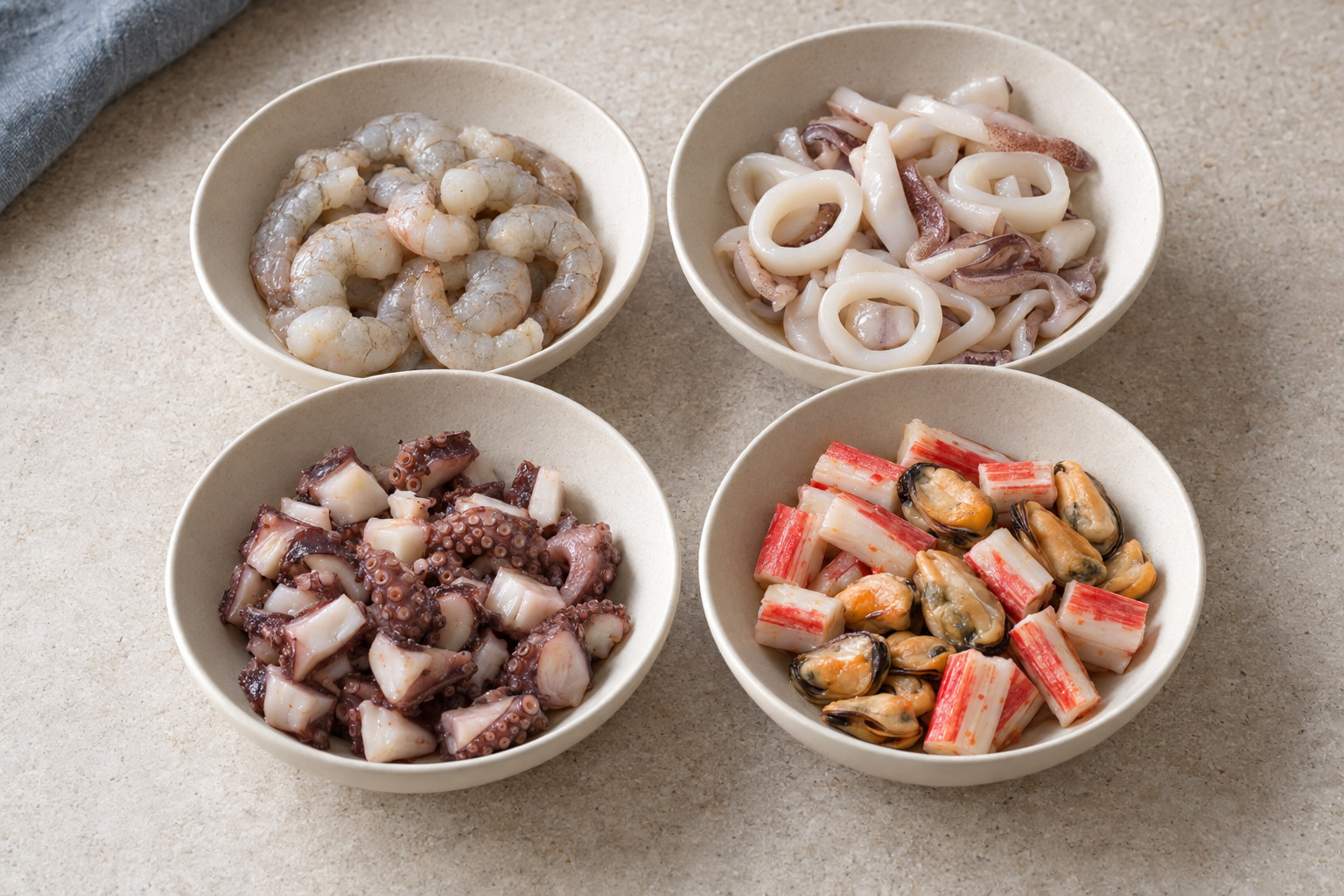
Cook the cephalopods until tender
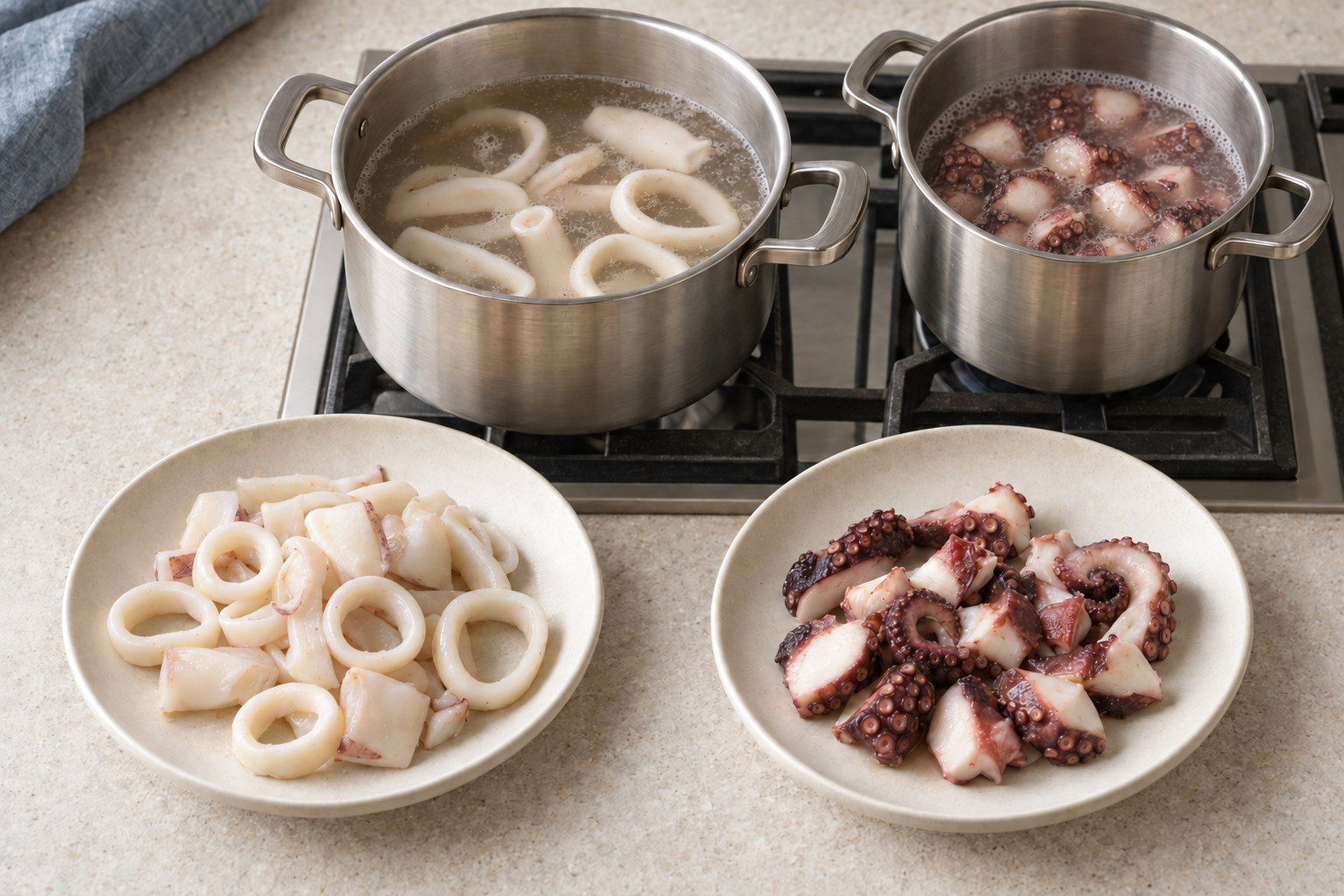
If the label does not confirm they are pre-cooked, we put the squid and octopus in separate pans and cover them with water. We do not salt the water. We bring it to a very gentle simmer, cover each pan with a small gap and let it bubble only lightly. From the 30-minute mark, we check each type separately every 10–15 minutes. We allow 75–100 minutes, but remove each piece as soon as it is tender: a knife should pass through without a rubbery resistance. We top up with hot water as needed to keep the pieces submerged. Once one type is tender, we do not wait for the other. We spread the tender pieces in a single layer in a clean, shallow container. We leave them uncovered for no more than 10 minutes to release steam, then cover and refrigerate. We do the same with the other type. We discard the cooking water. We finish the rest of the dish only when both types are tender. If the label confirms that the cephalopods are pre-cooked and tender, we skip this step and go straight to the next one.
Time is a guide, not a guarantee of tenderness; we continue cooking any pieces that are still tough in 10-minute intervals. We do not simmer ready-to-eat surimi, mussels or prawns for a long time.
Cook the tomato orzo
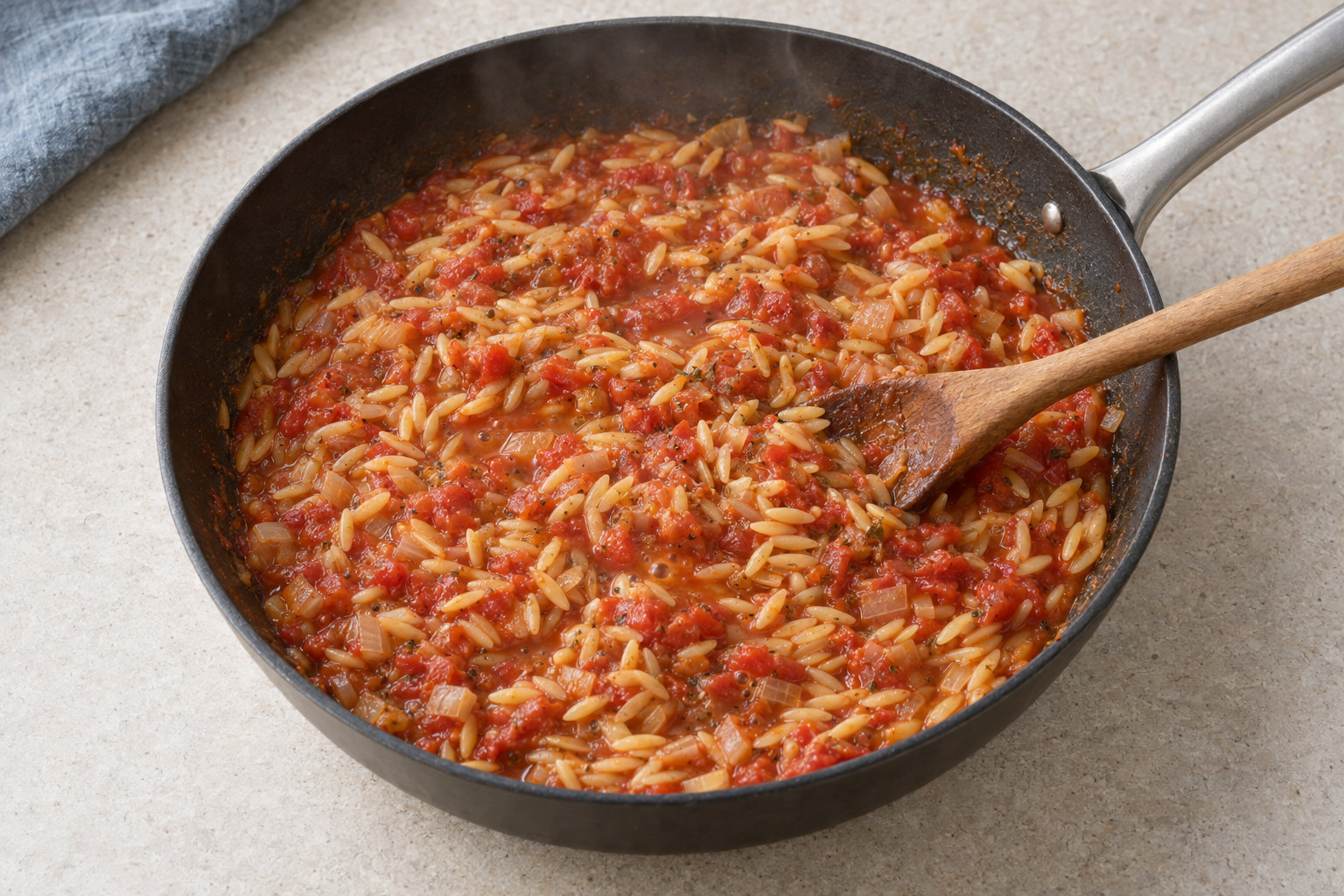
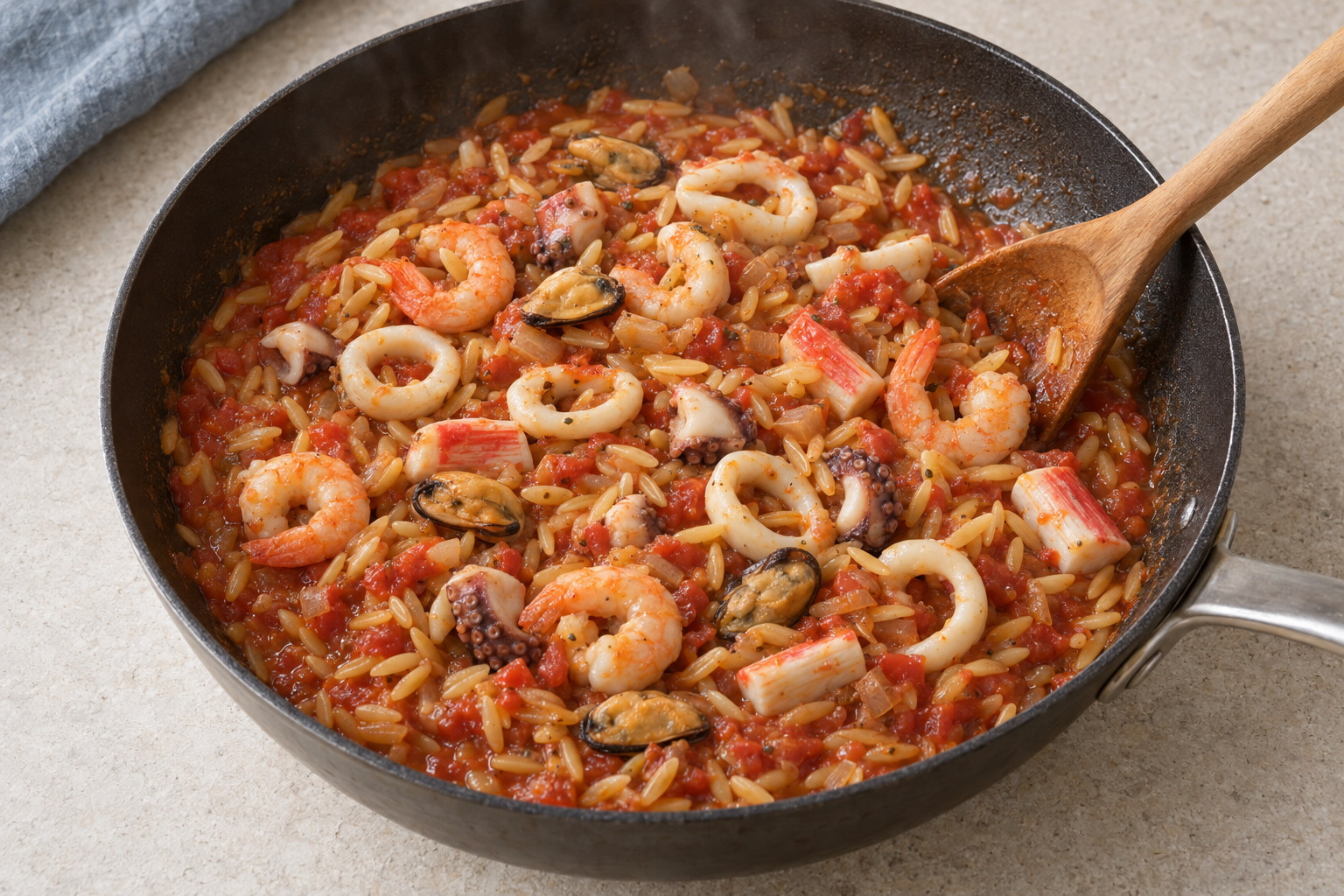
We peel and finely chop the onion and garlic. Once the cephalopods are tender, we heat all the oil in a deep frying pan. We cook the finely chopped onion for 4–5 minutes, add the garlic and stir for 30 seconds. We then add the oregano and tomatoes and simmer gently for 5 minutes. We stir in the orzo, all the salt and 260 ml water. We cook it for about 5 minutes less than the packet states for fully tender pasta, usually 5–7 minutes, stirring frequently from the bottom. If the whole seafood mix is confirmed cooked, we cook the orzo at this stage for only 2 minutes less than the packet states. We add hot water from the reserve a couple of tablespoons at a time as needed, keeping the orzo moist.
The pasta still has a firm centre; it softens as we finish the seafood. The liquid should be like a fairly loose sauce.
Add the seafood in stages
We add any prawns not confirmed as cooked first and simmer gently for about 3–5 minutes, until the centre is opaque and reaches at least 63 °C. At the same time, we add the tender cephalopods to warm through. We stir in the ready-to-eat surimi, mussels and any prawns confirmed as cooked only in the final 1–2 minutes, just to heat them through. Larger chilled pieces must be hot inside as well; we warm them gently for a little longer if needed. If the label confirms that the whole mix is cooked and the squid and octopus are tender, we add all the components to the hot base only at the end, for about 2–3 minutes, just to heat through. We keep the orzo over a low heat; if it thickens too much, we add a little of the hot reserve water set aside for the orzo.
The sauce coats the pasta, all the components are hot and the surimi holds its shape.
Finish with lemon and serve
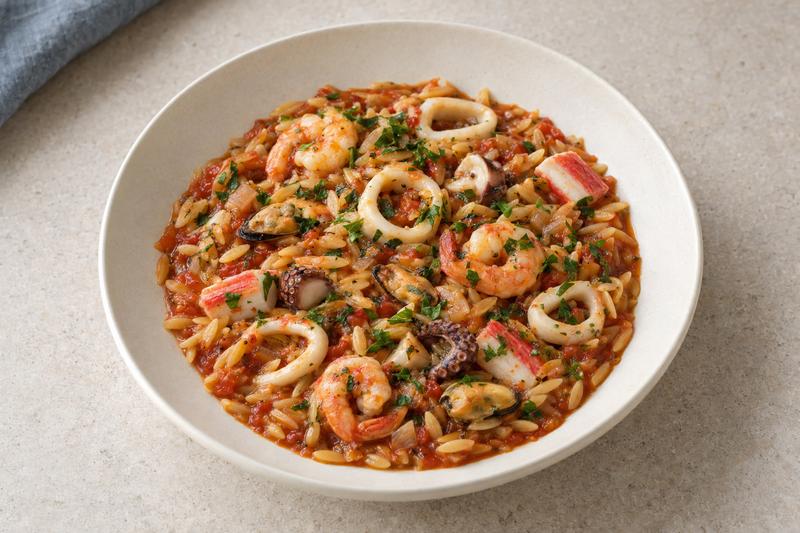
We wash, dry and chop the parsley. Off the heat, we stir it in with 2 teaspoons of lemon juice. We divide the contents of the pan evenly between two deep plates and serve immediately.
Tips from our kitchen
- We check the pack first to see which seafood is raw and which is pre-cooked, then choose the method accordingly.
What to watch out for
- We do not cook the ready-to-eat surimi and mussels for the full time with the cephalopods that still need tenderising.
How we serve it
- We divide the tomato orzo and all the seafood between deep plates, finish with lemon and parsley, and serve straight away.
Ingredient swaps
Orzo
the same dry weight of small tarhoňa pasta We follow the packet timing and top up with the reserved liquid; larger tarhoňa may need a few extra minutes.
Ingredient notes
- The mix is sold in 1 kg packs. It contains squid, surimi, octopus, mussels and prawns. The surimi and mussel meat are ready to eat; we check the label for the state of the other components. If the cephalopods are not confirmed as pre-cooked, we use the longer method described and check each piece.
During preparation
- We prepare each type of seafood according to whether it is raw or already cooked. We use clean utensils for the finished dish, separate from those used for raw ingredients. We tenderise the cephalopods separately; we only heat the ready-to-eat surimi and mussels briefly.
Our inspiration
Orzo looks like rice, but it is a small pasta. When we cook it directly with the tomatoes, it takes on their flavour and naturally thickens the sauce. We bring spoonfuls together with pieces of seafood and tender surimi, then finish with fresh lemon and parsley.
Similar recipes
Recipe for 4 people
The timing includes the long cooking of the squid and octopus if the pack does not confirm they are pre-cooked. If both are pre-cooked and tender, we skip the long simmer and make the whole dish in about 65 minutes. Tough pieces need longer cooking. We finish cooking raw prawns at the end and only heat the ready-cooked components through.
Step-by-step method
Before we start
First, we cook the squid and octopus until tender. Only then do we start the orzo; we finish the pasta and seafood mix together in one deep pan.
Separate the seafood components
We measure out 800 g of the mix. We separate the squid, octopus and prawns; we put the ready-to-eat surimi and mussel meat in a fourth bowl. We check the label on this particular pack. If it explicitly confirms that the cephalopods are pre-cooked and they are already tender, we keep them covered in the fridge and skip the long simmer in the next step. We separate cooked prawns from raw ones. If the label does not make this clear, we treat them as raw.
Red-and-white surimi is not raw fish or prawns, so we add the components at different times. If we cannot identify them, we first check their labelling on the pack.
Cook the cephalopods until tender
If the label does not confirm they are pre-cooked, we put the squid and octopus in separate pans and cover them with water. We do not salt the water. We bring it to a very gentle simmer, cover each pan with a small gap and let it bubble only lightly. From the 30-minute mark, we check each type separately every 10–15 minutes. We allow 75–100 minutes, but remove each piece as soon as it is tender: a knife should pass through without a rubbery resistance. We top up with hot water as needed to keep the pieces submerged. Once one type is tender, we do not wait for the other. We spread the tender pieces in a single layer in a clean, shallow container. We leave them uncovered for no more than 10 minutes to release steam, then cover and refrigerate. We do the same with the other type. We discard the cooking water. We finish the rest of the dish only when both types are tender. If the label confirms that the cephalopods are pre-cooked and tender, we skip this step and go straight to the next one.
Time is a guide, not a guarantee of tenderness; we continue cooking any pieces that are still tough in 10-minute intervals. We do not simmer ready-to-eat surimi, mussels or prawns for a long time.
Cook the tomato orzo
We peel and finely chop the onion and garlic. Once the cephalopods are tender, we heat all the oil in a deep frying pan. We cook the finely chopped onion for 4–5 minutes, add the garlic and stir for 30 seconds. We then add the oregano and tomatoes and simmer gently for 5 minutes. We stir in the orzo, all the salt and 480 ml water. We cook it for about 5 minutes less than the packet states for fully tender pasta, usually 5–7 minutes, stirring frequently from the bottom. If the whole seafood mix is confirmed cooked, we cook the orzo at this stage for only 2 minutes less than the packet states. We add hot water from the reserve a couple of tablespoons at a time as needed, keeping the orzo moist.
The pasta still has a firm centre; it softens as we finish the seafood. The liquid should be like a fairly loose sauce.
Add the seafood in stages
We add any prawns not confirmed as cooked first and simmer gently for about 3–5 minutes, until the centre is opaque and reaches at least 63 °C. At the same time, we add the tender cephalopods to warm through. We stir in the ready-to-eat surimi, mussels and any prawns confirmed as cooked only in the final 1–2 minutes, just to heat them through. Larger chilled pieces must be hot inside as well; we warm them gently for a little longer if needed. If the label confirms that the whole mix is cooked and the squid and octopus are tender, we add all the components to the hot base only at the end, for about 2–3 minutes, just to heat through. We keep the orzo over a low heat; if it thickens too much, we add a little of the hot reserve water set aside for the orzo.
The sauce coats the pasta, all the components are hot and the surimi holds its shape.
Finish with lemon and serve
We wash, dry and chop the parsley. Off the heat, we stir it in with 4 teaspoons of lemon juice. We divide the contents of the pan evenly between four deep plates and serve immediately.