
Boxxi original cuisine · European and Asian inspiration
Homemade pappardelle with squid ragù and herb pesto
A thick tomato ragù with tender squid coats our wide homemade pasta. On the plate, we add green pesto made with parsley, basil and almonds, bringing a fresh aroma to the long-simmered sauce. This is a dish for a leisurely day when we can enjoy rolling and cutting our own pasta.
We make the dough and pesto while the ragù simmers for a long time; we allow for resting the dough and rolling it by hand.
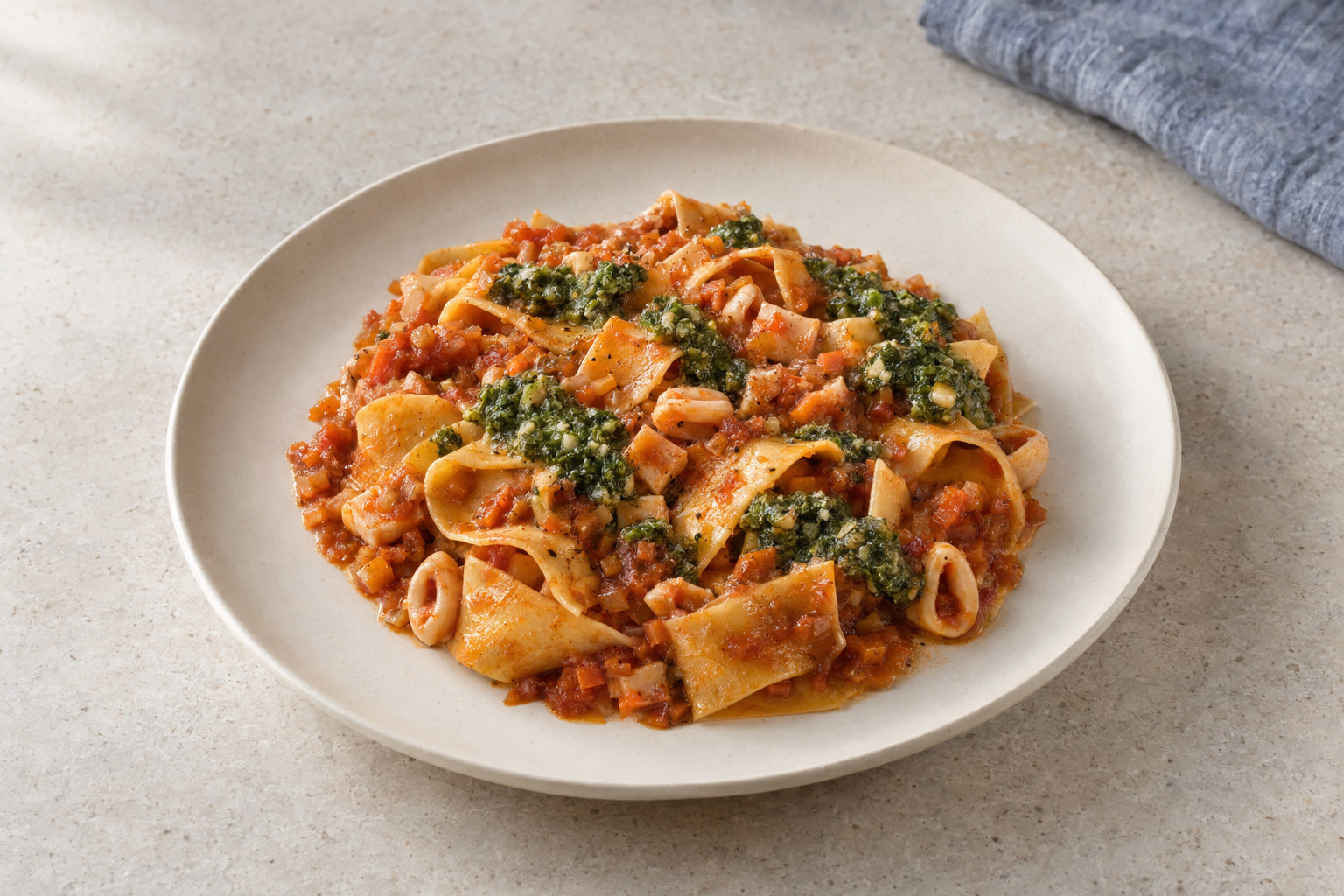
Wide egg pasta in a rich tomato ragù with tender squid, fresh herbs, almonds and lemon in the pesto.
Step-by-step method
What you will need
- kitchen scales
- knife and chopping board
- wide 3-litre saucepan with lid
- 5-litre pot
- two hob rings
- rolling pin
- small food chopper with a narrow bowl
- two 40 × 30 cm trays
- clean dry tea towels
- pasta tongs
- measuring jug
- oven
Before we start
We start simmering the ragù first; while it cooks, we make the dough and pesto. We begin rolling after the dough has rested and heat the water and plates before all the pasta is finished.
Start the delicate ragù
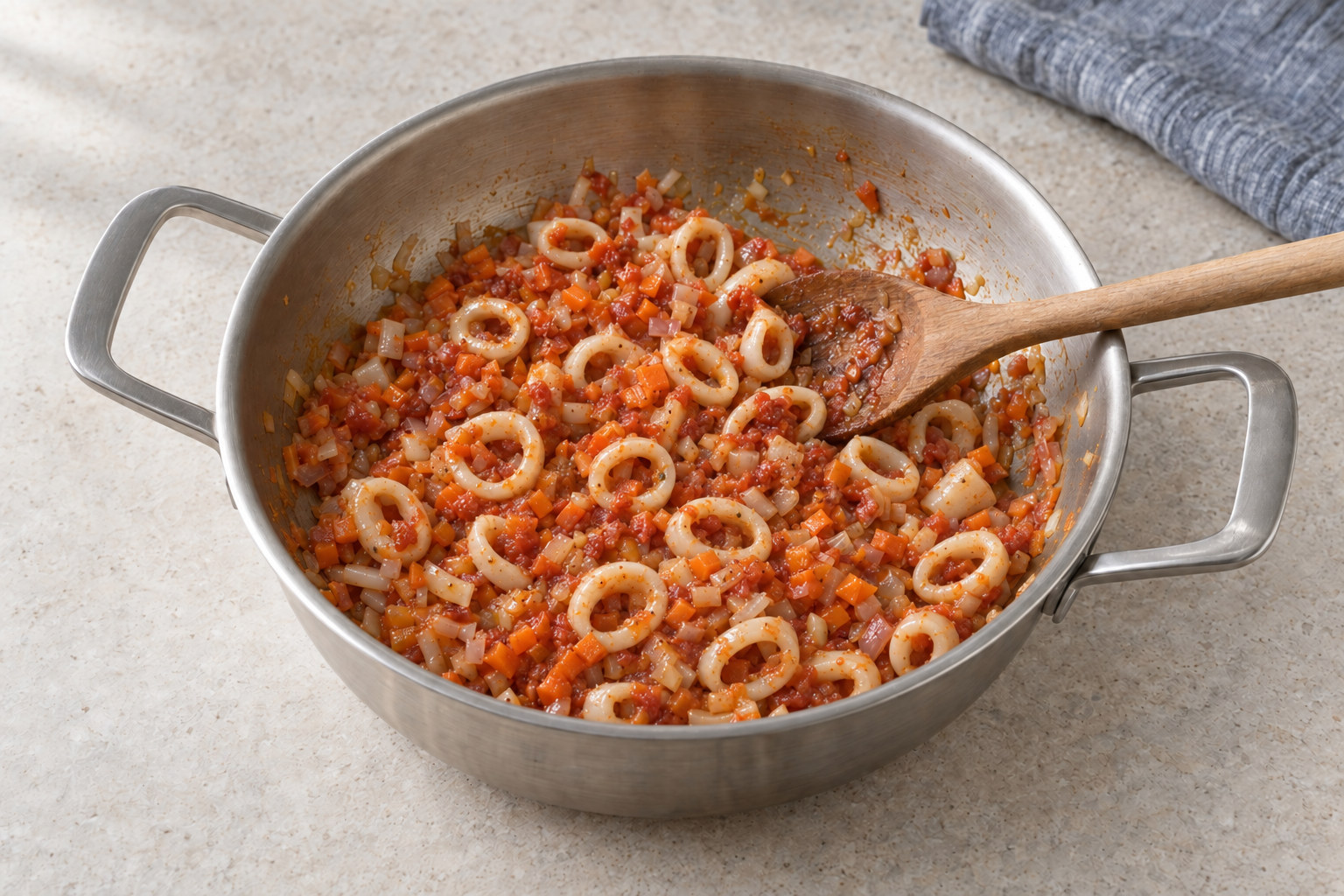
We pat the squid tubes dry and cut them crosswise into rings about 1 cm wide. We peel the shallot, carrot and garlic. We dice the shallot and carrot into 3 mm cubes and finely chop the garlic. In a wide 3-litre saucepan, we fry the vegetables in the oil for 7–8 minutes. We add the tomato purée and stir for 1 minute. We stir in the squid and heat for 2–3 minutes. We pour in the wine and let it almost evaporate over 4–5 minutes.
We cut the rings to roughly the same width and keep any juices released by the squid.
Simmer gently
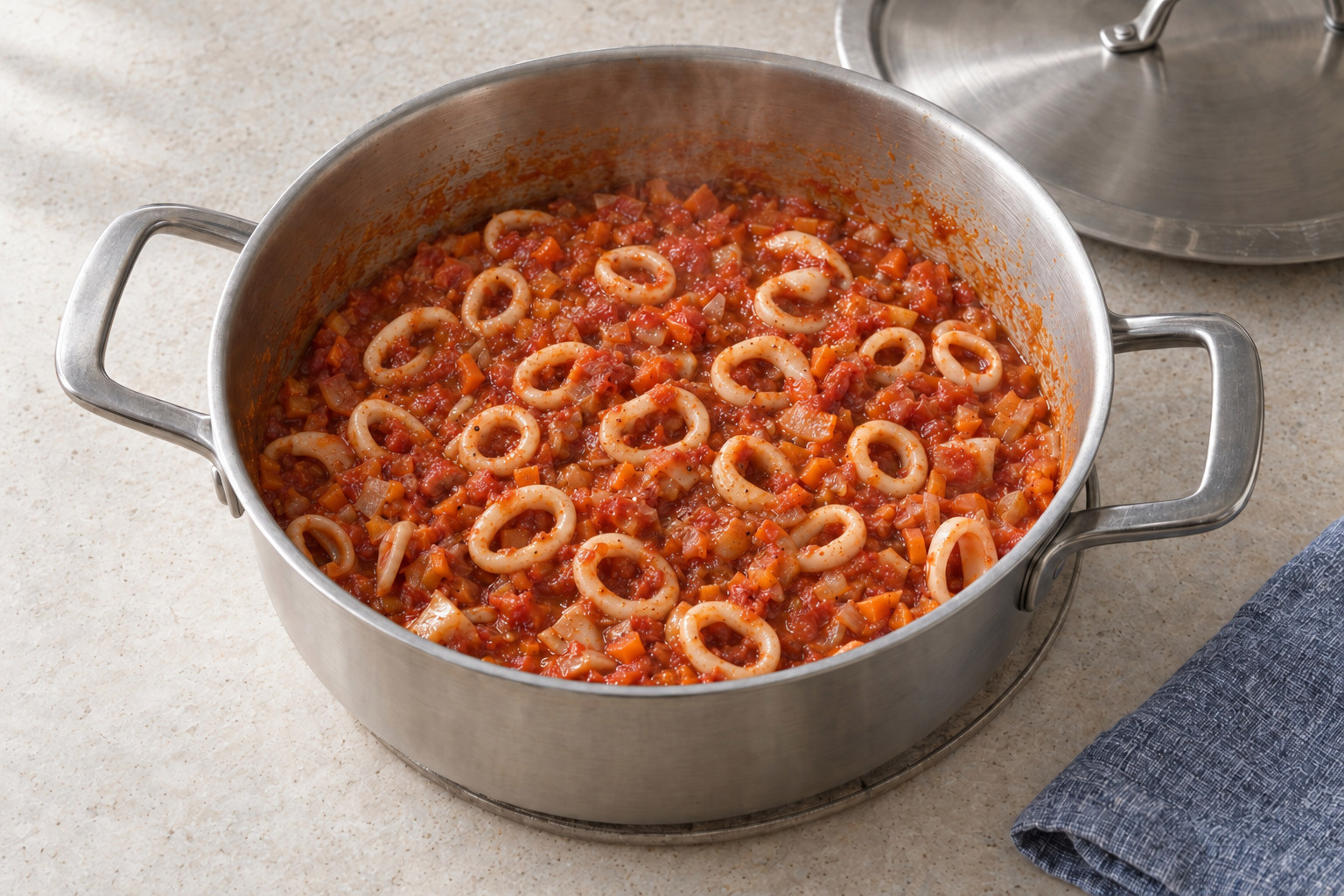
We add the passata, stock, 2 pinches of salt and pepper. We simmer gently with the lid ajar for 60–90 minutes, stirring every 15 minutes and adding 20–30 ml reserved water as needed. Towards the end, we remove the lid and reduce the sauce until it coats the pieces firmly.
The squid is tender to the bite and no separate water pools in the sauce. We cook the pasta only when the squid in the ragù is tender.
Make the dough while the ragù simmers
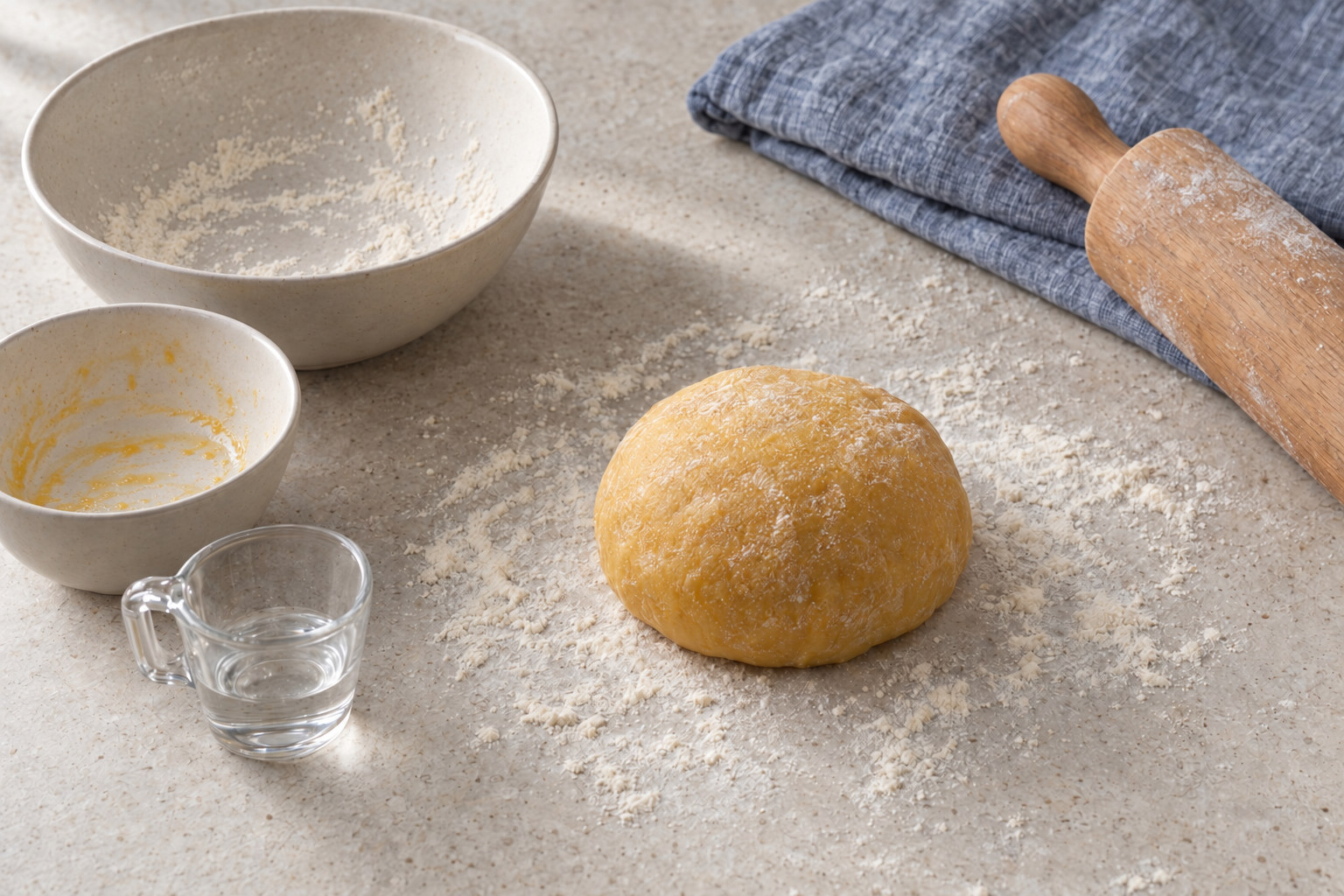
After the first 20 minutes of simmering, we bring 170 g flour together with the eggs. We knead for 8–10 minutes; only if the dough will not come together do we add a few drops of water. We wrap it and rest it for at least 30 minutes at room temperature.
The dough is smooth and elastic. We rest it before rolling so it stretches more easily.
Blend the pesto
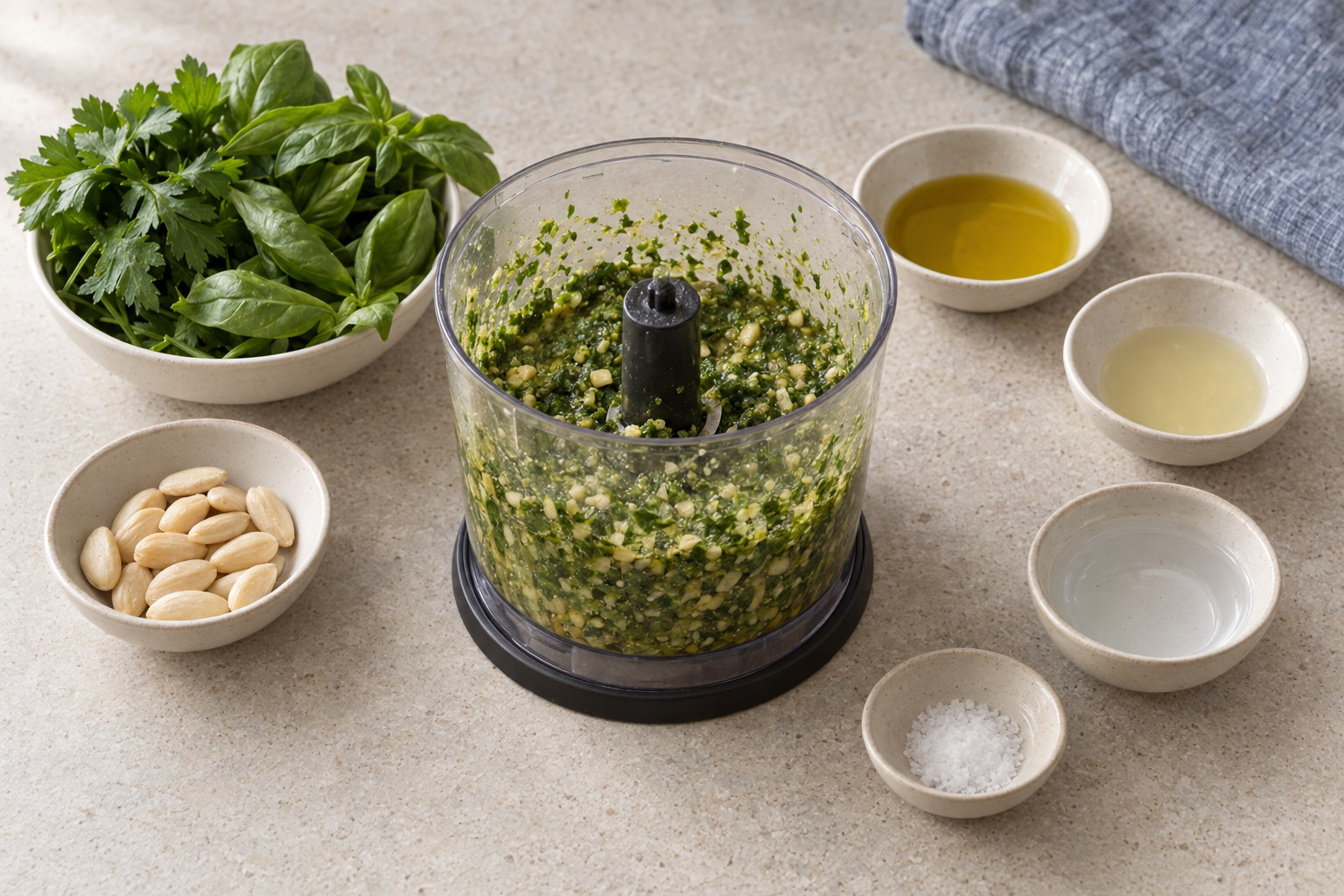
We wash and dry the parsley leaves and basil. In a small chopper with a narrow bowl, we briefly chop the almonds, parsley and basil. We add two tablespoons of oil, the lemon juice, one tablespoon of cold water and 1 pinch of salt. A few short pulses bring it together into a fine, slightly grainy pesto. We cover it and refrigerate.
We avoid heating the pesto by blending it too long and use all of it when serving.
Hand-roll the wide pasta
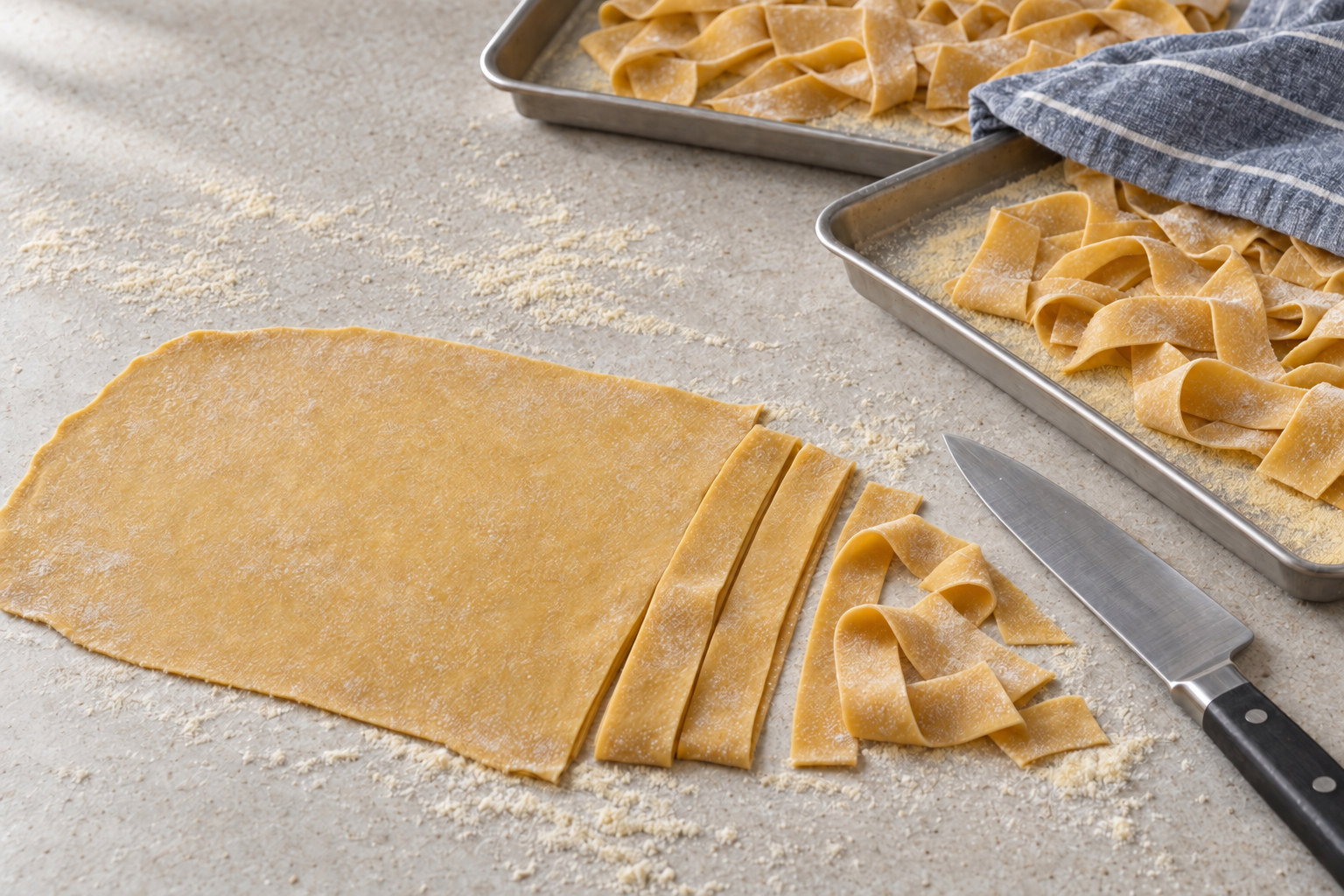
We divide the dough into three equal pieces. On a floured surface, we roll each in turn into a sheet 0.8–1 mm thick, roughly 25 × 28 cm; the dimensions are a guide and thickness matters most. We let it dry for 3–5 minutes, dust lightly, fold loosely and cut into 2 cm-wide ribbons. We unfold them and set them on two 40 × 30 cm trays lightly dusted with semolina, then loosely cover with a clean dry tea towel. While rolling, we already put plenty of salted water on to boil and set the oven to 60 °C to warm the plates.
The folded dough does not stick together. We do not compress the cut ribbons. Before cutting, we check that the sheet is thin in the centre too.
Combine the pasta and ragù
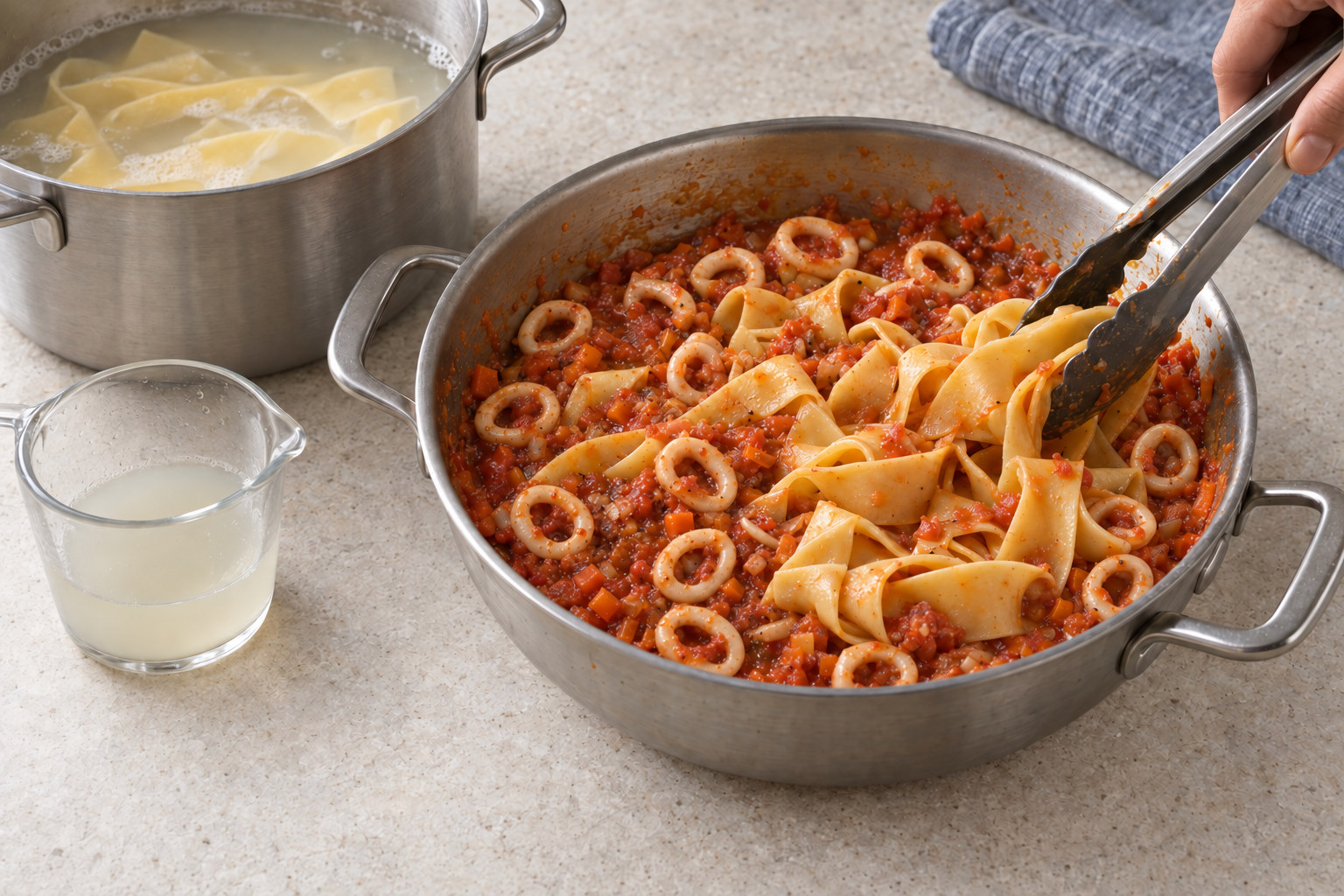
We keep the tender ragù covered over the lowest heat; it normally waits no more than 20 minutes. If rolling takes longer, we keep it at a very gentle simmer and add a little reserved water as needed. We cook the pasta in one batch in a 5-litre pot for about 2–3 minutes. We reserve 120 ml starchy cooking water, lift out the pasta with tongs and add it to the ragù. We combine over gentle heat for 30–60 seconds, adding the reserved water a tablespoon at a time according to the sauce thickness.
The wide pasta is tender with a slight bite. We add pasta water only as the sauce consistency requires.
Divide and add the pesto
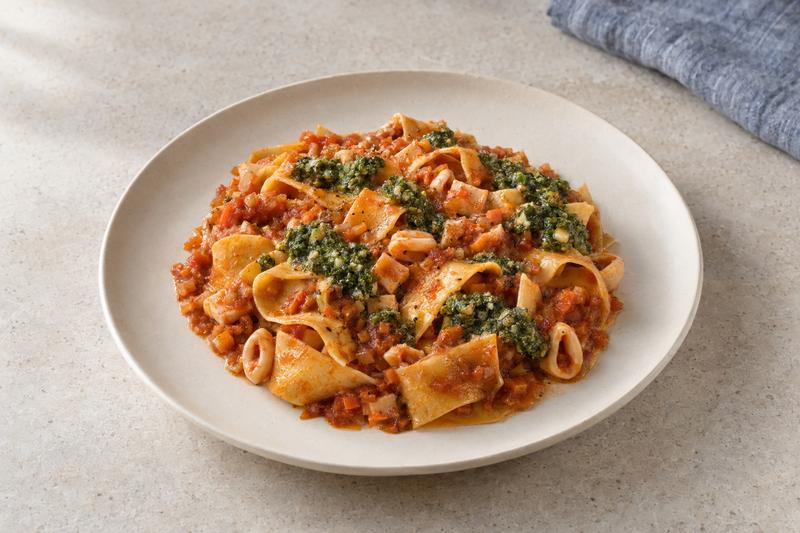
We divide all the pasta and ragù between two warm plates. We add half the fresh pesto to each portion and serve at once.
Tips from our kitchen
- We check the thin sheet at its centre too; the work surface should show faintly through it.
- We keep the other pieces wrapped while rolling.
What to watch out for
- We do not pile damp pasta tightly together.
- We do not add the pesto to the hot ragù before cooking the pasta.
How we serve it
- We divide the pappardelle with all the ragù between warm plates and add the pesto. We do not stir it into the boiling sauce, so it keeps its herbal aroma.
Ingredient notes
- We use cleaned squid tubes without tentacles.
During preparation
- We keep raw squid chilled until preparing it. We use clean utensils for the finished dish.
Our inspiration
We can make homemade pappardelle with an ordinary rolling pin. Resting the dough and rolling it evenly thin matter more than a machine, then we cut it into wide strips. Slow-simmering the squid ragù gives us time for this handwork; the finished pasta catches the sauce in its folds.
Similar recipes
Recipe for 4 people
We roll the six sheets by hand one after another. If rolling takes longer, we keep the ragù covered at a very gentle simmer and adjust its thickness just before adding the pasta.
Step-by-step method
Before we start
We make the dough and pesto while the ragù simmers. Rolling six sheets can take 40–50 minutes; if the tender ragù would wait longer than 20 minutes, we keep it at a very gentle simmer with a lid and a little reserved water, adjusting the final thickness just before adding the pasta.
Start the delicate ragù
We pat the squid tubes dry and cut them crosswise into rings about 1 cm wide. We peel the shallots, carrot and garlic. We dice the shallots and carrot into 3 mm cubes and finely chop the garlic. In a wide 5-litre saucepan, we fry the vegetables in the oil for 9–10 minutes. We add the tomato purée and stir for 1 minute. We stir in the squid and heat for another 3 minutes. We pour in the wine and let it evaporate for 5–7 minutes.
We cut the rings to roughly the same width and keep any juices released by the squid.
Simmer gently
We add the passata, stock, ¼ teaspoon salt and pepper. We simmer with the lid ajar for 70–100 minutes, stirring every quarter-hour. We add reserved water only 30–40 ml at a time if the bottom dries out. Finally, we reduce the ragù uncovered to a thick consistency.
The squid is tender to the bite and no separate water pools in the sauce. We cook the pasta only when the squid in the ragù is tender.
Make the dough while the ragù simmers
After the first 20 minutes of simmering, we mix 340 g flour with the eggs and knead for 10–12 minutes. We add a few drops of water only if the dry crumbs will not come together. We let the wrapped dough rest for at least 30 minutes.
The dough is smooth and elastic. We rest it before rolling so it stretches more easily.
Blend the pesto
We wash and dry the parsley leaves and basil. In a small chopper, we chop the almonds with both herbs. We add three tablespoons of oil, the lemon juice, five teaspoons of cold water and 1 pinch of salt, then blend briefly. We keep the pesto covered in the fridge.
We avoid heating the pesto by blending it too long and use all of it when serving.
Hand-roll the wide pasta
We divide the dough into six pieces. We roll each by hand to 0.8–1 mm thick, roughly 24 × 27 cm, let it dry for 3–5 minutes, dust it lightly and fold it loosely. We cut 2 cm-wide ribbons, unfold them at once and arrange in loose nests on four 40 × 30 cm trays dusted with semolina; we cover with dry tea towels. During the second half of rolling, we heat plenty of salted pasta water. We warm the plates in the oven at 60 °C.
The folded dough does not stick together. We do not compress the cut ribbons. Before cutting, we check that the sheet is thin in the centre too.
Combine the pasta and ragù
We keep the ragù covered at a very gentle simmer; if it waits longer than 20 minutes, we watch evaporation and loosen it with some reserved water. We cook all the pasta at once in a 7-litre pot for about 2–3 minutes. We reserve 180 ml cooking water, transfer the pasta with tongs to the ragù in the wide 5-litre saucepan and stir gently for 30–60 seconds. We add only enough starchy water, a tablespoon at a time, for the sauce to cling.
The wide pasta is tender with a slight bite. We add pasta water only as the sauce consistency requires.
Divide and add the pesto
We divide the pasta and all the ragù between four warm plates, adding a quarter of the pesto to each. We serve without delay.