
Boxxi signature cuisine · European and Asian influences
Lemon risotto with seared squid and fennel
Lemon zest perfumes our creamy fennel risotto. We sear the squid separately, so the scored edges curl gently in the pan. A little butter keeps the rice soft and creamy, a lovely contrast to the squid’s firmer bite.
We sear the squid in two or four smaller batches while continuing to stir the rice.

Soft, buttery risotto with lemon and sweet fennel, seared squid and fresh parsley.
Step-by-step method
What you will need
- kitchen scales
- knife and chopping board
- wide 24 cm / 2.5 l saucepan
- 1.5 l saucepan for the stock
- 28 cm frying pan with a base at least 24 cm across
- three hob rings
- oven
- measuring jug
Before we start
Before making the risotto, we chop everything and decide how many batches of squid will fit in the pan. We heat the stock on a separate hob ring. We time the two or four batches so the squid and risotto finish together.
Prepare the squid and vegetables
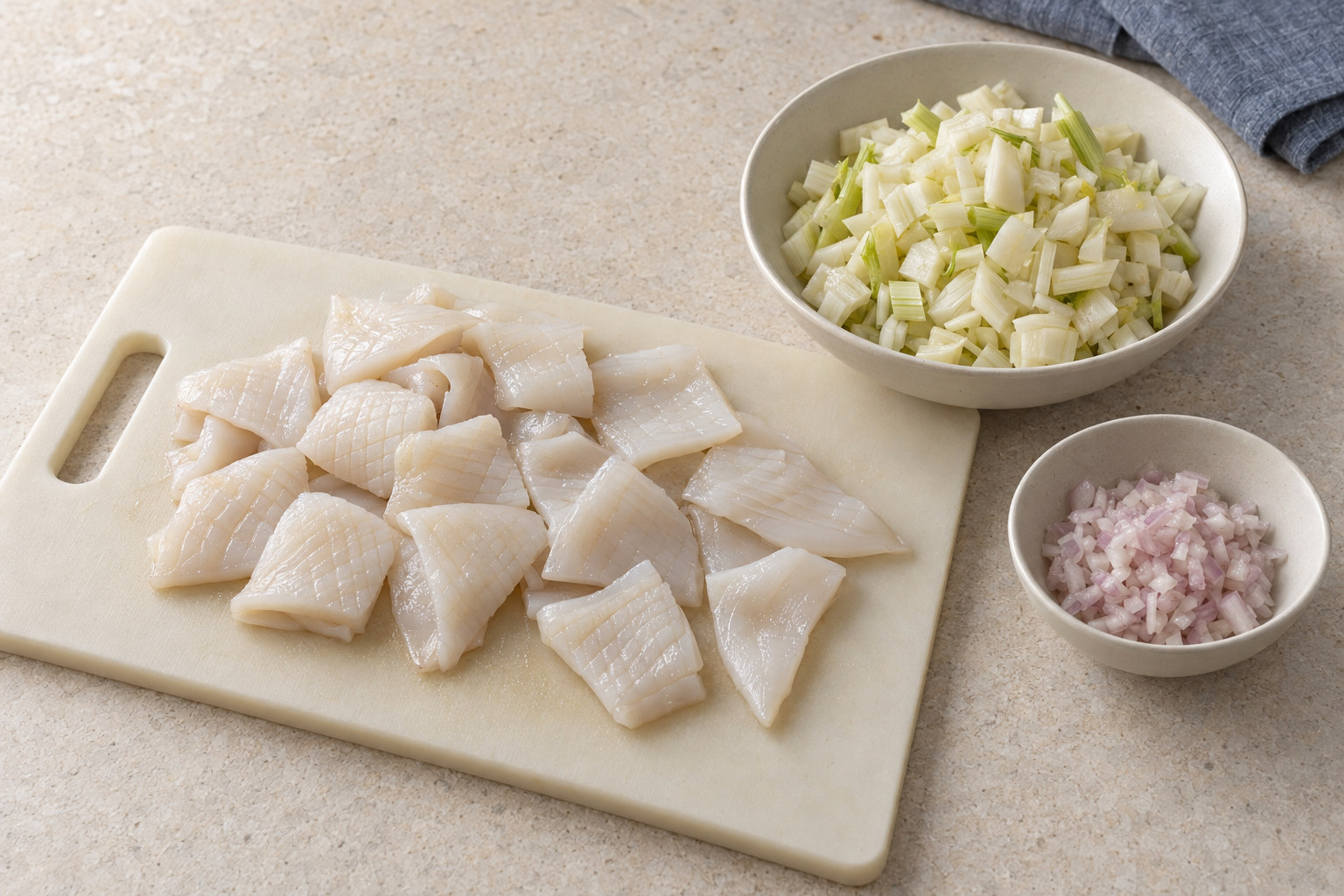
We open the patted-dry squid tubes lengthways. On the inside, we score a shallow 5 mm grid, cutting only halfway through the flesh, then cut them into pieces about 3 × 4 cm. We pat them thoroughly dry and divide them into two to four smaller batches so they do not overlap in the pan. We wash the fennel and remove its tough core. We peel the shallot and finely chop it with the fennel.
We do not cut all the way through the tube; scoring helps the pieces curl evenly.
Heat the stock and start the risotto
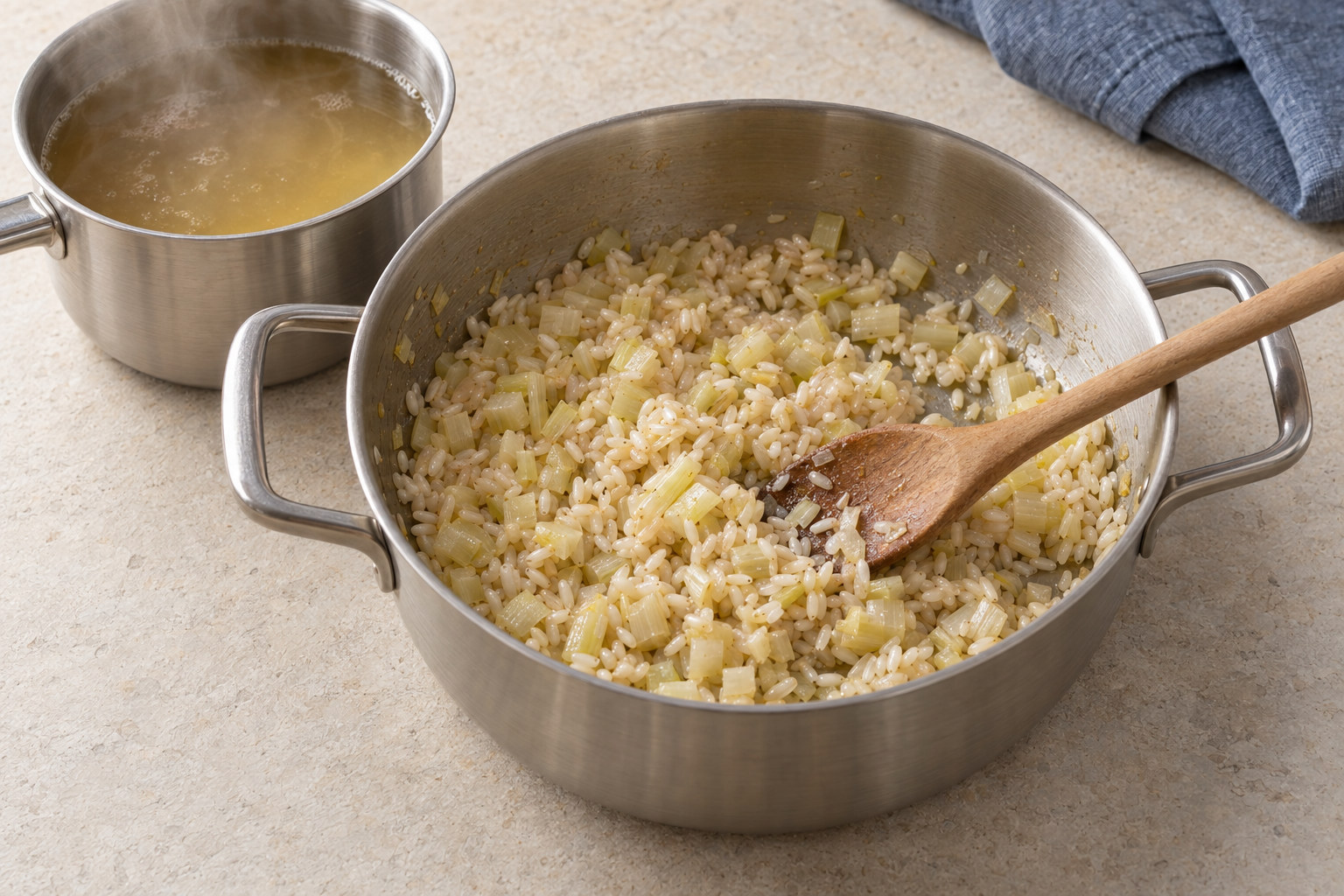
We heat the stock in a 1.5 l saucepan and keep it just below a simmer. We set the oven to 60 °C and warm two plates and a small bowl inside. In a wide 24 cm saucepan, we soften the fennel and shallot in the oil for 7–8 minutes. We add the rice and stir for 2 minutes, then add the wine and let it evaporate for 2–3 minutes.
The grains are hot, the vegetables have not caught and the wine has reduced to a moist coating.
Cook the risotto until creamy
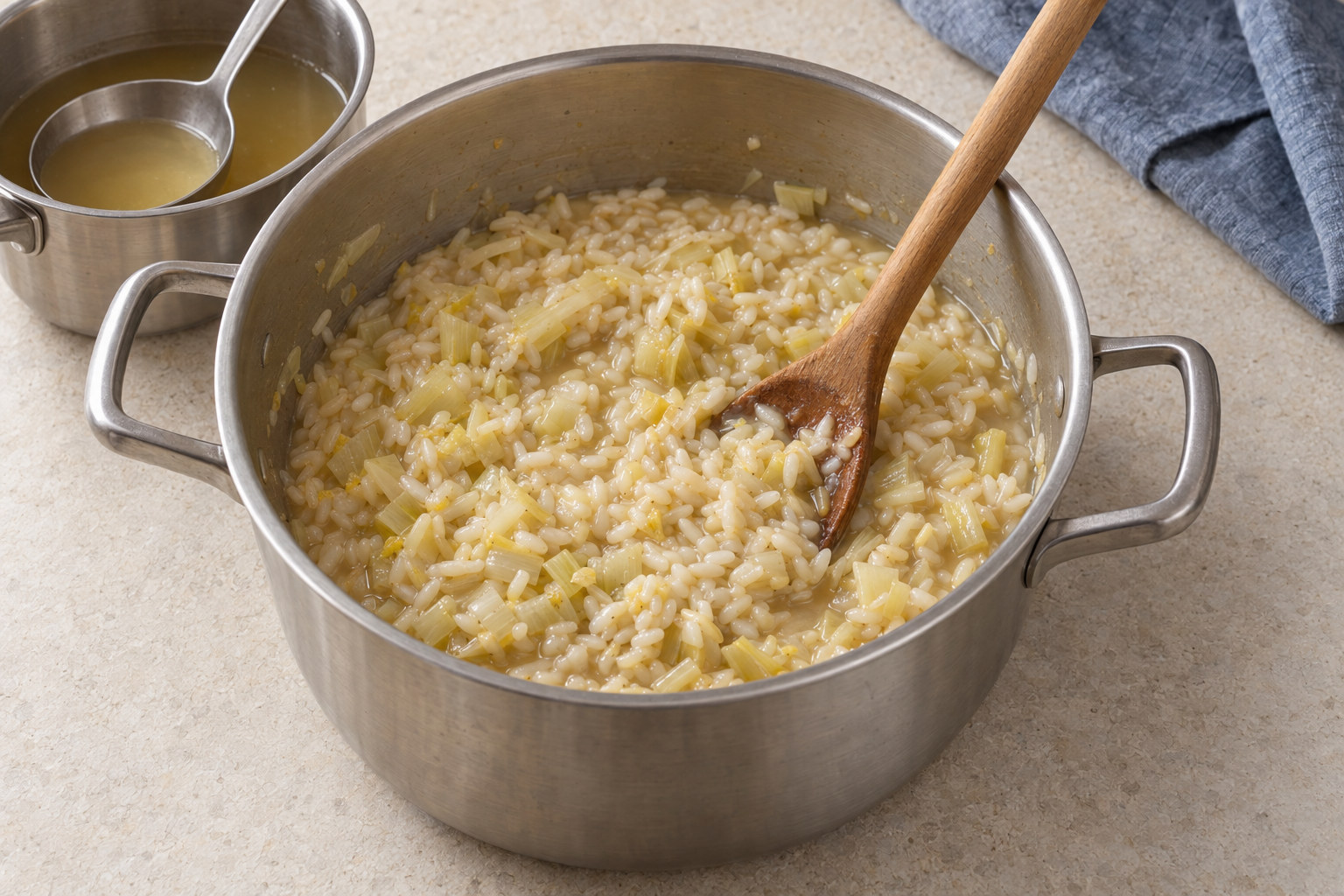
We add ¼ teaspoon salt and the stock a ladleful at a time, adding the next ladle when the previous one is almost absorbed. We cook for about 18–22 minutes, stirring often. If we run out of stock before the rice is tender, we continue adding hot water from the reserve. We start heating the frying pan about 8 minutes before the end if we are making two batches, or 14 minutes before the end for four smaller batches.
While we sear the squid, we keep adding liquid to the rice and stir often so everything finishes at the same time.
Sear the prepared batches
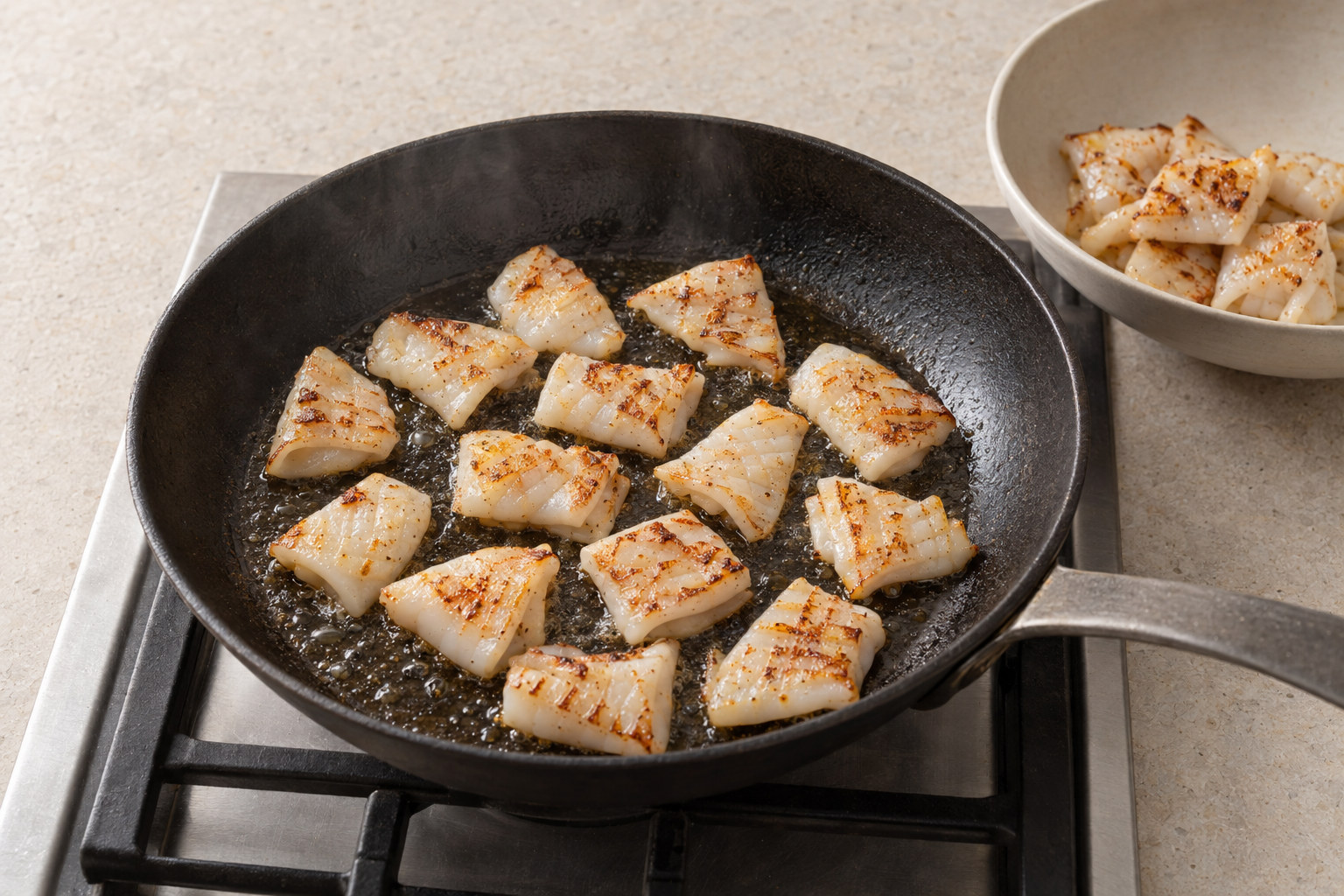
In a hot 28 cm pan with a base at least 24 cm across, we heat 2 teaspoons oil for two batches, or 1 teaspoon for four smaller batches. We add the first batch of squid in a single layer and sear for about 1–1.5 minutes per side. Once it is opaque, we transfer it to a warm bowl. We cook the remaining batches in the same way, dividing the remaining oil between them. The first batch waits in a 60 °C oven for no more than 12 minutes; we cover it loosely so it does not dry out.
The pieces do not overlap. Thicker ones need a little longer; we judge doneness by a heated, opaque centre, not surface colour alone.
Finish and serve straight away
We wash, dry and chop the parsley. We wash the lemon thoroughly and finely zest only the yellow part. We take the finished rice off the heat and stir in the cold butter, lemon juice and zest, and pepper. If it is too thick, we loosen it with 15–30 ml of the remaining hot water. Off the heat, we toss the squid with the lemon juice set aside for it and the parsley. We divide the risotto and squid between two warm plates.
The risotto slowly spreads across the plate. We do not cook it after adding the butter, and we do not leave the squid sitting in the rice.

Tips from our kitchen
- The tubes vary in thickness, so we cut the pieces evenly and check the thickest ones.
What to watch out for
- We do not crowd all the squid into the pan at once; we stick to the prepared batches.
- We add the butter off the heat, just before serving.
How we serve it
- We divide the risotto between warm plates and top it with squid, lemon and parsley. We serve it straight away, while the risotto still slowly spreads across the plate.
Ingredient notes
- We use cleaned squid tubes without tentacles.
During preparation
- We keep the raw squid chilled until we are ready to cook it. We use clean utensils for the finished dish.
Our inspiration
Chef Andrew MacKenzie of Pearly Cow in Brighton finishes his risotto with butter while the rice is still soft and has enough liquid. It then slowly spreads across the plate. This finishing technique inspired us; lemon, fennel and separately seared squid are our own variation.
Similar recipes


Recipe for 4 people
We use two pans for the squid and four hob rings so that all portions finish together.
Step-by-step method
Before we start
We need four hob rings for the stock, risotto and two pans. In each pan, we sear two or four smaller batches of squid, depending on the available surface. We decide the number of batches during preparation so the finished risotto does not have to wait.
Prepare the squid and vegetables
We open the patted-dry squid tubes lengthways, score a shallow 5 mm grid on the inside and cut them into pieces about 3 × 4 cm. We pat them thoroughly dry and divide them into four to eight smaller batches depending on the size of the pans. The pieces must not overlap while searing. We keep the squid chilled for now. We wash the fennel and remove its tough core. We peel the shallot and finely chop it with the fennel.
We do not cut all the way through the tube; scoring helps the pieces curl evenly.
Heat the stock and start the risotto
We heat the stock in a 2 l saucepan. We warm four plates and a bowl in the oven at 60 °C. In a wide 28 cm saucepan, we fry the fennel and shallot in oil for 9–10 minutes. We add the rice and stir for another 2 minutes. We pour in the wine and let it evaporate for 3–4 minutes.
The grains are hot, the vegetables have not caught and the wine has reduced to a moist coating.
Cook the risotto until creamy
We add ¼ teaspoon salt, gradually pour in the hot stock while stirring often and cook the rice for about 20–24 minutes. We add some of the hot water if needed. We start heating both pans about 8 minutes before the end for two batches in each pan, or 14 minutes before the end for four smaller batches in each pan.
While we sear the squid, we keep adding liquid to the rice and stir often so everything finishes at the same time.
Sear the prepared batches
In two hot 28 cm pans, we sear 150 g at a time in two batches per pan, or 75 g at a time in four batches per pan. We divide 3 tablespoons of oil among all the batches. We sear each side for about 1–1.5 minutes; we check that the centre is opaque. We transfer the squid to a warm bowl and finish the remaining batches in the same way. The first cooked batches wait in a 60 °C oven for no more than 12 minutes, loosely covered so they do not dry out.
The pieces do not overlap. Thicker ones need a little longer; we judge doneness by a heated, opaque centre, not surface colour alone.
Finish and serve straight away
We wash, dry and chop the parsley. We wash the lemon thoroughly and finely zest only the yellow part. We take the rice off the heat and stir in the butter, lemon juice and zest, and pepper. For a soft consistency, we add 30–50 ml of the remaining hot water if needed. We toss the squid with the lemon juice set aside for it and the parsley, then divide everything between four warmed plates.
The risotto slowly spreads across the plate. We do not cook it after adding the butter, and we do not leave the squid sitting in the rice.