
From the Boxxi kitchen · Italian inspiration
Mussel risotto with saffron and fennel
This creamy mussel risotto is fragrant with saffron, sweet fennel and dill. The rice retains a gentle bite, and cold butter gives it a glossy finish. Beside the wide plate, we serve a bowl of crisp leaf salad with lemon to balance the risotto’s rich flavour.
The rice cooks for approximately 20–24 minutes, depending on water evaporation and the type of grain.
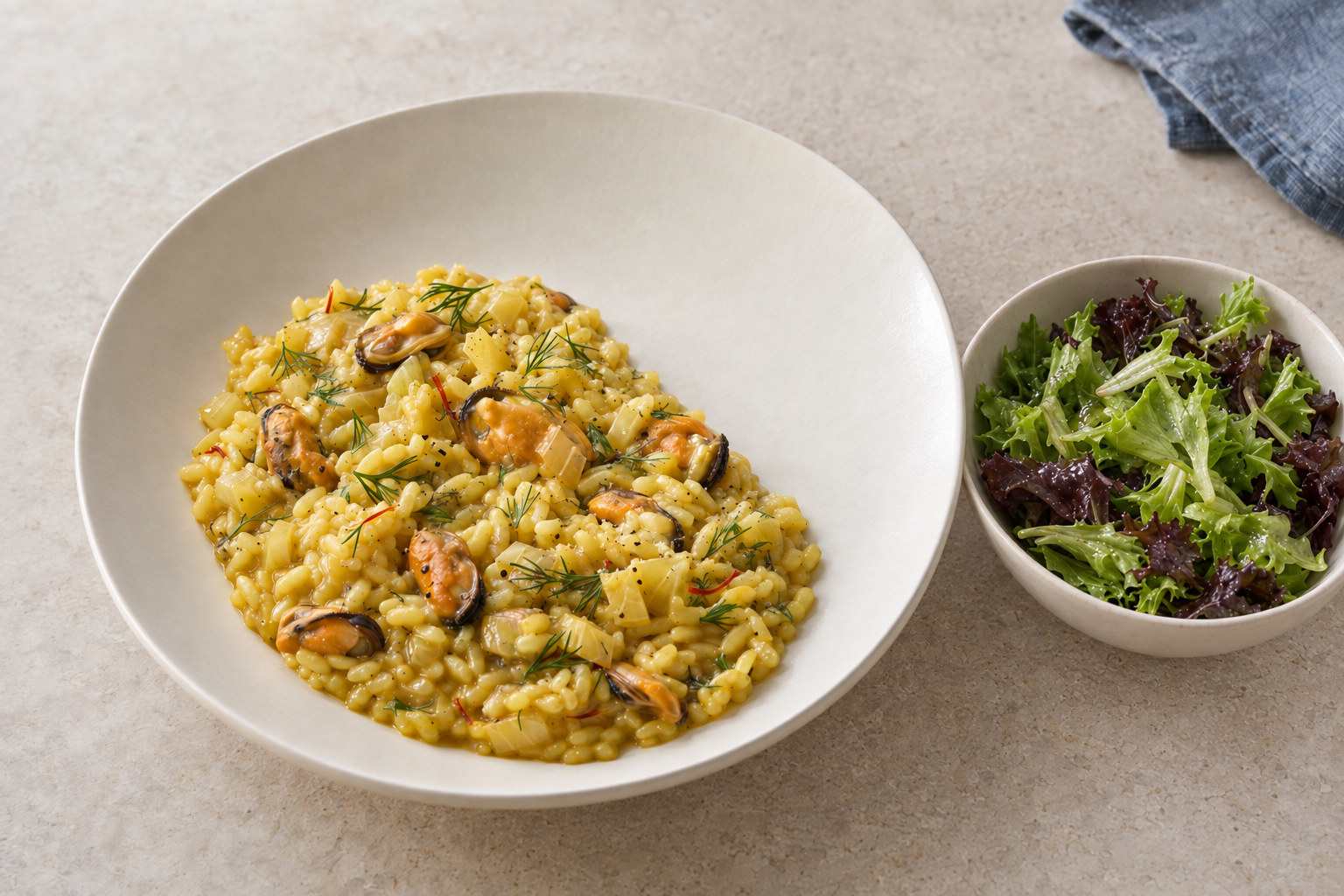
Sweet fennel and the delicate aroma of saffron complement the stronger flavour of the mussels. Butter makes the risotto silky, while lemon-dressed leaf salad adds a fresh tang.
Step-by-step method
What you will need
- kitchen scales
- knife and chopping board
- thin-tipped probe thermometer
- wide 24 cm, 3 l casserole pan
- 1.5 l saucepan
- sieve and bowl
- ladle
- small cup for the saffron
- salad bowl
- two hob rings
Before we start
We keep the water hot on the second hob ring. We add the mussels to the partially cooked rice while its centre is still firm, giving them time to cook. We dress the salad just before finishing; we do not leave the finished risotto waiting.
Prepare the liquid and mussels
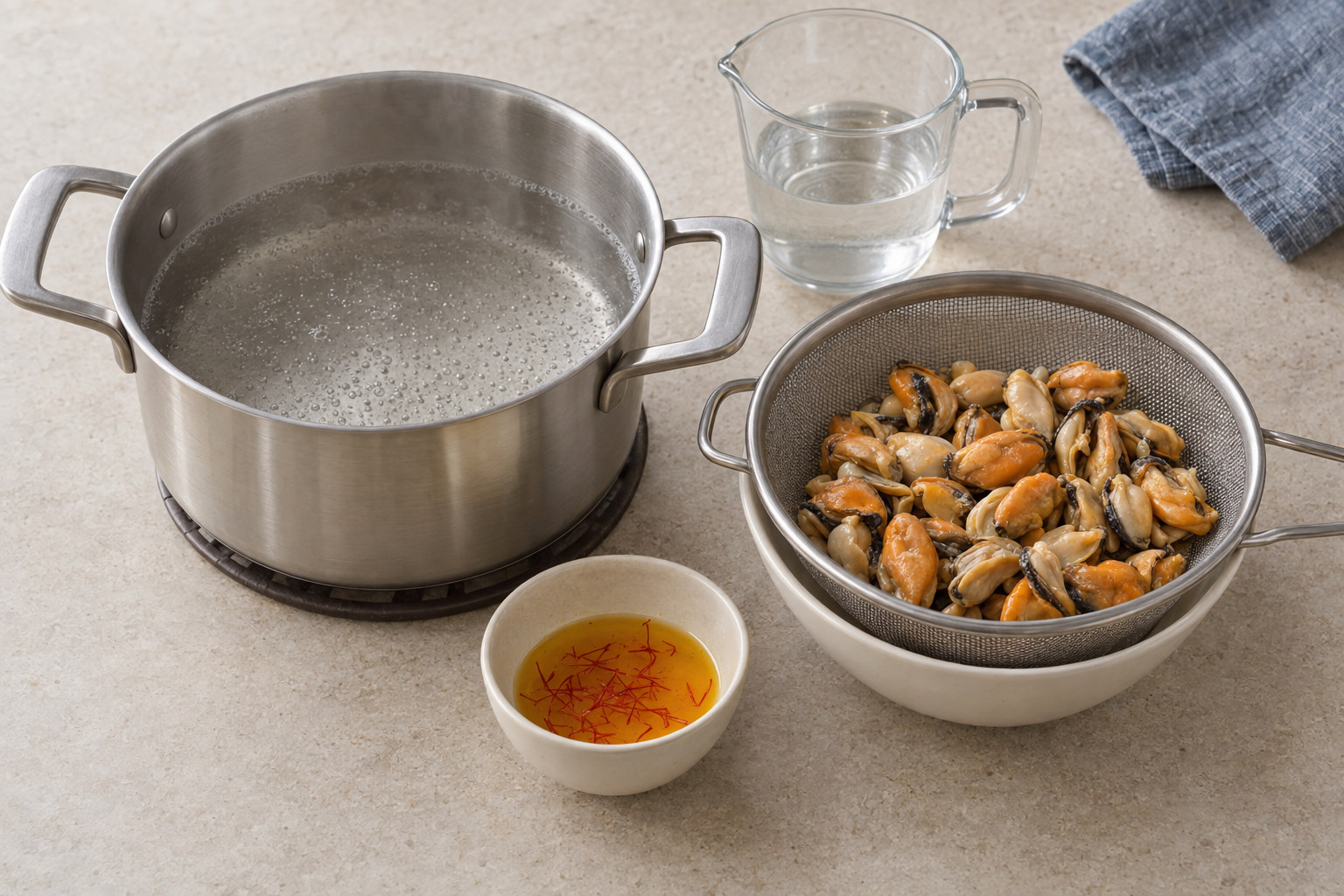
We leave the mussels to drain for 5 minutes and discard the liquid from the pack. We keep the meat chilled for now. In a saucepan, we heat 600 ml unsalted water; we take 30 ml of it for the saffron and leave it to infuse for 5 minutes. We keep the remaining water just below boiling and the reserve 100 ml separate.
The saffron infusion is golden and the mussels are well drained.
Soften the fennel and toast the rice
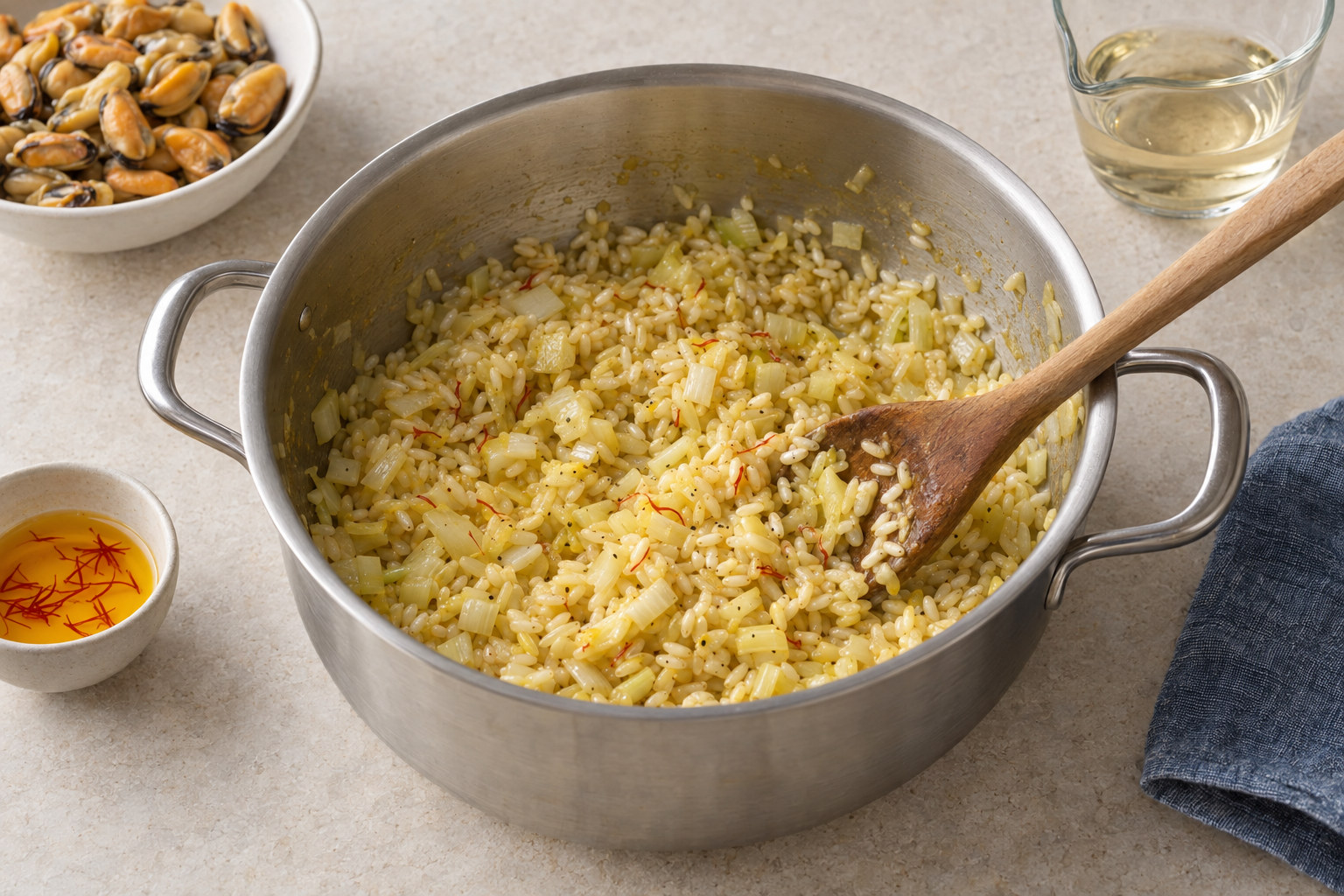
We peel the onion and garlic. We wash the fennel and remove the tough core. We cut the onion and fennel into 4 mm dice. In a wide casserole pan, we soften the vegetables in two teaspoons of oil over a medium heat for 6–8 minutes, without browning. We add the chopped garlic, then the rice after 30 seconds, and stir for 2 minutes. We pour in the wine and let it evaporate for 1–2 minutes. We add the saffron with its soaking water and the pepper.
The rice is hot and fragrant, and the fennel stays pale.
Add liquid to the rice gradually
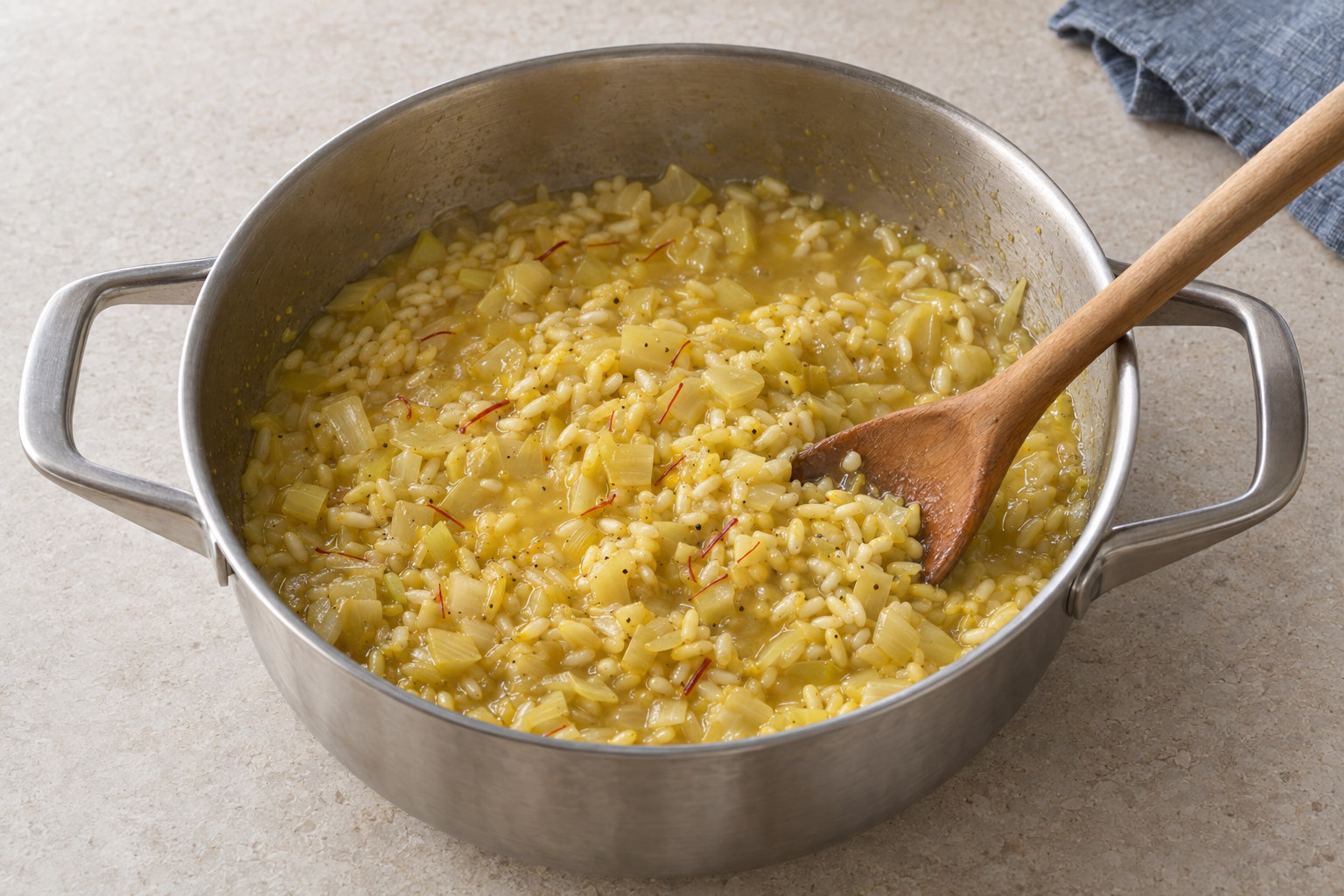
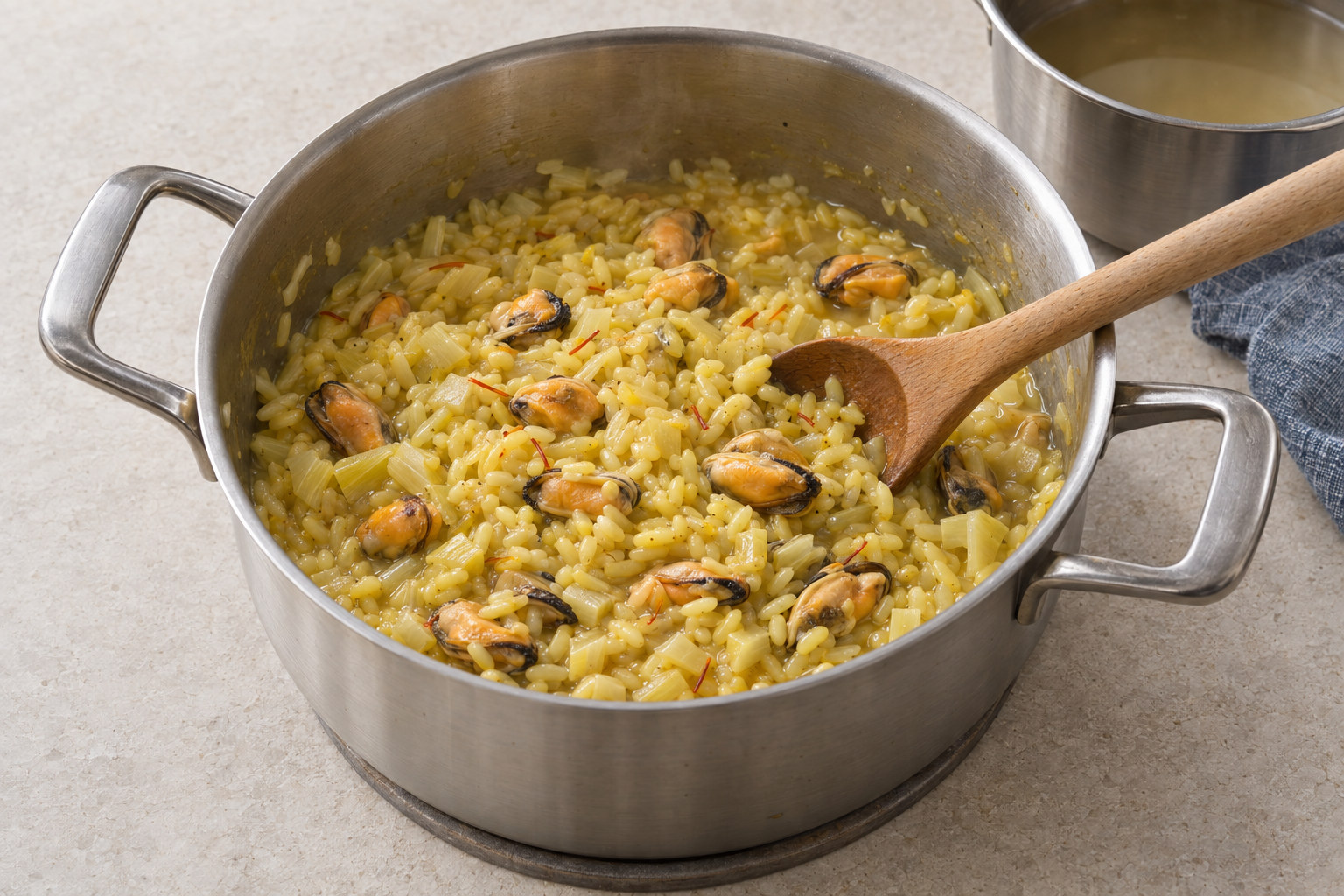
We add the hot water 100 ml at a time and stir frequently over a medium-low heat. We add the next batch when the previous one has almost been absorbed, without letting the rice catch. We cook this way for 10–12 minutes from the first addition of water. The rice is still firm, with a distinctly harder point in the centre.
The liquid bubbles gently across the surface, without coming to a rolling boil.
Finish cooking with the mussels
We stir in all the drained mussels and continue stirring gently and adding smaller amounts of water. We allow approximately another 8–10 minutes, including the time it takes to return to a simmer. We check that several of the largest mussels reach 70 °C and hold this temperature for 2 minutes; at the same time, we taste a grain of rice. It should have a gentle bite, without a hard, chalky centre. If the main quantity of water runs out first, we heat the reserve and add it 30 ml at a time. We may not need all the measured water; the finished risotto should remain moist and flow when we move the pan.
Prepare the salad and finish the risotto
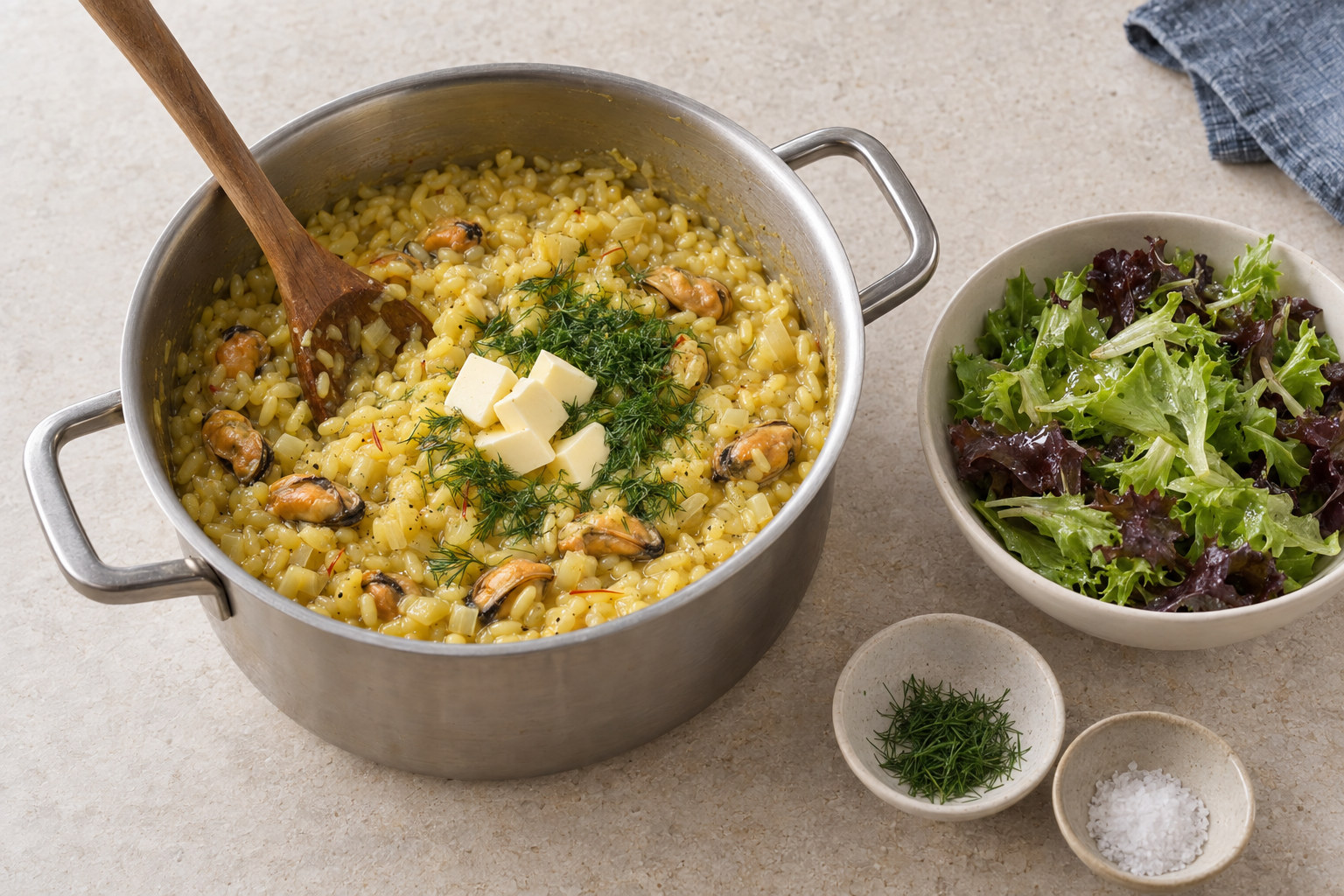
We wash and dry the salad leaves and dill, then chop the dill. During the last few minutes of cooking, we toss the salad leaves with the lemon juice, one teaspoon of oil and a pinch of salt. We take the finished risotto off the heat and stir in the cold butter and chopped dill. We leave it to settle for 1 minute; if it has thickened too much, we stir in a little of the remaining hot water. We do not add any more salt to the risotto.
The butter creates a glossy emulsion, and the salad leaves are only lightly coated with dressing.
Divide between warmed plates
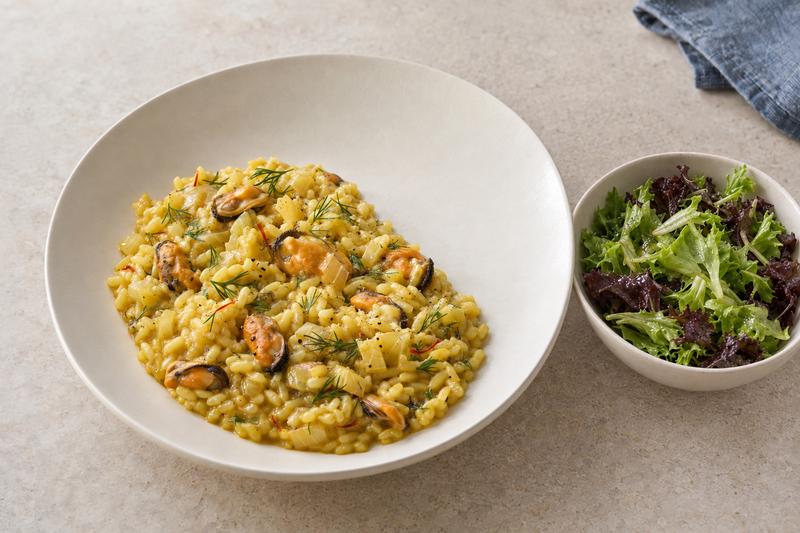
We divide the risotto between 2 wide, warmed plates. We gently tap the base of each plate against our palm so the risotto spreads out into a shallower layer on its own. We put the salad into separate bowls and serve immediately.
Tips from our kitchen
- We add the water hot so it does not needlessly interrupt the simmer.
- We add water as needed, judging by the tenderness of the rice and the consistency of the risotto.
What to watch out for
- After adding the mussels, we do not add cheese or salty stock powder.
- We do not leave the finished risotto standing in the pan, as it thickens quickly.
How we serve it
- We serve the risotto immediately on wide, warmed plates, where it slowly spreads out on its own. We serve the leaf salad in separate bowls.
Ingredient swaps
dill
the same number of handfuls of washed and dried flat-leaf parsley, chopped before adding The herb aroma will be less sweet; we keep the other quantities the same.
Ingredient notes
- We use shelled Mytilus chilensis mussels from a 500g pack.
- We cook the mussels thoroughly as described in the method; the product may not be pre-cooked.
- The product lists 1.5 g salt per 100 g. We drain off the liquid and add no more salt to the mussel part of the dish; we check the saltiness only once the dish is cooked.
During preparation
- We use clean utensils. We keep the mussels at 0–2 °C for no more than one day and take them out only just before cooking.
- We measure the temperature inside several of the largest pieces of mussel meat. We do not simply put the thermometer tip into the surrounding sauce.
Our inspiration
A creamy risotto does not need cream. The right rice, gradually added liquid and butter stirred in off the heat give it its silky texture. The grains remain distinct as the risotto slowly spreads across the plate. Fennel and saffron accompany the mussels, their aromas coming through the gently buttery base.
Similar recipes
Recipe for 4 people
Step-by-step method
Before we start
We keep the water hot on the second hob ring. We add the mussels to the partially cooked rice while its centre is still firm, giving them time to cook. We dress the salad just before finishing; we do not leave the finished risotto waiting.
Prepare the liquid and mussels
We leave the mussels to drain for 5 minutes and discard the liquid from the pack. We keep the meat chilled for now. In a saucepan, we heat 1100 ml unsalted water; we take 30 ml of it for the saffron and leave it to infuse for 5 minutes. We keep the remaining water just below boiling and the reserve 180 ml separate.
The saffron infusion is golden and the mussels are well drained.
Soften the fennel and toast the rice
We peel the onion and garlic. We wash the fennel and remove the tough core. We cut the onion and fennel into 4 mm dice. In a wide casserole pan, we soften the vegetables in one and a half tablespoons of oil over a medium heat for 6–8 minutes, without browning. We add the chopped garlic, then the rice after 30 seconds, and stir for 2 minutes. We pour in the wine and let it evaporate for 1–2 minutes. We add the saffron with its soaking water and the pepper.
The rice is hot and fragrant, and the fennel stays pale.
Add liquid to the rice gradually
We add the hot water 180 ml at a time and stir frequently over a medium-low heat. We add the next batch when the previous one has almost been absorbed, without letting the rice catch. We cook this way for 8–10 minutes from the first addition of water. The rice is still firm, with a distinctly harder point in the centre.
The liquid bubbles gently across the surface, without coming to a rolling boil.
Finish cooking with the mussels
We stir in all the drained mussels and continue stirring gently and adding smaller amounts of water. We allow approximately another 10–12 minutes, including the time it takes to return to a simmer. We check that several of the largest mussels reach 70 °C and hold this temperature for 2 minutes; at the same time, we taste a grain of rice. It should have a gentle bite, without a hard, chalky centre. If the main quantity of water runs out first, we heat the reserve and add it 50 ml at a time. We may not need all the measured water; the finished risotto should remain moist and flow when we move the pan.
Prepare the salad and finish the risotto
We wash and dry the salad leaves and dill, then chop the dill. During the last few minutes of cooking, we toss the salad leaves with the lemon juice, two teaspoons of oil and two pinches of salt. We take the finished risotto off the heat and stir in the cold butter and chopped dill. We leave it to settle for 1 minute; if it has thickened too much, we stir in a little of the remaining hot water. We do not add any more salt to the risotto.
The butter creates a glossy emulsion, and the salad leaves are only lightly coated with dressing.
Divide between warmed plates
We divide the risotto between 4 wide, warmed plates. We gently tap the base of each plate against our palm so the risotto spreads out into a shallower layer on its own. We put the salad into separate bowls and serve immediately.