
Boxxi original cuisine · Italian and modern European inspiration
Ricotta ravioli with mussels and peas
We fill thin, square ravioli with delicate ricotta, Parmesan, parsley and lemon zest. A light wine sauce with cream and butter brings them together with mussels and sweet peas. Everyone gets eight homemade parcels: a special meal that deserves time for rolling and filling the pasta.
We allow for a 30-minute rest for the dough and for filling the ravioli by hand. We cook the ravioli in two batches in one pot.
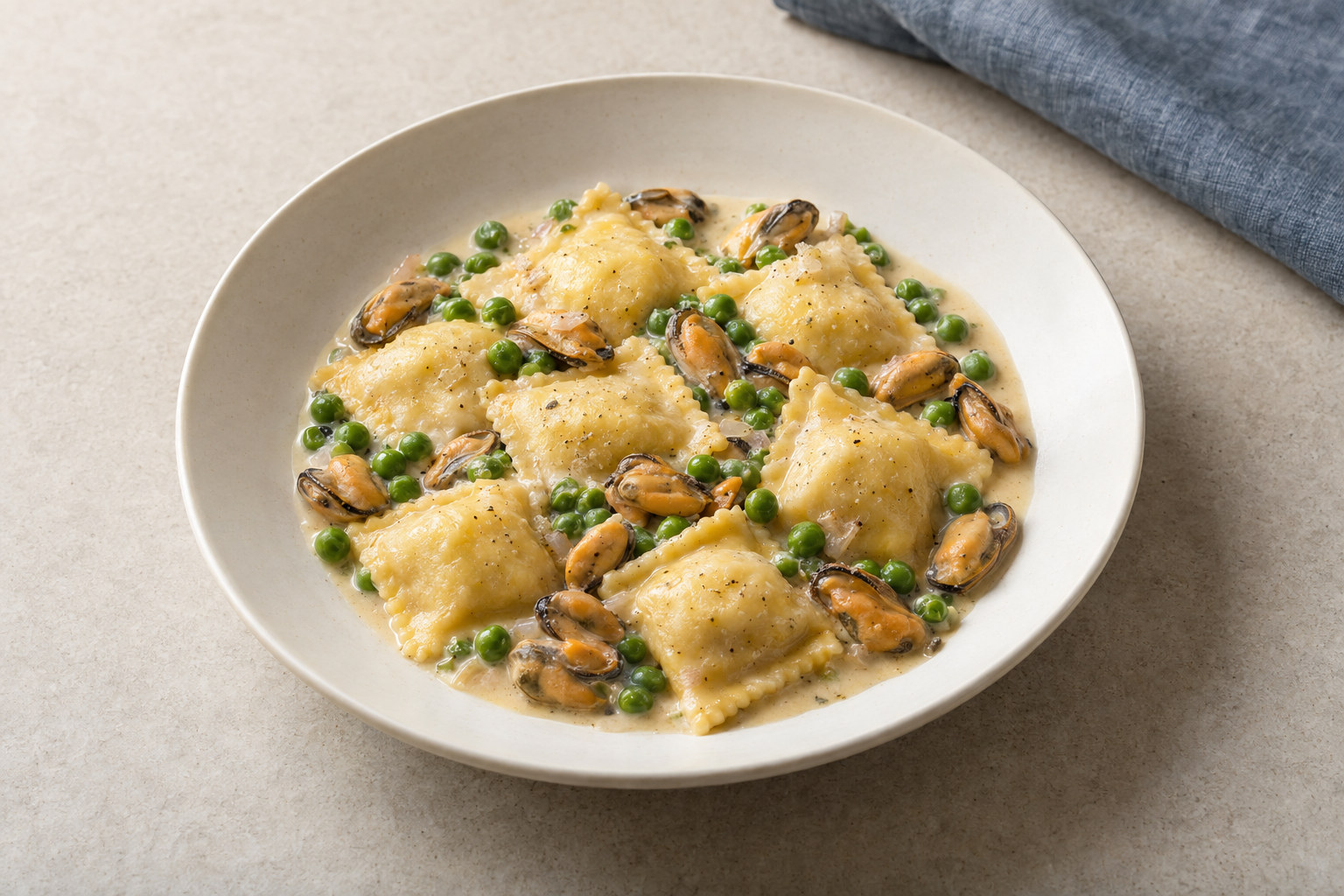
Mild ricotta balances the stronger flavour of mussels, lemon zest scents the filling and peas add sweetness. The butter-enriched wine sauce lightly coats the pasta.
Step-by-step method
What you will need
- kitchen scales
- knife and chopping board
- probe thermometer with a fine tip
- pasta machine
- pastry wheel
- 40 × 30 cm tray
- wide 24 cm, 3 l saucepan with a lid
- 5 l pot
- two heatproof deep bowls or plates
- two hob rings
- slotted spoon
- sieve and bowl
- oven
- clean tea towel
- lid or foil for briefly covering the plates
Before we start
First, we shape all the ravioli and reduce the wine. We cook the peas separately, cool them briefly and set them aside. We then cook the ravioli in the same pot. We keep the mussels and sauce hot while cooking the pasta. After the last batch, we reheat the peas in the ravioli water, drain them and finish the portions at once.
Make the dough and filling
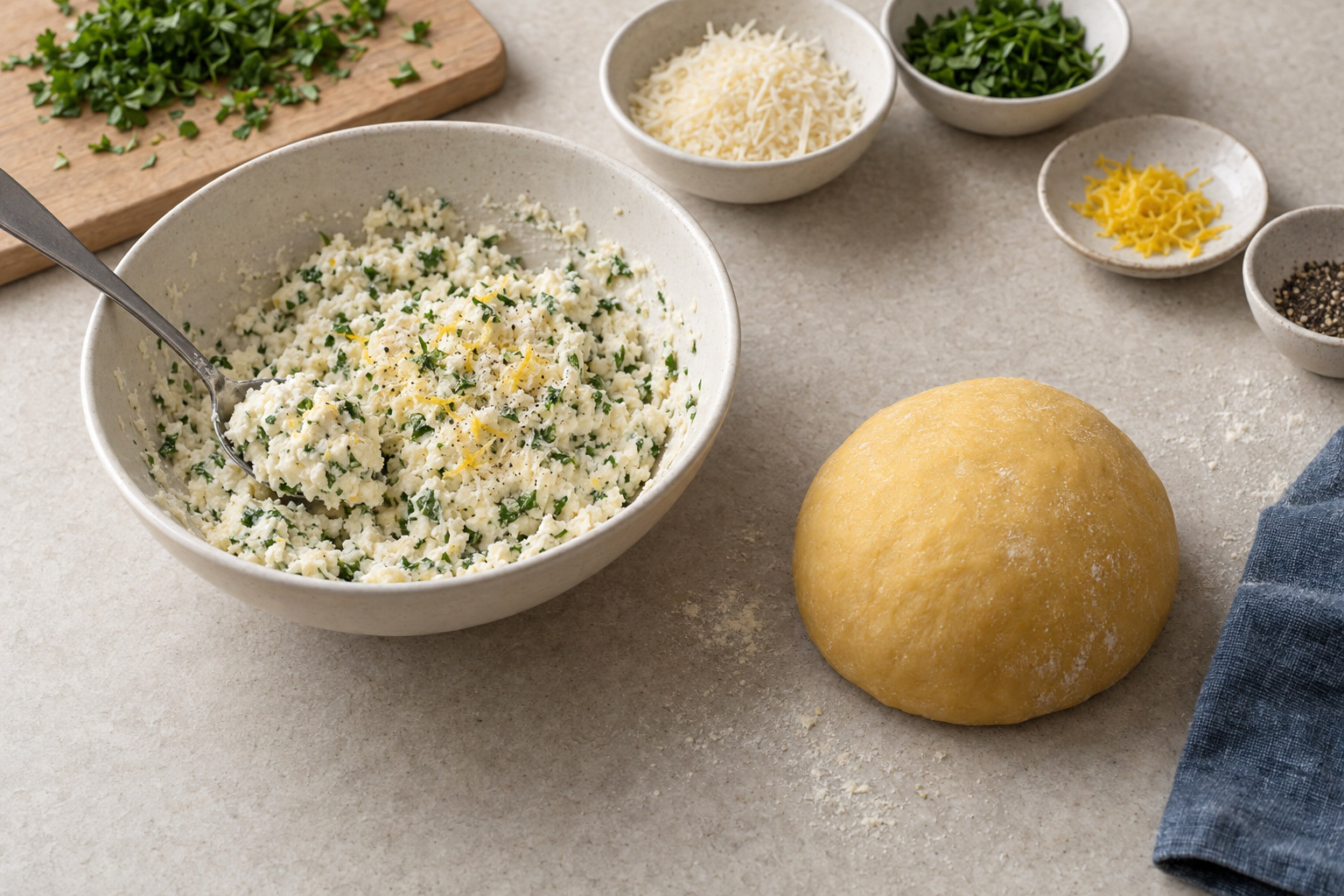
We combine the flour and eggs and knead for 8–10 minutes. If dry crumbs remain, we work in a few drops of water. We cover the smooth dough and let it rest for 30 minutes. We finely grate the Parmesan. We wash and dry the parsley. We wash the lemon thoroughly and finely grate only the yellow zest, avoiding the white pith. We mix the ricotta with the Parmesan, very finely chopped parsley, lemon zest and pepper. We cover the filling and refrigerate it.
The filling holds its shape on a spoon, and the dough is smooth and does not crack.
Roll and fill the ravioli
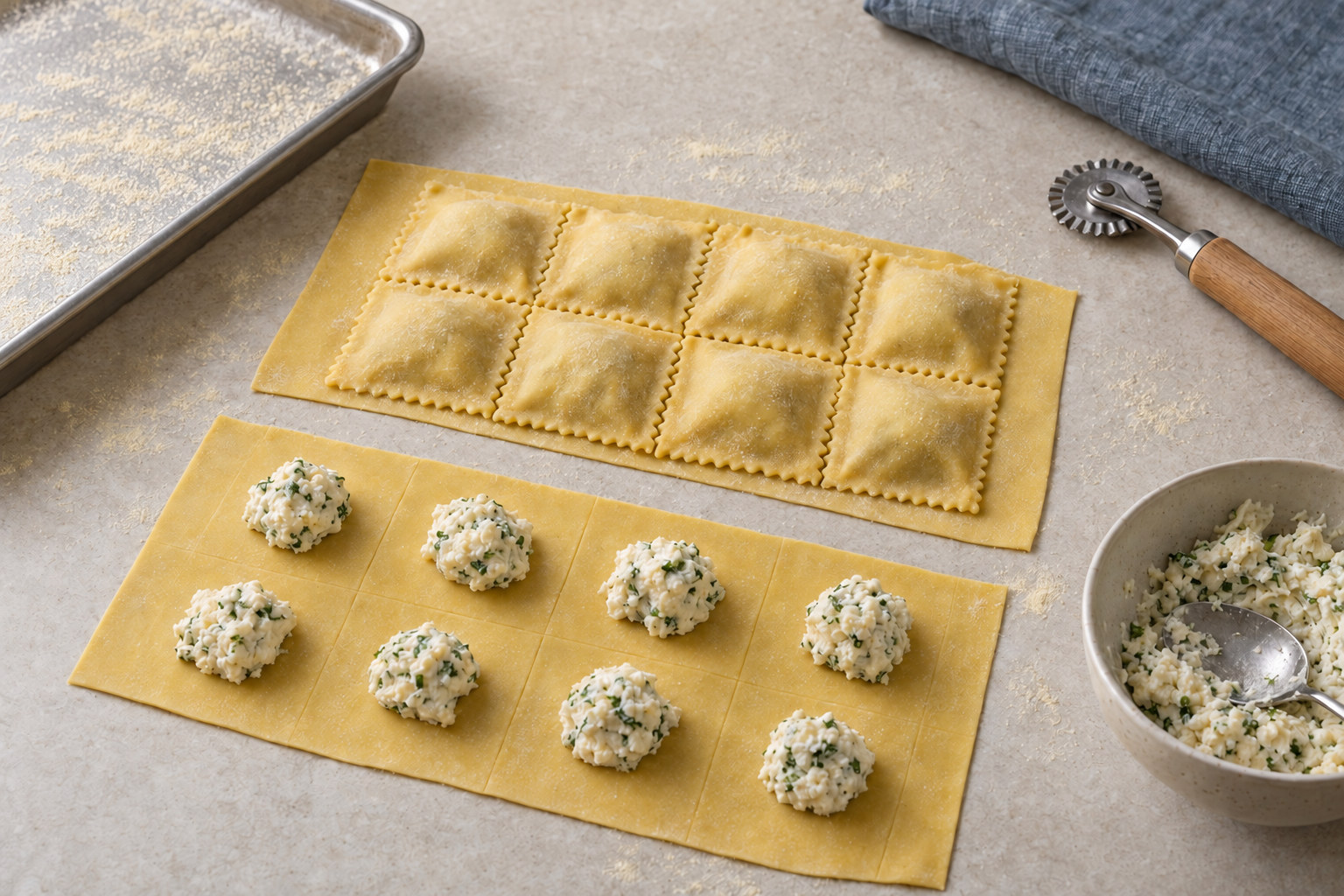
We divide the dough into four pieces. Using the pasta machine, we roll sheets approximately 14 × 28 cm and 1–1.2 mm thick. We make two equally sized sheets at a time and keep the remaining dough covered. On the bottom sheet we mark out eight 7 × 7 cm squares and put a heaped teaspoon of filling in the centre of each. We moisten the edges very lightly with water, cover with the second sheet, press out the air and seal a border of at least one centimetre with our fingers. We cut the ravioli with a pastry wheel. In this way we make 16 ravioli, dividing the filling evenly among them.
The seals are free of cheese, with no pocket of air around the filling.
Set aside the ravioli and reduce the wine
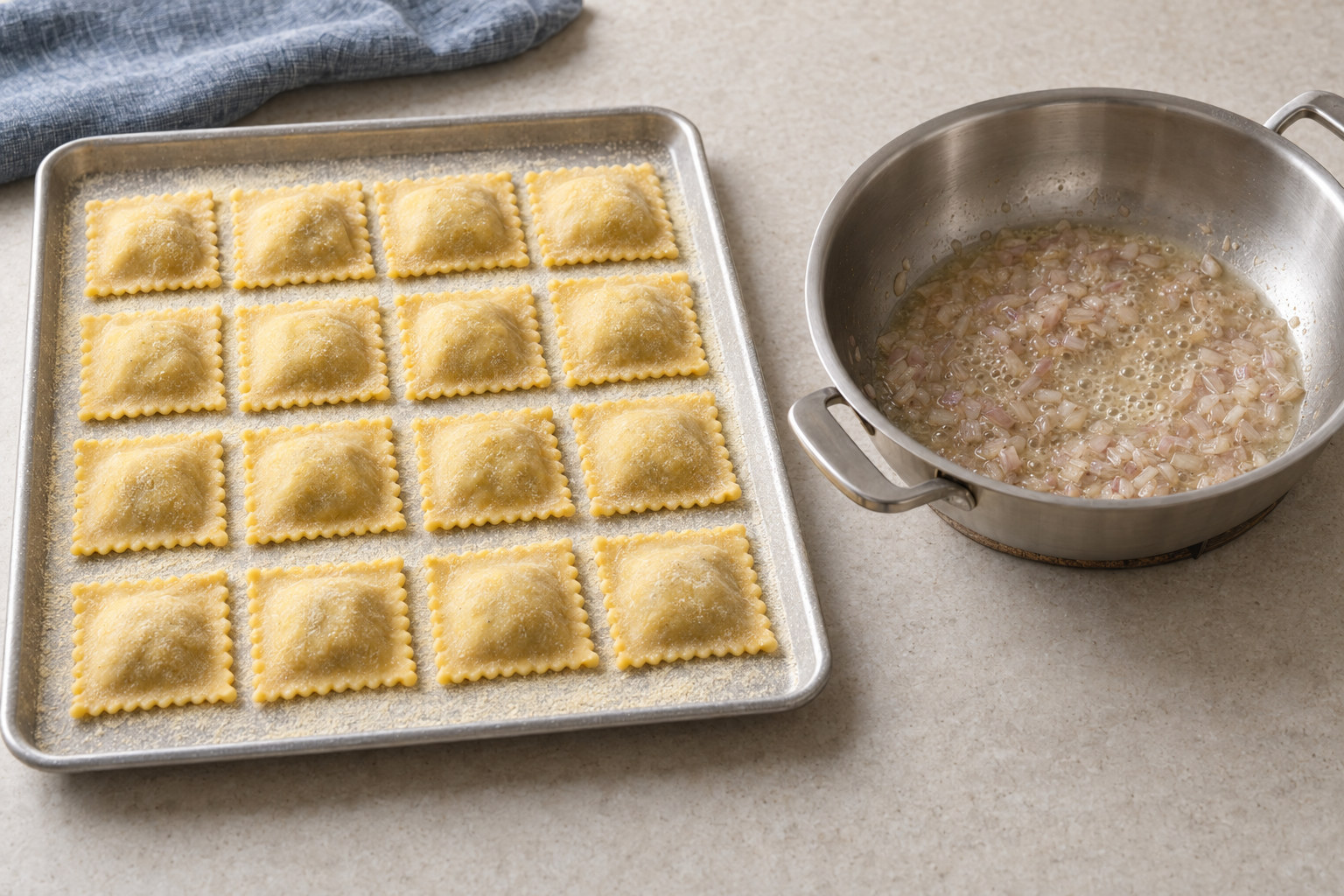
We lay the ravioli in a single layer on one 40 × 30 cm tray dusted with semolina, leaving small gaps between them. We cover them loosely with a clean tea towel and carry on without a long break. We can work small dough scraps back in while rolling; we set any remainder aside for another pasta side dish. We let the mussels drain for 5 minutes and discard the liquid from the pack. We peel and finely chop the shallot. In the wide saucepan, we bring the wine and shallot to the boil and gently reduce for 5–7 minutes until approximately 25 ml of liquid remains with the softened shallot. We keep the mussels chilled meanwhile.
The wine no longer covers the shallot deeply, but the bottom is not dry.
Cook the peas and make the sauce
We thoroughly wash the sieve used for the mussels. In the pasta pot, we cook 160 g of frozen peas in unsalted water according to the pack instructions. We drain them, rinse briefly with cold water and leave them to drain well. We transfer them to a bowl and cover them. We set the oven to 70 °C and put 2 heatproof deep plates inside. We refill the pot used for the peas with clean water, add 1 ½ teaspoons of salt and bring it to a gentle boil. We add 70 ml of water, cream and pepper to the shallot. We bring to a gentle simmer and cook gently for 3 minutes. We do not put the ravioli in the water yet.
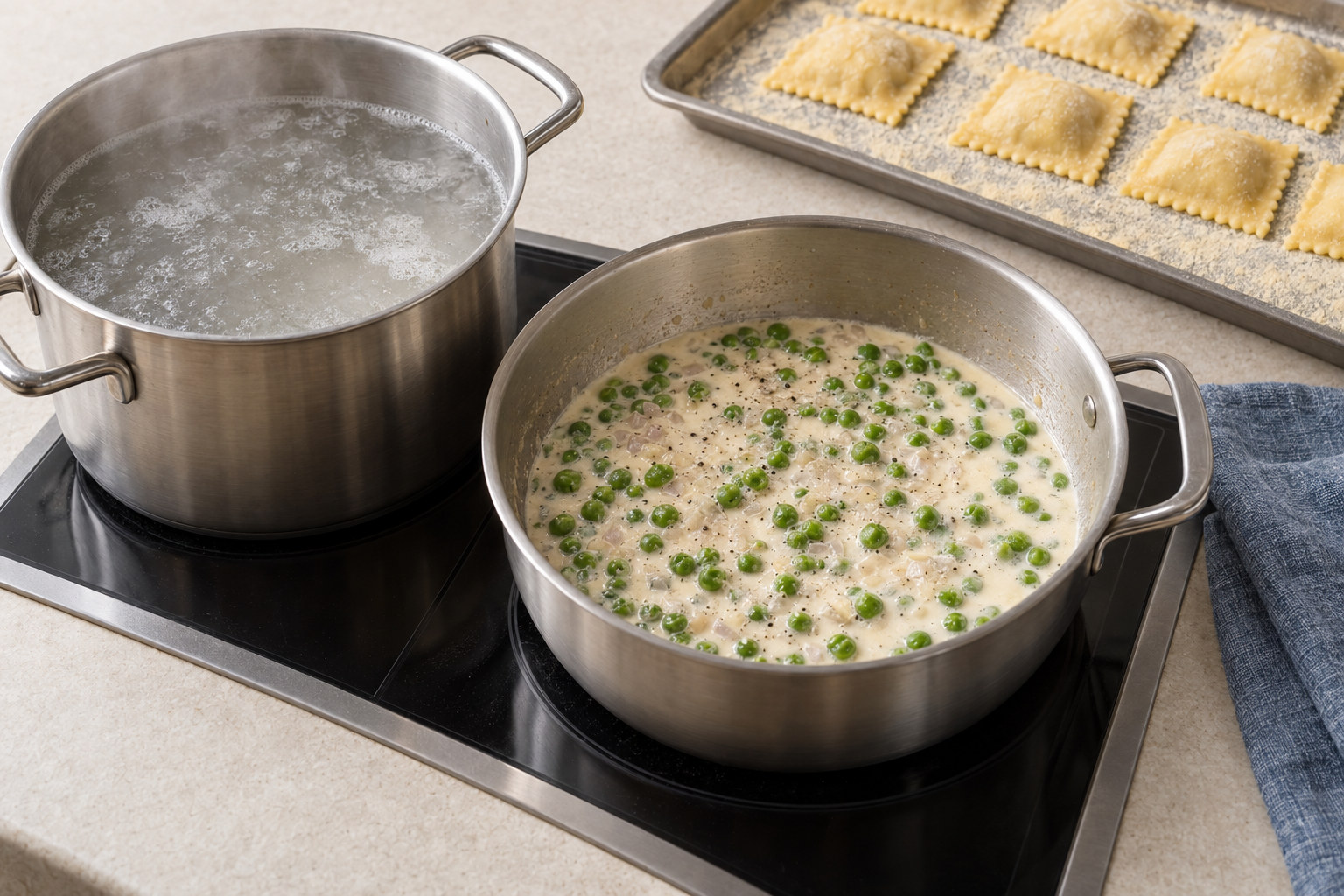
Cook the mussels and stir in the butter
We add the drained mussels to the sauce, cover and heat for approximately 5–7 minutes, stirring gently twice. We check for 70 °C in the centre of several of the largest pieces and maintain that temperature for 2 minutes; we continue briefly if needed. We take the saucepan off the heat and stir in the cold butter in small cubes. We cover it and keep the sauce hot on the lowest setting, without boiling, at no less than 63 °C until the ravioli are done and the peas have been reheated. We do not delay cooking the ravioli. We add no more salt.
The sauce thickens slightly and becomes glossy; the butter does not form a yellow oily pool.
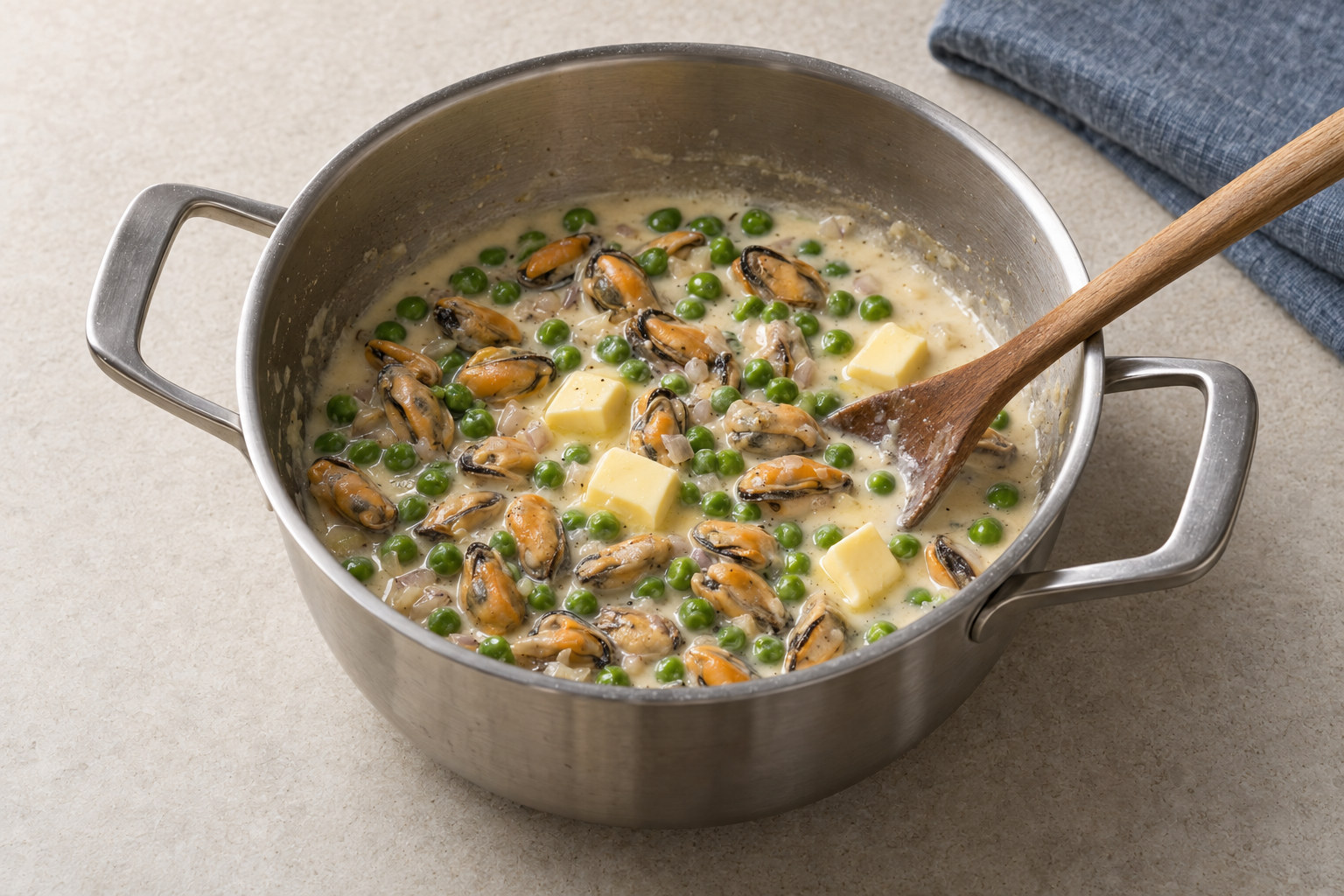
Cook the ravioli in two batches
We put eight ravioli into gently boiling water. We cook them for 4–5 minutes, testing one piece for a tender edge with no floury layer. We lift them out with a slotted spoon and divide them, four each, between two warmed plates. We moisten each first portion with about two tablespoons of sauce, cover lightly and return the plates to the oven while we cook the second batch and briefly reheat the peas. Once the water returns to a gentle boil, we cook the remaining eight ravioli in the same way.
The ravioli seals stay closed.
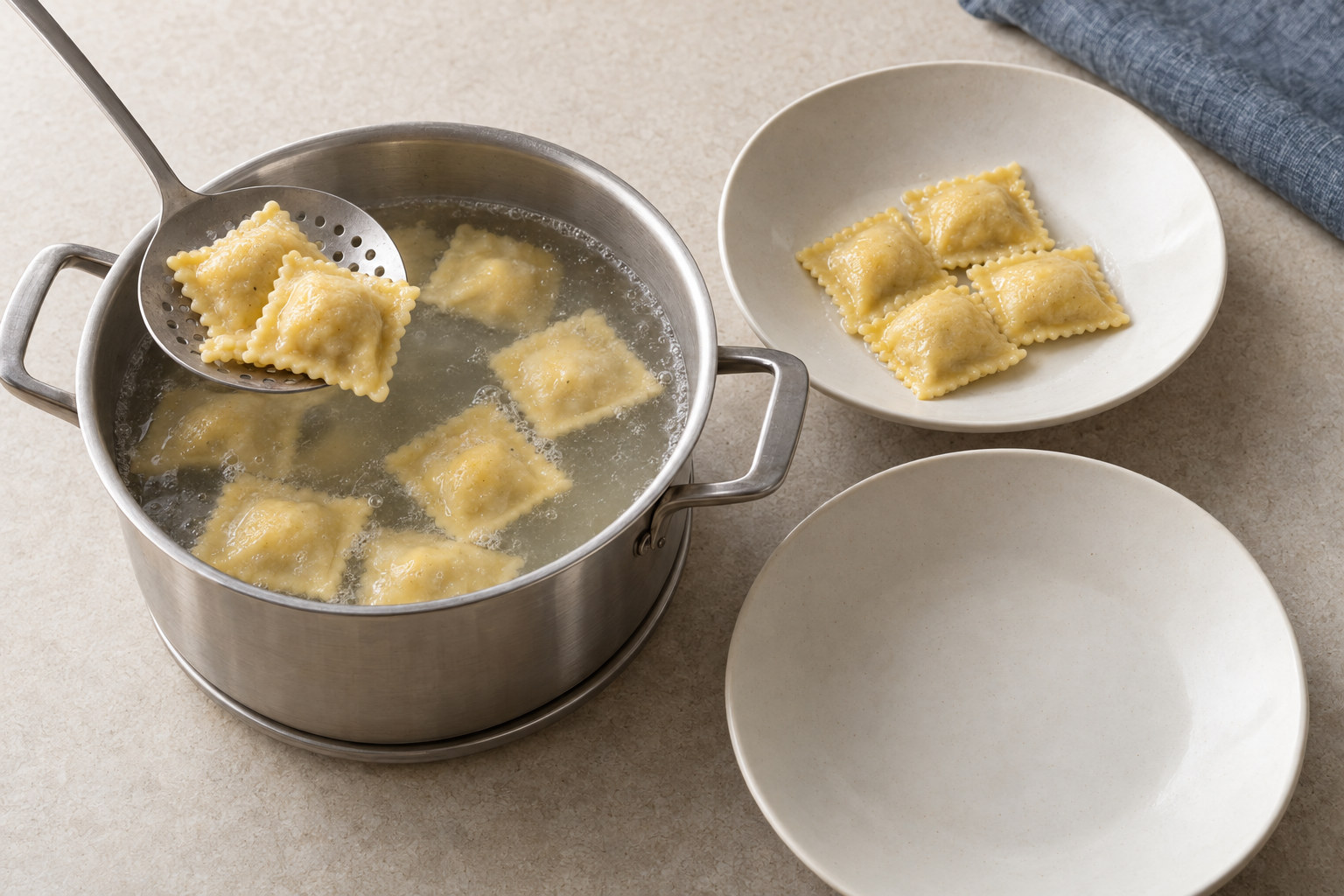
Reheat the peas and serve
We divide the second batch of ravioli among the plates so that each holds eight. We cover the plates lightly and return them briefly to the warm oven. If the sauce has thickened, we thin it little by little with 20–40 ml of water from the pasta pot. We tip the cooked peas into the still-boiling ravioli water and reheat them briefly until hot all the way through. We drain them well and divide them among the plates. We add the mussels with all the sauce and serve at once.
The ravioli stay whole and the sauce only coats them; we do not leave them sitting in a deep pool of liquid.
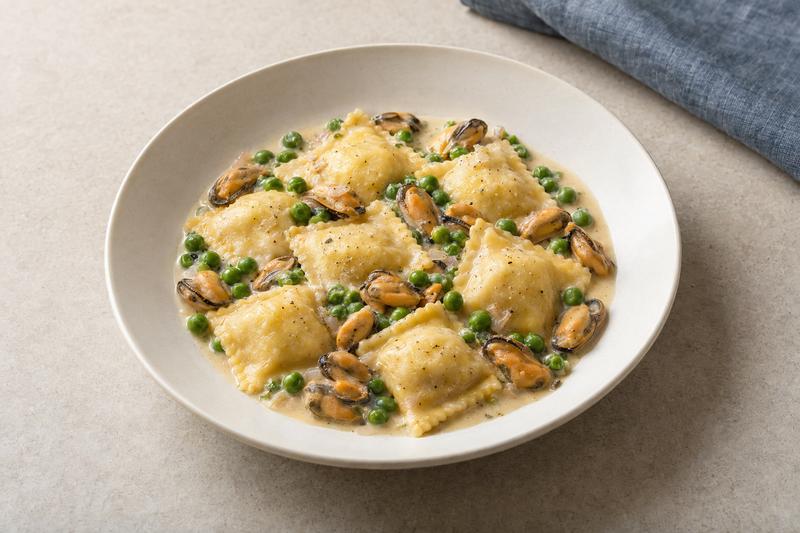
Tips from our kitchen
- We drain the ricotta well so it does not soak the dough.
- We fill the pasta sheets promptly after rolling them; if the edges have dried, we moisten them with only a very thin layer of water.
What to watch out for
- We do not overfill each raviolo.
- We do not leave cooked ravioli waiting in the water; we briefly keep them moistened on warm plates.
- Once we add the butter, we do not boil the sauce vigorously.
How we serve it
- We put eight ravioli on each warmed plate, add the mussels, peas and sauce, and serve at once.
Ingredient swaps
parsley in the filling
the same amount of finely chopped chives The filling gains a mild onion aroma while keeping the same consistency.
Ingredient notes
- We use shelled Mytilus chilensis mussels from 500 g packs.
- We cook the mussels thoroughly as described; the product may not be precooked.
- The product lists 1.5 g of salt per 100 g. We drain off the liquid and add no more salt to the mussels; we check the seasoning of the finished dish only after cooking.
During preparation
- We use clean utensils. We keep the mussels at 0–2 °C for no more than one day and take them out only just before preparation.
- We measure the temperature inside several of the largest pieces of mussel meat. We do not place the thermometer tip only in the surrounding sauce.
Our inspiration
Chef Robert Chambers, who helped open London restaurant Luca in 2016, grew up with Italian grandparents and his grandmother’s pasta was part of almost every evening. He later developed that experience into his own cooking style. His ricotta tortellini with mussels and spring vegetables inspired us to pair a delicate cheese filling with a taste of the sea in our square ravioli.
Robert Chambers
Robert Chambers is a chef with Italian family roots. He honed his pasta-making at London’s Locanda Locatelli and helped open Luca in 2016. His pairing of ricotta, mussels and spring vegetables inspired our ravioli.
Similar recipes
Recipe for 4 people
We allow for a 30-minute rest for the dough and for filling the ravioli by hand. We cook the ravioli in two batches in two pots at the same time.
Step-by-step method
Before we start
First, we shape all the ravioli and reduce the wine. We cook the peas separately in one pasta pot, cool them briefly and set them aside. We then cook the ravioli in two pots at once. We keep the mussels and sauce hot while cooking the pasta. After the last batch, we reheat all the peas in the water in one of the freed-up pots, drain them and finish the portions at once.
Make the dough and filling
We combine the flour and eggs and knead for 8–10 minutes. If dry crumbs remain, we work in a few drops of water. We cover the smooth dough and let it rest for 30 minutes. We finely grate the Parmesan. We wash and dry the parsley. We wash the lemon thoroughly and finely grate only the yellow zest, avoiding the white pith. We mix the ricotta with the Parmesan, very finely chopped parsley, lemon zest and pepper. We cover the filling and refrigerate it.
The filling holds its shape on a spoon, and the dough is smooth and does not crack.
Roll and fill the ravioli
We divide the dough into eight pieces. Using the pasta machine, we roll sheets approximately 14 × 28 cm and 1–1.2 mm thick. We make two equally sized sheets at a time and keep the remaining dough covered. On the bottom sheet we mark out eight 7 × 7 cm squares and put a heaped teaspoon of filling in the centre of each. We moisten the edges very lightly with water, cover with the second sheet, press out the air and seal a border of at least one centimetre with our fingers. We cut the ravioli with a pastry wheel. In this way we make 32 ravioli, dividing the filling evenly among them.
The seals are free of cheese, with no pocket of air around the filling.
Set aside the ravioli and reduce the wine
We lay the ravioli in a single layer on two 40 × 30 cm trays dusted with semolina, leaving small gaps between them. We cover them loosely with a clean tea towel and carry on without a long break. We can work small dough scraps back in while rolling; we set any remainder aside for another pasta side dish. We let the mussels drain for 5 minutes and discard the liquid from the pack. We peel and finely chop the shallot. In the wide saucepan, we bring the wine and shallot to the boil and gently reduce for 5–7 minutes until approximately 45 ml of liquid remains with the softened shallot. We keep the mussels chilled meanwhile.
The wine no longer covers the shallot deeply, but the bottom is not dry.
Cook the peas and make the sauce
We thoroughly wash the sieve used for the mussels. In one of the pasta pots, we cook all 300 g of frozen peas in unsalted water according to the pack instructions. We drain them, rinse briefly with cold water and leave them to drain well. We transfer them to a bowl and cover them. We set the oven to 70 °C and put 4 heatproof deep plates inside. We refill the pot used for the peas and the second pot with clean water. We add 1 ½ teaspoons of salt to each and bring both to a gentle boil on two hob rings. We add 120 ml of water, cream and pepper to the shallot. We bring to a gentle simmer and cook gently for 3 minutes. We do not put the ravioli in the water yet.
Cook the mussels and stir in the butter
We add the drained mussels to the sauce, cover and heat for approximately 7–9 minutes, stirring gently twice. We check for 70 °C in the centre of several of the largest pieces and maintain that temperature for 2 minutes; we continue briefly if needed. We take the saucepan off the heat and stir in the cold butter in small cubes. We cover it and keep the sauce hot on the lowest setting, without boiling, at no less than 63 °C until the ravioli are done and the peas have been reheated. We do not delay cooking the ravioli. We add no more salt.
The sauce thickens slightly and becomes glossy; the butter does not form a yellow oily pool.
Cook the ravioli in two batches
We put eight ravioli into each of the two pots, sixteen in total at once. We cook them for 4–5 minutes, testing one piece in each pot for a tender edge with no floury layer. We lift them out with a slotted spoon and divide them, four each, among four warmed plates. We moisten each first portion with about two tablespoons of sauce, cover lightly and return the plates to the oven while we cook the second batch and briefly reheat the peas. Once the water returns to a gentle boil, we cook the remaining eight ravioli in each pot in the same way.
The ravioli seals stay closed.
Reheat the peas and serve
We divide the second batch of ravioli among the plates so that each holds eight. We cover the plates lightly and return them briefly to the warm oven. If the sauce has thickened, we thin it little by little with 40–70 ml of water from one of the pasta pots. We tip all the cooked peas into the still-boiling water in one of the freed-up pots and reheat them briefly until hot all the way through. We drain them well and divide them evenly among the four plates. We add the mussels with all the sauce and serve at once.
The ravioli stay whole and the sauce only coats them; we do not leave them sitting in a deep pool of liquid.