
Boxxi original · European and Japanese inspiration
Celeriac ravioli with butter sauce and pike roe
Celeriac shows its sweet side in a delicate ricotta filling. We wrap it in homemade egg pasta and coat the cooked ravioli with a smooth butter and wine sauce. Tiny pike roe and crisp fennel make every mouthful a little different.
The time includes resting the pasta dough and cooling the filling; we cook twelve ravioli in two batches.
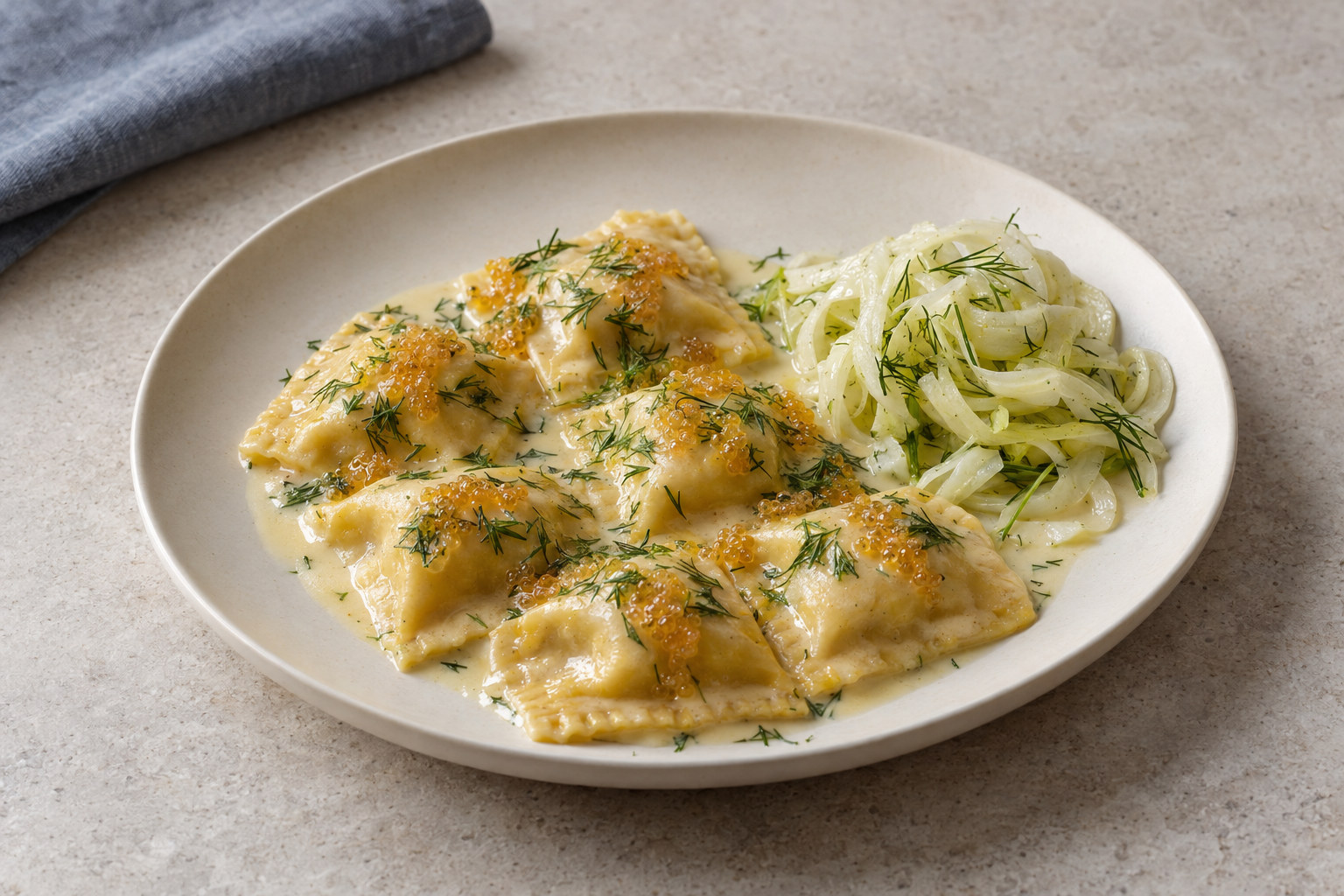
Celeriac and ricotta are delicate and sweet; the wine sauce is buttery with gentle acidity. Cold roe adds saltiness, while the fennel salad brings lemon and crunch.
Step-by-step method
What you will need
- kitchen scales
- knife and chopping board
- pasta machine, rolling pin and pastry wheel
- 3-litre saucepan with a steamer insert
- 24 cm frying pan
- potato ricer
- shallow 20 × 15 cm dish
- two 30 × 20 cm trays
- wide saucepan of at least 5 litres
- 1 l saucepan
- fine sieve and measuring jug
- slotted spoon and whisk
- thermometer with a thin probe
- shallow 30 × 20 cm ovenproof dish and foil
- two hob burners
- oven
Before we start
We cook the celeriac while the dough rests. The filling must cool before shaping; the reduction, salad and hot water will all be ready before the first batch. We whisk the butter into the sauce only during the second batch of ravioli.
We make the dough and cook the celeriac
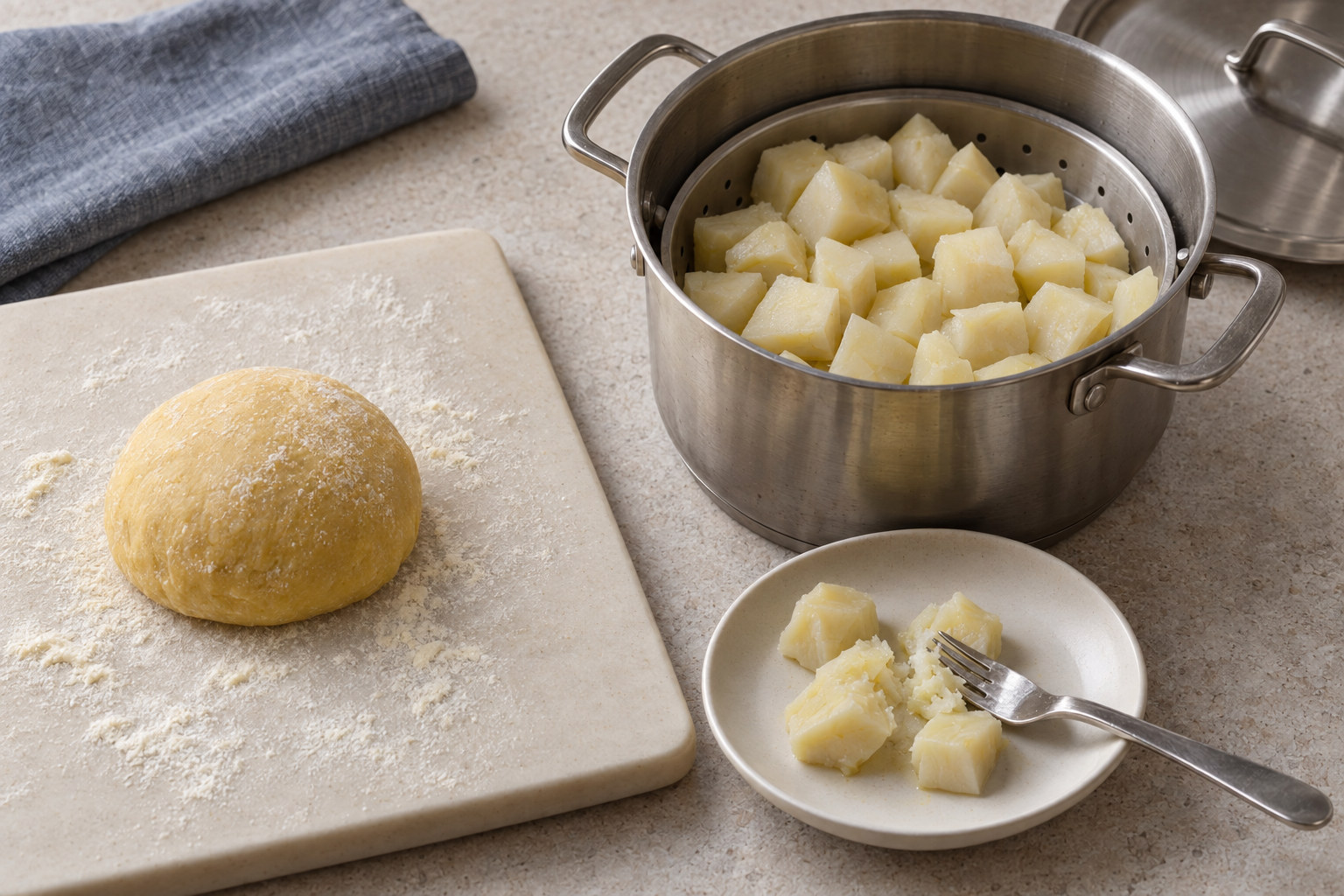
We drain the ricotta well. We knead the flour and egg for 8–10 minutes; if the dough crumbles, we add a few drops of water. We wrap it and leave it to rest for 30 minutes. We peel the celeriac, cut it into 1.5 cm cubes and steam it, covered, above the water in a 3-litre saucepan for 20–25 minutes from when the water boils, until it crushes easily.
The dough is cohesive and elastic. The celeriac crushes easily, with no firm pieces in the middle.
We make a firm filling
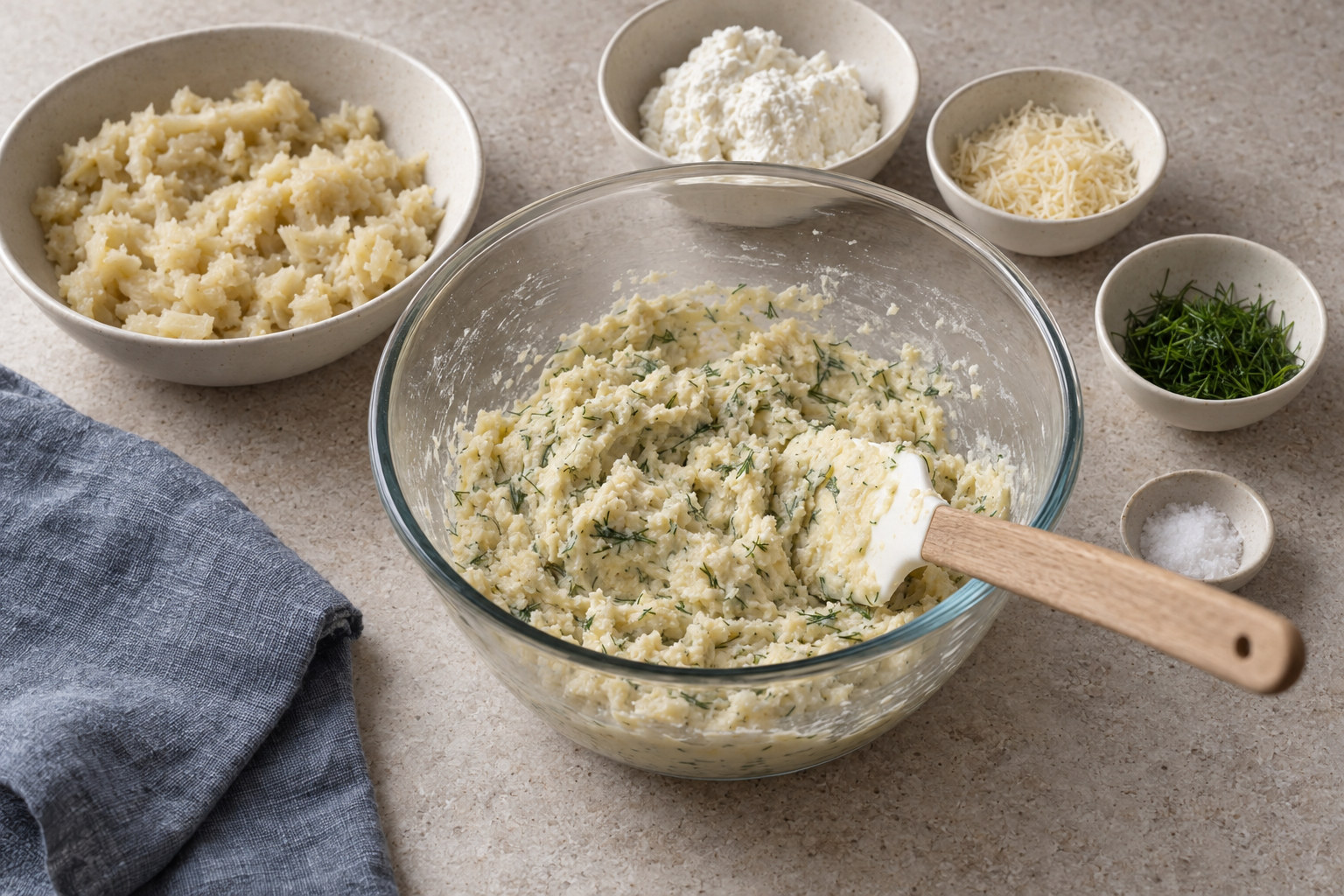
We finely grate the Parmesan, and wash, dry and chop the dill for the filling. We transfer the celeriac to a dry 24 cm frying pan, stir it over a low heat for 3–5 minutes until the surface moisture evaporates, then pass it through a ricer. We spread it thinly in a shallow 20 × 15 cm dish and leave it to cool below 30 °C for about 15 minutes. We transfer the cooled purée to a clean bowl, add the ricotta, Parmesan, dill and a pinch of salt, mix and refrigerate covered.
The filling holds on a teaspoon, does not run and releases no free water.
We shape twelve ravioli
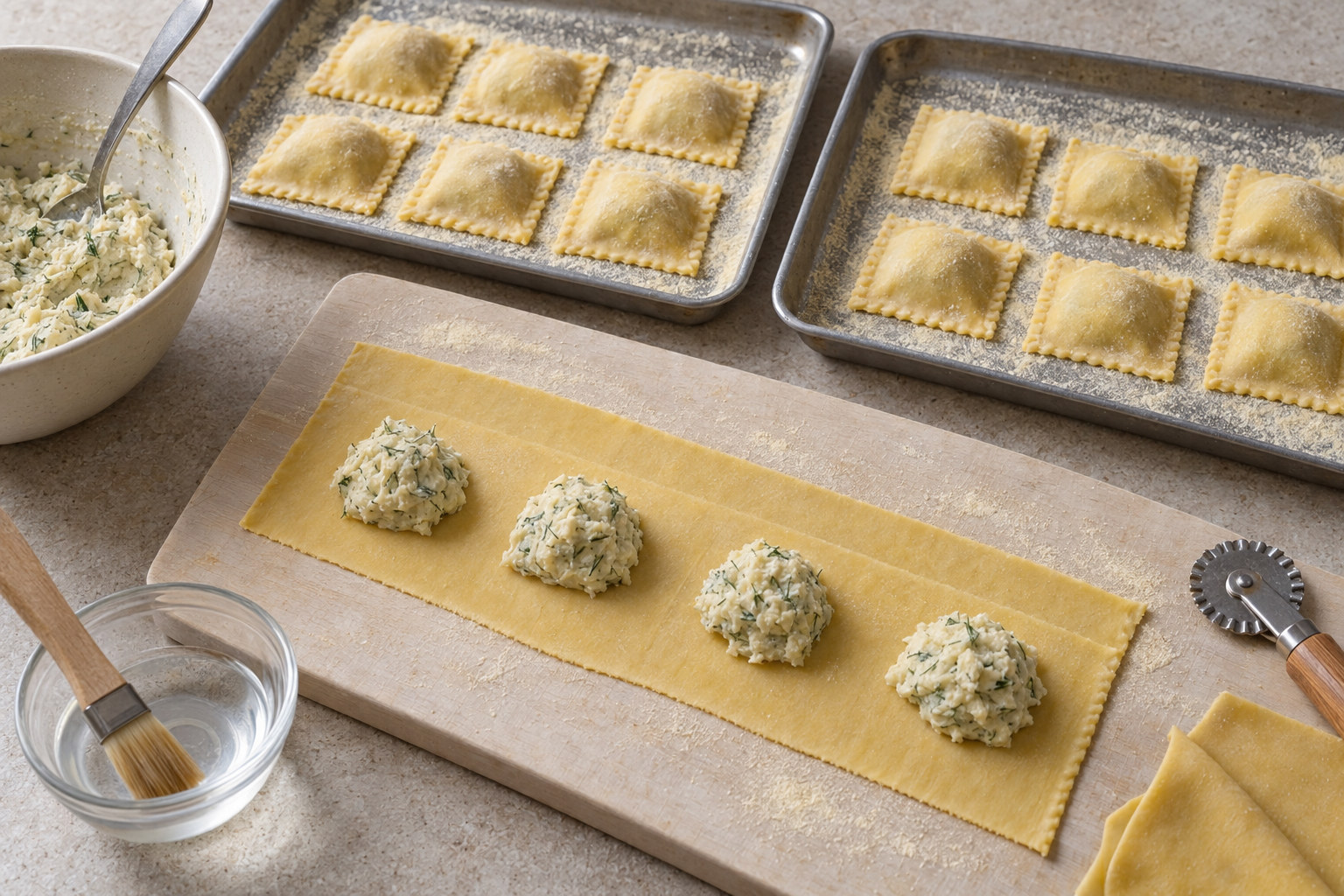
We divide the dough into three pieces and roll each through the pasta machine to 0.8–1 mm thick. From each piece we cut a 14 × 28 cm rectangle. We place four equal mounds of filling along one long half, about 7 cm apart, and flatten them slightly to no more than 1 cm high. We moisten the edges and the spaces between the mounds with a little water, fold lengthways, press out the air and seal firmly. We cut each strip into four squares about 7 cm across. We make 12 ravioli in all, using every bit of filling. We arrange them six to a tray on two 30 × 20 cm trays dusted with semolina and refrigerate. We gather the dough offcuts, cover and refrigerate them for another meal.
Each mound of filling is enclosed by a sealed rim about 1 cm wide. The edges of the dough do not dry out; we always cover the piece we are not working on.
We make the sauce base and salad
We peel and finely chop the shallot. In a 1-litre saucepan, we reduce the wine, vinegar and chopped shallot for 6–10 minutes. We strain out the shallot, which we do not serve, and measure 20 ml of liquid. We reduce any excess further or top up a shortfall from the 20 ml reserved water. We stir in the cream and take it off the heat. We wash the fennel and remove its tough core. We slice the fennel thinly and mix with the lemon juice, oil and salt for the salad. While doing this, we bring plenty of water to the boil in a large saucepan. We set the oven to 70 °C and warm the plates and a shallow 30 × 20 cm ovenproof dish greased with a teaspoon of butter.
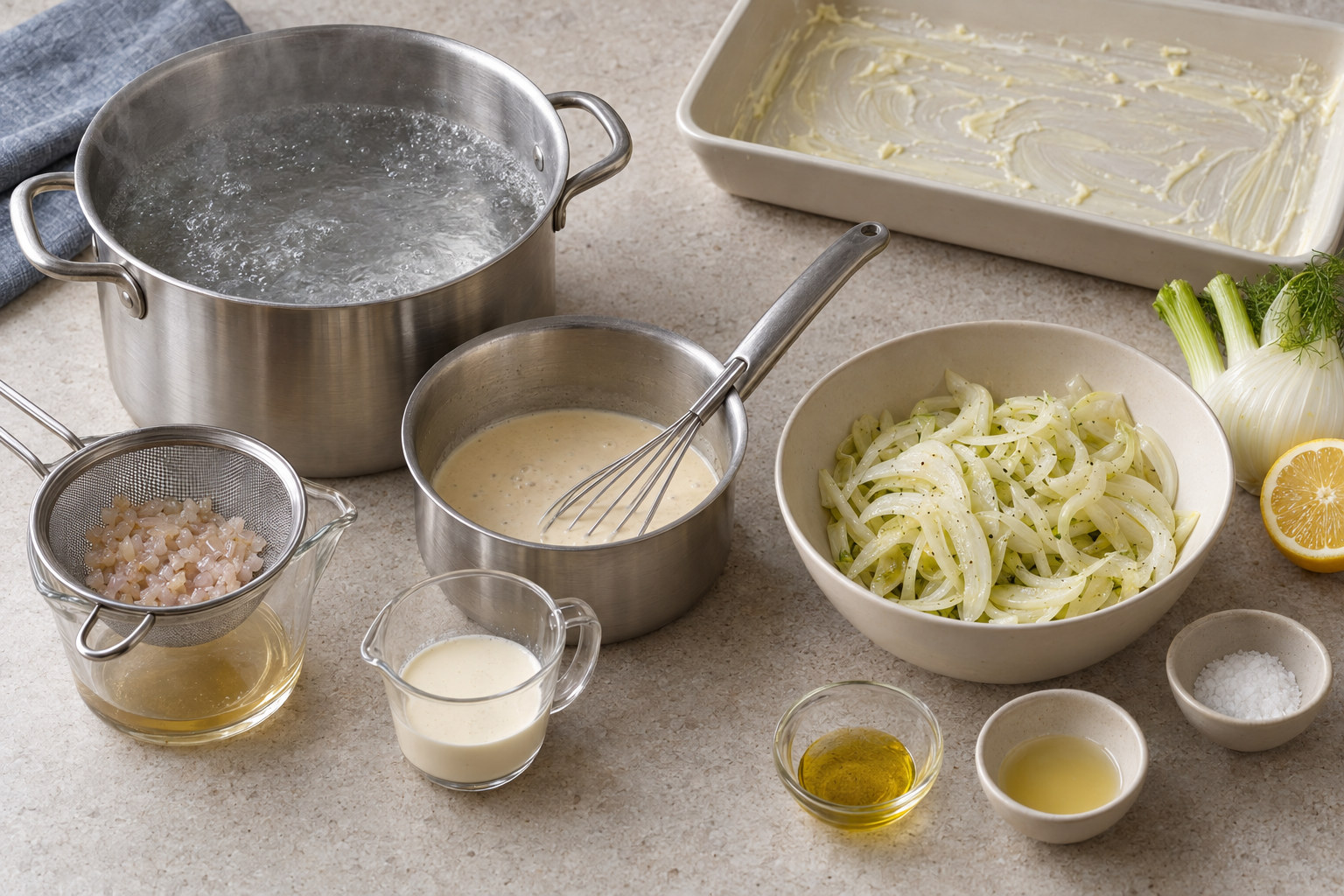
We cook two batches and finish the sauce
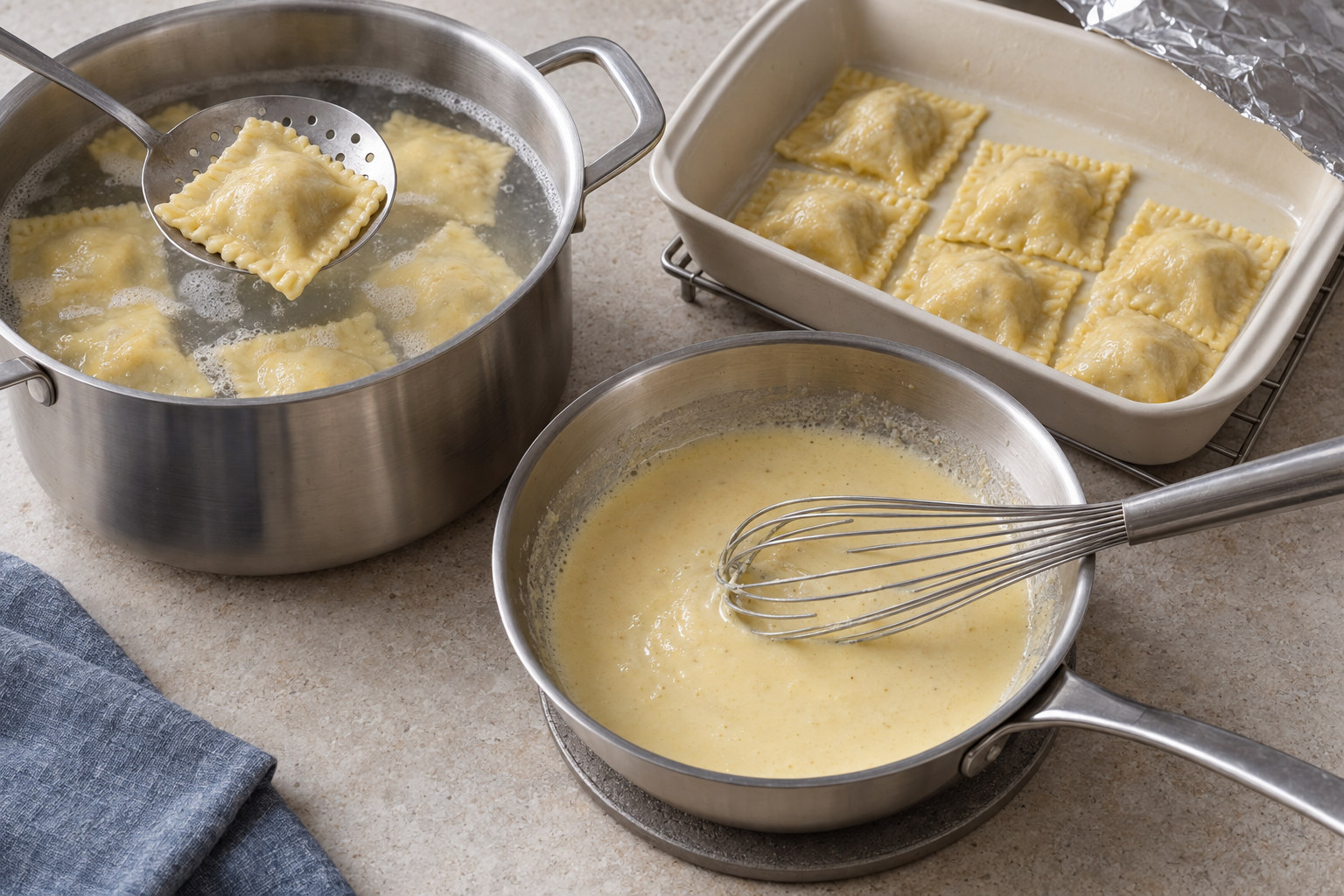
We salt the water with two teaspoons of salt. We cook six ravioli at a gentle simmer for 4–6 minutes, easing them apart with a spoon. We check that the edges have no raw floury centre and that the filling in one test raviolo is hot, at least 74 °C. We let them drain on a slotted spoon and transfer them in one layer to the warm buttered dish. We cover loosely and return them to the 70 °C oven for no more than 12 minutes. We cook the remaining six in the same water. During this second batch, we warm the reduction with the cream, turn the heat to its lowest setting and whisk in 45 g cold butter in small cubes over 2–3 minutes. We lift the saucepan off the heat as needed; the sauce should be about 50–60 °C and must not boil. We serve as soon as the second batch is done.
The first batch is protected from drying out and the ravioli do not lie on top of one another. The sauce is glossy, with no separated fat.
We divide the ravioli and add cold roe
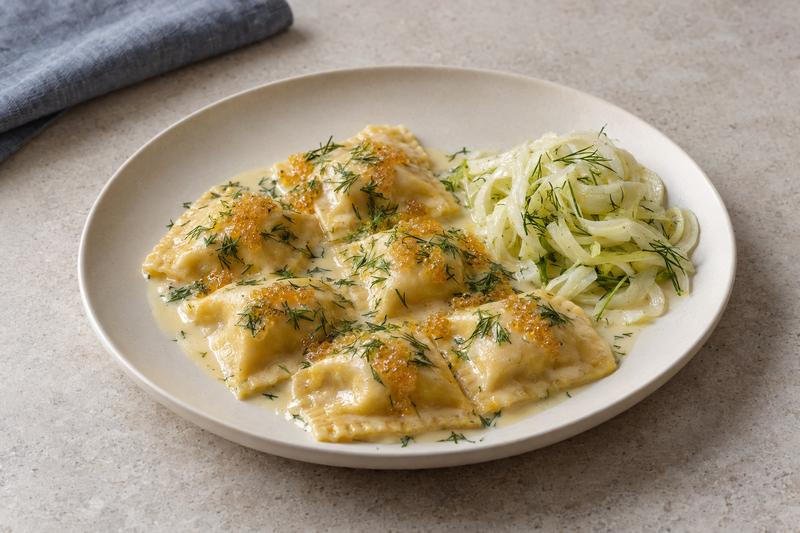
We wash and dry the dill for finishing. We put six ravioli on each warm plate. We divide all the sauce and dill between them, then spoon on the cold pike roe. We add the fennel salad alongside the ravioli and serve immediately.
Tips from our kitchen
- Before mixing the celeriac with ricotta, we let its excess moisture evaporate and leave it to cool. We can cut the pasta trimmings into noodles for another meal.
What to watch out for
- A wet filling or trapped air will make the pasta come apart.
- We do not boil the butter sauce or leave it waiting throughout the cooking of the pasta.
How we serve it
- We divide the ravioli between warm plates and add the butter sauce and cold roe. We place the fennel salad alongside the ravioli on the same plates and serve without delay.
Ingredient notes
- Pike roe is small and golden-yellow, with a delicately granular texture. We spoon it onto the sauce only once the ravioli are plated, so its grains remain intact rather than breaking during whisking or cooking.
During preparation
- We keep the roe chilled at 0–4 °C as directed on the pack and use a clean spoon to serve it. It is ready to eat; we add it only at the end and do not cook it. We store any opened leftovers separately according to the producer’s instructions.
Our inspiration
This butter sauce begins with a small amount of wine reduced with vinegar and shallot. We whisk in cold cubes of butter a little at a time, keeping the warm base below a boil. That is why we finish the sauce only as the second batch of pasta cooks. Smooth and glossy, it can coat the ravioli at once instead of losing its delicacy while it waits.
Similar recipes
Recipe for 4 people
We cook twenty-four ravioli in two saucepans, two batches in each. We finish the sauce during the second batch.
Step-by-step method
Before we start
We make room in the fridge for four trays. Two saucepans cook the first half of the ravioli at once; we bring the butter sauce together only during the second half. The first ravioli wait briefly in a single layer in a warm oven.
We make the dough and cook the celeriac
We drain the ricotta well. We knead the flour and eggs for 10–12 minutes, adding a few drops of water if the dough crumbles. We cover it and leave it to rest for 30 minutes. We peel the celeriac, cut it into 1.5 cm cubes and steam it, covered, above the water in a 5-litre saucepan for 25–30 minutes, until completely soft.
The dough is cohesive and elastic. The celeriac crushes easily, with no firm pieces in the middle.
We make a firm filling
We finely grate the Parmesan, and wash, dry and chop the dill for the filling. We stir the soft celeriac in a dry 28 cm frying pan for 5–7 minutes to drive off moisture, pass it through a ricer and spread it over a shallow 30 × 20 cm tray. We leave it to cool below 30 °C for about 15–20 minutes. We combine all the purée with the ricotta, Parmesan, dill and a pinch of salt, then cover and refrigerate.
The filling holds on a teaspoon, does not run and releases no free water.
We shape twenty-four ravioli
We divide the dough into six pieces. We roll each to 0.8–1 mm thick and cut out a 14 × 28 cm rectangle. On one half of each sheet, we place four equal mounds of filling about 7 cm apart. We flatten them slightly to no more than 1 cm high. We moisten the edges and spaces between the mounds with a little water, fold lengthways, press out the air and seal. We cut each strip into four 7 cm ravioli, making 24 in all and using every bit of filling. We spread them six to a tray without overlap on four 30 × 20 cm trays dusted with semolina and refrigerate. We cover the leftover dough and keep it separately for another use.
Each mound of filling is enclosed by a sealed rim about 1 cm wide. The edges of the dough do not dry out; we always cover the piece we are not working on.
We make the sauce base and salad
We peel and finely chop the shallot. In a 1.5-litre saucepan, we reduce the wine, vinegar and finely chopped shallot for 8–12 minutes, strain and measure 35 ml. We reduce further or add some of the 35 ml reserved water as needed. We do not serve the shallot. We stir in the cream and take the pan off the heat. We wash the fennel and remove its tough core, then slice it thinly and dress with the lemon juice, oil and salt. At the same time, we bring plenty of water to the boil in two large saucepans. We warm four plates and two shallow 30 × 20 cm dishes in the oven at 70 °C, greasing each dish with a teaspoon of butter.
We cook the ravioli and finish the sauce
We add 2 teaspoons of salt and six ravioli to each saucepan. We cook both first batches at the same time for 4–6 minutes at a gentle simmer, easing the ravioli apart with a spoon. We check that the filling has reached at least 74 °C and that the seal is tender with no raw floury centre. We divide the twelve ravioli, six to each warm buttered dish, cover loosely and put them in the 70 °C oven for no more than 12 minutes. We cook another six ravioli in each saucepan. During these second batches, we warm the reduction with the cream on a third hob ring and whisk in 80 g cold butter, cube by cube, over 3–4 minutes. We alternate the lowest heat with lifting the pan off it to keep the sauce smooth at about 50–60 °C. We do not let it boil.
The first batch is protected from drying out and the ravioli do not lie on top of one another. The sauce is glossy, with no separated fat.
We divide the ravioli and add cold roe
We wash and dry the dill for finishing. We put six ravioli on each of four plates. We divide the sauce and dill evenly, then add the roe to each portion away from the hob. We place the fennel salad alongside the ravioli and serve immediately.