
French technique / British inspiration · European cuisine
Sockeye salmon and spinach in homemade puff pastry
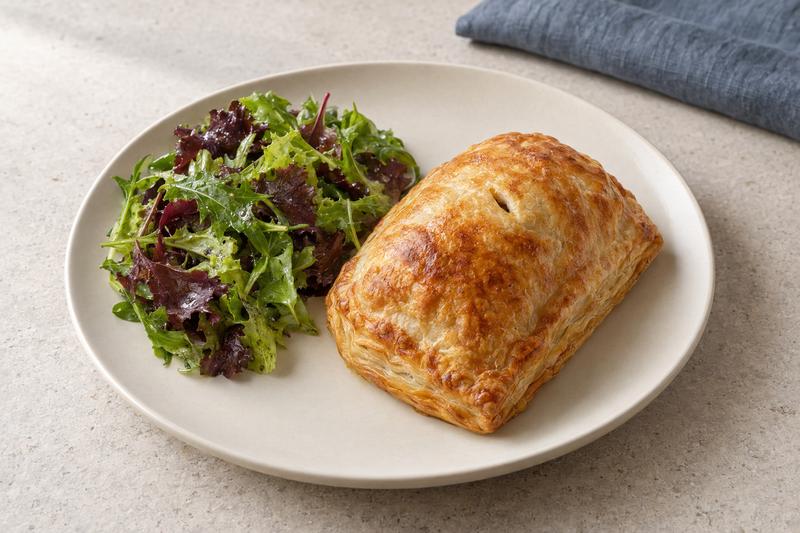
As we cut into the golden parcel, we reveal a portion of sockeye salmon surrounded by spinach and ricotta. We allow time for the homemade butter pastry so it rises into crisp, delicate layers in the oven. A fresh salad with lemon dressing complements the moist fish filling.
We allow for four folds of the homemade pastry and chilling between stages. We rest the baked parcels for 5 minutes before serving.
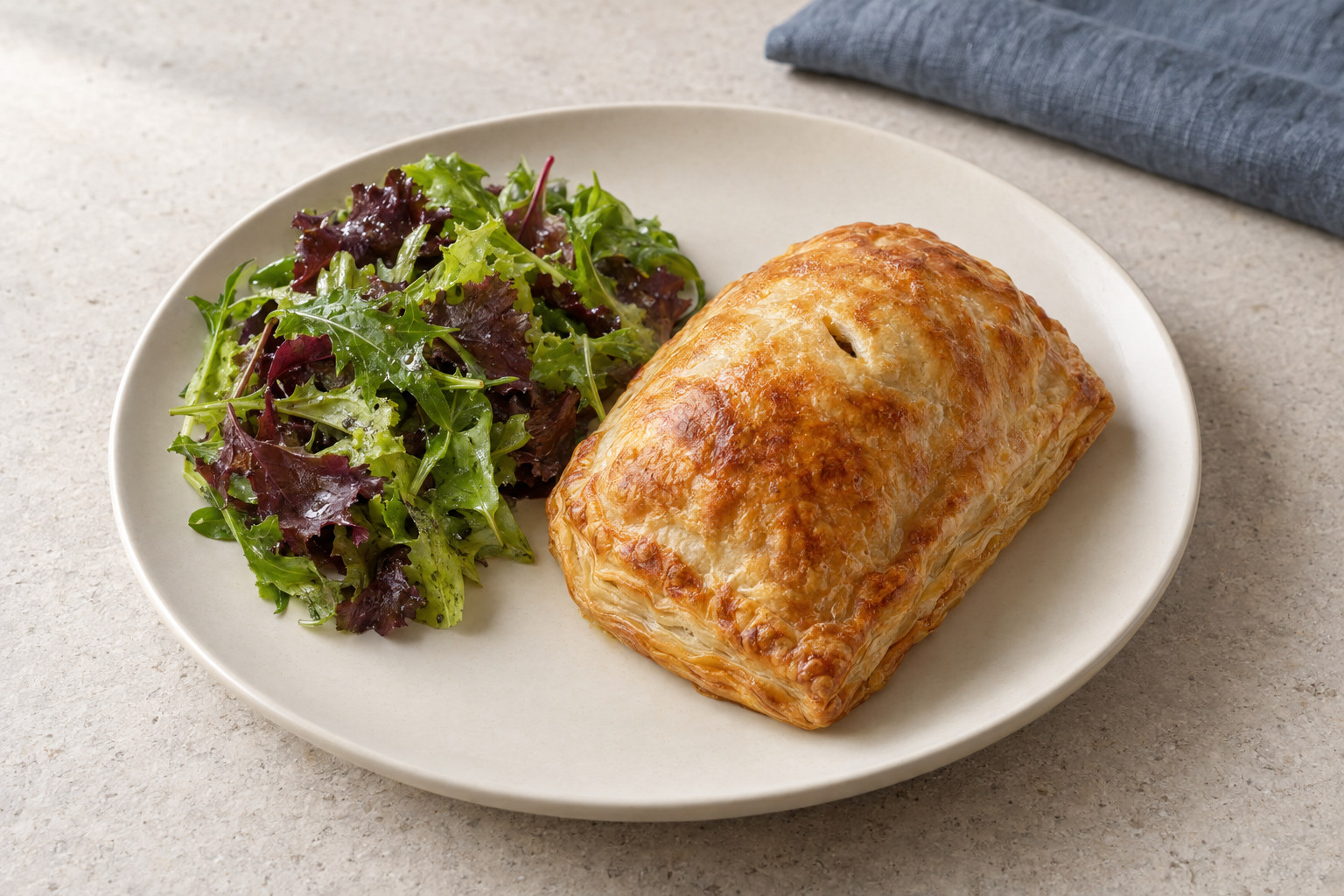
Golden, buttery layers of pastry enclose the more distinctive fish and mild spinach with ricotta. Garlic and a pinch of nutmeg flavour the filling, while the salad brings a lemony tang.
Step-by-step method
What you will need
- oven
- baking tray
- rolling pin
- spatula
- colander
- 26 cm frying pan
- thin-probe thermometer
Before we start
We prepare the spinach while the pastry chills. We take the fish out of the fridge just before wrapping it. We fold the pastry four times in total and chill the filled parcels before baking too.
Make the pastry with cold butter
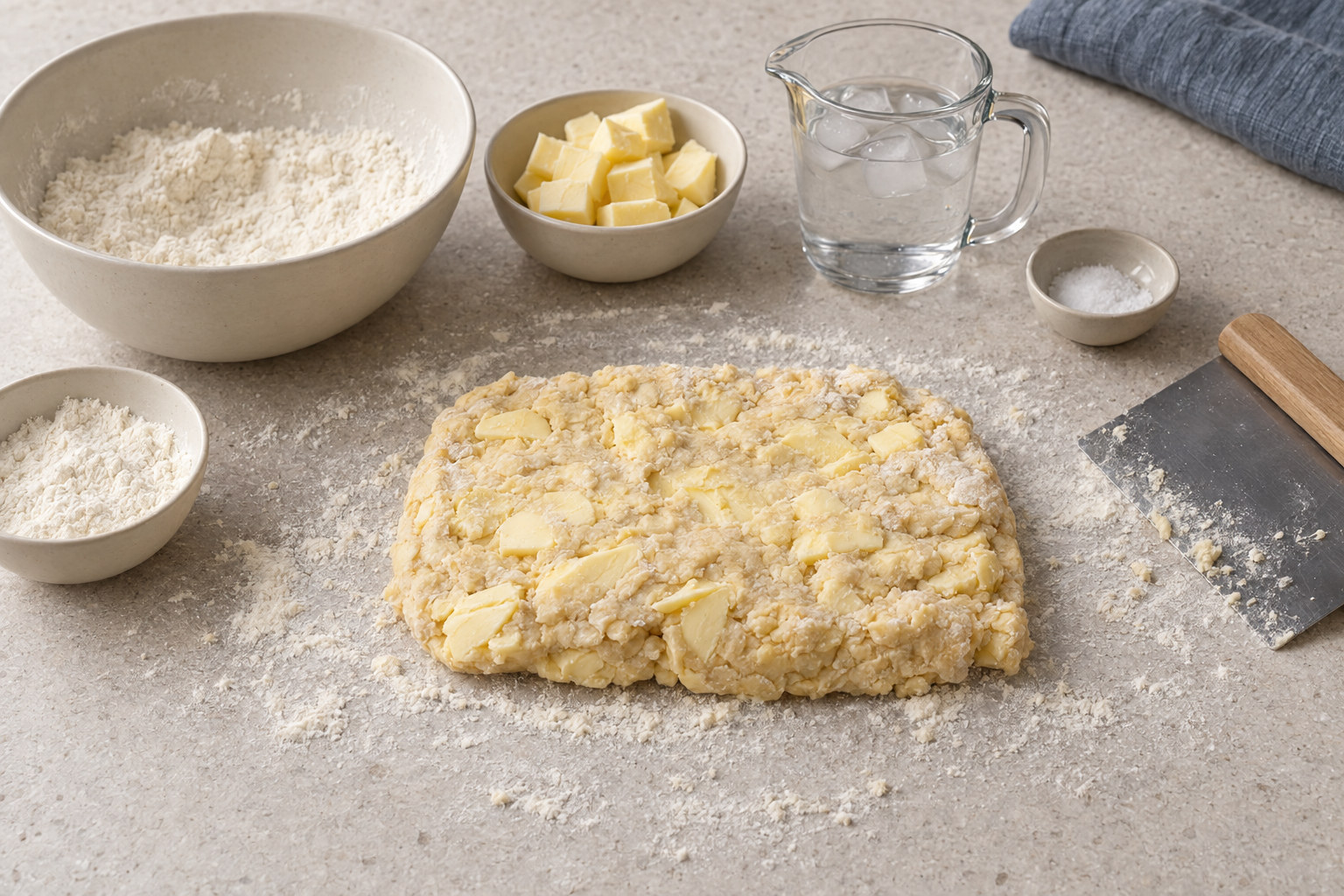
We set aside 15 g of the flour for dusting. We mix the rest with the salt for the pastry, add the cold butter and briefly rub it in, leaving flat, hazelnut-sized pieces. We pour in the ice-cold water and use a spatula to bring the dough together into a rough rectangle. We wrap it and chill for 30 minutes. Meanwhile, we let the ricotta drain in a fine sieve.
The dough holds together, but pieces of butter are still visible. Kneading for too long would prevent layers from forming.
Fold to create the layers
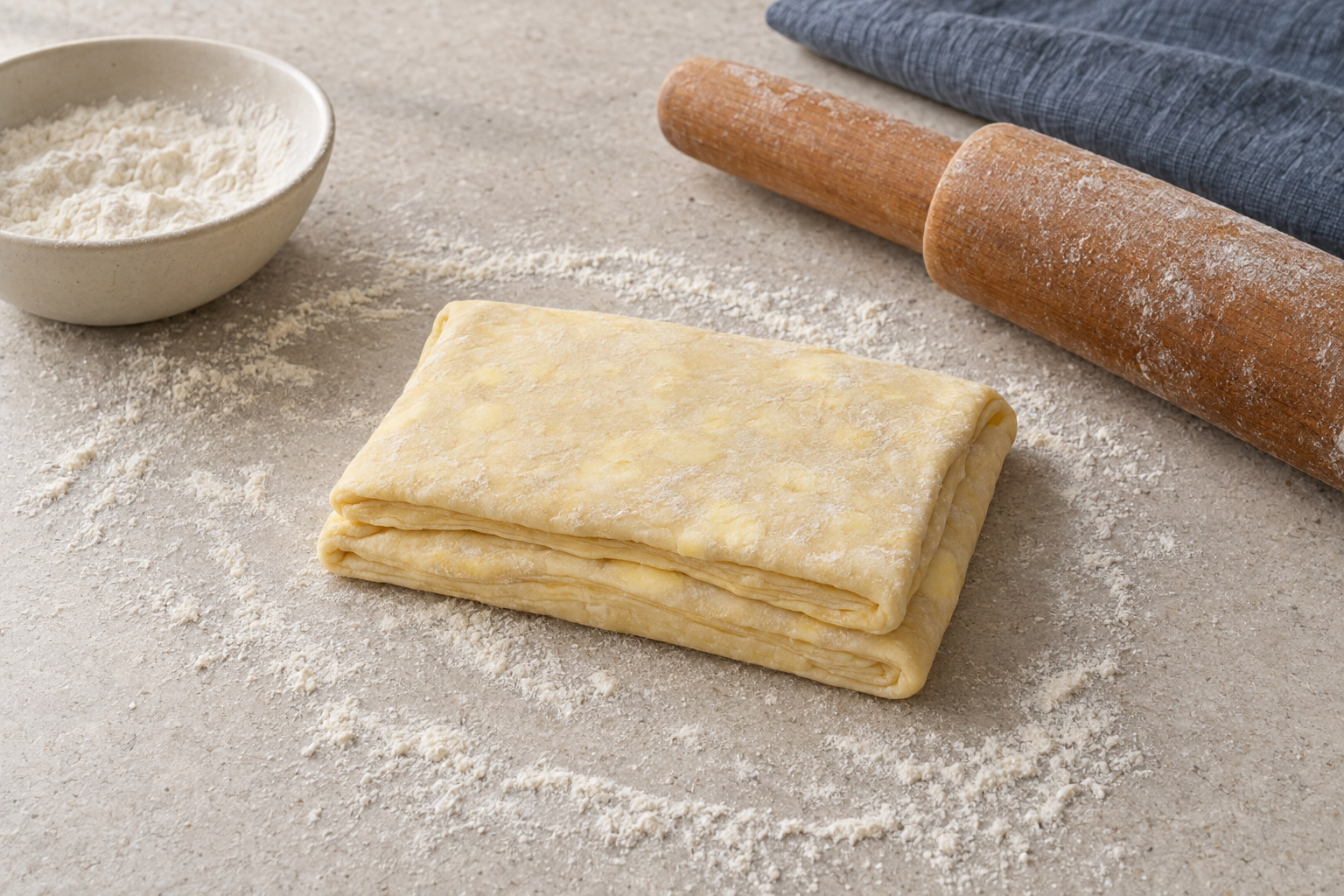
Using some of the reserved flour for dusting, we roll the dough into a 20 × 40 cm rectangle. We fold the short ends over in thirds, like a letter. We turn it a quarter turn, then roll out and fold again. We chill for 20 minutes, then roll out and fold twice more. We chill again for at least 20 minutes, finishing the filling in the meantime. If the butter starts softening and smearing, we stop and chill the pastry again.
The pastry has layers and flat patches of butter, with no greasy film on the surface.
Prepare the filling and squeeze the spinach dry
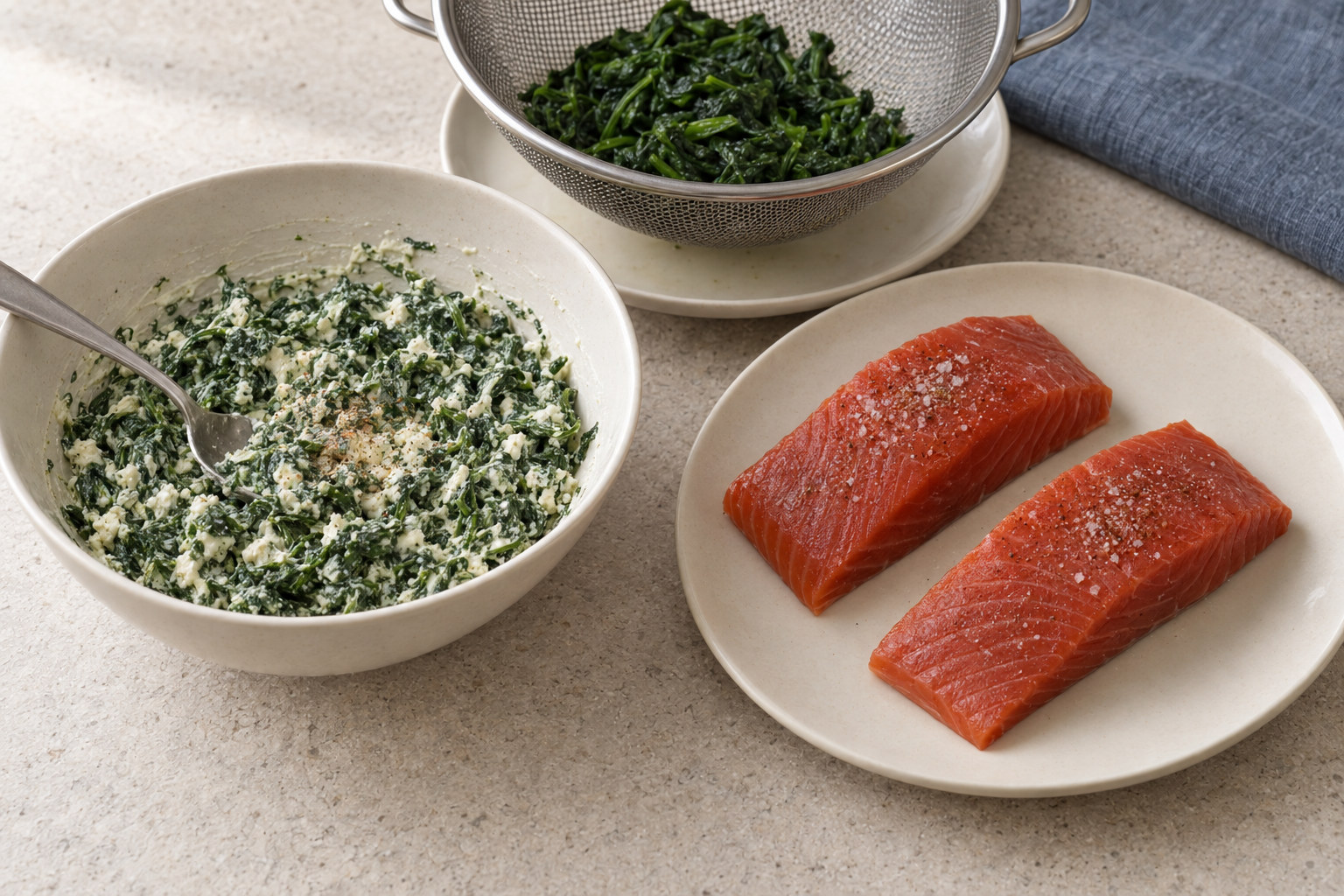
We wash the spinach and leave it to drain. We peel and chop the garlic, then briefly warm it in the oil. We add the spinach and let it wilt. We transfer it to a colander and press out the liquid thoroughly with a spoon. We spread it on a plate to cool, then chop it and mix with the ricotta, nutmeg and half the salt for the filling. We remove the skin from the fish, pat it dry and season with the other half of this salt.
The spinach does not drip when squeezed. The cold filling holds on a spoon; warm filling would melt the butter in the pastry.
Wrap the individual portions
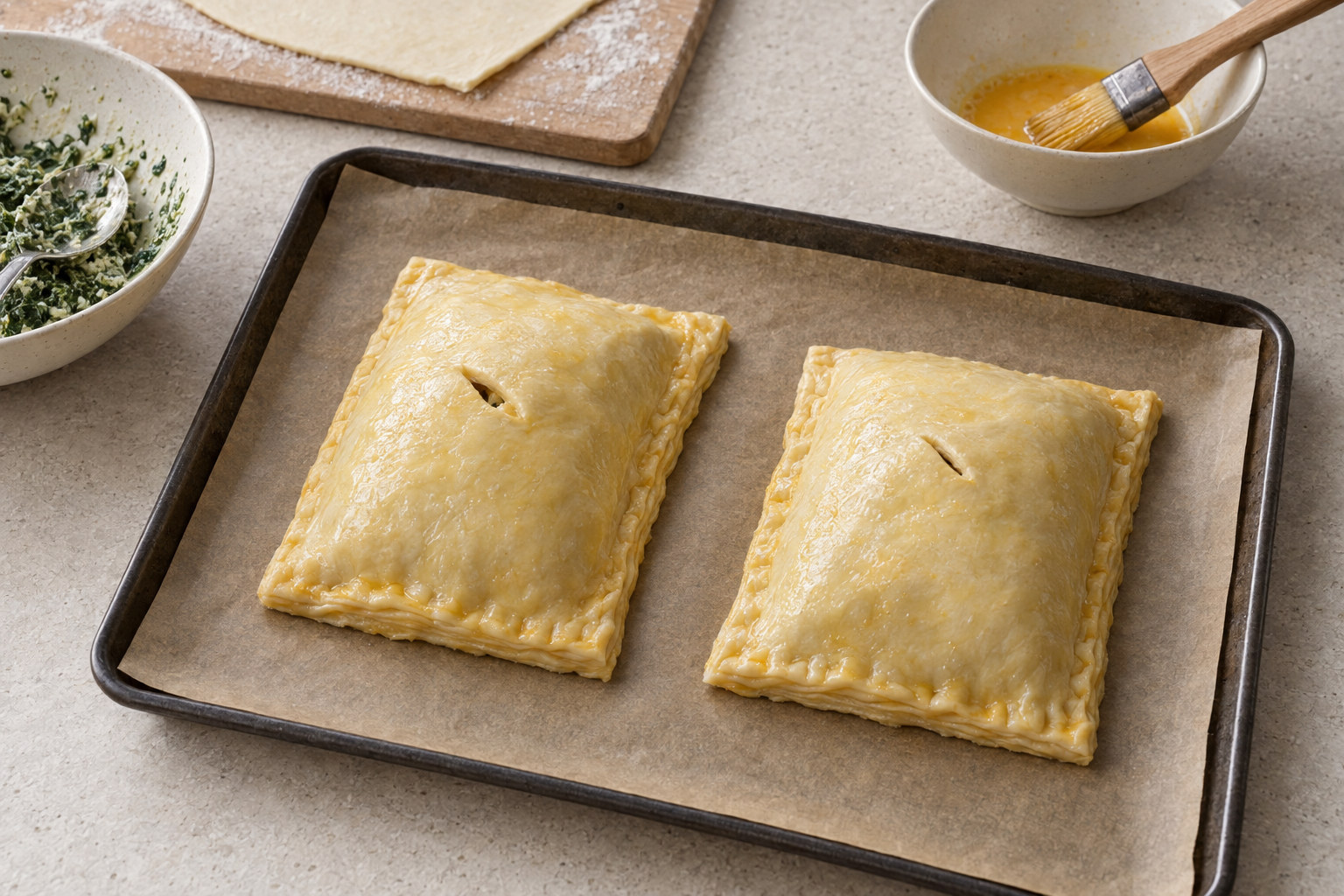
We preheat the oven to 200 °C, conventional heat. We roll the pastry out to about 3 mm thick and cut out two base rectangles and the same number of slightly larger tops. We size them to fit the fish portions, leaving about a 2 cm border around the filling. We place the bases on a baking tray lined with baking paper. We divide the filling equally between the parcels. On each base, we put some of its share of filling, one sockeye salmon portion, then the rest of its filling on top. We beat the egg and lightly brush the pastry borders with it. We cover with the tops, gently press around the filling and seal all the edges with a fork. We trim off any excess pastry. We chill the parcels for 15 minutes, then brush them with a thin layer of egg and make a small steam vent in the top.
Bake the parcels and finish the salad
We place the two parcels at least 4 cm apart. We bake for about 25–35 minutes in the lower half of the oven. We insert a thin thermometer probe through the steam vent to check that the centre of the fish has reached 63 °C. Both the top and base of the pastry should be cooked. We rest the parcels for 5 minutes. We wash and dry the salad leaves, toss with the oil, lemon juice and salt, and serve alongside the parcels.
The pastry is golden and layered, with no soggy base. The filling holds together when cut.
Tips from our kitchen
- We can prepare the pastry and filling earlier the same day and refrigerate them separately from the fish.
- If we use ready-made puff pastry, we weigh out about 350 g for 2 people or 650 g for 4. This lets us skip making the folds ourselves; we check the butter content when choosing the pastry.
- We allow time for the pastry to chill and clear the work surface before rolling it out.
What to watch out for
- We do not wrap the fish with warm or wet spinach, as it would make the pastry soggy.
- We avoid using too much flour for dusting so the pastry stays supple.
- Golden pastry does not prove the fish is cooked; we check its centre with a thermometer probe.
How we serve it
- After resting for five minutes, we serve one fish parcel per person, with a leafy salad and lemon dressing alongside.
Ingredient swaps
ricotta
the same amount of well-drained full-fat quark The filling will be slightly tangier and denser; we let the liquid drain thoroughly.
Ingredient notes
- We use individual 150 g skin-on sockeye salmon portions. Their deep red colour is natural for this species and does not, on its own, mean the fish is raw.
- We save the rest of the box for another meal and buy the side dish ingredients and other items separately.
During preparation
- We keep raw fish separate from cooked accompaniments. After handling it, we wash our hands, the chopping board and utensils.
- The fish inside the pastry parcel must reach at least 63 °C in its thickest part. The baking time is a guide; we insert the thin probe through the steam vent into the centre of the fish.
Our inspiration
Marcello Tully, former head chef at Kinloch Lodge on the Scottish Isle of Skye, drains the spinach and lets the finished filling cool for his salmon en croûte. The crisp pastry needs protecting from the inside too. We take the same care with our spinach and ricotta filling: excess water would make the pastry soggy, while warmth would melt the butter before baking.
Marcello Tully
A Brazilian-born chef who previously led the kitchen at Kinloch Lodge on the Scottish Isle of Skye. His salmon en croûte inspires the way we prepare the spinach filling.
Similar recipes

Recipe for 4 people
Step-by-step method
Before we start
We roll out the pastry in portions, keeping the rest chilled. We wilt the spinach in two batches so the water can evaporate. We wrap four equal-sized portions.
Make the pastry with cold butter
We set aside 25 g of the flour for dusting. We mix the rest with the salt for the pastry, add the cold butter and briefly rub it in, leaving flat, hazelnut-sized pieces. We pour in the ice-cold water and use a spatula to bring the dough together into a rough rectangle. We wrap it and chill for 30 minutes. Meanwhile, we let the ricotta drain in a fine sieve.
The dough holds together, but pieces of butter are still visible. Kneading for too long would prevent layers from forming.
Fold to create the layers
Using some of the reserved flour for dusting, we roll the dough into a 25 × 50 cm rectangle. We fold the short ends over in thirds, like a letter. We turn it a quarter turn, then roll out and fold again. We chill for 20 minutes, then roll out and fold twice more. We chill again for at least 20 minutes, finishing the filling in the meantime. If the butter starts softening and smearing, we stop and chill the pastry again.
The pastry has layers and flat patches of butter, with no greasy film on the surface.
Prepare the filling and squeeze the spinach dry
We wash the spinach and leave it to drain. We peel and chop the garlic, then briefly warm it in the oil. We add the spinach in two batches and let it wilt. We transfer it to a colander and press out the liquid thoroughly with a spoon. We spread it on a plate to cool, then chop it and mix with the ricotta, nutmeg and half the salt for the filling. We remove the skin from the fish, pat it dry and season with the other half of this salt.
The spinach does not drip when squeezed. The cold filling holds on a spoon; warm filling would melt the butter in the pastry.
Wrap the individual portions
We preheat the oven to 200 °C, conventional heat. We roll the pastry out to about 3 mm thick and cut out four base rectangles and the same number of slightly larger tops. We size them to fit the fish portions, leaving about a 2 cm border around the filling. We place the bases on a baking tray lined with baking paper. We divide the filling equally between the parcels. On each base, we put some of its share of filling, one sockeye salmon portion, then the rest of its filling on top. We beat the egg and lightly brush the pastry borders with it. We cover with the tops, gently press around the filling and seal all the edges with a fork. We trim off any excess pastry. We chill the parcels for 15 minutes, then brush them with a thin layer of egg and make a small steam vent in the top.
Bake the parcels and finish the salad
We place the four parcels on one large baking tray at least 4 cm apart. We bake for about 25–35 minutes in the lower half of the oven. If they will not fit on one tray, we use two trays and set the oven to 180 °C fan, swapping the trays halfway through baking. We insert a thin thermometer probe through the steam vent to check that the centre of the fish has reached 63 °C. Both the top and base of the pastry should be cooked. We rest the parcels for 5 minutes. We wash and dry the salad leaves, toss with the oil, lemon juice and salt, and serve alongside the parcels.
The pastry is golden and layered, with no soggy base. The filling holds together when cut.