
Alaskan-inspired · Alaska
Sockeye salmon baked on fennel with potatoes
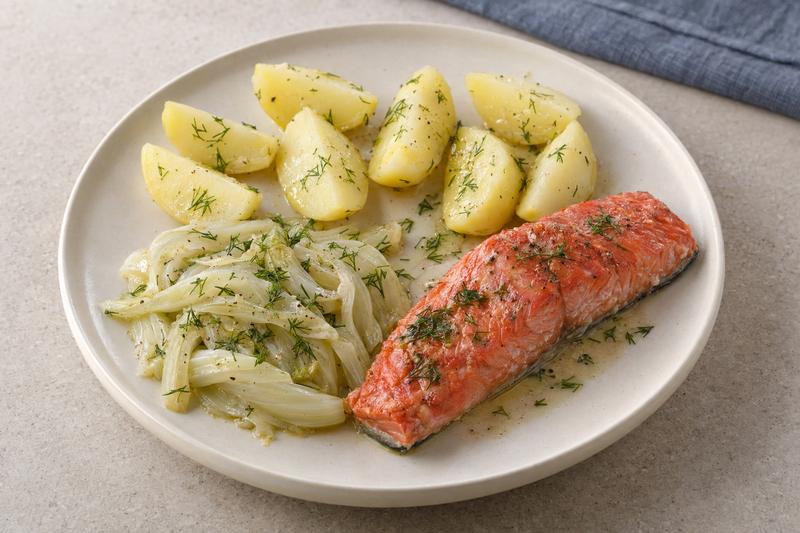
The fennel softens beneath the sockeye salmon, soaking up the cooking juices. We serve simple boiled potatoes alongside, spooning the juices over them too. Lemon and fresh dill go in at the very end to keep their fresh aroma.
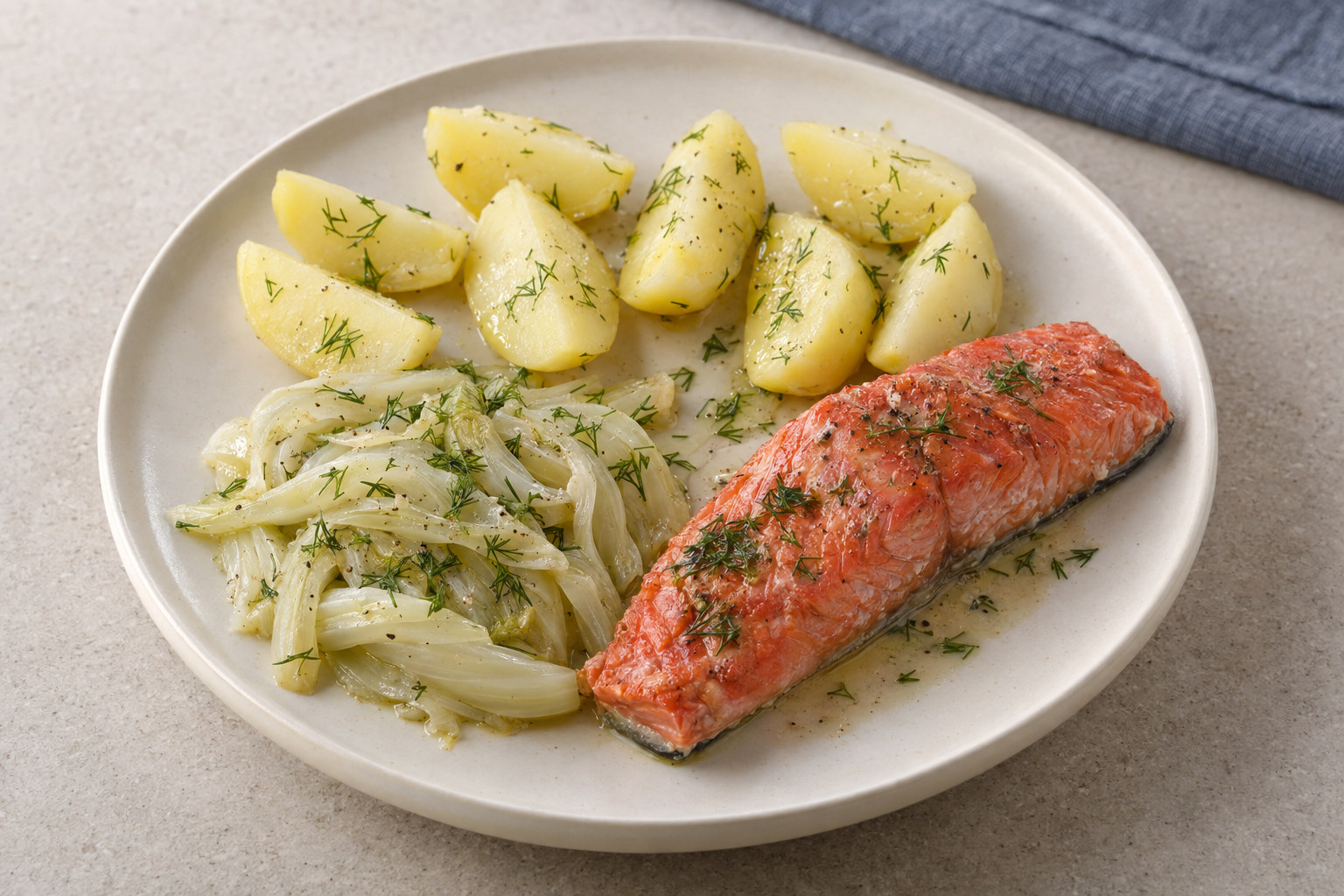
Gently sweet fennel with a hint of anise complements the rich flavour of sockeye salmon. Lemon juice and dill bring freshness to both the fish and the tender potatoes.
Step-by-step method
What you will need
- oven
- 25 × 20 cm roasting tin
- 2 litre saucepan
- thin-probe meat thermometer
Before we start
If we choose to finish with Icelandic salt, we hold back one small pinch of the regular salt for the fish. We season the fennel as described in the method. We start boiling the potatoes and baking the fennel at the same time; the fish goes into the oven after 15 minutes.
Prepare the vegetables
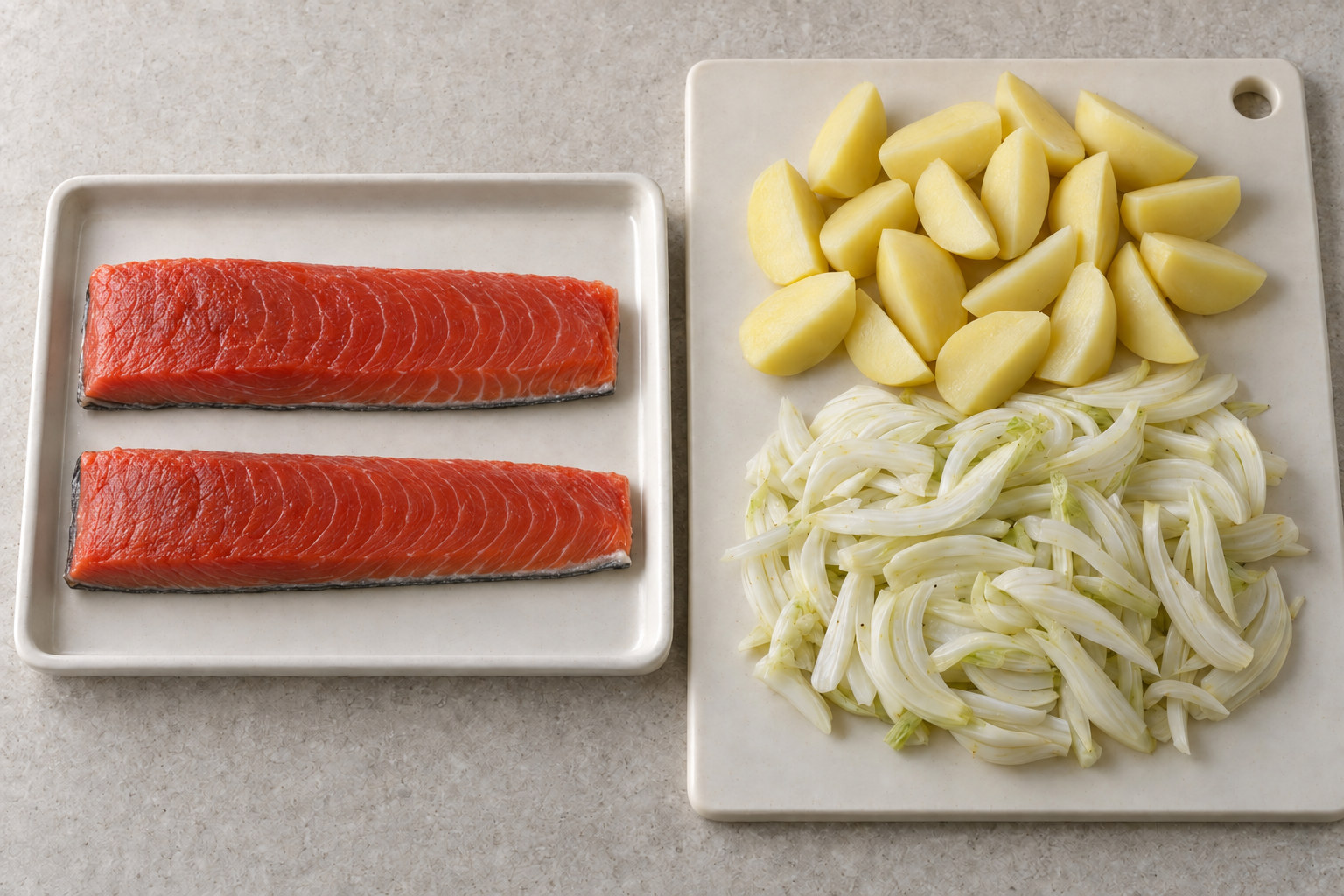
We preheat the oven to 190 °C using conventional top and bottom heat. We wash and halve the fennel, remove the tough core and slice it thinly. We peel the potatoes and cut them into similarly sized quarters.
The fennel slices are similar in thickness so they soften at the same time.
Start the potatoes and bake the fennel
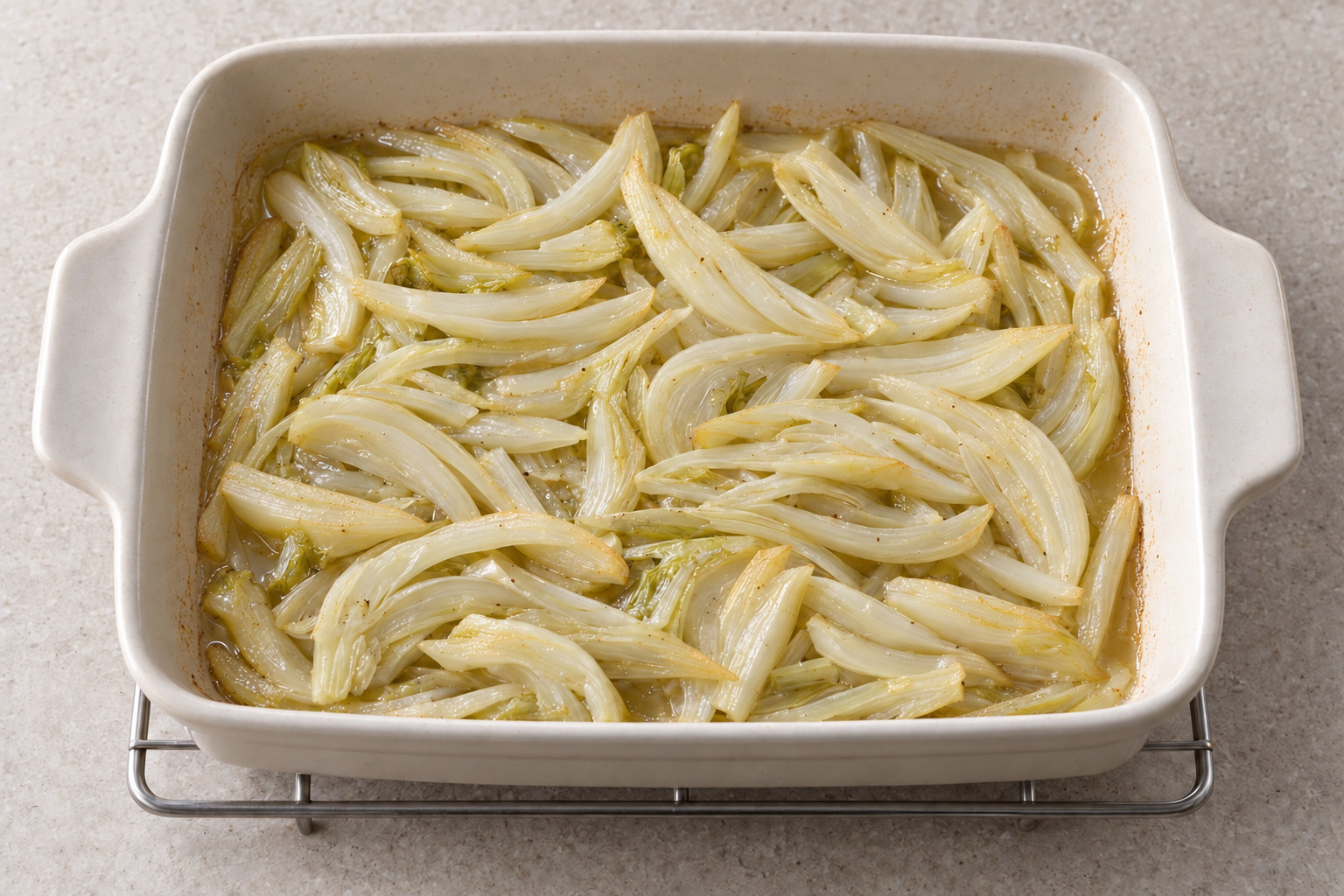
We put the potatoes in a two-litre saucepan, cover with water, add the salt for the cooking water and bring to the boil. We then simmer for 15–20 minutes. In a 25 × 20 cm roasting tin, we toss the fennel with two teaspoons of oil, half the salt and the water for the tin. We bake for 15 minutes.
The fennel is softening at the edges but still holds its shape. A knife slips easily into the potatoes.
Add the fish
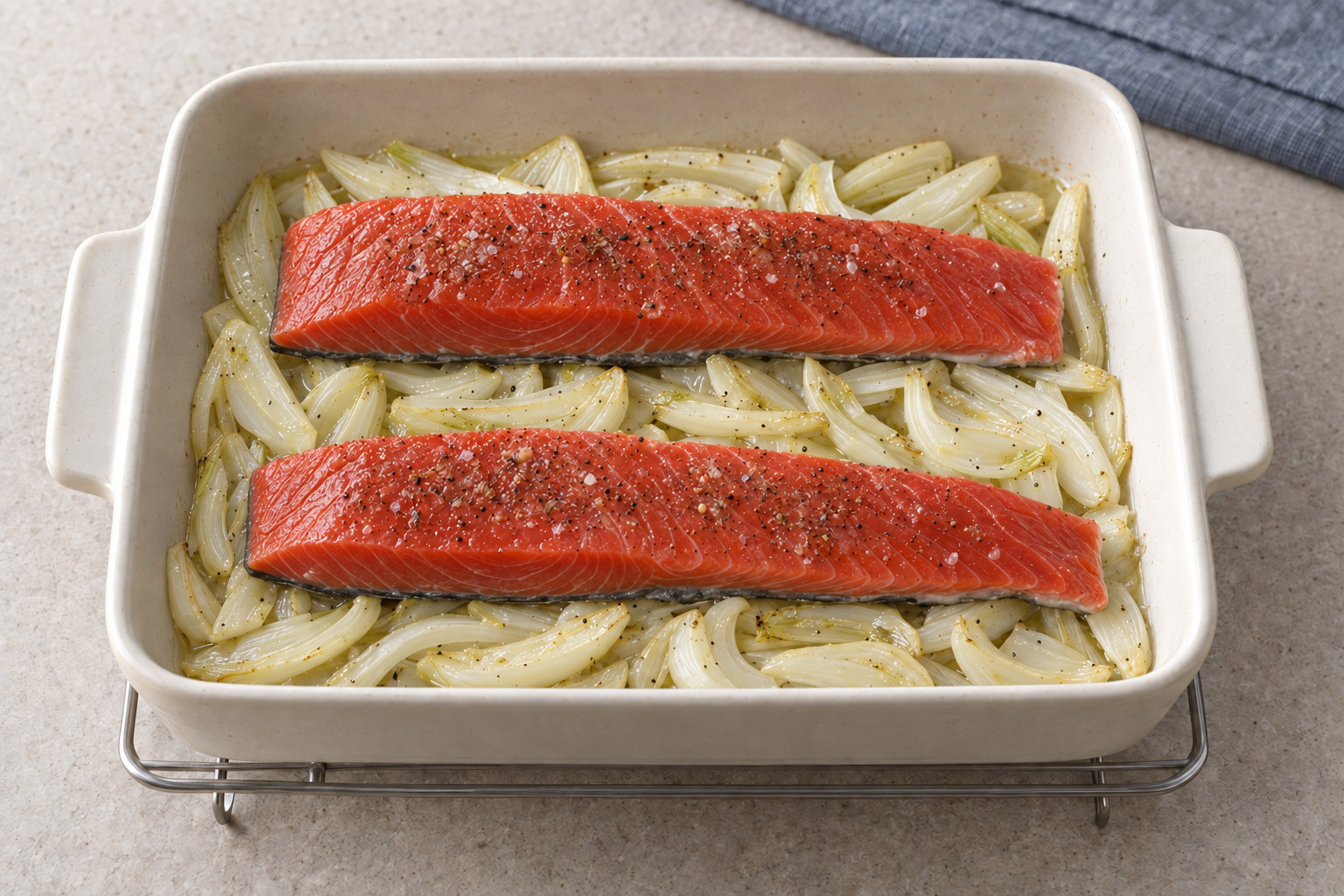
We pat the fish dry, brush with the remaining oil and season with the remaining salt and pepper. If we are finishing with Icelandic salt, we hold back one small pinch of the regular salt for the fish. We place the two portions skin-side down on the part-baked fennel, leaving space between them. We bake for about 8–12 minutes, depending on their thickness, checking thinner pieces after just 6 minutes. We take each portion out as soon as it reaches 63 °C at its thickest point; they may be ready at different times.
The flesh flakes apart. We do not wait for the vivid red colour to disappear; this salmon retains it even when cooked.
Season and serve
We drain the potatoes. We take the tin out of the oven and drizzle the lemon juice over the fish and fennel. We wash, dry and finely chop the dill, then scatter it over the finished dish. We plate the potatoes, fennel and fish and spoon over a little of the cooking juices. If we are using Icelandic salt, we taste the fish with the fennel, potatoes and juices. Just before serving, we sprinkle one small pinch of Saltverk Icelandic salt flakes with Arctic thyme over the fish to taste, in place of the regular salt we held back at the start. If the mouthful is already salty enough, we add no more salt.
Tips from our kitchen
- We slice the fennel while the oven heats up.
- We make the whole dinner in an ordinary oven and one saucepan.
What to watch out for
- We do not put the fish in the oven at the same time as the raw fennel; we let the vegetables soften first.
- We keep the portions in a single layer and check they are cooked with a thermometer, as this salmon retains its vivid colour.
How we serve it
- We divide the boiled potatoes, baked fennel and fish portions between warmed plates. We spoon over a little of the cooking juices and serve straight away.
Ingredient swaps
fennel
the same amount of leek, white and pale green parts The accompaniment will have a mild onion flavour rather than an anise aroma. We bake it for just 10 minutes before adding the fish, keeping an eye on the edges.
Ingredient notes
- We use individual 150 g skin-on sockeye salmon portions. Their deep red colour is natural for this species and does not, on its own, mean the fish is raw.
- We save the rest of the box for another meal and buy the side dish ingredients and other items separately.
During preparation
- We keep the prepared raw fish separate from the cooked accompaniments. After handling raw fish, we wash our hands, the chopping board and utensils.
- We bake the fish until it reaches at least 63 °C at the thickest point. We use the cooking time only as a guide, inserting the thin thermometer probe from the side into the centre of the flesh, not the skin.
Our inspiration
Fennel becomes pleasantly sweet as it bakes, catching the juices from the salmon above it. That is why it goes into the oven first: it needs time to soften, while smaller portions of sockeye cook quickly. We finish with lemon and dill, then spoon the cooking juices over the potatoes too, so none of that flavour goes to waste.
Similar recipes

Recipe for 4 people
Step-by-step method
Before we start
If we choose to finish with Icelandic salt, we hold back two small pinches of the regular salt for the fish. We season the fennel as described in the method. We use a wider roasting tin and keep the portions from overlapping. We do not double the cooking time for the fish; the potatoes may take a few extra minutes to come to the boil.
Prepare the vegetables
We preheat the oven to 190 °C using conventional top and bottom heat. We wash and halve the fennel, remove the tough core and slice it thinly. We peel the potatoes and cut them into similarly sized quarters.
The fennel slices are similar in thickness so they soften at the same time.
Start the potatoes and bake the fennel
We put the potatoes in a three-litre saucepan, cover with water, add the salt for the cooking water and bring to the boil. We then simmer for 15–20 minutes. In a 35 × 25 cm roasting tin, we toss the fennel with one and a half tablespoons of oil, half the salt and the water for the tin. We bake for 15 minutes.
The fennel is softening at the edges but still holds its shape. A knife slips easily into the potatoes.
Add the fish
We pat the fish dry, brush with the remaining oil and season with the remaining salt and pepper. If we are finishing with Icelandic salt, we hold back two small pinches of the regular salt for the fish. We place the four portions skin-side down on the part-baked fennel, leaving space between them. We bake for about 8–12 minutes, depending on their thickness, checking thinner pieces after just 6 minutes. We take each portion out as soon as it reaches 63 °C at its thickest point; they may be ready at different times.
The flesh flakes apart. We do not wait for the vivid red colour to disappear; this salmon retains it even when cooked.
Season and serve
We drain the potatoes. We take the tin out of the oven and drizzle the lemon juice over the fish and fennel. We wash, dry and finely chop the dill, then scatter it over the finished dish. We plate the potatoes, fennel and fish and spoon over a little of the cooking juices. If we are using Icelandic salt, we taste the fish with the fennel, potatoes and juices. Just before serving, we sprinkle two small pinches of Saltverk Icelandic salt flakes with Arctic thyme over the fish to taste, in place of the regular salt we held back at the start. If the mouthful is already salty enough, we add no more salt.