
Thai-inspired · Our home-style adaptation of red curry
Red prawn curry with coconut milk
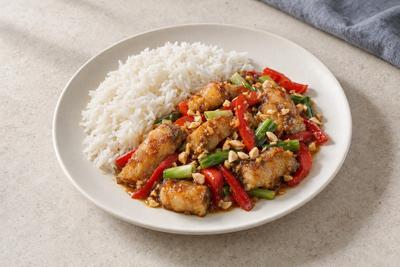
A bowl of red curry warms us with spices and carries the aroma of coconut and lime. We add sweet pepper and spring onion to plump prawns, then let the sauce soak into jasmine rice. We choose the heat by how much curry paste we use, so we can make dinner mild or more fiery.
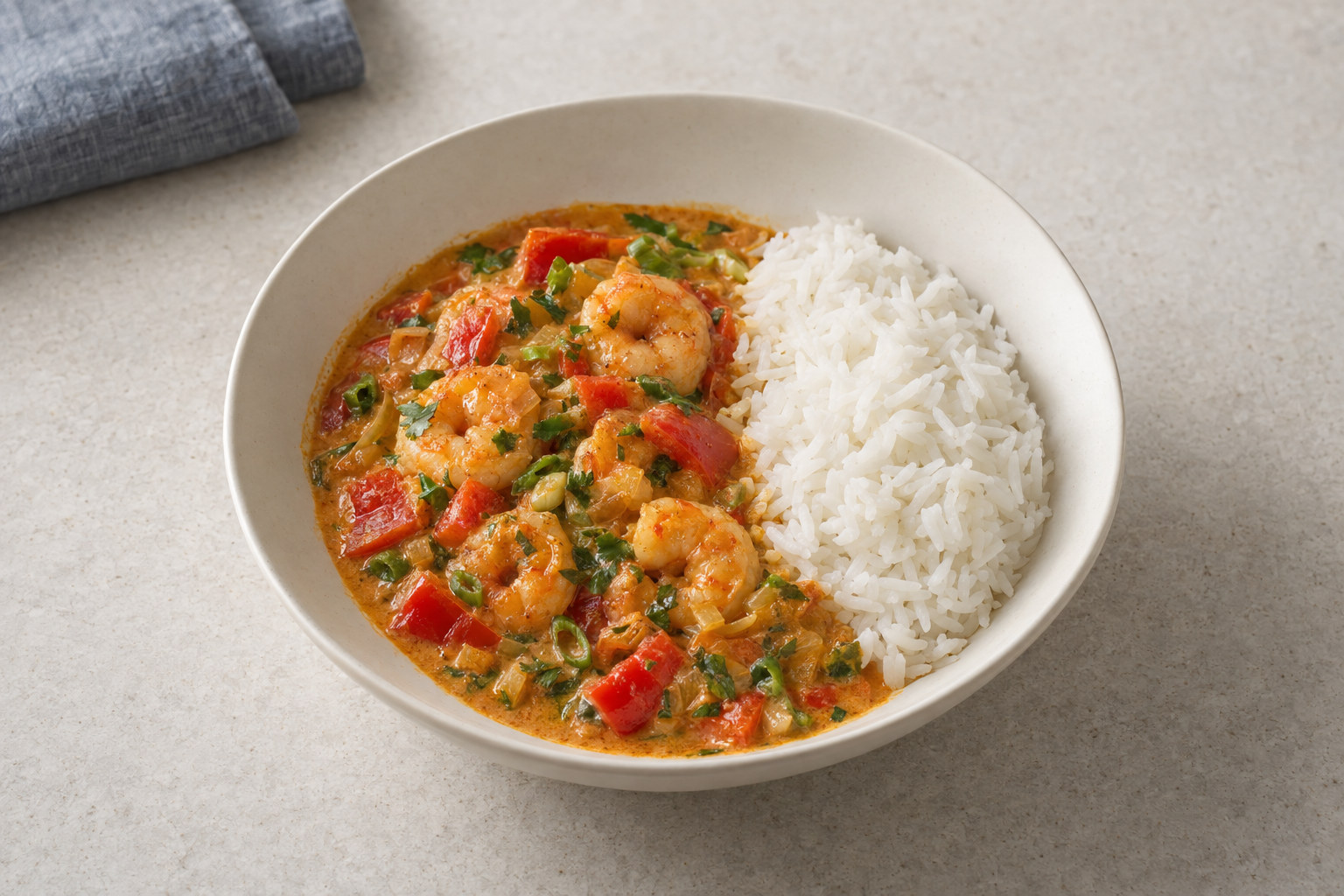
The coconut sauce is creamy, spiced and slightly sweet from the pepper and prawns. Lime and coriander bring freshness, while spring onion adds a little bite.
Step-by-step method
What you will need
- 28 cm deep frying pan
- 1.5-litre saucepan
- thermometer
- lid for the rice pan
- sieve
- knife and chopping board
- two hob rings
- kitchen scales
- measuring jug
Before we start
We start the rice first and add the prawns only once the sauce is ready. If we choose prawns of a different size or pack, we adjust the quantity and salt according to our purchase and the product note.
We start with the rice
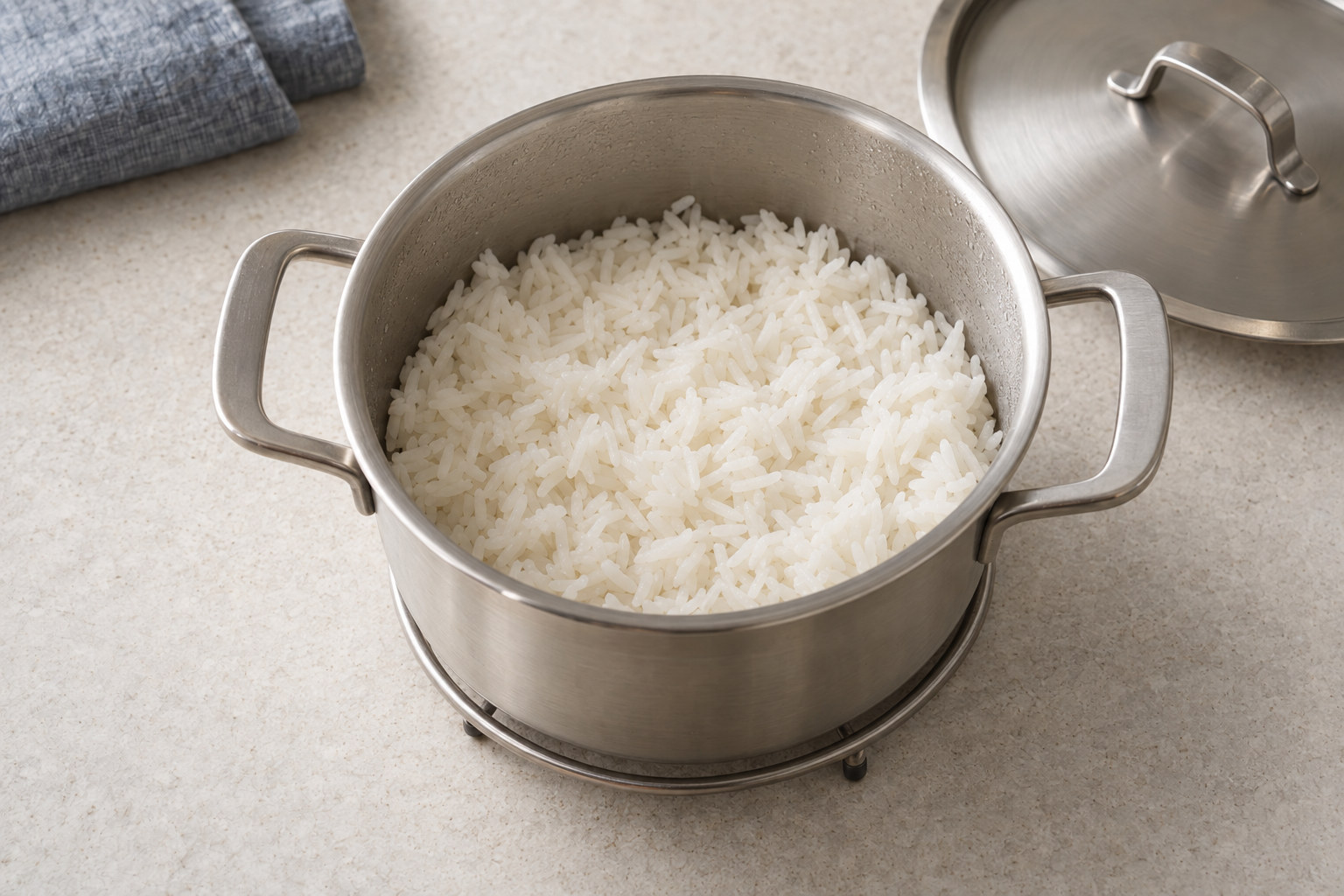
We rinse the rice, cover it with 210 ml water and bring it to the boil. We cover and cook it over a low heat for 12 minutes, then leave it to stand for 10 minutes.
The rice is tender; the grains cling lightly together but are not mushy.
We bloom the curry paste
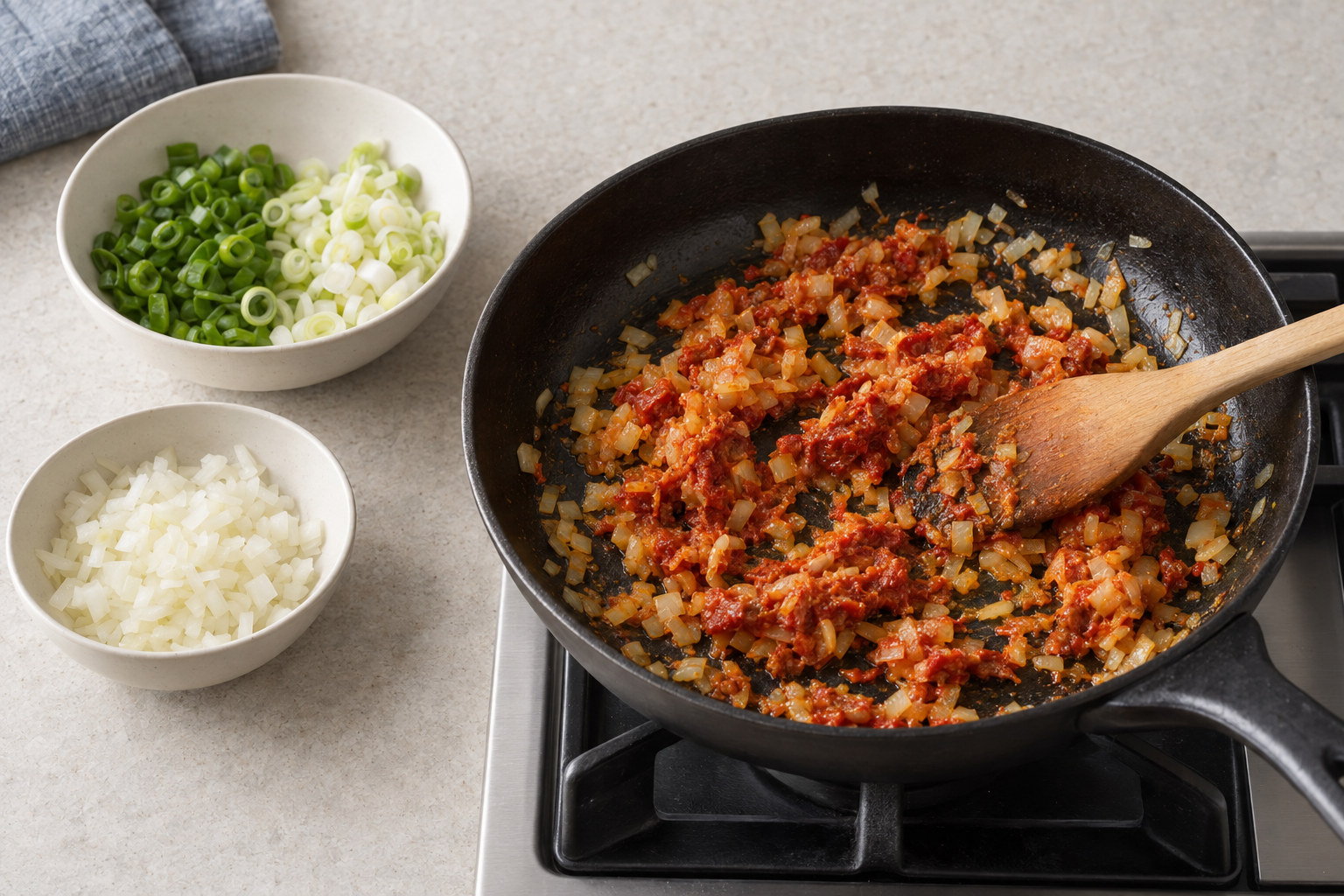
We wash the pepper and spring onion and remove the seeds from the pepper. We peel and finely chop the onion, then slice the spring onion into thin rings, keeping the white and green parts separate. We cook the onion in 2 tsp oil for 4 minutes. We add 20 g curry paste and stir over a medium heat for 45 seconds.
The paste smells aromatic and is not beginning to blacken.
We cook the sauce
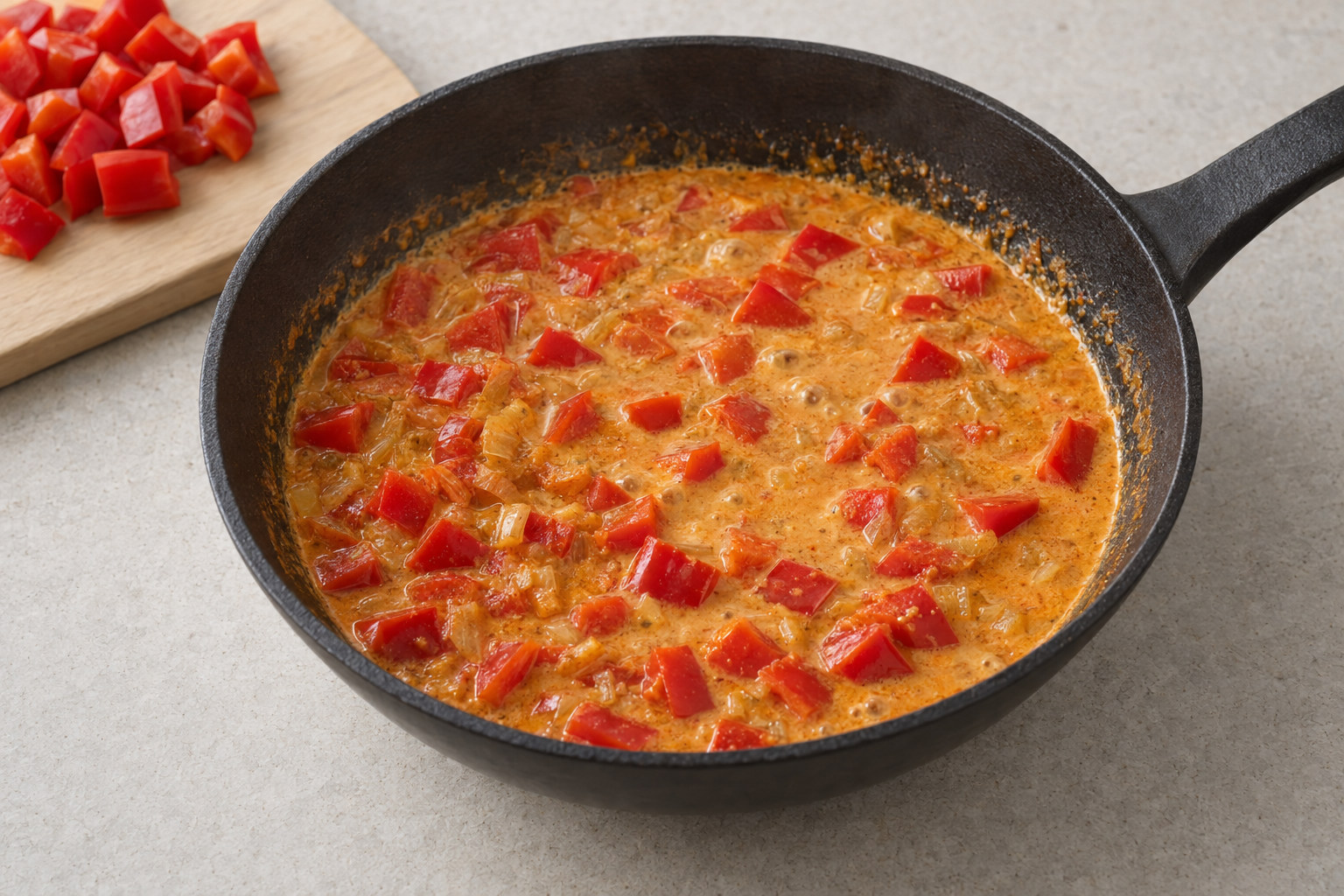
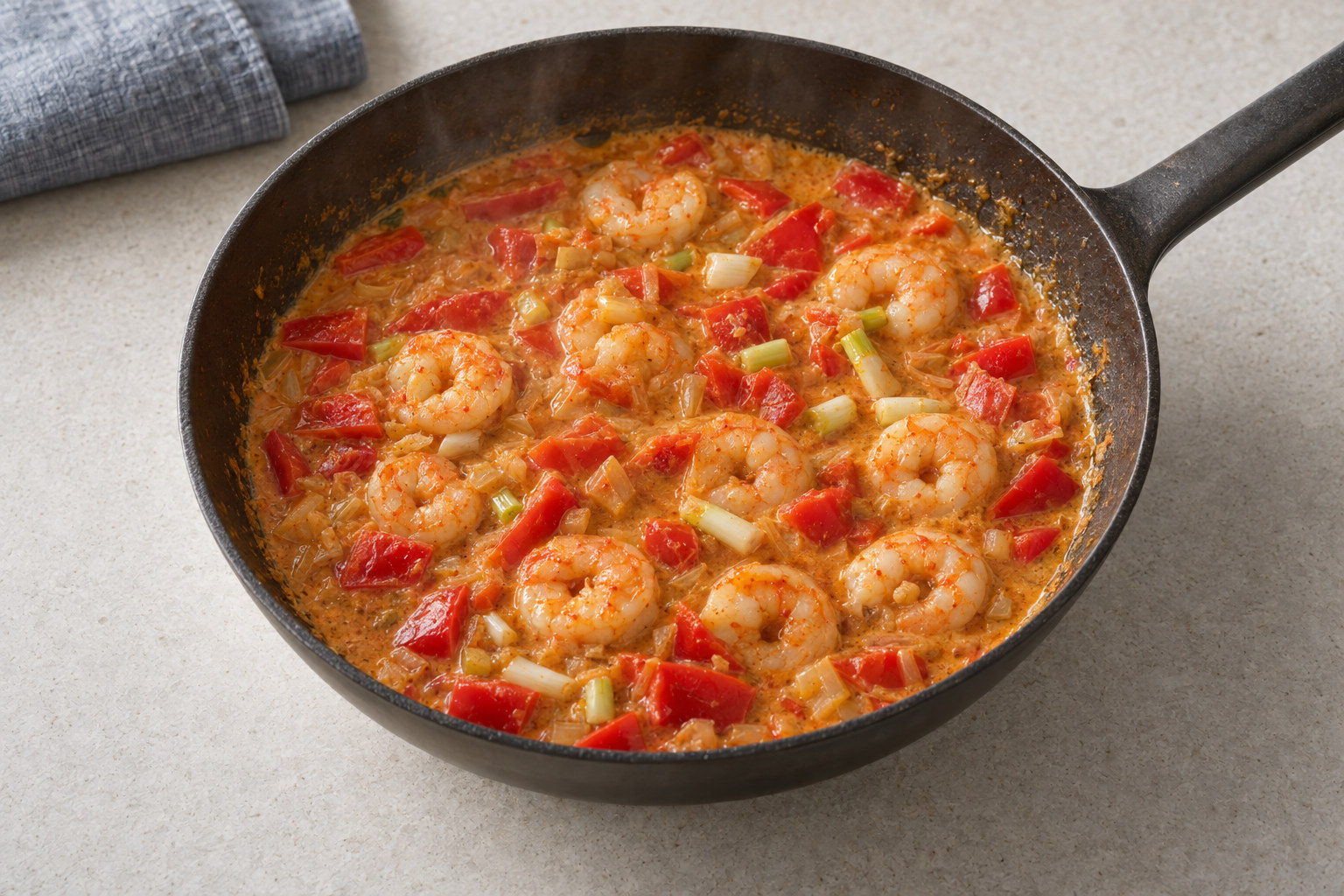
We pour in the coconut milk and 50 ml water. We cut the pepper into 2 cm cubes, add it and simmer gently for 5 minutes.
The sauce simmers gently and the edges of the pepper are softening.
We finish cooking the prawns
We pat the prawns dry, add them to the sauce and simmer gently for 3–5 minutes, depending on their size, until the centre reaches 63 °C. We add the white part of the spring onion for the final minute.
The prawns are opaque but still springy.
We finish with lime and serve
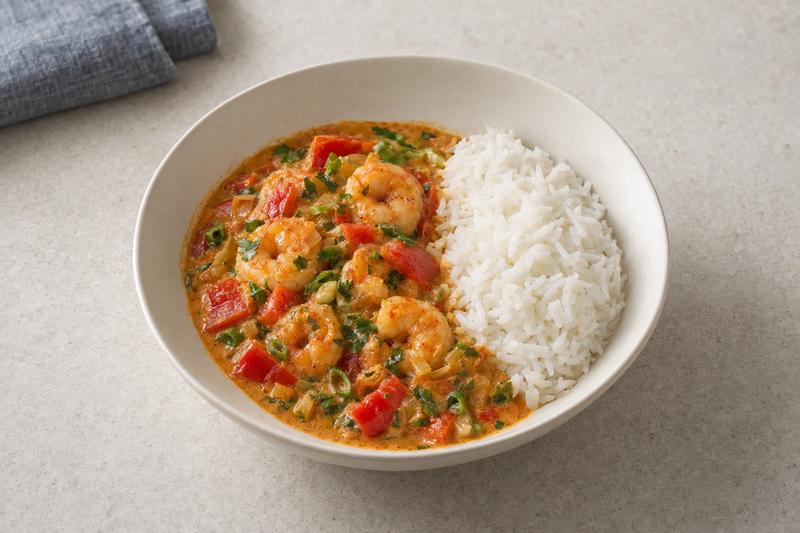
We turn off the heat. We stir in 15 ml lime juice, the green part of the spring onion and the washed, chopped coriander. We do not add salt to the curry; the prawns and curry paste have already supplied it. We divide the unsalted rice between two bowls, add the curry alongside and serve at once.
The sauce is fresh and lightly thickened, and the prawns are no longer cooking unnecessarily.
Tips from our kitchen
- We first let the paste release its aroma in the oil; it is harder to mix into the finished sauce.
- We adjust the heat by choosing the paste and its quantity, rather than cooking the prawns for longer.
What to watch out for
- A fierce boil or leaving the prawns in the hot sauce for too long will dry them out.
- If we add salt without checking how much is already in the curry paste, the curry may become too salty.
How we serve it
- We serve the curry and rice side by side in deep bowls.
Ingredient swaps
red curry paste
the same weight of yellow Thai curry paste Yellow paste changes the sauce’s spice profile and colour, making a yellow curry. We start with a smaller amount, depending on how hot the product is.
coriander leaves
parsley leaves, or we can leave out the herb We lose the characteristic fresh citrus aroma; if using parsley, we use the same amount.
Ingredient notes
- These prawns already contain salt. For two portions we use 300 g, and for four we use 600 g; we do not add any more salt to the curry. Larger 8/12 prawns may take longer to cook than 13/15 prawns; we check doneness as described.
- These prawns are more heavily salted. For two portions we use 200 g prawns, 250 g pepper and 10 g curry paste. For four portions we use 400 g prawns, 500 g pepper and 18 g paste. We keep the other ingredients as listed and add no more salt. We adjust the cooking time to the size of the prawns and check doneness as described.
During preparation
- We handle raw prawns separately from ready-to-eat ingredients. We serve the rice straight away; we cool leftovers quickly, ideally within an hour, and use them within 24 hours.
Our inspiration
Coconut milk softens the bold flavour of red curry paste without masking it. We first let the paste release its aroma briefly in oil with onion; the prawns go in at the end so they stay juicy. If we like to mop up every last drop of sauce, a bowl of fragrant jasmine rice is just the thing.
Similar recipes
Recipe for 4 people
Step-by-step method
Before we start
A wide pan helps the prawns cook evenly. If we choose prawns of a different size or pack, we adjust the quantity and salt according to our purchase and the product note.
We start with the rice
We rinse the rice, cover it with 400 ml water and bring it to the boil. We cover and cook it over the lowest heat for 13–15 minutes, then take it off the hob and leave it to stand for 10 minutes. If needed, we adjust the water according to the rice packet.
The rice is tender; the grains cling lightly together but are not mushy.
We bloom the curry paste
We wash the pepper and spring onion and remove the seeds from the pepper. We peel and finely chop the onions, cut the pepper into 2 cm cubes and slice the spring onion into thin rings, keeping the white and green parts separate. We cook the onions in 1½ tbsp oil over a medium heat for 5 minutes. We add 35 g paste and stir for 45–60 seconds.
The paste smells aromatic and is not beginning to blacken.
We cook the sauce
We pour in 450 ml coconut milk and 80 ml water, add the pepper and simmer gently for 6–7 minutes.
The sauce simmers gently and the edges of the pepper are softening.
We finish cooking the prawns
We spread the prawns out in a wide saucepan and cook them for about 4–6 minutes. After 2 minutes, we stir gently. We continue until the centre of the largest prawn reaches 63 °C. We add the white part of the spring onion for the final minute.
The prawns are opaque but still springy.
We finish with lime and serve
We turn off the heat. We stir in 25 ml lime juice, the green part of the spring onion and the washed, chopped coriander. We do not add salt to the curry; the prawns and curry paste have already supplied it. We divide the unsalted rice between four bowls, add the curry alongside and serve at once.
The sauce is fresh and lightly thickened, and the prawns are no longer cooking unnecessarily.