
Nordic inspiration · Norway – our salmon variation on fiskgrateng
Icelandic salmon macaroni bake with peas
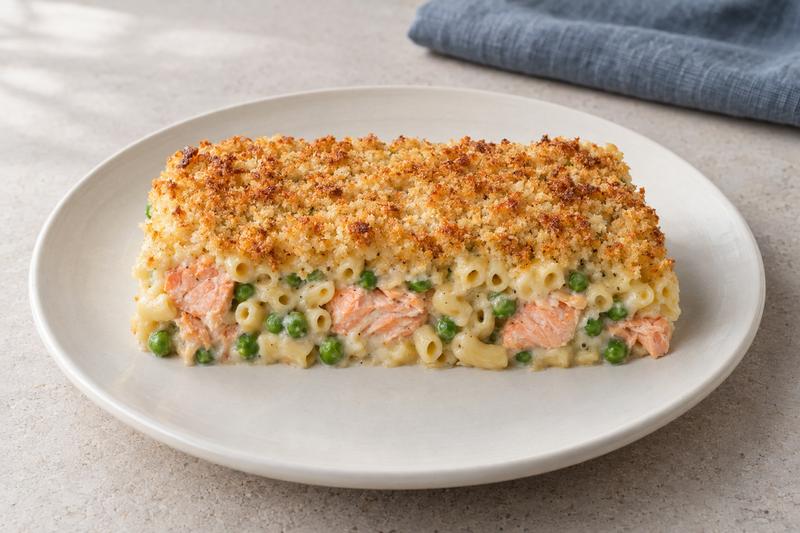
Beneath the golden breadcrumb topping, we find macaroni, pieces of Icelandic salmon and sweet peas in a delicate white sauce. The bake stays moist and, after a short rest, is easy to portion. Fish and its accompaniment come together in one baking dish.
The time includes preheating the oven, cooling the sauce for 10–15 minutes, baking and resting for 5 minutes.
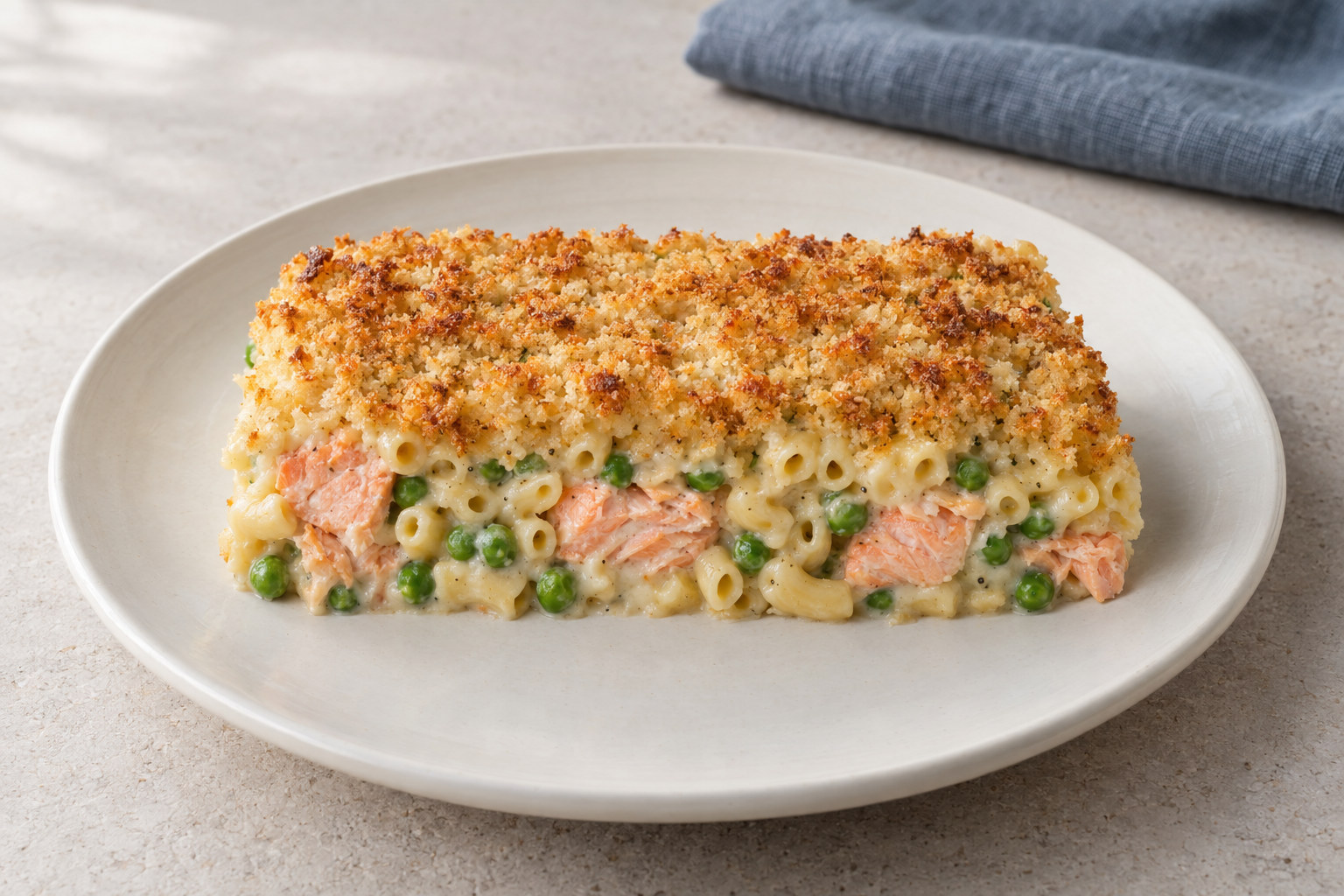
The milk sauce, lightly scented with nutmeg, softens the richer flavour of salmon. Peas bring sweetness, while the thin breadcrumb crust adds crunch.
Step-by-step method
What you will need
- 20 × 20 cm baking dish
- 2 l pot
- 1.5 l saucepan
- whisk
- thermometer
- oven
- two hob burners
- shallow heatproof bowl for the sauce
Before we start
We make the sauce while the pasta cooks; we add the fish only when assembling the bake.
We prepare the fish
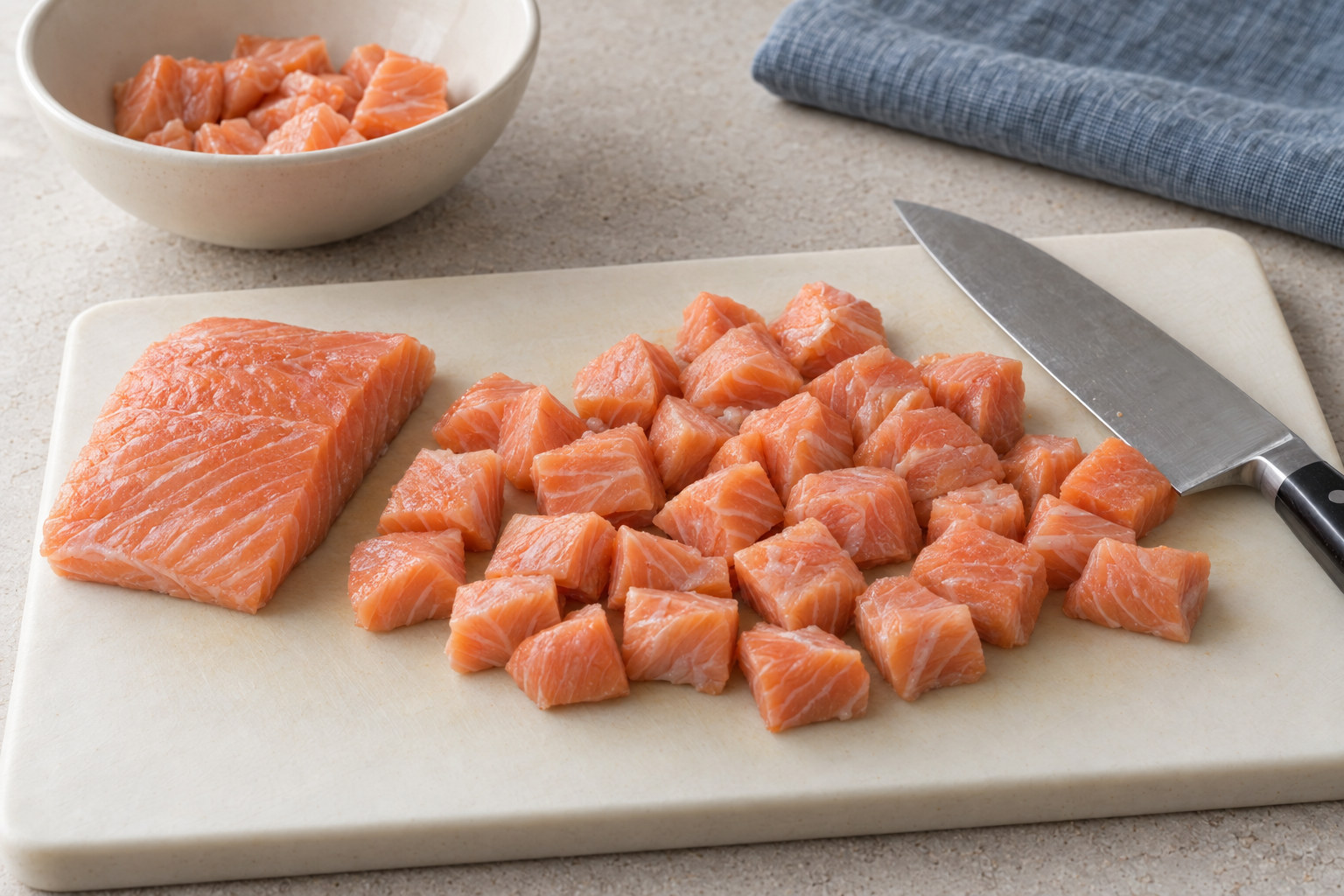
We remove the skin and any pin bones from the salmon, cut the flesh into 2 cm cubes and return it to the fridge. We preheat the oven to 190 °C, conventional heat.
We cook the pasta
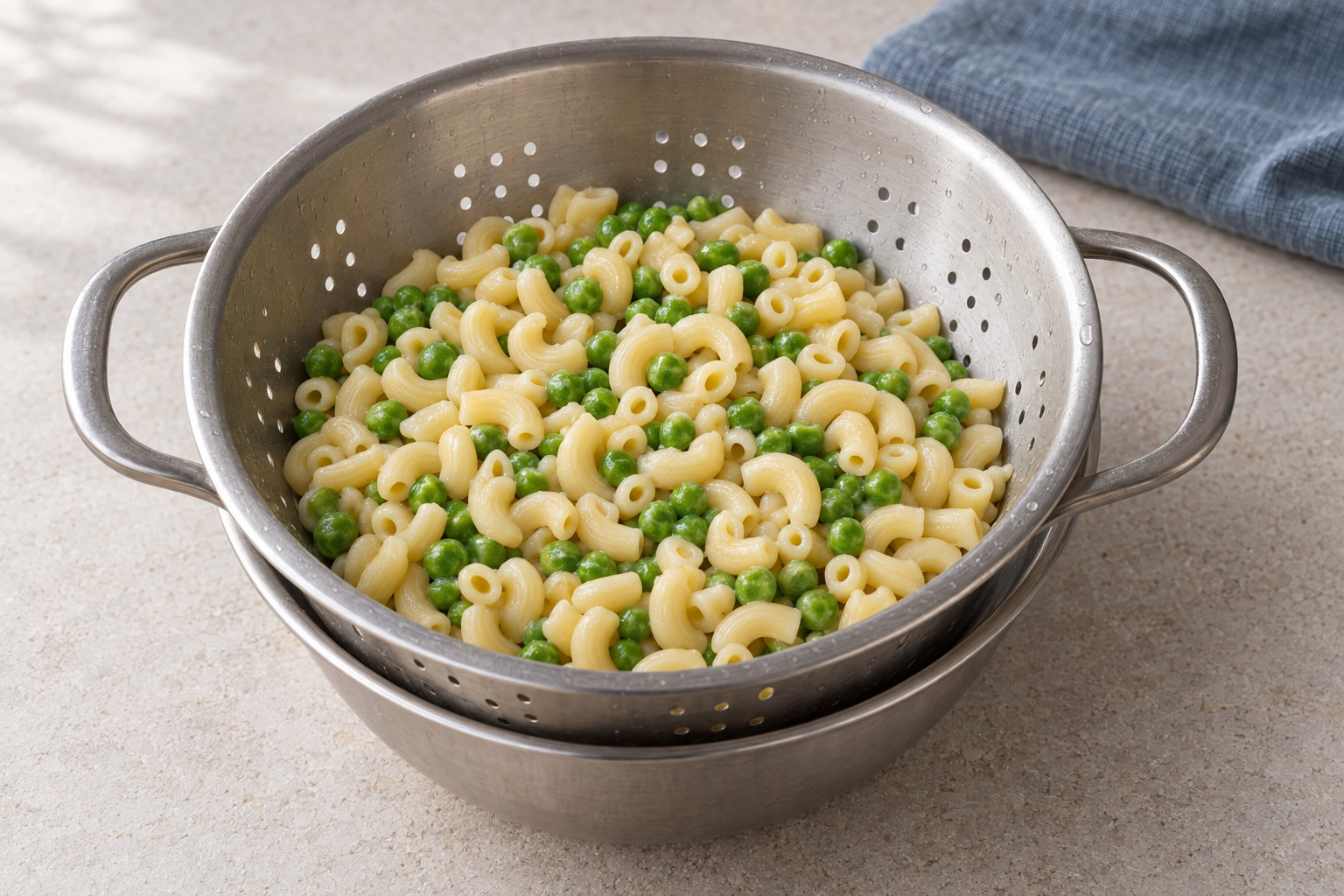
We cook 120 g macaroni in plenty of boiling water with 2 teaspoons of salt for 2 minutes less than the packet says. We add 100 g peas for the final minute. We drain the pasta; we do not use the cooking water again.
The pasta holds its shape and is still firm in the middle.
We make the sauce
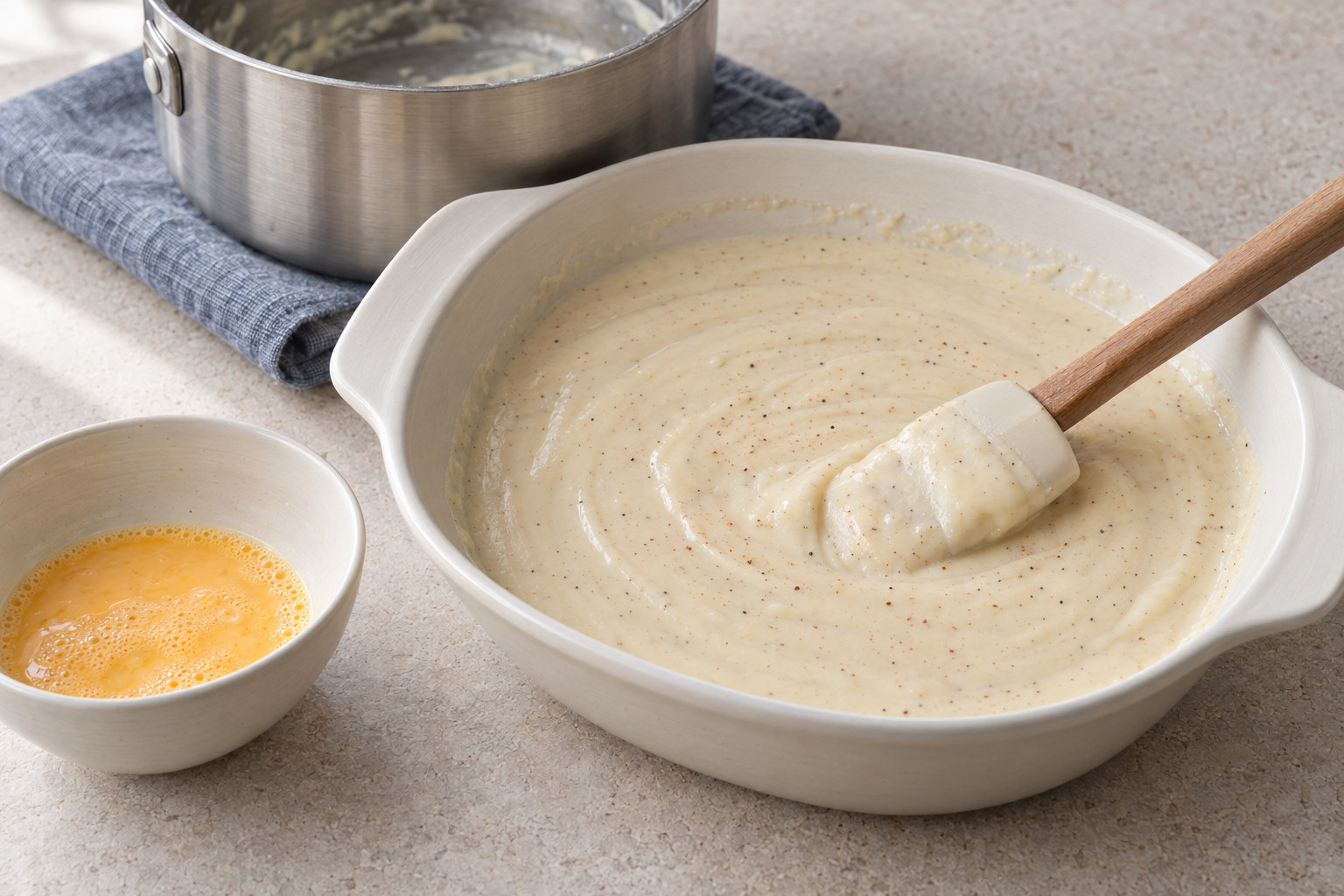
We set aside a teaspoon of the butter to grease the dish. We melt the rest in a saucepan, stir in 20 g flour and cook, stirring, for 1 minute. Gradually we whisk in 300 ml milk, ¼ teaspoon salt, pepper and nutmeg. We stir over a gentle simmer for 4 minutes. We pour the sauce into a shallow heatproof bowl and cool it to no more than 60 °C, stirring occasionally; allow about 10–15 minutes. We whisk a little warm sauce into one beaten egg, a spoonful at a time, then return it all to the bowl and combine.
The smooth sauce coats the spoon; the egg must not curdle.
We assemble and bake
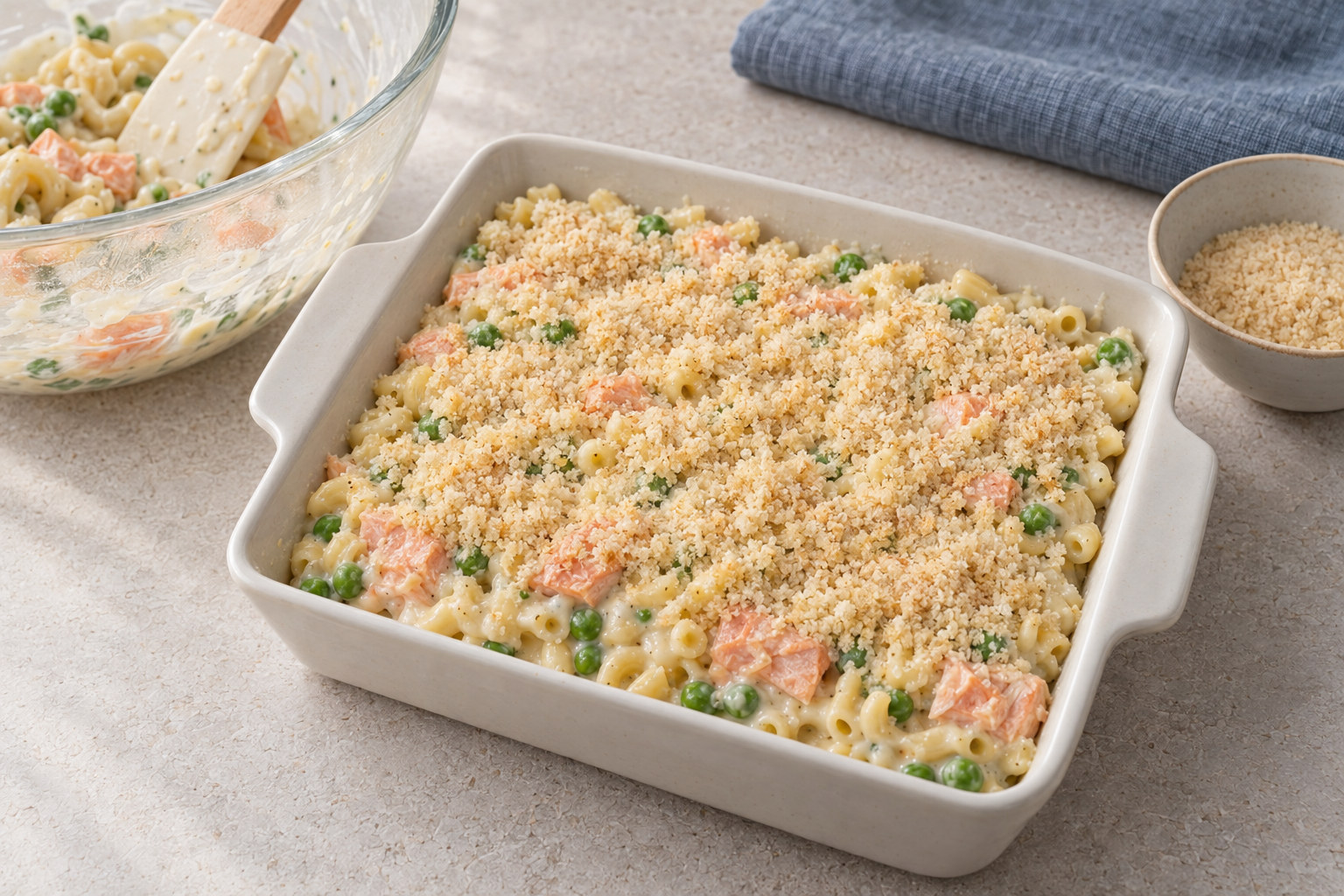
We grease a 20 × 20 cm dish with the reserved teaspoon of butter. We mix the sauce, pasta, peas and raw fish cubes, transfer to the dish and sprinkle evenly with a thin layer of 20 g breadcrumbs. We bake for 25–30 minutes. We insert the thermometer into the centre of the bake and the thickest fish cube; both readings must be at least 75 °C for 30 seconds.
The topping is golden and the centre is set, with no runny egg.
We rest and serve
We leave the bake to stand for 5 minutes. We divide it into two equal servings and serve hot.
It holds together when cut but stays moist inside.
Tips from our kitchen
- We cool the sauce to no more than 60 °C. We whisk a little of it into the egg, one spoonful at a time, and only then combine the two mixtures so the egg does not curdle.
- A deeper dish needs longer for the centre to cook through; we use the thermometer to guide us.
What to watch out for
- We do not cook the macaroni until completely soft, or they will fall apart in the oven.
- Once the bake reaches the required temperature, we do not leave it in the oven any longer than necessary, so the fish does not dry out.
How we serve it
- We serve it after a short rest; with pasta and vegetables, it is a complete meal.
Ingredient swaps
peas
The same weight of broccoli florets, blanched for 2 minutes The bake will be less sweet.
wheat pasta and flour
The same weight of gluten-free pasta and cornflour mixed into the milk: 15 g for two servings, 30 g for four We thicken the sauce with cornflour instead of a roux and use gluten-free breadcrumbs too.
Ingredient notes
- For two portions we use one 300 g pack; for four, two packs.
- We cut the amount listed in the ingredients from a whole fillet and save the rest for another meal.
- We use one 300 g pack from the salmon selection for two servings or two packs for four.
During preparation
- We keep utensils used for raw fish separate from the cooked dish. We cool leftovers promptly and refrigerate them. Because the bake contains egg, we also check that its centre is cooked through.
Our inspiration
Norwegian fish gratin binds pieces of fish with white sauce and egg, then finishes them with breadcrumbs. Macaroni or vegetables can join the fish. We make this homely version with Icelandic salmon and peas. Under the golden topping is a moist dish we can serve straight from the baking dish; it needs no further side.
Similar recipes
Recipe for 4 people
Step-by-step method
Before we start
We use a wider dish so the bake stays about the same depth.
We prepare the fish
We remove the skin and any pin bones from the salmon, cut the flesh into 2 cm cubes and return it to the fridge. We preheat the oven to 190 °C, conventional heat.
We cook the pasta
We cook 240 g macaroni in plenty of boiling water with 4 teaspoons of salt for 2 minutes less than the packet says. We add 200 g peas for the final minute, then drain.
The pasta holds its shape and is still firm in the middle.
We make the sauce
We set aside a teaspoon of the butter to grease the dish. We melt the rest in a saucepan, stir in 40 g flour and cook, stirring, for 1 minute. Gradually we whisk in 600 ml milk, ½ teaspoon salt, pepper and nutmeg. We stir over a gentle simmer for 5 minutes. We pour the sauce into a shallow heatproof bowl and cool it to no more than 60 °C, stirring occasionally; allow about 10–15 minutes. We whisk a little warm sauce into two beaten eggs, a spoonful at a time, then return it all to the bowl and combine.
The smooth sauce coats the spoon; the egg must not curdle.
We assemble and bake
We grease a 30 × 22 cm dish with the reserved teaspoon of butter. We mix the sauce, pasta, peas and fish, spread in the dish and sprinkle evenly with a thin layer of 40 g breadcrumbs. We bake for 30–35 minutes. We insert the thermometer into the centre of the bake and the thickest fish cube; both readings must be at least 75 °C for 30 seconds.
The topping is golden and the centre is set, with no runny egg.
We rest and serve
We leave it to stand for 5 minutes, divide it into four equal servings and serve hot.
It holds together when cut but stays moist inside.