
Japanese-inspired · Hokkaido, an adaptation of Ishikari nabe using strained stock made from a salmon frame
Ishikari nabe with Icelandic salmon stock, tofu and rice
Soft tofu, sweet cabbage and fragrant shiitake mushrooms come together in hot salmon stock. White miso mellows the soup and gives it a full flavour. With a bowl of plain white rice alongside, we make a home-cooked lunch inspired by Hokkaido's fishing communities.
The stated time includes making the stock. The rice cooks and rests while we finish the soup.
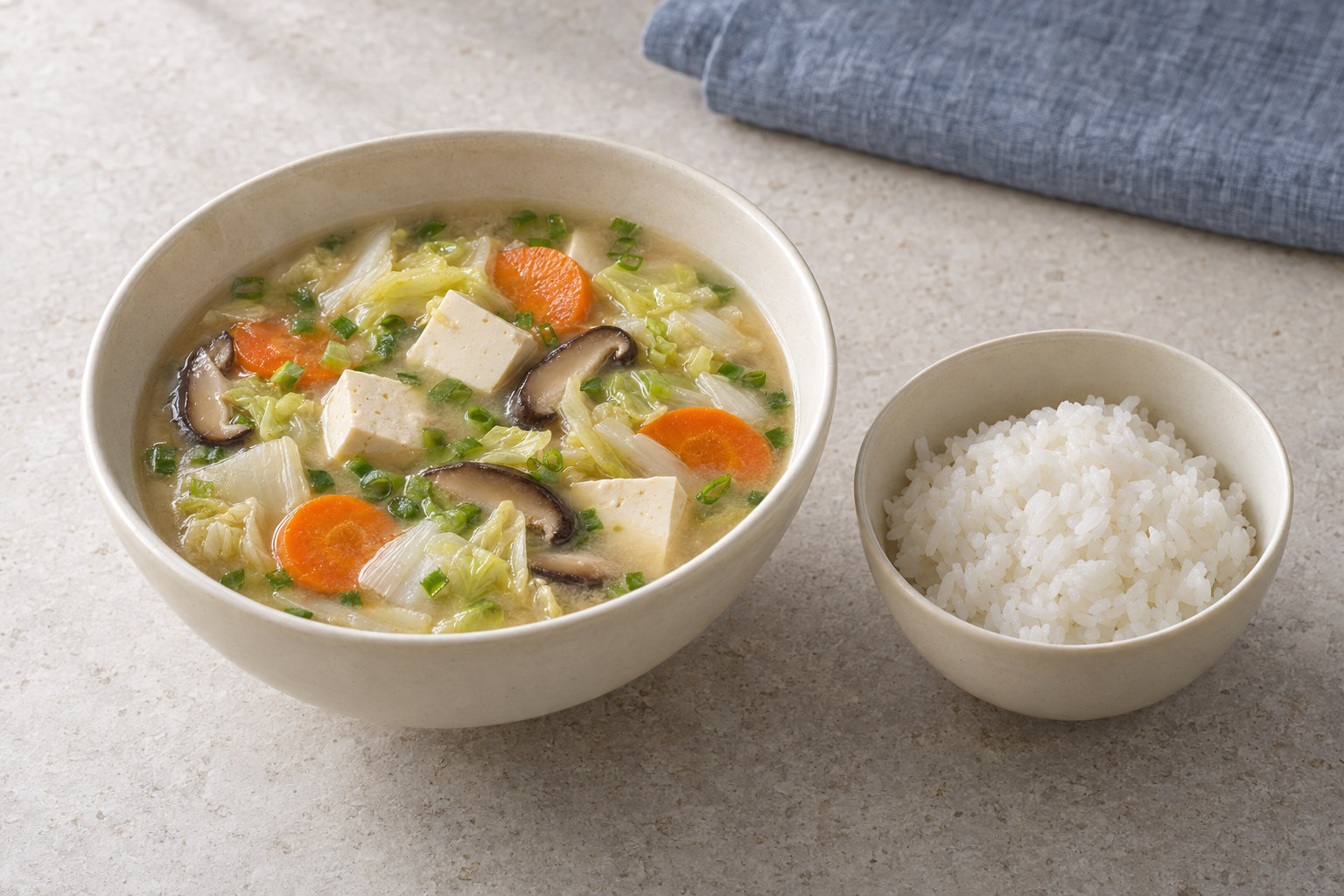
A rich salmon base, mild white miso, mushrooms and sweet cabbage; the tofu soaks up the flavour of the soup.
Step-by-step method
What you will need
- 4 l saucepan for the stock
- 3 l wide saucepan for the nabe
- Saucepan with a tight-fitting lid for the rice
- Fine sieve, measuring jug and 2 l heatproof bowl
- Chopping board and knife
- two hob rings
- kitchen thermometer
Before we start
Once the stock is strained, we start cooking the rice and cutting the vegetables and tofu.
Make the salmon stock
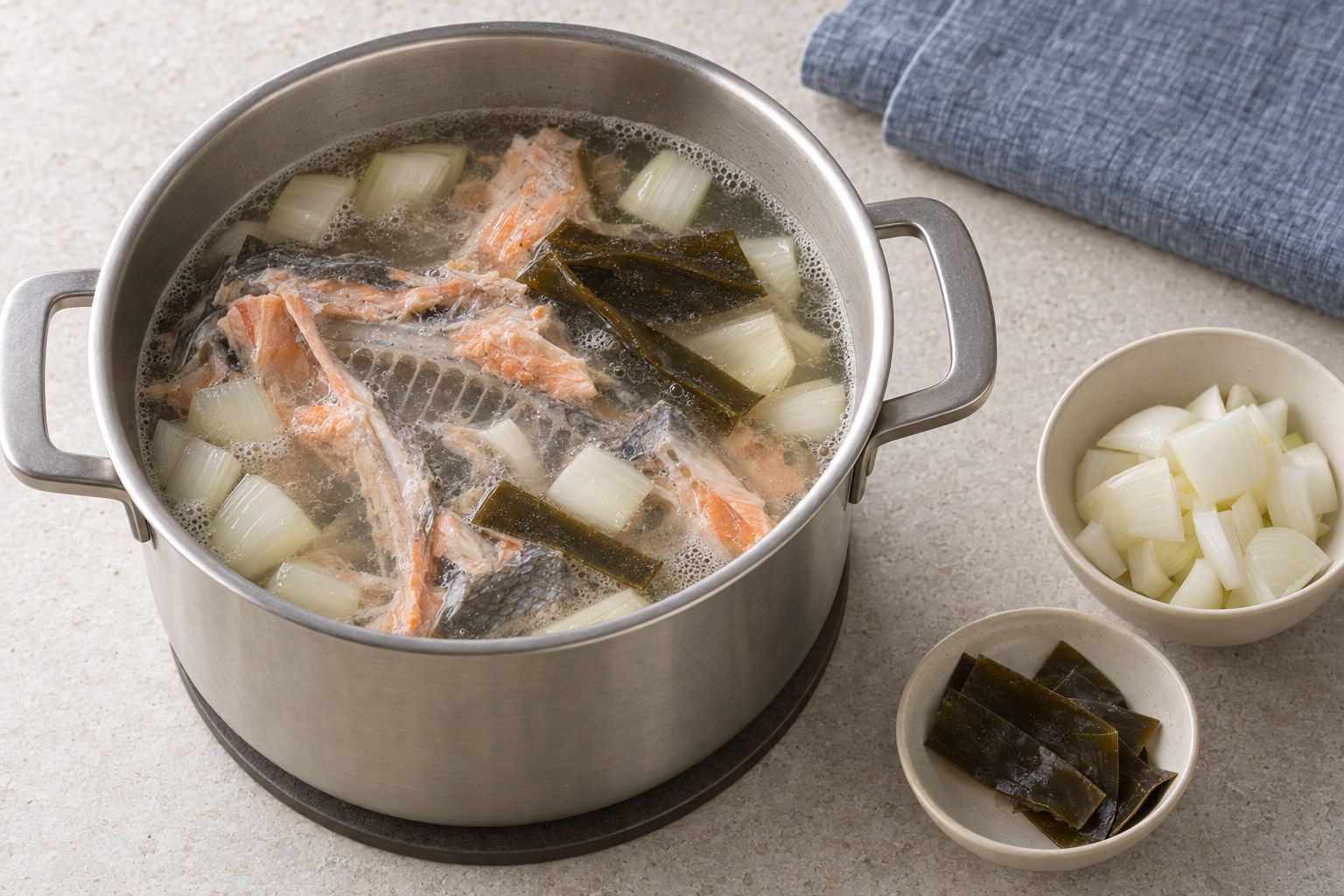
We peel the onion. We arrange 700 g of cleaned salmon frame, cut into pieces, in a 4 l saucepan. We add 1200 ml cold water, half a small onion roughly chopped, and 5 g kombu; we remove the seaweed just before the water starts to boil. The bones should be submerged, so we add a little more water if needed. We heat slowly, skim off the foam and simmer very gently for 25 minutes with the lid ajar. Meanwhile, we prepare the remaining ingredients.
The surface barely moves; vigorous boiling breaks up the flesh, disperses the fat and spoils the flavour.
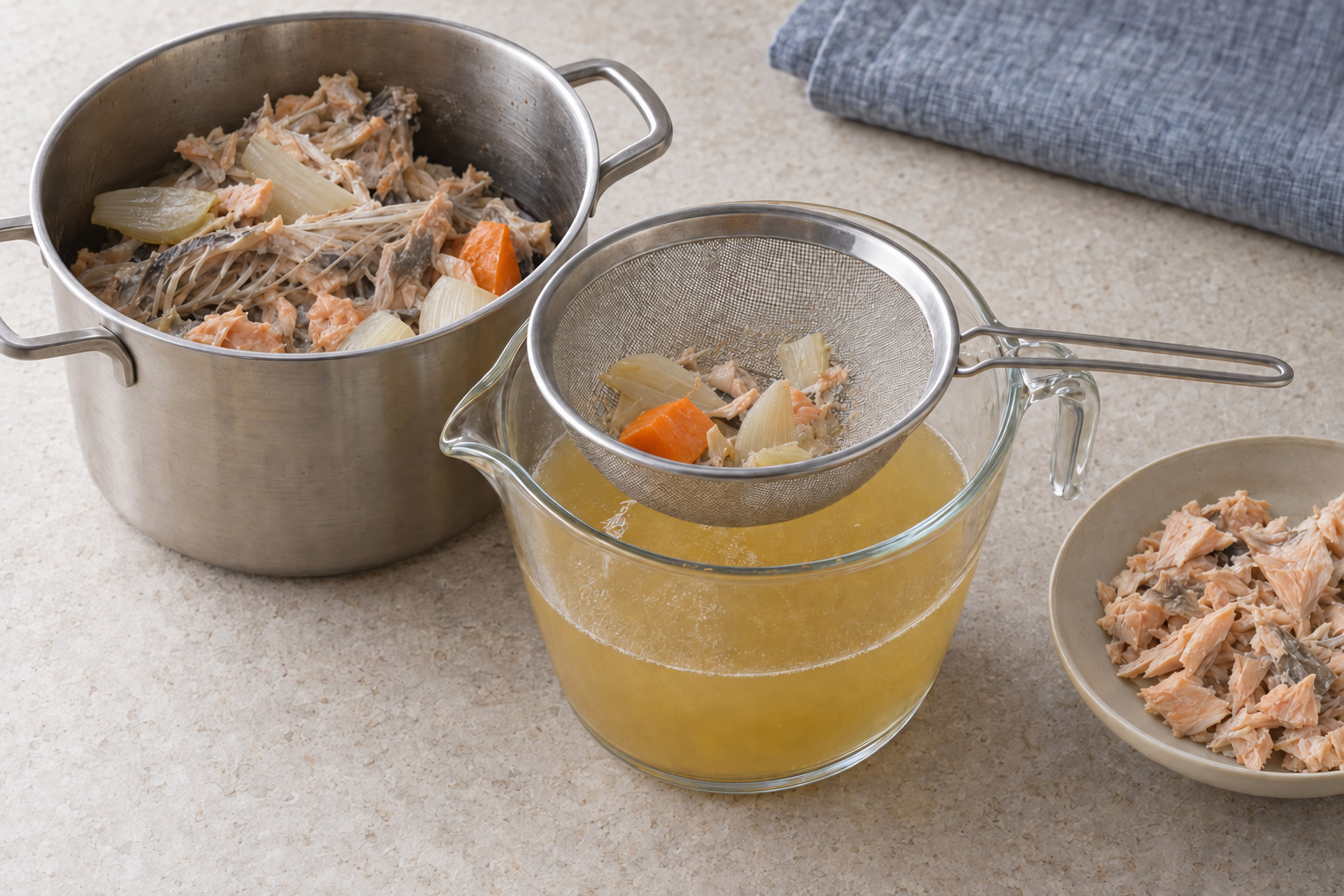
Strain and measure the stock
We strain the stock through a fine sieve without pressing the bones. We skim the fat off the surface and measure out 800 ml, topping up with hot water if there is less. We keep any extra stock for another dish. We pick any meat off the frame and carefully remove all the bones. We set the meat aside to add to the soup later.
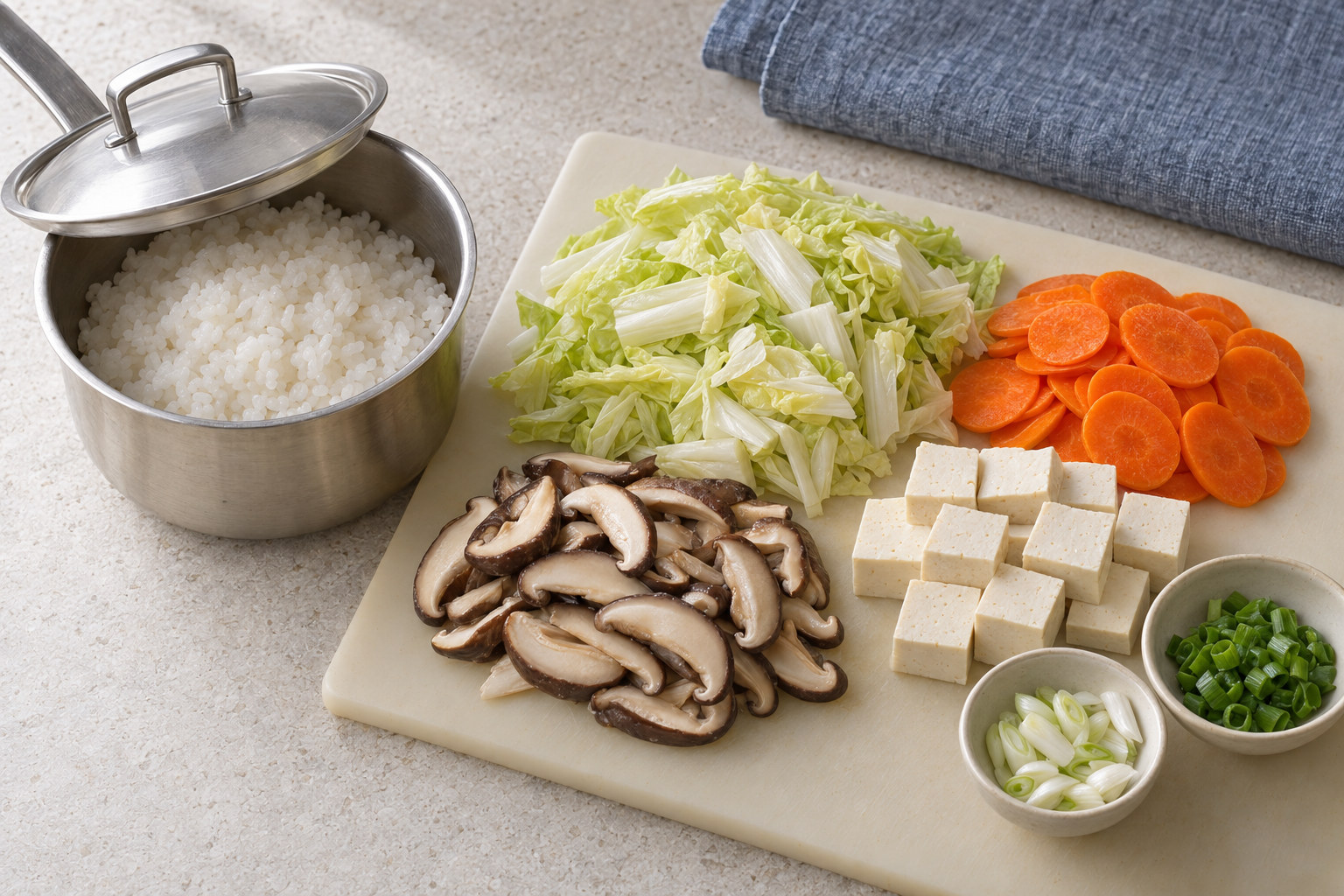
Cook the rice and cut the vegetables and tofu
We rinse 140 g rice in several changes of cold water, leave it to drain for 5 minutes and put it in a saucepan with 210 ml water. We bring to the boil, cover and cook over the lowest heat for 12 minutes, then leave it covered off the heat for 10 minutes. Meanwhile, we wash the cabbage and spring onions, remove the tough cabbage core and peel the carrot. We clean the mushrooms and remove their tough stalks. We drain the tofu. We cut the carrot into thin rounds, the cabbage into strips, the mushrooms into slices and the tofu into 2 cm cubes. We slice the spring onions into rounds, keeping the white and green parts separate.
The rice absorbs the water and finishes cooking as it rests; a tight-fitting lid limits steam loss.
Cook the vegetables in stages
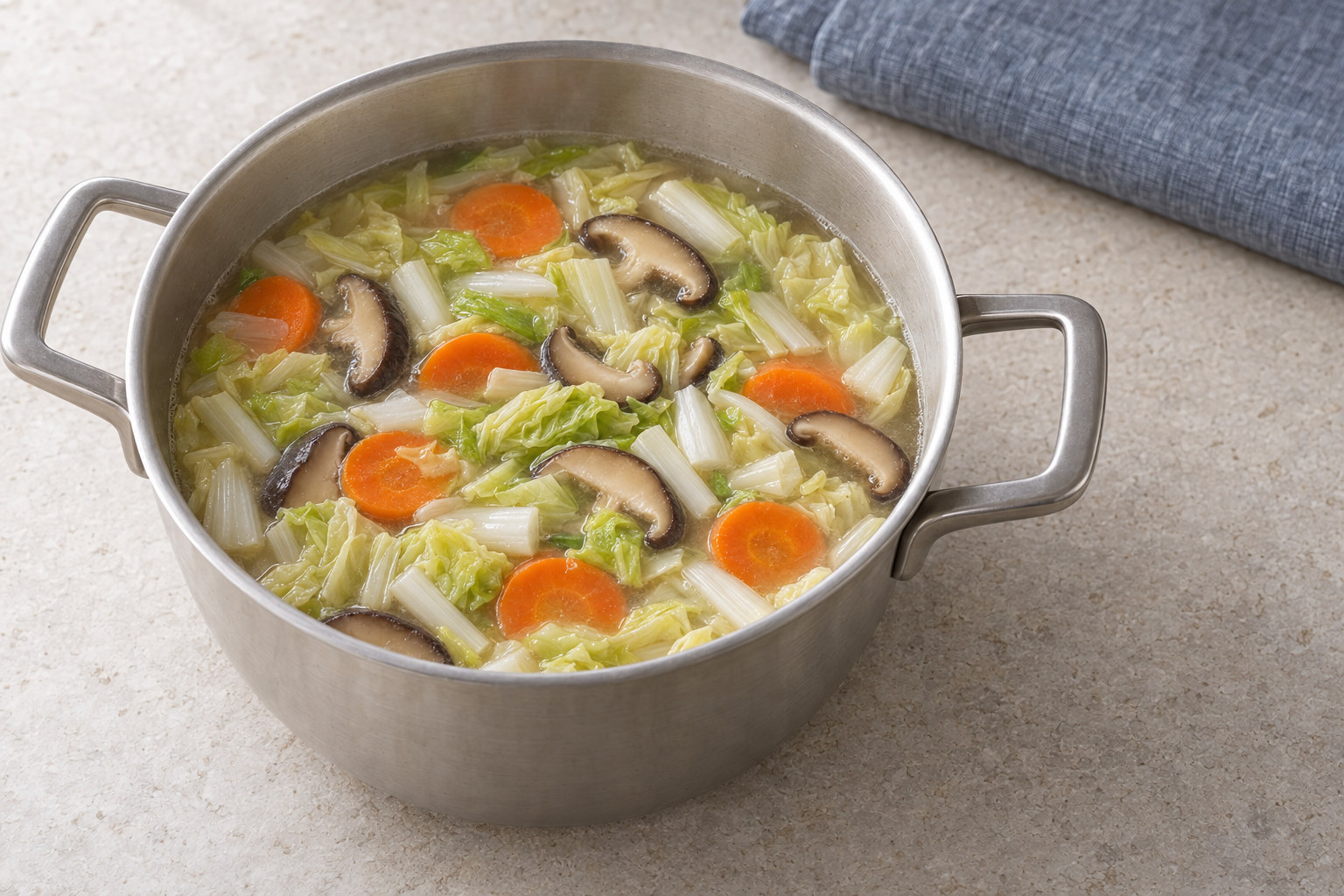
We pour 800 ml stock and 15 ml mirin into a wide saucepan. We add the carrot and white parts of the spring onions and simmer gently for 5 minutes. We add the cabbage and mushrooms and continue for another 6–8 minutes, until the carrot is tender. We do not salt the stock at this stage; the miso will provide salt.
The mushrooms are cooked, the cabbage is softened and the carrot yields easily to a fork.
Heat the tofu through and stir in the miso
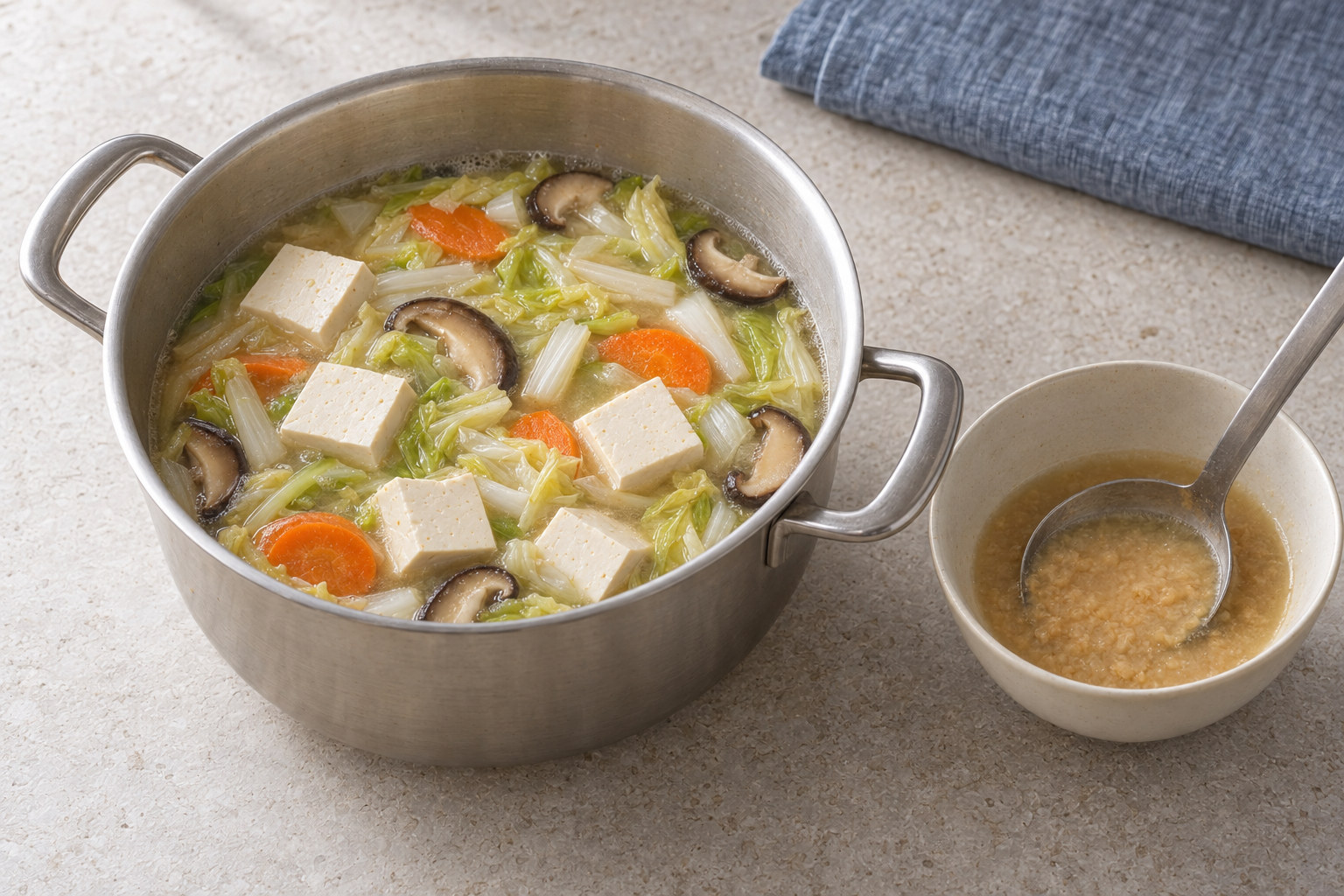
We add 300 g tofu and any meat picked off the frame. Once the soup returns to a gentle simmer, we cook for about 4–5 minutes. We check that the largest tofu cube reaches at least 70 °C for 2 minutes, extending the heating time if needed. We ladle some hot stock into a bowl and stir in 40 g miso until smooth. We take the saucepan off the heat, return the mixture and stir carefully. After adding the miso, we do not boil the soup vigorously.
The miso has dissolved smoothly without lumps, the tofu holds its shape and the whole dish is hot.
Serve with rice
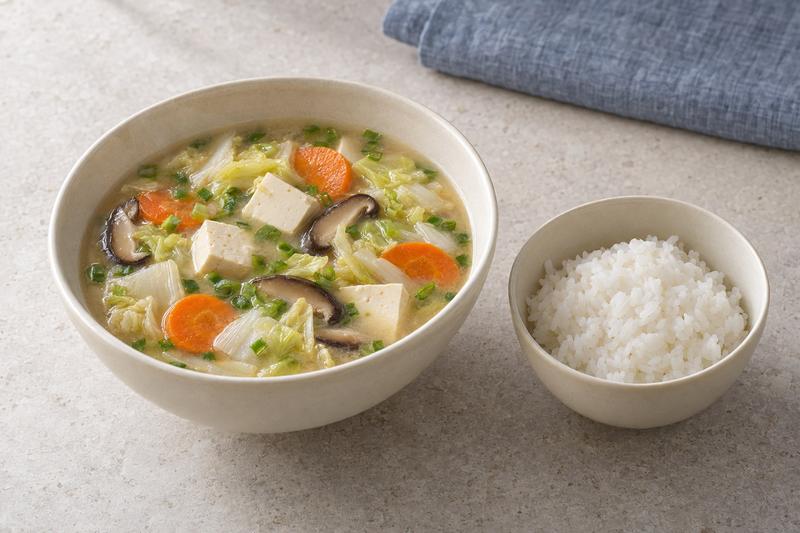
We fluff the rice and divide it between two small bowls. We divide the nabe between two deep bowls and scatter with the green parts of the spring onions. We serve the rice alongside so that everyone can alternate mouthfuls of rice and hot soup.
Tips from our kitchen
- We mix the miso with a little of the hot stock and stir it back in only after taking the pan off the heat; we add no further salt to either the soup or the rice.
- We cook the rice without sushi seasoning; its plain flavour is all we need alongside the hot soup.
- We add the tofu only once the vegetables are tender and stir carefully so the cubes stay whole.
What to watch out for
- After adding the miso, we do not boil the soup vigorously, to preserve its delicate aroma.
- We do not replace miso with the same weight of soy sauce, which would change both the flavour and consistency.
How we serve it
- We serve a separate small bowl of warm rice with each bowl of nabe. We serve as soon as the miso has dissolved.
Ingredient swaps
Fresh shiitake mushrooms 100 / 200 g
The same quantity of chestnut mushrooms The mushrooms will taste milder and less distinctive; the cooking time remains similar.
Mirin 15 / 30 ml
For two servings, 15 ml water and ¾ tsp sugar (about 3 g); for four, 30 ml water and 1 ½ tsp sugar (about 6 g). The rice wine aroma will be lost, giving a simple alcohol-free variation.
Ingredient notes
- The salmon frame for stock is sold in packs of at least 700 g. We use one pack for two servings or two for four. We carefully remove all bones from any meat we pick off the frame.
During preparation
- We strain the stock carefully and check all the meat picked off the frame for bones. We divide stock intended for later use between shallow containers, cool it quickly and refrigerate within 1–2 hours at up to 5 °C; we use it within 48 hours or freeze it. We reheat only once, and thoroughly. We use separate clean utensils for raw fish and cooked food. We cook the rice to serve straight away and do not leave it at room temperature. We check the miso label for ingredients and any cereal allergens.
Our inspiration
Ishikari nabe takes its name from the fishing town at the mouth of the river of the same name on Hokkaido. Around 1950, this hot salmon dish was also served to tourists waiting for the fishing nets to be hauled in. Visitors thus came to know a dish eaten by local fishers. In our home-style version, we make a strained salmon stock, add vegetables, tofu and miso, and serve a bowl of white rice alongside.
Similar recipes



Recipe for 4 people
The stated time includes making the stock and resting the rice. We allow longer for the larger saucepan to heat up.
Step-by-step method
Before we start
We cut the vegetables while the stock cooks and start preparing the rice as we strain it, so the rice and nabe are ready together.
Make the salmon stock
We peel the onion. We arrange 1400 g of cleaned salmon frame, cut into pieces, in a 6 l saucepan. We add 2400 ml cold water, one small onion roughly chopped, and 10 g kombu; we remove the seaweed just before the water starts to boil. The bones should be submerged, so we add a little more water if needed. We heat slowly, skim off the foam and simmer very gently for 25 minutes with the lid ajar. Meanwhile, we prepare the remaining ingredients.
The surface barely moves; vigorous boiling breaks up the flesh, disperses the fat and spoils the flavour.
Strain and measure the stock
We strain the stock through a fine sieve without pressing the bones. We skim the fat off the surface and measure out 1600 ml, topping up with hot water if there is less. We keep any extra stock for another dish. We pick any meat off the frame and carefully remove all the bones. We set the meat aside to add to the soup later.
Cook the rice and cut the vegetables and tofu
We rinse 280 g rice in several changes of cold water, leave it to drain for 5 minutes and put it in a saucepan with 420 ml water. We bring to the boil, cover and cook over the lowest heat for 12 minutes, then leave it covered off the heat for 10 minutes. Meanwhile, we wash the cabbage and spring onions, remove the tough cabbage core and peel the carrots. We clean the mushrooms and remove their tough stalks. We drain the tofu. We cut the carrots into thin rounds, the cabbage into strips, the mushrooms into slices and the tofu into 2 cm cubes. We slice the spring onions into rounds, keeping the white and green parts separate.
The rice absorbs the water and finishes cooking as it rests; a tight-fitting lid limits steam loss.
Cook the vegetables in stages
We pour 1600 ml stock and 30 ml mirin into a wide saucepan. We add the carrots and white parts of the spring onions and simmer gently for 5 minutes. We add the cabbage and mushrooms and, once the soup returns to a gentle simmer, continue for another 6–8 minutes, until the carrots are tender. We do not salt the stock at this stage; the miso will provide salt.
The mushrooms are cooked, the cabbage is softened and the carrots yield easily to a fork.
Heat the tofu through and stir in the miso
We add 600 g tofu and any meat picked off the frame. Once the soup returns to a gentle simmer, we cook for about 4–5 minutes. We check that the largest tofu cube reaches at least 70 °C for 2 minutes, extending the heating time if needed. We ladle some hot stock into a bowl and stir in 80 g miso until smooth. We take the saucepan off the heat, return the mixture and stir carefully. After adding the miso, we do not boil the soup vigorously.
The miso has dissolved smoothly without lumps, the tofu holds its shape and the whole dish is hot.
Serve with rice
We fluff the rice and divide it between four small bowls. We divide the nabe between four deep bowls and scatter with the green parts of the spring onions. We serve the rice alongside so that everyone can alternate mouthfuls of rice and hot soup.