
Cambodian-inspired · Cambodian-inspired
Lok lak-style roe deer slices with homemade rice noodles
We lay glossy slices of roe deer over wide rice noodles that we steam ourselves in thin sheets. Cold tomatoes and cucumber, with a separate lime and pepper dip, bring freshness and a sharp kick to the hot meat.
The stated time includes steaming and cooling each noodle sheet, marinating the meat and finishing the components alongside one another.
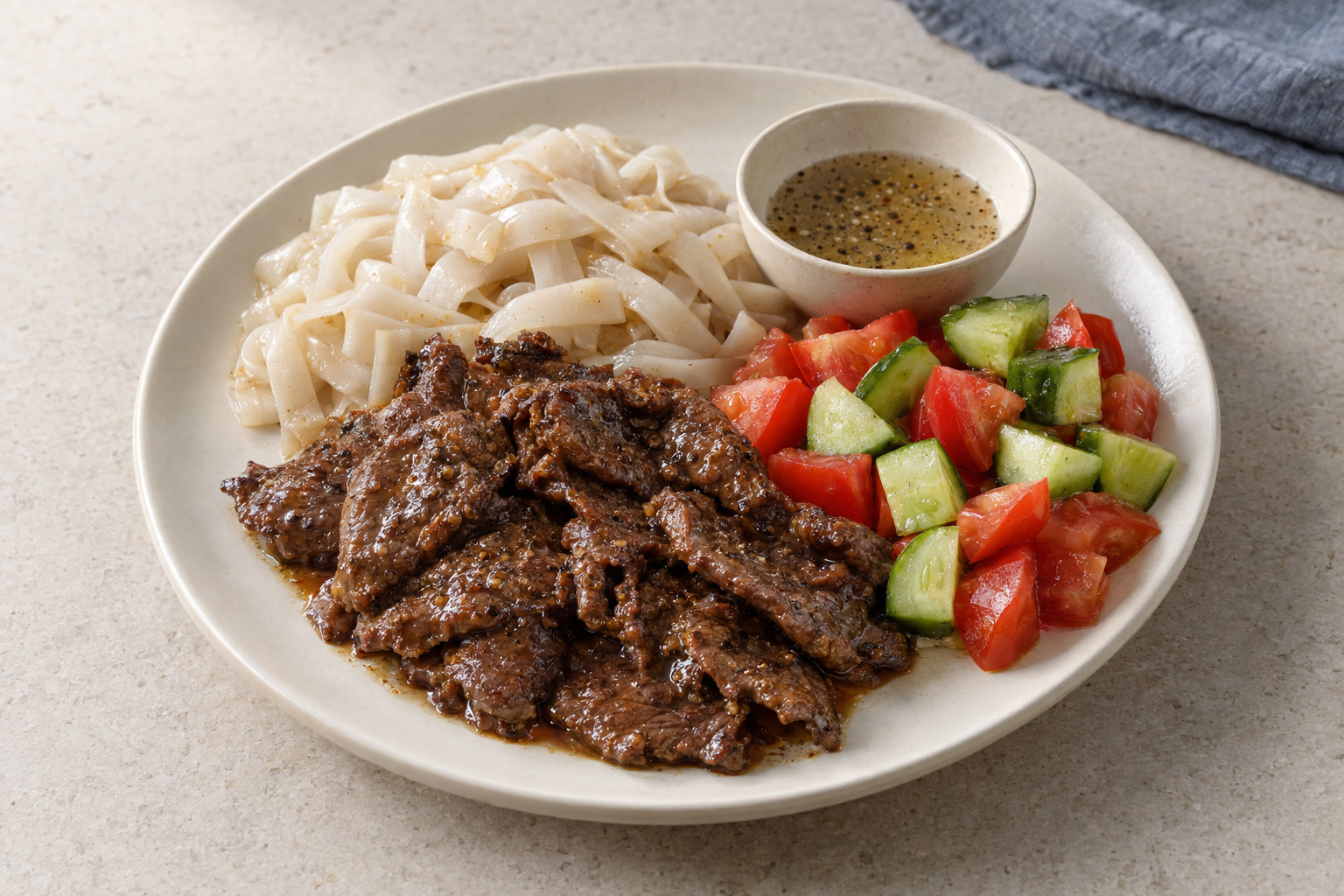
A salty glaze with a touch of sweetness coats the roe deer, lime and pepper give each mouthful a lively kick, and the supple noodles soften the flavours.
Step-by-step method
What you will need
- kitchen scales
- probe thermometer with a thin probe
- knife and two separate chopping boards
- measuring jug
- 28 cm deep frying pan
- 8 l steamer with an internal diameter of at least 28 cm, a rack at least 5 cm above the base and a lid
- shallow non-stick metal tin with a flat base, 22 cm in diameter
- tongs for lifting the tin
- silicone spatula and brush
- shallow container wider than 24 cm for a cooling bath
- ice packs
- bowl for the batter and a 65 ml measuring cup
- an oiled tray
- meat mallet and cling film
- warmed bowl with a lid for the noodles
- kettle
Before we start
We make the noodle sheets first. Only once they are finished do we marinate the meat for 20 minutes; meanwhile, we cut the vegetables and mix the dip. During the last two batches of frying the meat, we start steaming the noodles again. We keep the hot noodles covered in a warmed bowl only briefly, then serve them straight away with the finished meat.
Steam the homemade noodle sheets
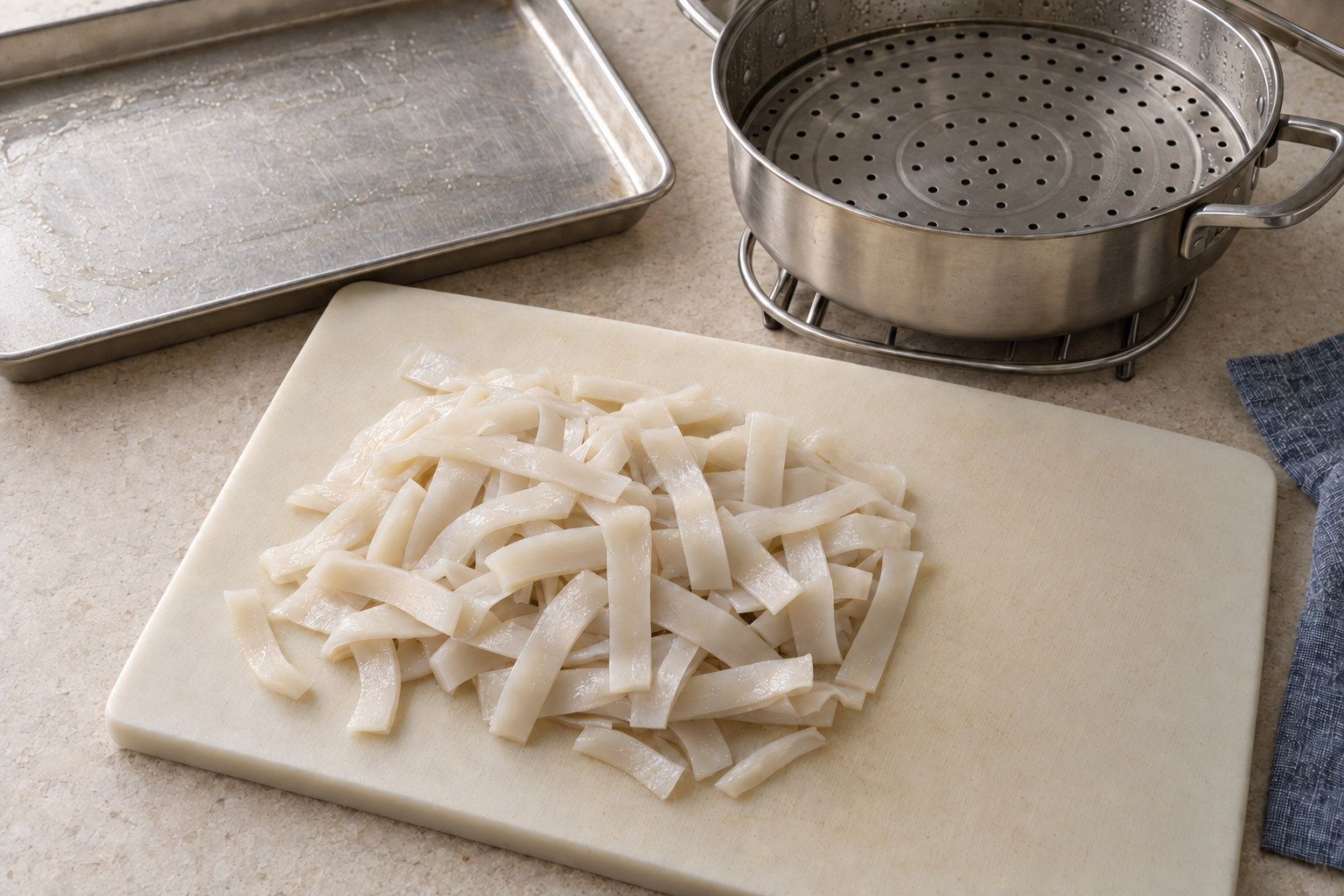
We work the rice flour and tapioca starch with a third of the water for the batter for 5 minutes, then stir in the remaining water to make a smooth batter. We fill the steamer with water below the rack and bring it to the boil. We lightly brush the 22 cm tin with some of the oil set aside for the sheets. Before each pour, we stir the batter and measure out 65 ml, spreading it over the whole base. We cover and steam for 1–2 minutes, until it forms a continuous, matt sheet with no liquid patches. Using tongs, we lower the base of the tin into a cold-water bath, making sure no water spills onto the noodle sheet. We leave it to cool completely for 1–2 minutes, brush a thin layer of oil over the sheet and loosen it with a spatula. We stack the sheets on a lightly oiled tray. We repeat until all the batter is used, making approximately 5 sheets. We spread the smaller final portion over only part of the tin, keeping the same thickness. We divide the oil between the tin, tray and upper surface of all the sheets. We keep checking the steamer's water level and top up with hot water as needed. We cut the sheets into 2 cm-wide noodles and keep them covered until the meat is ready.
The thin sheets are supple, do not stick together and do not tear when lifted.
Prepare the thin slices
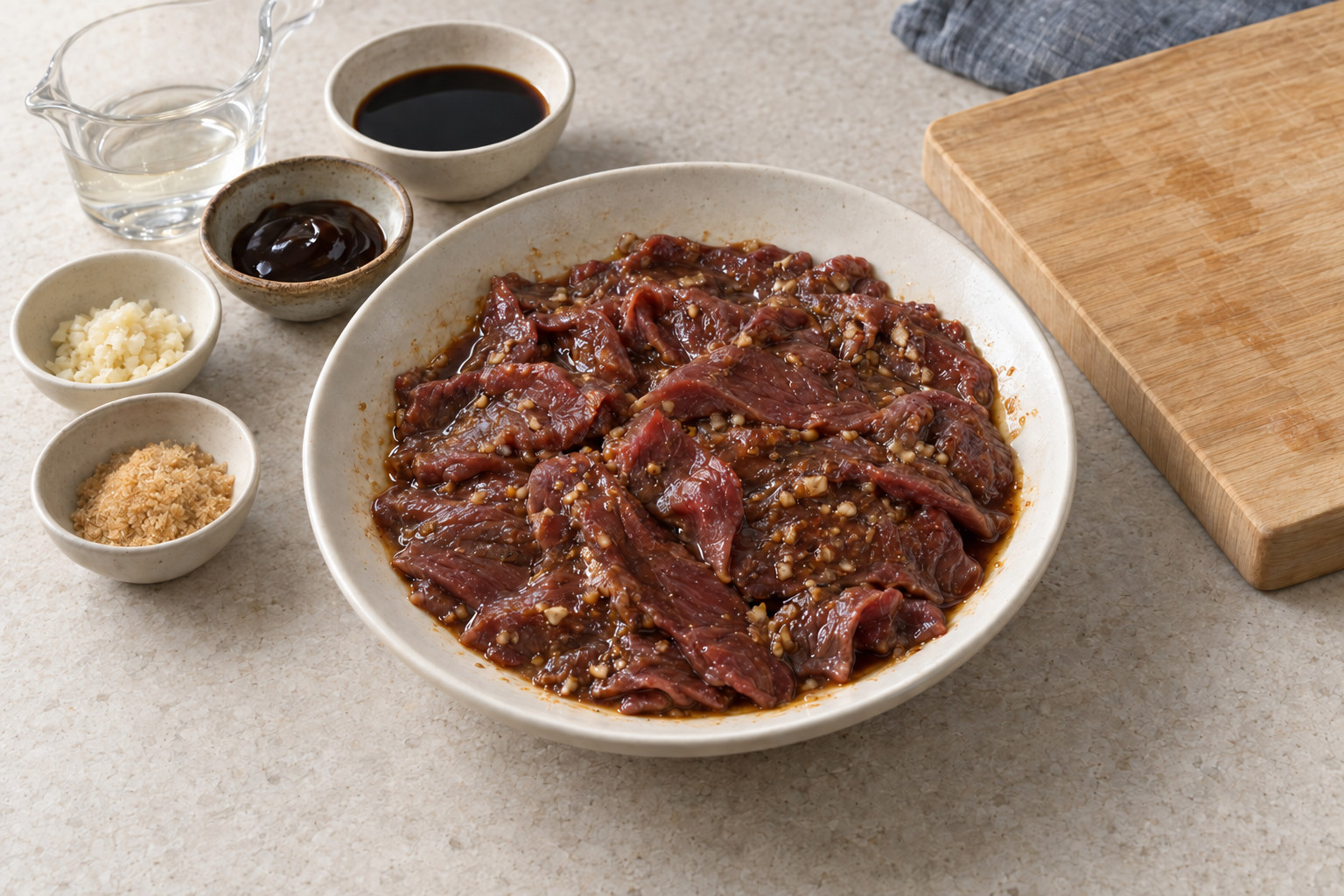
We cut the haunch across the grain into 3–4 mm slices and gently even them out with a mallet through cling film. We mix them with the soy and oyster sauces, crushed garlic and sugar. We cover and marinate in the fridge for 20 minutes. Before frying, we drain the meat and reserve all the raw marinade separately. We do not add salt to the meat.
The slices are evenly thin, do not tear and have no thick edge of connective tissue.
Prepare the salad and pepper dip
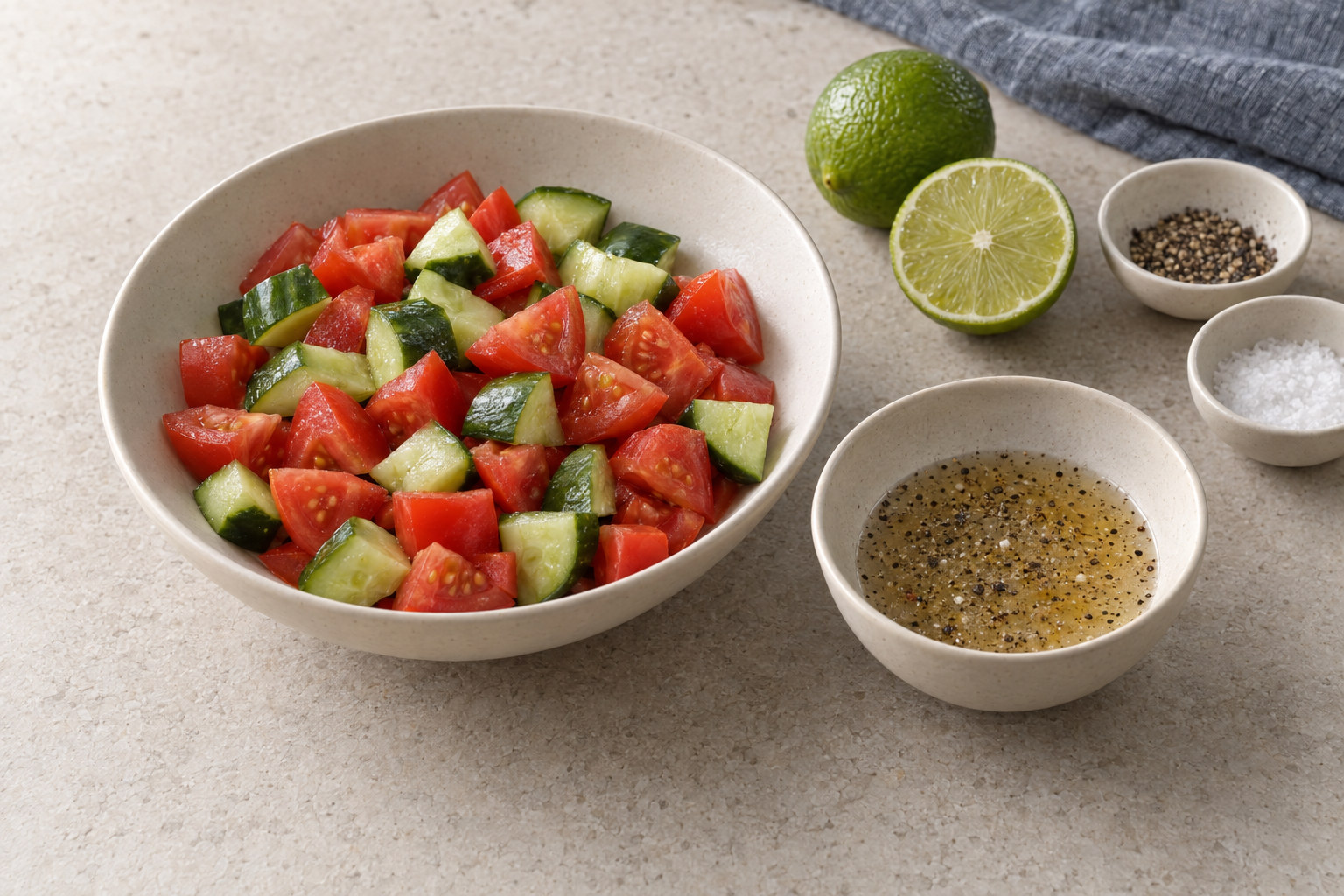
We cut the tomatoes and cucumber into small pieces and keep them chilled. In a small bowl, we mix the lime juice, pepper, salt and water set aside for the dip. We serve the dip separately and do not pour it over the vegetables beforehand.
The vegetables are fresh, and the dip is sharply acidic and peppery.
Fry in batches
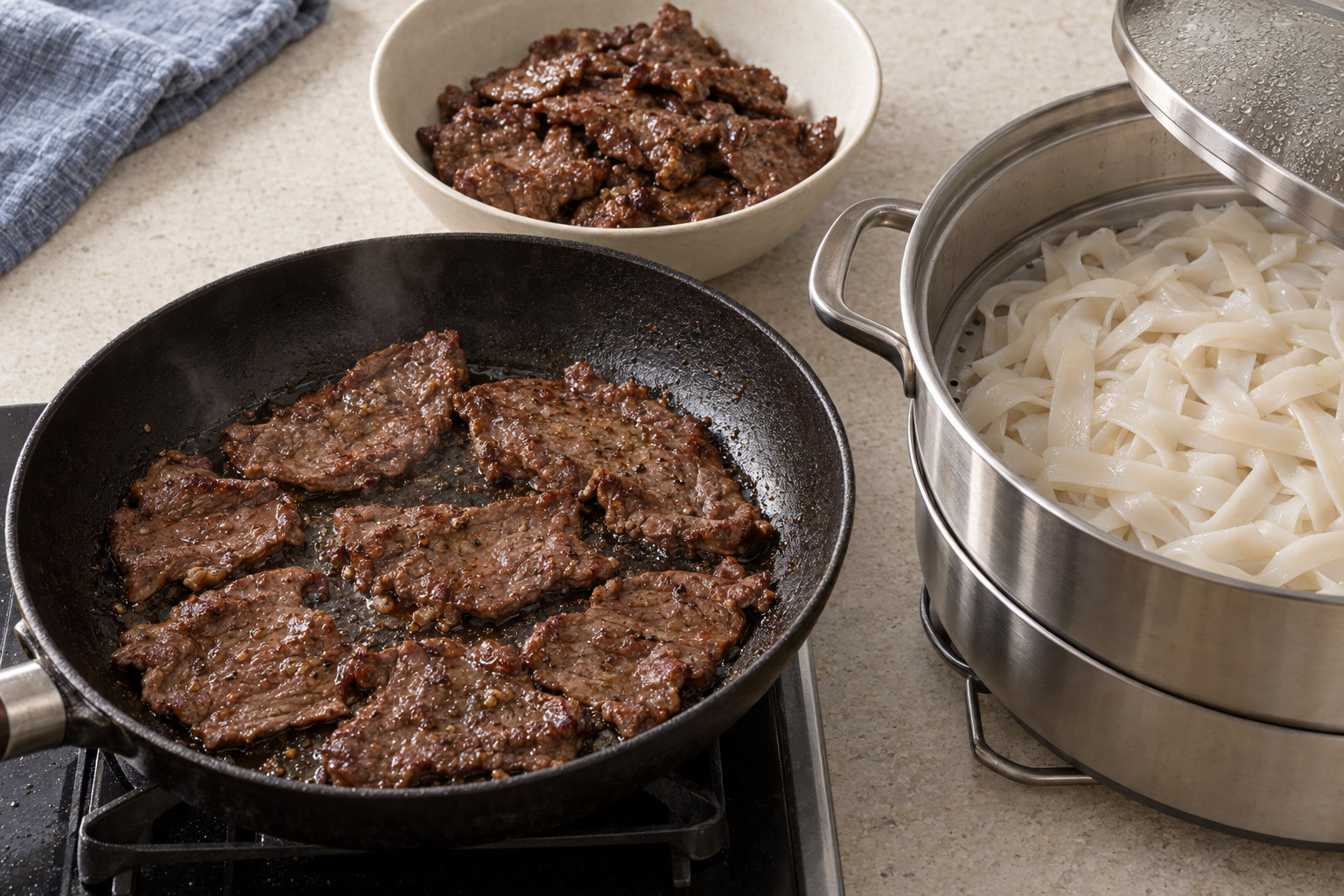
We heat the pan over a medium-high heat, season the meat with the pepper set aside for it and divide the oil between four batches of 100 g. We lay each batch in the pan without overlapping, fry for 60–90 seconds on each side and transfer to a clean bowl. The browned bits must not turn black. At the same time, we spread the noodles in the tin in a layer no more than 1 cm deep and steam them, covered, in one batch for 3–4 minutes, until hot and supple. We transfer them to a warmed bowl and cover.
The meat has browned patches and is not sitting in a pool of liquid in the pan.
Finish the sauce and meat
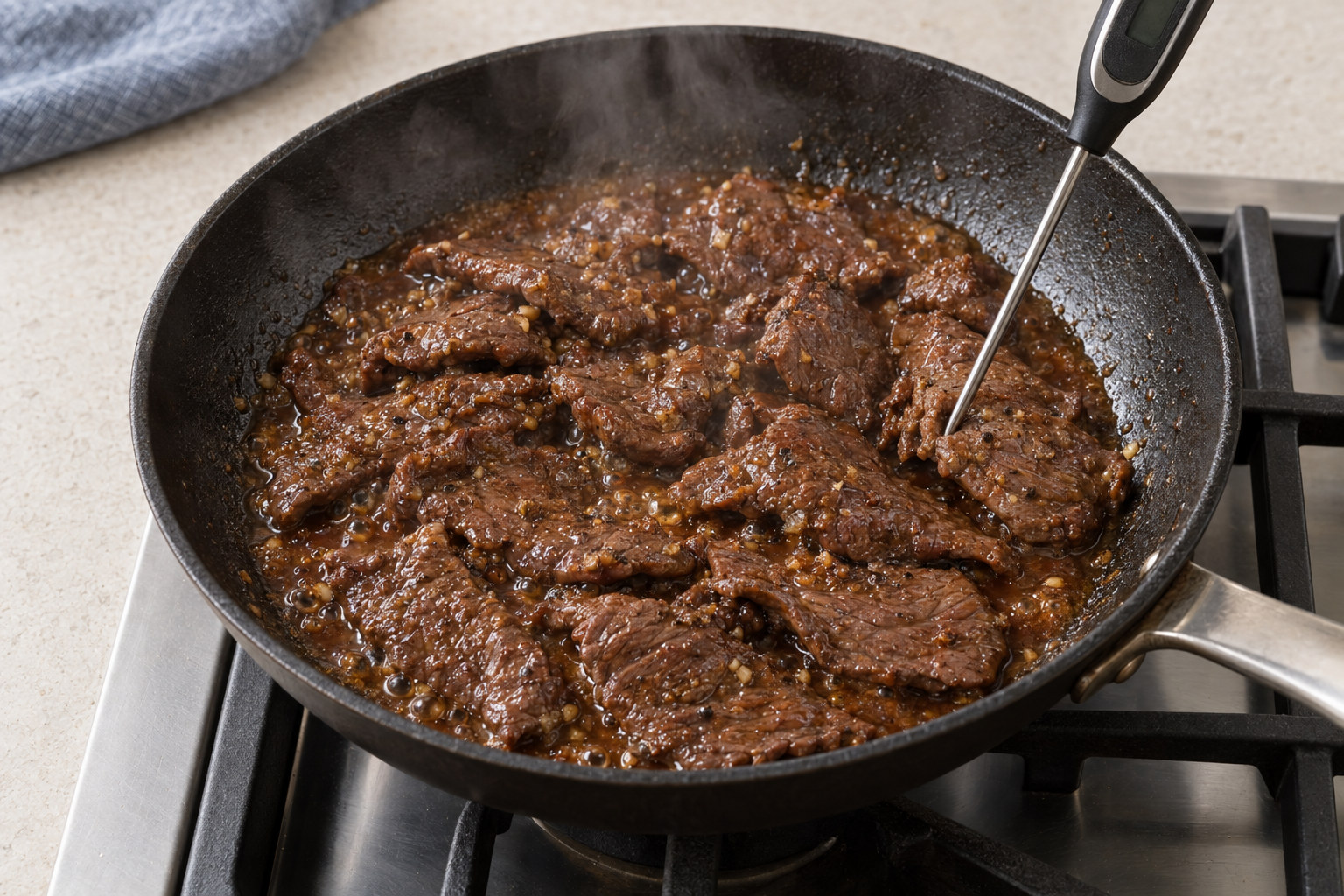
We pour 40 ml water and all the raw marinade into the pan. We bring to the boil and cook for 2 minutes. We return the meat and its juices and turn gently. We insert a thin probe lengthways into the thickest slices and check that they reach at least 70 °C inside for 2 minutes. If the glaze is too thick, we add water one tablespoon at a time, up to a maximum of 45 ml. The meat should be glossy, with only a thin layer of sauce remaining.
Divide and serve
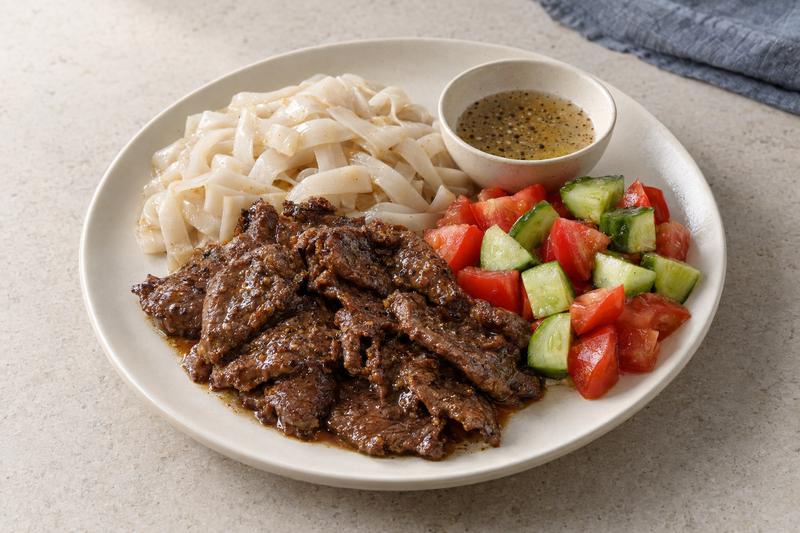
We divide all the hot noodles and glazed meat between 2 plates, adding the tomatoes and cucumber alongside. We divide the lime and pepper dip between 2 small bowls and dip the meat a mouthful at a time, so the strong dip does not flood the whole plate.
Tips from our kitchen
- We stir the batter again before making each sheet, as the starch quickly sinks to the bottom.
- We let each noodle sheet cool completely before lifting it with a spatula; warm sheets tear easily.
What to watch out for
- We let the marinated slices drain before frying, then add them to the pan in the specified batches without overlapping.
- Frying times are approximate. We check the temperature inside the thickest slices with a thin probe as described in the method.
How we serve it
- We serve the noodles and meat hot and keep the vegetables cold. We offer the pepper dip in separate bowls for dipping individual mouthfuls.
Ingredient swaps
Thai rice flour
no direct substitution with glutinous rice flour Glutinous rice flour gives a different texture; for this method, we use ordinary Thai rice flour and tapioca starch.
During preparation
- We keep raw meat and utensils used for it separate from cooked food. We measure the temperature inside the thickest slices with a clean, thin probe.
Our inspiration
Nite Yun, founder of the former Nyum Bai restaurant in Oakland, serves her lok lak with a separate lime and pepper dip. Its sharp acidity reaches each mouthful only when it is dipped. For our roe deer version, we also add wide rice noodles, following the method of Pailin Chongchitnant, former head chef at Oryza Bistro Asiana in Santa Clara. We bring the two ideas together with cold vegetables.
Pailin Chongchitnant
Pailin “Pai” Chongchitnant is a Thai chef who previously led the kitchen at Oryza Bistro Asiana in Santa Clara, California. Her homemade rice noodle method is the basis for the side dish we serve with our roe deer lok lak.
Similar recipes
Recipe for 4 people
Step-by-step method
Before we start
We make the noodle sheets first. Only once they are finished do we marinate the meat for 20 minutes; meanwhile, we cut the vegetables and mix the dip. During the last three batches of frying the meat, we start steaming the noodles again. We keep the hot noodles covered in a warmed bowl only briefly, then serve them straight away with the finished meat.
Steam the homemade noodle sheets
We work the rice flour and tapioca starch with a third of the water for the batter for 5 minutes, then stir in the remaining water to make a smooth batter. We fill the steamer with water below the rack and bring it to the boil. We lightly brush the 22 cm tin with some of the oil set aside for the sheets. Before each pour, we stir the batter and measure out 65 ml, spreading it over the whole base. We cover and steam for 1–2 minutes, until it forms a continuous, matt sheet with no liquid patches. Using tongs, we lower the base of the tin into a cold-water bath, making sure no water spills onto the noodle sheet. We leave it to cool completely for 1–2 minutes, brush a thin layer of oil over the sheet and loosen it with a spatula. We stack the sheets on a lightly oiled tray. We repeat until all the batter is used, making approximately 9–10 sheets. We spread the smaller final portion over only part of the tin, keeping the same thickness. We divide the oil between the tin, tray and upper surface of all the sheets. We keep checking the steamer's water level and top up with hot water as needed. We cut the sheets into 2 cm-wide noodles and keep them covered until the meat is ready.
The thin sheets are supple, do not stick together and do not tear when lifted.
Prepare the thin slices
We cut the haunch across the grain into 3–4 mm slices and gently even them out with a mallet through cling film. We mix them with the soy and oyster sauces, crushed garlic and sugar. We cover and marinate in the fridge for 20 minutes. Before frying, we drain the meat and reserve all the raw marinade separately. We do not add salt to the meat.
The slices are evenly thin, do not tear and have no thick edge of connective tissue.
Prepare the salad and pepper dip
We cut the tomatoes and cucumber into small pieces and keep them chilled. In a small bowl, we mix the lime juice, salt and water set aside for the dip. We add the pepper gradually, tasting as we go. We serve the dip separately and do not pour it over the vegetables beforehand.
The vegetables are fresh, and the dip is sharply acidic and peppery.
Fry in batches
We heat the pan over a medium-high heat, season the meat with the pepper set aside for it and divide the oil between eight batches of 100 g. We lay each batch in the pan without overlapping, fry for 60–90 seconds on each side and transfer to a clean bowl. The browned bits must not turn black. At the same time, we spread the noodles in the tin in a layer no more than 1 cm deep and steam them, covered, in two batches of 3–4 minutes each, until hot and supple. We keep the first batch covered in a warmed bowl and add the second.
The meat has browned patches and is not sitting in a pool of liquid in the pan.
Finish the sauce and meat
We pour 65 ml water and all the raw marinade into the pan. We bring to the boil and cook for 2 minutes. We return the meat and its juices and turn gently. We insert a thin probe lengthways into the thickest slices and check that they reach at least 70 °C inside for 2 minutes. If the glaze is too thick, we add water one tablespoon at a time, up to a maximum of 75 ml. The meat should be glossy, with only a thin layer of sauce remaining.
Divide and serve
We divide all the hot noodles and glazed meat between 4 plates, adding the tomatoes and cucumber alongside. We divide the lime and pepper dip between 4 small bowls and dip the meat a mouthful at a time, so the strong dip does not flood the whole plate.