
Original Central European cuisine · Original Central European cuisine
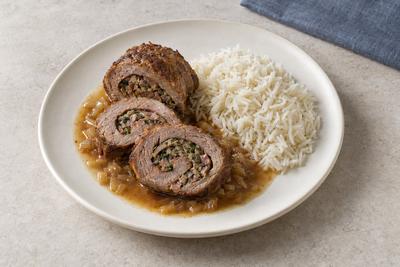
Roe deer slices with lemon and pea mash
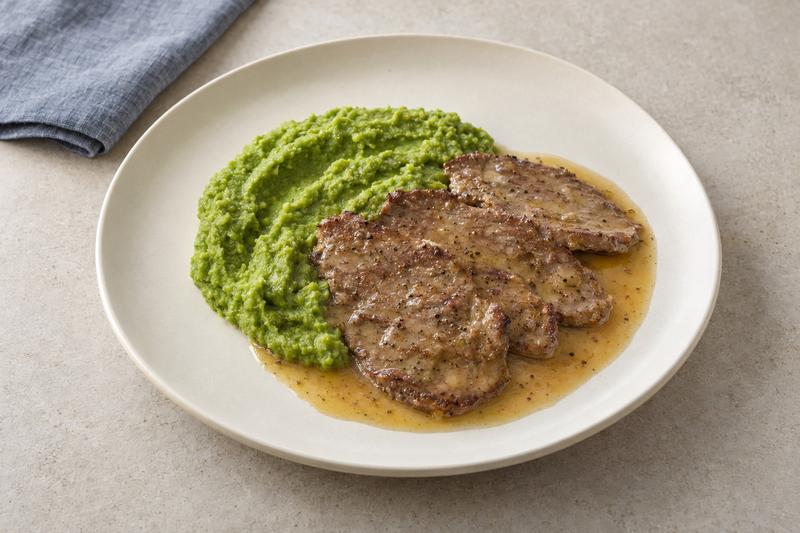
We serve the roe deer haunch in thin, pan-fried slices with a glossy lemon sauce. Beside it we spoon buttery pea mash scented with finely grated zest; its sweetness balances the tart juices.
We make the mash before frying the meat; we finish all the slices together in the sauce.
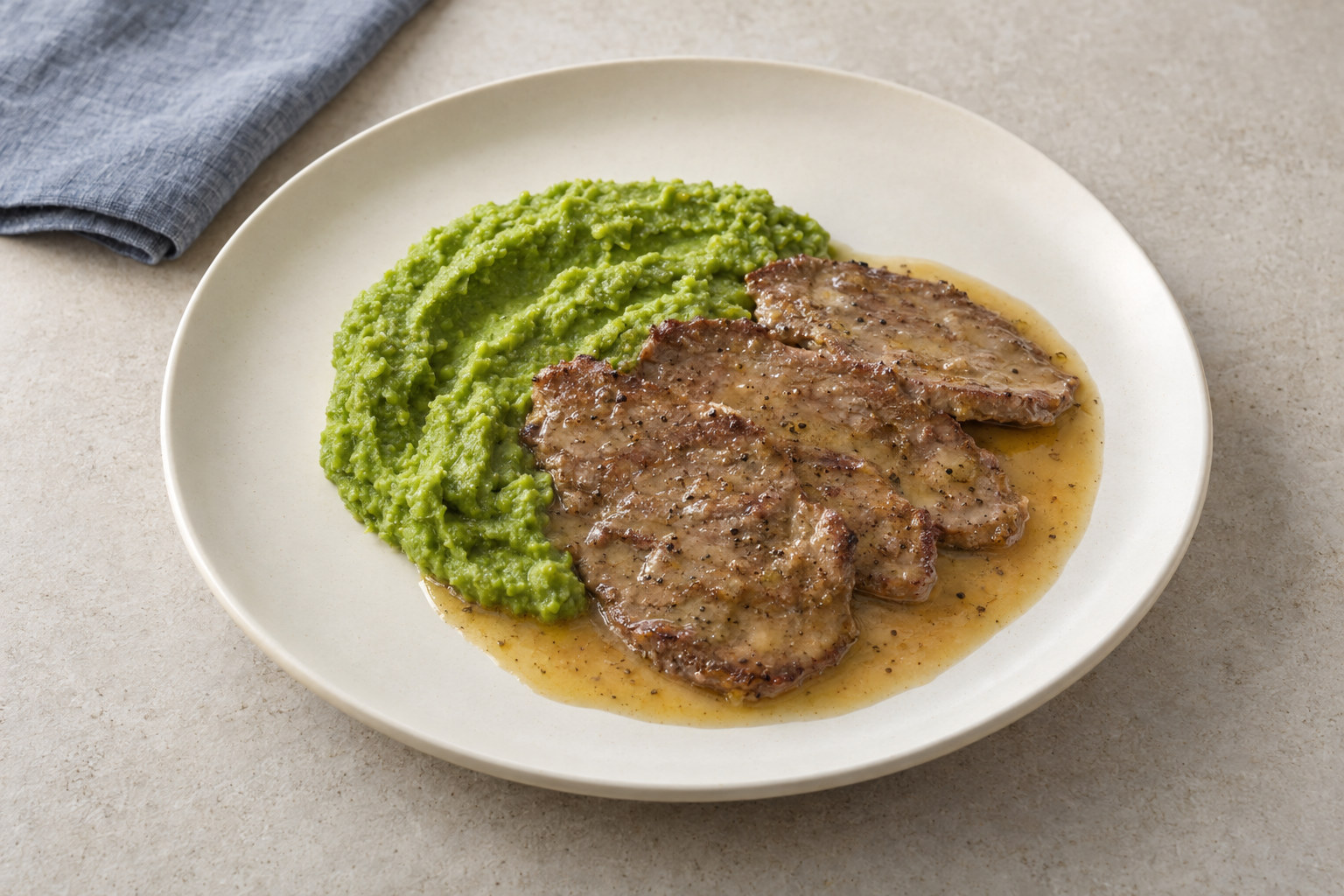
Lemon brightens the buttery sauce, while sweet peas soften the fuller flavour of the roe deer slices.
Step-by-step method
What you will need
- kitchen scales
- thin-probe thermometer
- knife and two separate chopping boards
- measuring jug
- deep 28 cm frying pan
- 1.5-litre saucepan for the peas
- meat mallet and cling film
- stick blender
- colander
- clean bowl for the browned meat
Before we start
We make the pea mash before frying the meat. After blending, we cover it and keep it over the lowest heat, stirring occasionally. We fry the slices in the stated batches, then finish them together in the sauce. Before serving, we stir the mash briefly and check that it is hot.
Prepare the thin slices
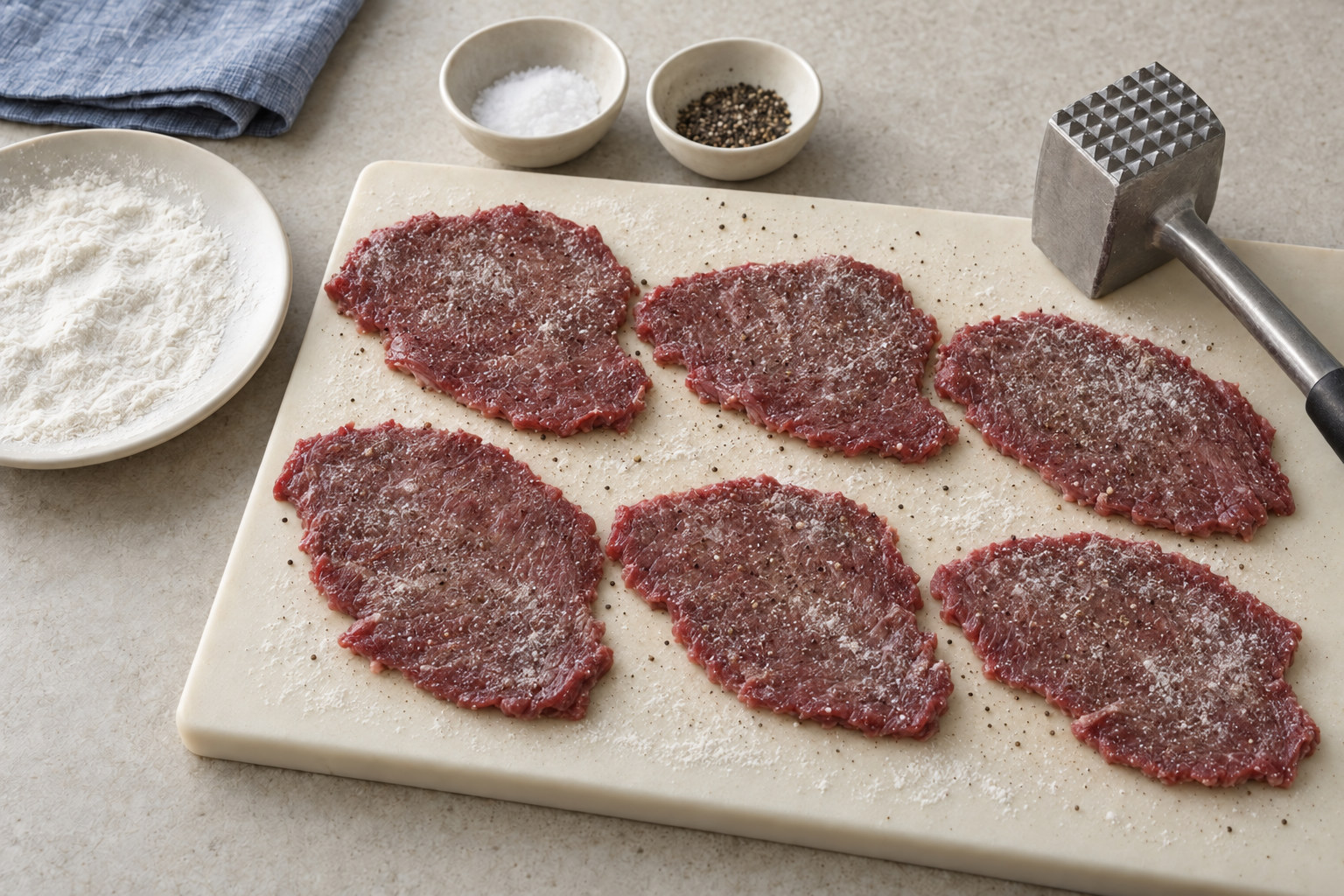
We slice the haunch across the grain into 3–4 mm slices and gently even them out with a meat mallet through cling film. We pat them dry. Just before frying, we distribute the salt for the meat, pepper and all the flour evenly over the slices; the flour should form only a light dusting.
The slices are evenly thin, do not tear and have no thick strip of connective tissue at the edge.
Make the pea mash
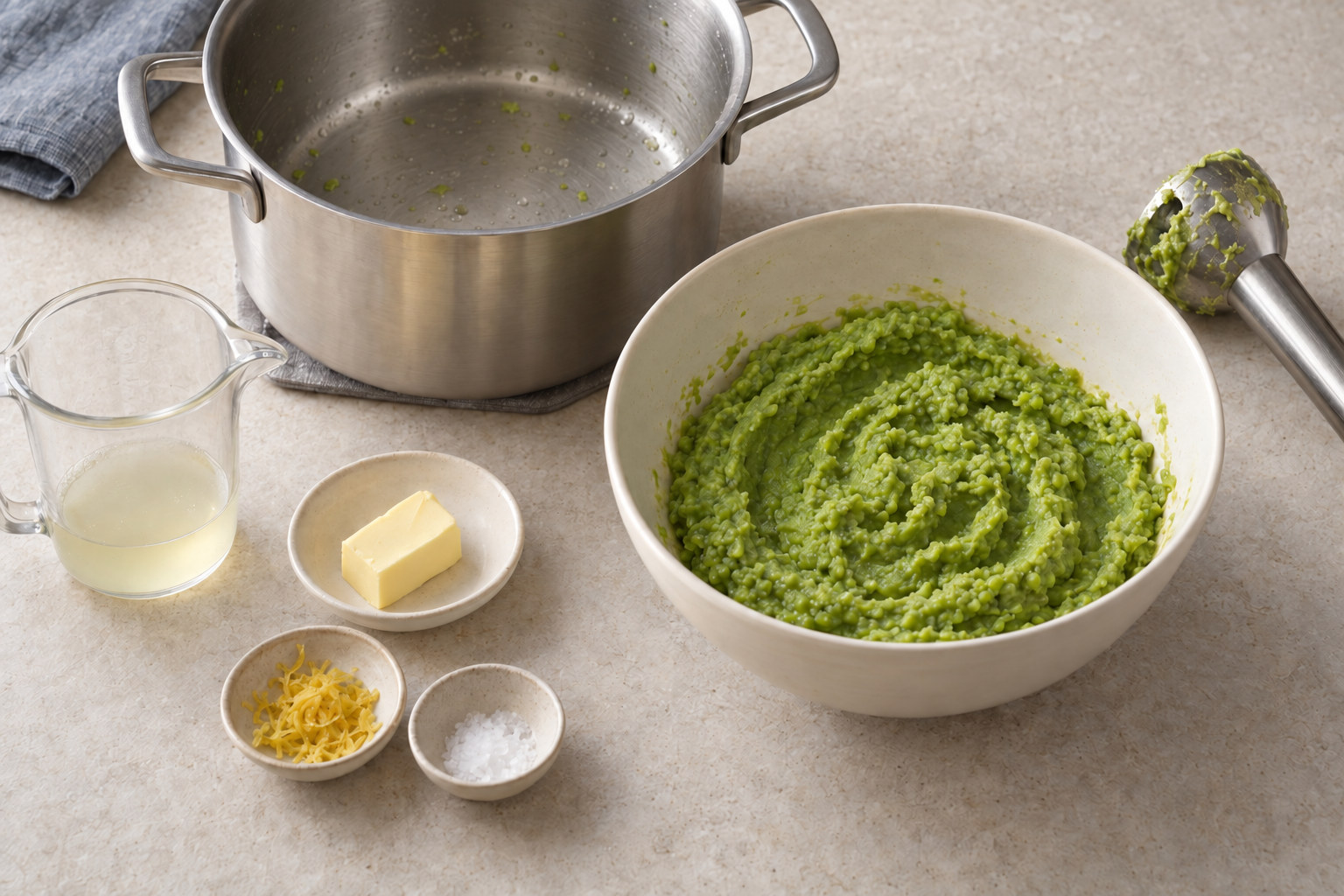
We bring the water for the peas to the boil, add the frozen peas and simmer for 4–6 minutes after the water returns to the boil, until tender. We drain them and reserve 60 ml of the water. We blend the peas with the butter, salt and finely grated lemon zest. We start with one tablespoon of the reserved water, then add more by the tablespoon as needed, up to 45 ml in total. We cover the thick mash and keep the remaining water in case we need it for reheating.
The mash is thick, green and hot throughout, not watery.
Fry in batches
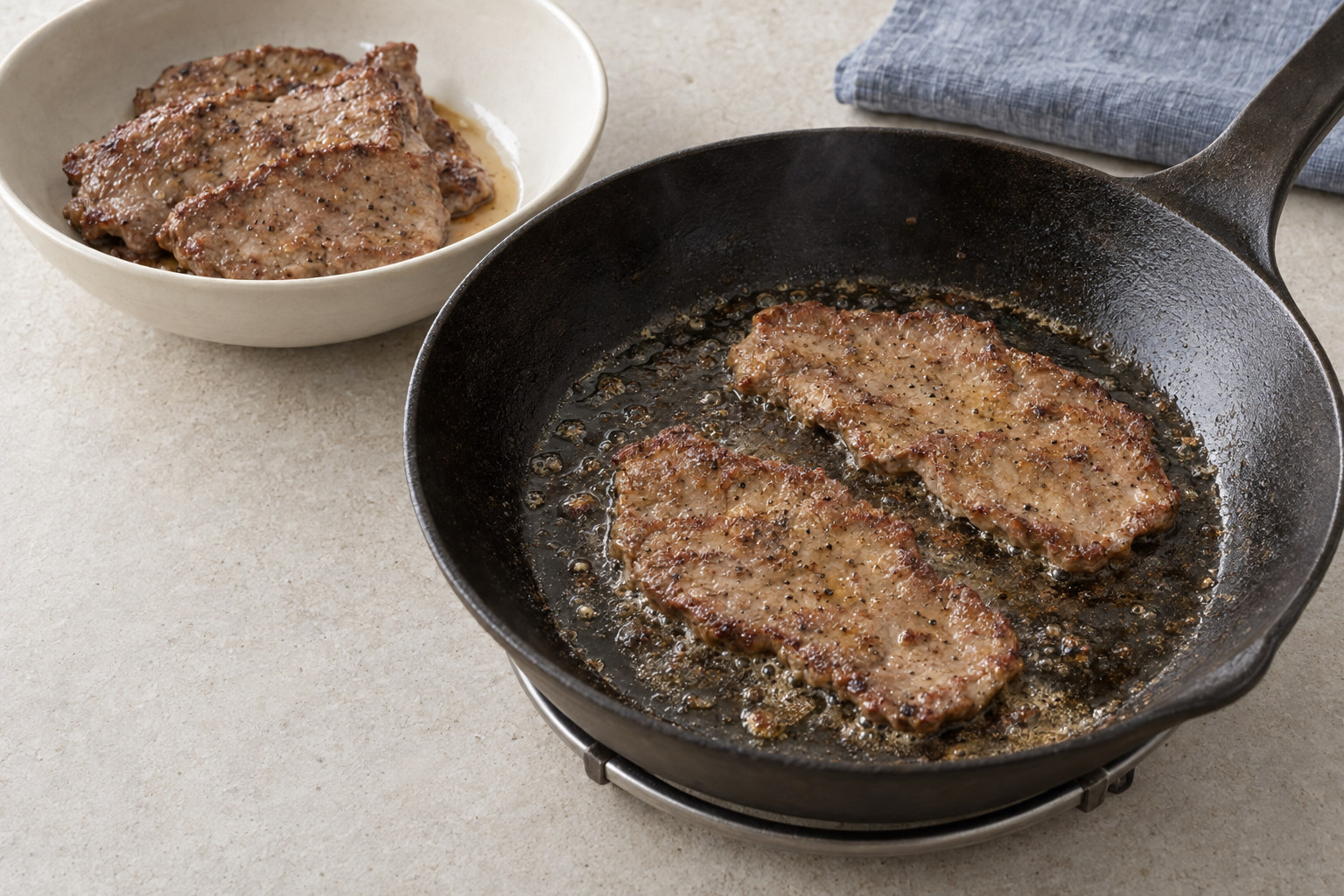
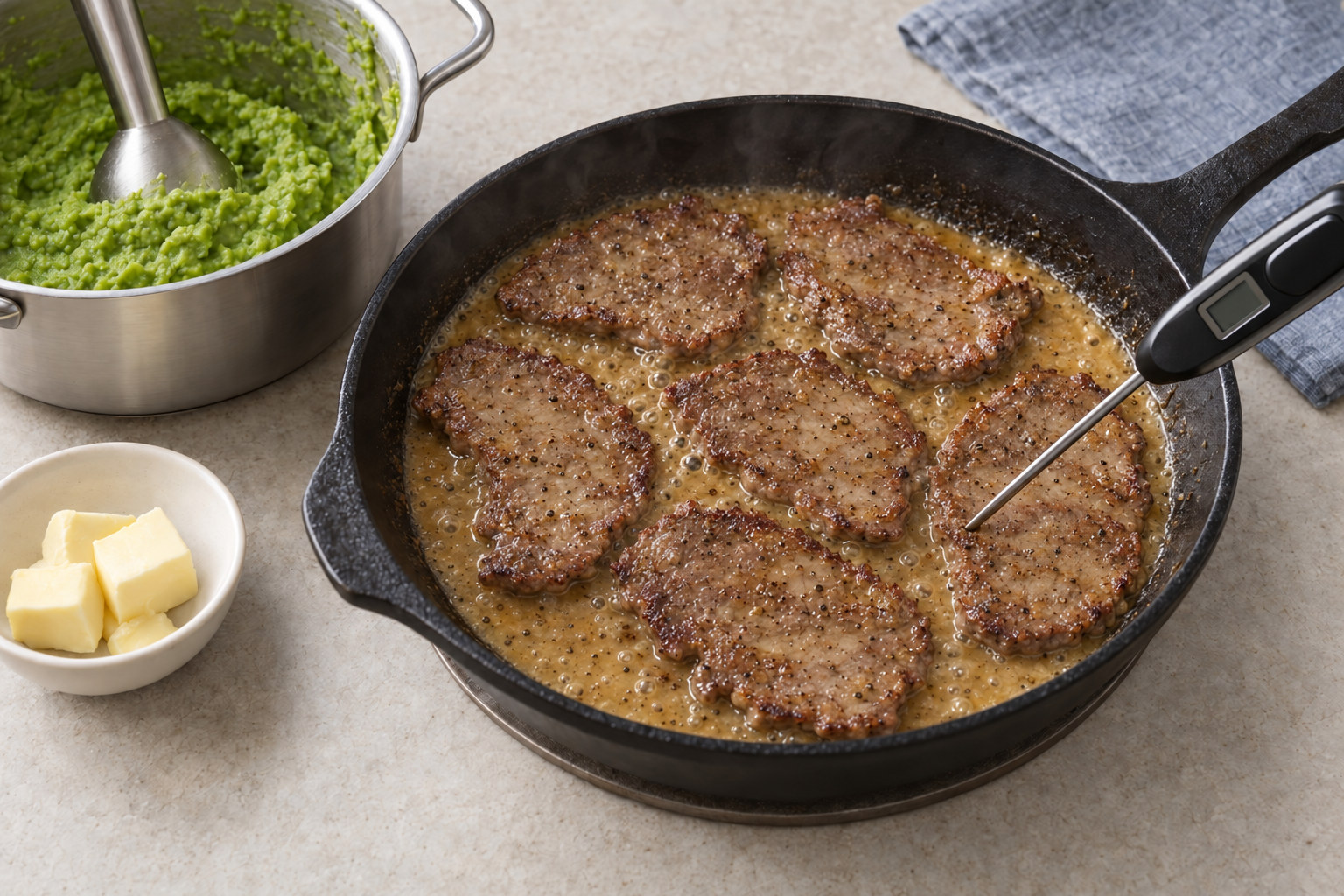
We heat the pan over a medium-high heat. We divide the oil between four batches of 100 g meat, arranging the slices without overlap each time. We fry them for 60–90 seconds on each side until lightly browned. We transfer the meat to a clean bowl and keep all its juices.
The meat has browned patches and is not sitting in a pool of liquid in the pan.
Finish the sauce and meat
We pour all the stock into the pan, loosen the browned bits and simmer for 2 minutes. We return all the meat and juices, turn the slices gently in the sauce and use a thin probe lengthwise to check that the thickest slices reach at least 70 °C for 2 minutes at the centre. If the sauce thickens too much, we add water by the tablespoon, up to 45 ml. We take the pan off the heat and stir in the lemon juice and the butter for the meat. Meanwhile, we stir the mash over a low heat; if needed, we use the last tablespoon of reserved pea water.
The sauce lightly coats the meat.
We plate and serve
We divide the pea mash and roe deer slices between 2 warmed plates. We spoon over the lemon sauce and serve straight away.
Tips from our kitchen
- We cut the slices across the grain and even out their thickness so they finish cooking together.
- We measure out the pea cooking water and add it gradually; the mash should hold its shape on the plate rather than spread.
What to watch out for
- We pat the meat dry before frying and place it in the pan in the stated batches so the slices do not overlap.
- The frying time is a guide; we check the thickest slices with a thin probe.
How we serve it
- We place the roe deer slices beside the pea mash, spoon over the lemon sauce and serve at once.
During preparation
- We keep raw meat and utensils used for it separate from cooked food. We measure the temperature inside the thickest slices with a clean, thin probe.
Our inspiration
Sweet peas and lemon give roe deer a lighter, fresher accompaniment. In our own combination we use the fragrant yellow zest too: it scents the mash, while the juice lifts the buttery sauce. We take a forkful of meat with peas and a little lemon sauce. Their flavours work best together.
Similar recipes
Recipe for 4 people
Step-by-step method
Before we start
We make the pea mash before frying the meat. After blending, we cover it and keep it over the lowest heat, stirring occasionally. We fry the slices in the stated batches, then finish them together in the sauce. Before serving, we stir the mash briefly and check that it is hot.
Prepare the thin slices
We slice the haunch across the grain into 3–4 mm slices and gently even them out with a meat mallet through cling film. We pat them dry. Just before frying, we distribute the salt for the meat, pepper and all the flour evenly over the slices; the flour should form only a light dusting.
The slices are evenly thin, do not tear and have no thick strip of connective tissue at the edge.
Make the pea mash
We bring the water for the peas to the boil, add the frozen peas and simmer for 4–6 minutes after the water returns to the boil, until tender. We drain them and reserve 100 ml of the water. We blend the peas with the butter, salt and finely grated lemon zest. We start with two tablespoons of the reserved water, then add more by the tablespoon as needed, up to 75 ml in total. We cover the thick mash and keep the remaining water in case we need it for reheating.
The mash is thick, green and hot throughout, not watery.
Fry in batches
We heat the pan over a medium-high heat. We divide the oil between eight batches of 100 g meat, arranging the slices without overlap each time. We fry them for 60–90 seconds on each side until lightly browned. We transfer the meat to a clean bowl and keep all its juices.
The meat has browned patches and is not sitting in a pool of liquid in the pan.
Finish the sauce and meat
We pour all the stock into the pan, loosen the browned bits and simmer for 2 minutes. We return all the meat and juices, turn the slices gently in the sauce and use a thin probe lengthwise to check that the thickest slices reach at least 70 °C for 2 minutes at the centre. If the sauce thickens too much, we add water by the tablespoon, up to 75 ml. We take the pan off the heat and stir in the lemon juice and the butter for the meat. Meanwhile, we stir the mash over a low heat; if needed, we use up to the remaining 25 ml of reserved pea water.
The sauce lightly coats the meat.
We plate and serve
We divide the pea mash and roe deer slices between 4 warmed plates. We spoon over the lemon sauce and serve straight away.