
Italian and French inspiration · Italian and French inspiration
Beef consommé with roe deer pasta parcels
Homemade pasta parcels filled with braised roe deer and Parmesan shine in golden beef consommé. Thin egg pasta, tender meat and fresh parsley need no heavy sauce. This is a dinner for a day when we want to enjoy the cooking itself and take our time filling each parcel by hand.
The time includes 150–210 minutes of braising and about 60–90 minutes to chill the filling. While it cools, we clarify the stock and let the dough rest.
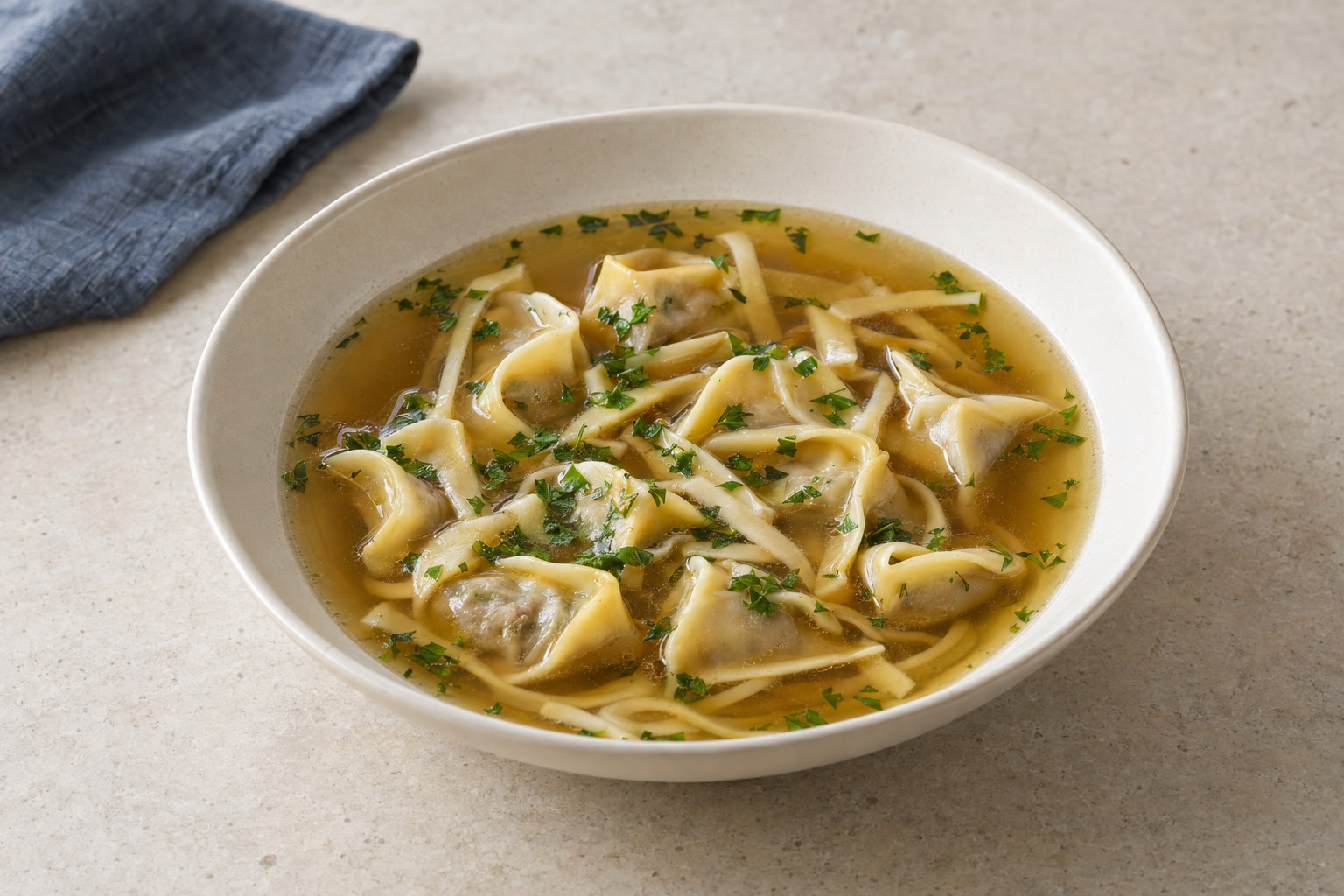
Clear beef consommé is paired with delicate egg pasta parcels filled with tender roe deer and a little parsley.
Step-by-step method
What you will need
- kitchen scales
- knife and two separate chopping boards
- measuring jug
- heavy 18 cm pan with a lid, 2 l
- 2 l pan for clarifying and a clean 2 l pan for the finished stock
- ladle, fine sieve and two layers of fine muslin
- pasta machine or rolling pin
- ruler and pastry wheel
- shallow 20 × 20 cm metal dish
- larger container for a cold-water bath and ice packs
- cling film
- slotted spoon
- kettle
- two 5 l pans with an inner diameter of at least 24 cm for the parcels
- hob with four burners
- flat 40 × 30 cm tray and a clean tea towel
- separate shallow 15 × 10 cm metal dish for the onion base
Before we start
As soon as the meat is braised, we separate and chill the filling. While it cools, we clarify the stock and make the dough, which we leave to rest for 30 minutes. We shape the parcels in small batches and keep the remaining filling in the fridge. We put the shaped uncooked parcels on a floured tray in the fridge. Just before serving, we cook them in two pans at the same time. Meanwhile, we heat the clear stock and the remaining onion base on the other two burners; we put the cooked pasta straight into the bowls.
Cut and brown the meat
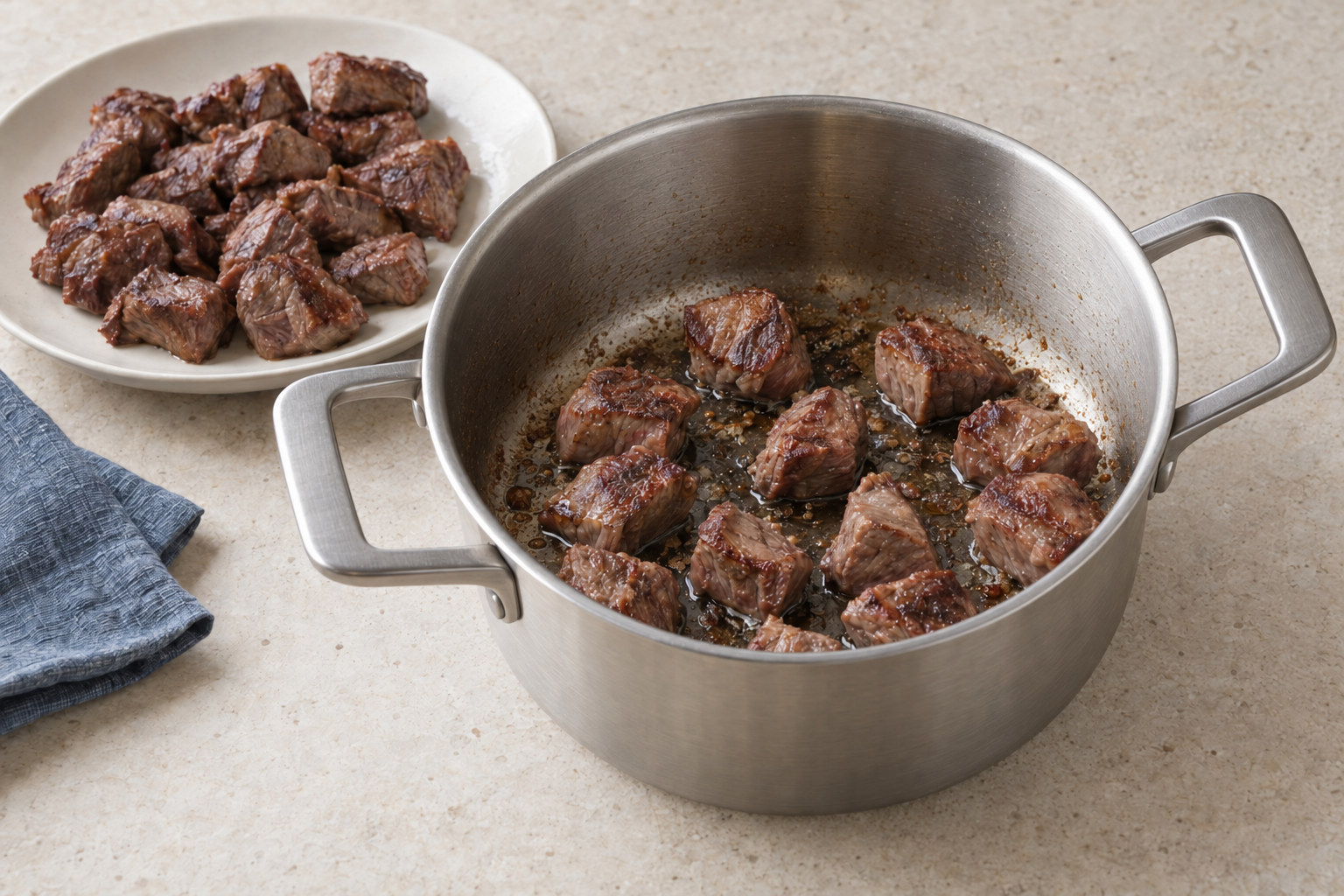
We cut the meat into 3 cm cubes, pat it dry, season it with the salt set aside for the meat and add pepper. We reserve 1 teaspoon of oil for the onion and divide the rest between two 150 g batches. We brown each batch over a medium-high heat for 4–6 minutes, then set it aside.
The cubes have browned sides; they should not simmer in juices at the bottom of the pan.
Make the base for braising
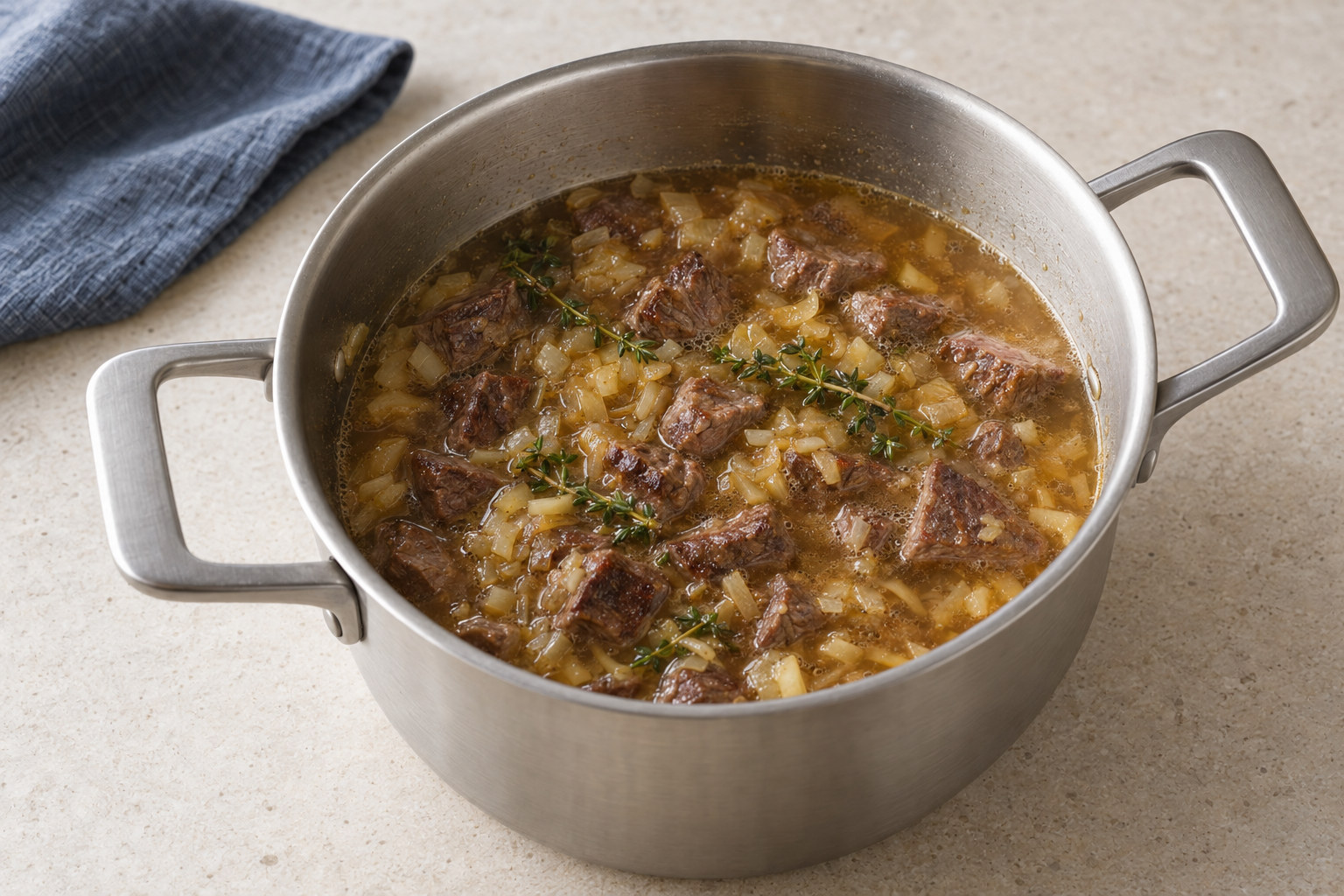
In the remaining oil, we stir and cook the peeled, finely chopped onion for 7–9 minutes until golden. We add the thyme, all the meat and its juices, and 250 ml of stock. We bring it to a gentle simmer.
The onion smells sweet and the seasoning has not burnt.
Braise the meat and chill the filling
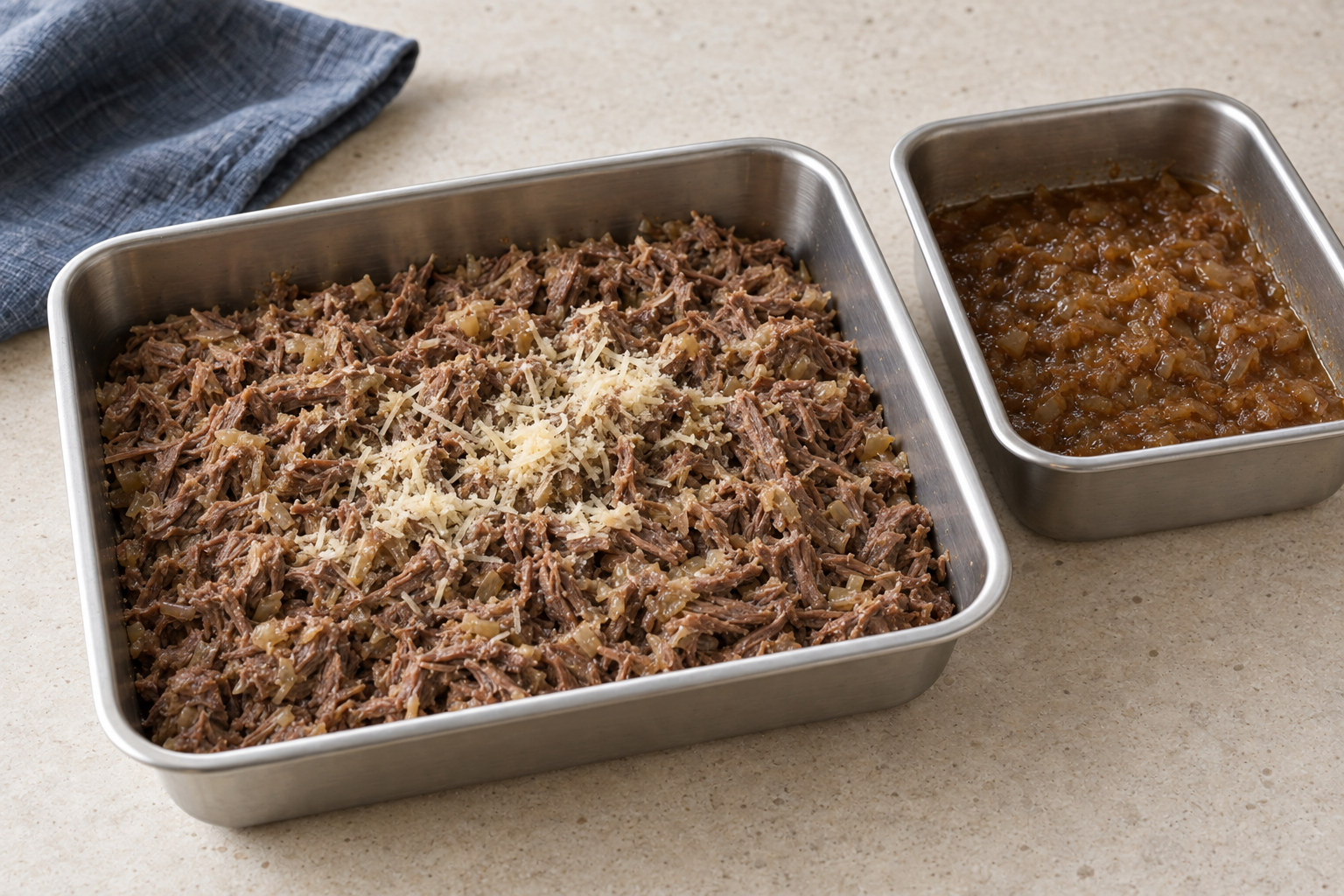
We cover the pan and braise the meat over a low heat for about 150–210 minutes. The liquid should bubble only occasionally. Every half-hour, we stir from the bottom and add a little hot water if needed. We continue until a cube pulls easily into tender fibres with a fork; we braise tougher meat for longer. We remove the tender meat and discard the thyme stems. We reduce the juices and onion for 10–15 minutes until the mixture clings to a spoon and releases no free liquid. We finely chop the meat and stir in the Parmesan and 30 g of the thick onion base. We set aside the remaining base and later serve it separately in a small dish so it does not cloud the clear stock. We immediately spread the filling in a shallow metal dish and the remaining onion base in a second dish. We stand both in a cold-water bath with ice packs, stirring the filling occasionally with a clean spoon. Once the mixtures have cooled, we cover them and put them in the fridge without delay. We use the filling in the parcels only when it is cold right through. We keep the onion base in the fridge until its final reheating.
Clarify the stock
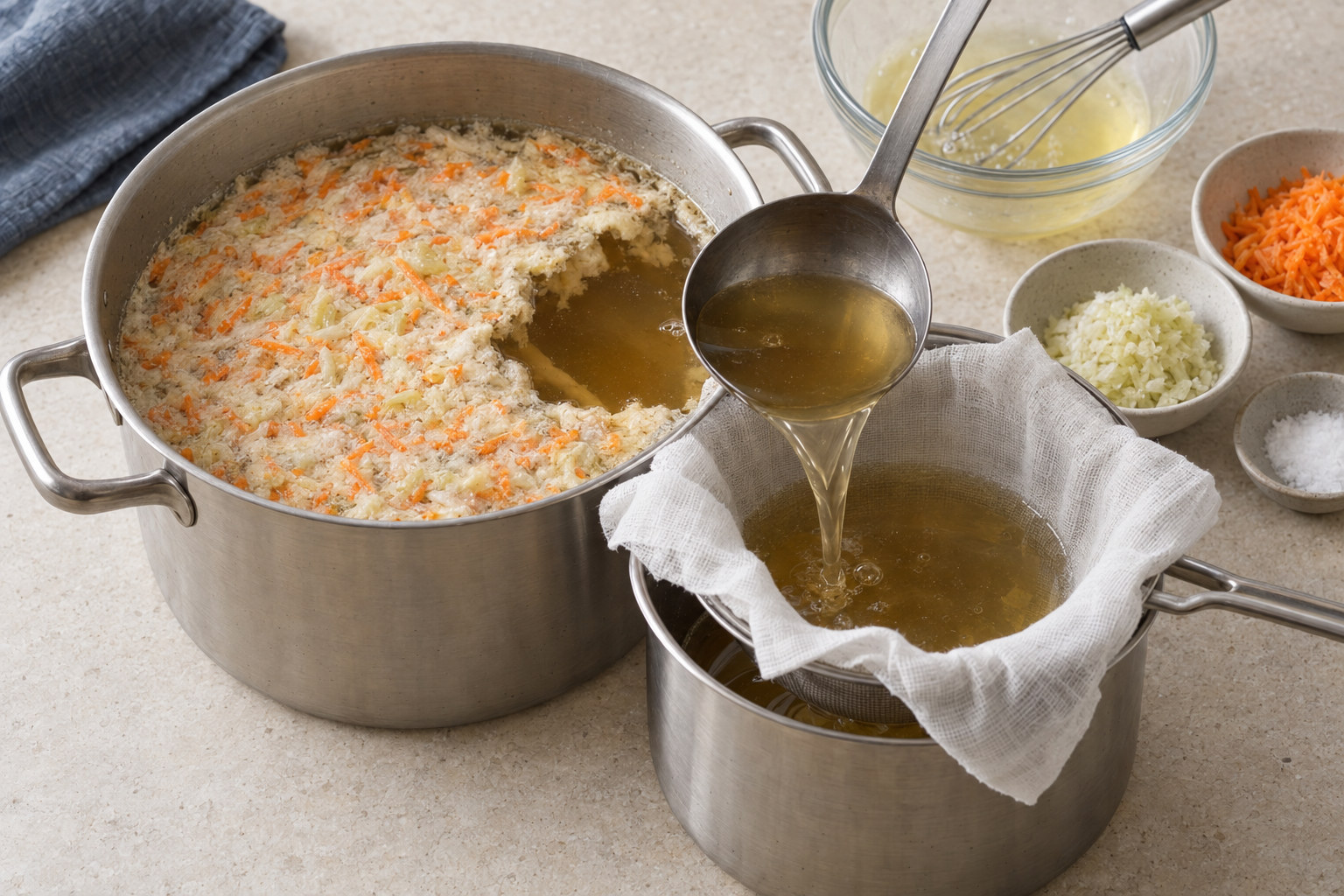
We clean and finely grate the carrot and celery. We mix the cold beef stock with the lightly beaten egg whites and grated vegetables. We heat it slowly, loosening the mixture from the bottom with a spatula. Once the egg whites have set into a continuous raft, we stop stirring. We keep it just below a simmer for 25–35 minutes. With a ladle, we make a small opening at the edge and carefully ladle the clear liquid through two layers of muslin dampened with clean water into a clean pan. We do not squeeze the muslin. We season the stock with half the salt allocated to the dough and stock. We do not add the strained ingredients back to the soup. We keep the finished stock covered and hot over a low heat, then bring it back to a boil before serving.
An egg-white raft forms on the surface with clear liquid underneath. A vigorous boil would cloud the stock.
Make and roll the dough
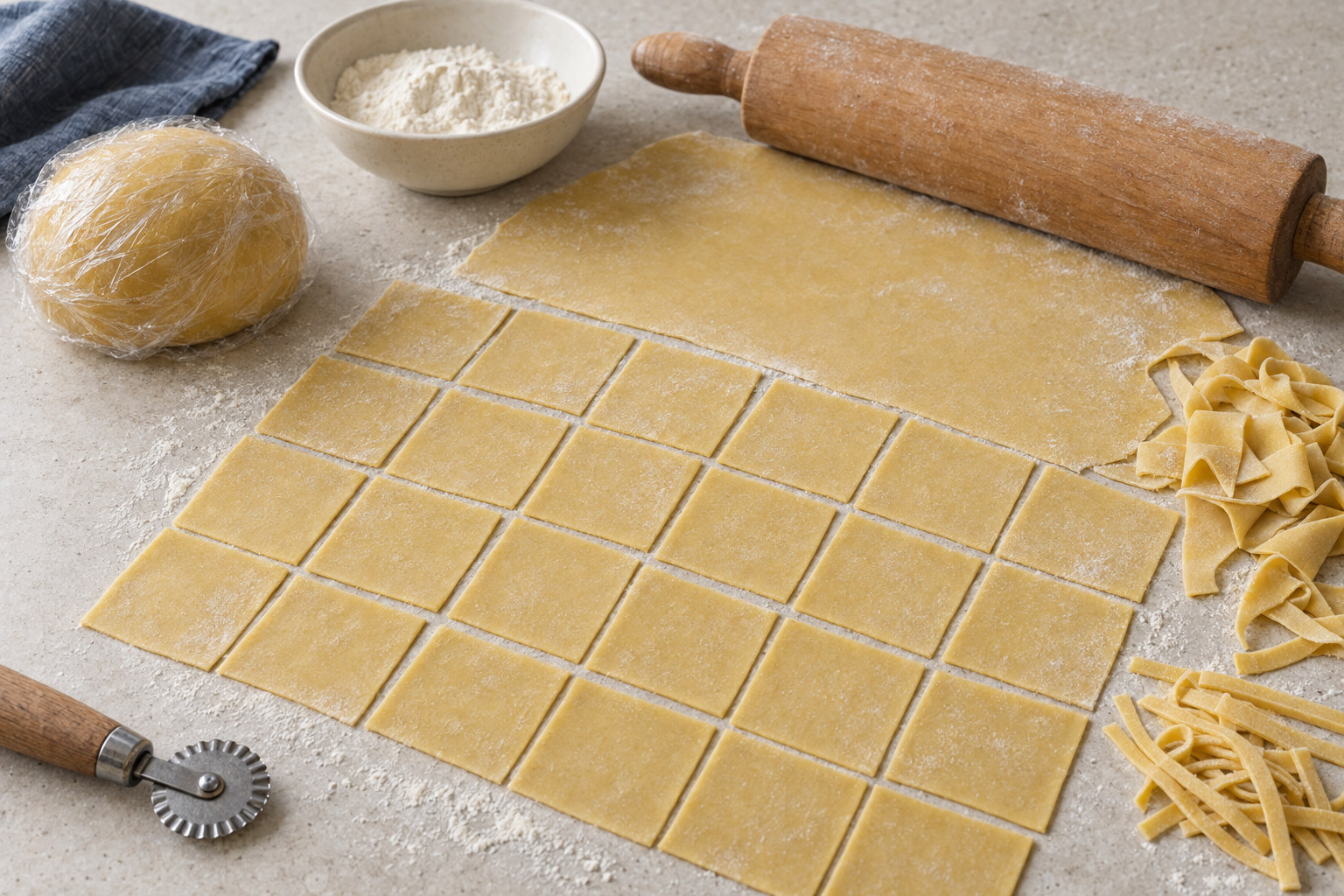
Using the flour for the dough, eggs, water for the dough and the remaining half of the salt for the dough and stock, we knead a smooth dough for 8 minutes. We wrap it and let it rest in the fridge for 30 minutes. We roll it in sections to about 1 mm thick, dusting it lightly as needed. We cut out squares of about 10 × 10 cm; the batch makes around 20 parcels. We bring the offcuts together once, leave them covered to rest for 10 minutes, then roll them again. We cut the last narrow strips into thin noodles for the soup.
The dough is elastic, very thin and does not stick.
Fill and seal the parcels
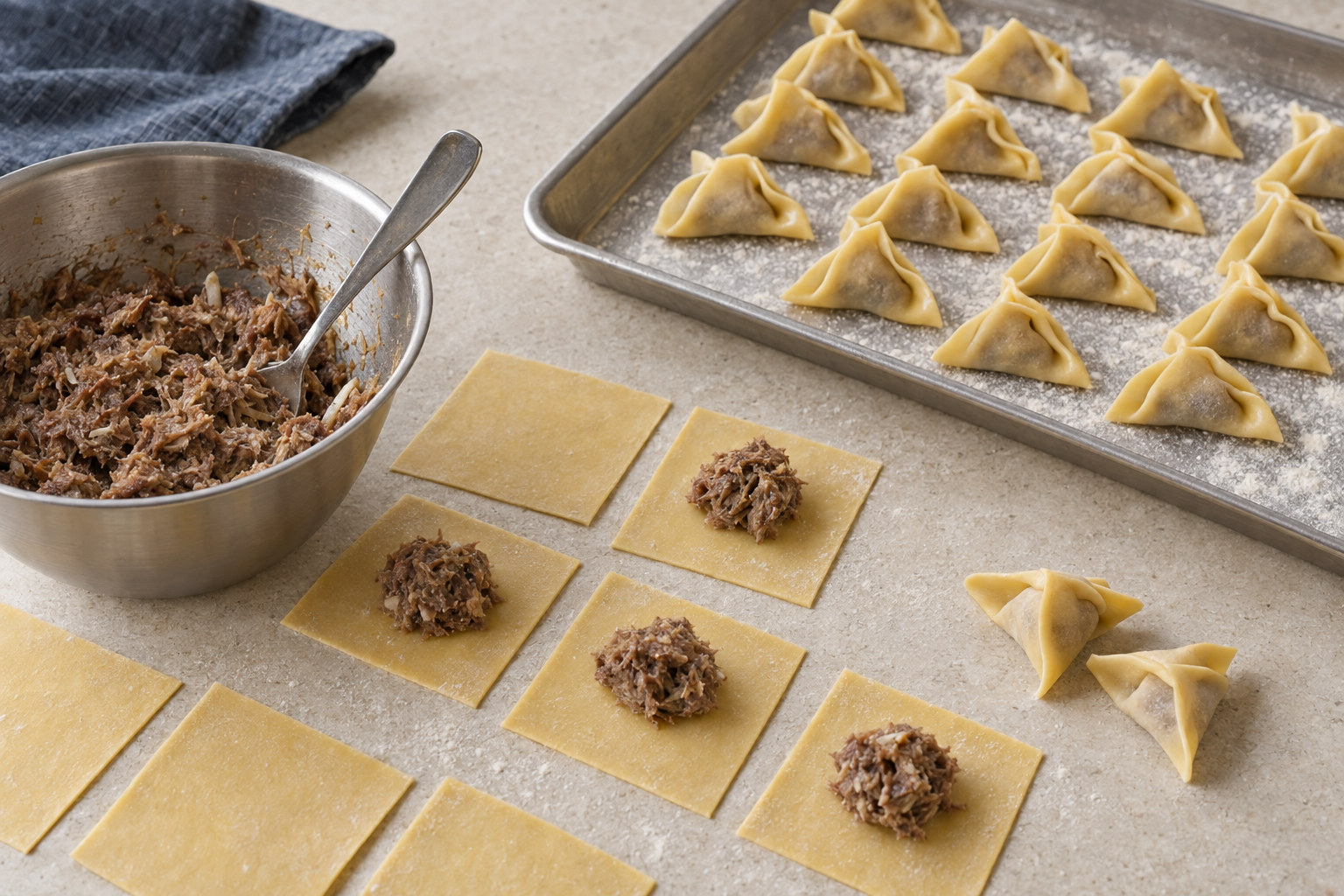
We divide the cold filling evenly among the centres of the prepared squares, roughly 2 teaspoons for each. We leave a border of about 1 cm of bare dough. We lift all four corners over the filling and bring them together at a point. Working along the edges, we press out the air and firmly seal all four joined seams to make a closed pouch. If an edge is dry, we lightly moisten it with a finger. We fill a few at a time, keeping the rest of the dough covered and the filling in the fridge. We arrange the parcels in one layer on a floured tray, cover them loosely and keep them in the fridge at 0–5 °C until cooking.
The seams are dry and firm, and no filling leaks out.
Cook the parcels and serve
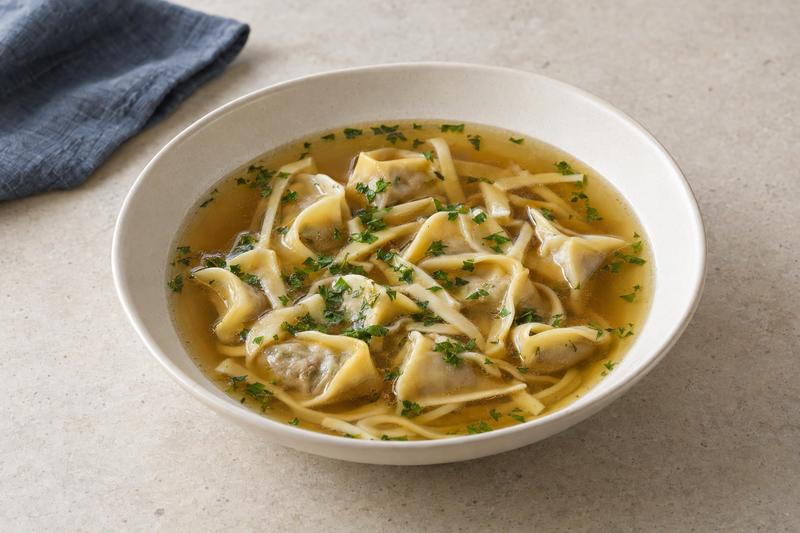
We pour 3 l of water into each of two pans and add 3 teaspoons of salt to each. We bring both to a gentle simmer and divide the parcels evenly between them. We gently loosen them from the bottom and cook for about 5–7 minutes from when the water returns to a simmer. The pasta must be soft even at the seams. We cut open the largest parcel from each pan and check that the filling is hot all the way through; if needed, we cook the parcels longer. We add the noodles made from the offcuts for the final 2 minutes. Meanwhile, we bring the clear stock to a boil and heat the remaining onion base thoroughly. We lift out the parcels with a slotted spoon, let them drain briefly and divide them between 2 warmed deep bowls, about 10 parcels per serving. We add the noodles, hot stock and parsley. We serve the onion base separately. We take the soup straight to the table and do not leave the pasta standing in the stock.
The stock stays clear because we have not cooked the pasta in it.
Tips from our kitchen
- We ladle the clarified stock through an opening at the edge of the egg-white raft and never squeeze the cloth.
- We fill the parcels in small batches, keeping the remaining dough covered so it does not dry out and the filling in the fridge.
What to watch out for
- We pat the meat dry before browning and keep to the stated batch sizes so every cube touches the base of the pan.
How we serve it
- We pour the hot stock over the parcels only once they are in the bowls and serve straight away. We serve the remaining onion base separately so the stock stays clear.
During preparation
- We wash our hands and utensils after handling raw meat, and keep raw meat and its utensils separate from the finished food.
- We keep the filling and shaped uncooked parcels at 0–5 °C and take out only the portion we are working with. We serve the cooked parcels from both pans immediately with hot stock.
Our inspiration
A clear soup can look modest, yet it showcases one of the most striking kitchen skills. Consommé gets its clarity from egg whites. What appeals to us is the moment at the table: we put the hand-folded parcels into each bowl and only then pour over the hot stock. Their folds stay visible, and the first cut reveals the roe deer filling. We make it when we feel like preparing a special meal with homemade pasta.
Similar recipes
Recipe for 4 people
Step-by-step method
Before we start
As soon as the meat is braised, we separate and chill the filling. While it cools, we clarify the stock and make the dough, which we leave to rest for 30 minutes. We shape the parcels in small batches and keep the remaining filling in the fridge. We put the shaped uncooked parcels on a floured tray in the fridge. Just before serving, we cook them in two pans at the same time. Meanwhile, we heat the clear stock and the remaining onion base on the other two burners; we put the cooked pasta straight into the bowls.
Cut and brown the meat
We cut the meat into 3 cm cubes, pat it dry, season it with the salt set aside for the meat and add pepper. We reserve half a tablespoon of oil for the onion and divide the rest between three 200 g batches. We brown each batch over a medium-high heat for 4–6 minutes, then set it aside.
The cubes have browned sides; they should not simmer in juices at the bottom of the pan.
Make the base for braising
In the remaining oil, we stir and cook the peeled, finely chopped onion for 7–9 minutes until golden. We add the thyme, all the meat and its juices, and 400 ml of stock. We bring it to a gentle simmer.
The onion smells sweet and the seasoning has not burnt.
Braise the meat and chill the filling
We cover the pan and braise the meat over a low heat for about 150–210 minutes. The liquid should bubble only occasionally. Every half-hour, we stir from the bottom and add a little hot water if needed. We continue until a cube pulls easily into tender fibres with a fork; we braise tougher meat for longer. We remove the tender meat and discard the thyme stems. We reduce the juices and onion for 10–15 minutes until the mixture clings to a spoon and releases no free liquid. We finely chop the meat and stir in the Parmesan and 50 g of the thick onion base. We set aside the remaining base and later serve it separately in a small dish so it does not cloud the clear stock. We immediately divide the filling between two shallow metal dishes and put the remaining onion base in a third dish. We stand all three in a cold-water bath with ice packs, stirring the filling occasionally with a clean spoon. Once the mixtures have cooled, we cover them and put them in the fridge without delay. We use the filling in the parcels only when it is cold right through. We keep the onion base in the fridge until its final reheating.
Clarify the stock
We clean and finely grate the carrot and celery. We mix the cold beef stock with the lightly beaten egg whites and grated vegetables. We heat it slowly, loosening the mixture from the bottom with a spatula. Once the egg whites have set into a continuous raft, we stop stirring. We keep it just below a simmer for 25–35 minutes. With a ladle, we make a small opening at the edge and carefully ladle the clear liquid through two layers of muslin dampened with clean water into a clean pan. We do not squeeze the muslin. We season the stock with half the salt allocated to the dough and stock. We do not add the strained ingredients back to the soup. We keep the finished stock covered and hot over a low heat, then bring it back to a boil before serving.
An egg-white raft forms on the surface with clear liquid underneath. A vigorous boil would cloud the stock.
Make and roll the dough
Using the flour for the dough, eggs, water for the dough and the remaining half of the salt for the dough and stock, we knead a smooth dough for 8 minutes. We wrap it and let it rest in the fridge for 30 minutes. We roll it in sections to about 1 mm thick, dusting it lightly as needed. We cut out squares of about 10 × 10 cm; the batch makes around 40 parcels. We bring the offcuts together once, leave them covered to rest for 10 minutes, then roll them again. We cut the last narrow strips into thin noodles for the soup.
The dough is elastic, very thin and does not stick.
Fill and seal the parcels
We divide the cold filling evenly among the centres of the prepared squares, roughly 2 teaspoons for each. We leave a border of about 1 cm of bare dough. We lift all four corners over the filling and bring them together at a point. Working along the edges, we press out the air and firmly seal all four joined seams to make a closed pouch. If an edge is dry, we lightly moisten it with a finger. We fill a few at a time, keeping the rest of the dough covered and the filling in the fridge. We arrange the parcels in one layer on a floured tray, cover them loosely and keep them in the fridge at 0–5 °C until cooking.
The seams are dry and firm, and no filling leaks out.
Cook the parcels and serve
We pour 3.5 l of water into each of two pans and add 4½ teaspoons of salt to each. We bring both to a gentle simmer and divide the parcels evenly between them. We gently loosen them from the bottom and cook for about 5–7 minutes from when the water returns to a simmer. The pasta must be soft even at the seams. We cut open the largest parcel from each pan and check that the filling is hot all the way through; if needed, we cook the parcels longer. We add the noodles made from the offcuts for the final 2 minutes. Meanwhile, we bring the clear stock to a boil and heat the remaining onion base thoroughly. We lift out the parcels with a slotted spoon, let them drain briefly and divide them between 4 warmed deep bowls, about 10 parcels per serving. We add the noodles, hot stock and parsley. We serve the onion base separately. We take the soup straight to the table and do not leave the pasta standing in the stock.
The stock stays clear because we have not cooked the pasta in it.