
Italian inspiration · Italian inspiration
Roe deer ragù with juniper and homemade potato gnocchi
We coat homemade potato gnocchi in a thick red wine sauce and add roe deer meat so tender we can pull it apart with forks. Juniper perfumes the sauce and carrot brings a little sweetness. We grate Parmesan over the top. We set aside a leisurely stretch at the stove for this dinner.
We cook the potatoes while the meat braises and let them cool before mixing the dough; we cook the gnocchi only once the ragù is ready.
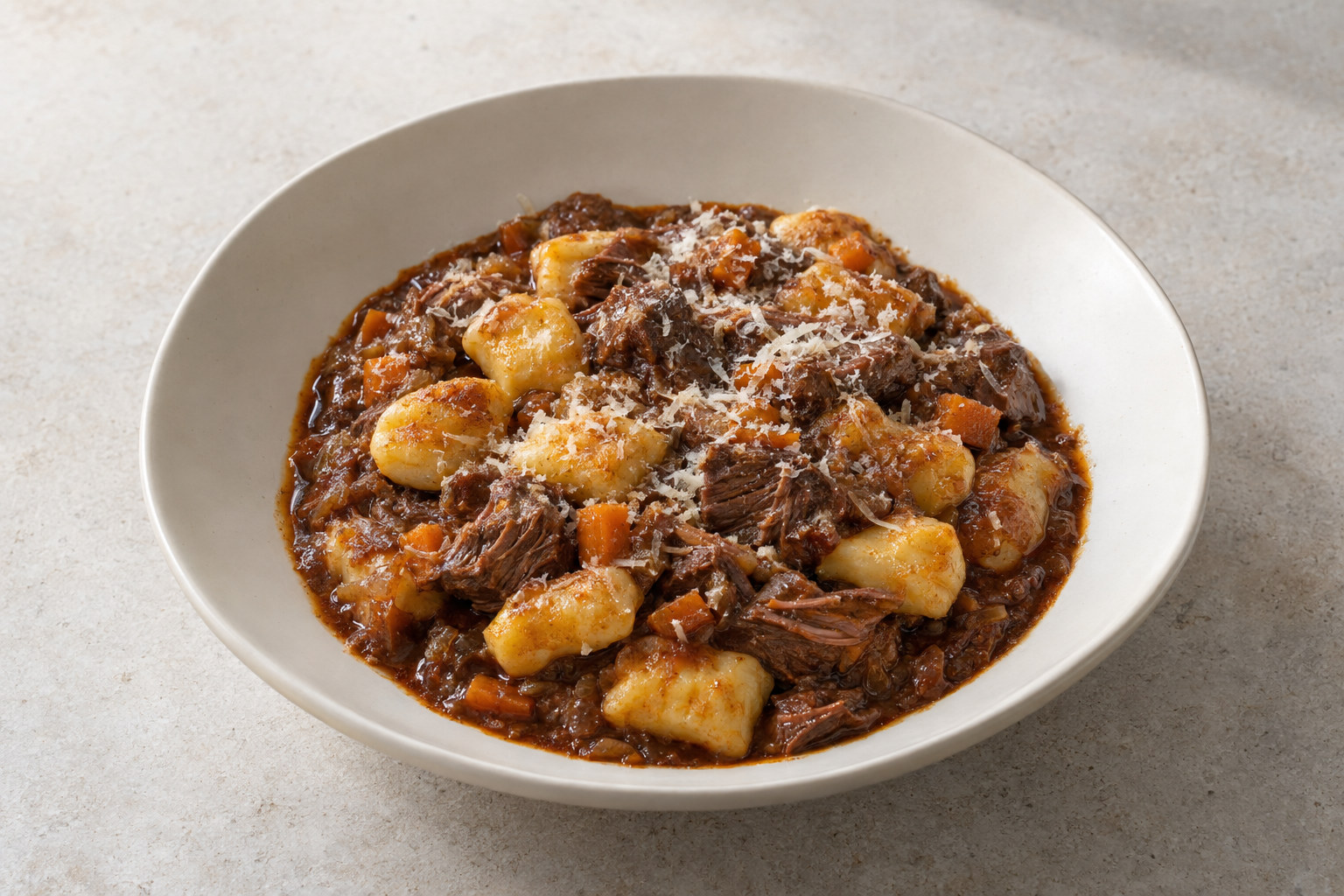
Carrot and Parmesan balance the spiced notes of juniper and red wine. The thick sauce coats tender meat and delicate potato gnocchi.
Step-by-step method
What you will need
- kitchen scales
- knife and two separate chopping boards
- measuring jug
- heavy 20 cm pot with a close-fitting lid, 3 l
- clean bowl for the meat
- kettle
- 2.5 l pot for the potatoes
- 3 l pot for the gnocchi
- potato ricer
- tray and work surface
- slotted spoon
Before we start
We start cooking the potatoes about 50–60 minutes before we expect the meat to become tender. We let them steam dry and cool. We bring the dough together only after finishing and thickening the ragù; then we shape the gnocchi and cook them immediately in batches.
We prepare the meat and base
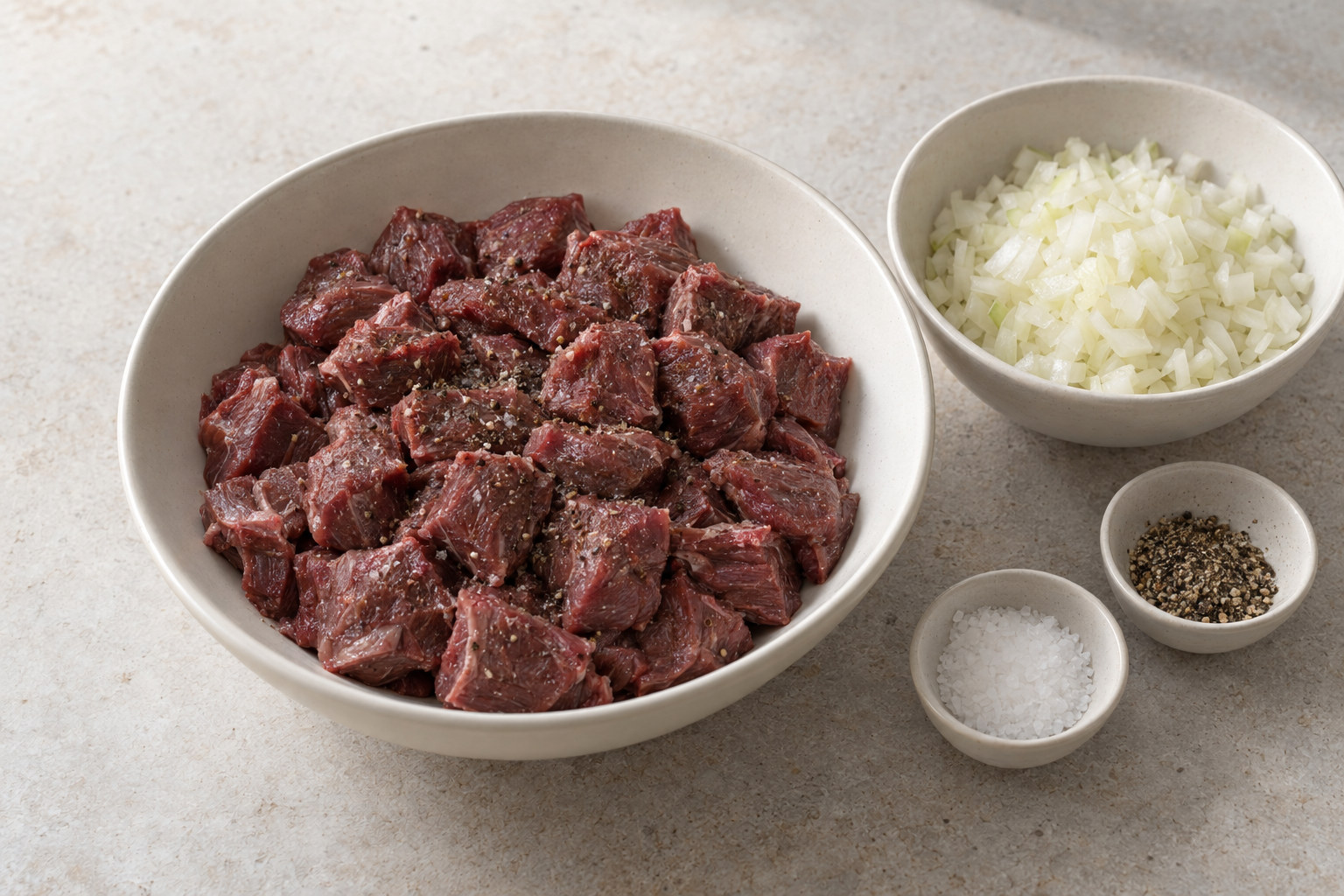
We cut the meat into 3 cm cubes and pat it dry. We toss it with two thirds of the salt for the meat and with pepper. We peel and finely chop the onion.
Similarly sized cubes of meat soften evenly.
We brown the meat and season the base
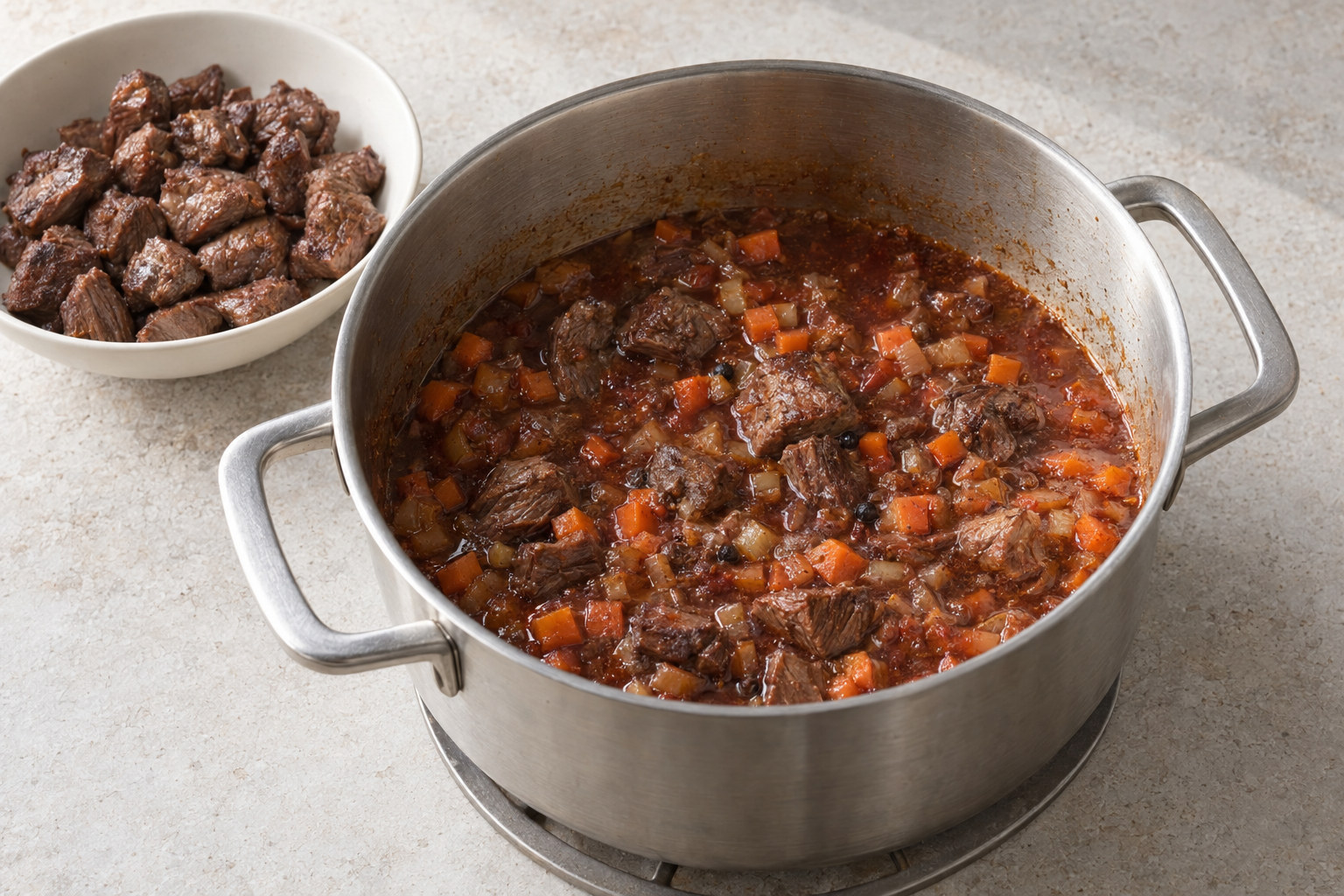
We reserve one teaspoon of oil for the onion and divide the rest between two 225 g batches of meat. We brown each batch over medium-high heat for 4–6 minutes and set it aside. In the remaining oil, we fry the onion, stirring, for 7–9 minutes until golden. We add the peeled carrot cut into 5 mm dice, lightly crushed juniper berries and tomato purée. We stir for 2 minutes, pour in the wine and simmer for 3 minutes. We immediately add all the stock, return the meat and its collected juices, and bring to a gentle simmer.
Brown fond forms on the base, without black burnt patches.
We braise the meat until tender
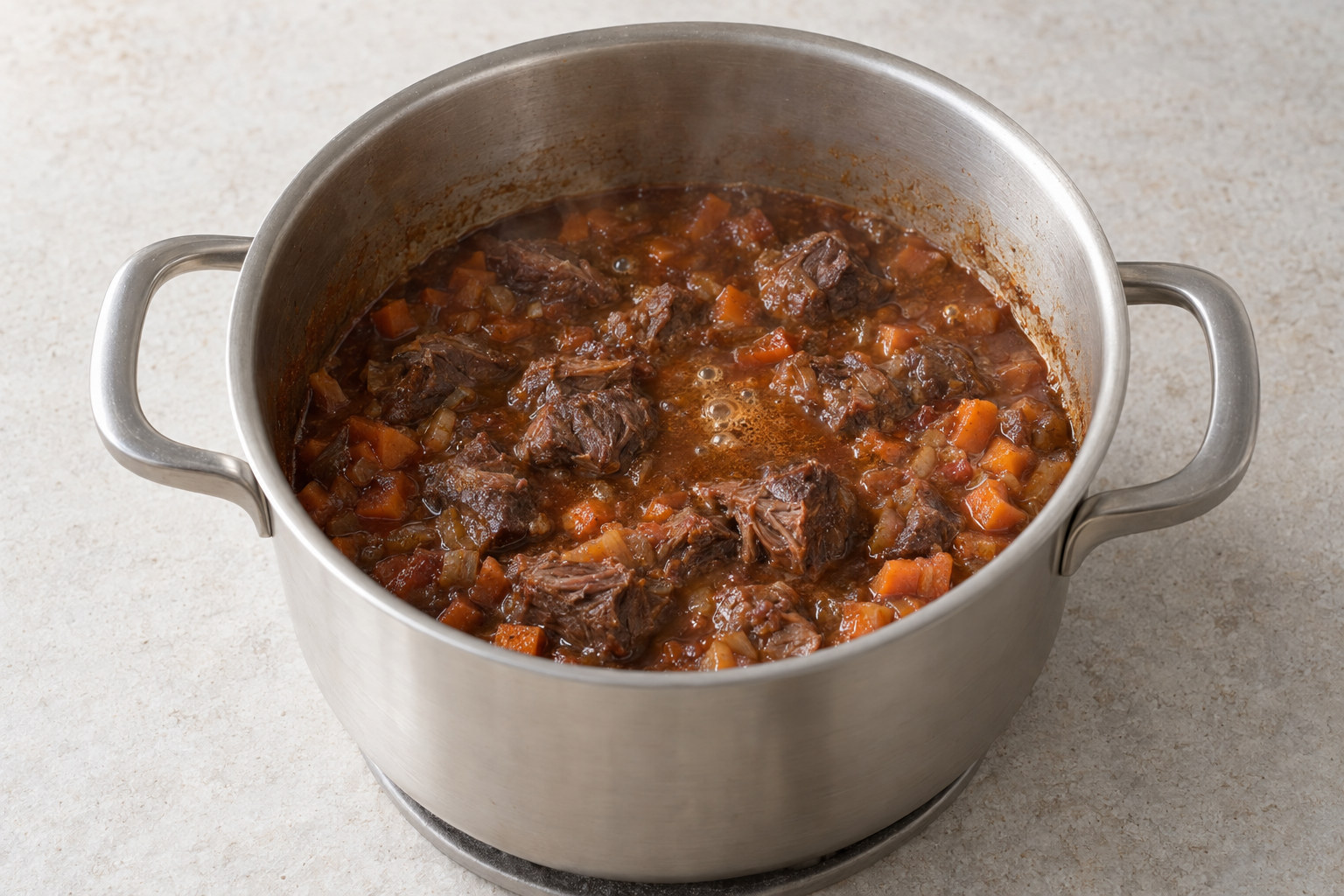
We cover the pot and braise the meat over low heat for about 150–210 minutes. The liquid should bubble only occasionally. Every half-hour, we stir from the base and add a little hot water if needed. The meat is ready when we can easily pull a cube into soft strands with a fork. If it is still tough, we keep braising and wait before preparing the gnocchi. If the liquid reduces quickly, we lower the heat and check that the lid fits closely.
We prepare the potatoes for the gnocchi
We peel the potatoes and cut them into 3 cm pieces. We boil them in plenty of water for 18–22 minutes until tender. We drain them, let them steam dry in the hot empty pot for 2 minutes, then pass them through a potato ricer. We spread them on a tray and let them cool for about 15 minutes until lukewarm and fluffy.
The potatoes have steamed dry and are lukewarm; we do not use wet potatoes or cold ones from the fridge.
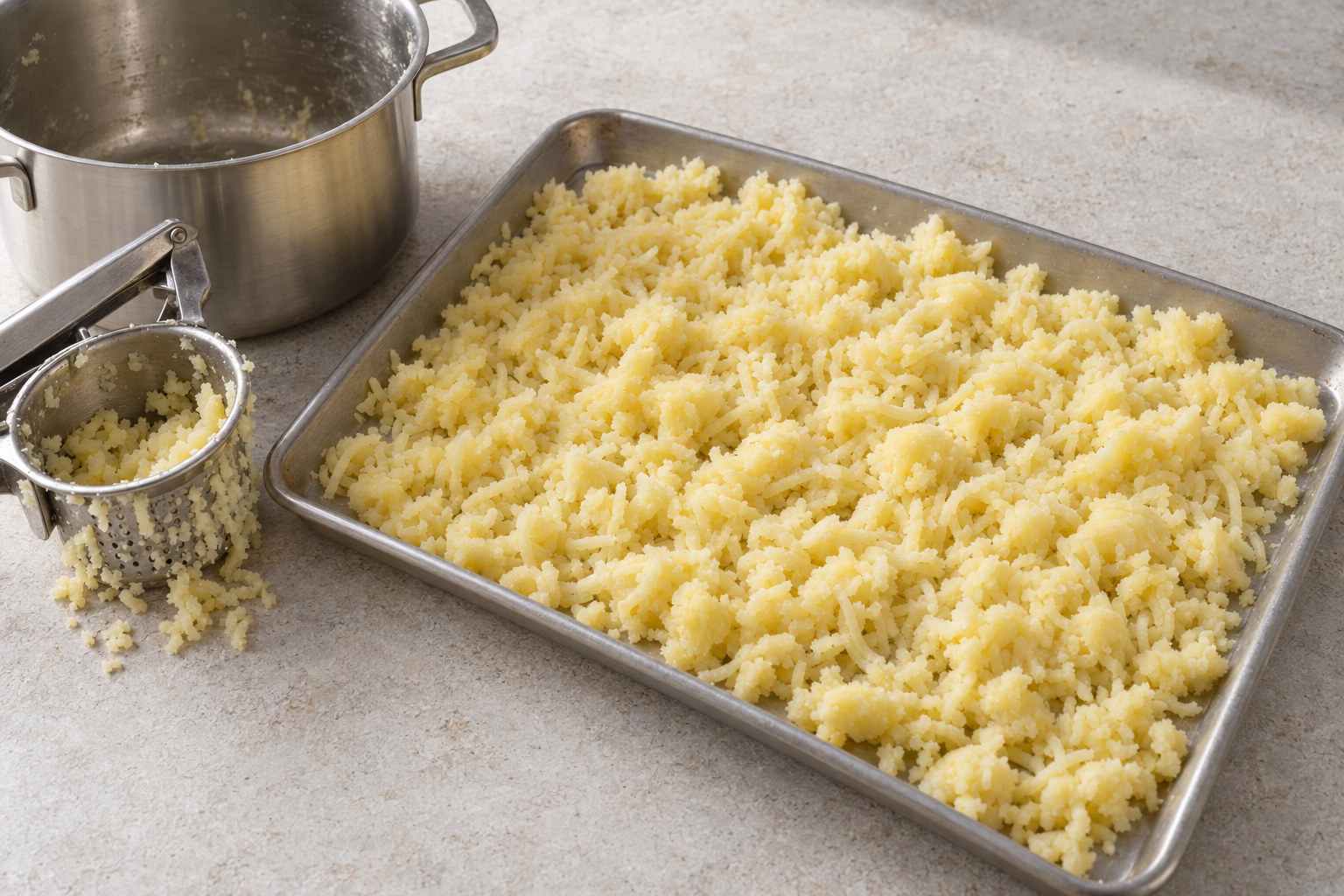
We shape and cook the gnocchi
First, we finish the ragù as described in the next step. We briefly work the yolk, 100 g flour and the dough salt into the lukewarm potatoes. We lightly dust the work surface with the flour set aside for this. From a small piece of dough, we shape a test gnocchi 1.5 cm thick and 2 cm long. We cook it in water salted with the amount set aside for the gnocchi; after it floats, we cook it for another 1–2 minutes. If it falls apart, we work 5 g of the reserve flour into the unshaped dough and test again. We use no more than the full 20 g reserve. We roll the remaining dough into ropes 1.5 cm thick and cut 2 cm gnocchi. We cook them in three equal batches, each for 1–2 minutes after they float. With a slotted spoon, we transfer them straight into the finished ragù and keep them warm over the lowest heat.
The test gnocchi is light but holds together when lifted; it is not floury inside.
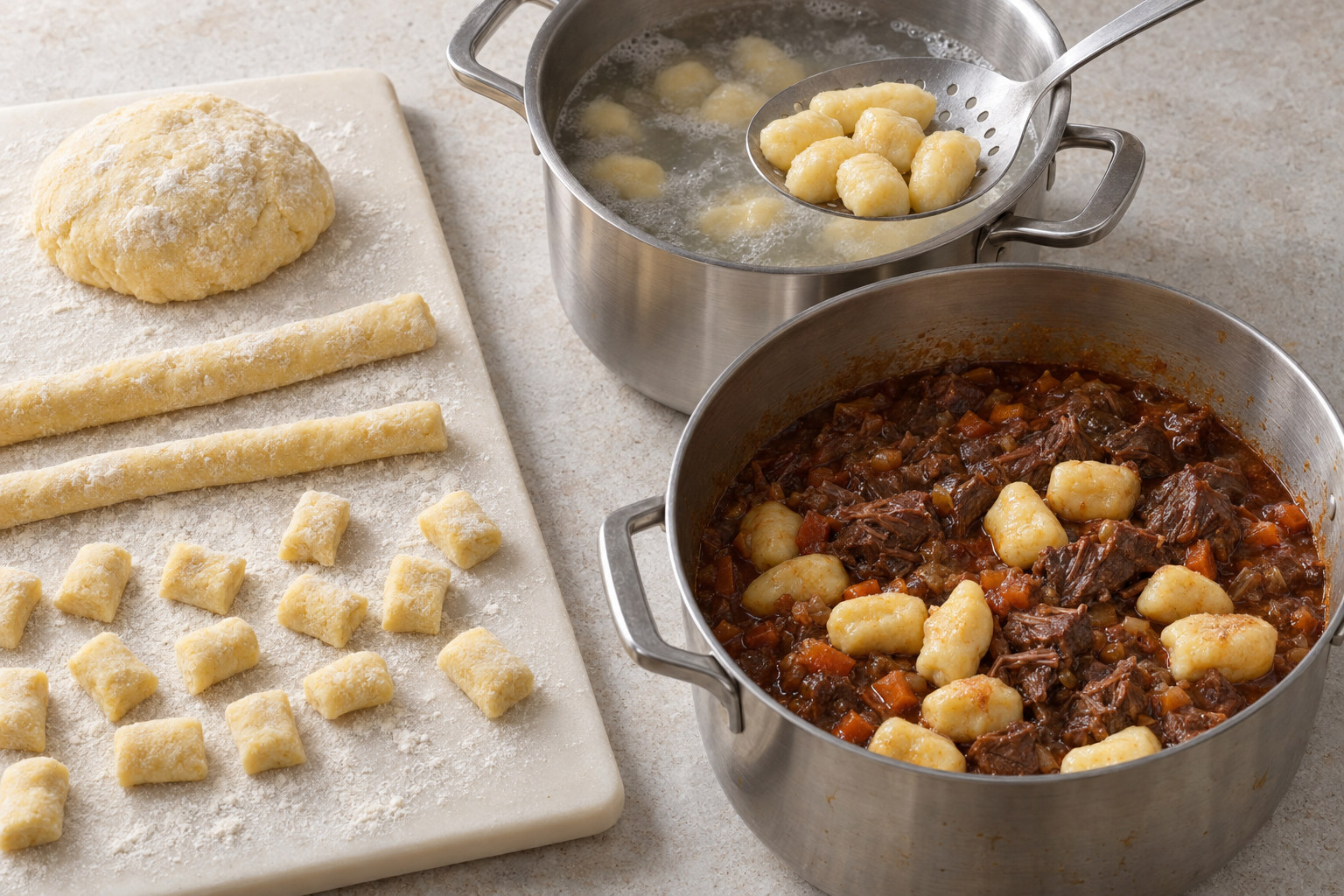
We finish the ragù
We finish the ragù before mixing the dough. We pull the tender meat into smaller pieces with forks and reduce the sauce for 5–10 minutes if needed. We stir in the remaining third of the salt set aside for the meat. Once all the cooked gnocchi are added, we fold everything together gently just once and take the pot off the heat. We do not reduce the sauce further.
The sauce coats both meat and gnocchi but remains juicy.
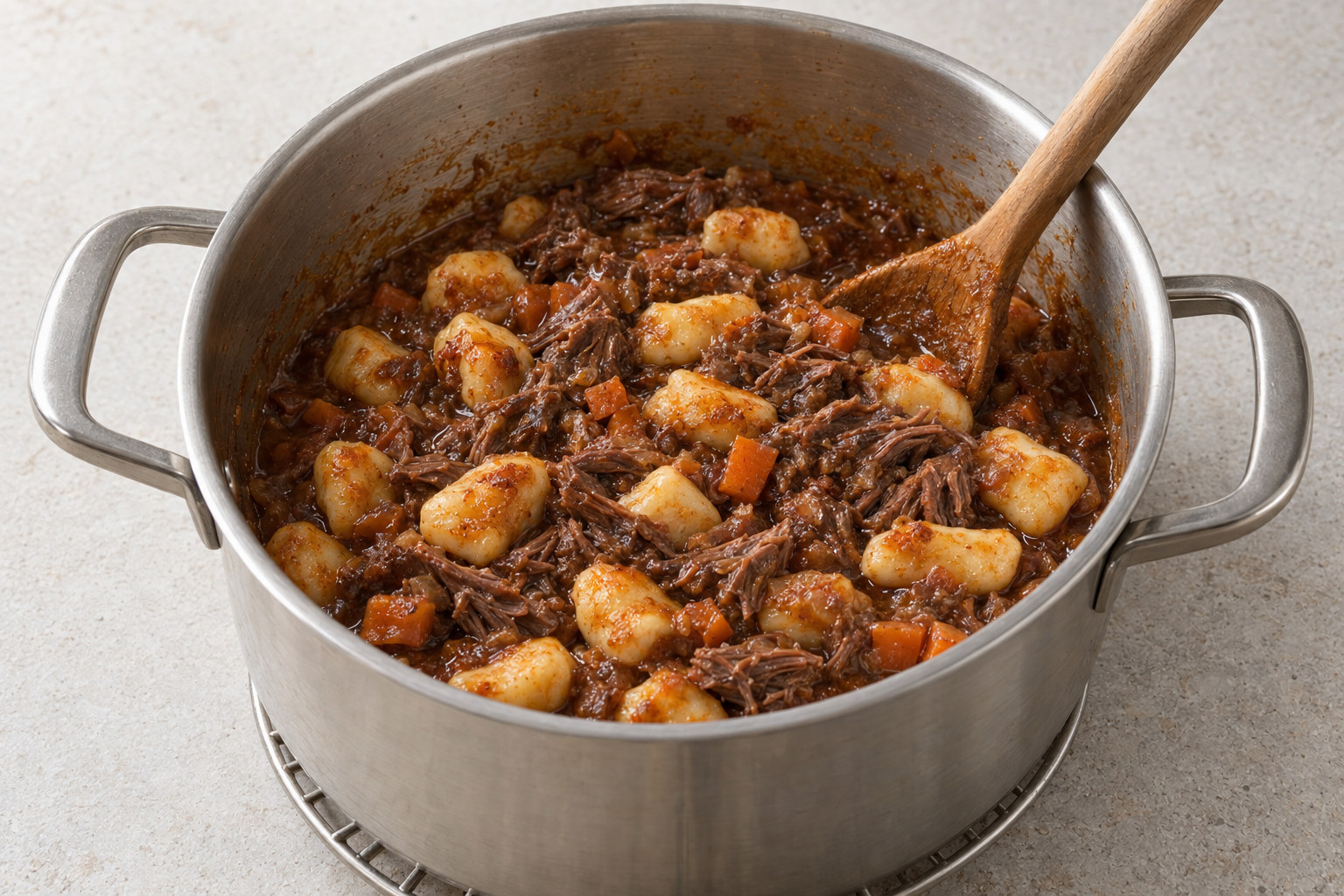
We plate and serve
We divide the gnocchi and ragù between 2 warmed deep plates and scatter finely grated Parmesan over them.
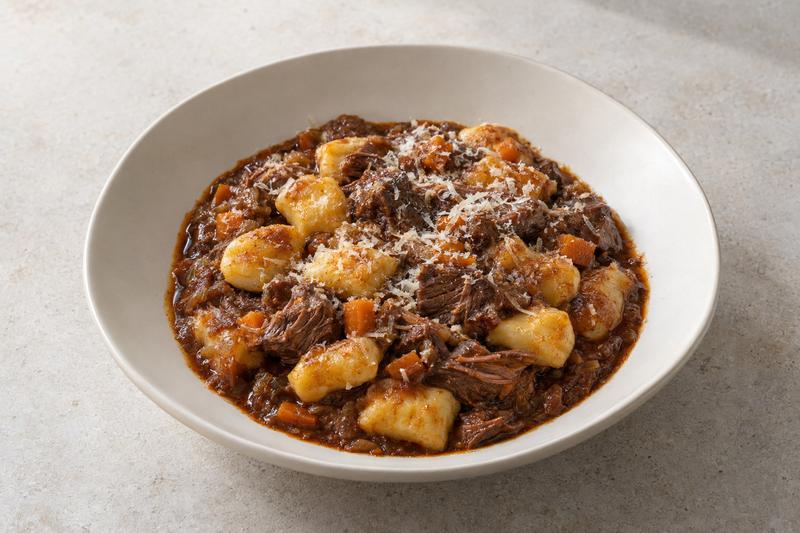
Tips from our kitchen
- We let the potatoes steam dry and knead the dough only briefly. We add extra flour only if the test gnocchi needs it.
- We finish the ragù before cooking the gnocchi; then we fold the cooked gnocchi into it gently.
What to watch out for
- We dry the meat before browning and use the stated batches so every cube touches the base of the pot.
How we serve it
- We divide the gnocchi and ragù between warmed deep plates and scatter finely grated Parmesan over them.
During preparation
- We keep raw meat and the utensils used for it separate from ready-to-eat food.
Our inspiration
In Roman trattorias, Thursday belongs to gnocchi. A local saying goes: “gnocchi on Thursday, fish on Friday, tripe on Saturday”. In the lanes of Trastevere and Testaccio, gnocchi have a regular place in the week. We need not wait until Thursday. We make soft potato gnocchi and pair them with our roe deer ragù, wine and juniper — perhaps for an unhurried Sunday lunch.
Similar recipes
Recipe for 4 people
Step-by-step method
Before we start
We start cooking the potatoes about 50–60 minutes before we expect the meat to become tender. We let them steam dry and cool. We bring the dough together only after finishing and thickening the ragù; then we shape the gnocchi and cook them immediately in batches.
We prepare the meat and base
We cut the meat into 3 cm cubes and pat it dry. We toss it with two thirds of the salt for the meat and with pepper. We peel and finely chop the onion.
Similarly sized cubes of meat soften evenly.
We brown the meat and season the base
We reserve half a tablespoon of oil for the onion and divide the rest between four 225 g batches of meat. We brown each batch over medium-high heat for 4–6 minutes and set it aside. In the remaining oil, we fry the onion, stirring, for 7–9 minutes until golden. We add the peeled carrot cut into 5 mm dice, lightly crushed juniper berries and tomato purée. We stir for 2 minutes, pour in the wine and simmer for 3 minutes. We immediately add all the stock, return the meat and its collected juices, and bring to a gentle simmer.
Brown fond forms on the base, without black burnt patches.
We braise the meat until tender
We cover the pot and braise the meat over low heat for about 150–210 minutes. The liquid should bubble only occasionally. Every half-hour, we stir from the base and add a little hot water if needed. The meat is ready when we can easily pull a cube into soft strands with a fork. If it is still tough, we keep braising and wait before preparing the gnocchi. If the liquid reduces quickly, we lower the heat and check that the lid fits closely.
We prepare the potatoes for the gnocchi
We peel the potatoes and cut them into 3 cm pieces. We boil them in plenty of water for 18–22 minutes until tender. We drain them, let them steam dry in the hot empty pot for 2 minutes, then pass them through a potato ricer. We spread them on a tray and let them cool for about 15 minutes until lukewarm and fluffy.
The potatoes have steamed dry and are lukewarm; we do not use wet potatoes or cold ones from the fridge.
We shape and cook the gnocchi
First, we finish the ragù as described in the next step. We briefly work the yolks, 190 g flour and the dough salt into the lukewarm potatoes. We lightly dust the work surface with the flour set aside for this. From a small piece of dough, we shape a test gnocchi 1.5 cm thick and 2 cm long. We cook it in water salted with the amount set aside for the gnocchi; after it floats, we cook it for another 1–2 minutes. If it falls apart, we work 5 g of the reserve flour into the unshaped dough and test again. We use no more than the full 40 g reserve. We roll the remaining dough into ropes 1.5 cm thick and cut 2 cm gnocchi. We cook them in four equal batches, each for 1–2 minutes after they float. With a slotted spoon, we transfer them straight into the finished ragù and keep them warm over the lowest heat.
The test gnocchi is light but holds together when lifted; it is not floury inside.
We finish the ragù
We finish the ragù before mixing the dough. We pull the tender meat into smaller pieces with forks and reduce the sauce for 5–10 minutes if needed. We stir in the remaining third of the salt set aside for the meat. Once all the cooked gnocchi are added, we fold everything together gently just once and take the pot off the heat. We do not reduce the sauce further.
The sauce coats both meat and gnocchi but remains juicy.
We plate and serve
We divide the gnocchi and ragù between 4 warmed deep plates and scatter finely grated Parmesan over them.