
Tuscany, Italy · Tuscany, Italy
Wild boar dolceforte with raisins, chocolate and creamy polenta
Tender cubes of wild boar leg come with a dark sweet-and-sour sauce of raisins, orange peel and a little dark chocolate. Toasted pine nuts add crunch, with soft, creamy milk polenta alongside. We save dolceforte for a special lunch, when the slowly braised meat is worth waiting for.
We first braise the meat slowly, then finish the sweet-and-sour sauce base. We cook the polenta just before serving and stir the chocolate into the sauce at the very end.
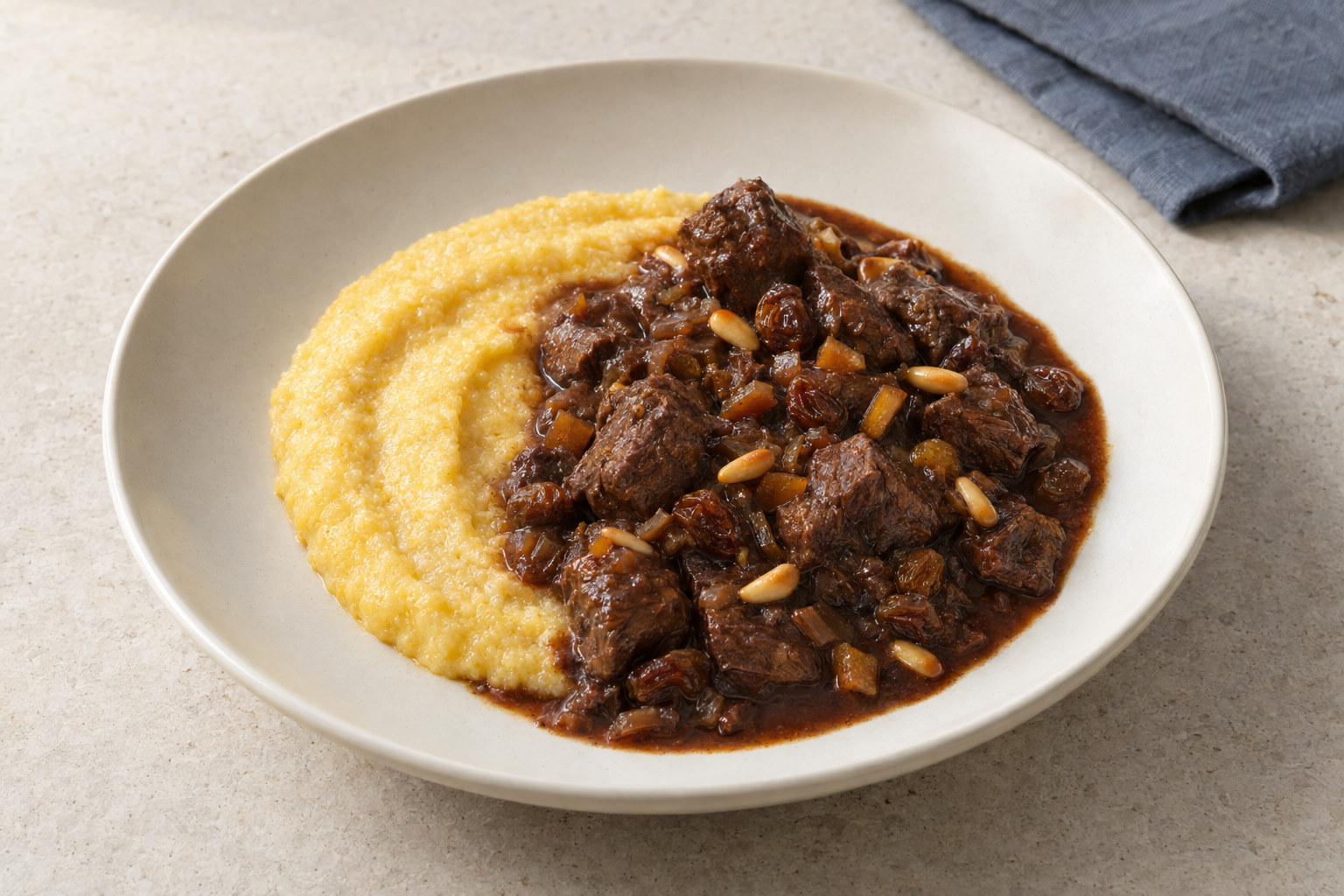
Wine vinegar and dark chocolate balance the sweet raisins and candied peel. Pine nuts add crunch, while buttery polenta softens the bold flavour of the game.
Step-by-step method
What you will need
- kitchen scales
- thermometer with a thin probe
- knife and two separate chopping boards
- measuring jug
- heavy 20 cm pot with a lid, 3 l
- 1.5 l saucepan for the polenta
- small dry frying pan for the pine nuts
- whisk
- electric kettle
Before we start
We reduce the cooking juices to thicken them before adding the chocolate. We cook the polenta only once the meat is tender and the sauce just needs finishing. We toast the pine nuts while the meat braises and set them aside for the end.
Brown the meat and make the base
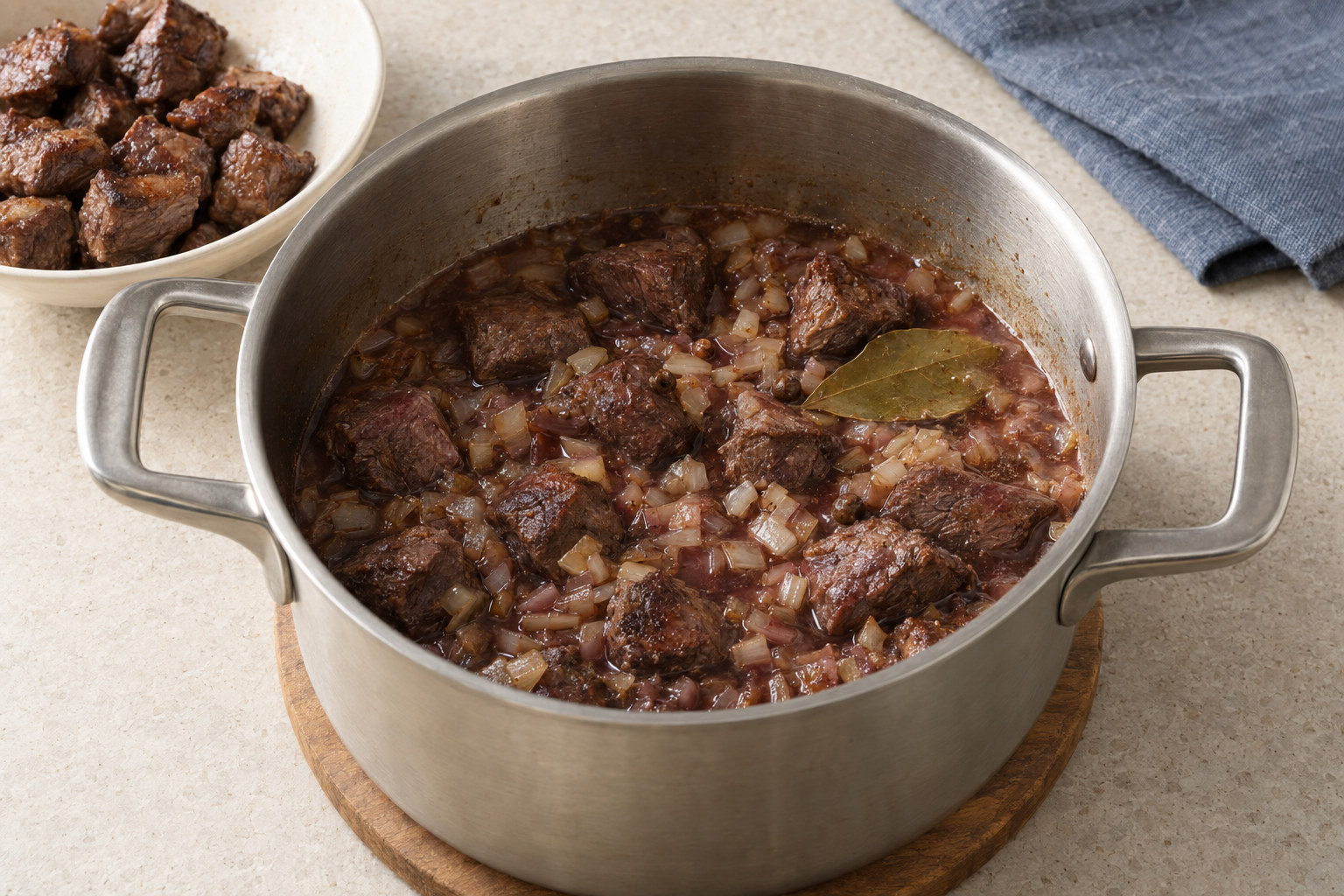
We peel and finely chop the onion. We cut the leg into 3 cm cubes, pat dry and season with the salt for the meat and the pepper. We divide two teaspoons of oil between two roughly equal batches of meat for browning. We fry each batch for 4–6 minutes over a medium-high heat, then lift it out. We fry the chopped onion in the remaining oil for 7–9 minutes, stirring. We pour in all the wine and cook for 3 minutes. We add the stock, allspice and bay leaf. We return the meat and any released juices.
Slowly braise the leg
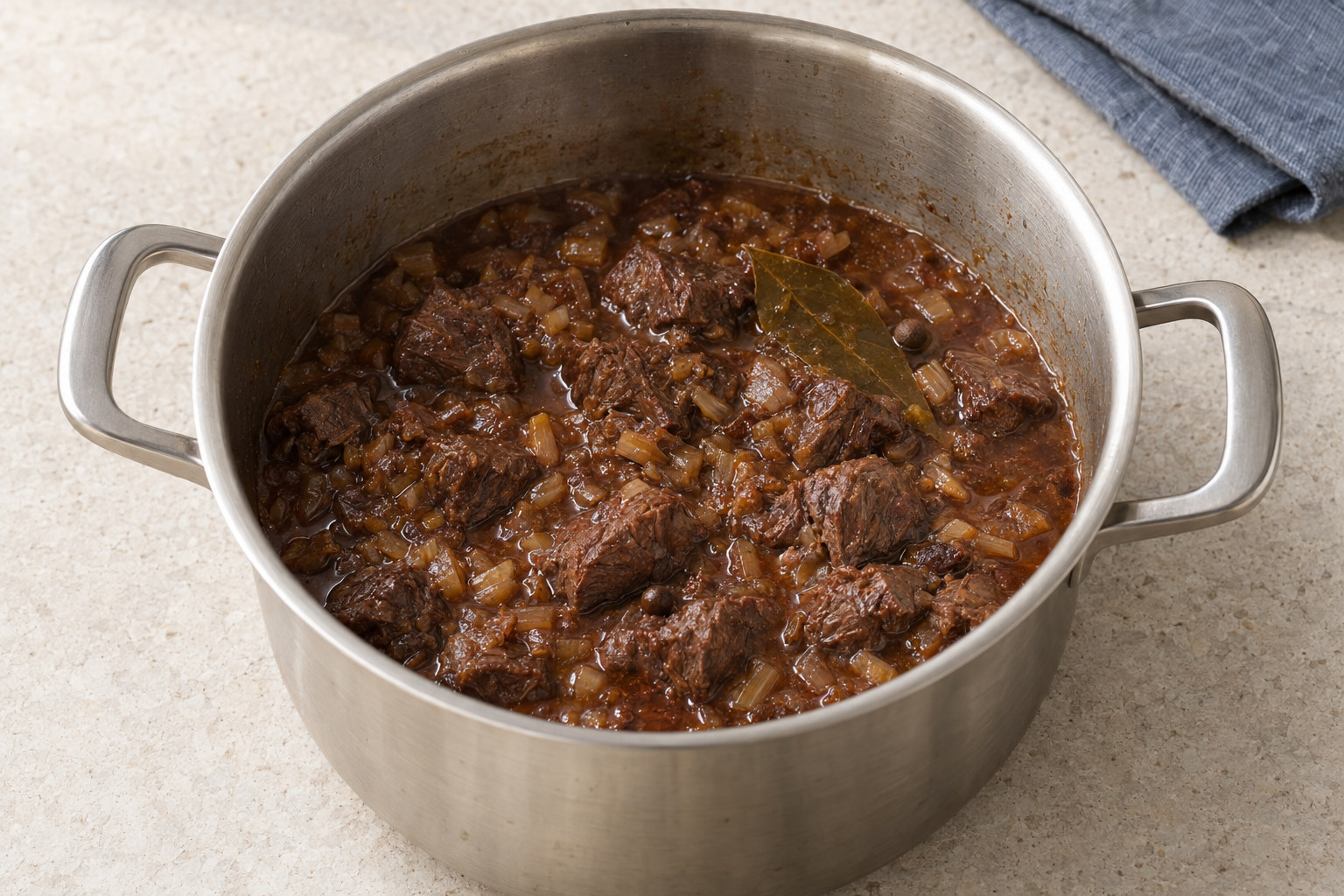
We cover with a tight-fitting lid and braise over the lowest heat for about 150–210 minutes, so the liquid only bubbles occasionally. We stir every 30 minutes and add a little hot water as needed. The tender meat comes apart easily with a fork. We check that the thickest piece has reached at least 74 °C. If the meat is still tough, we keep braising and delay making the polenta.
Flavour the sweet-and-sour sauce
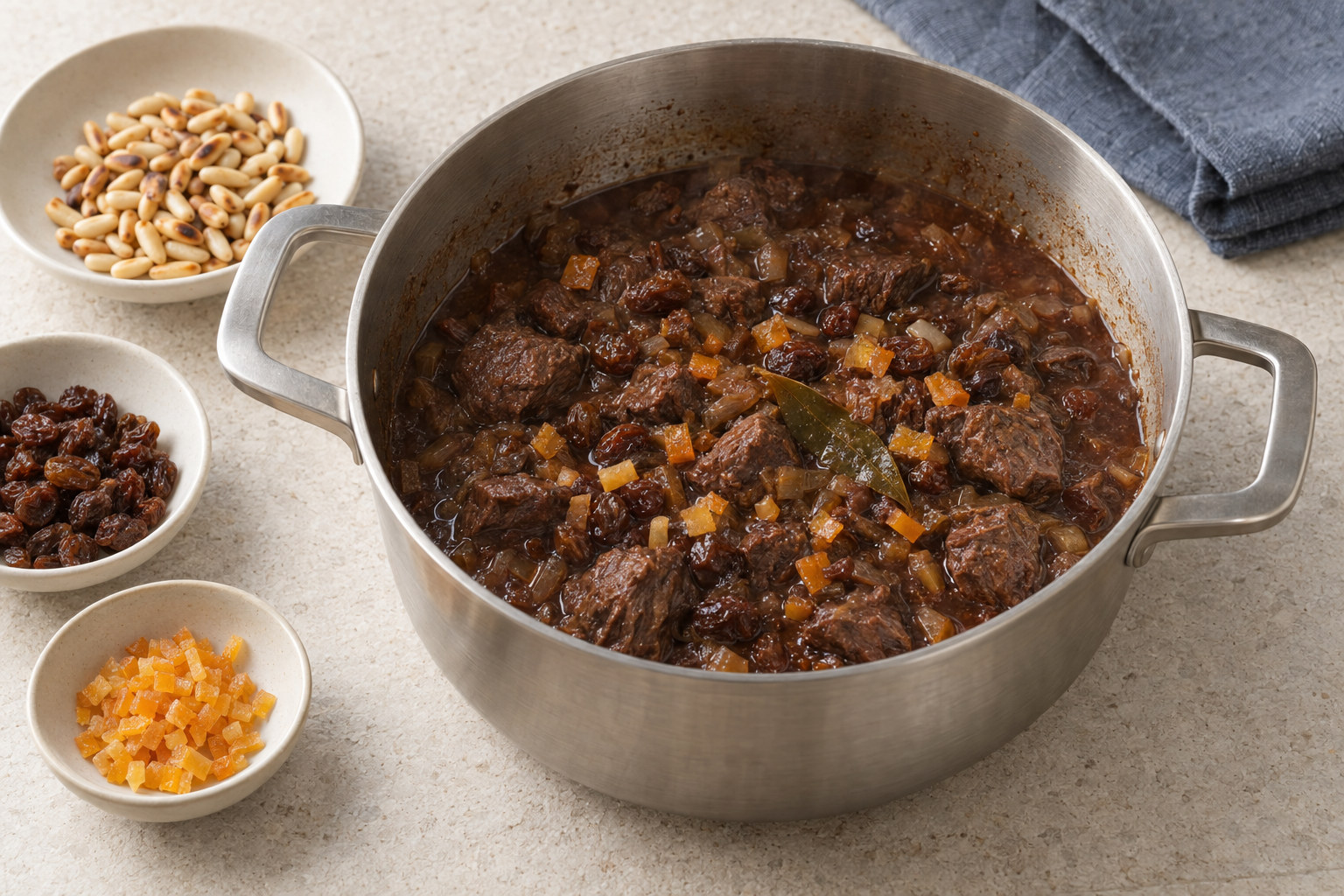
While the meat braises, we dry-toast the pine nuts over a medium heat for about 2 minutes, turning them constantly, then immediately tip them onto a plate. We add all the wine vinegar, raisins and finely chopped candied peel to the tender meat. We simmer uncovered for 8–10 minutes. If needed, we let the sauce thicken further before the chocolate goes in. We remove the bay leaf.
Cook the creamy polenta
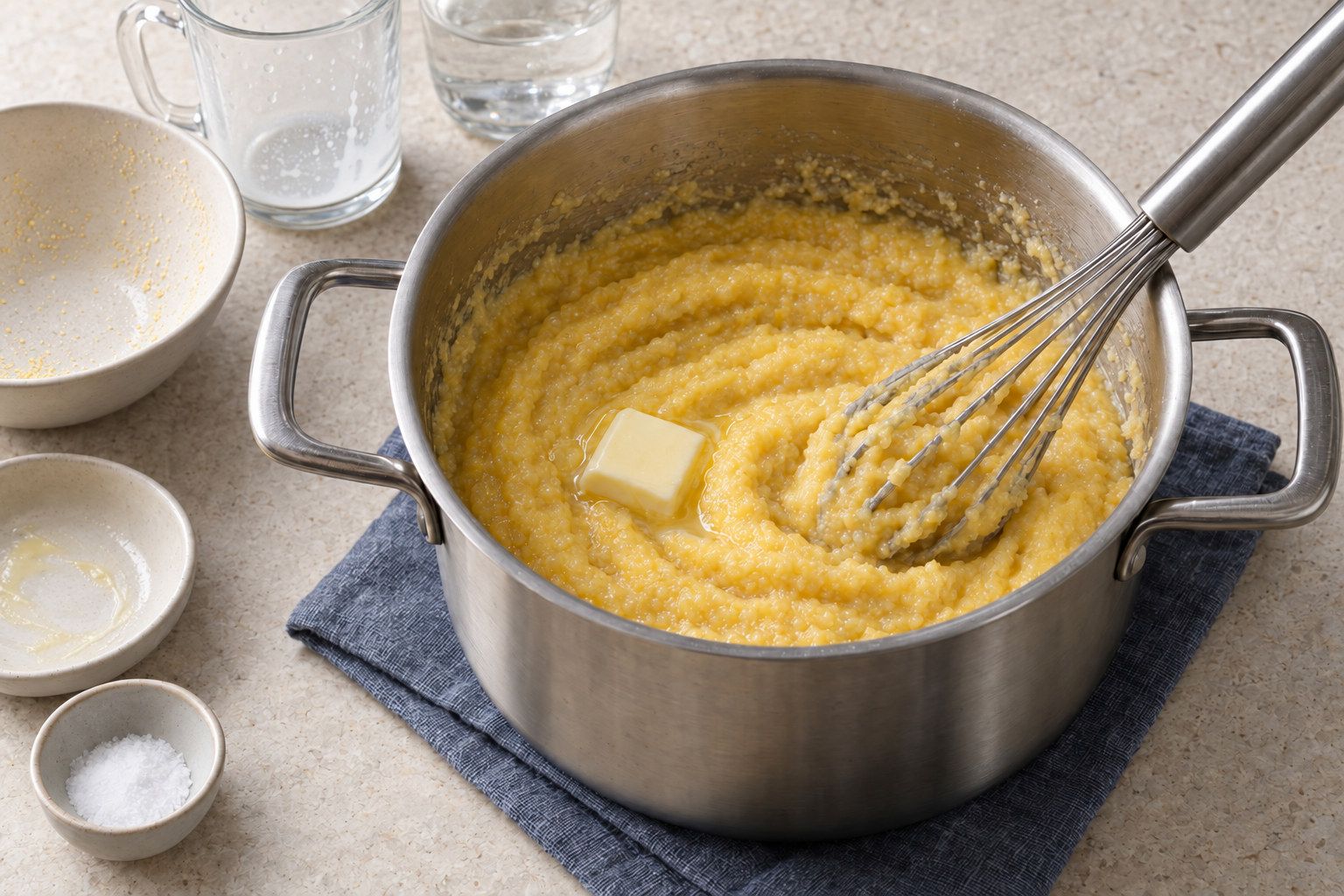
We bring 340 ml water, the milk and the salt for the polenta to a gentle simmer. We use instant polenta with a cooking time of 3–5 minutes stated on the packet. We pour it into the saucepan, whisking continuously. We stir over the lowest heat for 3–5 minutes until tender, then stir in all the butter. If the polenta is too thick, we add hot water a tablespoon at a time, up to a maximum of 60 ml.
We cook the polenta just before serving.
Stir in the chocolate and pine nuts
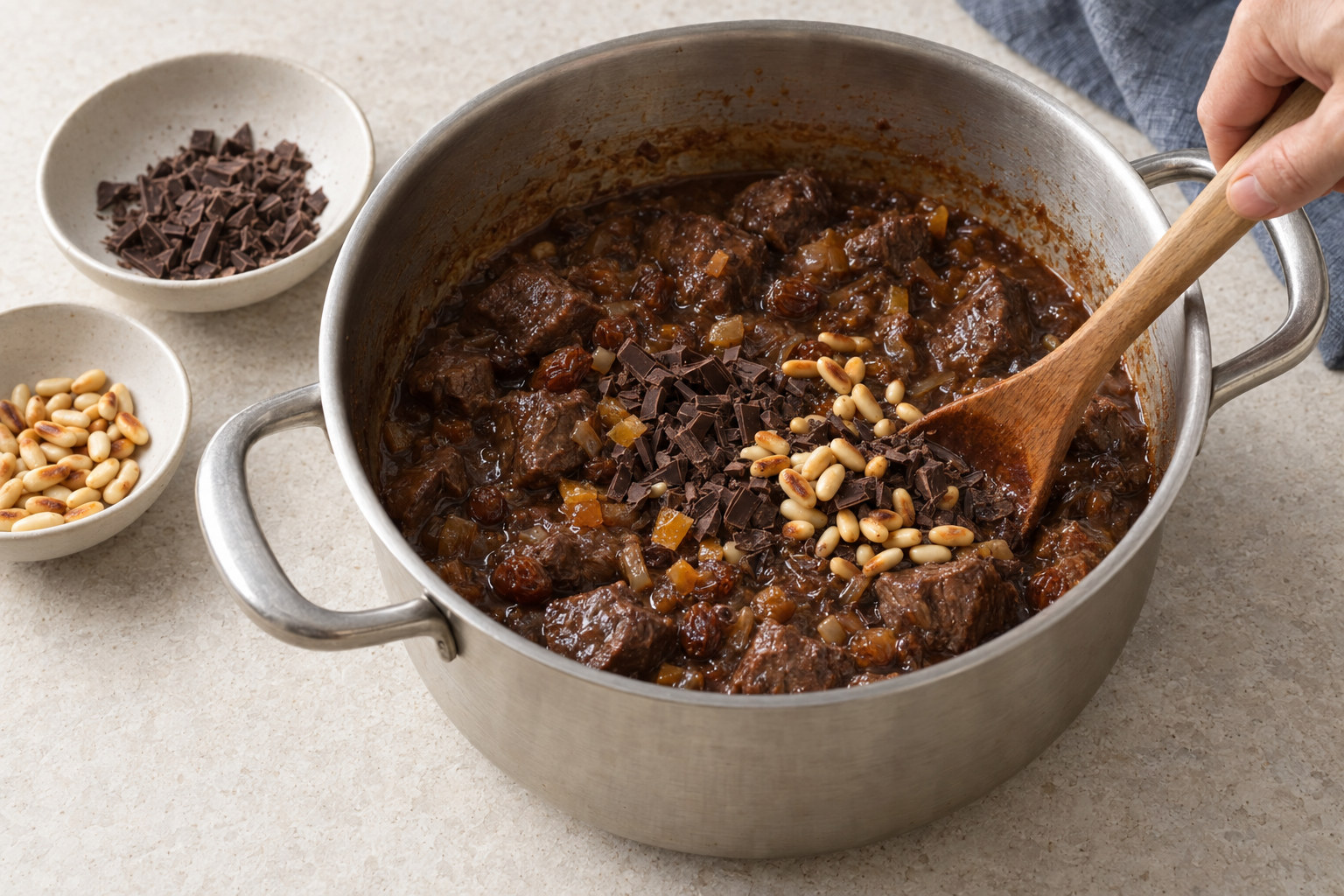
We take the pot of meat off the heat. We stir in all the finely chopped chocolate and toasted pine nuts, stirring until the chocolate melts and the sauce is smooth. We do not boil it vigorously or reduce it any further.
Serve with polenta
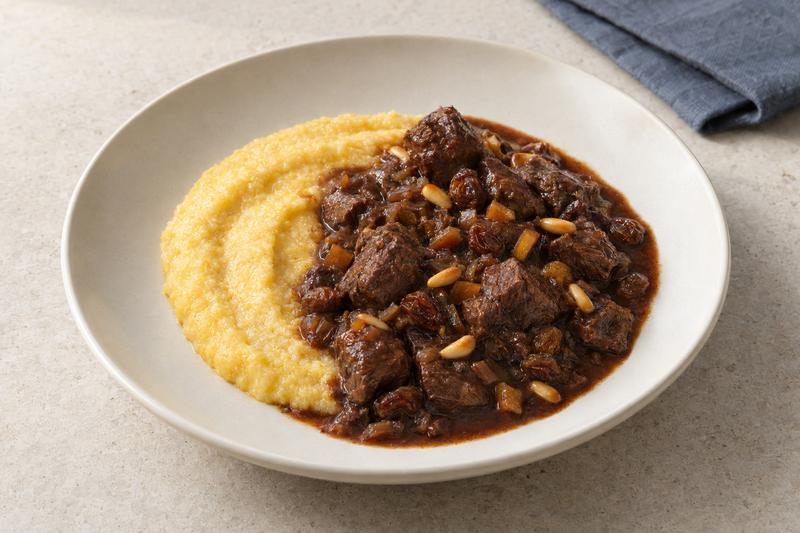
We divide all the polenta and the meat with its sauce, raisins and pine nuts between 2 warmed deep plates. We serve straight away.
Tips from our kitchen
- We use the chocolate just to flavour the sauce, adding it after taking the pot off the heat so it does not boil vigorously.
- We watch the pine nuts closely as they toast; they burn quickly and turn bitter.
What to watch out for
- We brown the meat in the specified batches so it colours rather than stewing in its own juices.
How we serve it
- We serve creamy polenta with wild boar cubes, sweet-and-sour sauce, raisins and pine nuts in warmed deep plates.
Ingredient swaps
pine nuts
We replace the pine nuts with the same weight of shelled sunflower seeds. The toasted seeds will still be crunchy but will have a less resinous flavour.
During preparation
- We measure the temperature with a clean, thin probe. We keep raw meat and any utensils that have touched it separate from the cooked food, and wash our hands after handling it.
Our inspiration
Chocolate in a game sauce is not necessarily a modern idea. Tuscan dolceforte has its roots in Renaissance cooking. Its sweet-and-sour sauce brings chocolate, raisins, candied fruit and pine nuts together with vinegar. In our version, we add soft polenta alongside the sauce and enjoy mouthfuls that move between sweetness, acidity and a gentle bitterness.
Similar recipes
Recipe for 4 people
Step-by-step method
Before we start
We reduce the cooking juices to thicken them before adding the chocolate. We cook the polenta only once the meat is tender and the sauce just needs finishing. We toast the pine nuts while the meat braises and set them aside for the end.
Brown the meat and make the base
We peel and finely chop the onions. We cut the leg into 3 cm cubes, pat dry and season with the salt for the meat and the pepper. We divide one and a half tablespoons of oil between four roughly equal batches of meat for browning. We fry each batch for 4–6 minutes over a medium-high heat, then lift it out. We fry the chopped onions in the remaining oil for 7–9 minutes, stirring. We pour in all the wine and cook for 3 minutes. We add the stock, allspice and bay leaves. We return the meat and any released juices.
Slowly braise the leg
We cover with a tight-fitting lid and braise over the lowest heat for about 150–210 minutes, so the liquid only bubbles occasionally. We stir every 30 minutes and add a little hot water as needed. The tender meat comes apart easily with a fork. We check that the thickest piece has reached at least 74 °C. If the meat is still tough, we keep braising and delay making the polenta.
Flavour the sweet-and-sour sauce
While the meat braises, we dry-toast the pine nuts over a medium heat for about 2 minutes, turning them constantly, then immediately tip them onto a plate. We add all the wine vinegar, raisins and finely chopped candied peel to the tender meat. We simmer uncovered for 8–10 minutes. If needed, we let the sauce thicken further before the chocolate goes in. We remove the bay leaves.
Cook the creamy polenta
We bring 660 ml water, the milk and the salt for the polenta to a gentle simmer. We use instant polenta with a cooking time of 3–5 minutes stated on the packet. We pour it into the saucepan, whisking continuously. We stir over the lowest heat for 3–5 minutes until tender, then stir in all the butter. If the polenta is too thick, we add hot water a tablespoon at a time, up to a maximum of 100 ml.
We cook the polenta just before serving.
Stir in the chocolate and pine nuts
We take the pot of meat off the heat. We stir in all the finely chopped chocolate and toasted pine nuts, stirring until the chocolate melts and the sauce is smooth. We do not boil it vigorously or reduce it any further.
Serve with polenta
We divide all the polenta and the meat with its sauce, raisins and pine nuts between 4 warmed deep plates. We serve straight away.