
Japanese-inspired · Japanese-inspired
Wild boar shogayaki with ginger, cabbage and rice
We coat thin slices of wild boar haunch in a glossy sauce of ginger, soy sauce and sweet mirin. Alongside the richly flavoured meat, we serve white rice and crunchy cabbage dressed with rice vinegar. This Japanese-inspired supper comes together in a frying pan; the key is to slice the meat thinly and fry it in small batches.
While the rice cooks and rests, we prepare the cabbage and sauce and fry the meat in batches. Finally, we finish all the slices together in the sauce.
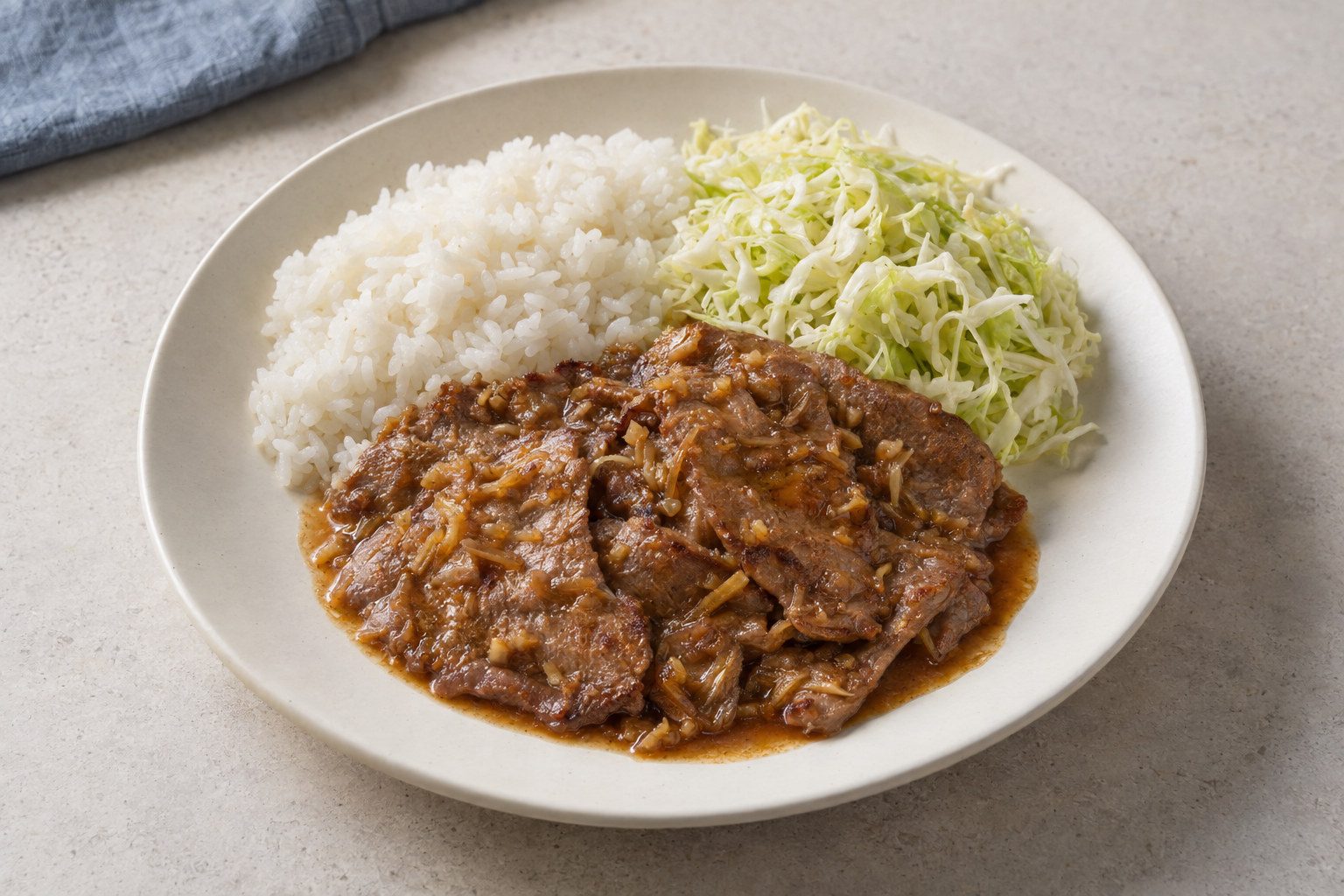
Ginger gives the meat a fresh, peppery bite, while mirin and soy sauce make a sweet-salty glaze. Mild rice and tangy white cabbage complement it without extra seasoning.
Step-by-step method
What you will need
- kitchen scales
- probe thermometer with a thin probe
- knife and two separate chopping boards
- measuring jug
- 28 cm deep frying pan
- 1.5 l saucepan with a lid for the rice
- meat mallet and cling film
- fine grater
- bowl for the cabbage
- clean bowl for the browned meat
Before we start
We start the rice first. Meanwhile, we prepare the cabbage and ginger sauce and fry the meat in batches. We leave the rice covered to rest; it can wait briefly while we finish all the slices together in the sauce.
Cook the rice
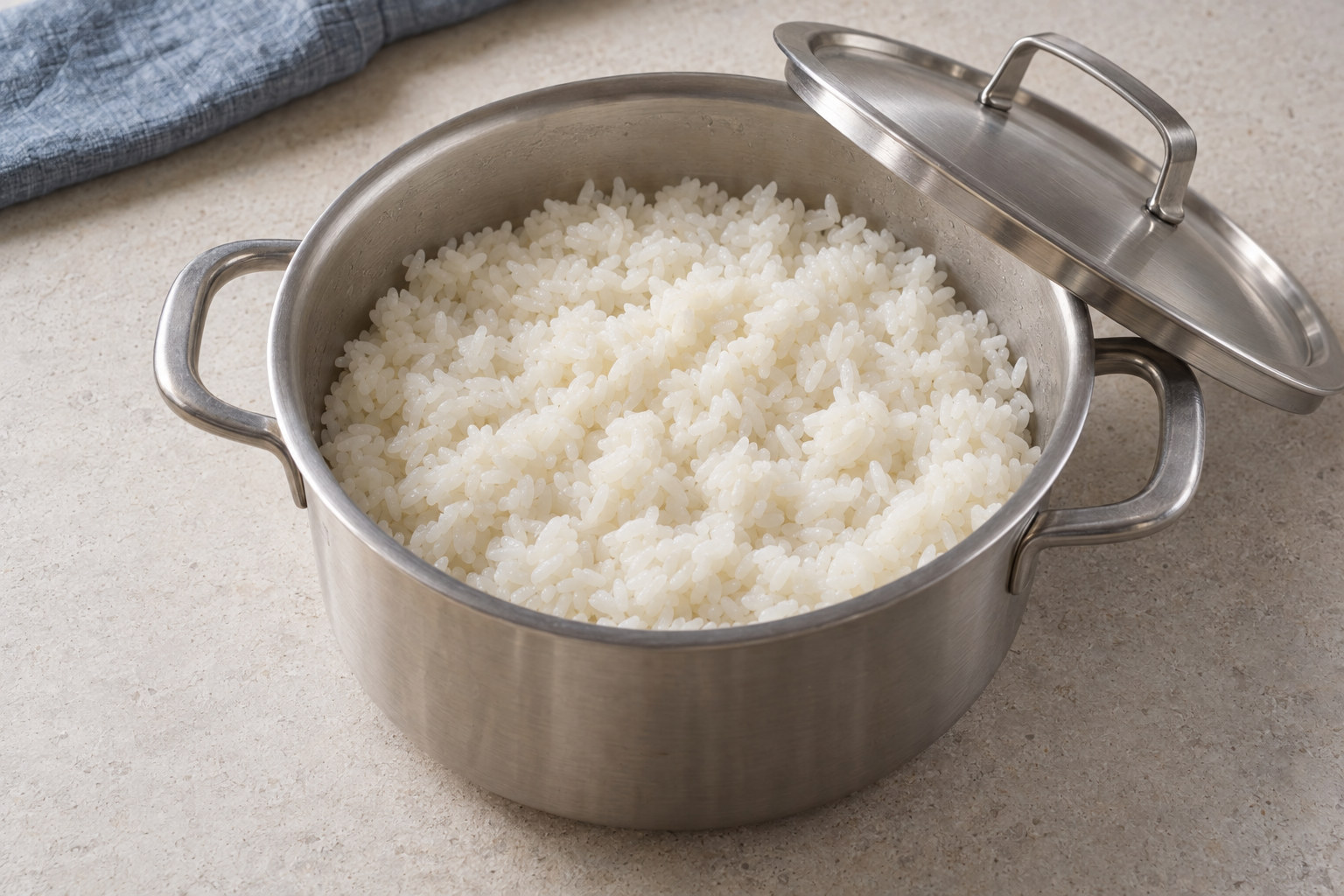
We put the rice in a saucepan with 230 ml water and add the salt. We bring to a gentle simmer, cover with a tight-fitting lid and cook over the lowest heat for 12–15 minutes without lifting the lid. We take it off the heat and leave it to rest for 10 minutes. We fluff it with a fork and cover again.
Slice the meat and make the ginger sauce
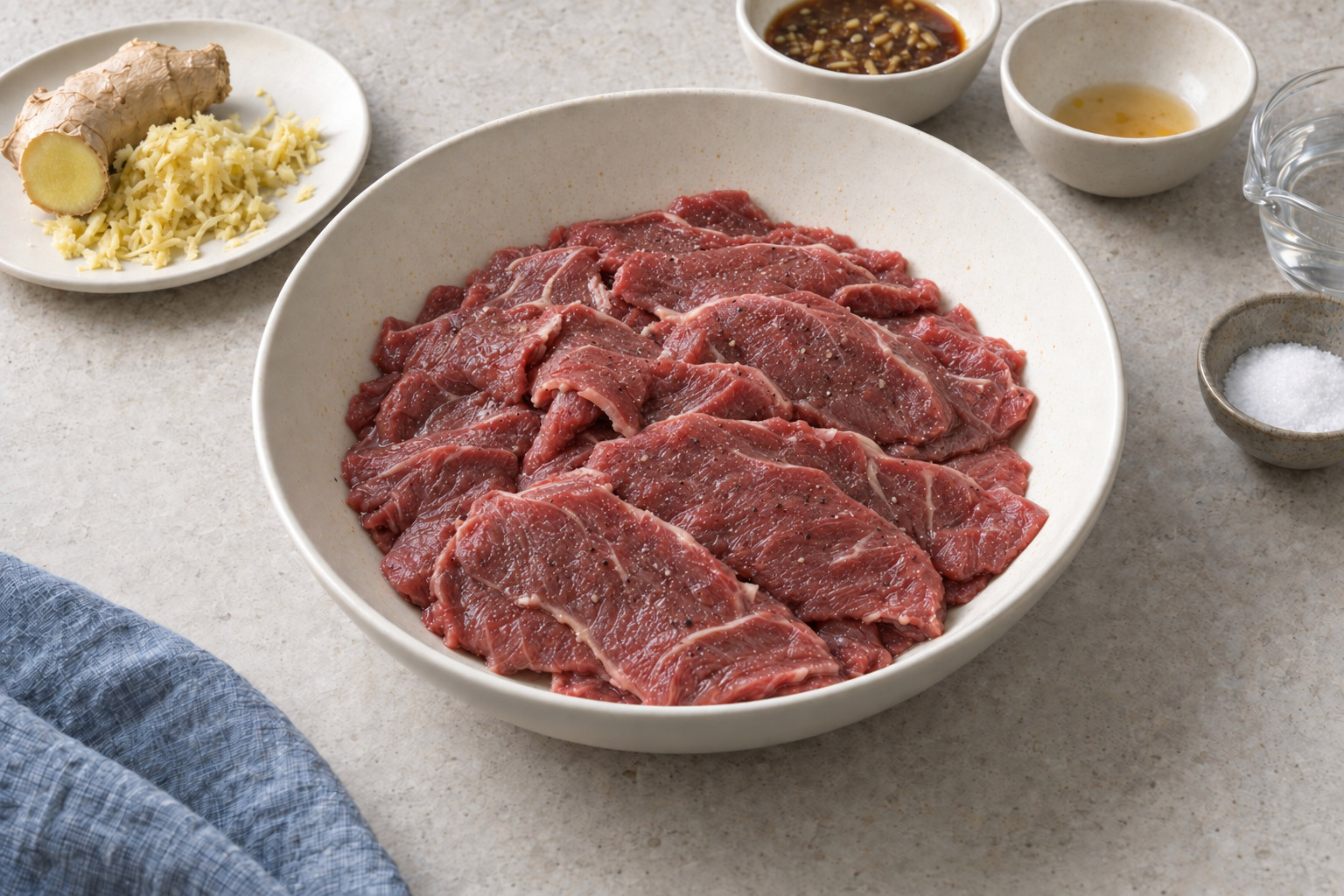
We cut the haunch across the grain into slices. Between sheets of cling film, we lightly pound them to an even thickness of 3–4 mm. We remove the film, pat the meat dry, season with the salt set aside for the meat and add pepper. We peel and finely grate the ginger, then mix all of it with the soy sauce, mirin, 35 ml water for the sauce and sugar.
Make the cabbage salad
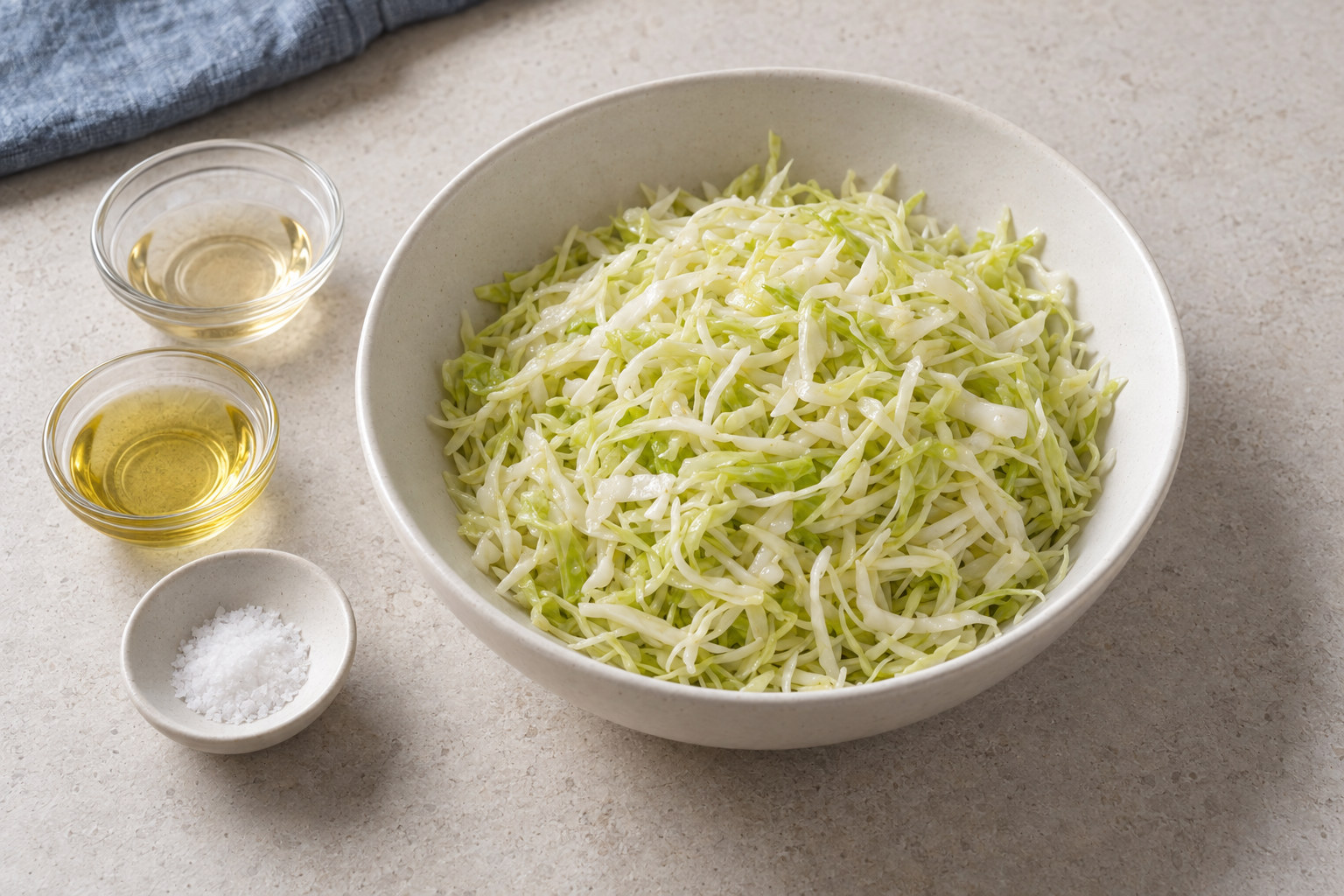
We remove the tough core from the cabbage and shred it very finely. We mix it with all the rice vinegar and the oil and salt set aside for the cabbage. We gently massage it for a minute, then leave it in the bowl while we fry the meat.
Fry the thin slices in batches
We divide the rapeseed oil for the meat between four batches of 100 g meat. We fry each batch in the heated pan over a medium-high heat for 60–90 seconds on each side, then transfer it to a clean bowl. We do not overcrowd the pan. If the browned bits begin to darken, we lower the heat a little.
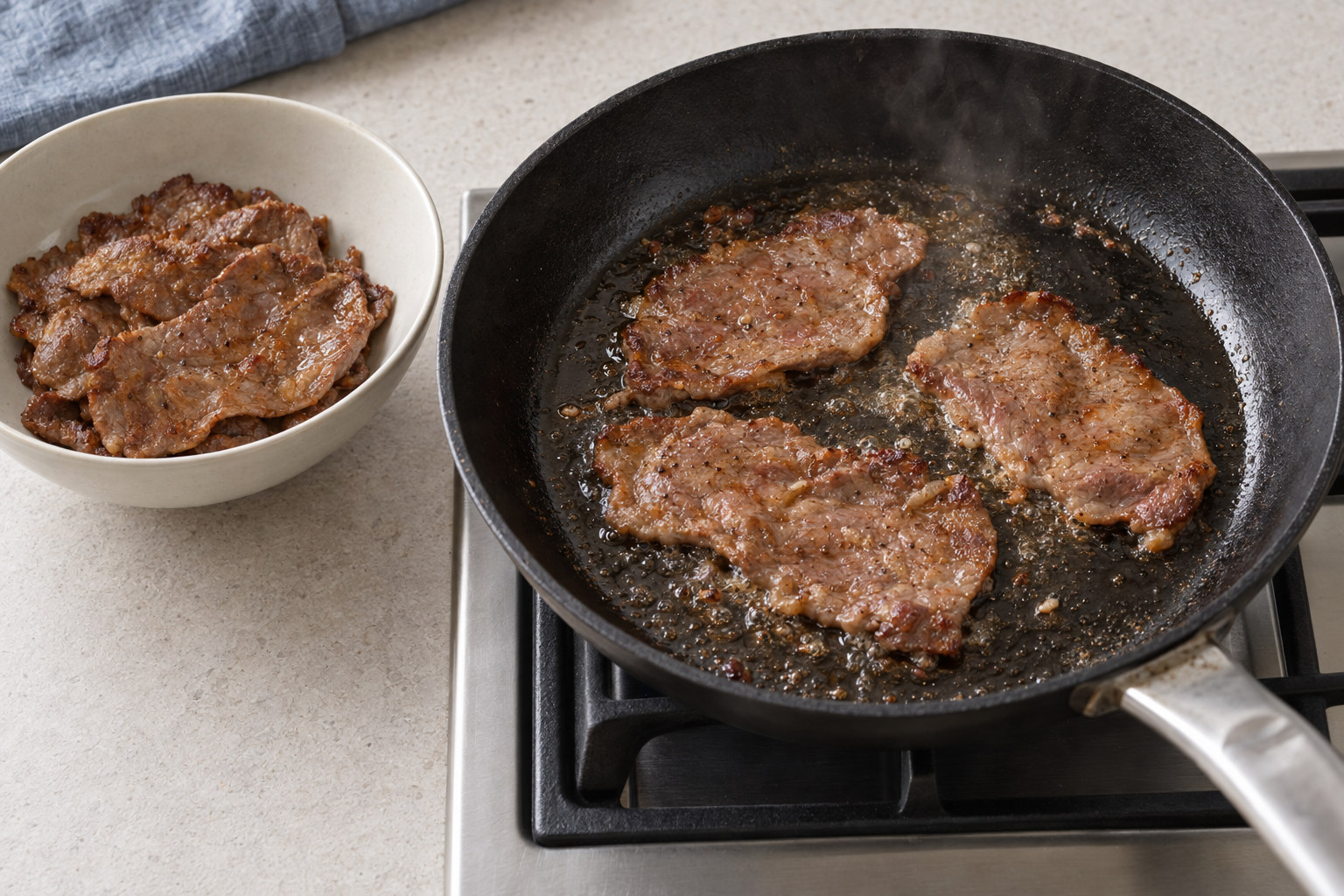
Finish the meat in the sauce
We pour all the ginger mixture into the pan, bring it to a gentle simmer and cook for 2 minutes. We return all the meat and collected juices, turning the slices in the sauce for 1–3 minutes until the thickest slice reaches at least 74 °C. We check with a clean, thin probe. If the sauce thickens too quickly, we add water a tbsp at a time, up to a maximum of 45 ml. We then take the pan off the heat straight away.
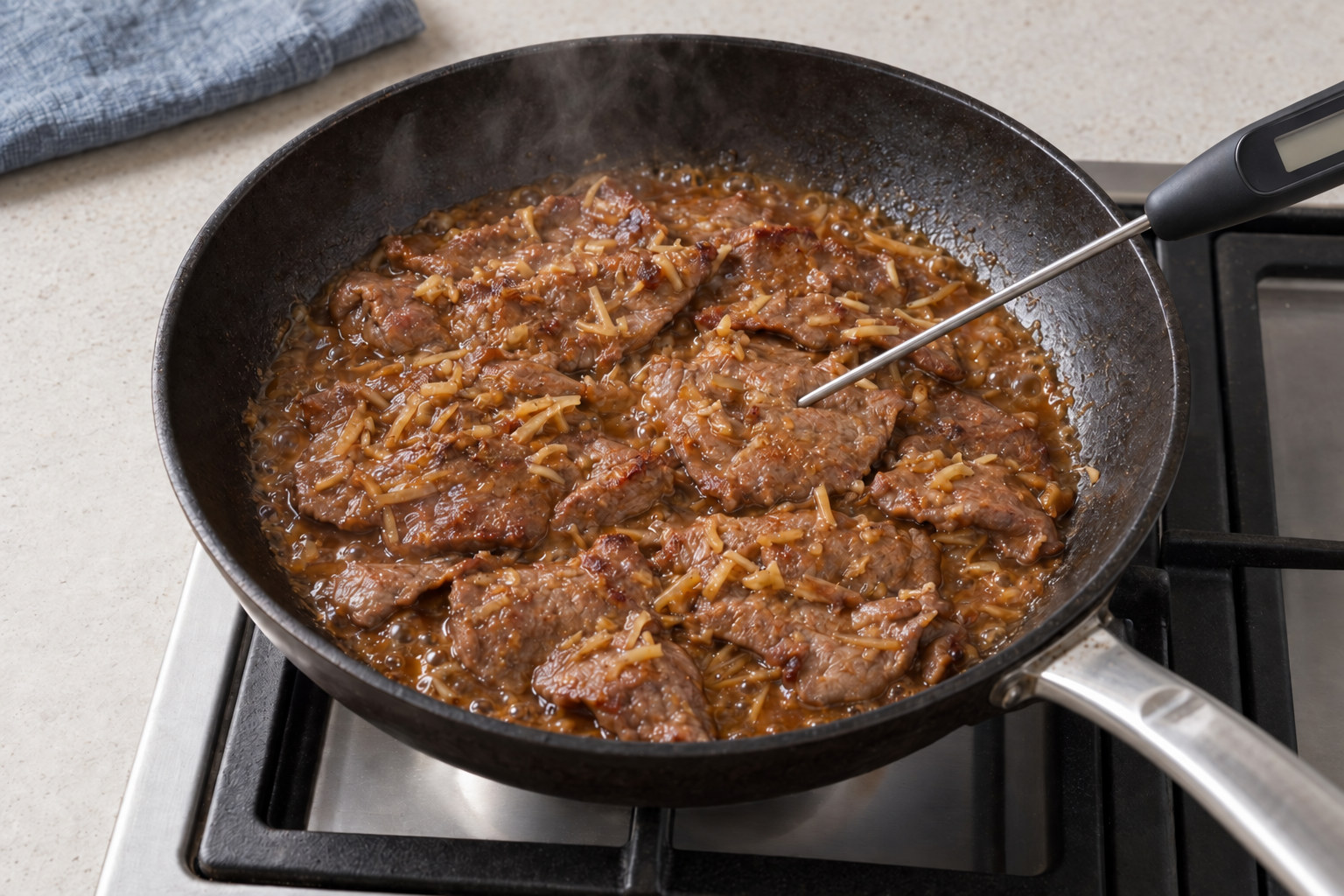
Serve with rice and cabbage
We divide the rice, meat and ginger sauce between 2 warmed plates. We add the cabbage salad with its dressing and serve straight away.
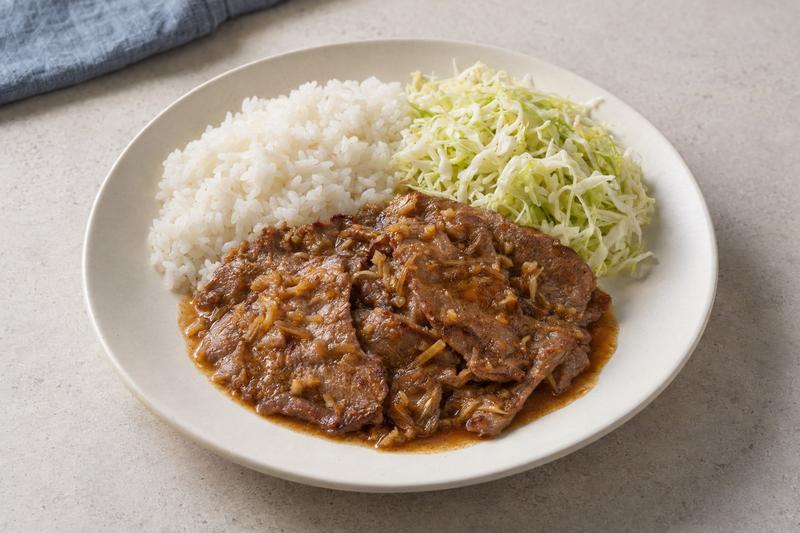
Tips from our kitchen
- We slice the meat across the grain and fry it in small batches.
- We leave the rice covered to rest after cooking while we finish the meat.
What to watch out for
- We fry the meat in the specified batches so that it browns rather than stews in its own juices.
- We finish the thin slices together in the sauce and check their temperature with a thin probe. Frying time and a browned surface alone are not enough.
How we serve it
- We serve the haunch slices and ginger sauce on warmed plates with rice and the cabbage salad, including its dressing.
Ingredient swaps
mirin
We replace the mirin with the same volume of apple juice with no added sugar and omit the sugar from the sauce. The sauce will be fruitier and lack the rice aroma; this is a home-style variation.
During preparation
- We measure the temperature with a clean, thin probe. We keep raw meat and any utensils that have touched it separate from cooked food, and wash our hands after handling it.
Our inspiration
A mound of finely shredded cabbage belongs with shogayaki as naturally as rice does. Chef Hank Shaw, who previously cooked at The Horn of Africa restaurant in Madison, describes it as a usual accompaniment in Japanese lunch spots. He uses wild boar loin; our version uses thin slices of haunch.
Hank Shaw
Hank Shaw is a chef who previously cooked at The Horn of Africa restaurant in Madison. His wild boar loin shogayaki is the inspiration for our version using haunch.
Similar recipes
Recipe for 4 people
Step-by-step method
Before we start
We start the rice first. Meanwhile, we prepare the cabbage and ginger sauce and fry the meat in batches. We leave the rice covered to rest; it can wait briefly while we finish all the slices together in the sauce.
Cook the rice
We put the rice in a saucepan with 430 ml water and add the salt. We bring to a gentle simmer, cover with a tight-fitting lid and cook over the lowest heat for 12–15 minutes without lifting the lid. We take it off the heat and leave it to rest for 10 minutes. We fluff it with a fork and cover again.
Slice the meat and make the ginger sauce
We cut the haunch across the grain into slices. Between sheets of cling film, we lightly pound them to an even thickness of 3–4 mm. We remove the film, pat the meat dry, season with the salt set aside for the meat and add pepper. We peel and finely grate the ginger, then mix all of it with the soy sauce, mirin, 60 ml water for the sauce and sugar.
Make the cabbage salad
We remove the tough core from the cabbage and shred it very finely. We mix it with all the rice vinegar and the oil and salt set aside for the cabbage. We gently massage it for a minute, then leave it in the bowl while we fry the meat.
Fry the thin slices in batches
We divide the rapeseed oil for the meat between eight batches of 100 g meat. We fry each batch in the heated pan over a medium-high heat for 60–90 seconds on each side, then transfer it to a clean bowl. We do not overcrowd the pan. If the browned bits begin to darken, we lower the heat a little.
Finish the meat in the sauce
We pour all the ginger mixture into the pan, bring it to a gentle simmer and cook for 2 minutes. We return all the meat and collected juices, turning the slices in the sauce for 1–3 minutes until the thickest slice reaches at least 74 °C. We check with a clean, thin probe. If the sauce thickens too quickly, we add water a tbsp at a time, up to a maximum of 75 ml. We then take the pan off the heat straight away.
Serve with rice and cabbage
We divide the rice, meat and ginger sauce between 4 warmed plates. We add the cabbage salad with its dressing and serve straight away.