
Cantonese inspiration · Cantonese inspiration
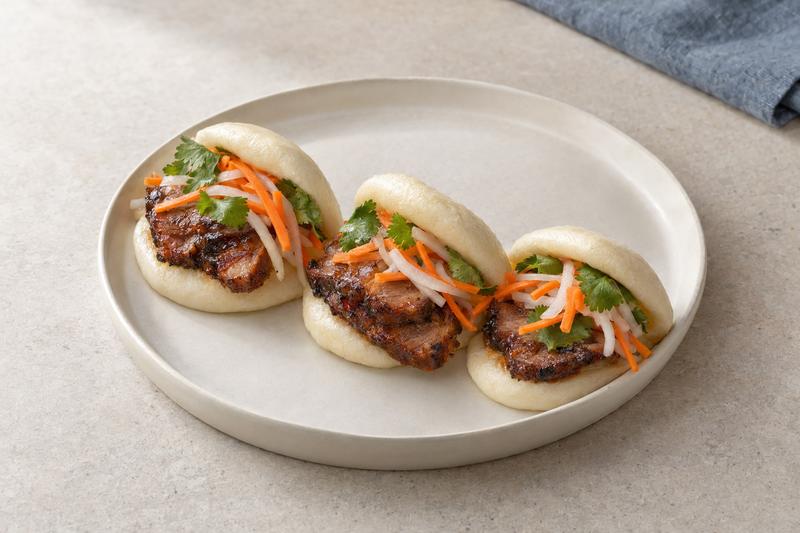
Wild boar char siu in homemade steamed bao with pickled radish
We fill soft homemade bao with glossy slices of wild boar neck coated in a sweet-savoury glaze and scented with Chinese five-spice. Pickled radish and carrot, along with fresh coriander, add tang and a fresh crunch. The yeasted dough and slowly braised meat keep us busy for part of the day; when it is time to eat, we serve three filled buns per person.
The dough proves while the meat braises. The time includes 170–220 minutes of braising, 60–90 minutes for the first rise, 20–30 minutes for the final prove and one batch of six bao steamed, including 5 minutes resting with the lid on.
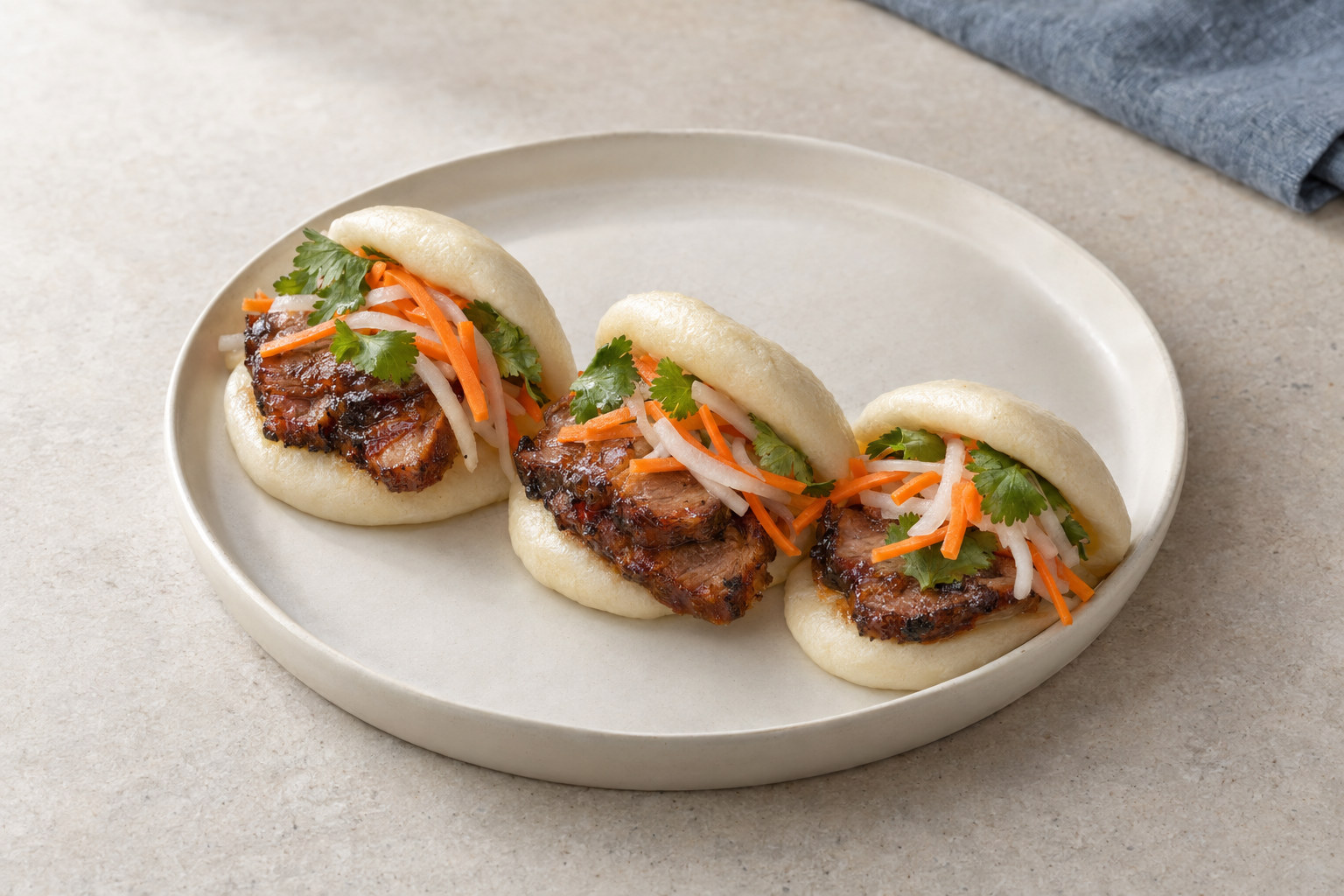
Honey and hoisin give the spiced meat a sweet-savoury coating, balanced by the tangy vegetables inside the soft steamed buns.
Step-by-step method
What you will need
- heavy 20 cm / 3 l pot with lid
- two-tier steamer with a 30 cm internal diameter, 3 bao per tier
- baking paper cut into 9 × 9 cm squares, rolling pin, clean tea towel
- 30 × 30 cm baking tray, oven
- 2 hob rings
- kitchen scales, probe thermometer and separate chopping boards for meat and vegetables
- electric kettle for heating the reserve water
- wire rack over a tray and a clean tea towel for holding cooked bao briefly
Before we start
We make the dough after the meat has braised for an hour; once tender, the meat can wait briefly in its juices. We shape 6 smaller bao, three per person, and steam all six at once. We start glazing the meat from the 7th minute of steady steam. We steam the bao only once the meat is tender. If braising takes longer, we put the bao in the fridge to slow down further proving.
Cut and brown the neck
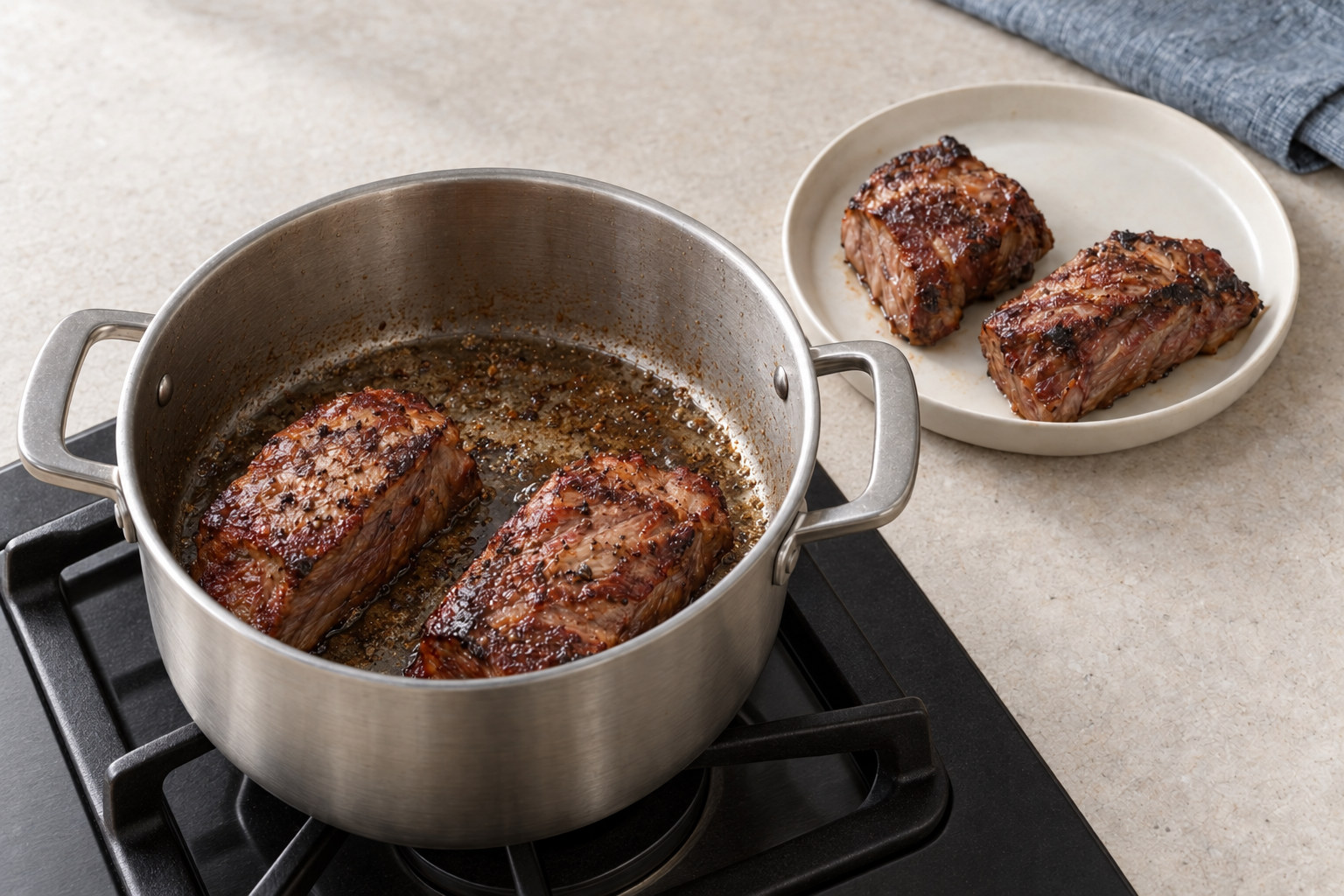
We cut the trimmed meat into 4 equal, elongated pieces of 120 g each. We pat them dry and season with the salt allocated to the meat and the pepper. We reserve 1 teaspoon of the oil for the onion and divide the rest between 2 batches of meat, about 240 g per batch. We brown each batch over a medium-high heat for 4–6 minutes, transferring the browned meat to a bowl.
We brown the meat in a single layer so water does not collect in the bottom of the pan.
Braise the neck until tender
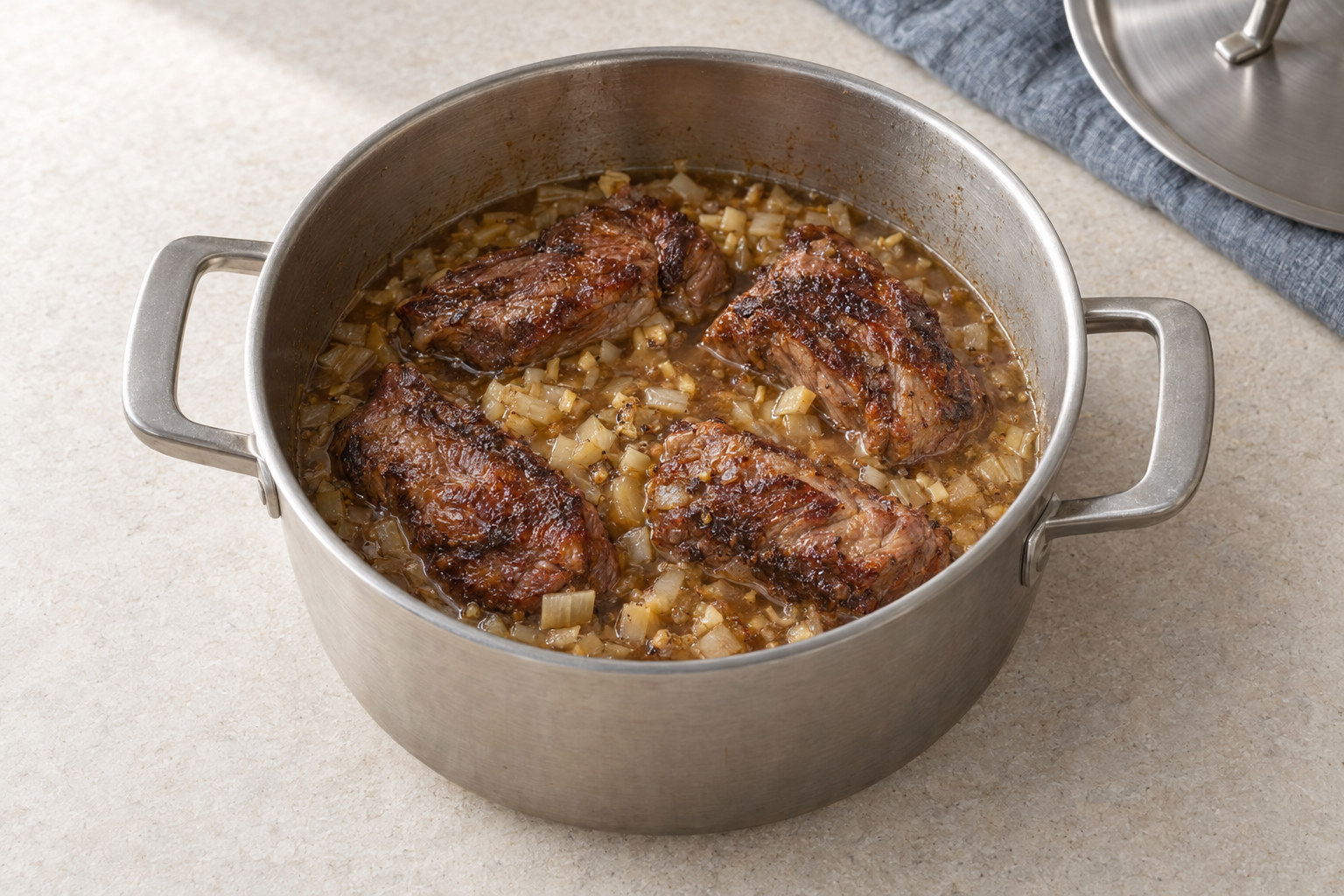
We peel and finely chop the onion, garlic and ginger. We cook the onion in the reserved oil for 7–9 minutes, stirring. We add the chopped ginger, garlic and five-spice and cook for 20 seconds. We return the meat and its juices to the pot and pour in all the stock. We cover and braise gently for 170–220 minutes. Every 35 minutes, we turn the meat and add water in 30 ml amounts if it is drying out. We check that the meat has reached at least 74 °C at the centre. It must be tender but still hold its shape.
The pieces must be tender before glazing. A brief roast alone will not soften the connective tissue.
Make the bao dough
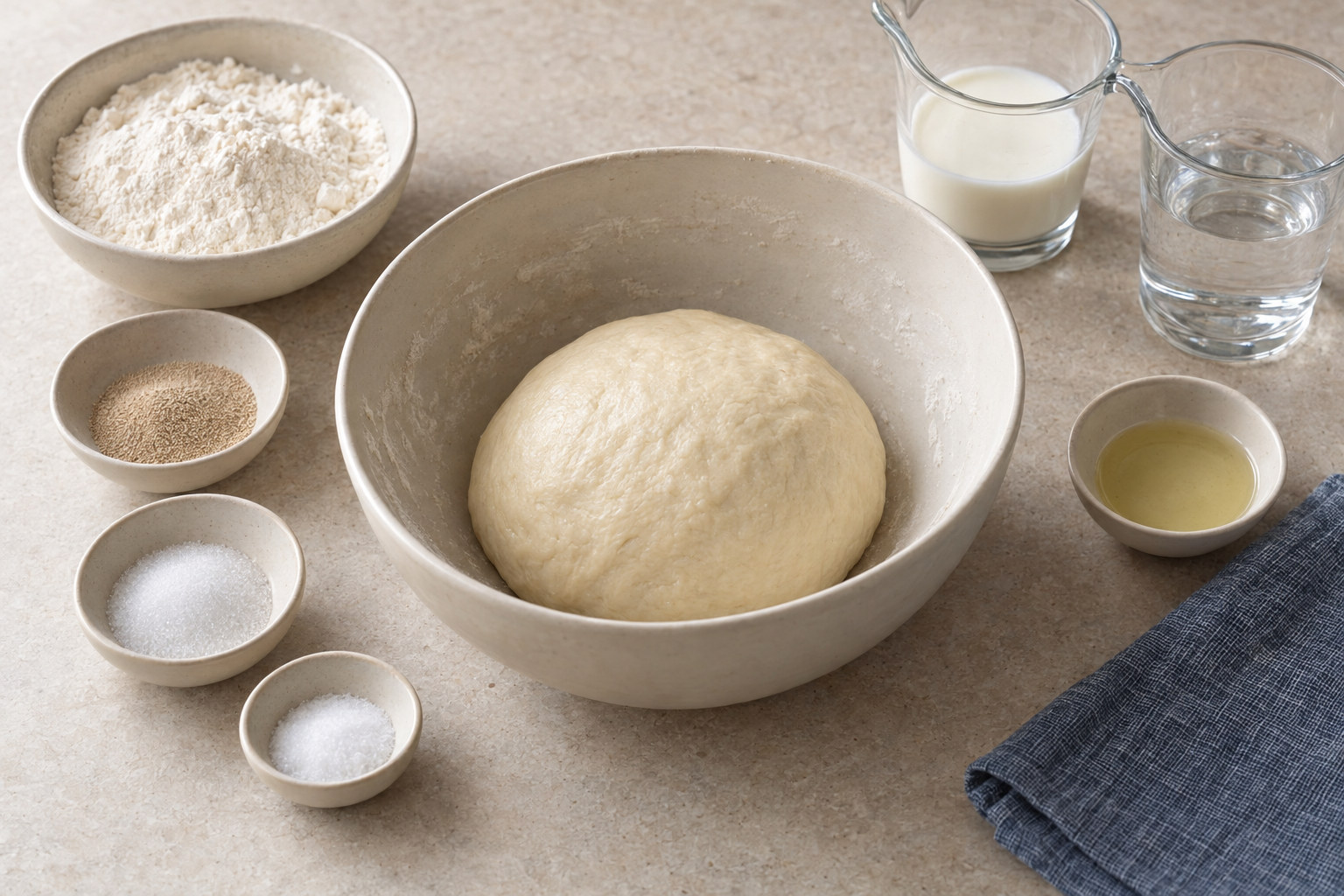
We mix the flour with the yeast, sugar and salt allocated to the dough. We add the milk, water and oil for the dough. The milk and water should be lukewarm, no hotter than 35 °C. We knead for 8–10 minutes until smooth, then cover and leave to rise for 60–90 minutes until roughly doubled in size.
The dough is soft and elastic, with no dry cracks after kneading.
Pickle the vegetables and make the glaze
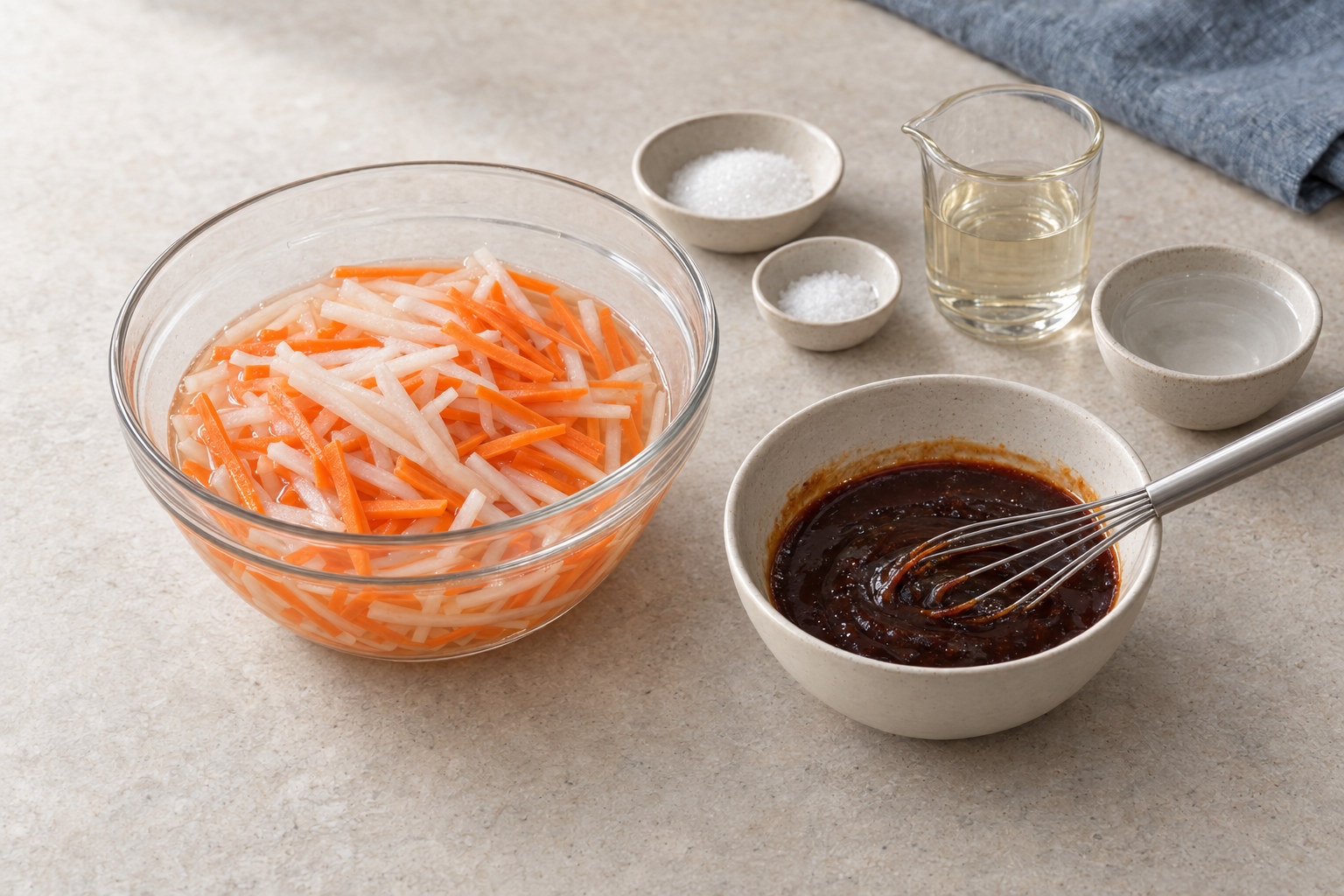
We peel the radish and carrot and cut them into thin matchsticks. We dissolve the sugar and salt for the pickling liquid in the vinegar and water allocated to the pickled vegetables. We mix with the vegetables, cover and refrigerate for at least 30 minutes. In another bowl, we mix the hoisin, soy sauce, honey and vinegar for the glaze.
Shape smaller bao
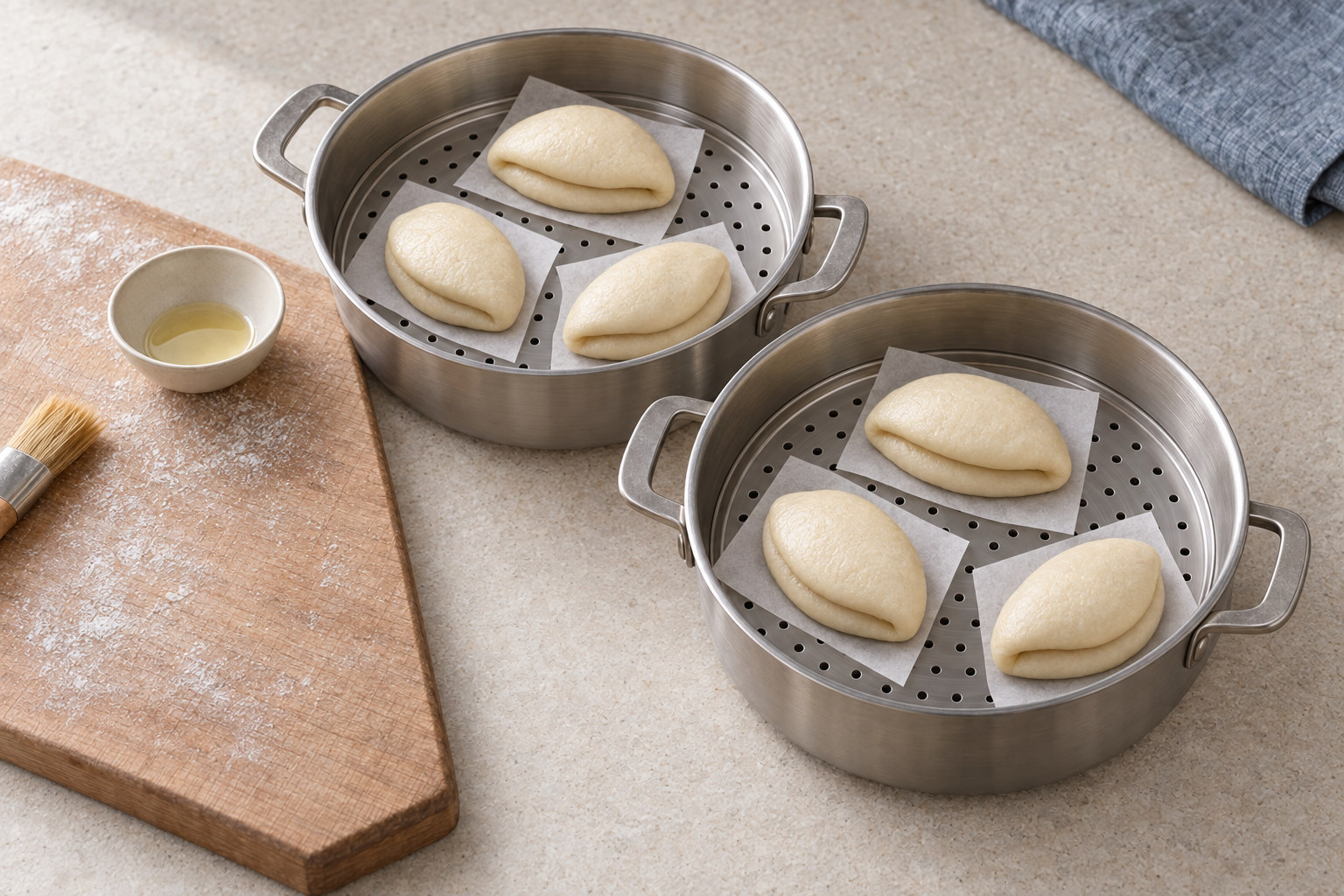
We briefly knock back the dough and divide it into 6 equal pieces, about 56 g each. We roll each into an oval about 8 × 13 cm and around 6 mm thick. We lightly brush with the oil reserved for folding and fold in half, then place each on its own paper square. We arrange three on each steamer tier with gaps of at least 2.5 cm. The papers must not overlap. We cover and leave to prove for 20–30 minutes until roughly 1.5 times their size. If the meat is not yet tender, we cover all the fully proved bao and put them in the fridge. We begin steaming only once the meat is tender, taking the bao out of the fridge 2 minutes before steaming.
The dough springs back slowly after a light touch and does not collapse.
Steam the bao
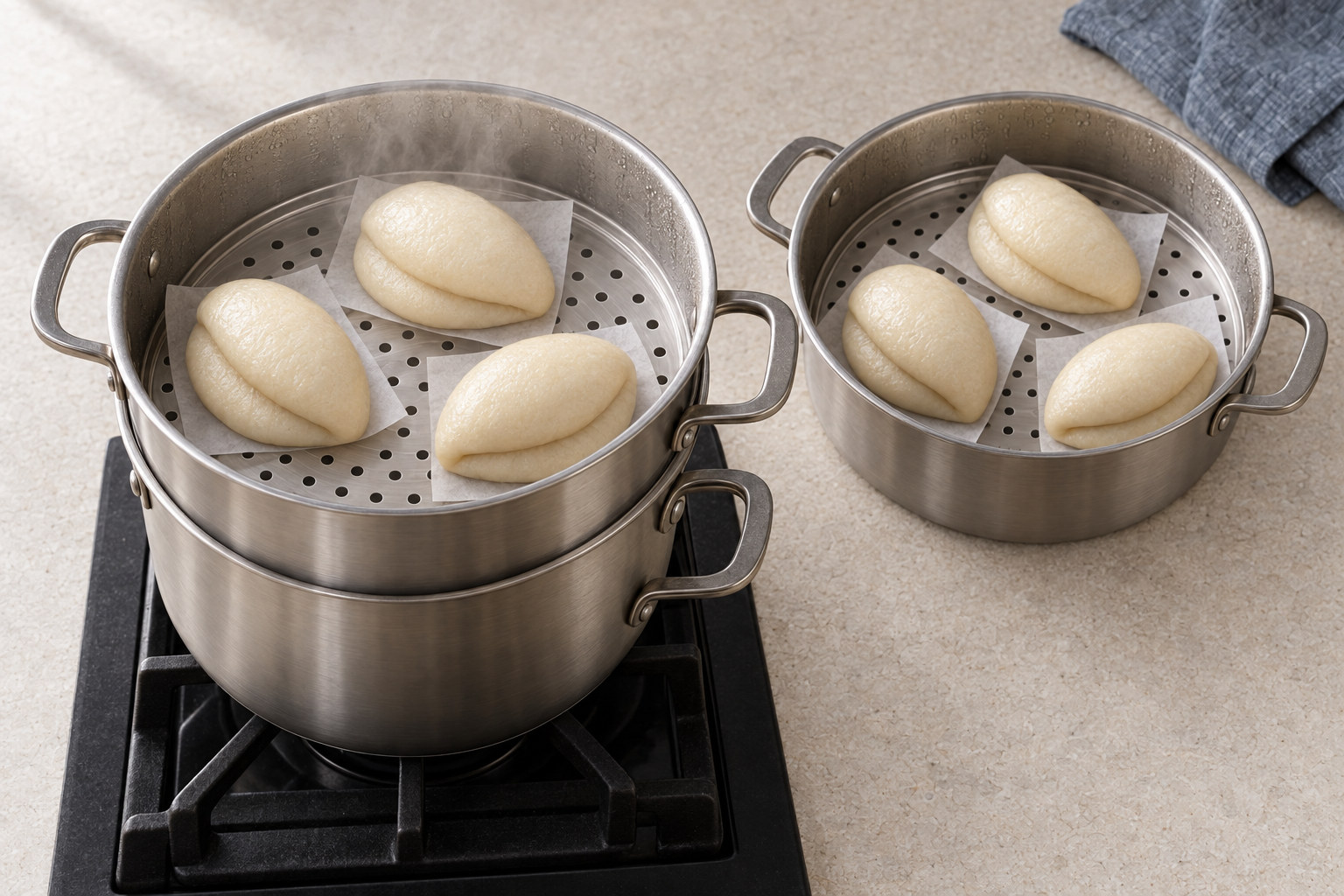
Once the meat is tender, we keep it covered and hot in its own juices until glazing. We pour 1200 ml water into the lower pan and keep the remaining 600 ml in reserve. We choose a lower saucepan that leaves the water level at least 2 cm below the insert. We fit both tiers containing the six bao, cover and heat over a medium heat. Once steam begins to escape steadily, we lower the heat and steam for 12–14 minutes. We then turn off the heat and leave the lid on for 5 minutes. We check one bun: the dough at the centre must be springy, with no gummy, raw layer.
The pan must not boil dry, and condensation from the lid should not drip onto the dough.
Roast the meat with the glaze
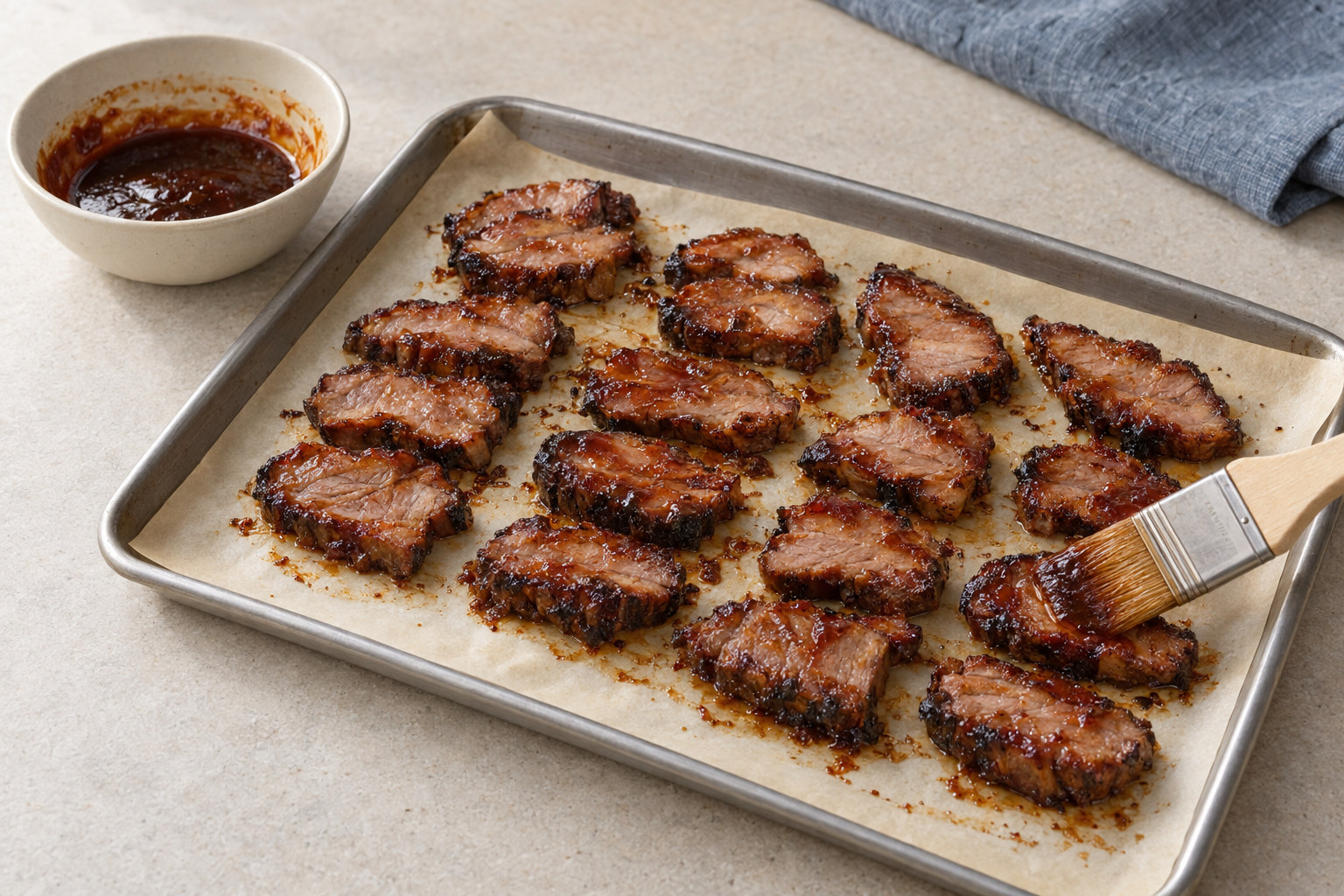
We preheat the oven to 210 °C. We take out the hot, tender pieces of meat, cut them crossways into 1 cm slices and arrange them on a tray lined with baking paper. We do not use the stock with the onion and spices again in this dish. We brush the slices with half the glaze. We put the meat in the preheated oven at about the 7th minute of steady steam so it is ready as the bao finish steaming and resting. We roast for 8–12 minutes. After 5 minutes, we turn the slices and brush with the remaining glaze. Before serving, we check that the meat is at least 74 °C at the centre. If the glaze darkens too soon, we lower the oven temperature to 160 °C. If the meat needs to wait briefly, we limit this to 5 minutes, loosely covered on a warm plate.
The honey caramelises to brown, but must not turn black.
Fill the bao and serve
We open the bao and divide all the meat, drained pickled vegetables and chopped coriander between them. We serve three per person. If some of the vegetables do not fit, we serve them alongside the bao. We do not pour the pickling liquid into the buns.
The bao are warm and springy, and the filling is juicy without pickling liquid running out.
Tips from our kitchen
- We glaze the meat only once it is tender. Honey darkens quickly in the oven, so we keep an eye on it from the fifth minute onwards.
- When making four servings, we keep the second batch of proved bao covered in the fridge while it waits. We briefly reheat the first batch before filling.
What to watch out for
- We steam the bao only once the meat is tender. We drain the pickled vegetables before filling the buns so the pickling liquid does not run out.
How we serve it
- We open the bao and divide all the meat, drained pickled vegetables and chopped coriander between them. We serve three per person. If some of the vegetables do not fit, we serve them alongside the bao. We do not pour the pickling liquid into the buns.
During preparation
- We measure the temperature in the thickest pieces with a clean probe. We keep raw meat, its chopping board and used utensils separate from the finished food.
Our inspiration
After steaming, a folded bao opens like a little pocket. One small but useful detail helps: oil between the folded halves keeps them from sticking together. Here, we fill these buns with our own wild boar version of char siu, the Cantonese meat dish with a sweet-savoury glaze.
Hank Shaw
Hank Shaw is a chef who previously cooked at The Horn of Africa restaurant in Madison. His char siu inspired our own wild boar filling for steamed buns.
Similar recipes
Recipe for 4 people
The dough proves while the meat braises. The time includes 170–220 minutes of braising, 60–90 minutes for the first rise, 20–30 minutes for the final prove and two batches of six bao, including resting with the lid on and briefly reheating the first batch.
Step-by-step method
Before we start
We make the dough after the meat has braised for an hour; once tender, the meat can wait briefly in its juices. We shape 12 smaller bao, three per person, and steam two batches of six. After its final prove, the second shaped batch waits covered in the fridge. We start glazing the meat from the 10th minute of steady steam during the second batch, then briefly re-steam the first six. We steam the bao only once the meat is tender. If braising takes longer, we put the bao in the fridge to slow down further proving.
Cut and brown the neck
We cut the trimmed meat into 8 equal, elongated pieces of 120 g each. We pat them dry and season with the salt allocated to the meat and the pepper. We reserve 1 teaspoon of the oil for the onion and divide the rest between 4 batches of meat, about 240 g per batch. We brown each batch over a medium-high heat for 4–6 minutes, transferring the browned meat to a bowl.
We brown the meat in a single layer so water does not collect in the bottom of the pan.
Braise the neck until tender
We peel and finely chop the onion, garlic and ginger. We cook the onion in the reserved oil for 7–9 minutes, stirring. We add the chopped ginger, garlic and five-spice and cook for 20 seconds. We return the meat and its juices to the pot and pour in all the stock. We cover and braise gently for 170–220 minutes. Every 35 minutes, we turn the meat and add water in 30 ml amounts if it is drying out. We check that the meat has reached at least 74 °C at the centre. It must be tender but still hold its shape.
The pieces must be tender before glazing. A brief roast alone will not soften the connective tissue.
Make the bao dough
We mix the flour with the yeast, sugar and salt allocated to the dough. We add the milk, water and oil for the dough. The milk and water should be lukewarm, no hotter than 35 °C. We knead for 8–10 minutes until smooth, then cover and leave to rise for 60–90 minutes until roughly doubled in size.
The dough is soft and elastic, with no dry cracks after kneading.
Pickle the vegetables and make the glaze
We peel the radish and carrot and cut them into thin matchsticks. We dissolve the sugar and salt for the pickling liquid in the vinegar and water allocated to the pickled vegetables. We mix with the vegetables, cover and refrigerate for at least 30 minutes. In another bowl, we mix the hoisin, soy sauce, honey and vinegar for the glaze.
Shape smaller bao
We briefly knock back the dough and divide it into 12 equal pieces, about 52 g each. We roll each into an oval about 8 × 13 cm and around 6 mm thick. We lightly brush with the oil reserved for folding and fold in half, then place each on its own paper square. We arrange three on each steamer tier with gaps of at least 2.5 cm. The papers must not overlap. We cover and leave to prove for 20–30 minutes until roughly 1.5 times their size. We let the second six prove on a tray, then cover and refrigerate them so they do not overprove while waiting. If the meat is not yet tender, we cover all the fully proved bao and put them in the fridge. We begin steaming only once the meat is tender, taking the first batch out of the fridge 2 minutes before steaming.
The dough springs back slowly after a light touch and does not collapse.
Steam the bao
Once the meat is tender, we keep it covered and hot in its own juices until glazing. We pour 1600 ml water into the lower pan and keep the remaining 1000 ml in reserve. We choose a lower saucepan that leaves the water level at least 2 cm below the insert. We fit both tiers containing the first six bao, cover and heat over a medium heat. Once steam begins to escape steadily, we lower the heat and steam for 12–14 minutes. We then turn off the heat and leave the lid on for 5 minutes. We check one bun: the dough at the centre must be springy, with no gummy, raw layer. We transfer the first batch to a wire rack and cover loosely with a tea towel. We check the water and top up with the reserve heated in the kettle. We leave the second batch out of the fridge for 2 minutes, then steam it for the same 12–14 minutes. We then leave it to rest for 5 minutes with the lid on.
The pan must not boil dry, and condensation from the lid should not drip onto the dough.
Roast the meat with the glaze
We preheat the oven to 210 °C. We take out the hot, tender pieces of meat, cut them crossways into 1 cm slices and arrange them on a tray lined with baking paper. We do not use the stock with the onion and spices again in this dish. We brush the slices with half the glaze. We put the meat in the preheated oven at about the 10th minute of steady steam during the second batch of bao. We roast for 8–12 minutes. After 5 minutes, we turn the slices and brush with the remaining glaze. Before serving, we check that the meat is at least 74 °C at the centre. If the glaze darkens too soon, we lower the oven temperature to 160 °C. Roasting then finishes as we briefly reheat the first six bao. If the meat needs to wait, we limit this to 5 minutes, loosely covered on a warm plate. Once we remove the second six bao, we cover them loosely and re-steam the first six for 3 minutes. We then leave them for one minute with the lid on.
The honey caramelises to brown, but must not turn black.
Fill the bao and serve
We open the bao and divide all the meat, drained pickled vegetables and chopped coriander between them. We serve three per person. If some of the vegetables do not fit, we serve them alongside the bao. We do not pour the pickling liquid into the buns.
The bao are warm and springy, and the filling is juicy without pickling liquid running out.