
Sichuan, China · Sichuan, China
Sichuan-style twice-cooked wild boar neck with leeks
We coat thin slices of wild boar neck in a spicy sauce with fermented chilli paste and ginger. The leeks keep a little crunch, while rice softens the bold, salty flavour. The final stir-fry is quick, but we allow several hours beforehand to braise and chill the meat.
The time includes 150–210 minutes of braising, 90–150 minutes of chilling the meat and finishing two separate batches in the pan.
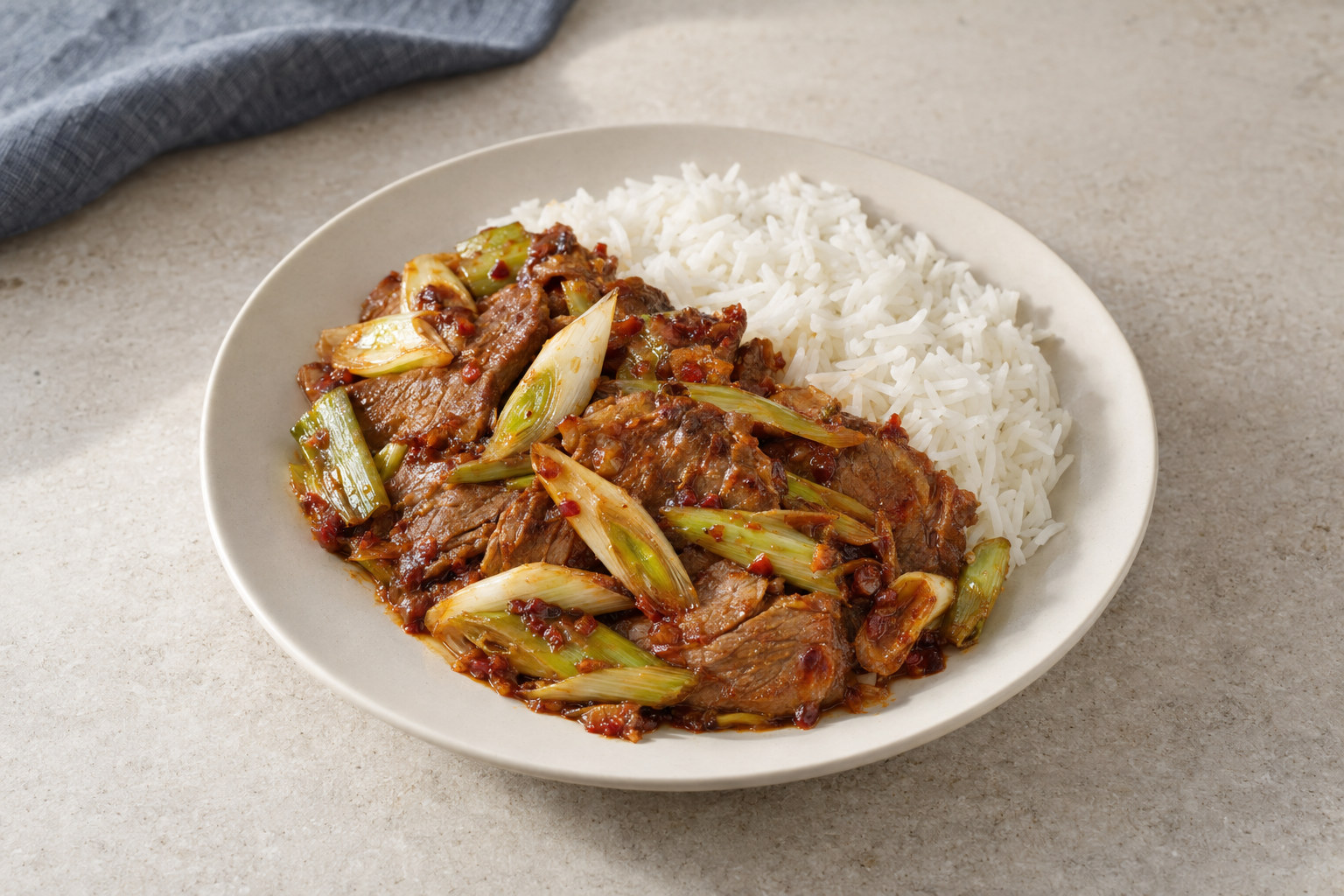
Hot, salty broad bean paste, ginger and rice wine flavour tender slices of wild boar; the sweet leeks add crunch.
Step-by-step method
What you will need
- heavy 18 cm / 3 l pot with a lid
- metal dish measuring 20 × 15 cm and a water bath with sealed ice packs
- 28 cm frying pan with a flat base at least 22 cm across
- 1.5 l saucepan for the rice, covered ovenproof dish, oven
- 2 hob rings
- kitchen scales, probe thermometer and separate chopping boards for meat and vegetables
Before we start
We first braise the meat and chill it thoroughly so we can slice it neatly. We start cooking the rice before the final stage. We fully finish each of the two batches of meat and leeks; the first waits briefly in a warm oven.
Braise the neck
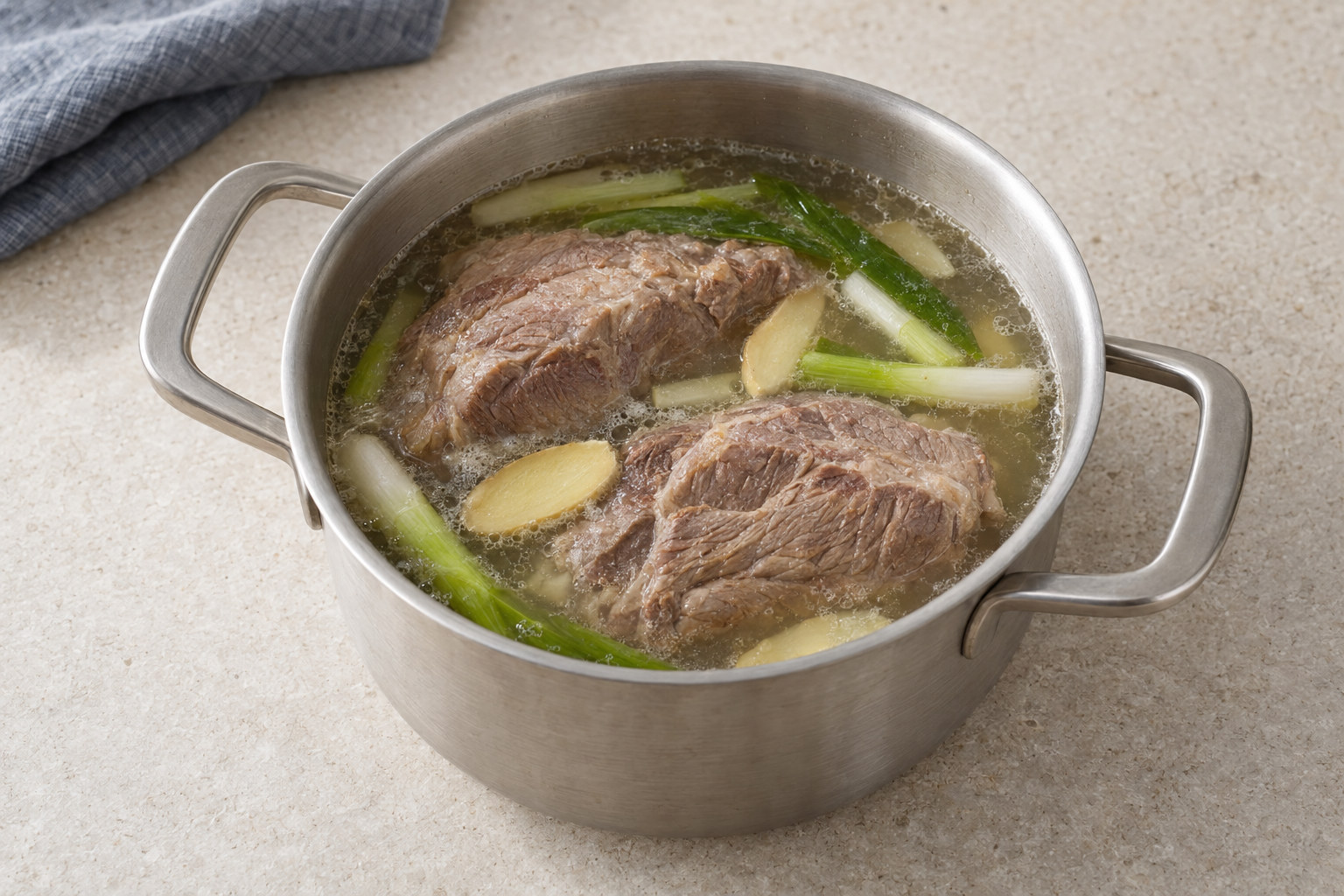
We divide the meat into 2 pieces of 240 g, no more than 4 cm thick. We put them in a snug-fitting pot and pour in about 700 ml water. We peel the ginger and slice half of it. We add it to the meat with the washed spring onion and the salt for braising. We bring it to a gentle simmer, cover and braise for 150–210 minutes. We turn the pieces every 35 minutes and add a little hot water if the pot is drying out. The meat must reach at least 74 °C in the centre and yield to a fork while still holding together.
A gentle simmer keeps the pieces intact for slicing later.
Chill and slice the meat
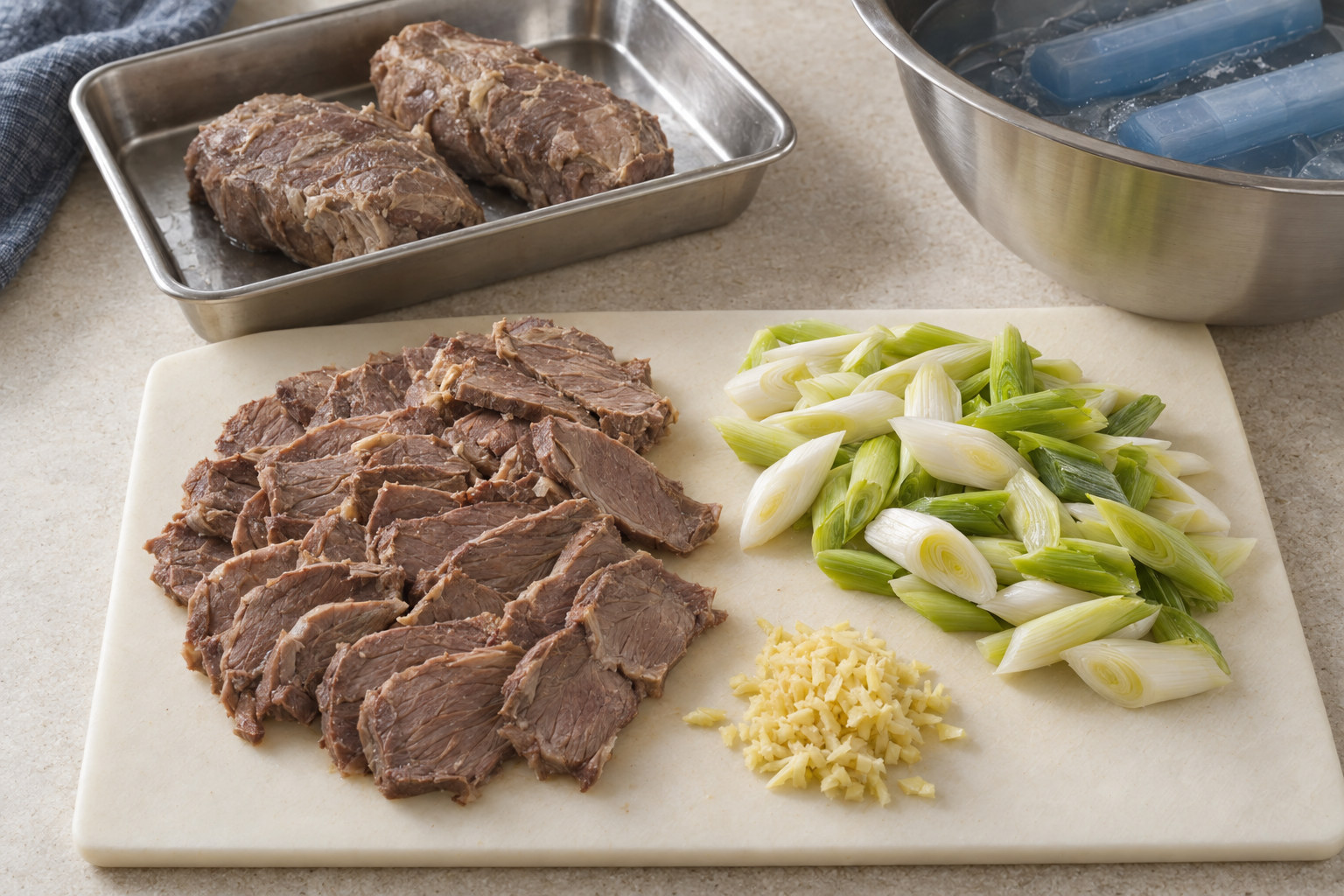
We lift the meat into a metal dish in a single layer. For the first 30 minutes, we cool it in a bath of cold water with sealed ice packs. We keep the water below the rim of the dish so it cannot get into the food, and replace it when it warms up. We turn the pieces once. We then transfer them to a fridge at no more than 5 °C and chill until the centre of the meat reaches the same temperature, usually for a further 60–120 minutes. We discard the cooking water with the spent ginger and spring onion. We cut the cold meat across the grain into 4 mm slices. We wash the leek thoroughly and cut it diagonally into 1 cm pieces. We finely chop the remaining ginger.
The slices hold together and are cold in the centre.
Cook the rice
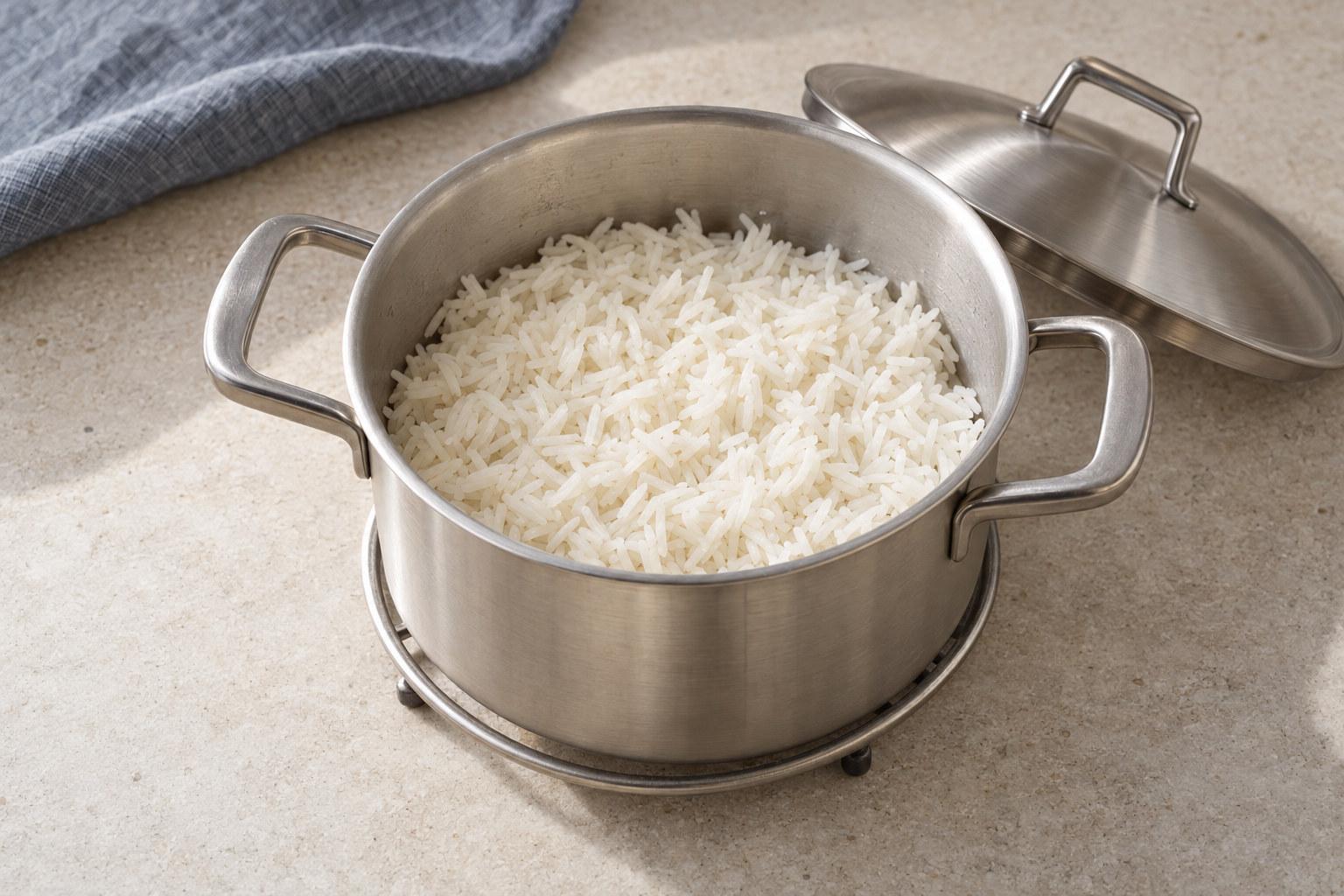
We rinse the rice in a sieve and drain it thoroughly. We bring it to the boil in a saucepan with 230 ml water and the salt for the rice. We cover, cook over the lowest heat for 12–15 minutes, then leave it off the heat for 10 minutes to finish steaming. We keep the lid on throughout cooking.
The grains are tender and no water remains at the bottom.
Divide the ingredients into two batches
We set the oven to 90 °C and put a covered serving dish inside. We divide the meat, leeks, remaining ginger, doubanjiang, soy sauce, Shaoxing wine, sugar, oil and water for finishing into two equal batches.
We cook each batch separately with all its ingredients to avoid overcrowding the pan.
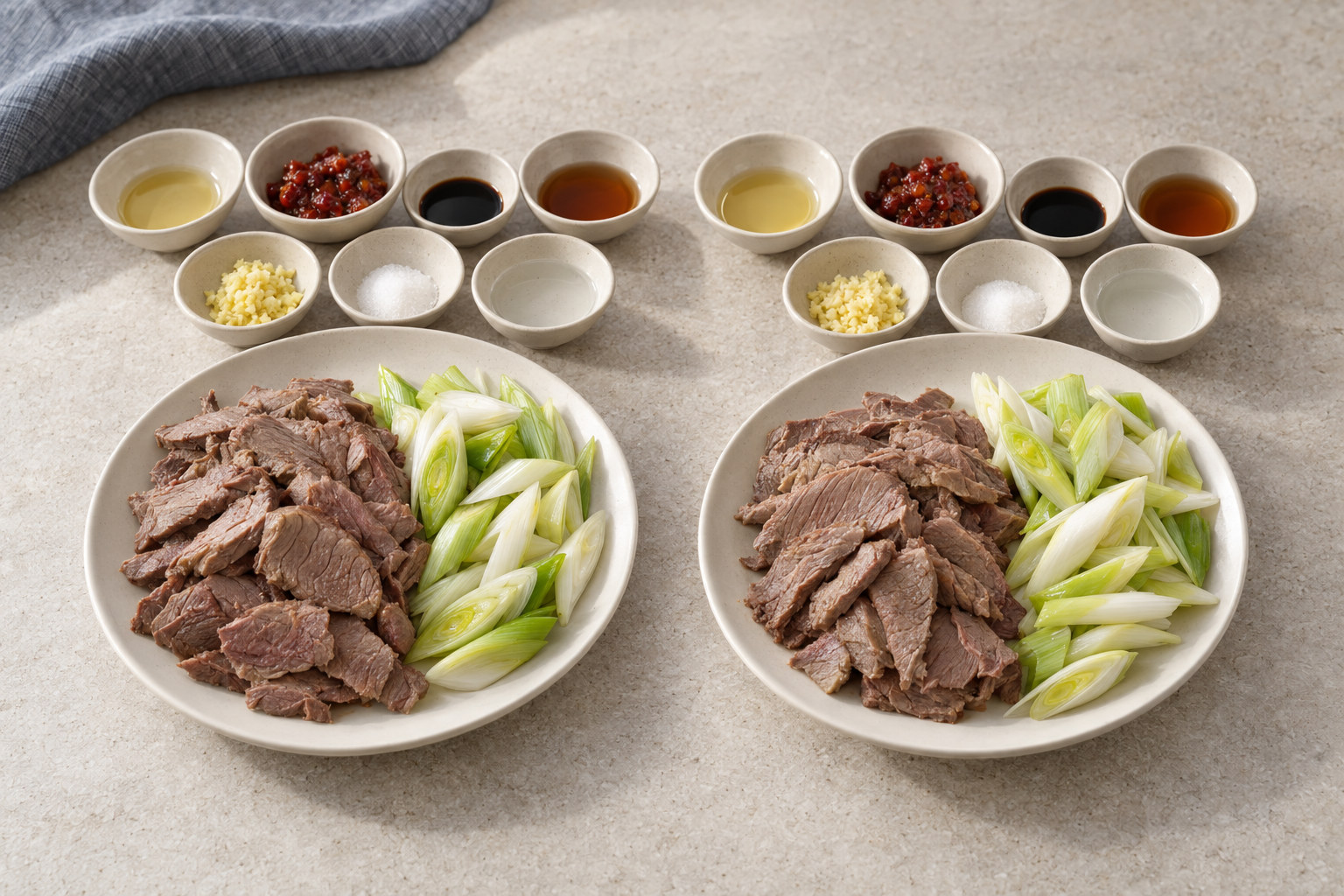
Stir-fry the first batch
We fry half of all the meat in a single layer in 1 teaspoon of oil for 2–3 minutes, then set it aside. We add the remaining 1 teaspoon of oil for this half of the ingredients to the pan, along with half the prepared ginger and doubanjiang. We stir-fry for 20 seconds. We add the leeks for this batch and stir-fry for 2–3 minutes. We return the meat and add the soy sauce, Shaoxing wine, sugar and water measured out for this batch. We stir until the centre of a thicker slice reaches at least 74 °C. We transfer to the warm dish and cover.
The leeks keep a little crunch and the sauce coats the meat.
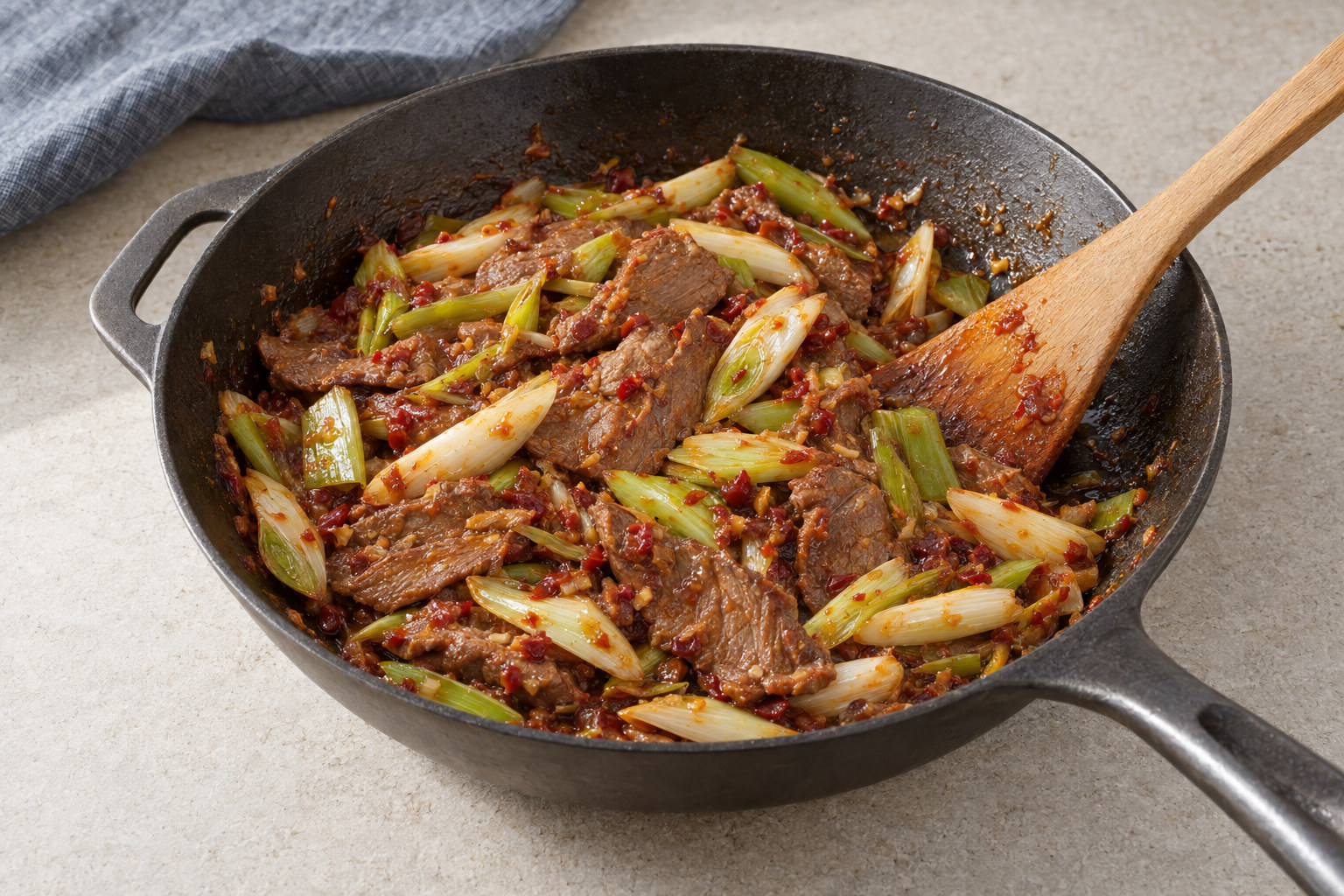
Finish the second batch and serve
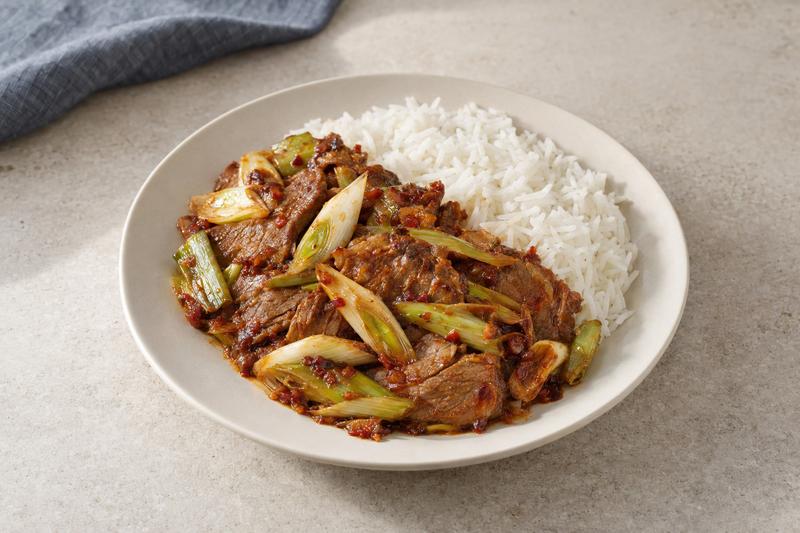
We cook the second half of the ingredients in the same way. We keep the first batch in the oven for no longer than 10 minutes. We immediately divide both batches between 2 plates with the cooked rice and serve.
The salty fermented paste and soy sauce mean we need no additional salt.
Tips from our kitchen
- We leave the leaner wild boar neck to cool before cutting it across the grain into thin slices.
- Doubanjiang and soy sauce are both salty, so we do not add any more salt to the stir-fry.
What to watch out for
- We wait until the meat is cold in the centre before slicing, so the slices hold together. We finish each batch separately, including its leeks and sauce.
How we serve it
- We immediately divide both finished batches between the plates with the cooked rice. The sauce and fermented paste are salty, so we add no further salt at the final stage.
Ingredient swaps
Shaoxing rice wine
We replace the Shaoxing wine with the same amount of dry sherry. The aroma will be different; sulphites may also be present.
doubanjiang
We use fermented broad bean paste with chilli from an Asian grocer. Sweet chilli sauce is not a substitute for doubanjiang. Fermented broad beans and chilli provide the essential flavour, rather than heat alone.
During preparation
- We measure the temperature in the thickest pieces with a clean probe. We keep raw meat, its chopping board and used utensils separate from the cooked food.
Our inspiration
Twice-cooked meat first becomes tender at a gentle simmer, then gains browned edges in a hot pan. Hank Shaw, a cook who has worked at The Horn of Africa restaurant in Madison, prepares pork belly this way and includes the more strongly flavoured green part of the leek. We use the same idea for wild boar neck: once chilled, we slice it and briefly stir-fry it with leeks and spicy paste.
Hank Shaw
Hank Shaw is a cook who previously worked at The Horn of Africa restaurant in Madison. His twice-cooked pork belly inspired our variation with wild boar neck.
Similar recipes

Recipe for 4 people
Step-by-step method
Before we start
We first braise the meat and chill it thoroughly so we can slice it neatly. We start cooking the rice before the final stage. We fully finish each of the two batches of meat and leeks; the first waits briefly in a warm oven.
Braise the neck
We divide the meat into 4 pieces of 240 g, no more than 4 cm thick. We put them in a snug-fitting pot and pour in about 1100 ml water. We peel the ginger and slice half of it. We add it to the meat with the washed spring onions and the salt for braising. We bring it to a gentle simmer, cover and braise for 150–210 minutes. We turn the pieces every 35 minutes and add a little hot water if the pot is drying out. The meat must reach at least 74 °C in the centre and yield to a fork while still holding together.
A gentle simmer keeps the pieces intact for slicing later.
Chill and slice the meat
We lift the meat into a metal dish in a single layer. For the first 30 minutes, we cool it in a bath of cold water with sealed ice packs. We keep the water below the rim of the dish so it cannot get into the food, and replace it when it warms up. We turn the pieces once. We then transfer them to a fridge at no more than 5 °C and chill until the centre of the meat reaches the same temperature, usually for a further 60–120 minutes. We discard the cooking water with the spent ginger and spring onions. We cut the cold meat across the grain into 4 mm slices. We wash the leeks thoroughly and cut them diagonally into 1 cm pieces. We finely chop the remaining ginger.
The slices hold together and are cold in the centre.
Cook the rice
We rinse the rice in a sieve and drain it thoroughly. We bring it to the boil in a saucepan with 430 ml water and the salt for the rice. We cover, cook over the lowest heat for 12–15 minutes, then leave it off the heat for 10 minutes to finish steaming. We keep the lid on throughout cooking.
The grains are tender and no water remains at the bottom.
Divide the ingredients into two batches
We set the oven to 90 °C and put a covered serving dish inside. We divide the meat, leeks, remaining ginger, doubanjiang, soy sauce, Shaoxing wine, sugar, oil and water for finishing into two equal batches.
We cook each batch separately with all its ingredients to avoid overcrowding the pan.
Stir-fry the first batch
We fry half of all the meat in two smaller batches, using 2 teaspoons of oil. We fry each in a single layer for 2–3 minutes, then set it aside. We add the remaining 1 teaspoon of oil for this half of the ingredients to the pan, along with half the prepared ginger and doubanjiang. We stir-fry for 20 seconds. We add the leeks for this batch and stir-fry for 2–3 minutes. We return the meat and add the soy sauce, Shaoxing wine, sugar and water measured out for this batch. We stir until the centre of a thicker slice reaches at least 74 °C. We transfer to the warm dish and cover.
The leeks keep a little crunch and the sauce coats the meat.
Finish the second batch and serve
We cook the second half of the ingredients in the same way. We keep the first batch in the oven for no longer than 15 minutes. We immediately divide both batches between 4 plates with the cooked rice and serve.
The salty fermented paste and soy sauce mean we need no additional salt.