
Oaxaca, Mexico · Oaxaca, Mexico
Red deer shoulder in dark mole with corn dumplings
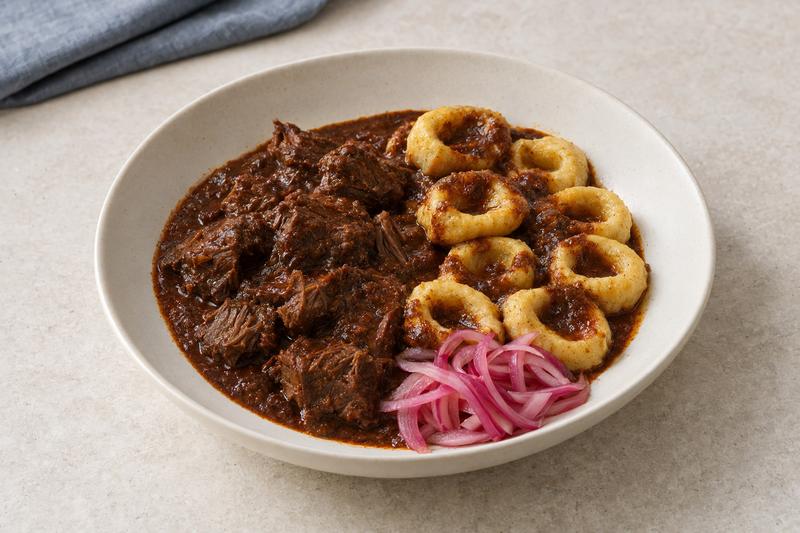
Tender red deer shoulder is coated in dark mole with the fruity, spiced flavour of three dried chillies. Dimpled corn dumplings catch the sauce, while pickled onion adds a refreshing crunch. We prepare each part in turn and give this dish a whole afternoon in the kitchen.
A tougher shoulder may need longer braising; we test tenderness with a fork. Heating the water and testing the first dumpling may take longer than the 25 minutes of simmering the mole, so the stated total time is a guide.
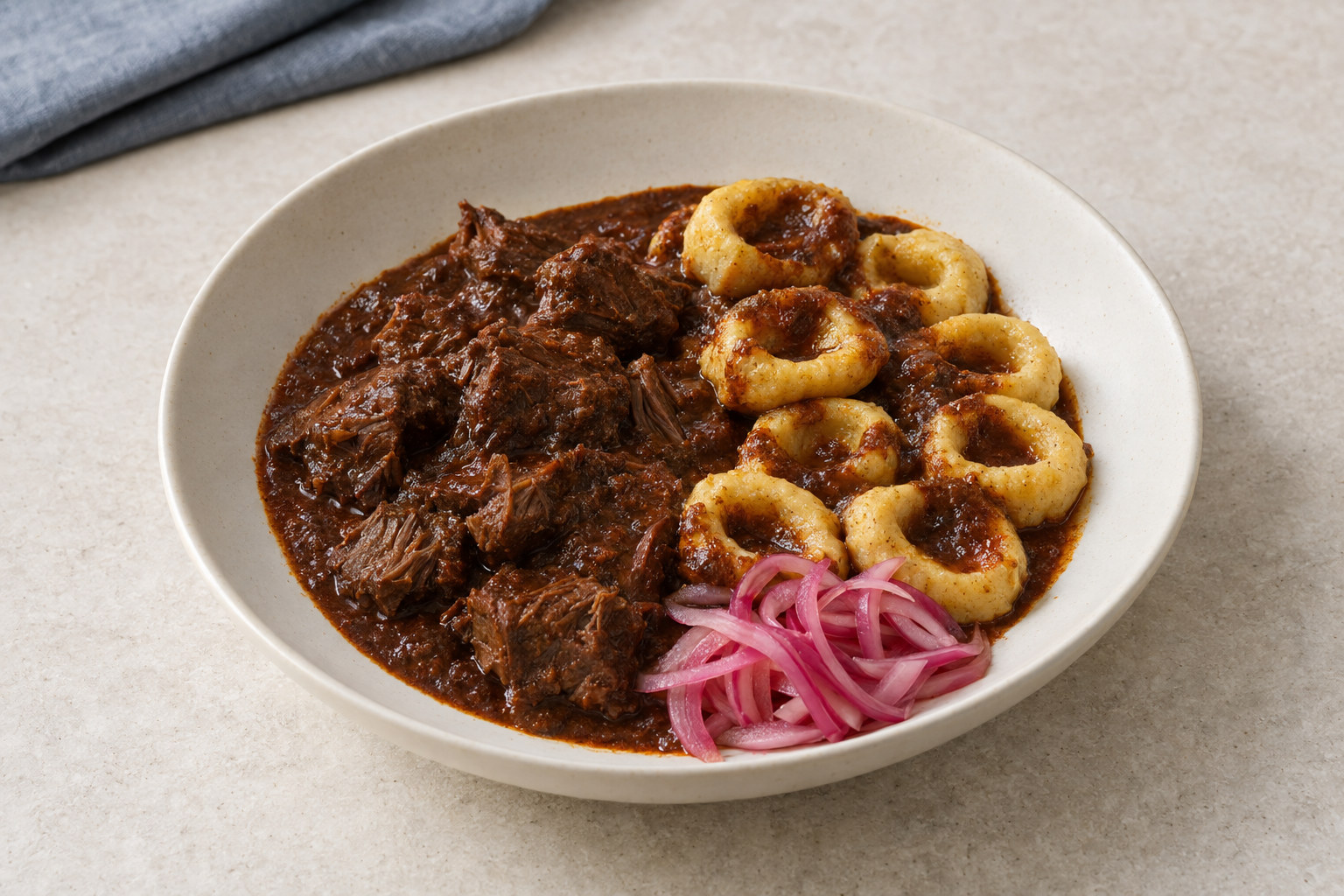
Toasted chillies, tomatoes and onion make a deeply spiced sauce; corn dumplings soften it, while lime and onion bring freshness.
Step-by-step method
What you will need
- kitchen scales
- knife and two separate boards
- measuring jug
- heavy 20 cm pot, 3 l capacity, with a tight-fitting lid
- powerful blender suitable for lukewarm liquids
- 26 cm frying pan
- 1.5 l saucepan for the mole
- 3 l pot for the dumplings
- 0.5 l saucepan for the pickling liquid
- slotted spoon
- fine sieve
- electric kettle
Before we start
We pickle the onion during the first minutes of braising. We start the mole about 75 minutes before we expect the shoulder to become tender. We mix the dumpling dough while the mole simmers and cook the first dumpling separately as a test. We cook the remaining dumplings only once the meat is becoming tender and the sauce is ready.
We cut and brown the meat
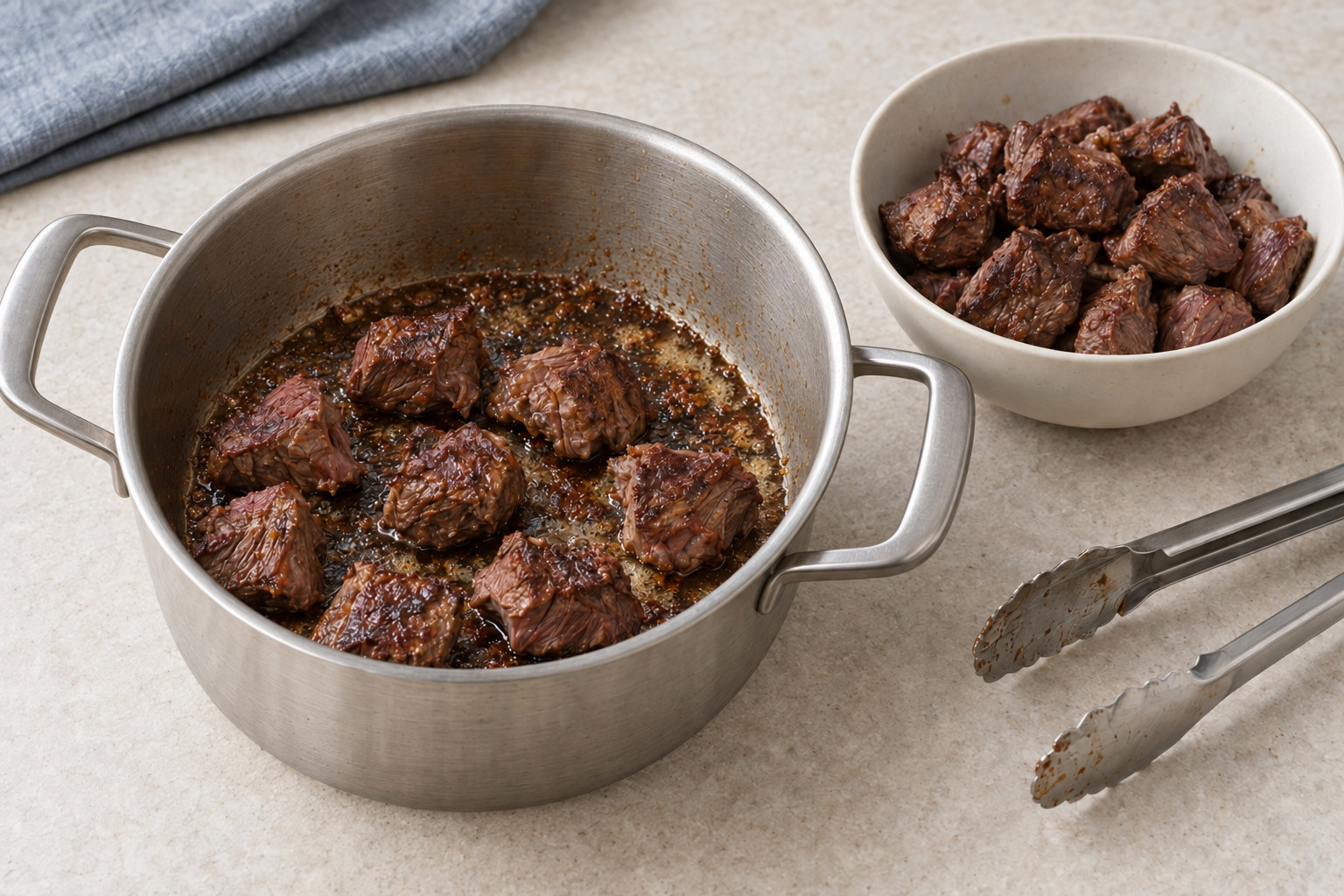
We cut the shoulder into 3 cm cubes and pat them dry. We season with salt and pepper. We reserve a teaspoon of the oil for the onion and divide the rest between two 225 g batches. We brown the meat over a medium-high heat for 4–6 minutes per batch, then transfer it to a clean bowl.
The cubes have browned sides; they must not boil in the juices at the bottom.
We prepare the braising base
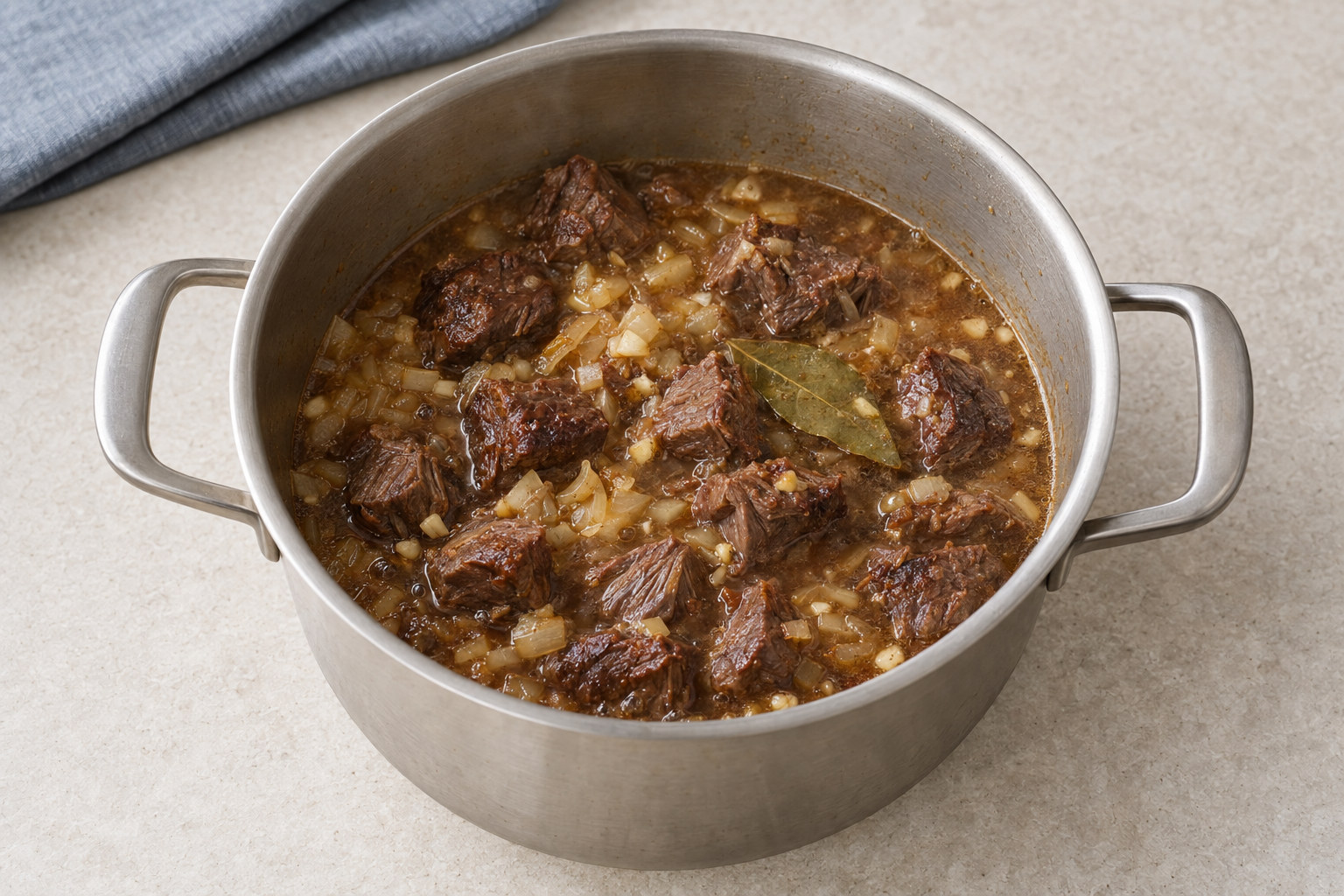
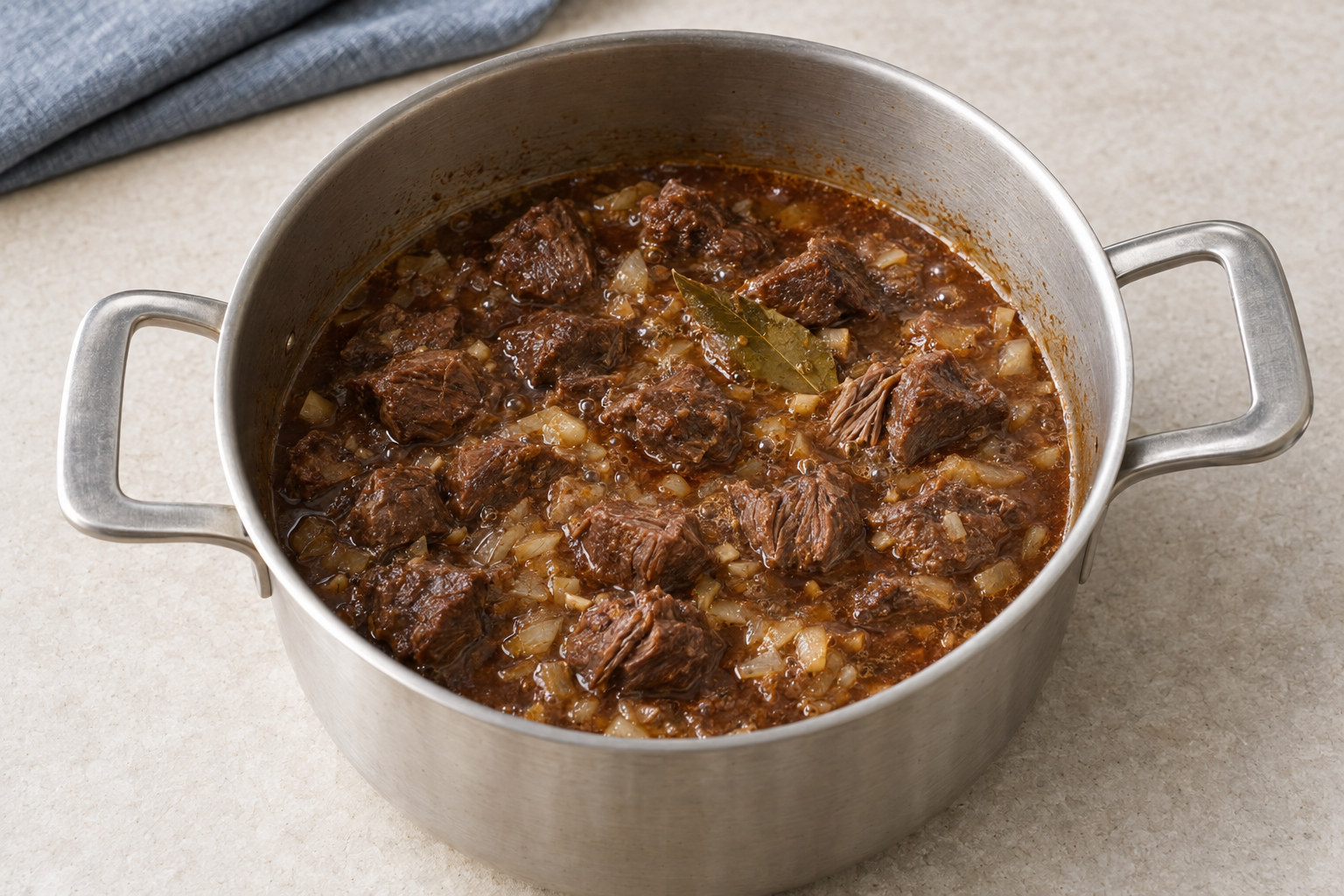
In the same pot, we fry the peeled, finely chopped onion in the remaining oil for 7–9 minutes, stirring constantly, until golden. We add the crushed garlic and bay leaf. We return the meat and its collected juices, pour in all the stock and bring it to a very gentle simmer. We spread the cubes evenly through the liquid and turn them regularly while braising. We cover the pot and start braising the meat over a low heat.
The onion smells sweet and the aromatics are not burnt.
We pickle the onion
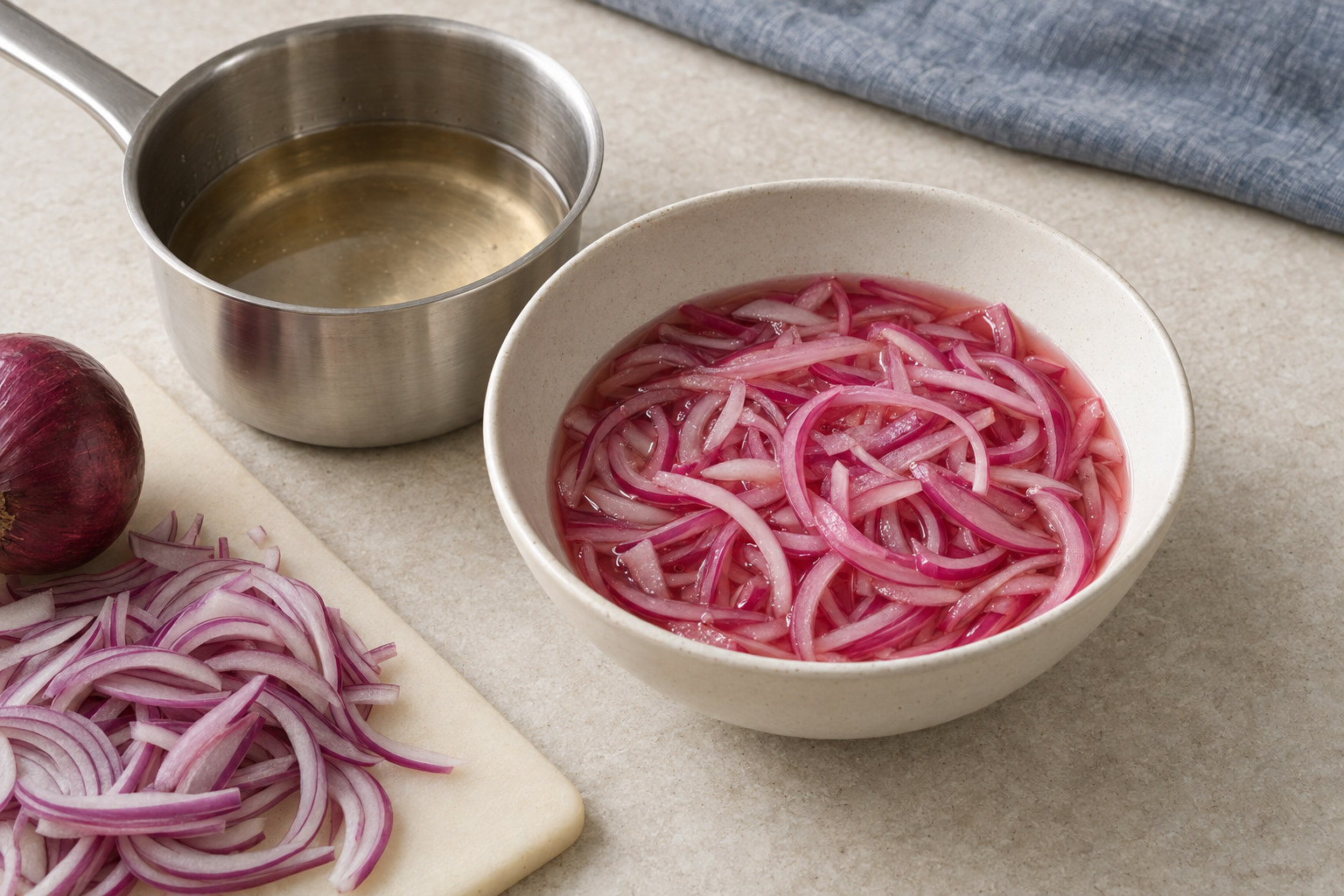
During the early part of braising, we peel the red onion and slice it 1–2 mm thick. We simmer the vinegar, water for the pickling liquid, sugar and salt from the pickled-onion ingredients for 1 minute and pour this over the onion. We leave the onion to stand for at least 20 minutes while the meat continues braising, stir it twice and drain it just before serving.
The onion is tart and still crisp.
We braise the meat slowly until tender
We continue braising the meat over a low heat for about 150–210 minutes in total, until it pulls apart easily into strands with a fork. While the meat braises, we prepare the mole as described in the following steps, starting about 75 minutes before we expect the meat to become tender. The liquid should bubble only occasionally. We stir every half-hour and add a little hot water as needed. If the meat is still firm, we continue braising and wait before finishing the dumplings. We do not turn up the heat. Liquid boiling away quickly usually means the simmer is too vigorous or the lid does not fit closely.
The meat is tender and the liquid is only gently bubbling.
We toast the base for the mole
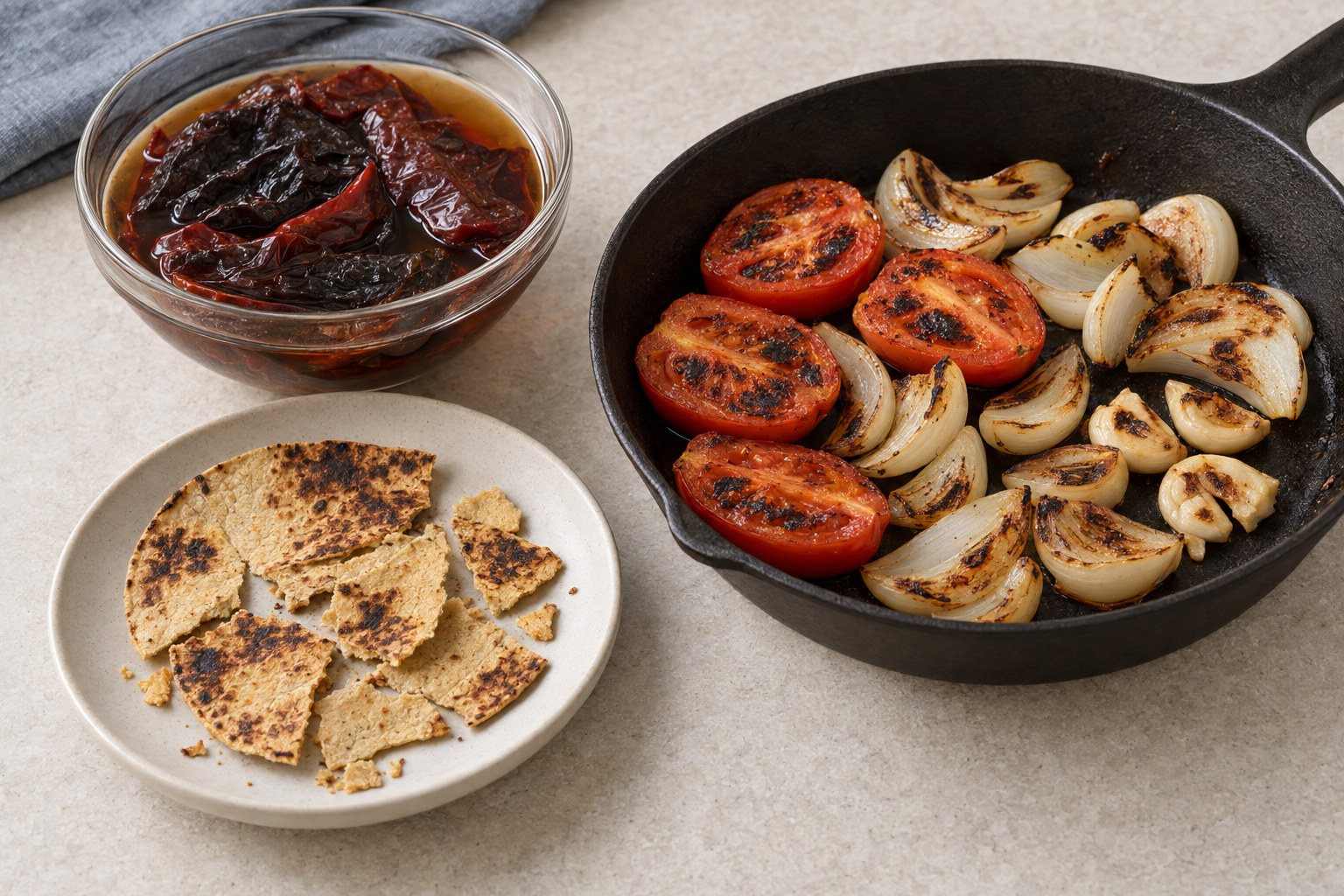
About 75 minutes before the end of braising, we press the chillies briefly against a dry pan on both sides, just until fragrant. We cover them with the hot water for soaking and leave them to soften for 20 minutes. We halve the tomatoes, peel the onion for the mole and slice it 1 cm thick, then lightly crush the peeled garlic cloves. We char the vegetables in a dry pan over a medium heat for 10–15 minutes, turning them regularly until dark brown patches form. We toast the tortilla in the dry pan until dark brown, break it up and set everything aside.
The chillies smell fruity and spicy, not acrid or burnt.
We blend and simmer the sauce
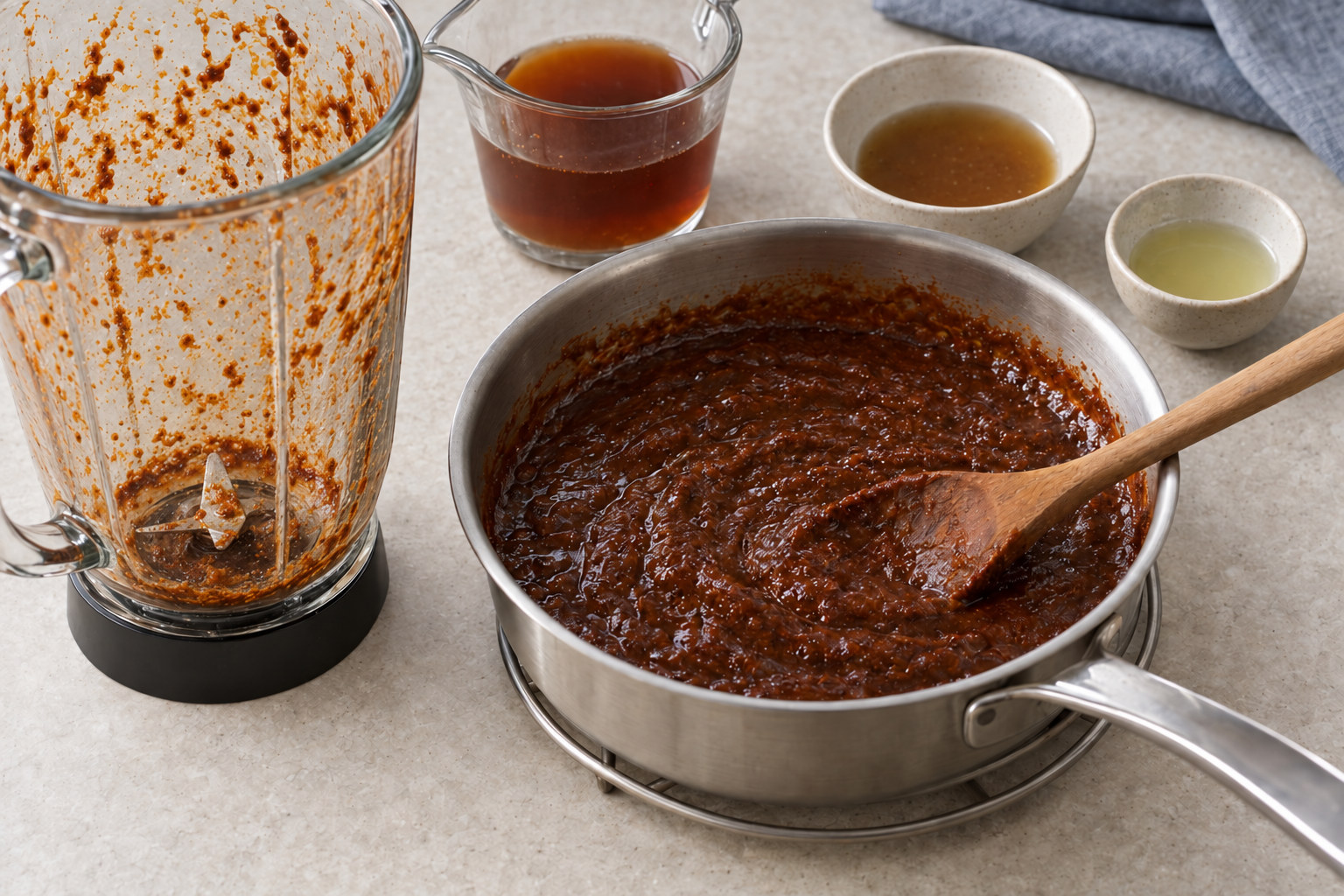
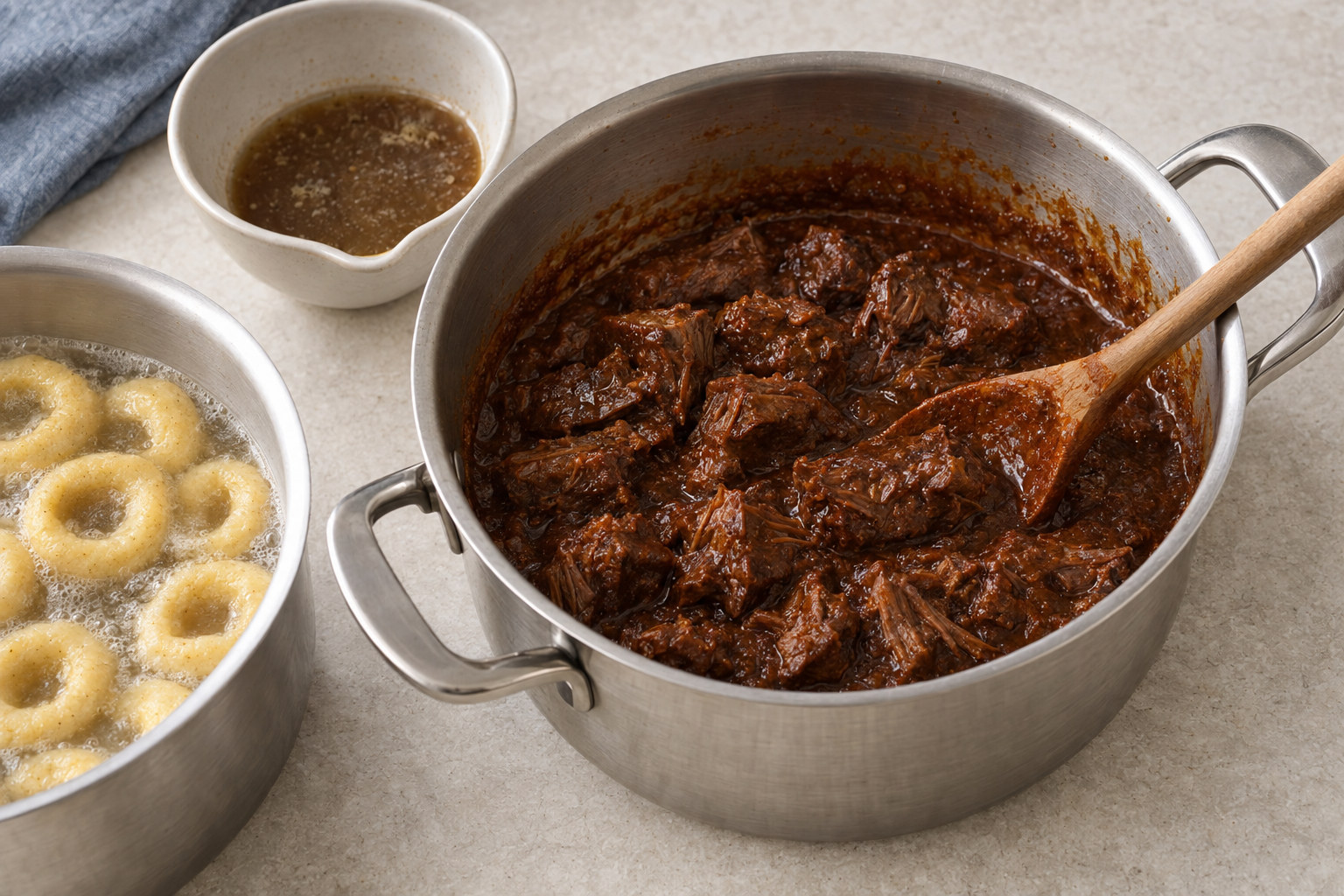
We lift out the chillies and keep their soaking water. We let the vegetables and chillies cool briefly until lukewarm. We blend them with the tortilla, cumin, oregano and half the salt for the dumplings and mole. We first add 100 ml of the chilli soaking water and 80 ml of the meat braising liquid. We blend until smooth; if the mixture is too thick for the blender, we add more of the remaining chilli water a tablespoon at a time. We carefully pour the purée into the hot oil for the mole and simmer gently for 25 minutes. At the same time, we put the water on to heat for the dumplings and start the dough as described in the next step. We stir the sauce regularly across the bottom. After 25 minutes, we stir in the lime juice. We keep the sauce covered and hot, and set the remaining soaking water aside.
The sauce is smooth, dark and slightly tart; bitterness means the chillies have burnt.
We shape the corn dumplings, chochoyotes
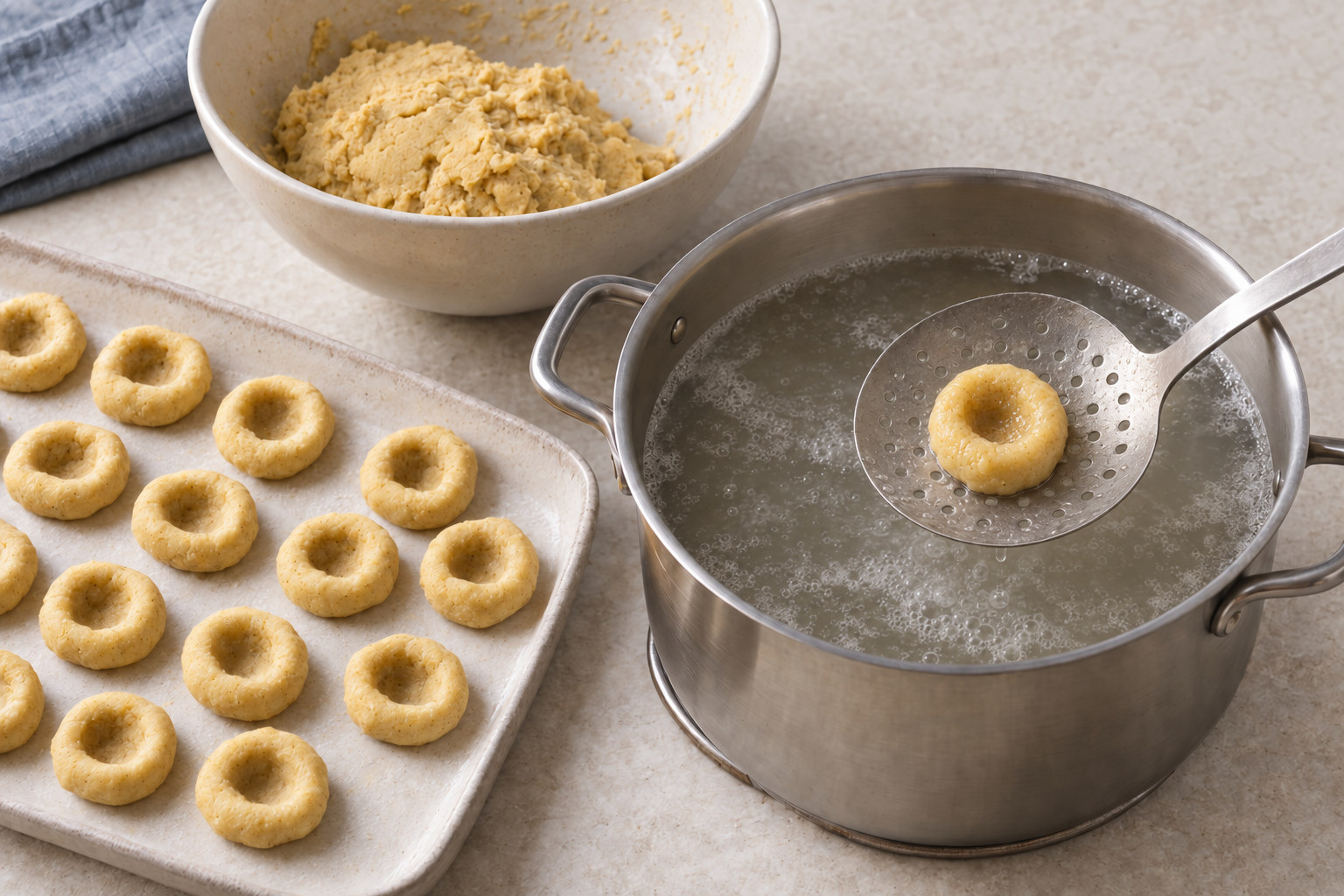
We knead 110 g masa harina for 3 minutes with 150 ml lukewarm water, the lard and the other half of the salt for the dumplings and mole. We cover it for 10 minutes. The dough should be soft, non-sticky and free of cracks; we add water a teaspoon at a time if it is dry, or reserved flour 5 g at a time if it is sticky. We use no more than 20 ml of the reserved water and 10 g of the reserved flour. We first shape one test dumpling 2.5–3 cm across and make a dimple with a finger to about half its height. We gently simmer it in a pot of plenty of water for 10–15 minutes, then cut it open. If it breaks up, we knead the remaining dough again and add a little of the reserved flour if needed. The dumpling should be evenly cooked inside with no dry flour. We then shape the remaining dough into dumplings, making about 24 evenly sized dumplings in total. Once the meat is tender and the mole is ready, we gently simmer them in one batch in the same water for 10–15 minutes, without stirring vigorously. We lift them out with a slotted spoon, divide them between two warmed deep plates and cover them loosely while we finish the meat.
The dough is soft and holds its shape; the edges of the dimple do not crack.
We combine the meat and mole
As soon as the dumplings are cooked, we finish the meat. We remove the bay leaf from the braising liquid. We lift out the tender shoulder and mix it with the finished mole. We add the remaining braising liquid a tablespoon at a time until the sauce coats the meat but is still spoonable; we may not need all the liquid. We warm everything gently together for at least 3 minutes, until the meat and sauce are thoroughly hot.
The dumplings hold their shape and both the meat and sauce are hot.
We divide and serve
We add the meat in mole and the drained onion to the dumplings on two warmed deep plates. We spoon a little sauce over the dumplings and serve immediately.
Tips from our kitchen
- We toast the chillies only until fragrant so the mole does not turn bitter. For the dumplings, we use nixtamalised maize flour, masa harina.
- We cook one test dumpling first and cut it open. If there is still dry flour inside, it needs longer cooking. We keep the water at a gentle simmer so the dumplings do not break up.
What to watch out for
- Wet meat steams in an overcrowded pan instead of browning. We dry it before searing and work in batches.
How we serve it
- We serve the meat in mole with corn dumplings and drained pickled onion. We spoon a little sauce over the dumplings.
Ingredient swaps
masa harina
no equivalent substitute with ordinary maize flour We use nixtamalised maize flour; we do not replace it with ordinary maize flour in this dough.
pasilla
the same weight of ancho The sauce will be fruitier and less earthy; we keep the guajillo for freshness.
During preparation
- We keep raw meat and used utensils separate from cooked food.
Our inspiration
Chichilo is one of the seven well-known moles of Oaxaca, Mexico, and is also served with game. Hank Shaw, a chef who once cooked at The Horn of Africa restaurant in Madison, pairs it with slow-braised meat and corn dumplings called chochoyotes. Their central dimple catches the sauce, a small detail we appreciate as we eat. We make our mole with ancho, pasilla and guajillo chillies. It is an invitation to spend an afternoon cooking fragrant Mexican food and bring something unusual to the table.
Hank Shaw
Hank Shaw is a cook and author of game recipes. He once cooked at The Horn of Africa in Madison, USA; today he develops his craft with venison and other ingredients from nature.
Similar recipes
Recipe for 4 people
Step-by-step method
Before we start
We pickle the onion during the first minutes of braising. We start the mole about 75 minutes before we expect the shoulder to become tender. We mix the dumpling dough while the mole simmers and cook the first dumpling separately as a test. We cook the remaining dumplings only once the meat is becoming tender and the sauce is ready. We divide the final batch of about 48 dumplings between two wide pots and cook them at the same time.
We cut and brown the meat
We cut the shoulder into 3 cm cubes and pat them dry. We season with salt and pepper. We reserve half a tablespoon of the oil for the onion and divide the rest between four 225 g batches. We brown the meat over a medium-high heat for 4–6 minutes per batch, then transfer it to a clean bowl.
The cubes have browned sides; they must not boil in the juices at the bottom.
We prepare the braising base
In the same pot, we fry the peeled, finely chopped onion in the remaining oil for 7–9 minutes, stirring constantly, until golden. We add the crushed garlic and bay leaves. We return the meat and its collected juices, pour in all the stock and bring it to a very gentle simmer. We spread the cubes evenly through the liquid and turn them regularly while braising. We cover the pot and start braising the meat over a low heat.
The onion smells sweet and the aromatics are not burnt.
We pickle the onion
During the early part of braising, we peel the red onion and slice it 1–2 mm thick. We simmer the vinegar, water for the pickling liquid, sugar and salt from the pickled-onion ingredients for 1 minute and pour this over the onion. We leave the onion to stand for at least 20 minutes while the meat continues braising, stir it twice and drain it just before serving.
The onion is tart and still crisp.
We braise the meat slowly until tender
We continue braising the meat over a low heat for about 150–210 minutes in total, until it pulls apart easily into strands with a fork. While the meat braises, we prepare the mole as described in the following steps, starting about 75 minutes before we expect the meat to become tender. The liquid should bubble only occasionally. We stir every half-hour and add a little hot water as needed. If the meat is still firm, we continue braising and wait before finishing the dumplings. We do not turn up the heat. Liquid boiling away quickly usually means the simmer is too vigorous or the lid does not fit closely.
The meat is tender and the liquid is only gently bubbling.
We toast the base for the mole
About 75 minutes before the end of braising, we press the chillies briefly against a dry pan on both sides, just until fragrant. We cover them with the hot water for soaking and leave them to soften for 20 minutes. We halve the tomatoes, peel the onion for the mole and slice it 1 cm thick, then lightly crush the peeled garlic cloves. We char the vegetables in a dry pan over a medium heat for 10–15 minutes, turning them regularly until dark brown patches form. We toast the tortilla in the dry pan until dark brown, break it up and set everything aside.
The chillies smell fruity and spicy, not acrid or burnt.
We blend and simmer the sauce
We lift out the chillies and keep their soaking water. We let the vegetables and chillies cool briefly until lukewarm. We blend them with the tortilla, cumin, oregano and half the salt for the dumplings and mole. We first add 180 ml of the chilli soaking water and 140 ml of the meat braising liquid. We blend until smooth; if the mixture is too thick for the blender, we add more of the remaining chilli water a tablespoon at a time. We carefully pour the purée into the hot oil for the mole and simmer gently for 25 minutes. At the same time, we put the water on to heat in both pots and start the dough as described in the next step. We stir the sauce regularly across the bottom. After 25 minutes, we stir in the lime juice. We keep the sauce covered and hot, and set the remaining soaking water aside.
The sauce is smooth, dark and slightly tart; bitterness means the chillies have burnt.
We shape the corn dumplings, chochoyotes
We knead 210 g masa harina for 3 minutes with 290 ml lukewarm water, the lard and the other half of the salt for the dumplings and mole. We cover it for 10 minutes. The dough should be soft, non-sticky and free of cracks; we add water a teaspoon at a time if it is dry, or reserved flour 5 g at a time if it is sticky. We use no more than 40 ml of the reserved water and 20 g of the reserved flour. We first shape one test dumpling 2.5–3 cm across and make a dimple with a finger to about half its height. We gently simmer it in a pot of plenty of water for 10–15 minutes, then cut it open. If it breaks up, we knead the remaining dough again and add a little of the reserved flour if needed. The dumpling should be evenly cooked inside with no dry flour. We then shape the remaining dough into dumplings, making about 48 evenly sized dumplings in total. Once the meat is tender and the mole is ready, we divide the remaining dumplings roughly equally between the two wide pots of gently simmering water, about 23–24 in each. We cook both batches at the same time for 10–15 minutes without stirring vigorously. We lift them out with a slotted spoon, divide them between four warmed deep plates and cover them loosely while we finish the meat.
The dough is soft and holds its shape; the edges of the dimple do not crack.
We combine the meat and mole
As soon as the dumplings are cooked, we finish the meat. We remove both bay leaves from the braising liquid. We lift out the tender shoulder and mix it with the finished mole. We add the remaining braising liquid a tablespoon at a time until the sauce coats the meat but is still spoonable; we may not need all the liquid. We warm everything gently together for at least 3 minutes, until the meat and sauce are thoroughly hot.
The dumplings hold their shape and both the meat and sauce are hot.
We divide and serve
We add the meat in mole and the drained onion to the dumplings on four warmed deep plates. We spoon a little sauce over the dumplings and serve immediately.