
British inspiration · British inspiration
Red deer shoulder shepherd’s pie with potato and parsnip mash
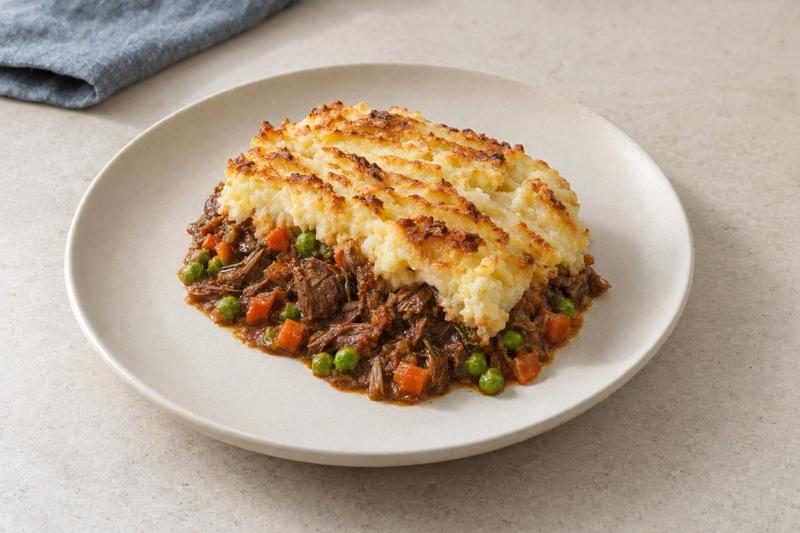
Our spoon first breaks through the browned peaks of mash, then lifts strands of red deer meat from the rich gravy below. We save this hearty pie with parsnip and peas for a day when we have time for slow braising and a shared lunch.
Tougher shoulder may need longer braising; we test its tenderness with a fork.
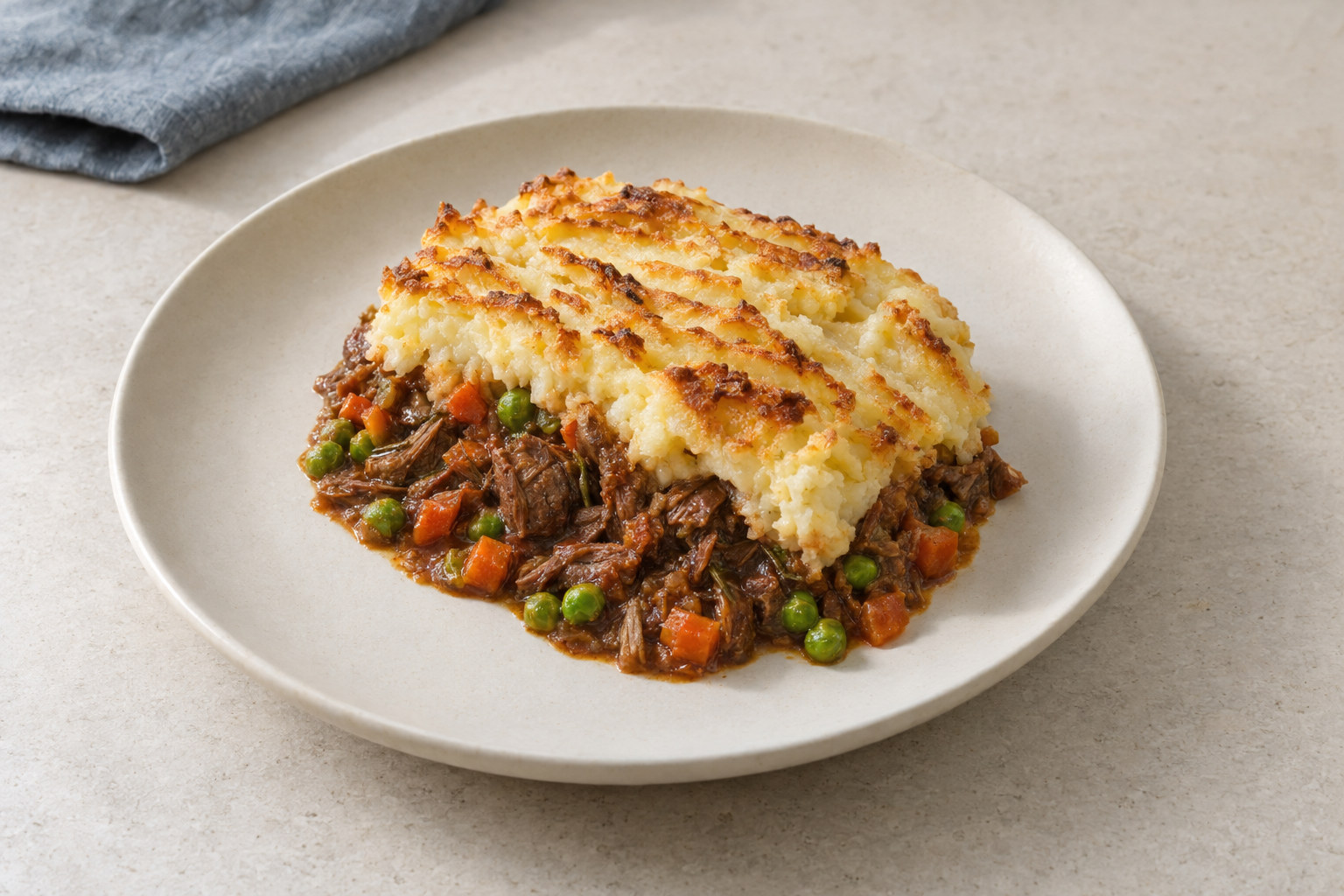
Rosemary scents the meat filling, set against the sweetness of carrot, parsnip and peas.
Step-by-step method
What you will need
- kitchen scales
- knife and two separate chopping boards
- measuring jug
- heavy 20 cm pot with tight-fitting lid, 3 l
- 3 l pot with lid
- 20 × 20 cm baking dish at least 5 cm deep
- 0.5 l saucepan for the milk
- potato masher
- colander
- oven
- kettle
Before we start
When the meat begins to soften, we start the mash, allowing about 35 minutes to make it. While the potatoes and parsnip cook, we preheat the oven to 210 °C. We cover the hot meat filling with warm mash and bake straight away. We let the pie rest for 5 minutes before serving.
We cut and brown the meat
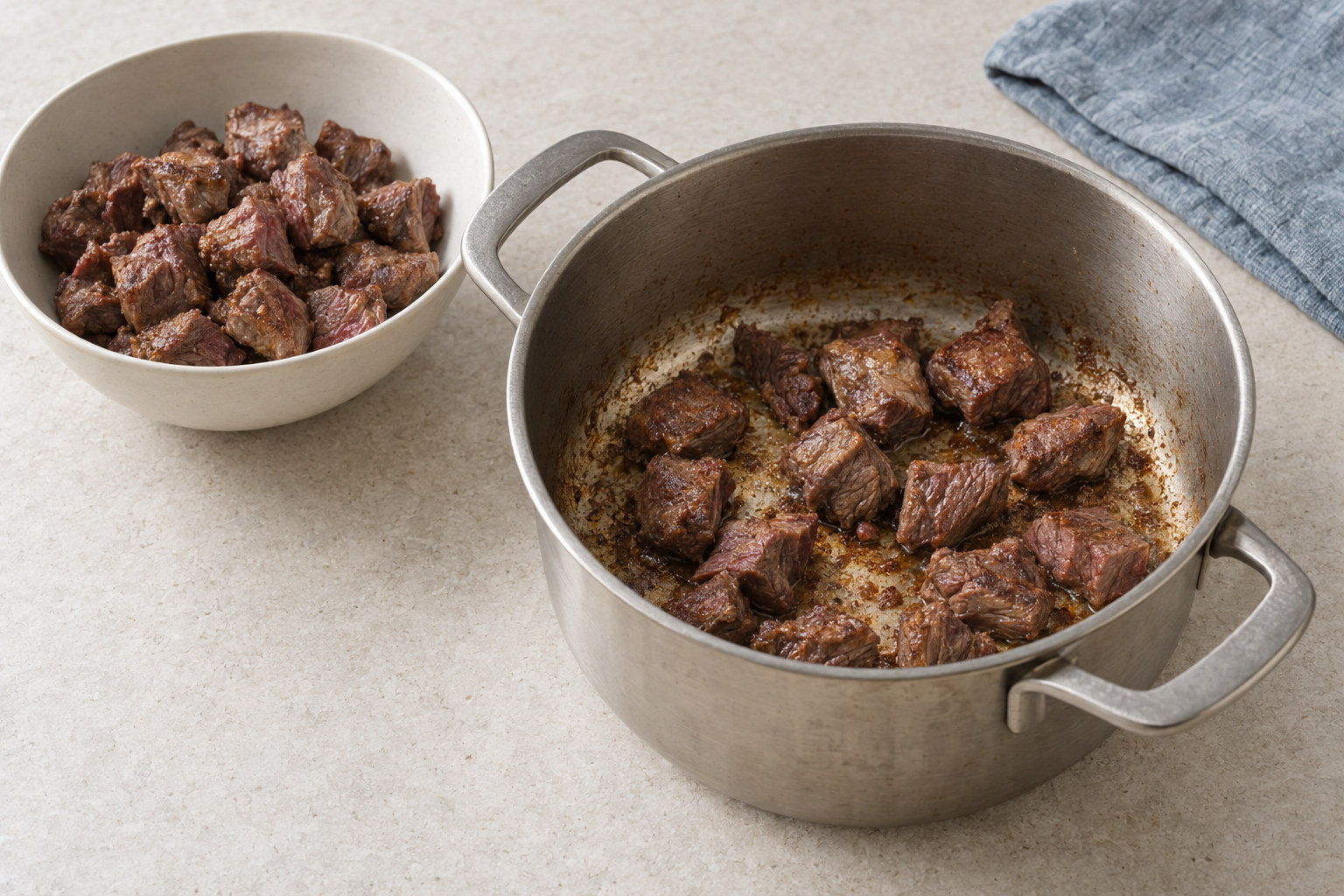
We cut the prepared shoulder into 3 cm cubes and pat them dry. We season with the salt for the meat and add pepper. We reserve 1 teaspoon of the oil for the onion and divide the rest between two 225 g batches of meat. We brown each batch over medium-high heat for 4–6 minutes, then transfer it to a clean bowl.
The cubes have browned sides; they must not boil in the juices on the base.
We prepare the braising base
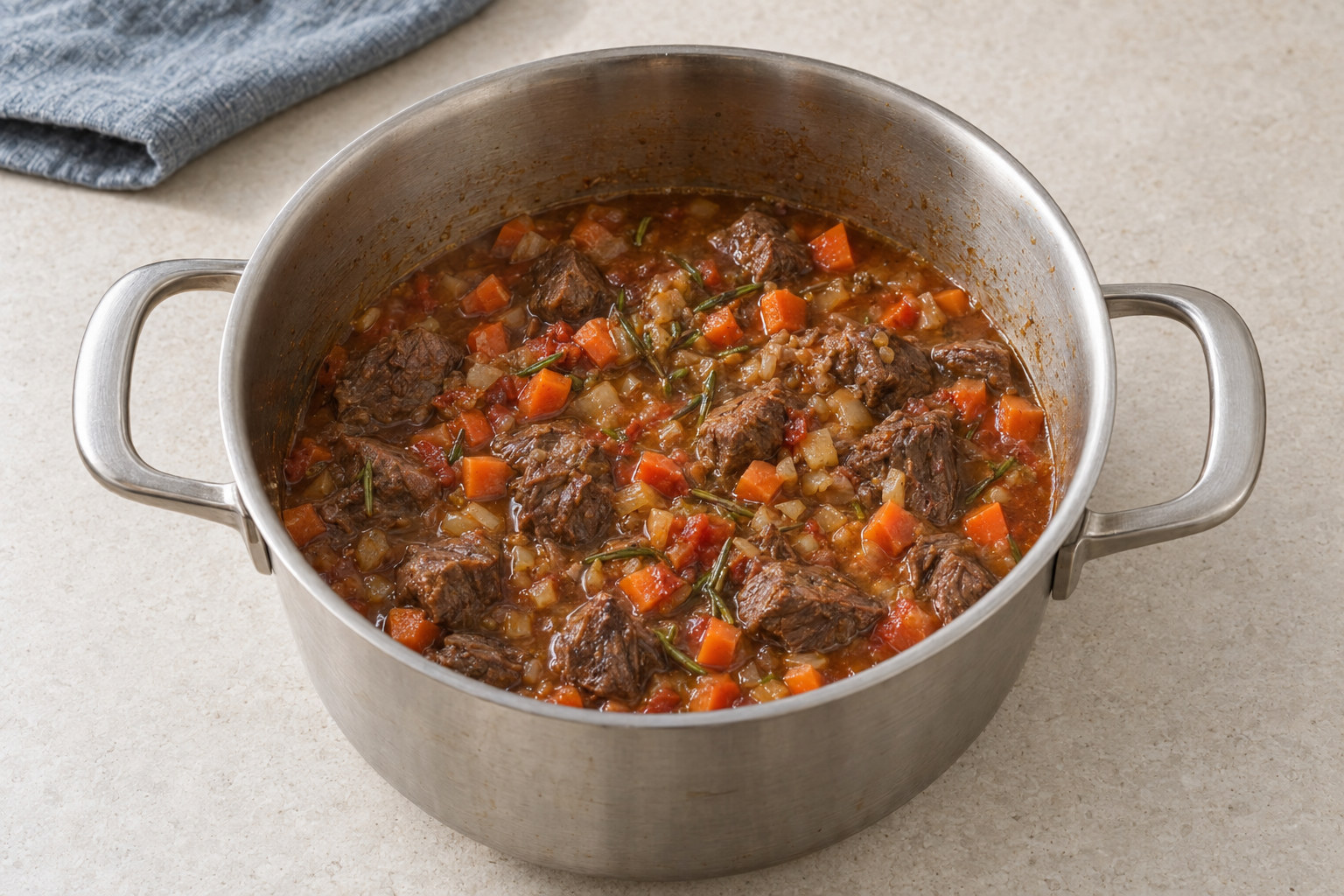
In the same pot, we fry the finely chopped onion in the remaining oil for 7–9 minutes, stirring, until golden. We add the finely diced carrot, tomato purée and chopped rosemary. We fry for 2 minutes, stirring. We keep the peas frozen for now. We return the meat and collected juices, pour in all the stock and bring to a very gentle simmer. We nestle the cubes into the liquid and turn them regularly during braising.
The onion smells sweet and the herbs are not burnt.
We braise the meat slowly until tender
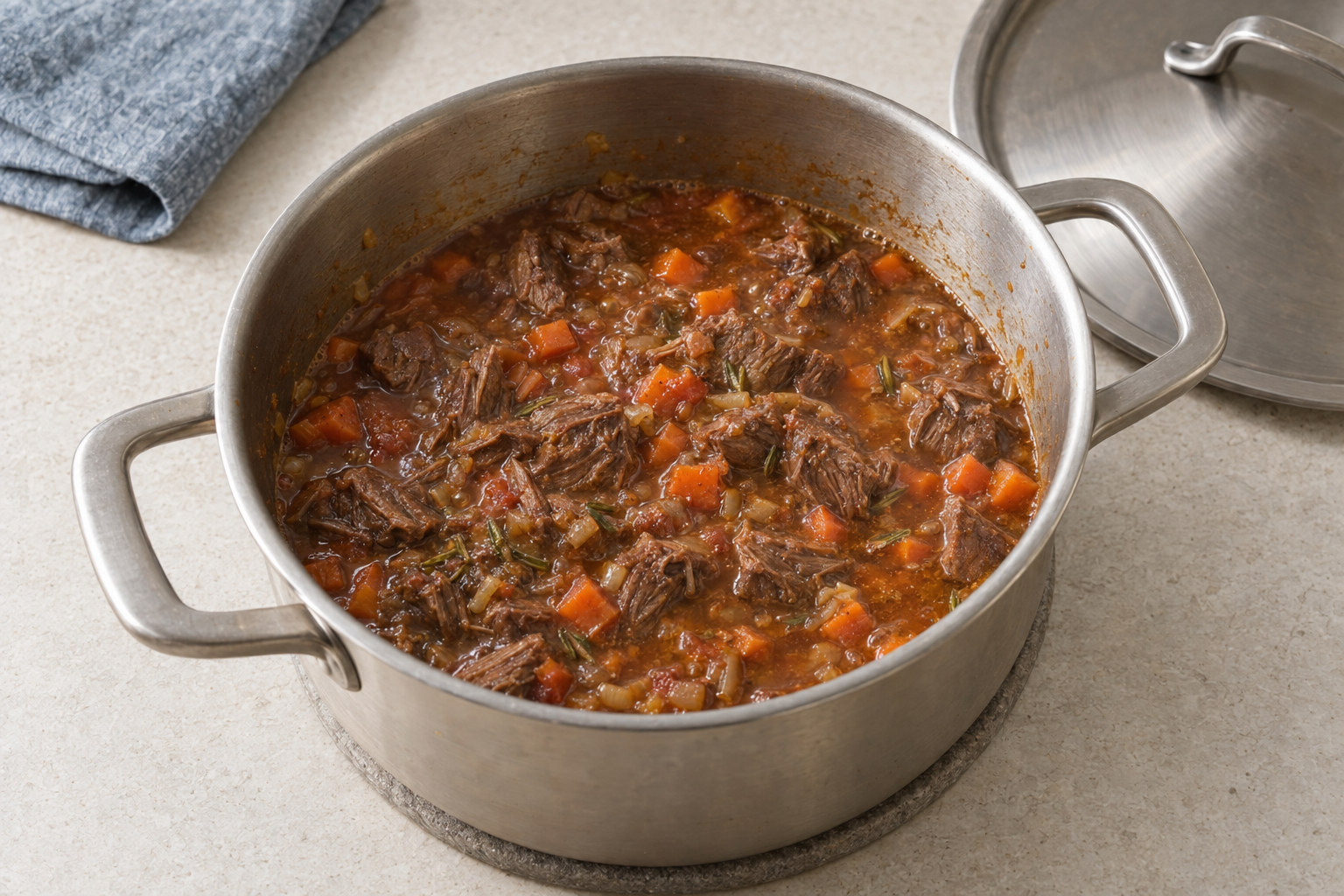
We cover and braise over low heat for about 150–210 minutes. The liquid should bubble only now and then. Every 30 minutes, we stir the meat, check that it is not catching on the base and add a little hot water if needed. We can easily pull cooked meat into strands with a fork. If the shoulder is still tough, we keep braising it and wait before making the mash. We do not turn up the heat. If the water boils away quickly, we lower the heat and check that the lid fits tightly.
The meat is tender and the liquid bubbles only gently.
We make the potato and parsnip mash
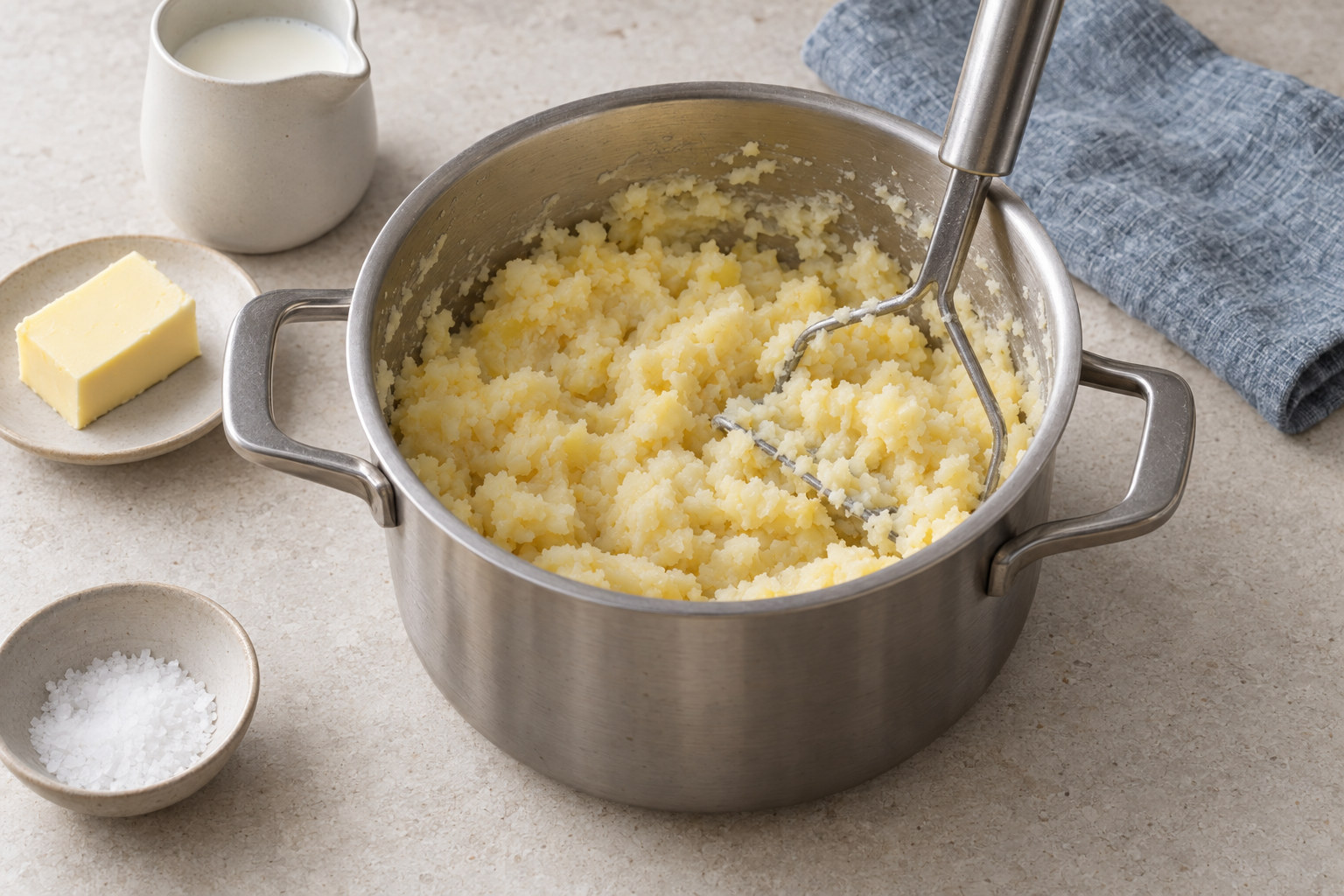
We peel the potatoes and parsnip and cut them into pieces about 2 cm across. We cover with unsalted water, bring to the boil and simmer for 20–25 minutes until tender. We drain the water and let the vegetables steam dry for a minute. We add the butter, warmed milk and salt set aside for the mash and mash by hand. We do not blend it; it should be thick enough to hold on a spoon.
We bake the meat filling under the mash
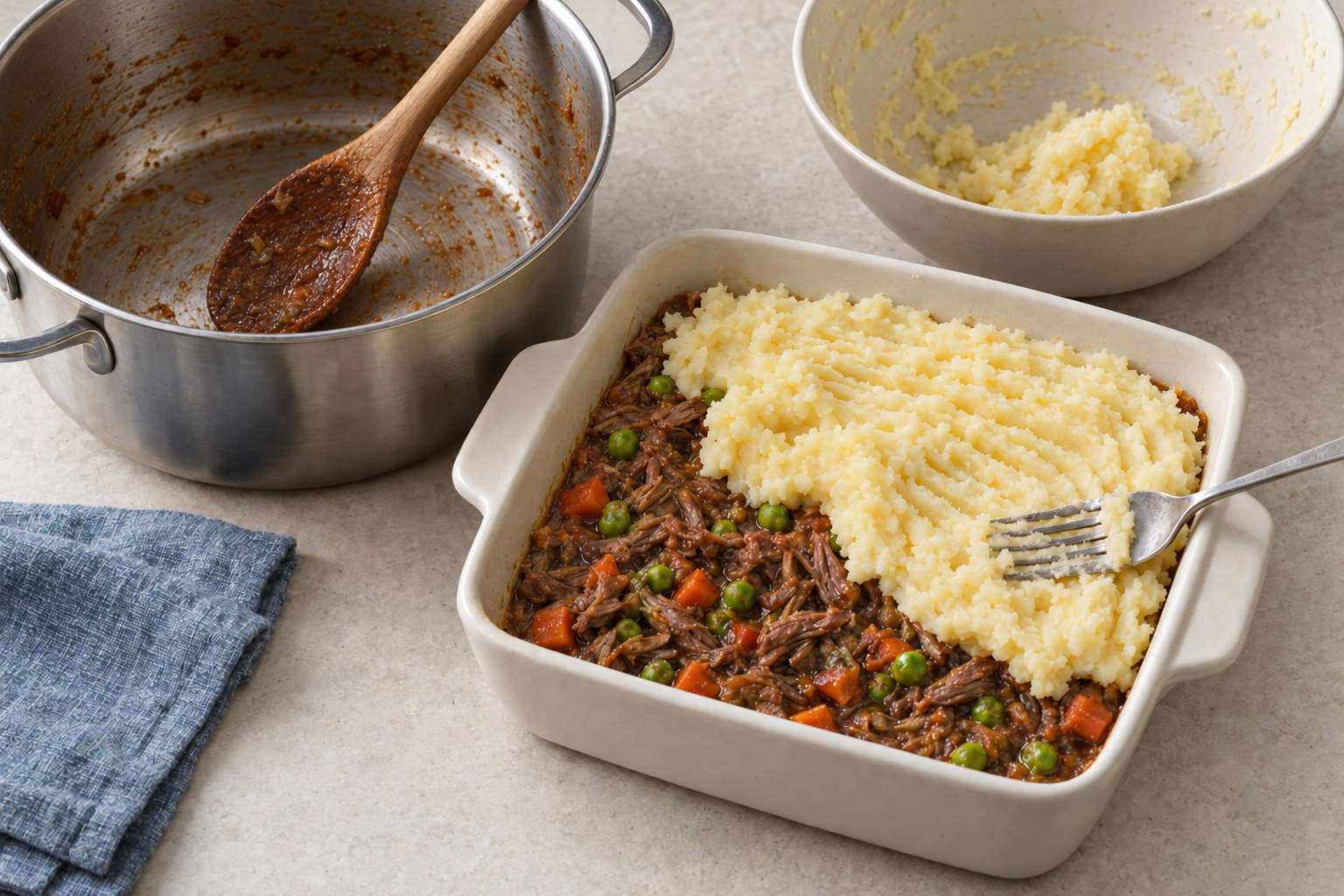
Using two forks, we pull the tender shoulder into short strands, stir in the peas and simmer for 5 minutes. If the filling is thin and juices separate from it, we cook it uncovered for another 5–10 minutes. We transfer the hot filling to the baking dish. We spoon the mash over the top, smooth it into a continuous layer and make grooves with a fork. We bake in the preheated oven at 210 °C with top and bottom heat for 20–25 minutes, until the filling bubbles at the edges and the mash turns golden.
We portion and serve
We let the pie rest for 5 minutes. Then we spoon it into 2 servings, ensuring each has meat filling and potato and parsnip mash.
Tips from our kitchen
- We reduce the filling before covering it with mash so it does not spread across the plate.
- We spoon on the mash and join it only at the surface; pressing it into the meat would mix the two layers.
What to watch out for
- Wet meat stews rather than browns in an overcrowded pan. We pat it dry before searing and work in batches.
How we serve it
- We scoop the pie with a spoon so every serving contains both the meat filling and baked mash.
During preparation
- We keep raw meat and its utensils separate from the finished food.
Our inspiration
Paul Welburn, former head chef of the London restaurant Rhodes W1, makes a game cobbler with horseradish dumplings. It has two parts in one dish: slowly braised, juicy filling underneath and freshly baked dough on top. Every serving brings both together.
We take the pairing of filling and a baked top as our inspiration. In our own version, we use red deer shoulder and replace the dumplings with potato and parsnip mash. The grooves made by a fork turn into golden peaks in the oven, while soft mash and meat with vegetables remain beneath.
Paul Welburn
Paul Welburn is a British chef who ran the kitchen at the London restaurant Rhodes W1. His game cobbler, braised meat baked under a layer of dough, inspired our own pie with potato mash.
Similar recipes
Recipe for 4 people
Step-by-step method
Before we start
When the meat begins to soften, we start the mash, allowing about 35 minutes to make it. While the potatoes and parsnip cook, we preheat the oven to 210 °C. We cover the hot meat filling with warm mash and bake straight away. We let the pie rest for 5 minutes before serving.
We cut and brown the meat
We cut the prepared shoulder into 3 cm cubes and pat them dry. We season with the salt for the meat and add pepper. We reserve half a tablespoon of the oil for the onion and divide the rest between four 225 g batches of meat. We brown each batch over medium-high heat for 4–6 minutes, then transfer it to a clean bowl.
The cubes have browned sides; they must not boil in the juices on the base.
We prepare the braising base
In the same pot, we fry the finely chopped onion in the remaining oil for 7–9 minutes, stirring, until golden. We add the finely diced carrot, tomato purée and chopped rosemary. We fry for 2 minutes, stirring. We keep the peas frozen for now. We return the meat and collected juices, pour in all the stock and bring to a very gentle simmer. We nestle the cubes into the liquid and turn them regularly during braising.
The onion smells sweet and the herbs are not burnt.
We braise the meat slowly until tender
We cover and braise over low heat for about 150–210 minutes. The liquid should bubble only now and then. Every 30 minutes, we stir the meat, check that it is not catching on the base and add a little hot water if needed. We can easily pull cooked meat into strands with a fork. If the shoulder is still tough, we keep braising it and wait before making the mash. We do not turn up the heat. If the water boils away quickly, we lower the heat and check that the lid fits tightly.
The meat is tender and the liquid bubbles only gently.
We make the potato and parsnip mash
We peel the potatoes and parsnip and cut them into pieces about 2 cm across. We cover with unsalted water, bring to the boil and simmer for 20–25 minutes until tender. We drain the water and let the vegetables steam dry for a minute. We add the butter, warmed milk and salt set aside for the mash and mash by hand. We do not blend it; it should be thick enough to hold on a spoon.
We bake the meat filling under the mash
Using two forks, we pull the tender shoulder into short strands, stir in the peas and simmer for 5 minutes. If the filling is thin and juices separate from it, we cook it uncovered for another 5–10 minutes. We transfer the hot filling to the baking dish. We spoon the mash over the top, smooth it into a continuous layer and make grooves with a fork. We bake in the preheated oven at 210 °C with top and bottom heat for 20–25 minutes, until the filling bubbles at the edges and the mash turns golden.
We portion and serve
We let the pie rest for 5 minutes. Then we spoon it into 4 servings, ensuring each has meat filling and potato and parsnip mash.