
Original Central European cuisine · Original Central European cuisine
Red deer roulade with mushroom filling, spaetzle and juniper jus
Slices of red deer roulade reveal a fragrant mushroom and thyme filling. We serve the meat with homemade egg spaetzle tossed in butter and a dark wine jus that brings together juniper and currants. We take our time over this special lunch.
The total time includes cooling the mushroom filling.
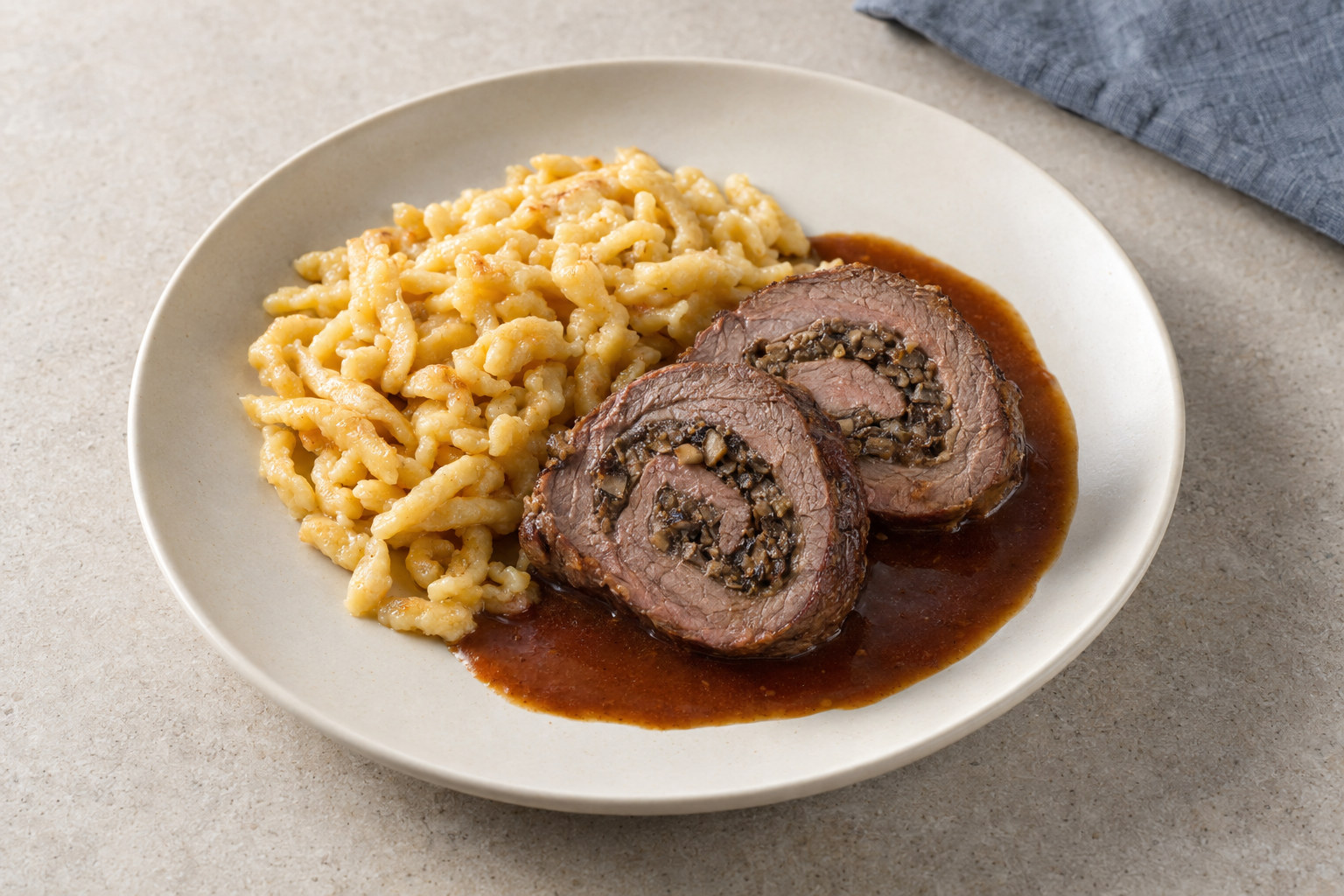
Red deer meat with finely chopped mushrooms and thyme, springy buttered spaetzle and glossy wine jus. Juniper perfumes the jus with spice, while currant jam adds a sweet-tart note.
Step-by-step method
What you will need
- kitchen scales
- probe thermometer with a thin probe
- knife and two separate chopping boards
- measuring jug
- 26 cm pan
- 22 × 18 cm small roasting tin
- 3 l pot
- 1 l small saucepan
- kitchen string
- cling film for evening out the meat
- spaetzle sieve
- fine colander
- slotted spoon
- bowl
- clean shallow plate for cooling the filling
- oven
Before we start
We spread the mushroom filling in a thin layer and cool it for about 15 minutes while opening out the meat and preheating the oven. During roasting, we make the jus and strain it into a small saucepan. We mix the spaetzle batter about 25 minutes before the expected end of roasting and cook it when the meat’s internal temperature approaches 70 °C. We use the freed-up pan for the buttered spaetzle and serve after the roulade’s eight-minute rest.
Cook the mushroom filling dry and cool it
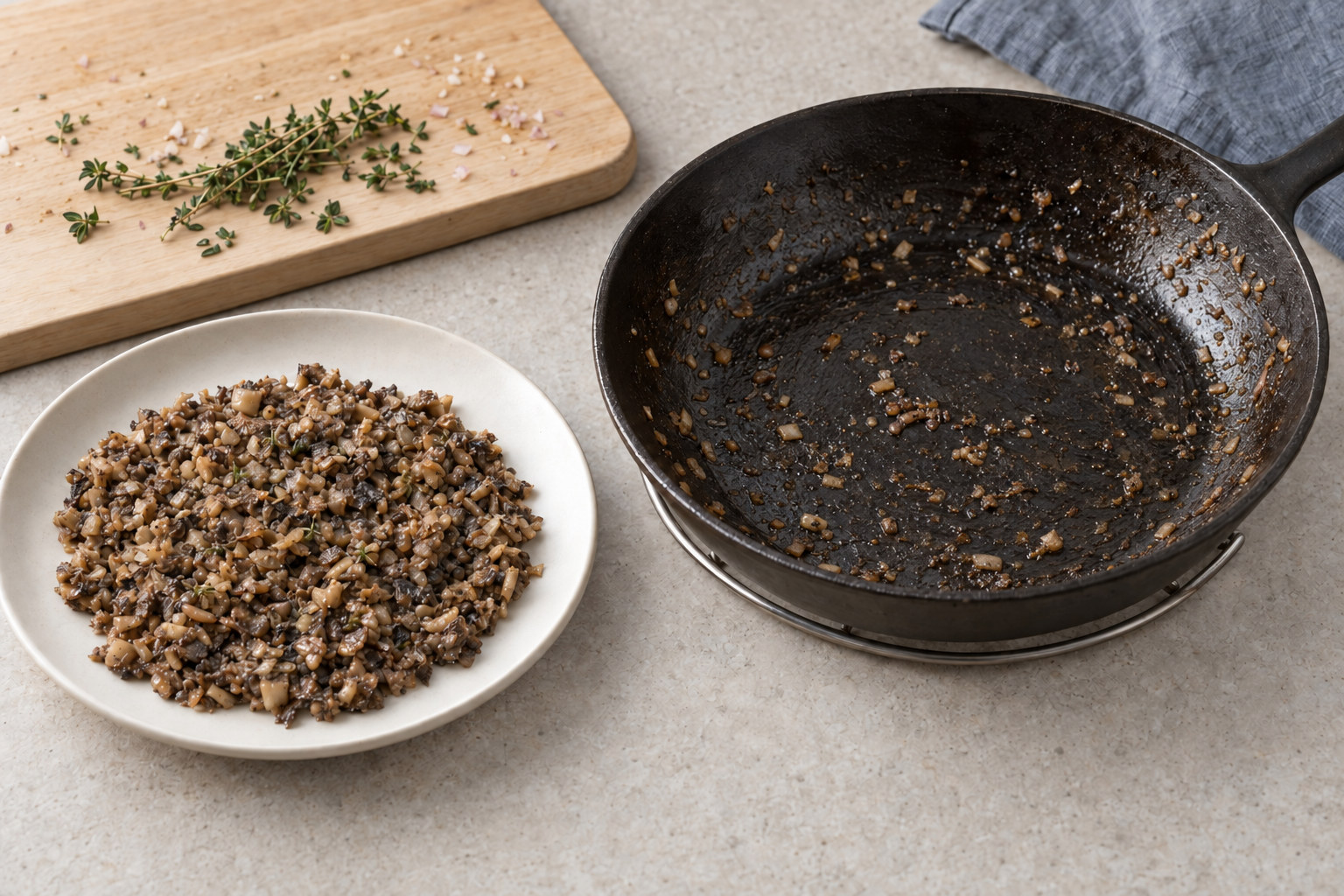
We clean the mushrooms, peel the shallot and chop both very finely. We strip the leaves from the thyme. We soften the shallot in the butter for 3 minutes, then add the mushrooms, thyme and one third of the salt set aside for the roulade. We fry for 10–15 minutes until all the liquid has evaporated. We spread the filling on a clean plate and let it cool.
The mushroom filling, called duxelles, resembles damp crumbs; no water runs out when pressed.
Fill and tie the roulade
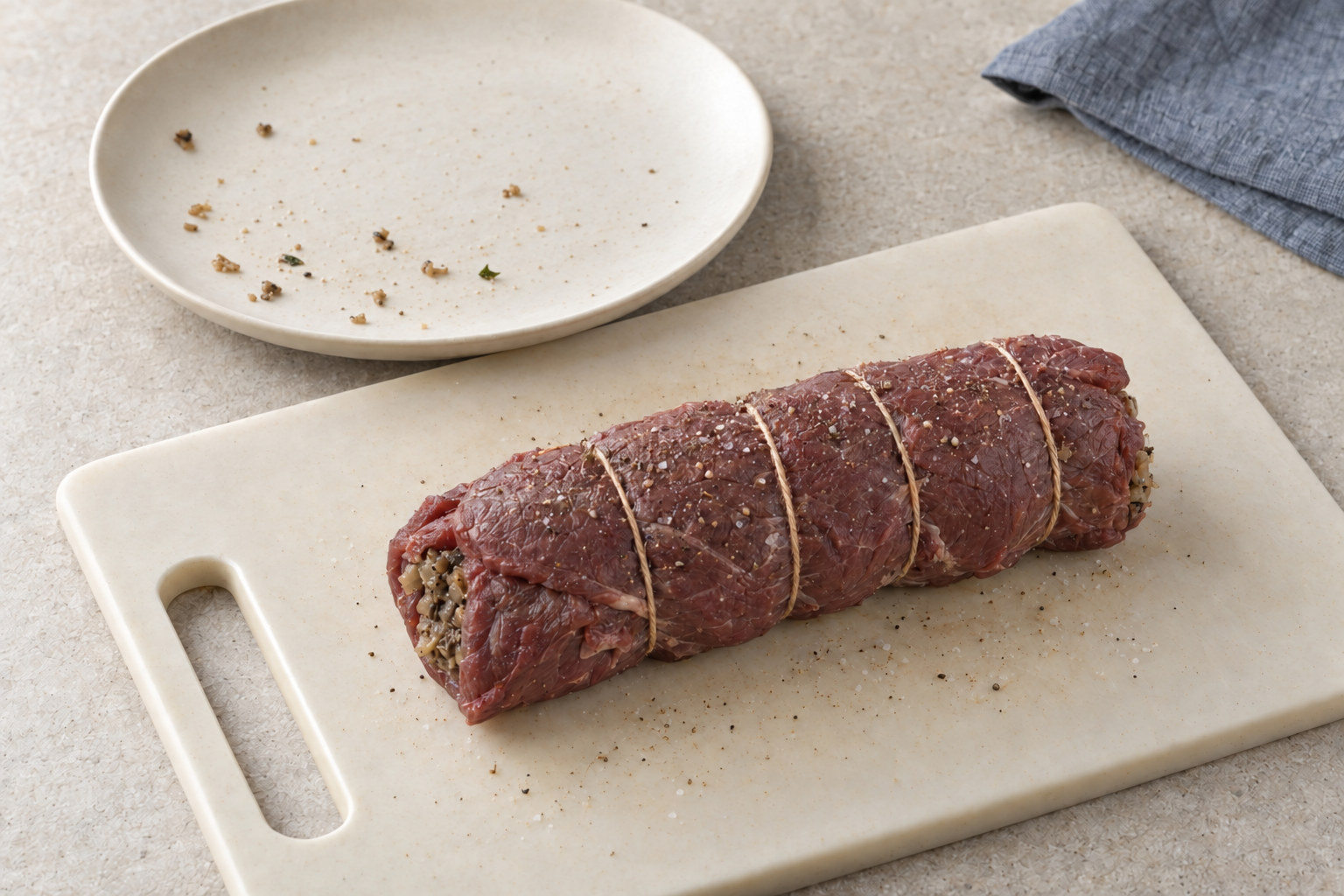
We make one whole sheet from 450 g of haunch. We cut the muscle lengthways and open it out without cutting all the way through. Between sheets of cling film, we gently even it to a thickness of 8–10 mm and dimensions of about 18 × 30 cm. We spread the cold, dry mushroom filling over it, leaving a 2 cm border. We roll from the short side and tie with string every 3 cm. We season the outside with the remaining salt and pepper. This makes one roulade about 6–7 cm across.
The roulade is even, the filling does not leak and the string holds the meat gently.
Sear and roast the roulade
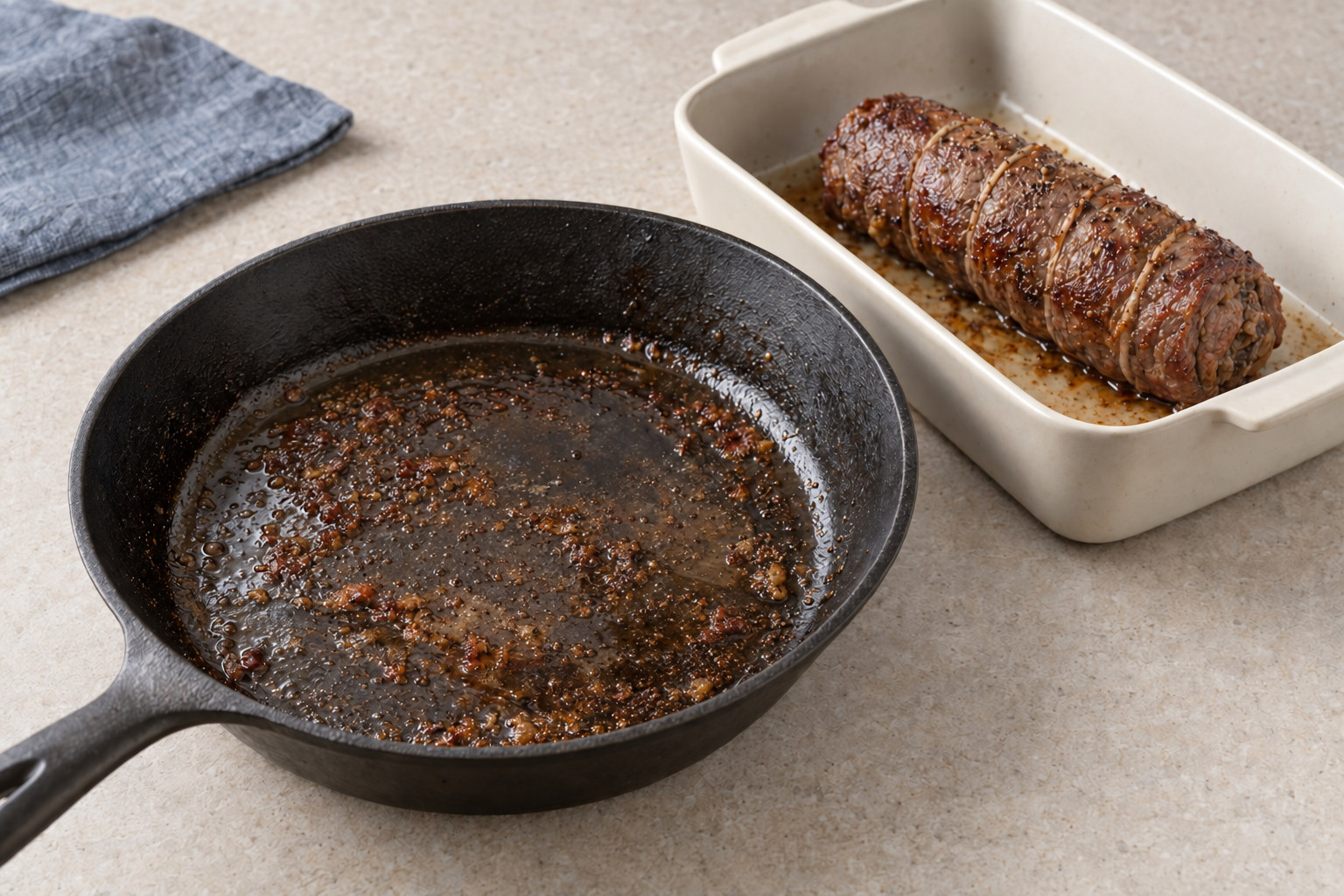
We preheat the oven to 155 °C with top and bottom heat. We sear the roulade in oil on all sides for 6–8 minutes. We transfer it to the small roasting tin and roast for about 35–55 minutes, depending on its actual diameter. With a clean probe, we check that both the meat and the centre of the filling have stayed at no less than 70 °C for 2 minutes. If the centre is cooler, we keep roasting and check every 5 minutes. We cover loosely and rest for 8 minutes.
Reduce the juniper jus
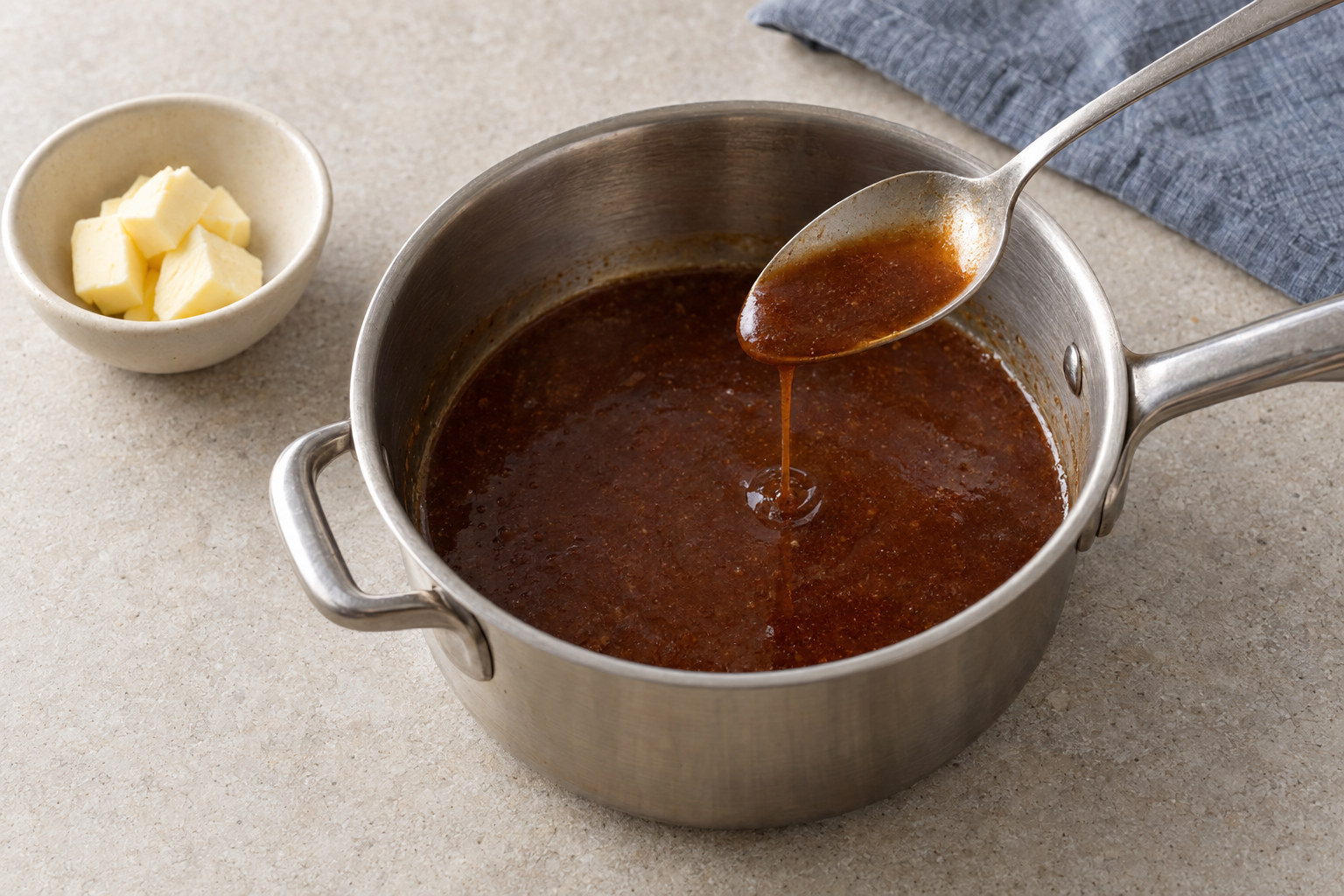
We peel and finely chop the onion for the jus and add it to the pan used for the meat. We fry it, stirring, for 3 minutes. We pour in the wine, add the juniper and reduce to one third of its volume. We add the stock and currant jam and simmer for 15–25 minutes. We strain into a small saucepan, stir in the salt and whisk in the cold butter away from a vigorous boil. We keep the jus over the lowest heat without letting it boil. We wipe out the large pan and reserve it for finishing the spaetzle.
The jus makes a thin glossy coating on a spoon; it is not as thick as custard.
Mix and cook the spaetzle
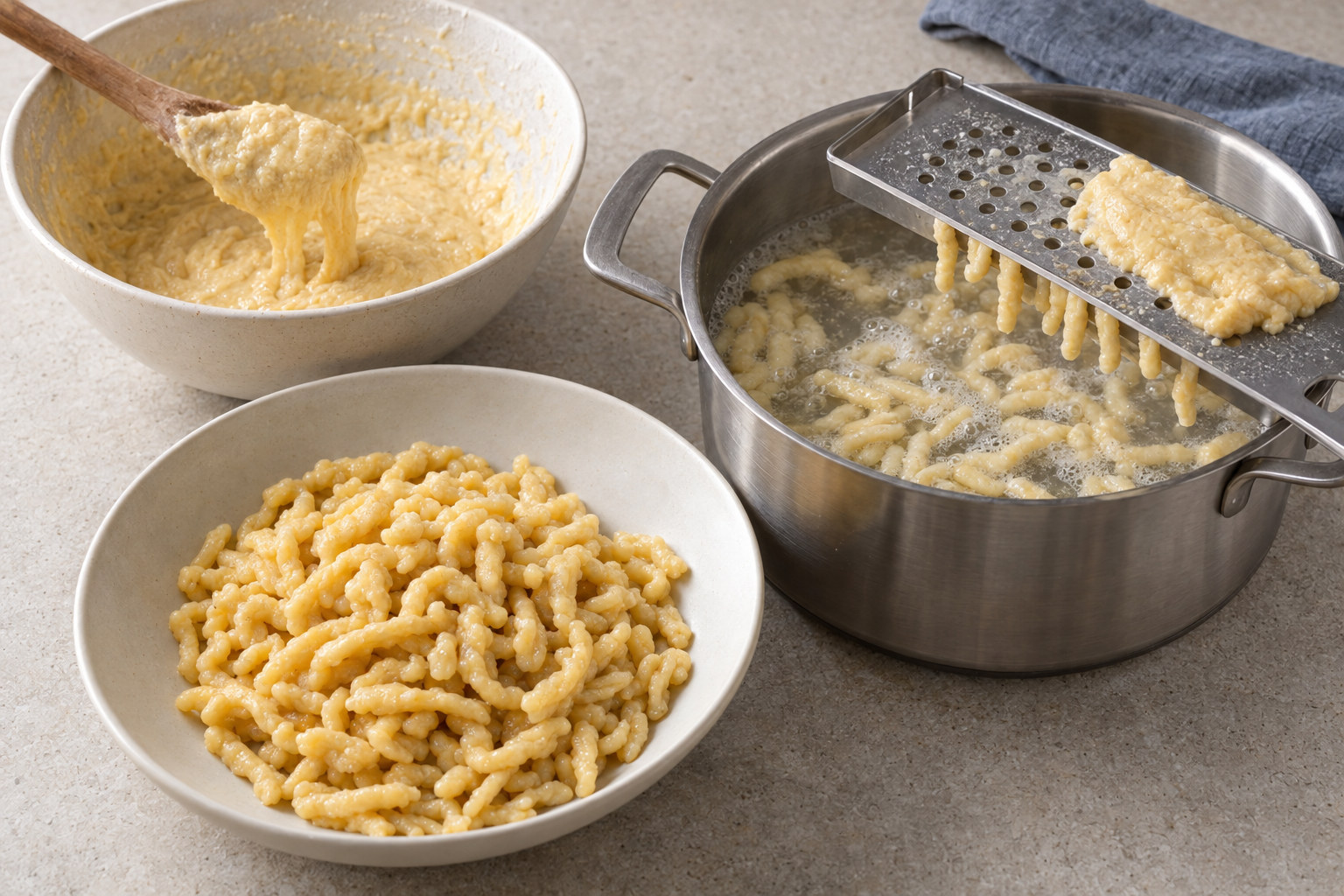
We stir the flour, beaten egg, milk and salt for the batter with a wooden spoon for 3 minutes, then rest the batter for 10 minutes. It should fall from a spoon in a thick ribbon. In a wide pot, we bring plenty of water to a boil and add the salt set aside for cooking. We press the batter through a spaetzle sieve in two roughly equal batches. After the spaetzle rise to the surface, we cook them for another 2 minutes and lift them out with a slotted spoon.
The spaetzle are springy and have no raw flour taste inside.
Warm the spaetzle and serve the roulade
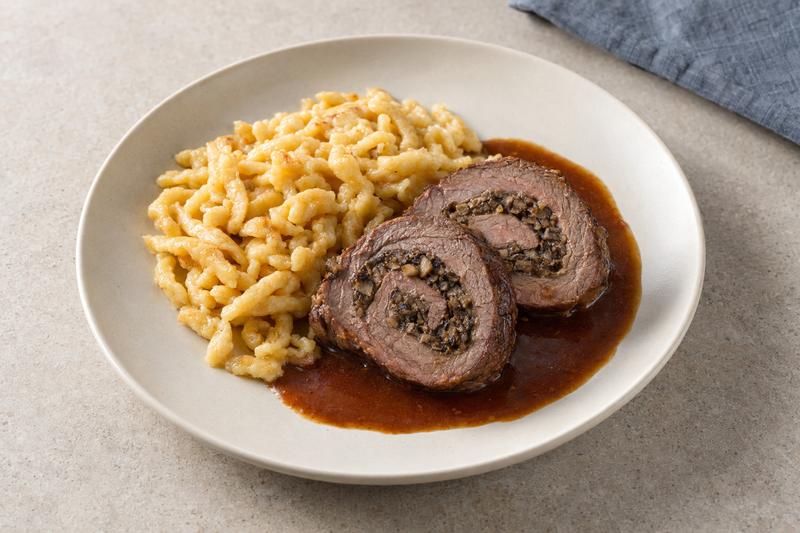
We transfer the drained spaetzle straight to the freed-up pan with the butter set aside for them and toss gently after each batch. Before serving, we warm them over a medium heat for 2–3 minutes. We remove the string from the roulade and cut it into 2 cm slices. We divide the spaetzle, meat and sauce among the plates and serve immediately while hot.
The cut slices hold their filling, the spaetzle are separate and the sauce is not greasy.
Tips from our kitchen
- We cook the moisture out of the mushroom filling and let it cool so the meat can be rolled neatly.
- We toss each cooked batch of spaetzle with butter so they do not stick together before serving.
What to watch out for
- A wet filling creates pockets of liquid inside the roulade. We cook off its moisture and cool it first.
- For four people we make two roulades of equal thickness. One large roulade would take a different time to cook.
How we serve it
- We slice the roulade to show the mushroom filling. We serve it hot with spaetzle and juniper jus.
Ingredient swaps
button mushrooms
the same weight of oyster mushrooms We chop the oyster mushrooms very finely; the filling will be firmer and needs thorough frying.
During preparation
- We keep raw meat and used utensils separate from cooked food.
Our inspiration
Andy McLeish, chef of Chapter One in Kent, England, uses a finely chopped mushroom layer called duxelles in his venison Wellington. The same filling need not sit beneath pastry: in our roulade, a sheet of red deer haunch wraps around it. We turn one culinary foundation into a different special lunch, this time with buttered spaetzle and juniper jus.
Similar recipes
Recipe for 4 people
Step-by-step method
Before we start
We spread the mushroom filling in a thin layer and cool it for about 15 minutes while opening out the meat and preheating the oven. During roasting, we make the jus and strain it into a small saucepan. We mix the spaetzle batter about 25 minutes before the expected end of roasting and cook it when the meat’s internal temperature approaches 70 °C. We use the freed-up pan for the buttered spaetzle and serve after the roulades’ eight-minute rest.
Cook the mushroom filling dry and cool it
We clean the mushrooms, peel the shallots and chop both very finely. We strip the leaves from the thyme. We soften the shallots in the butter for 3 minutes, then add the mushrooms, thyme and one third of the salt set aside for the roulades. We fry for 10–15 minutes until all the liquid has evaporated. We spread the filling on a clean plate and let it cool.
The mushroom filling, called duxelles, resembles damp crumbs; no water runs out when pressed.
Fill and tie the roulades
We make two separate sheets of haunch, 450 g of meat each. We cut each muscle lengthways and open it out without cutting all the way through. Between sheets of cling film, we gently even each sheet to a thickness of 8–10 mm and dimensions of about 18 × 30 cm. We divide the cold, dry mushroom filling between them, leaving a 2 cm border. We roll each from the short side and tie with string every 3 cm. We season the outside with the remaining salt and pepper. This makes two equally thick roulades, each about 6–7 cm across.
The roulade is even, the filling does not leak and the string holds the meat gently.
Sear and roast the roulades
We preheat the oven to 155 °C with top and bottom heat. We divide the oil between two batches and sear each roulade separately on all sides for 6–8 minutes. We transfer them to the roasting tin side by side and roast for about 35–55 minutes, depending on their actual diameter. With a clean probe, we check that both the meat and the centre of the filling of each roulade have stayed at no less than 70 °C for 2 minutes. If a centre is cooler, we keep roasting and check every 5 minutes. We cover loosely and rest for 8 minutes.
Reduce the juniper jus
We peel and finely chop the onion for the jus and add it to the pan used for the meat. We fry it, stirring, for 3 minutes. We pour in the wine, add the juniper and reduce to one third of its volume. We add the stock and currant jam and simmer for 15–25 minutes. We strain into a small saucepan, stir in the salt and whisk in the cold butter away from a vigorous boil. We keep the jus over the lowest heat without letting it boil. We wipe out the large pan and reserve it for finishing the spaetzle.
The jus makes a thin glossy coating on a spoon; it is not as thick as custard.
Mix and cook the spaetzle
We stir the flour, beaten eggs, milk and salt for the batter with a wooden spoon for 3 minutes, then rest the batter for 10 minutes. It should fall from a spoon in a thick ribbon. In a wide pot, we bring plenty of water to a boil and add the salt set aside for cooking. We press the batter through a spaetzle sieve in four roughly equal batches. After the spaetzle rise to the surface, we cook them for another 2 minutes and lift them out with a slotted spoon.
The spaetzle are springy and have no raw flour taste inside.
Warm the spaetzle and serve the roulade
We transfer the drained spaetzle straight to the freed-up pan with the butter set aside for them and toss gently after each batch. Before serving, we warm them over a medium heat for 2–3 minutes. We remove the strings from both roulades and cut them into 2 cm slices. We divide the spaetzle, meat and sauce among the plates and serve immediately while hot.
The cut slices hold their filling, the spaetzle are separate and the sauce is not greasy.