
Korean inspiration · Korean inspiration
Venison bulgogi with spring onion jeon, cucumber and ssamjang dip
We wrap glossy slices of venison haunch with pear, ginger and sesame in lettuce leaves, along with crisp cucumber. A little ssamjang adds a salty, gently spicy flavour, while the spring onion jeon bring a pleasant crunch. At the table, we can put together each mouthful just as we like it.
The total time includes 30 minutes of marinating.
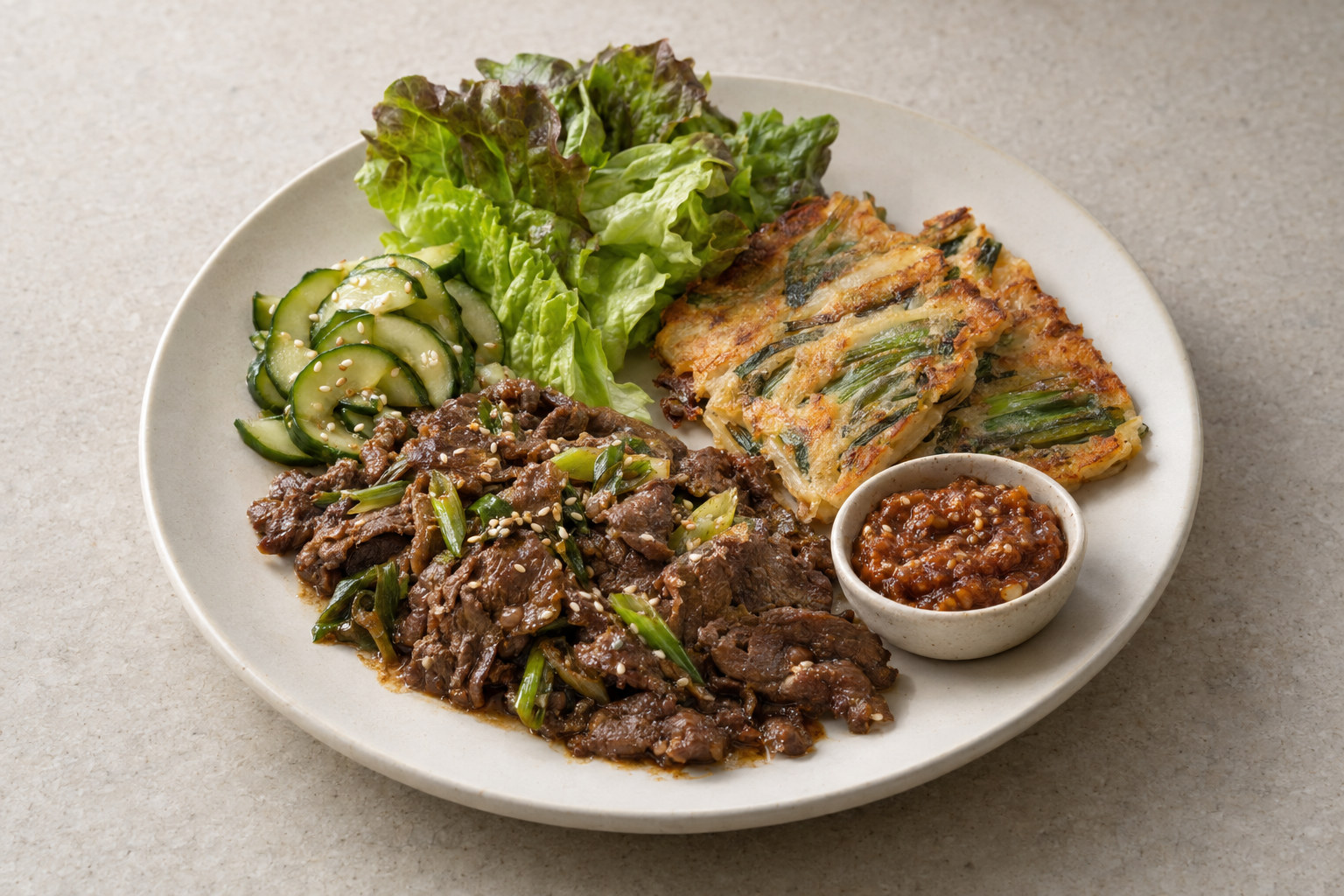
A sweet and salty pear glaze, ginger and toasted sesame surround the venison. Tangy cucumber freshens the bold dip, while the warm spring onion pancakes have crisp edges.
Step-by-step method
What you will need
- kitchen scales
- meat thermometer with a thin probe
- knife and two separate chopping boards
- measuring jug
- 30 cm non-stick frying pan with a flat base of at least 26 cm, and a deep 28 cm frying pan
- fine grater
- wide fish slice
- wire rack and baking tray
- oven
- bowls for the marinade, dip and batter
- two hob rings
Before we start
We marinate the meat first. During the 30-minute marinating time, we prepare the cucumber, dip and batter. We fry four jeon, two at a time in one pan, then cook two batches of meat in the other. We keep the cooked jeon uncovered on a rack at 80 °C for no more than 25 minutes.
Slice and marinate the meat
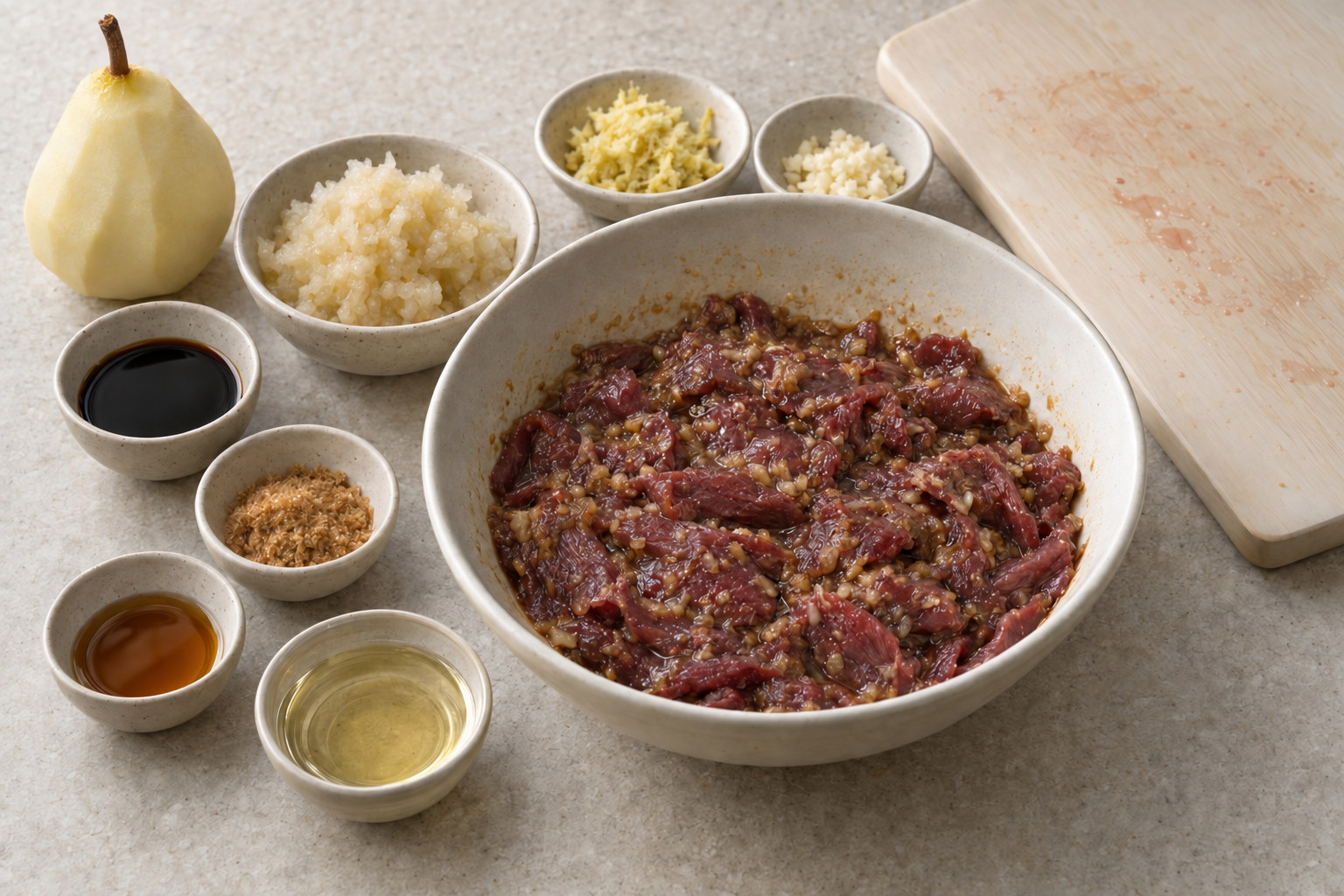
We cut the prepared venison haunch across the grain into 2–3 mm slices. We peel and core the pear, peel the garlic and ginger, then finely grate all three. We mix them with the soy sauce, brown sugar and sesame oil, stir in the meat and leave it covered in the fridge for 30 minutes.
The marinade clings to the thin slices and has no large pieces of pear.
Prepare the cucumber and lettuce
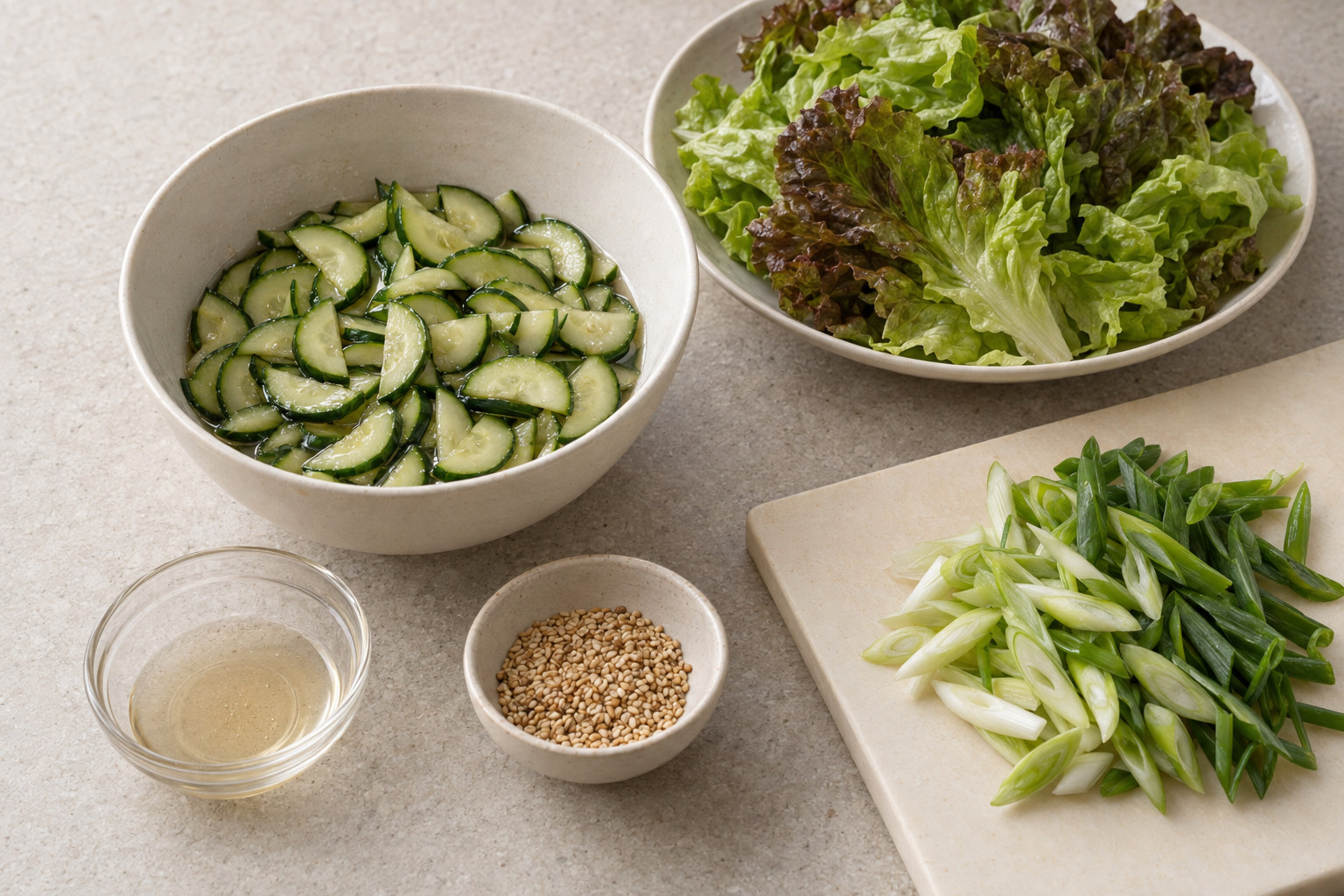
We rinse the cucumber and cut it into thin half-moons. We mix the rice vinegar, sugar and salt, pour it over the cucumber and leave for 20 minutes. We rinse and dry the lettuce leaves and arrange them for serving. We rinse the spring onions and slice the portion for the meat diagonally. We dry-toast the sesame seeds for 1–2 minutes, just until fragrant.
The cucumber stays crisp.
Mix the ssamjang and batter
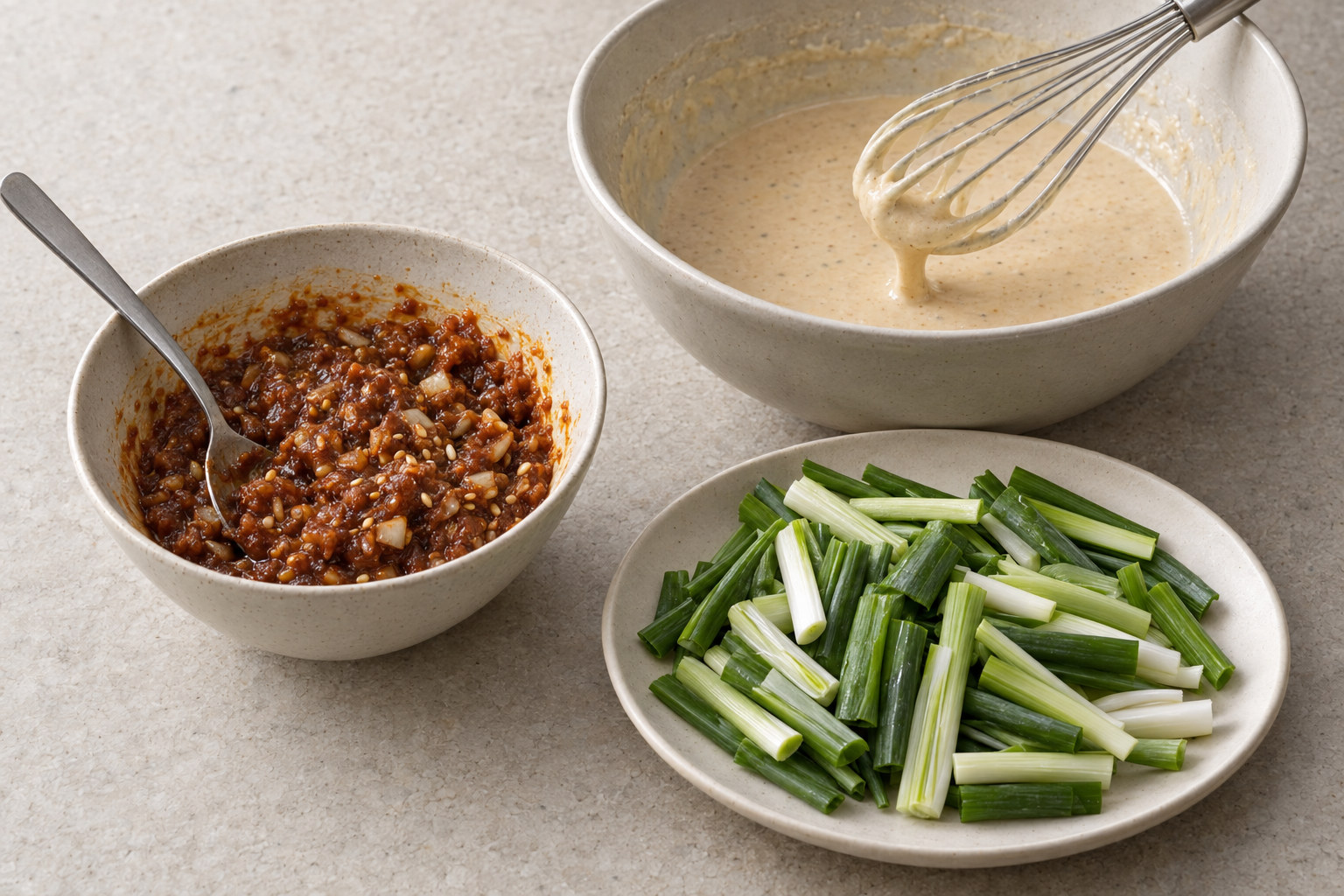
We peel and finely chop the onion and garlic for the dip, then mix with the remaining ssamjang ingredients. In a separate bowl, we mix the flour, water, doenjang and sugar for the jeon into a smooth batter. We cut the spring onions for the pancakes into 5 cm lengths and halve the thicker sections lengthways.
The dip is thick and the batter runs smoothly off a spoon.
Fry the spring onion pancakes
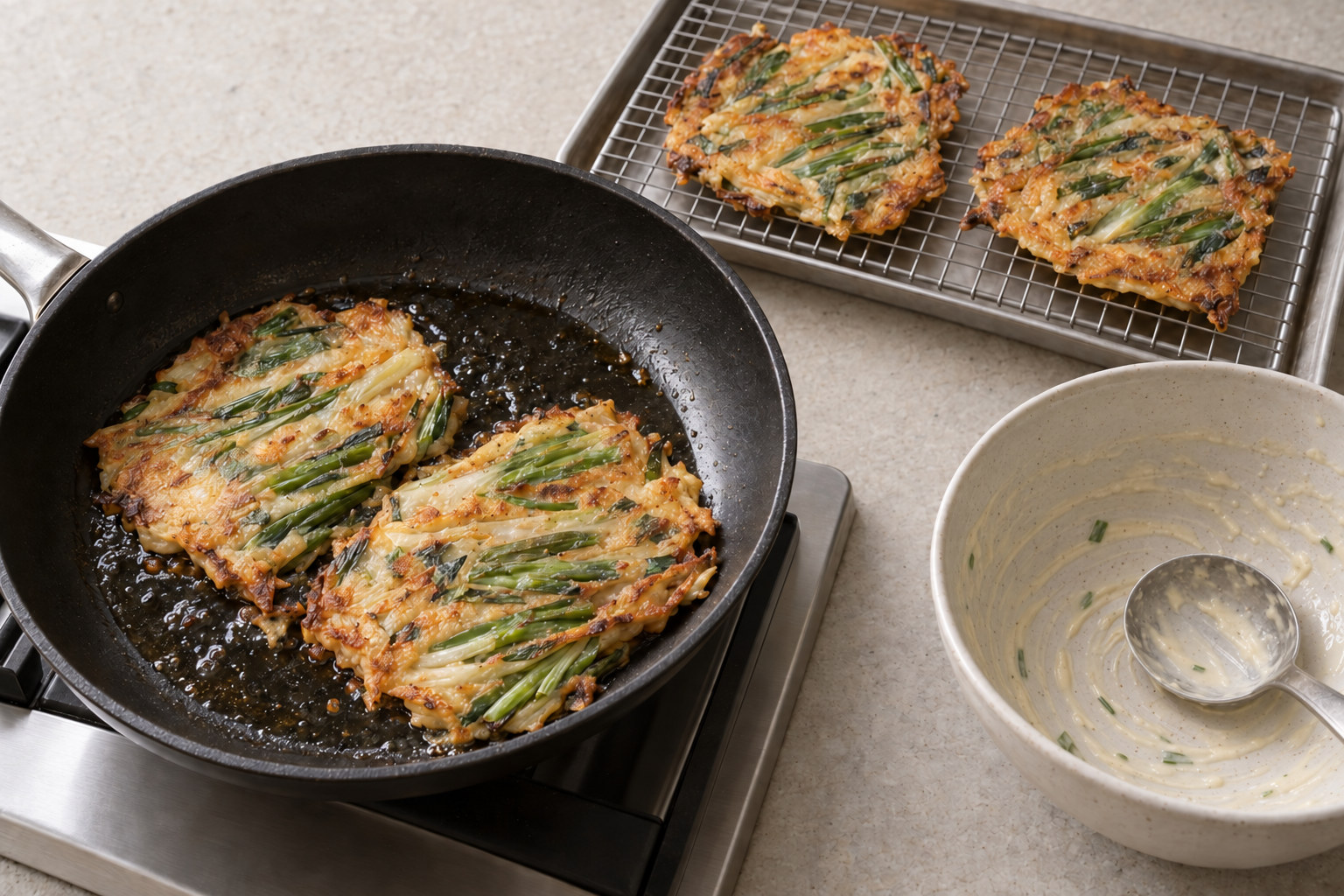
We preheat the oven to 80 °C and divide the spring onions and batter into 4 equal portions. We reserve half the oil for the second batch. We fry two pancakes at a time in one non-stick pan, making two batches in total. We arrange the spring onions in the oil in two rectangles about 14 × 10 cm and pour each portion of batter over them. We fry over a medium heat for 3–4 minutes, turn with a wide fish slice and cook for another 2–3 minutes. No wet, floury layer should remain inside. We put the cooked pancakes side by side on a rack in the oven, without stacking them.
The edges are crisp and the pancake does not tear when turned.
Sear the meat in batches
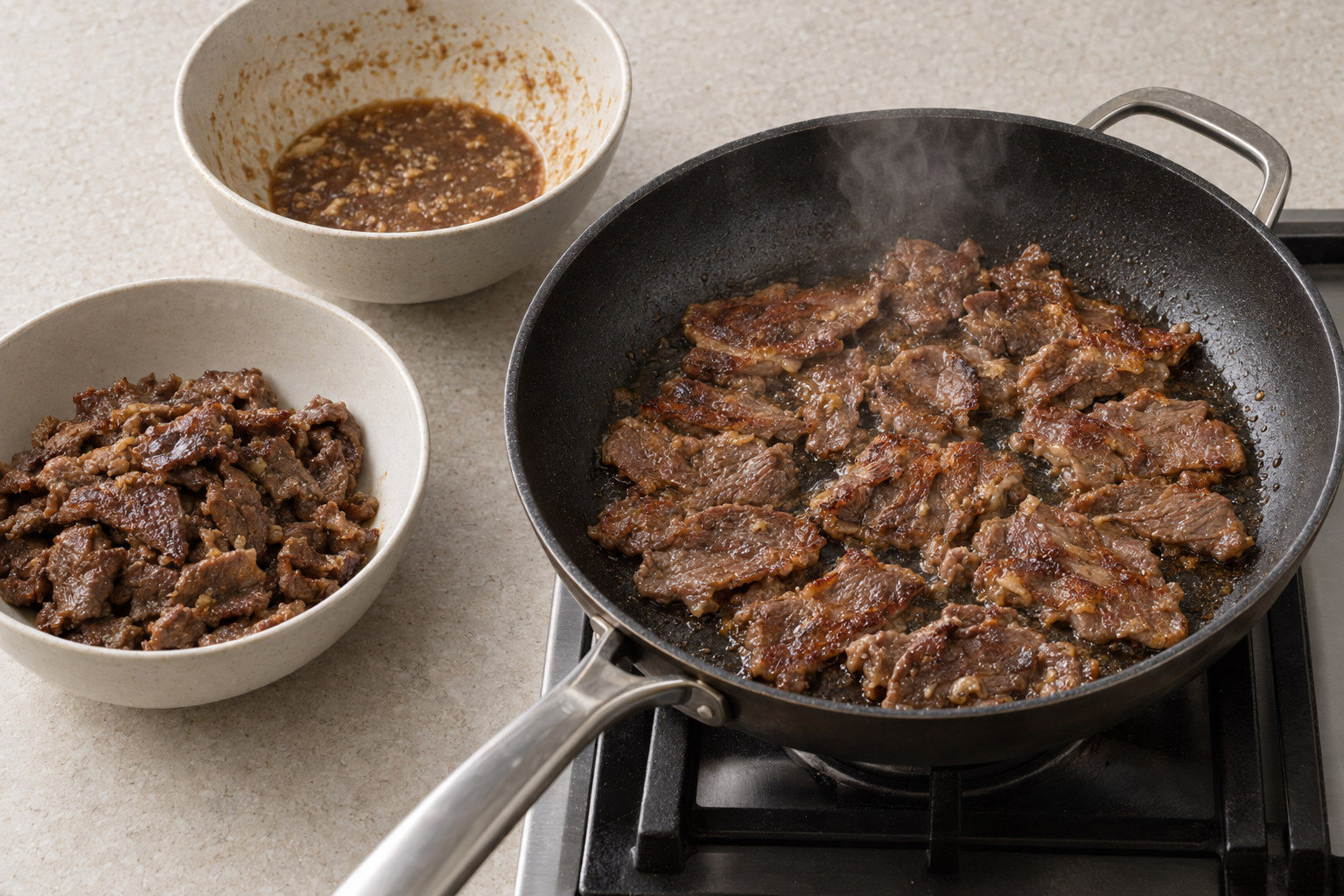
We heat the deeper pan over a medium-high heat and divide the oil reserved for the meat between two 200 g batches. We lift the meat out of the excess marinade and arrange it in a single layer, keeping the marinade to boil thoroughly later. We sear each batch for 3–4 minutes in total, turning halfway through. We do not let the sugar blacken, lowering the heat if needed. We transfer the seared meat to a clean bowl.
Finish cooking the glaze and meat
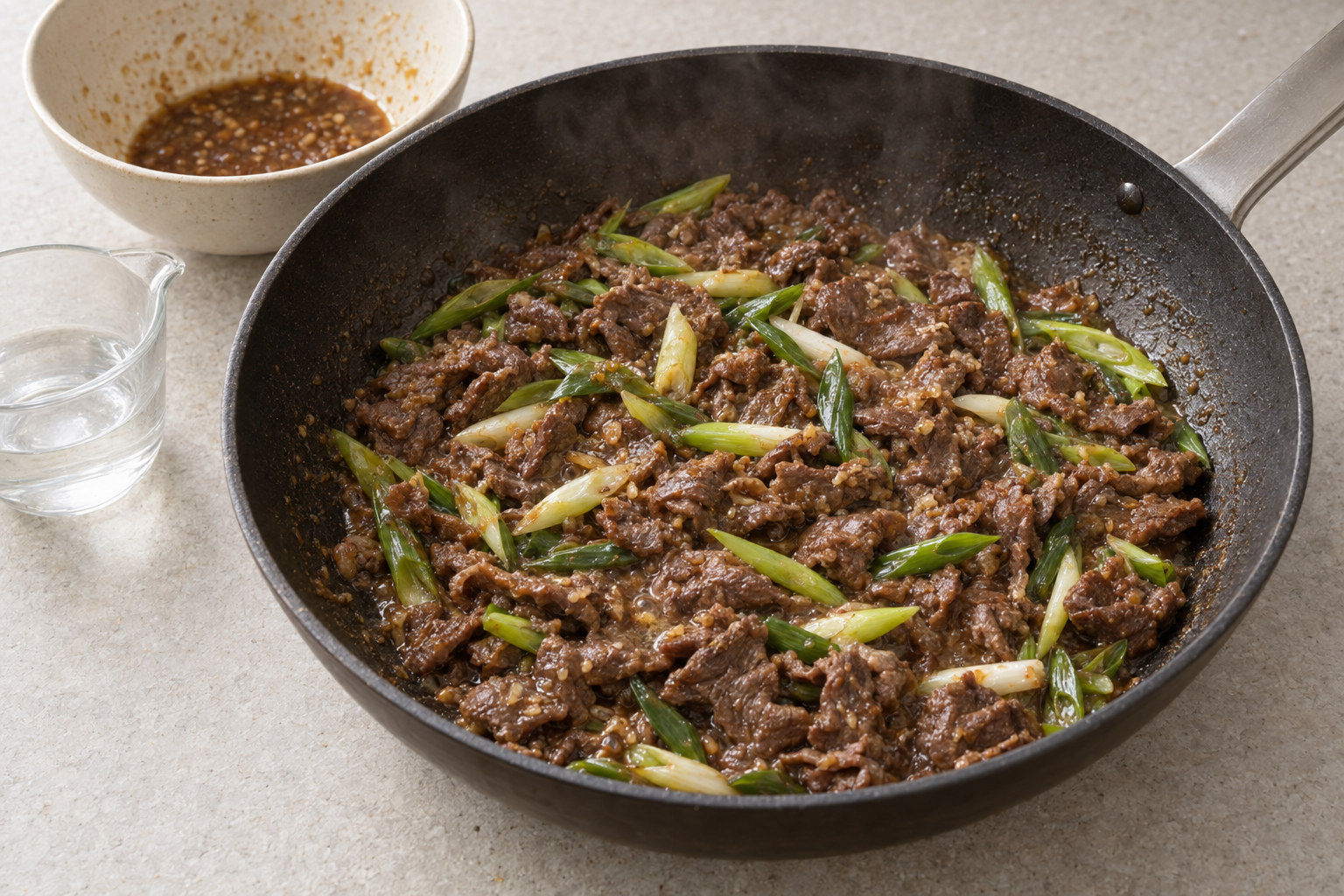
We return all the meat to the pan and add the spring onion, the remaining raw marinade and the water for finishing. We bring to the boil and cook for 2 minutes, stirring. We insert a thin probe lengthways into the thickest pieces and check that their centres stay at no less than 70 °C for 2 minutes.
The marinade is thoroughly cooked and the meat glossy, with only a little sauce at the bottom of the pan.
Serve the meat with pancakes and dip
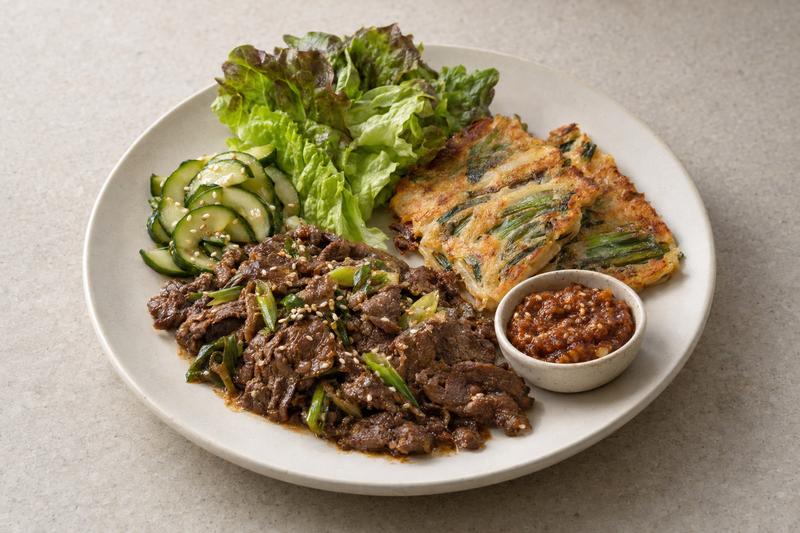
We scatter the sesame seeds listed with the cucumber over the bulgogi and serve with the warm jeon, cucumber, lettuce leaves and dip. We put a small bite of meat, some cucumber and just a thin layer of salty ssamjang into each leaf, with the jeon alongside.
Tips from our kitchen
- Ssamjang stays salty even with honey added; a thin layer is enough for each bite.
- We keep the jeon on a rack. Stacking them in a covered bowl would make them steam and soften.
What to watch out for
- An overcrowded pan steams the meat instead of searing it. We let excess marinade drain off and reserve it to boil thoroughly, then sear the meat in batches.
How we serve it
- We wrap the meat, cucumber and a little ssamjang in lettuce leaves, with the warm spring onion pancakes alongside.
Ingredient swaps
pear
the same weight of a sweeter apple, peeled and cored We grate the apple into the marinade just as finely as the pear. It adds more acidity; we do not add extra sugar.
During preparation
- We keep raw meat and used utensils separate from the cooked food.
Our inspiration
Korean meals include small bites wrapped in leaves and served with the bold flavour of ssamjang. Lettuce need not be a separate side: we fold it in our hands into an edible wrap for the meat and a little salty dip. We bring this way of serving to venison bulgogi, leaving room at the shared table for crisp cucumber and spring onion pancakes.
Similar recipes
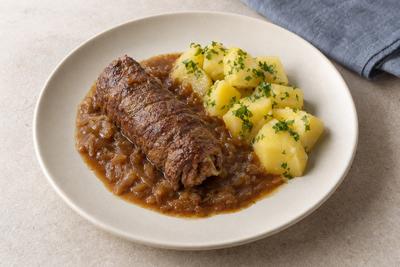
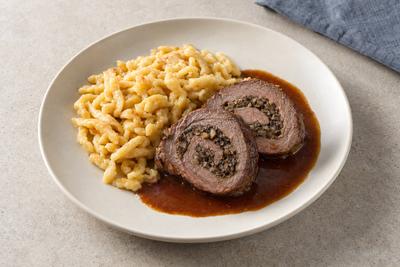
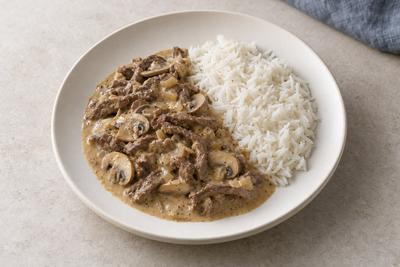
Recipe for 4 people
Step-by-step method
Before we start
We marinate the meat first. During the 30-minute marinating time, we prepare the cucumber, dip and batter. We fry eight jeon in two pans at the same time, two in each pan for two rounds. We then wipe out the deeper pan and use it for four batches of meat. We keep the jeon uncovered on a rack at 80 °C for no more than 30 minutes.
Slice and marinate the meat
We cut the prepared venison haunch across the grain into 2–3 mm slices. We peel and core the pear, peel the garlic and ginger, then finely grate all three. We mix them with the soy sauce, brown sugar and sesame oil, stir in the meat and leave it covered in the fridge for 30 minutes.
The marinade clings to the thin slices and has no large pieces of pear.
Prepare the cucumber and lettuce
We rinse the cucumber and cut it into thin half-moons. We mix the rice vinegar, sugar and salt, pour it over the cucumber and leave for 20 minutes. We rinse and dry the lettuce leaves and arrange them for serving. We rinse the spring onions and slice the portion for the meat diagonally. We dry-toast the sesame seeds for 1–2 minutes, just until fragrant.
The cucumber stays crisp.
Mix the ssamjang and batter
We peel and finely chop the onion and garlic for the dip, then mix with the remaining ssamjang ingredients. In a separate bowl, we mix the flour, water, doenjang and sugar for the jeon into a smooth batter. We cut the spring onions for the pancakes into 5 cm lengths and halve the thicker sections lengthways.
The dip is thick and the batter runs smoothly off a spoon.
Fry the spring onion pancakes
We preheat the oven to 80 °C and divide the spring onions and batter into 8 equal portions. We reserve half the oil for the second round and divide the rest between both pans. We fry two pancakes in each of two non-stick pans at the same time, making two rounds of four in total. In each pan, we arrange the spring onions in the oil in two rectangles about 14 × 10 cm and pour each portion of batter over them. We fry over a medium heat for 3–4 minutes, turn with a wide fish slice and cook for another 2–3 minutes. No wet, floury layer should remain inside. We put the cooked pancakes side by side on a rack in the oven, without stacking them.
The edges are crisp and the pancake does not tear when turned.
Sear the meat in batches
We heat the deeper pan over a medium-high heat and divide the oil reserved for the meat between four 200 g batches. We lift the meat out of the excess marinade and arrange it in a single layer, keeping the marinade to boil thoroughly later. We sear each batch for 3–4 minutes in total, turning halfway through. We do not let the sugar blacken, lowering the heat if needed. We transfer the seared meat to a clean bowl.
Finish cooking the glaze and meat
We return all the meat to the pan and add the spring onions, the remaining raw marinade and the water for finishing. We bring to the boil and cook for 2 minutes, stirring. We insert a thin probe lengthways into the thickest pieces and check that their centres stay at no less than 70 °C for 2 minutes.
The marinade is thoroughly cooked and the meat glossy, with only a little sauce at the bottom of the pan.
Serve the meat with pancakes and dip
We scatter the sesame seeds listed with the cucumber over the bulgogi and serve with the warm jeon, cucumber, lettuce leaves and dip. We put a small bite of meat, some cucumber and just a thin layer of salty ssamjang into each leaf, with the jeon alongside.