
Thai inspiration · Thai inspiration
Venison massaman with potatoes, coconut and peanuts
A coconut sauce with a hand-pounded paste infuses the venison with cinnamon, cardamom and lemongrass. The potatoes stay in tender pieces, tamarind adds tang and peanuts bring crunch. We serve this slow-cooked curry with jasmine rice to soak up the rich sauce.
The time includes pounding the homemade curry paste. We adjust the braising time according to the tenderness of the meat.
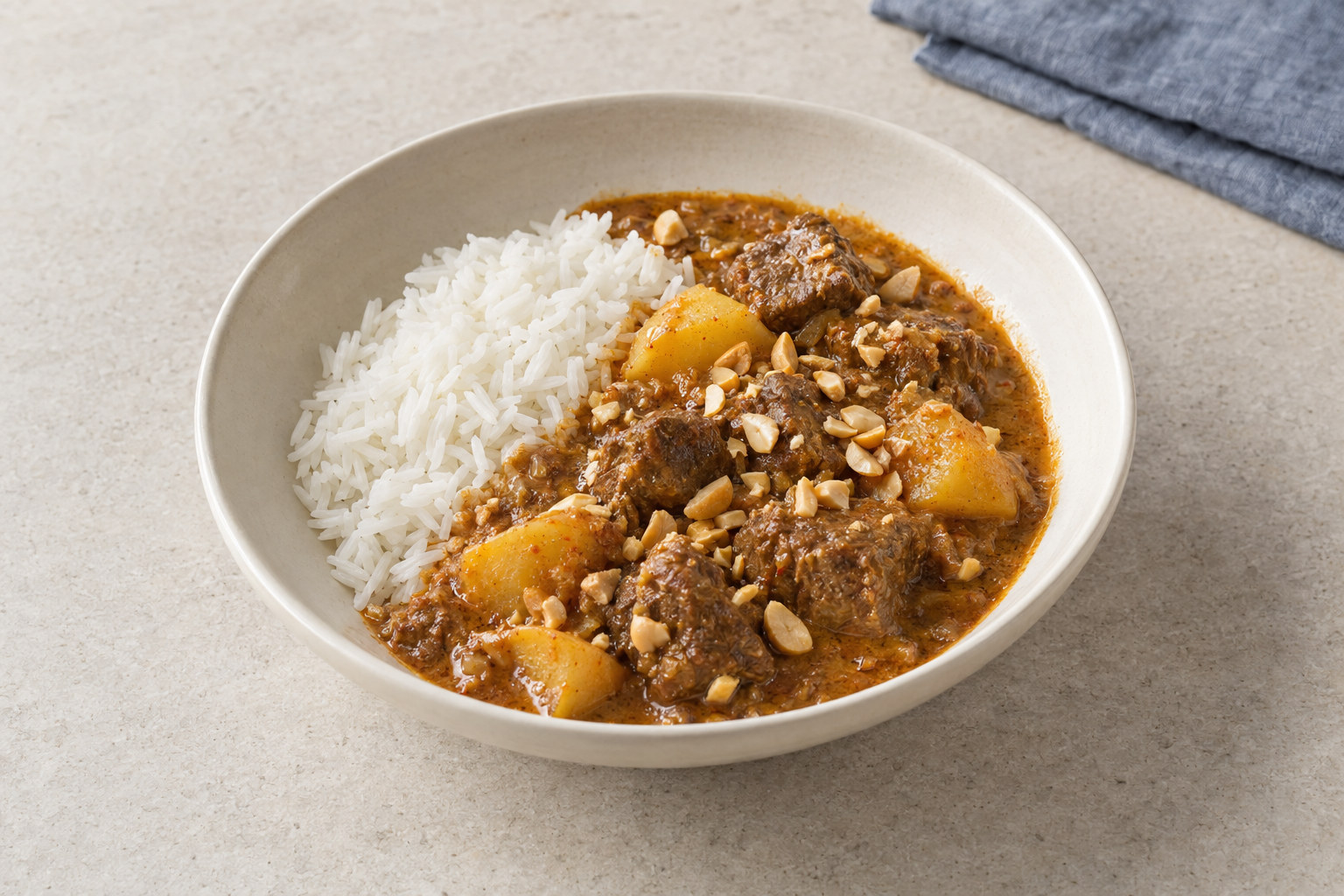
Coconut mellows the chilli and fragrant spices, tamarind adds a fruity tang and roasted peanuts complement the tender potatoes.
Step-by-step method
What you will need
- kitchen scales
- knife and two separate chopping boards
- measuring jug
- heavy 20 cm, 3 l saucepan with a tight-fitting lid
- 1.5 l saucepan with a lid for the rice
- heavy pestle and mortar holding at least 500 ml
- spice grinder
- small dry frying pan for the spices
- kettle
Before we start
We pound the paste before browning the meat. Once the meat is almost tender, we add the potatoes for the final 20–25 minutes. We start the rice at the same time so that, after 12–15 minutes of cooking, it has 10 minutes to rest. We season the curry at the end and add the peanuts only once it is plated.
Prepare the meat and base
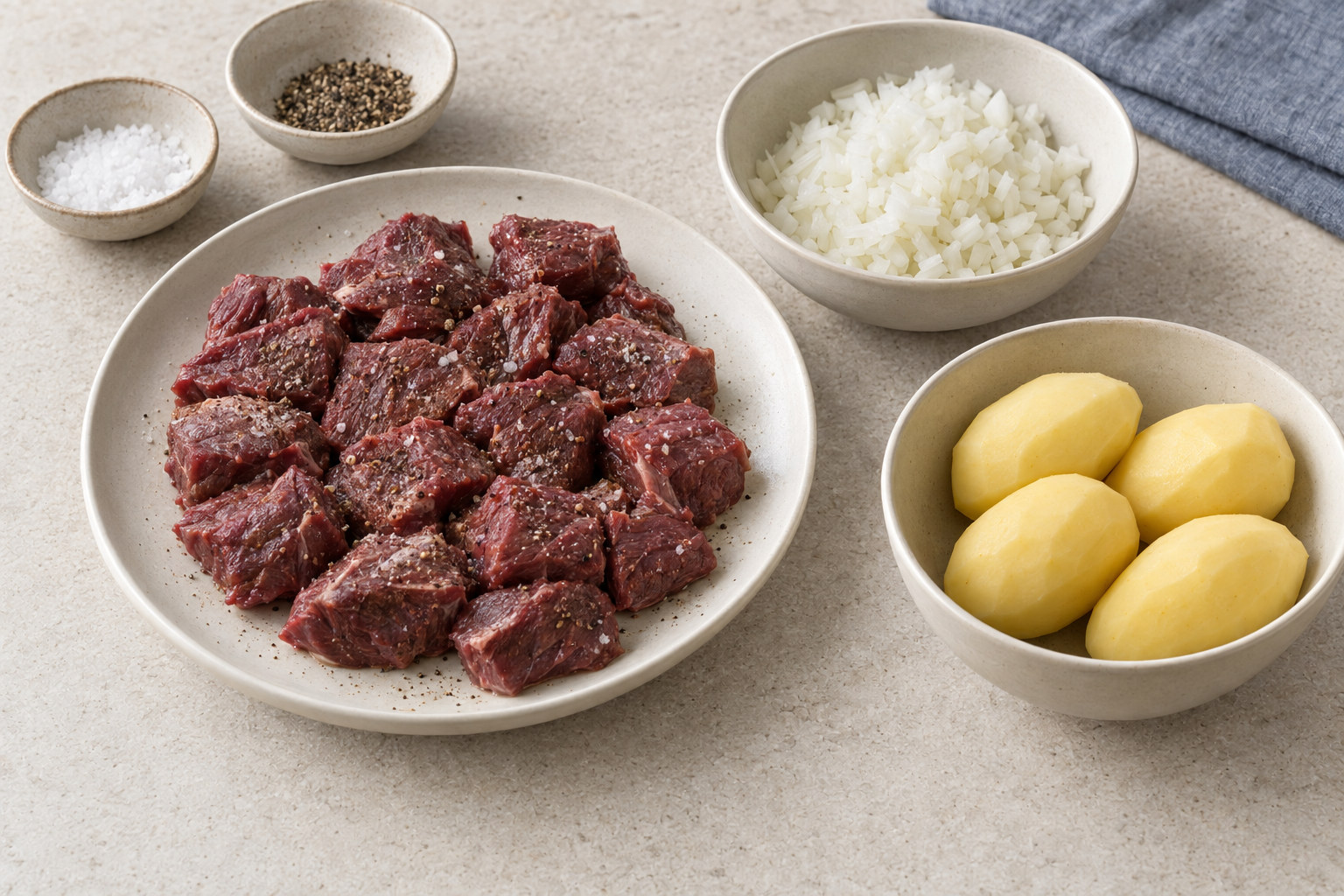
We cut the meat into 3 cm cubes, pat dry and season with all the salt for the meat and the black pepper. We peel and finely chop the onion. We leave the potatoes whole for now, cutting them only just before adding them to the curry.
Evenly sized meat cubes become tender at the same time.
Pound the homemade curry paste
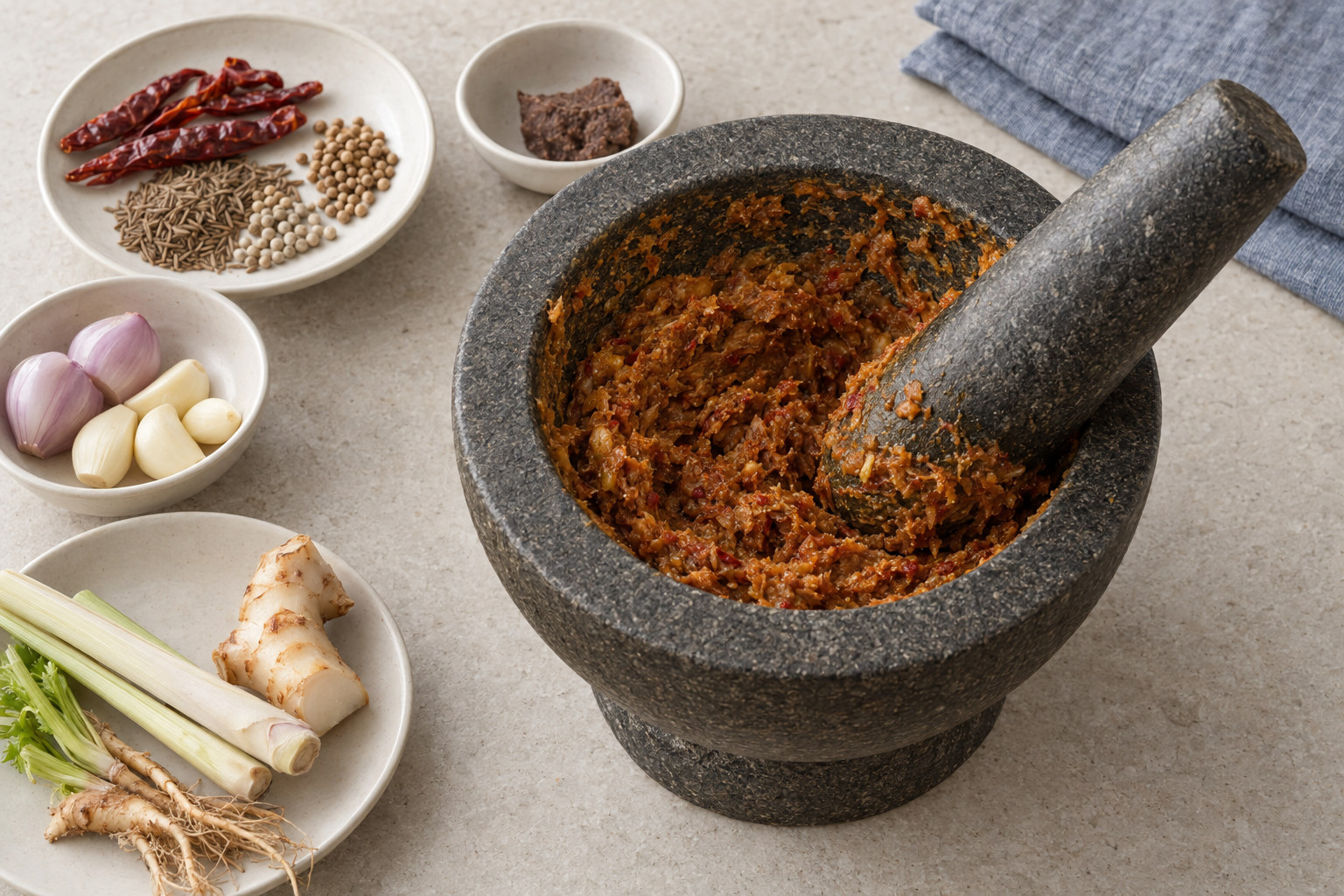
We toast the coriander seeds, cumin seeds and white peppercorns in a dry pan for 1 minute until fragrant, then grind them finely with the dried chillies. We mix in the ground cinnamon, cloves, nutmeg and cardamom. We chop the galangal, lemongrass and coriander root very finely and pound them with the salt into a paste in a heavy mortar. We peel and finely chop the shallot and garlic, then gradually work them into the paste. We add the ground spices and gapi. We pound for about 15–20 minutes until no tough fibres remain, then use the whole batch of paste in the curry.
Brown the meat and add flavour
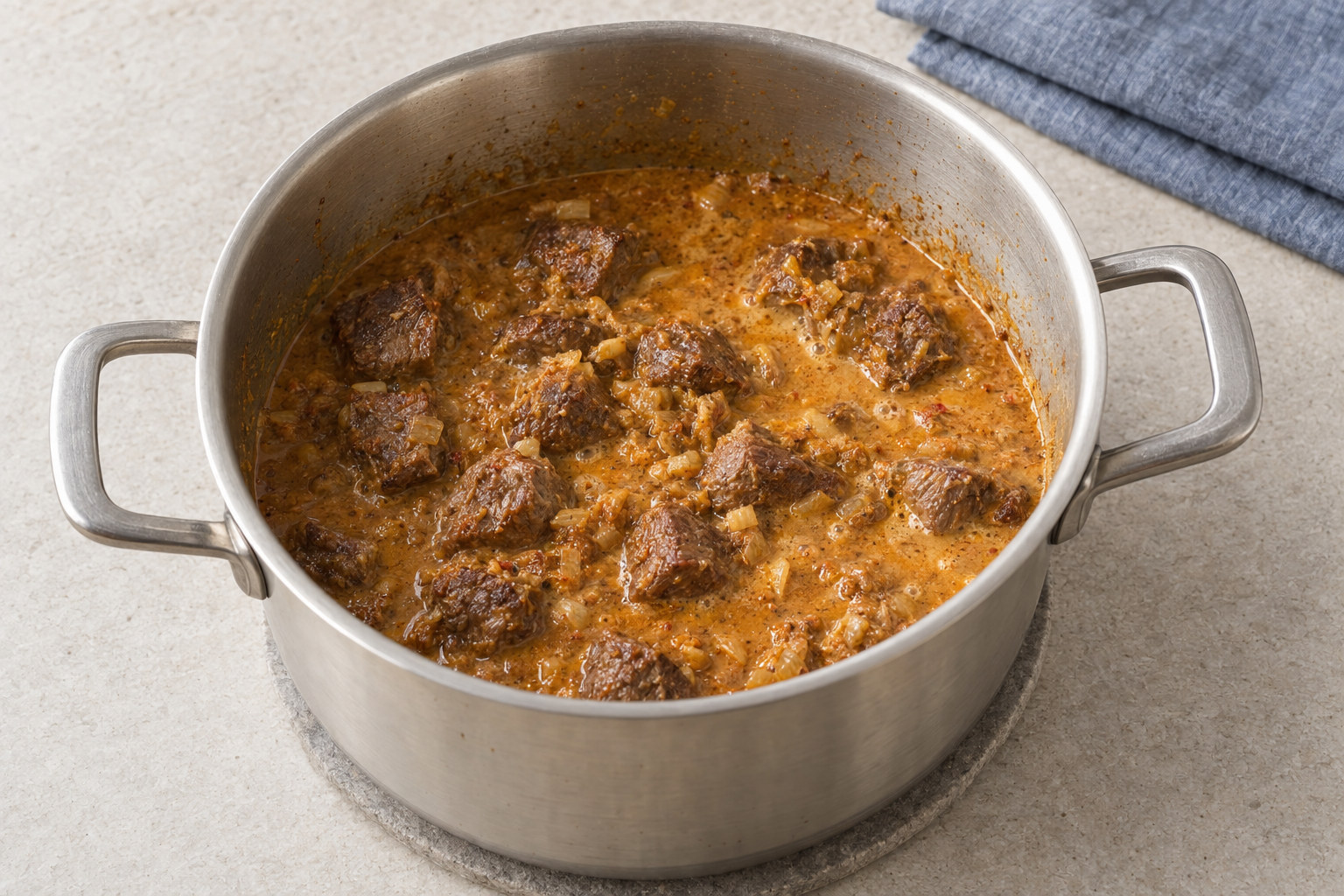
We set aside a teaspoon of oil for the onion and divide the rest between two batches of meat, 225 g each. We brown each batch for 4–6 minutes over a medium-high heat and lift it out. We cook the onion in the reserved oil for 7–9 minutes, stirring constantly, then add the whole batch of homemade paste and 50 ml of coconut milk. We stir over a medium heat for 3–4 minutes until fragrant, taking care not to burn the paste. We pour in the remaining coconut milk and all the stock, return the meat and its juices and bring to a very gentle simmer.
There are browned bits on the bottom, with nothing black or burnt.
Braise the meat until tender
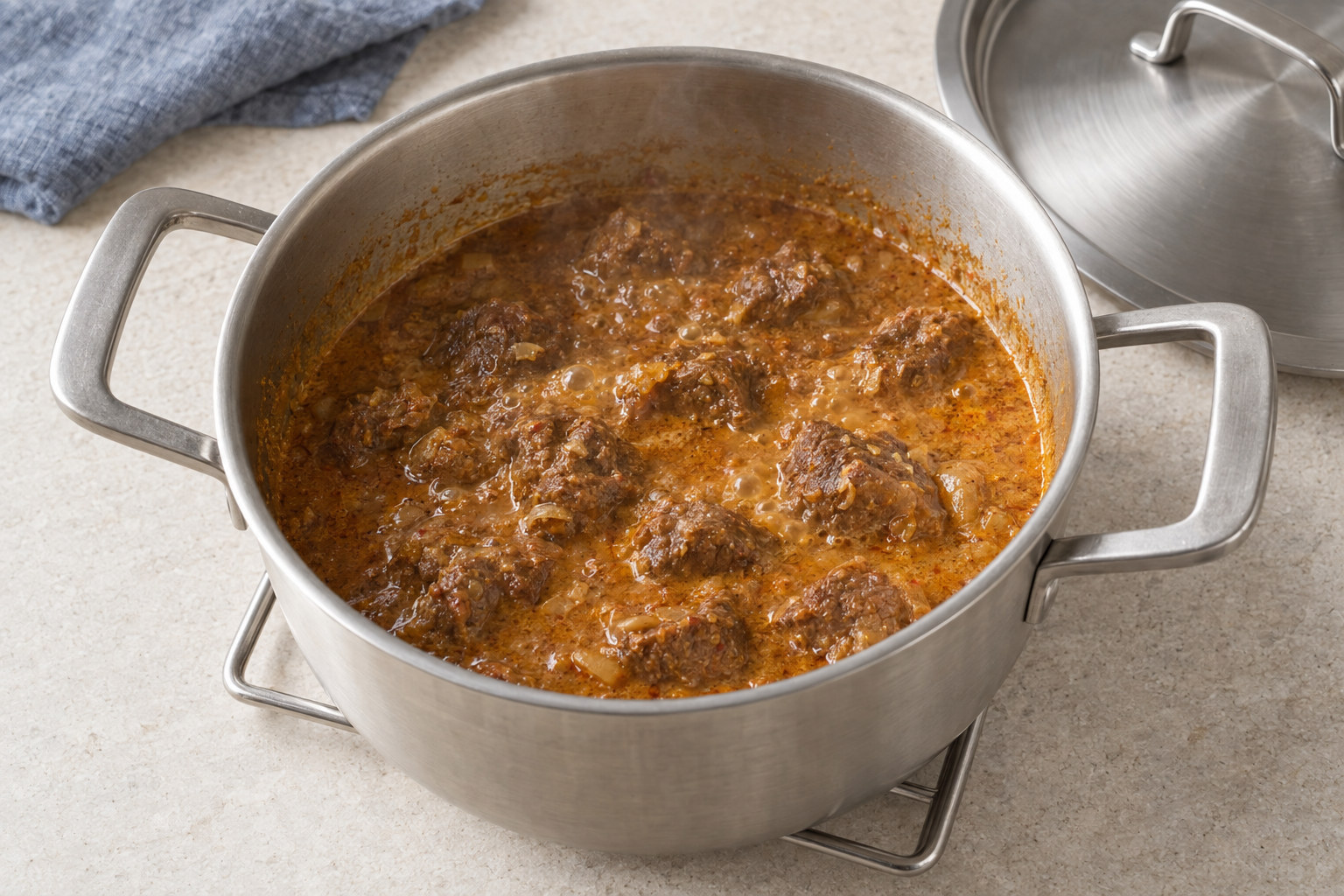
We cover the pan and braise the meat over a low heat for about 150–210 minutes. The liquid should bubble only occasionally. Every half hour, we stir from the bottom and add a little hot water as needed. Once the meat is almost tender, we add the potatoes as described in Finish the curry. They braise together for the final 20–25 minutes. If the meat is still tough, we continue braising and wait before starting the potatoes and rice. If the liquid is reducing quickly, we lower the heat and check that the lid fits tightly.
The surface of the liquid bubbles only occasionally; the meat is tender rather than springy.
Cook the rice
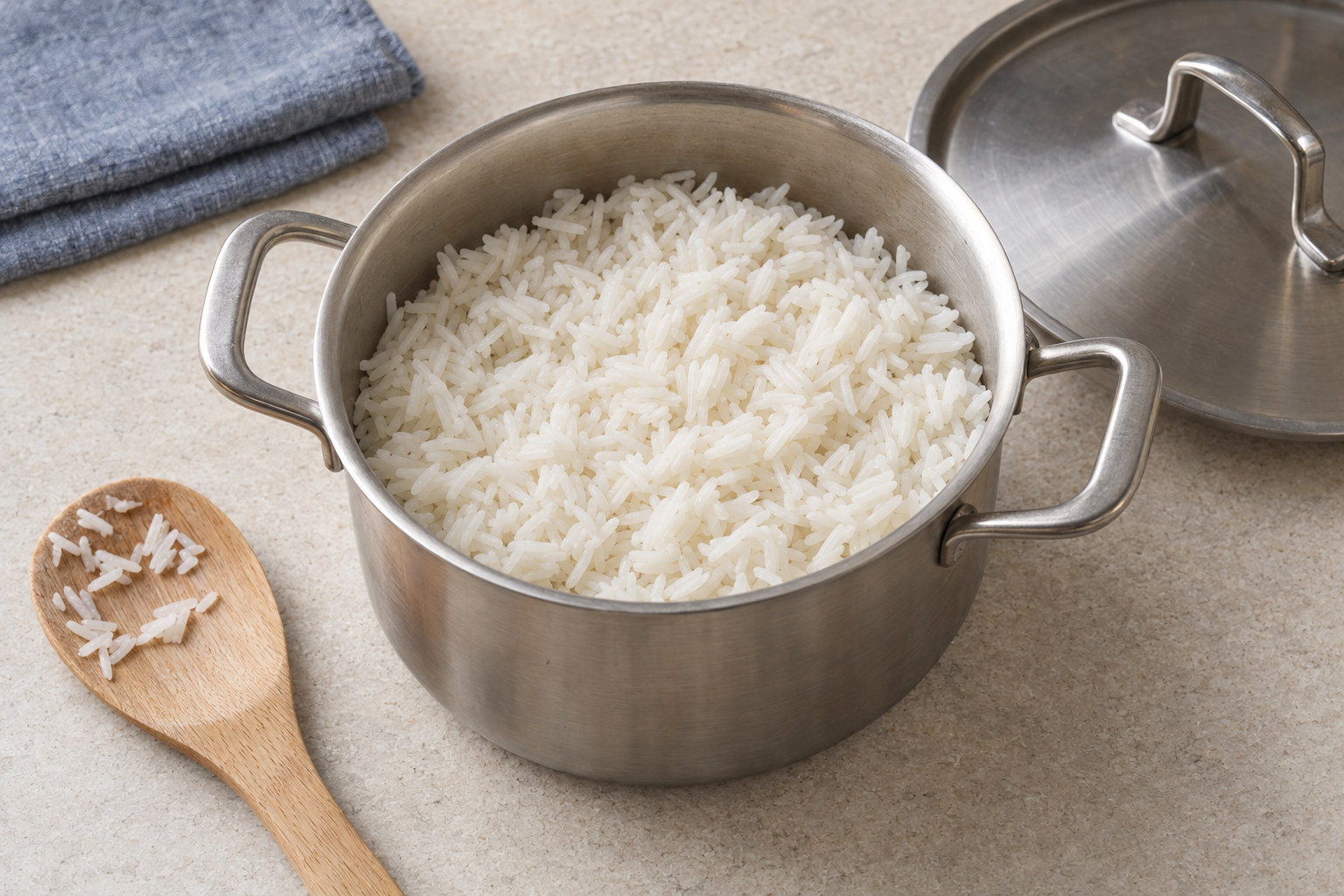
We put the jasmine rice in a saucepan with 230 ml of water and add the salt. We bring to a gentle boil, cover tightly and cook over the lowest heat for 12–15 minutes. We take off the heat, leave covered for 10 minutes to finish steaming, then fluff with a fork.
The rice is tender, with separate grains and no water left at the bottom.
Finish the curry
When the meat is almost tender, we peel the potatoes, cut into 2 cm cubes and add to the pan. We cover and simmer gently for 20–25 minutes until a fork goes through a potato, stirring from the bottom several times. We stir in all the tamarind paste, fish sauce and sugar. If the sauce is too thin, we reduce it uncovered for 5–10 minutes, keeping it loose enough to serve with rice. We roughly chop the peanuts.
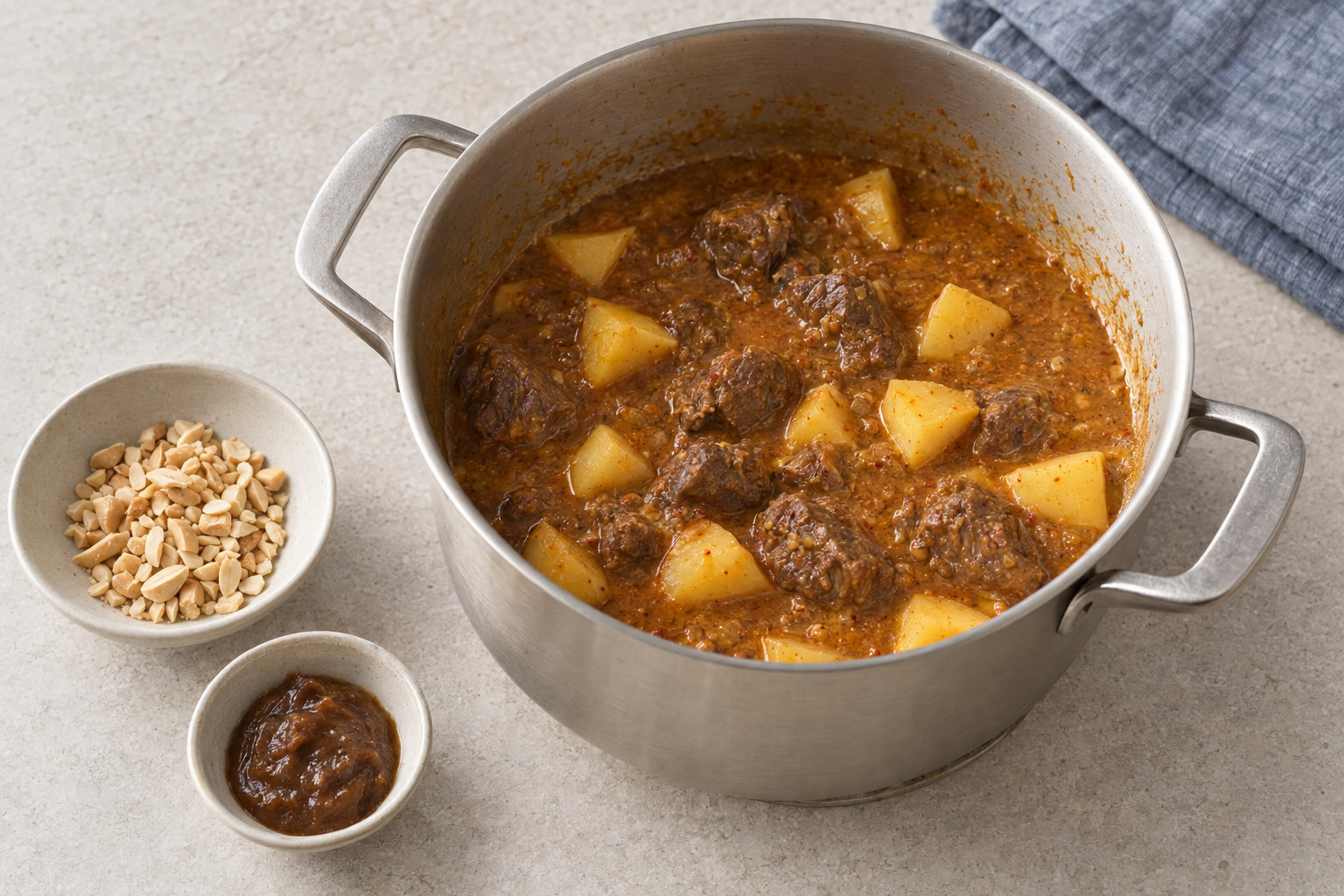
Plate up and serve
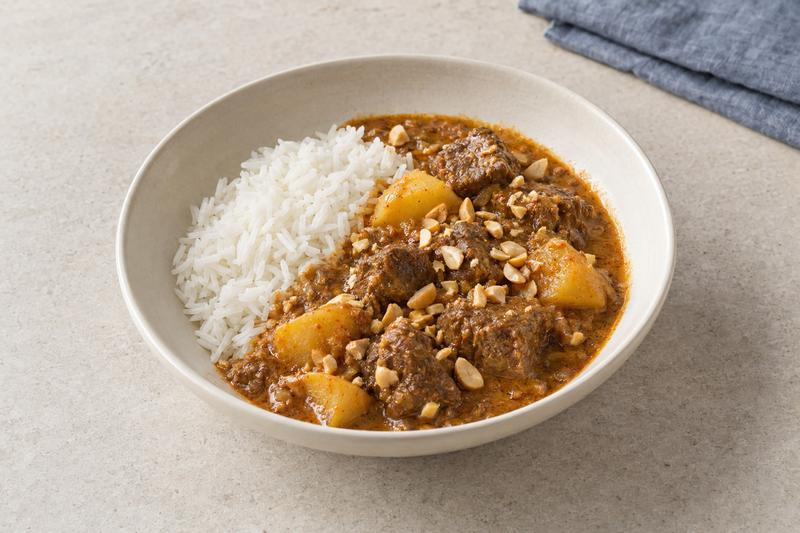
We divide all the rice and curry, including the meat and potatoes, between 2 warmed deep plates. We scatter over the chopped peanuts and serve immediately.
Tips from our kitchen
- We pound the paste until smooth and keep the coconut milk at a gentle simmer.
- We use unsweetened tamarind paste of regular strength.
What to watch out for
- We pat the meat dry before browning and add it to the pan in the specified batches so that each cube sits directly on the base.
How we serve it
- We serve the meat and potato curry beside the jasmine rice, adding the chopped peanuts only once it is plated.
Ingredient swaps
tamarind paste
For 2 servings, 10 ml of lime juice; for 4 servings, 20 ml. We adjust the flavour at the end. This gives a more citrusy flavour without the fruity depth of tamarind; we stir it in only at the end.
coriander roots
the same weight of lower coriander stalks The aroma will be milder; we chop them very finely.
galangal
the same weight of ginger Ginger is more pungent and lacks the pine-like aroma of galangal.
During preparation
- We keep raw meat and its utensils separate from cooked food.
Our inspiration
Pailin Chongchitnant, a Thai chef who previously led Oryza Bistro Asiana in Santa Clara, California, was making massaman as a child. She places it in Thai-Muslim cuisine and points to its distinctive aroma: alongside lemongrass, there are notes of cinnamon, cloves and cardamom. With potatoes and a rich coconut sauce, it feels more like a warming, slow-cooked lunch than a light weeknight curry. We add venison to this fragrant mix and scatter crunchy peanuts over the top.
Pailin Chongchitnant
Pailin “Pai” Chongchitnant is a Thai chef who previously headed the kitchen at Oryza Bistro Asiana in Santa Clara, California. Her massaman paste recipe inspired our combination of dried spices, galangal and lemongrass.
Similar recipes
Recipe for 4 people
Step-by-step method
Before we start
We pound the paste before browning the meat. Once the meat is almost tender, we add the potatoes for the final 20–25 minutes. We start the rice at the same time so that, after 12–15 minutes of cooking, it has 10 minutes to rest. We season the curry at the end and add the peanuts only once it is plated.
Prepare the meat and base
We cut the meat into 3 cm cubes, pat dry and season with all the salt for the meat and the black pepper. We peel and finely chop the onions. We leave the potatoes whole for now, cutting them only just before adding them to the curry.
Evenly sized meat cubes become tender at the same time.
Pound the homemade curry paste
We toast the coriander seeds, cumin seeds and white peppercorns in a dry pan for 1 minute until fragrant, then grind them finely with the dried chillies. We mix in the ground cinnamon, cloves, nutmeg and cardamom. We chop the galangal, lemongrass and coriander roots very finely and pound them with the salt into a paste in a heavy mortar. We peel and finely chop the shallot and garlic, then gradually work them into the paste. We add the ground spices and gapi. We pound for about 15–20 minutes until no tough fibres remain, then use the whole batch of paste in the curry.
Brown the meat and add flavour
We set aside half a tablespoon of oil for the onions and divide the rest between four batches of meat, 225 g each. We brown each batch for 4–6 minutes over a medium-high heat and lift it out. We cook the onions in the reserved oil for 7–9 minutes, stirring constantly, then add the whole batch of homemade paste and 90 ml of coconut milk. We stir over a medium heat for 3–4 minutes until fragrant, taking care not to burn the paste. We pour in the remaining coconut milk and all the stock, return the meat and its juices and bring to a very gentle simmer.
There are browned bits on the bottom, with nothing black or burnt.
Braise the meat until tender
We cover the pan and braise the meat over a low heat for about 150–210 minutes. The liquid should bubble only occasionally. Every half hour, we stir from the bottom and add a little hot water as needed. Once the meat is almost tender, we add the potatoes as described in Finish the curry. They braise together for the final 20–25 minutes. If the meat is still tough, we continue braising and wait before starting the potatoes and rice. If the liquid is reducing quickly, we lower the heat and check that the lid fits tightly.
The surface of the liquid bubbles only occasionally; the meat is tender rather than springy.
Cook the rice
We put the jasmine rice in a saucepan with 430 ml of water and add the salt. We bring to a gentle boil, cover tightly and cook over the lowest heat for 12–15 minutes. We take off the heat, leave covered for 10 minutes to finish steaming, then fluff with a fork.
The rice is tender, with separate grains and no water left at the bottom.
Finish the curry
When the meat is almost tender, we peel the potatoes, cut into 2 cm cubes and add to the pan. We cover and simmer gently for 20–25 minutes until a fork goes through a potato, stirring from the bottom several times. We stir in all the tamarind paste, fish sauce and sugar. If the sauce is too thin, we reduce it uncovered for 5–10 minutes, keeping it loose enough to serve with rice. We roughly chop the peanuts.
Plate up and serve
We divide all the rice and curry, including the meat and potatoes, between 4 warmed deep plates. We scatter over the chopped peanuts and serve immediately.