
Italian inspiration · Italian inspiration
Red deer ragù with porcini and wide egg noodles
We coat wide egg noodles in a rich wine sauce with tender red deer venison and the aroma of rosemary. Porcini fried in butter give the ragù a bold woodland flavour. After the long braise, we only need to fold freshly cooked noodles through the sauce and serve at once.
We allow for soaking the porcini while preparing the meat and onion. We adjust the braising time to the tenderness of the meat.
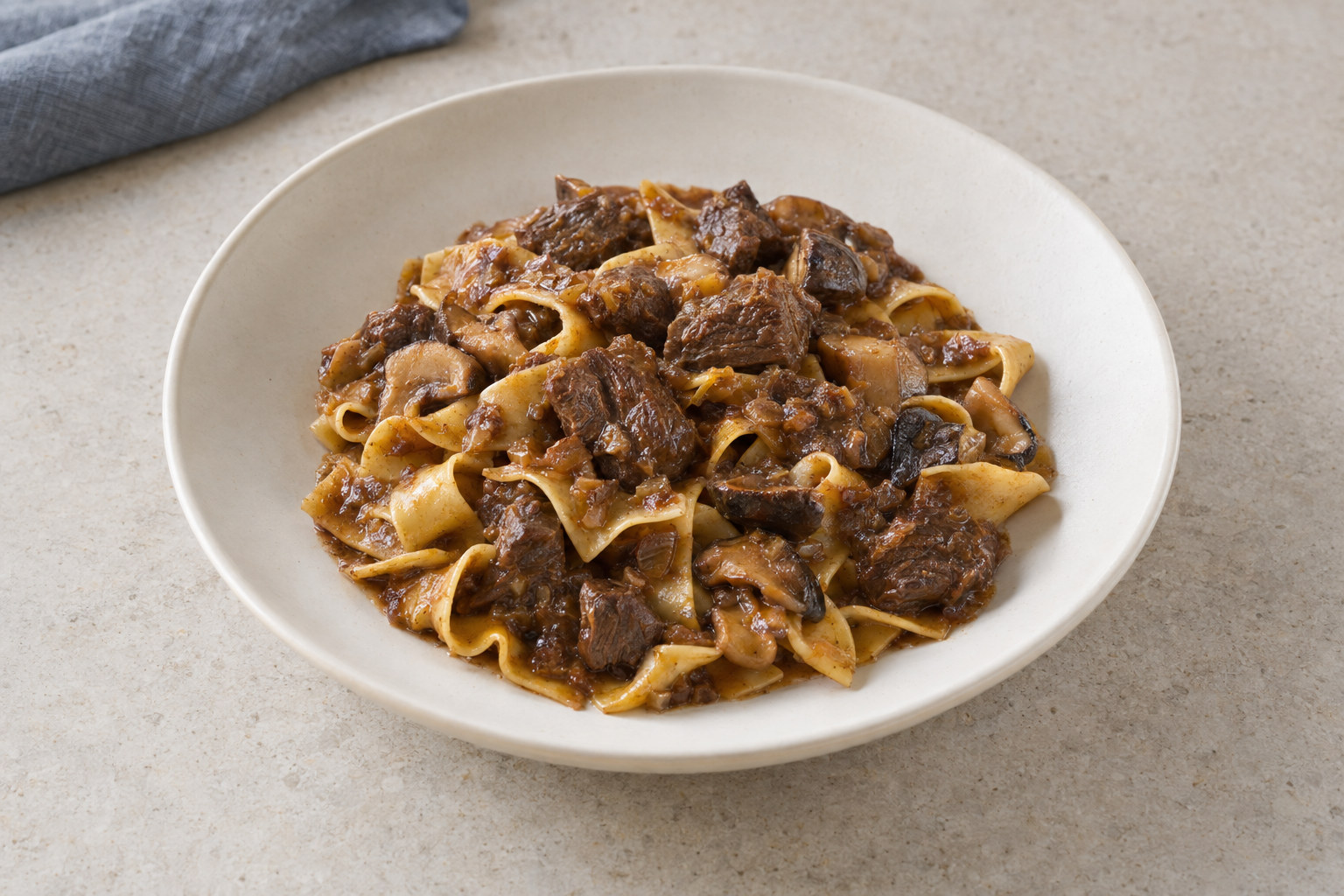
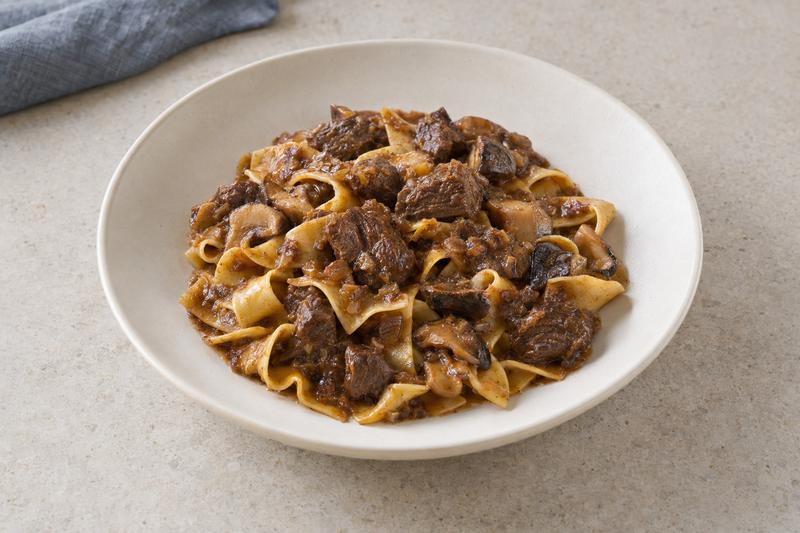
Wine sauce, butter-fried porcini and rosemary coat the wide noodles and tender cubes of red deer venison.
Step-by-step method
What you will need
- kitchen scales
- knife and two separate boards
- measuring jug
- heavy 20 cm pot, 3 l capacity, with a tight-fitting lid
- 3 l pot for the noodles
- 22 cm frying pan for the porcini
- fine filter or tightly woven cloth and sieve
- heatproof bowl for the porcini
- colander
- pasta tongs
- electric kettle
Before we start
We soak the porcini first, then prepare the meat and onion during the 20-minute soak. After draining, we keep the mushrooms covered in the fridge until near the end of the braise. Once the meat is nearly tender, we fry the mushrooms and put the noodle water on to boil. We finish the sauce before draining the noodles.
We prepare the meat and base
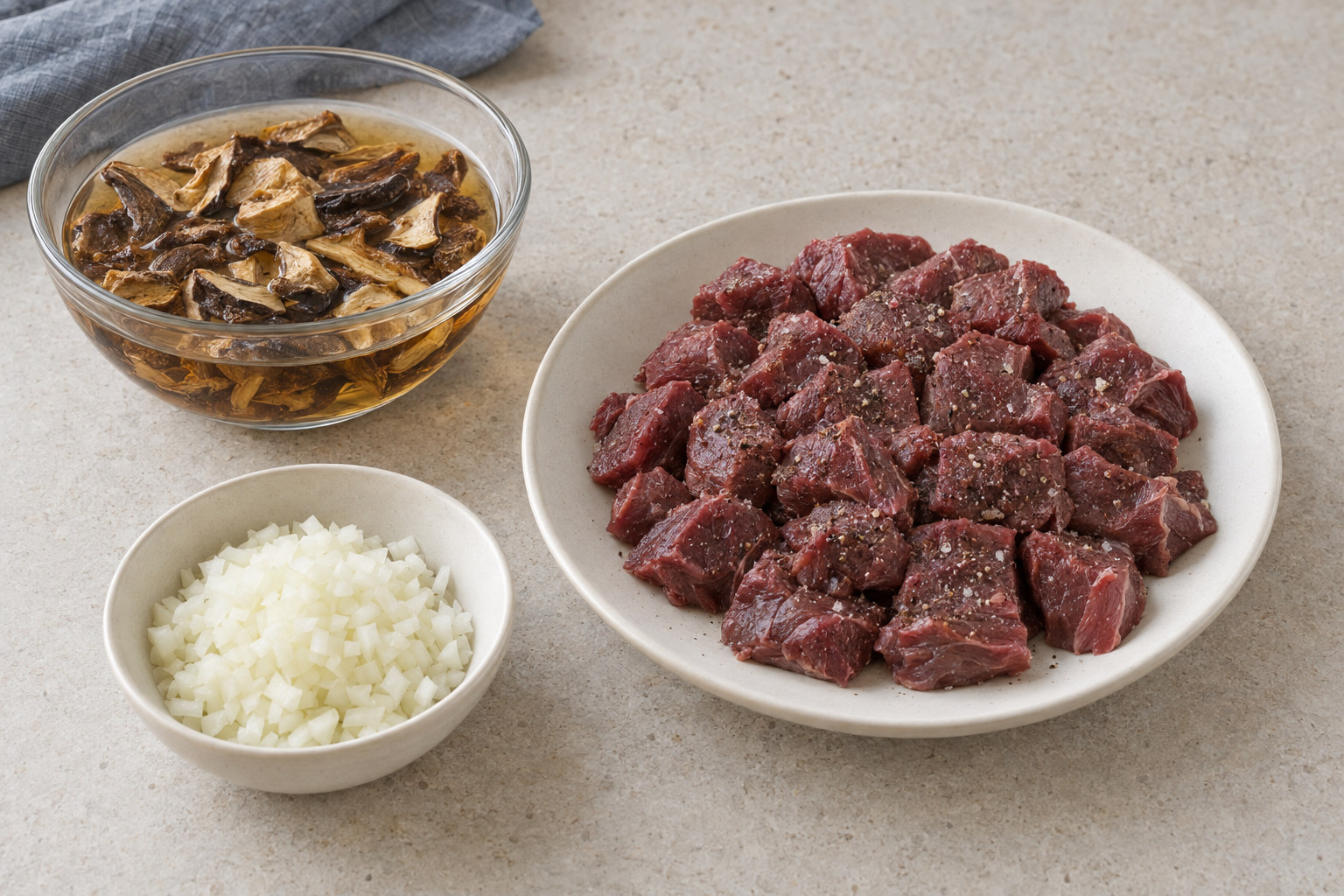
We cover the porcini with 160 ml hot water and leave them for 20 minutes. We cut the meat into 3 cm cubes, dry it, season with two-thirds of the salt for the meat and add pepper. We peel and finely chop the onion.
Evenly sized meat cubes become tender at the same rate.
We sear and season
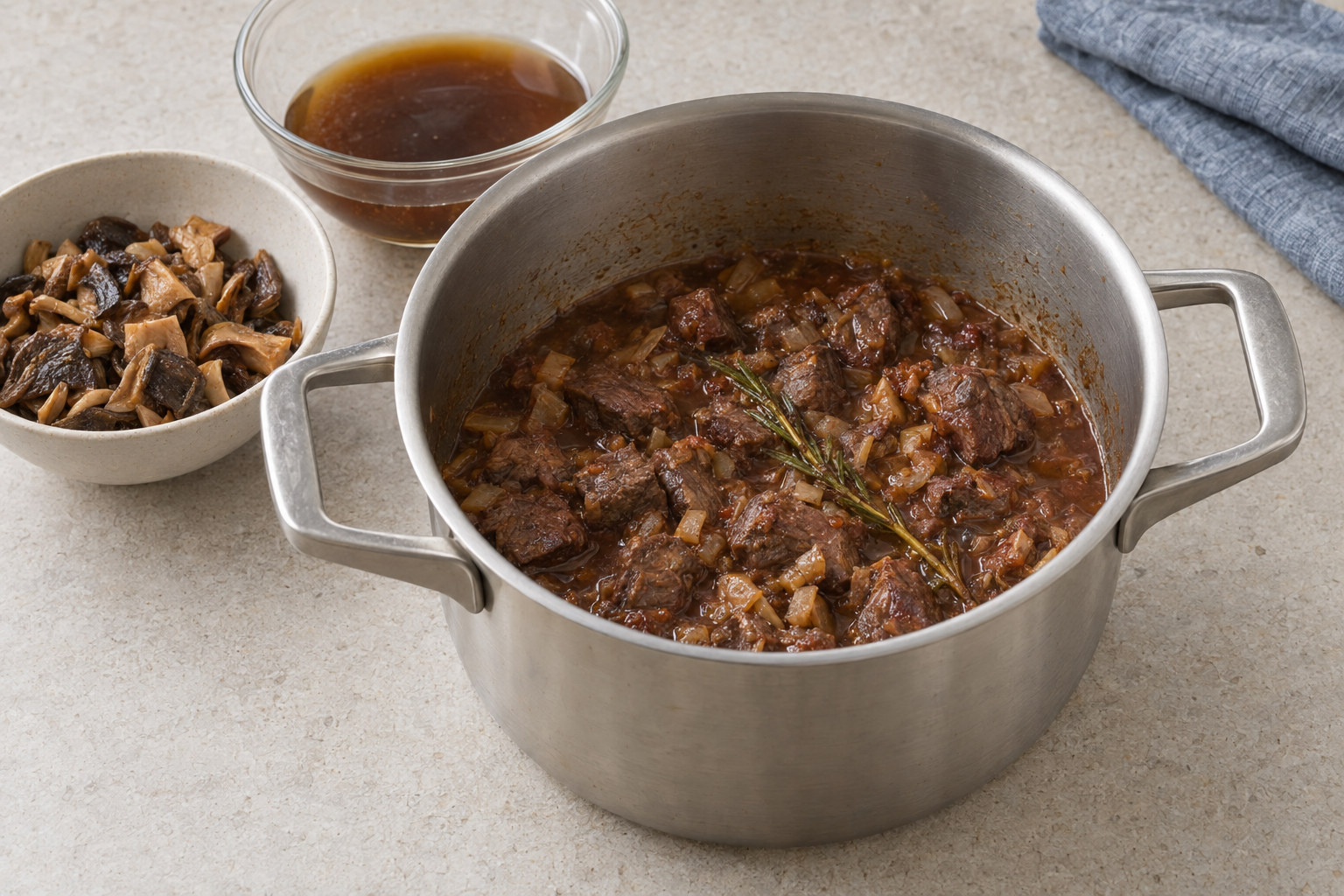
We reserve 1 tsp oil for the onion and divide the rest between two 225 g batches of meat. We sear each batch over medium-high heat for 4–6 minutes and remove it. In the remaining oil, we fry the onion for 7–9 minutes, stirring constantly. We add the tomato purée and whole rosemary sprigs and stir for another 1 minute. We pour in the wine and simmer for 3 minutes. We drain the porcini through a fine filter and add the soaking liquid to the pot with all the stock. We return the meat and its juices and bring to a gentle simmer. We cover the mushrooms and refrigerate them until we finish the ragù.
Browned bits form on the bottom, without black burnt patches.
We braise the meat until tender
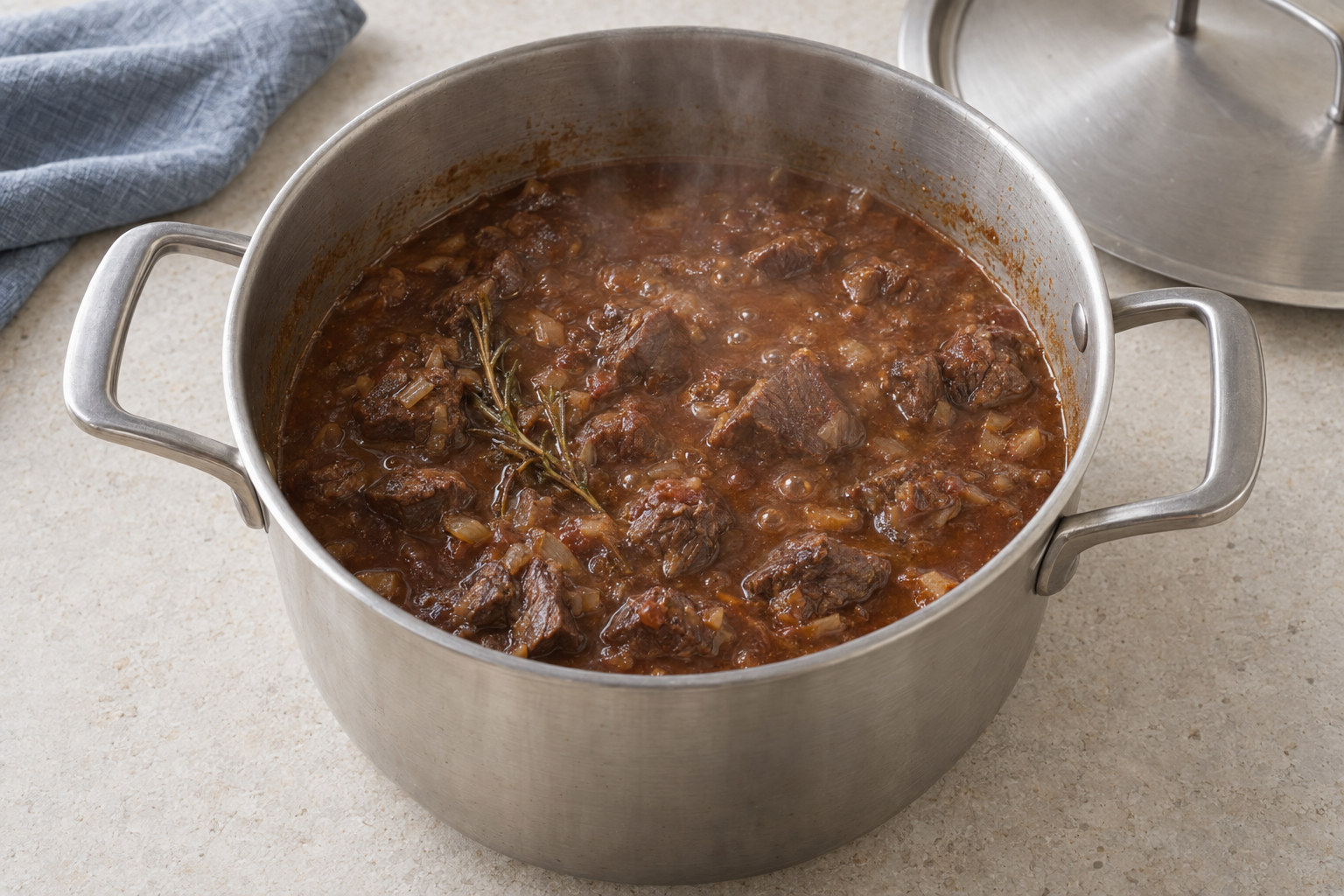
We cover the pot and braise the meat over low heat for about 150–210 minutes. The liquid should bubble only occasionally. Every half-hour we stir from the bottom and add a little hot water if needed. When the meat is nearly tender, we begin preparing the porcini and noodles as in the next steps. We braise the meat with the mushrooms for the final 10 minutes. If the meat is still tough, we braise it longer and wait before cooking the noodles. If the liquid is evaporating quickly, we lower the heat and check that the lid fits well.
The liquid bubbles only occasionally; the meat is tender, not springy.
We cook the pasta
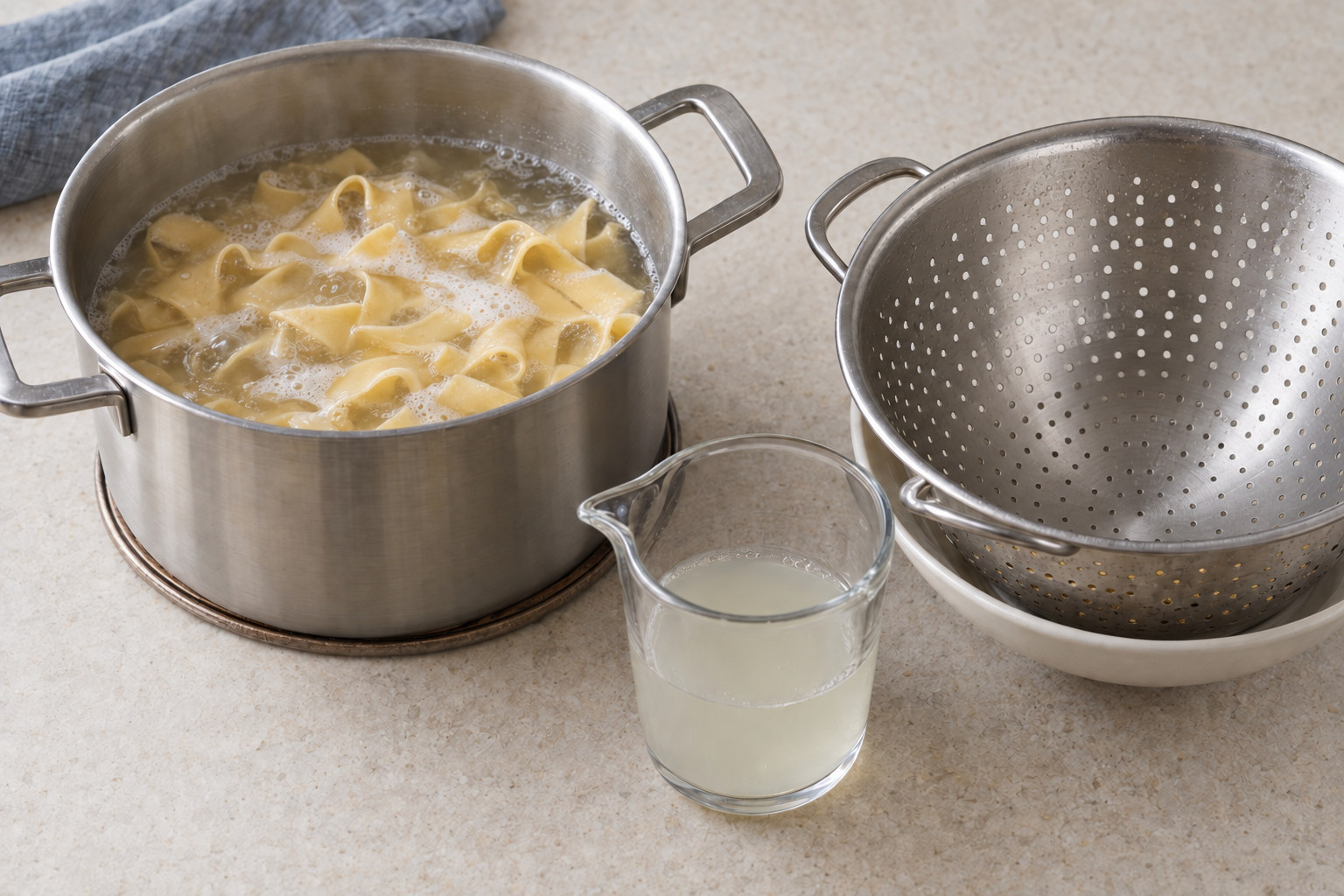
About 15 minutes before serving, we bring the salted pasta water to the boil. We add the noodles when the mushroom ragù is nearly ready and simmer them for 7–10 minutes until al dente. Before draining, we reserve 100 ml cooking water. We do not rinse the noodles; we add them to the finished ragù as soon as we drain them.
The pasta offers a little resistance, but is neither raw nor overcooked.
We finish the sauce
About 15 minutes before the braise is done, we slice the refrigerated porcini, fry them in butter over medium heat for 5 minutes and stir them into the meat for the final 10 minutes. We remove the rosemary stems, stir in the remaining third of the salt and reduce the gravy uncovered if it is too thin. We add the drained noodles to the hot ragù and gently fold them through for 1 minute. Only if the ragù is too thick, we add the reserved pasta water by the spoonful, no more than 100 ml.
The sauce clings to the meat without turning into a dry paste.
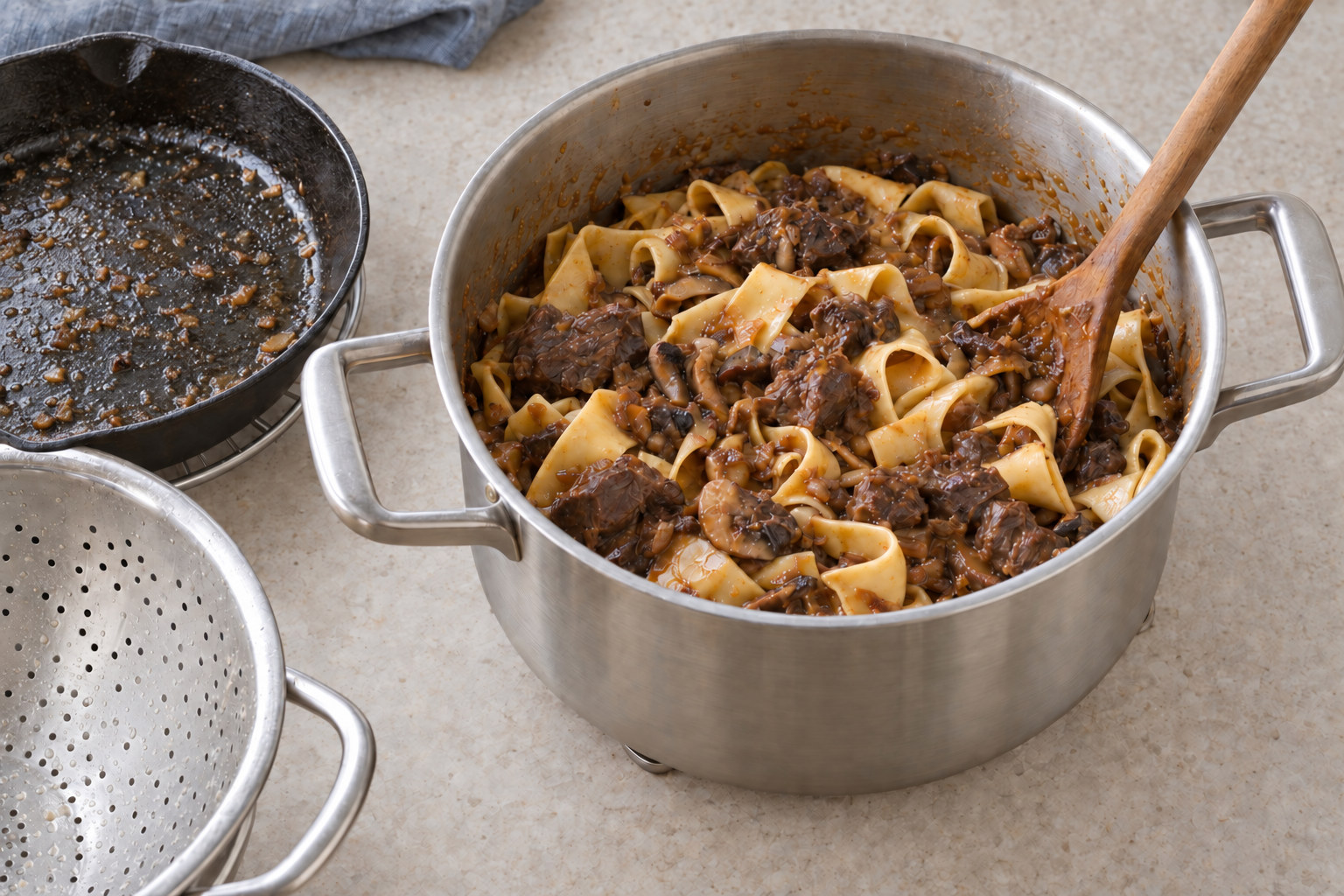
Plate and serve
We divide all the noodles and ragù between 2 warmed deep plates. We distribute the porcini and meat evenly and serve at once.
Tips from our kitchen
- We strain the dried-mushroom soaking liquid through tightly woven cloth so no grit gets into the ragù.
- We fold the noodles into the fully cooked ragù; once they are in, we do not reduce the sauce for long.
What to watch out for
- We dry the meat before searing and add it to the pot in the specified batches so each cube touches the bottom.
How we serve it
- We fold the noodles through the finished ragù and immediately divide them, with the meat and porcini, among warmed deep plates.
During preparation
- We keep raw meat and its utensils separate from cooked food.
Our inspiration
Dried porcini finds its way back into the ragù in stages: first it lends some of its aroma to the water, then it becomes a tender bite itself. The soaking liquid is therefore more than a by-product. When we strain it and use it for braising, it links the mushrooms with the sauce before we add the fried pieces. We then taste that woodland flavour in both the meat and the wide egg noodles.
Similar recipes
Recipe for 4 people
Step-by-step method
Before we start
We soak the porcini first, then prepare the meat and onion during the 20-minute soak. After draining, we keep the mushrooms covered in the fridge until near the end of the braise. Once the meat is nearly tender, we fry the mushrooms and put the noodle water on to boil. We finish the sauce before draining the noodles.
We prepare the meat and base
We cover the porcini with 260 ml hot water and leave them for 20 minutes. We cut the meat into 3 cm cubes, dry it, season with two-thirds of the salt for the meat and add pepper. We peel and finely chop the onion.
Evenly sized meat cubes become tender at the same rate.
We sear and season
We reserve ½ tbsp oil for the onion and divide the rest between four 225 g batches of meat. We sear each batch over medium-high heat for 4–6 minutes and remove it. In the remaining oil, we fry the onion for 7–9 minutes, stirring constantly. We add the tomato purée and whole rosemary sprigs and stir for another 1 minute. We pour in the wine and simmer for 3 minutes. We drain the porcini through a fine filter and add the soaking liquid to the pot with all the stock. We return the meat and its juices and bring to a gentle simmer. We cover the mushrooms and refrigerate them until we finish the ragù.
Browned bits form on the bottom, without black burnt patches.
We braise the meat until tender
We cover the pot and braise the meat over low heat for about 150–210 minutes. The liquid should bubble only occasionally. Every half-hour we stir from the bottom and add a little hot water if needed. When the meat is nearly tender, we begin preparing the porcini and noodles as in the next steps. We braise the meat with the mushrooms for the final 10 minutes. If the meat is still tough, we braise it longer and wait before cooking the noodles. If the liquid is evaporating quickly, we lower the heat and check that the lid fits well.
The liquid bubbles only occasionally; the meat is tender, not springy.
We cook the pasta
About 15 minutes before serving, we bring the salted pasta water to the boil. We add the noodles when the mushroom ragù is nearly ready and simmer them for 7–10 minutes until al dente. Before draining, we reserve 160 ml cooking water. We do not rinse the noodles; we add them to the finished ragù as soon as we drain them.
The pasta offers a little resistance, but is neither raw nor overcooked.
We finish the sauce
About 15 minutes before the braise is done, we slice the refrigerated porcini, fry them in butter over medium heat for 5 minutes and stir them into the meat for the final 10 minutes. We remove the rosemary stems, stir in the remaining third of the salt and reduce the gravy uncovered if it is too thin. We add the drained noodles to the hot ragù and gently fold them through for 1 minute. Only if the ragù is too thick, we add the reserved pasta water by the spoonful, no more than 160 ml.
The sauce clings to the meat without turning into a dry paste.
Plate and serve
We divide all the noodles and ragù among 4 warmed deep plates. We distribute the porcini and meat evenly and serve at once.