
Contemporary French cuisine · Contemporary French cuisine
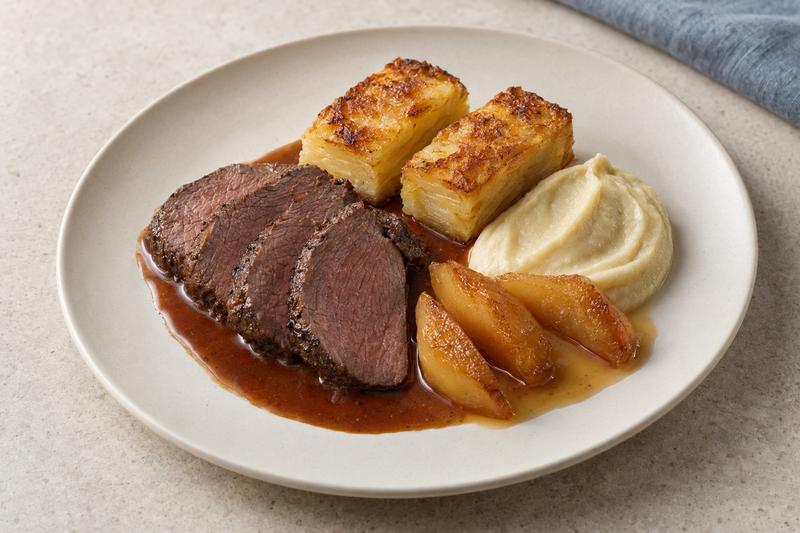
Fallow deer haunch with quince, parsnip cream and potato pavé
Thin layers of potato with a crisp surface, smooth parsnip cream and fragrant quince turn fallow deer haunch into a celebratory meal. The wine jus balances the sweeter accompaniments and lets the slices of meat stand out beside the golden pavé. We begin preparing it the day before.
We spread the preparation over two days. The total time includes baking the pavé for 60–75 minutes, initial cooling within 45 minutes, further cooling of its centre in the fridge and at least 8 hours of pressing while chilled. On the second day, we finish the quince and parsnip cream first. We put the pavé in the oven before searing the meat so it begins reheating during the sear; it needs approximately 20–30 minutes in total. If it has to wait longer, we can briefly reheat it for another 3–5 minutes. The core temperature determines the haunch’s roasting time: we first check it about 10 minutes after putting the meat in the oven, then roughly every 5 minutes according to its thickness; the total time is a guide.
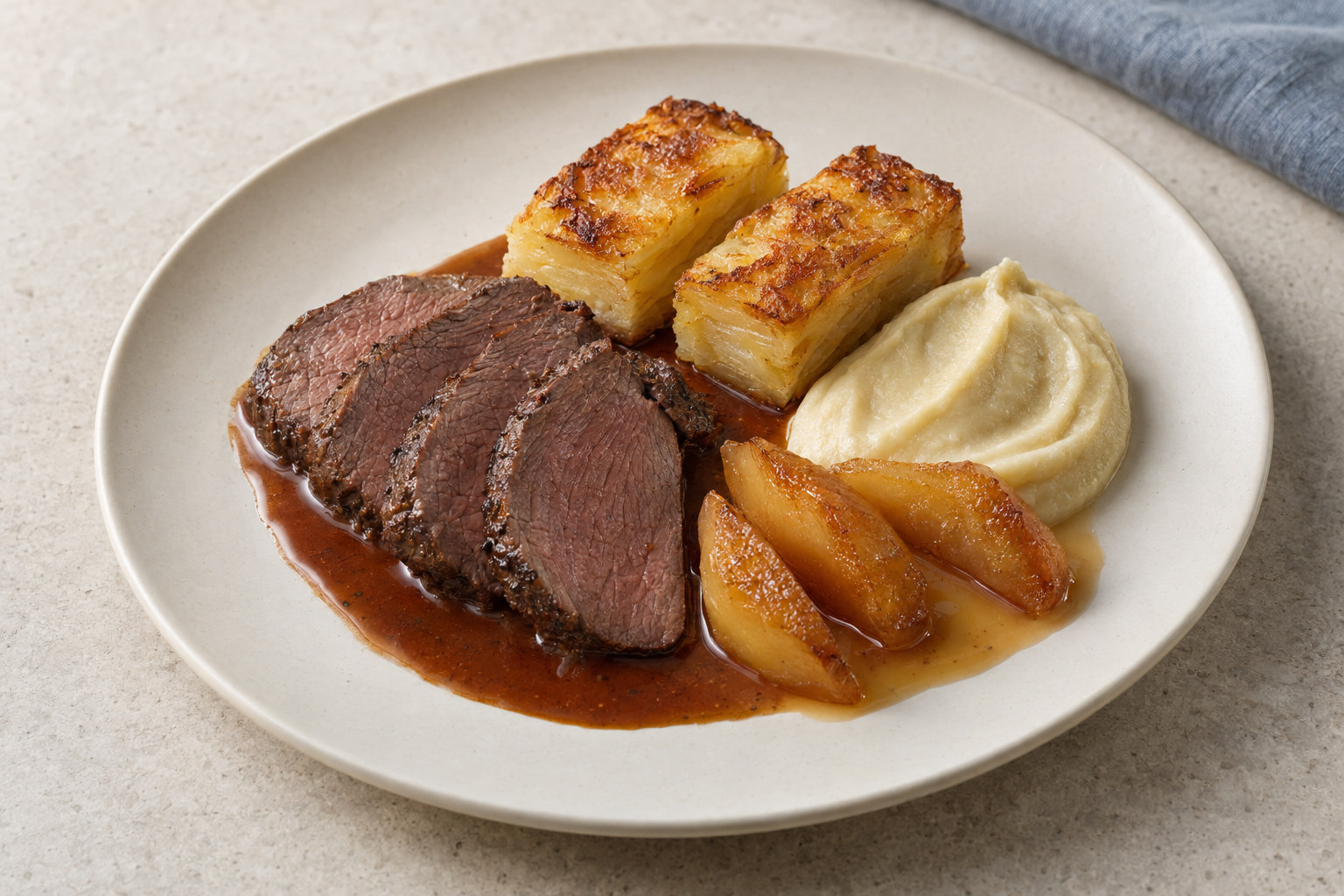
Buttery potato layers, smooth parsnip and fragrant quince accompany roasted fallow deer haunch; the wine jus balances the sweeter sides.
Step-by-step method
What you will need
- kitchen scales
- thin-probe thermometer
- knife and two separate chopping boards
- measuring jug
- 26 cm pan for the meat
- second 26 cm pan for the pavé
- metal tin with a 20 × 12 cm internal base, at least 5 cm high
- flat board to fit the tin and a clean 0.5 kg weight
- container for a cooling bath and ice packs
- mandoline with a hand guard
- baking parchment and foil
- 22 × 16 cm roasting dish
- baking tray
- 1.5-litre saucepan for the parsnip
- 14 cm, 1-litre saucepan for the quince
- stick blender
- sieve
- oven with two shelf levels
Before we start
The day before, we bake, cool and press the pavé under a weight. On the second day, we first finish the quince and parsnip cream and keep them covered and hot. We then sear the pavé and meat. We put the pavé in the preheated oven before searing the meat; as it reheats, we sear the meat and add it to the oven. While they roast, we make the wine jus. We take out the meat according to its core temperature and the pavé as soon as it is hot through; steps 5 and 6 give the details and explain what to do if it has to wait longer. While the meat rests, we finish the jus with butter and get the sides ready to serve.
Bake and press the pavé the day before
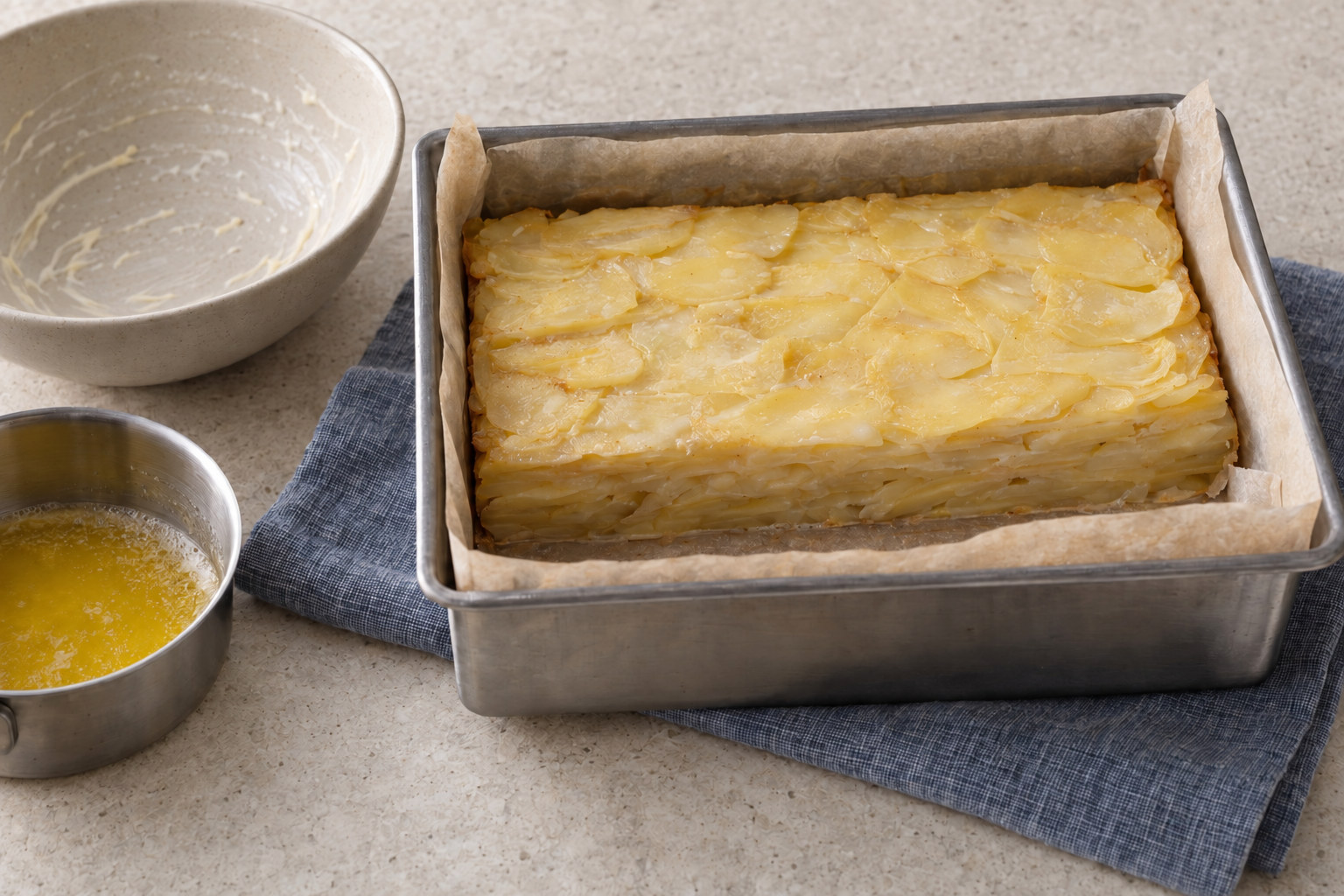
The day before, we peel the potatoes and cut them into 1 mm slices. We do not rinse the slices again. We reserve 2 teaspoons of clarified butter for frying. We melt the rest and mix it with the potatoes, all the cream and the salt for the potatoes. In a parchment-lined tin, we arrange everything in overlapping layers so the whole block is no more than 3 cm high. We cover and bake at 170 °C with top and bottom heat for 60–75 minutes until completely tender, checking with a knife. We stand the metal tin in a cold bath with ice packs; water must not get inside. We put it in a 0–5 °C fridge within 45 minutes at the latest. We do not leave the pavé outside the fridge for more than 2 hours in total. We cover it with clean parchment, a flat board and the specified weight. Once the centre has cooled to no more than 5 °C, we press it in the fridge for at least another 8 hours.
The layers hold together, and the cold block cuts cleanly.
Cook and blend the parsnip cream
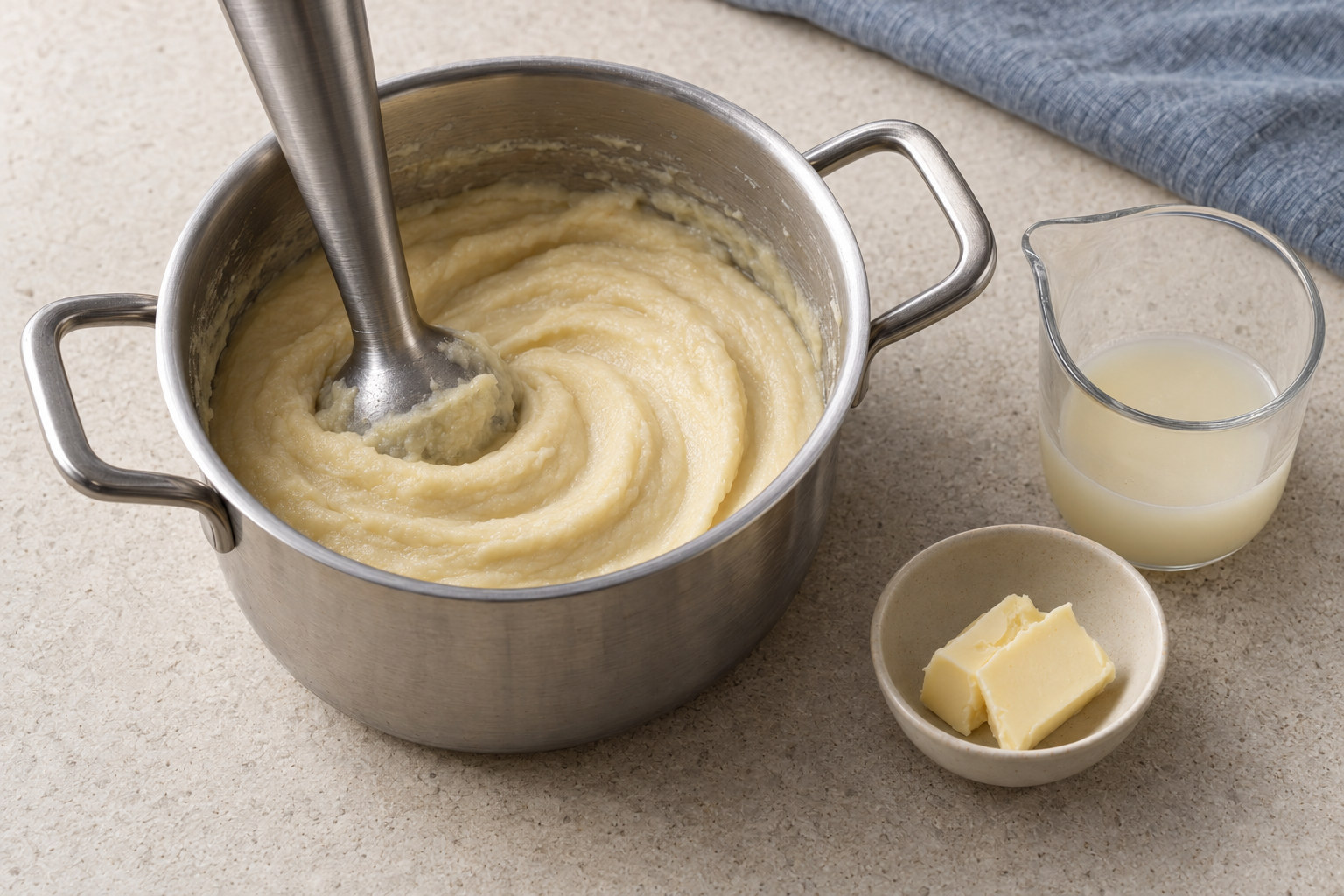
We peel the parsnips and cut them into 1 cm cubes. We put them in a saucepan with the milk, water for the purée and salt for the purée. We cover and simmer gently for 20–30 minutes until completely tender, stirring twice. We drain through a sieve, reserving all the liquid. We blend the parsnips with the butter and 60 ml of the liquid to start. We add more liquid by the tablespoon only until the mixture is smooth and creamy, using no more than 150 ml in total. We cover the finished cream and keep it hot over the lowest heat while finishing the meat and pavé. We stir it from the bottom regularly so it does not catch, and do not let it boil hard. We stir it again before serving.
The purée is completely smooth and coats a spoon; it must not be watery.
Poach the quince gently
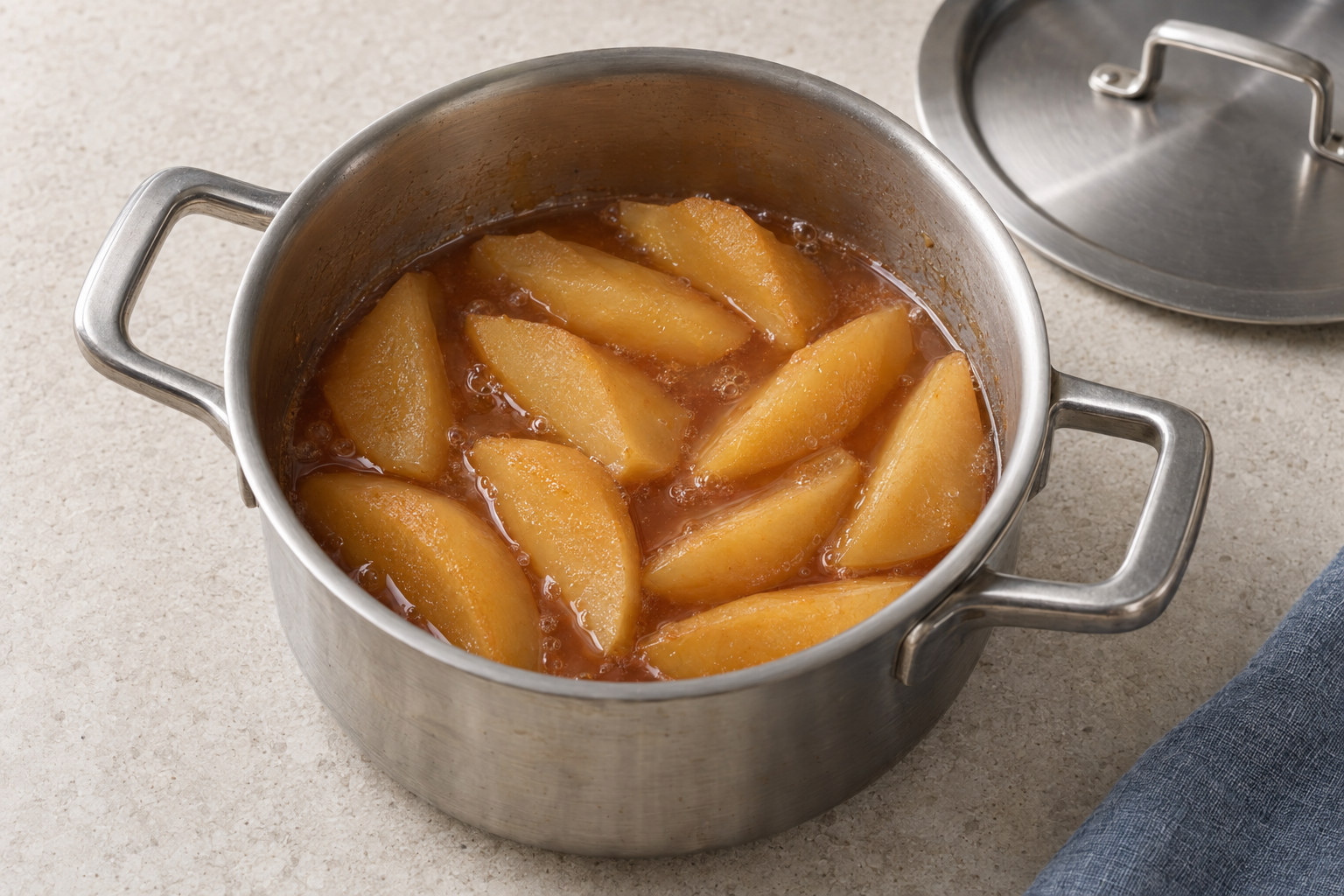
We peel and core the quince, then cut it into wedges 1.5 cm thick. In the specified saucepan, we pour over the apple juice, 100 ml of the water for the quince and the lemon juice, then add the sugar. We cover and simmer gently for 25–40 minutes, turning the wedges every 10 minutes. If the liquid diminishes before the quince is tender, we add reserve water 20 ml at a time, no more than 60 ml. Once a knife passes easily through the centre, we uncover and reduce for 3–5 minutes until a light fruit jus remains. We keep the quince covered and hot in its liquid over the lowest heat while finishing the meat and pavé. We do not let it boil hard or reduce further; before serving, we check that it remains hot.
The fruit is fragrant and holds its shape; the centre must not remain hard.
Prepare the meat
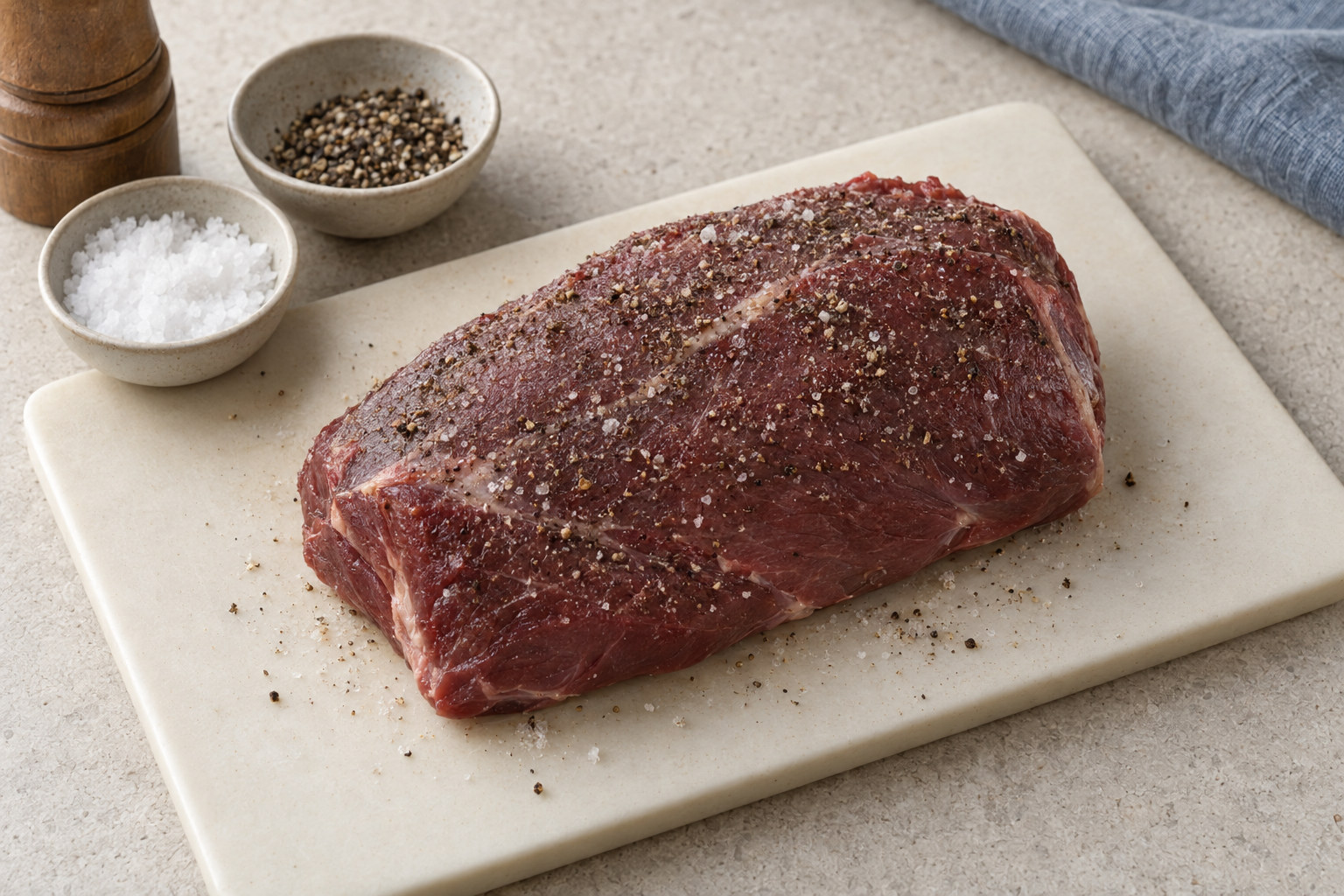
On the day of serving, we prepare one whole 420 g piece of fallow deer haunch, 5–6 cm thick. We pat the meat dry and season it with salt and pepper. Before searing the meat, the quince and parsnip cream are already finished and being kept hot.
The meat is dry and evenly thick.
Sear the pavé
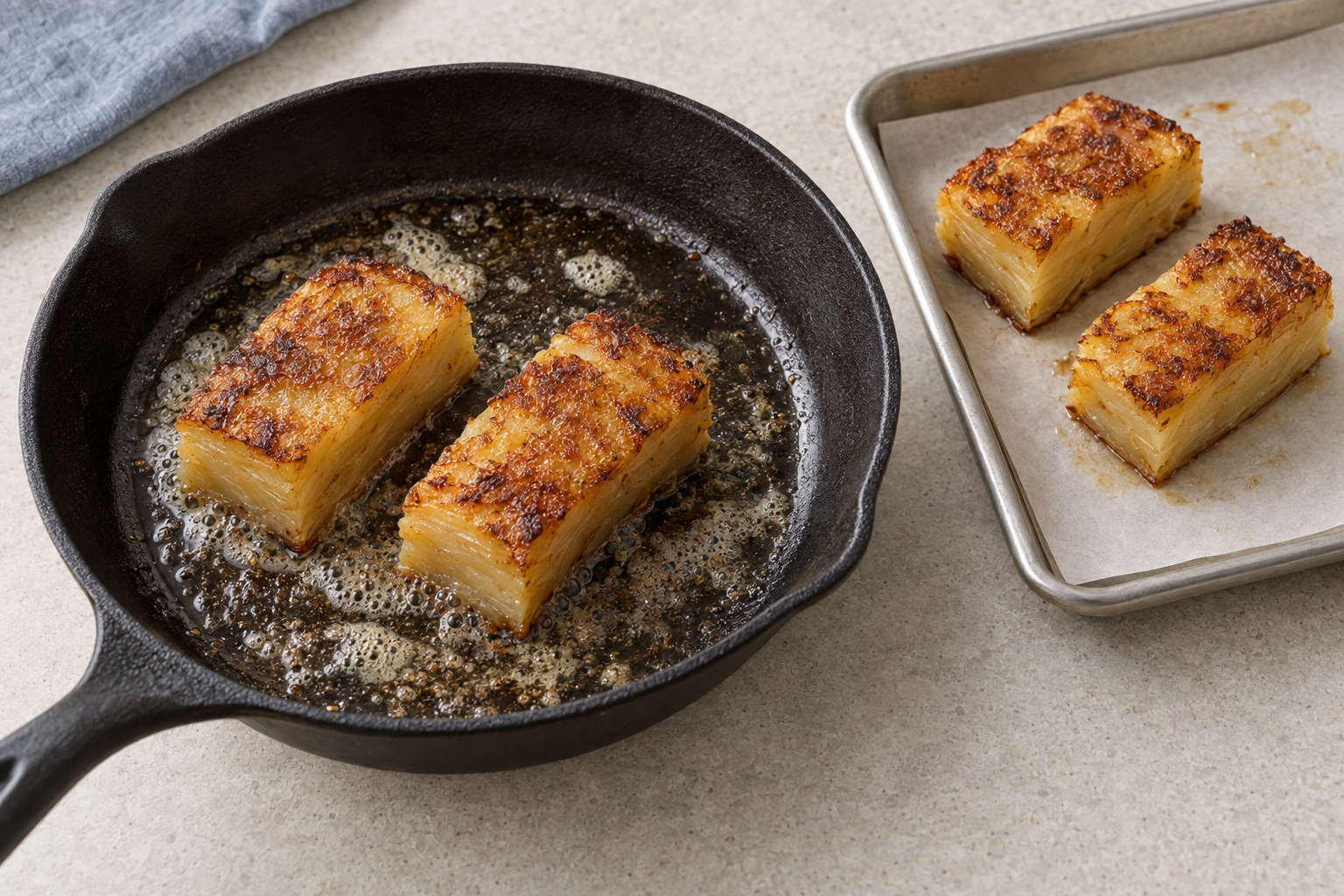
We turn out the cold block and cut it into four rectangles of about 10 × 6 cm. In a separate pan, we divide the remaining clarified butter between two batches and fry two pieces per batch for 3–4 minutes on each broad side until golden. We transfer them carefully to a baking tray. We preheat the oven to 150 °C with top and bottom heat. We put the tray of pavé on the second level and start searing the meat at once. The pavé begins reheating while the meat sears.
The surface is golden and the pavé is ready on the tray.
Sear the haunch and put it in the oven
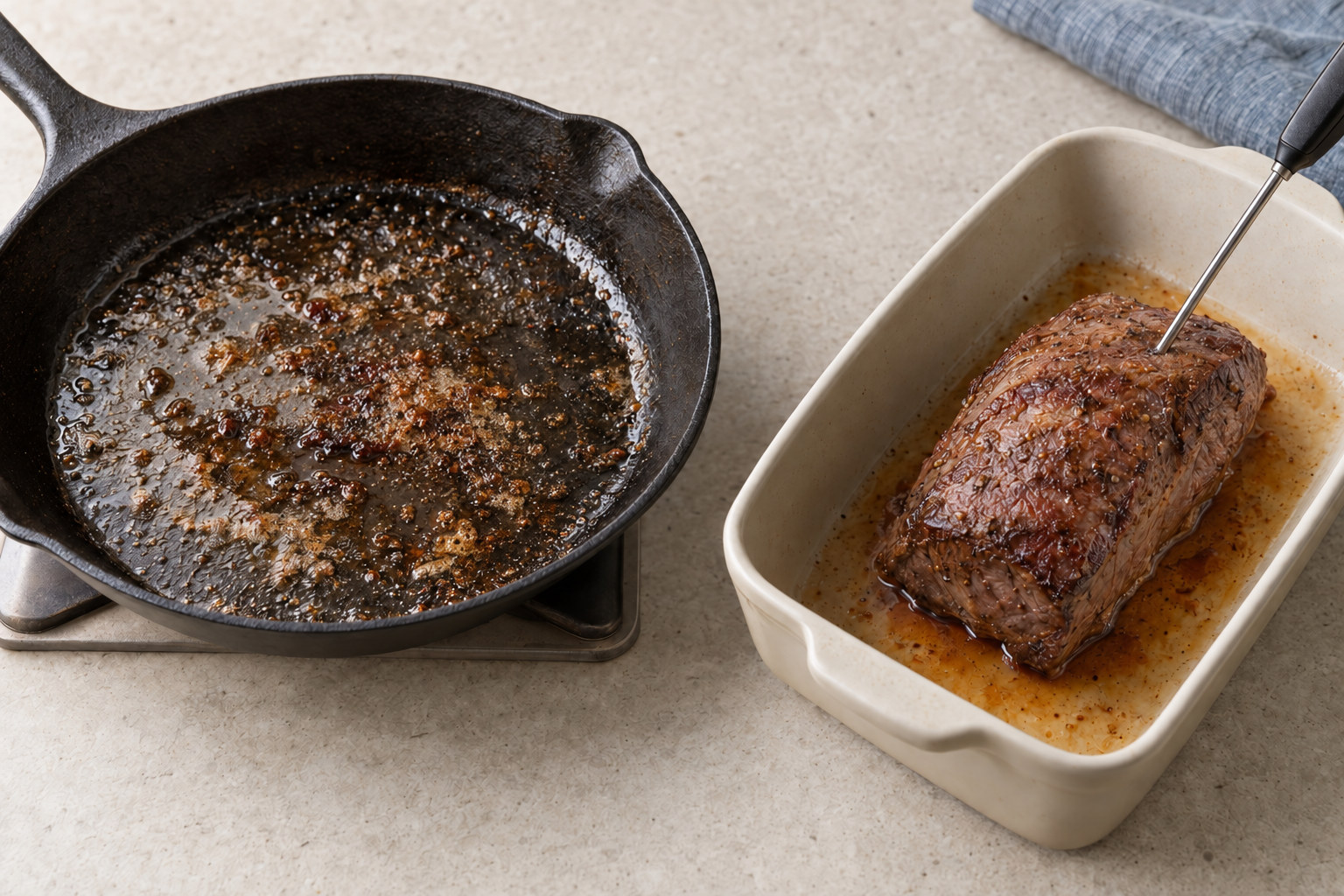
The pavé is already reheating in the oven at 150 °C. The quince and parsnip cream are ready, and we keep them hot. We sear the meat in the oil on all sides for 5–6 minutes and transfer it to a roasting dish. We put the dish into the oven alongside the pavé. We roast the meat according to its core temperature, allowing for the thickness of the piece. While it roasts, we start the wine jus.
The meat is brown on the outside. We verify doneness with the probe, not by the pinkness of the meat or the colour of its juices.
Make the wine jus while the meat roasts
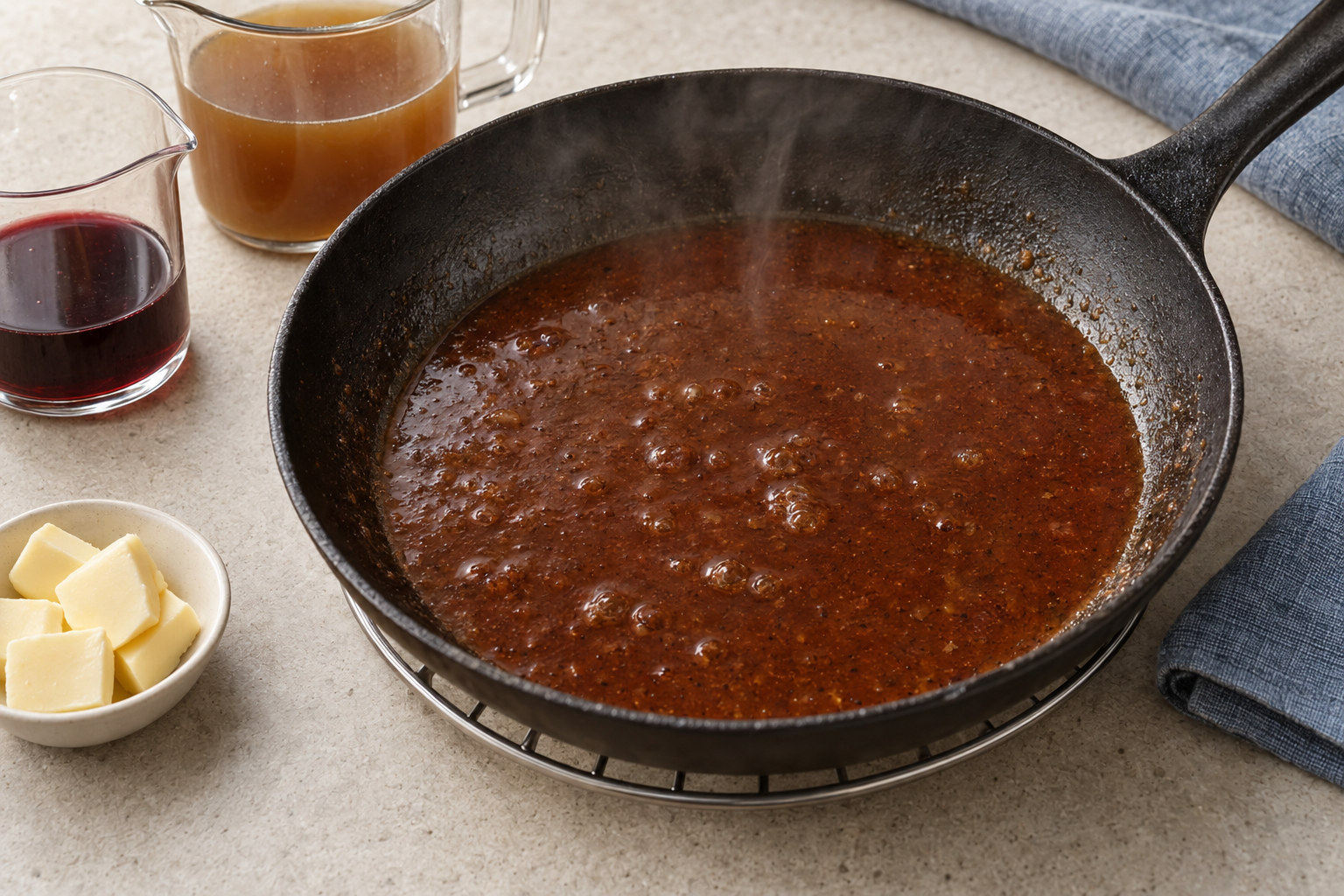
As soon as we put the meat in the oven, we pour the wine into the pan and reduce it to one third over 4–6 minutes. We add all the beef stock and simmer gently for 8–12 minutes. We then keep the jus over the lowest heat. While the jus simmers, we watch the meat and pavé. About 10 minutes after putting the meat in the oven, we check the centre of its thickest part with a clean probe. We check again roughly every 5 minutes, depending on thickness. We reheat the pavé for approximately 20–30 minutes from the time it went into the oven. We first check it after 20 minutes: we leave a thin knife in the centre of one piece for a few seconds; the blade should feel distinctly hot when withdrawn. If not, we reheat it a little longer. Once the pavé is hot through, we take it out and loosely cover it with foil on the warm tray. If it waits for more than 10 minutes, we return it to the oven for about 3–5 minutes just before serving so it stays hot without drying out unnecessarily. For a pink centre, we take the meat out at 56–58 °C and let it rest for about 5 minutes, loosely covered on a warmed plate. If the meat reaches temperature before the pavé is hot, we finish reheating the pavé while the meat rests; we do not keep cooking the meat for its sake. We add the juices from the rested meat to the jus, take the pan off the heat and gradually whisk in the cold butter reserved for the jus. We serve only once the pavé is hot through.
Divide and serve
When the meat and pavé are ready and the meat has rested, we stir the hot parsnip cream, check the quince and check the wine jus. We cut the haunch across the grain into 1 cm slices and divide it between 2 warmed plates. We add two pavé rectangles, an equal share of parsnip cream and quince with a little of its liquid to each plate. We spoon the wine and butter jus alongside the meat, keeping the surface of the layered potatoes dry. We serve immediately.
Tips from our kitchen
- We weigh down the pavé evenly over its whole surface and cut it only once completely chilled, so the layers hold together.
- We simmer the quince gently until tender and only then reduce its liquid; reducing it earlier could leave the fruit hard.
What to watch out for
- We dry the meat before searing and follow the stated batches so every piece touches the base of the pan.
- We check the meat temperature at its thickest point. For the pavé, we insert a thin knife into the centre of one piece to check that it is hot through; a browned surface alone does not tell us.
How we serve it
- We serve slices of haunch with parsnip cream, quince and two pieces of pavé per person. We pour the wine jus alongside the meat so the potato surface stays crisp.
During preparation
- We measure temperatures with a clean, thin probe. We keep raw meat and its utensils separate from ready-to-eat food.
Our inspiration
When Charlie Hibbert, head chef of the Ox Barn restaurant at the British estate Thyme, writes about autumn, he notices the colours of the vegetables in the garden and the leaves on the trees. His seasonal dish includes potato pavé, which he leaves to firm up overnight after baking and fries until crisp the next day. That accompaniment inspired our own autumn plate with fallow deer haunch, parsnip and quince. We give it two days, then enjoy several flavours and crisp potato layers together in a single mouthful.
Geoffrey Smeddle
Geoffrey Smeddle is the head chef of The Peat Inn in Fife, Scotland. His recipe for game with potatoes, celeriac and chestnuts is one inspiration for the composition of our celebratory plate.
Similar recipes
Recipe for 4 people
Step-by-step method
Before we start
The day before, we bake, cool and press the pavé under a weight. On the second day, we first finish the quince and parsnip cream and keep them covered and hot. We then sear the pavé and meat. We put the pavé in the preheated oven before searing the meat; as it reheats, we sear the meat and add it to the oven. While they roast, we make the wine jus. We take out the meat according to its core temperature and the pavé as soon as it is hot through; steps 5 and 6 give the details and explain what to do if it has to wait longer. While the meat rests, we finish the jus with butter and get the sides ready to serve.
Bake and press the pavé the day before
The day before, we peel the potatoes and cut them into 1 mm slices. We do not rinse the slices again. We reserve 1 tablespoon of clarified butter for frying. We melt the rest and mix it with the potatoes, all the cream and the salt for the potatoes. In a parchment-lined tin, we arrange everything in overlapping layers so the whole block is no more than 3 cm high. We cover and bake at 170 °C with top and bottom heat for 60–75 minutes until completely tender, checking with a knife. We stand the metal tin in a cold bath with ice packs; water must not get inside. We put it in a 0–5 °C fridge within 45 minutes at the latest. We do not leave the pavé outside the fridge for more than 2 hours in total. We cover it with clean parchment, a flat board and the specified weight. Once the centre has cooled to no more than 5 °C, we press it in the fridge for at least another 8 hours.
The layers hold together, and the cold block cuts cleanly.
Cook and blend the parsnip cream
We peel the parsnips and cut them into 1 cm cubes. We put them in a saucepan with the milk, water for the purée and salt for the purée. We cover and simmer gently for 20–30 minutes until completely tender, stirring twice. We drain through a sieve, reserving all the liquid. We blend the parsnips with the butter and 100 ml of the liquid to start. We add more liquid by the tablespoon only until the mixture is smooth and creamy, using no more than 250 ml in total. We cover the finished cream and keep it hot over the lowest heat while finishing the meat and pavé. We stir it from the bottom regularly so it does not catch, and do not let it boil hard. We stir it again before serving.
The purée is completely smooth and coats a spoon; it must not be watery.
Poach the quince gently
We peel and core the quince, then cut it into wedges 1.5 cm thick. In the specified saucepan, we pour over the apple juice, 160 ml of the water for the quince and the lemon juice, then add the sugar. We cover and simmer gently for 25–40 minutes, turning the wedges every 10 minutes. If the liquid diminishes before the quince is tender, we add reserve water 20 ml at a time, no more than 100 ml. Once a knife passes easily through the centre, we uncover and reduce for 3–5 minutes until a light fruit jus remains. We keep the quince covered and hot in its liquid over the lowest heat while finishing the meat and pavé. We do not let it boil hard or reduce further; before serving, we check that it remains hot.
The fruit is fragrant and holds its shape; the centre must not remain hard.
Prepare the meat
On the day of serving, we prepare two whole pieces of fallow deer haunch, each 420 g and 5–6 cm thick. We pat the meat dry and season it with salt and pepper. Before searing the meat, the quince and parsnip cream are already finished and being kept hot.
The meat is dry and the pieces are similar in thickness.
Sear the pavé
We turn out the cold block and cut it into eight rectangles of about 10 × 6 cm. In a separate pan, we divide the remaining clarified butter between two batches and fry four pieces per batch for 3–4 minutes on each broad side until golden. We transfer them carefully to a baking tray. We preheat the oven to 150 °C with top and bottom heat. We put the tray of pavé on the second level and start searing the meat at once. The pavé begins reheating while the meat sears.
The surface is golden and the pavé is ready on the tray.
Sear the haunch and put it in the oven
The pavé is already reheating in the oven at 150 °C. The quince and parsnip cream are ready, and we keep them hot. We sear the two pieces of meat one at a time in the oil for 5–6 minutes each on all sides, about 10–12 minutes in total, dividing the oil between them. We transfer both pieces to a roasting dish and put them into the oven alongside the pavé. We roast the meat according to its core temperature, allowing for the thickness of each piece. While it roasts, we start the wine jus.
The meat is brown on the outside. We verify doneness with the probe, not by the pinkness of the meat or the colour of its juices.
Make the wine jus while the meat roasts
As soon as we put the meat in the oven, we pour the wine into the pan and reduce it to one third over 6–8 minutes. We add all the beef stock and simmer gently for 8–12 minutes. We then keep the jus over the lowest heat. While the jus simmers, we watch both pieces of meat and the pavé. About 10 minutes after putting the meat in the oven, we check the centre of the thickest part of each piece separately with a clean probe. We check again roughly every 5 minutes, depending on their thickness. We reheat the pavé for approximately 20–30 minutes from the time it went into the oven. We first check it after 20 minutes: we leave a thin knife in the centre of one piece for a few seconds; the blade should feel distinctly hot when withdrawn. If not, we reheat it a little longer. Once the pavé is hot through, we take it out and loosely cover it with foil on the warm tray. If it waits for more than 10 minutes, we return it to the oven for about 3–5 minutes just before serving so it stays hot without drying out unnecessarily. For a pink centre, we take each piece of meat out at 56–58 °C and let it rest for about 5 minutes, loosely covered on a warmed plate. If the first piece reaches temperature before the second or before the pavé is hot, we do not put it back in the oven. We finish reheating the pavé while the meat rests if it needs longer. We add the juices from the rested meat to the jus, take the pan off the heat and gradually whisk in the cold butter reserved for the jus. We plate each serving with hot pavé and rested meat, then serve without unnecessary delay.
Divide and serve
When the meat and pavé are ready and the meat has rested, we stir the hot parsnip cream, check the quince and check the wine jus. We cut the haunch across the grain into 1 cm slices and divide it between 4 warmed plates. We add two pavé rectangles, an equal share of parsnip cream and quince with a little of its liquid to each plate. We spoon the wine and butter jus alongside the meat, keeping the surface of the layered potatoes dry. We serve immediately.