
Contemporary European cuisine · Contemporary European cuisine
Fallow deer roulade with apricots, pistachios and lemon bulgur
When we slice the fallow deer roulade, we reveal a sweet apricot filling with green pistachios and parsley. We serve it with thyme-scented white wine juices and fluffy lemon bulgur. The colourful slices make a festive centrepiece when we want to serve venison a little differently.
The time includes soaking the apricots, cooling the filling, braising and resting the roulade; we make the bulgur towards the end of braising.
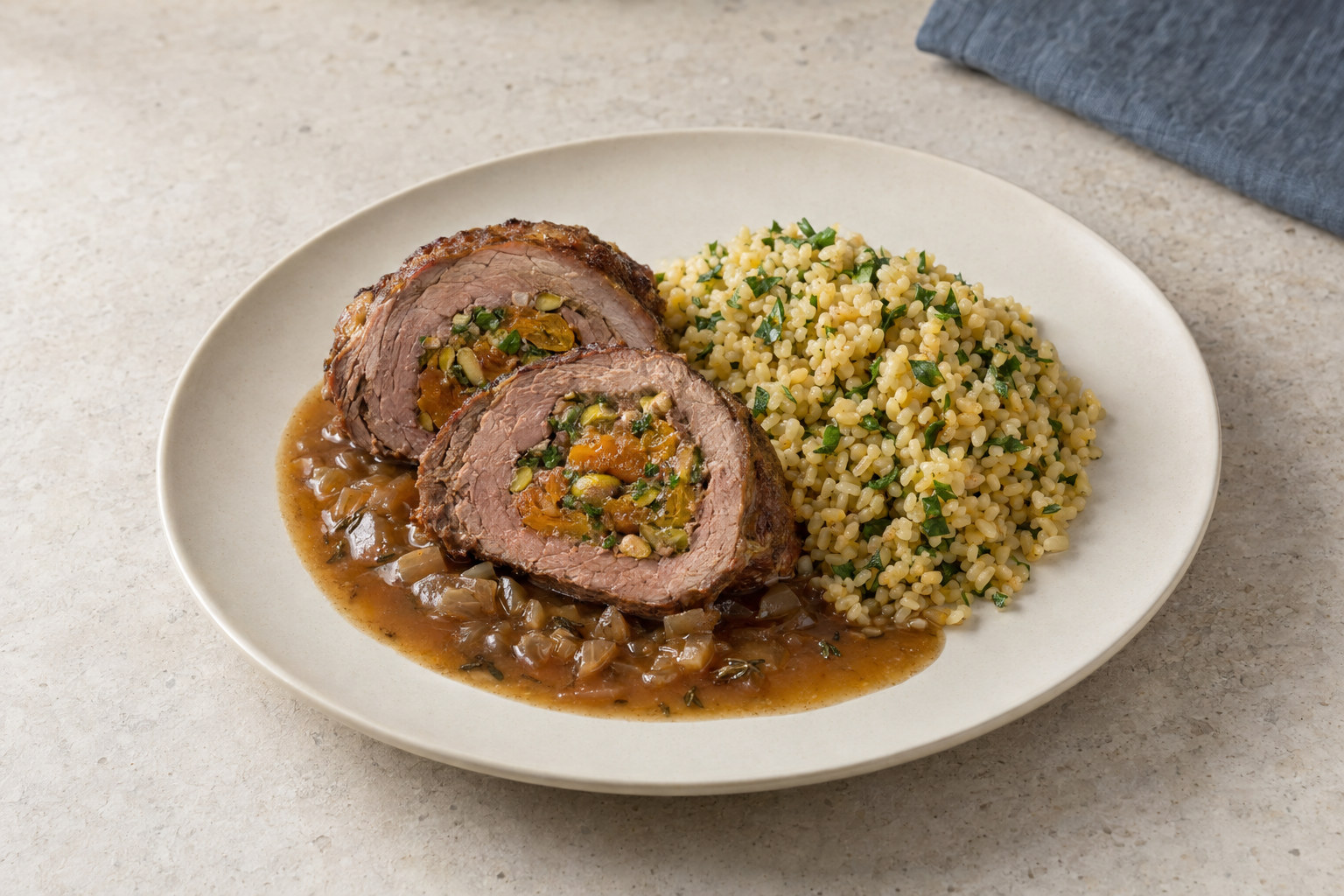
The sweetness of apricots and the taste of pistachios complement the thyme-scented wine juices. Lemon and parsley give the bulgur a fresh acidity.
Step-by-step method
What you will need
- kitchen scales
- thin-probe thermometer
- knife and two separate chopping boards
- measuring jug
- heavy 22 cm, 3-litre pot with a tight-fitting lid
- 1.5-litre saucepan with lid for the bulgur
- sieve and shallow plate for the filling
- meat mallet and cling film
- kitchen string and scissors
- electric kettle
Before we start
While the apricots soak for 15 minutes, we open out the meat into a sheet. We let the filling cool completely before rolling. We start the bulgur when the roulade is almost tender, about 25 minutes before serving. We reduce the juices during the 7-minute meat rest.
Make the apricot filling
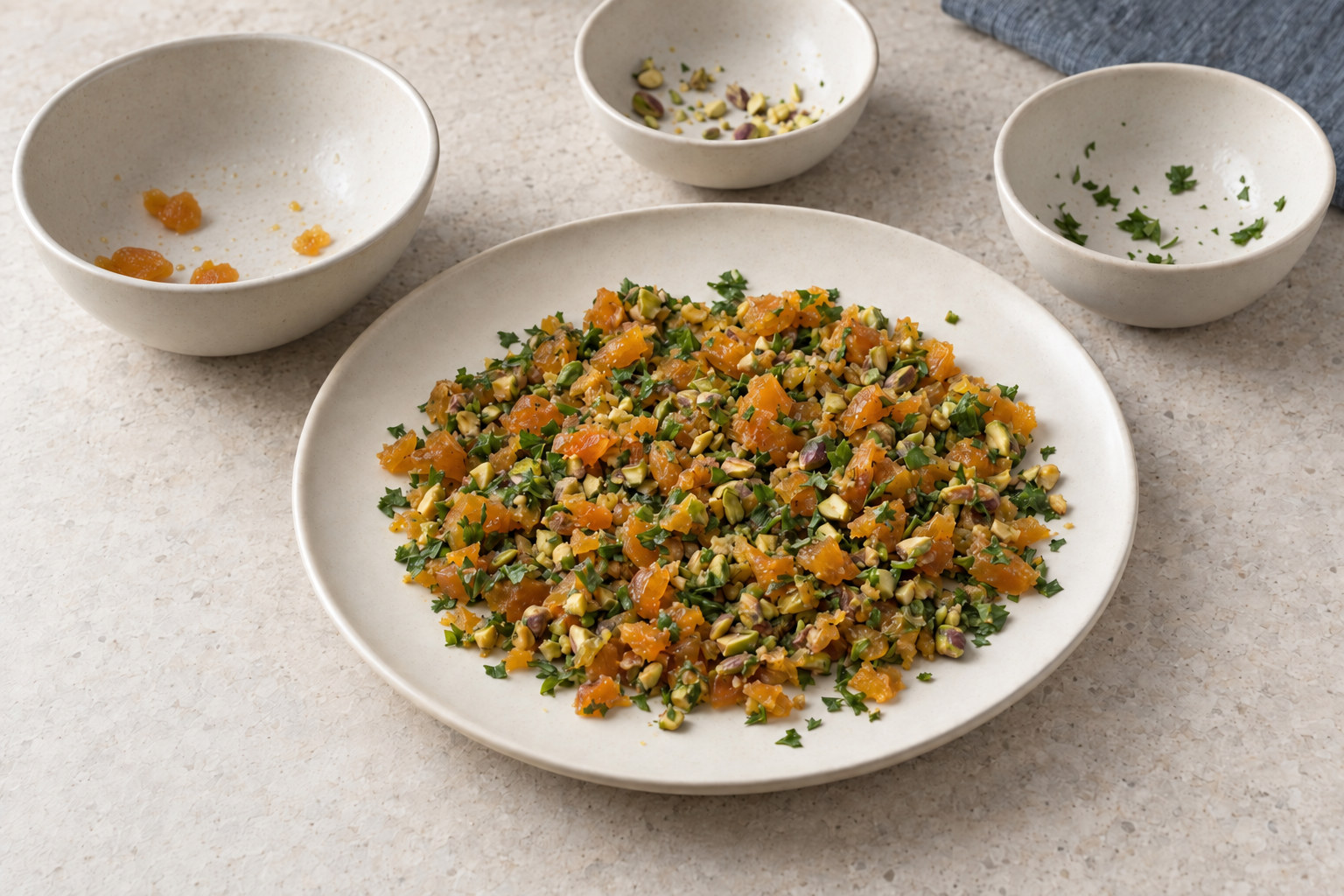
We cover the apricots with hot water and leave them to soften for 15 minutes. We drain and dry them, then finely chop them with the pistachios and parsley for the filling. We spread the mixture on a plate and let it cool for 10 minutes; we do not add the soaking water to the filling.
Fill and roll the haunch
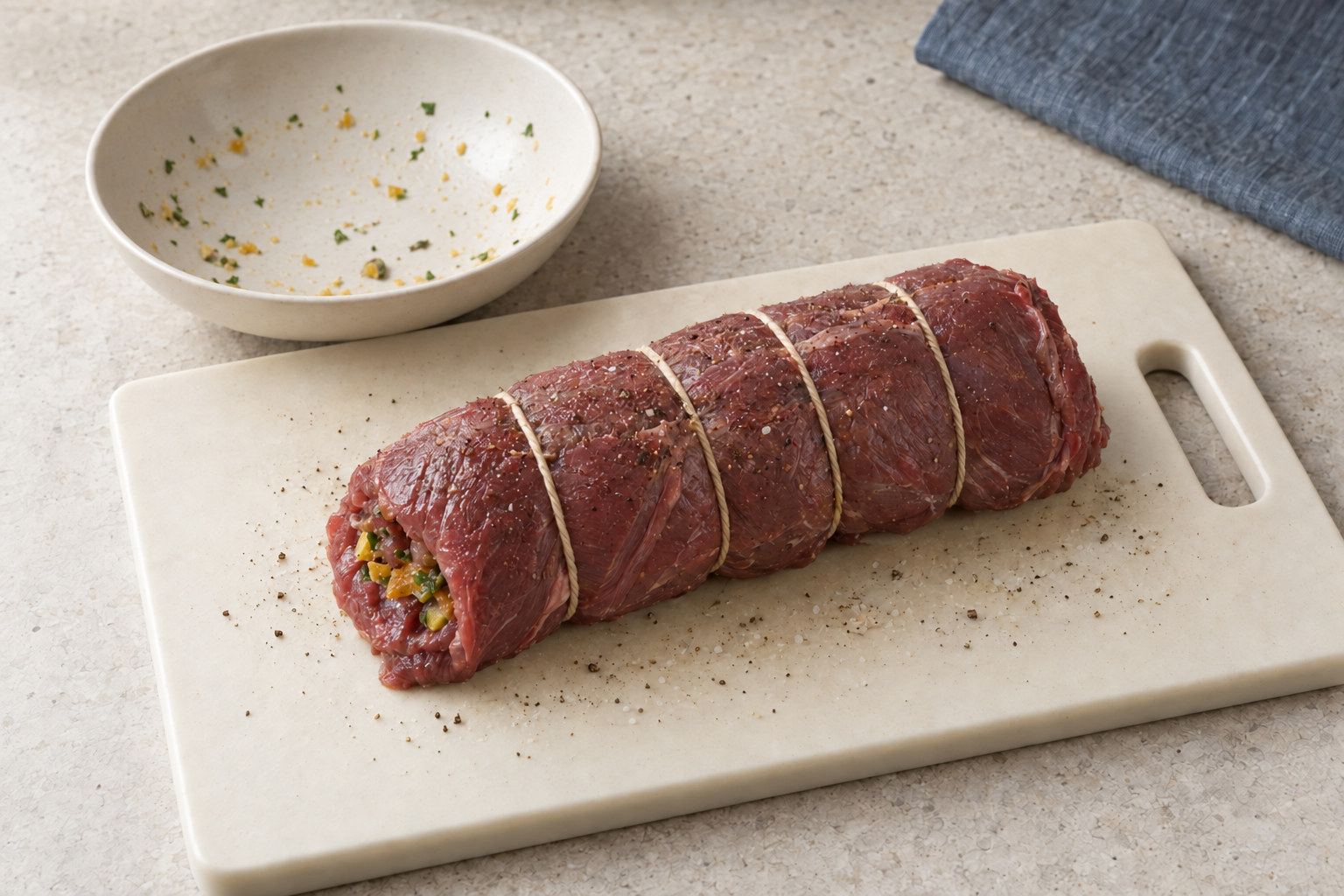
We butterfly the haunch into one continuous sheet, about 18 × 30 cm. We even it out through cling film to 8 mm thick, then remove the film. We spread half the salt reserved for the meat and all the pepper over the surface, add the filling and leave a clear 2 cm border. We roll from the short side into one roulade about 18 cm long and 6 cm thick. We tie it with string at 3 cm intervals.
The filling does not spill out, the end is tucked under and the roulade has an even diameter.
Brown the roulade and make the juices
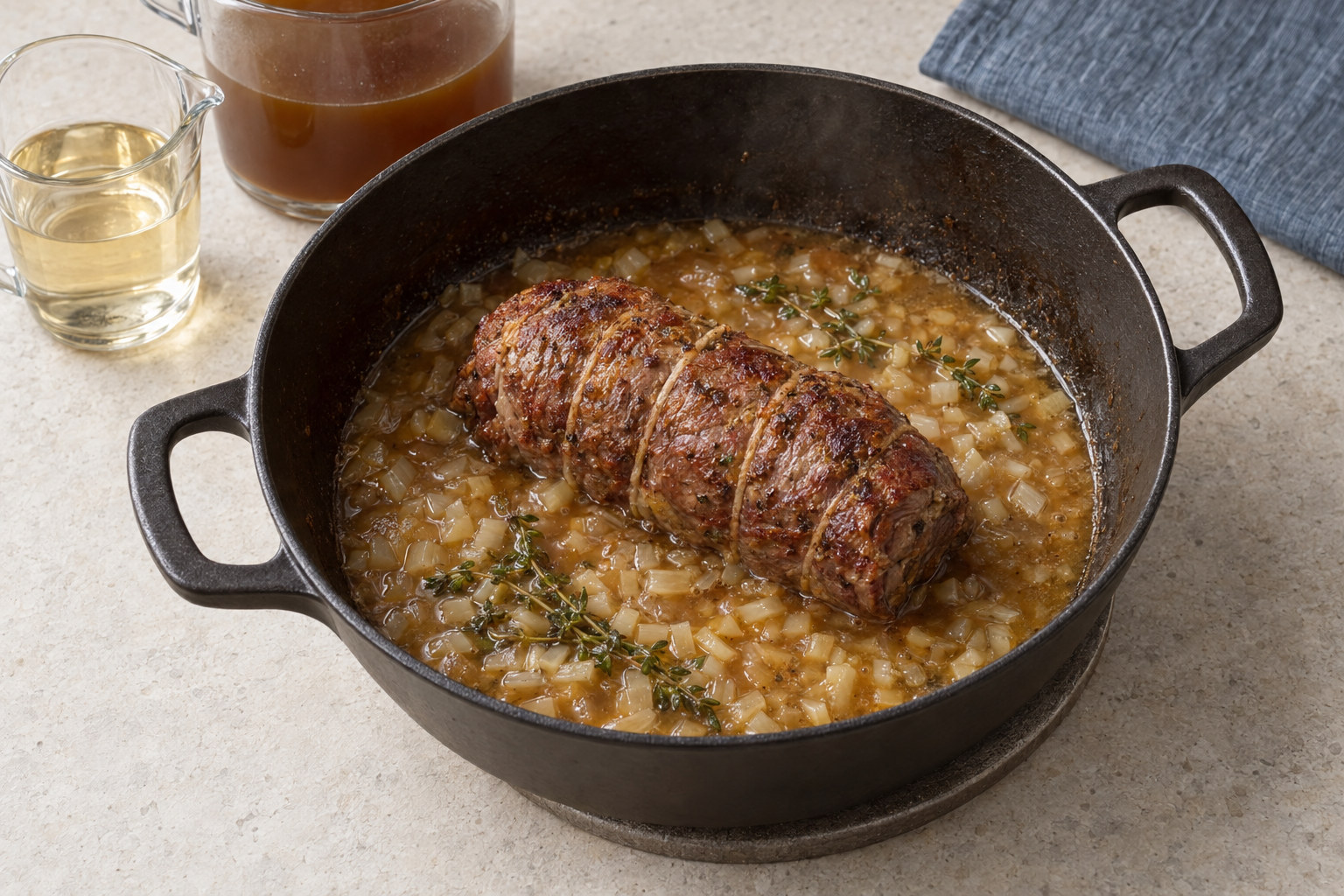
We reserve one teaspoon of oil for the onion. In the remaining two teaspoons, we brown the roulade on all sides for 6–8 minutes in total. We take the meat out. In the reserved oil, we stir and fry the peeled, finely chopped onion for 7–9 minutes. We pour in the wine, add the thyme and simmer for 3 minutes. We add all the stock and the remaining half of the salt reserved for the meat.
The base is golden and the liquid loosens the browned bits.
Braise the roulade
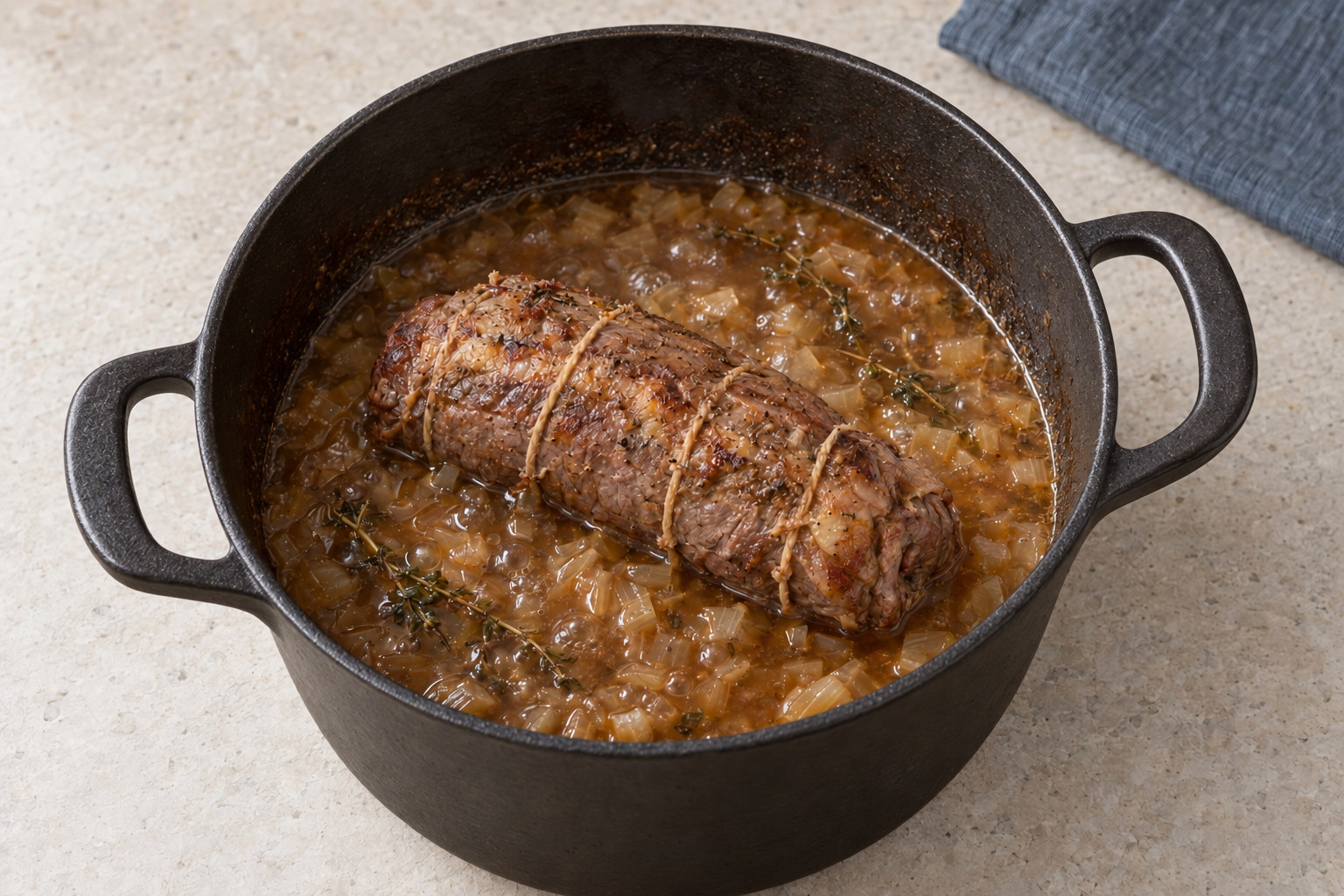
We return the roulade to the pot and cover. We braise over the lowest heat for 75–110 minutes, carefully turning and basting it every 25 minutes. As the liquid evaporates, we add water two tablespoons at a time, up to 150 ml in total. The meat must yield when pierced. We check that both the centre of the meat and the filling reach at least 70 °C for 2 minutes. If the meat is still tough, we braise it longer and start cooking the bulgur later. We take out the cooked meat and let it rest, loosely covered, for 7 minutes.
The liquid barely bubbles; we do not boil the roulade vigorously.
Cook the bulgur
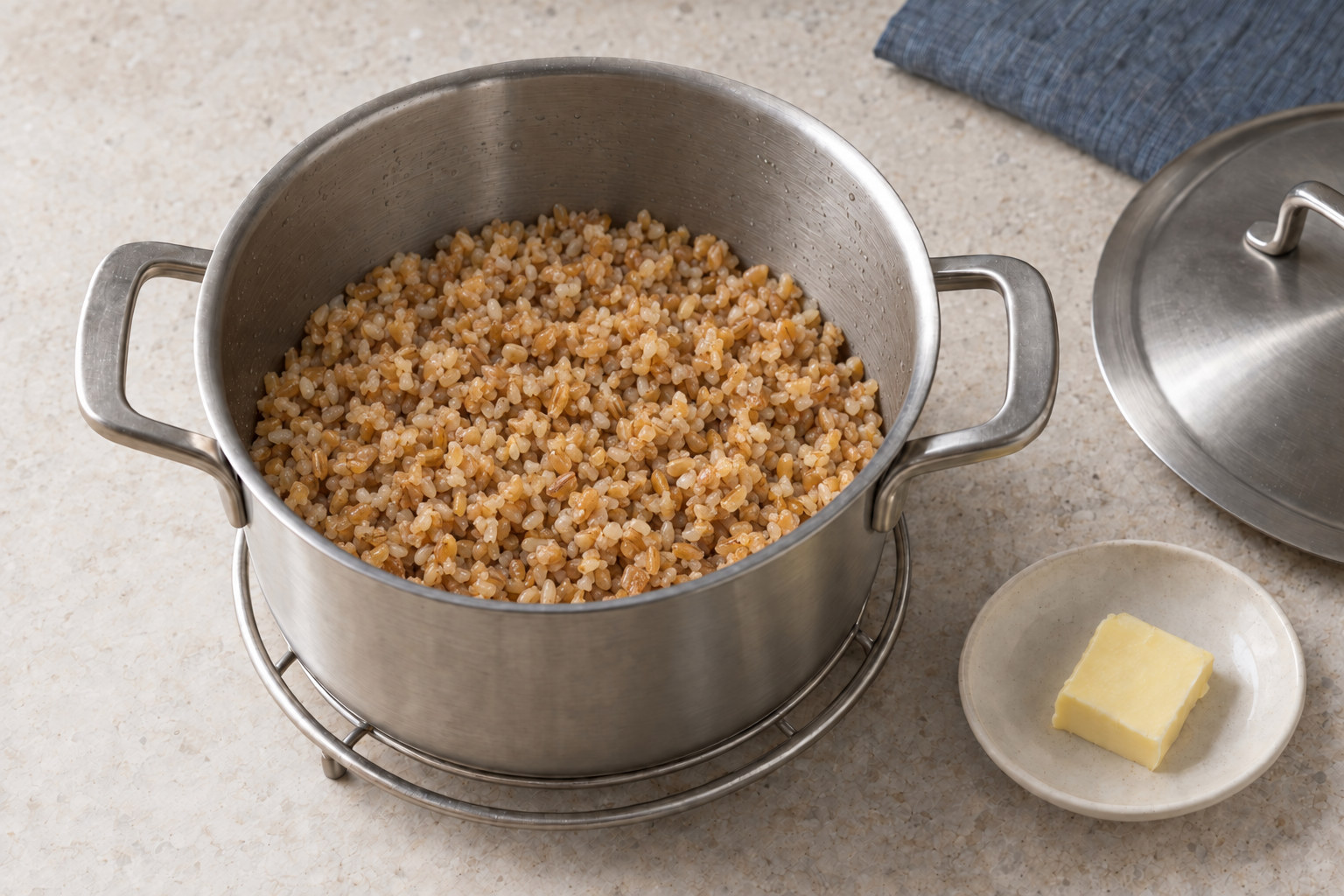
We add 280 ml water to the bulgur and salt it. We bring it to a gentle simmer, cover tightly and cook over the lowest heat for 12–15 minutes. If the water has been absorbed but the grains are still hard, we add water from the reserve in 20 ml portions, up to 60 ml. Off the hob, we leave it covered to finish cooking for 5 minutes, then stir in the butter.
The grains are tender but not mushy; nothing is catching on the bottom.
Season the bulgur with lemon and parsley
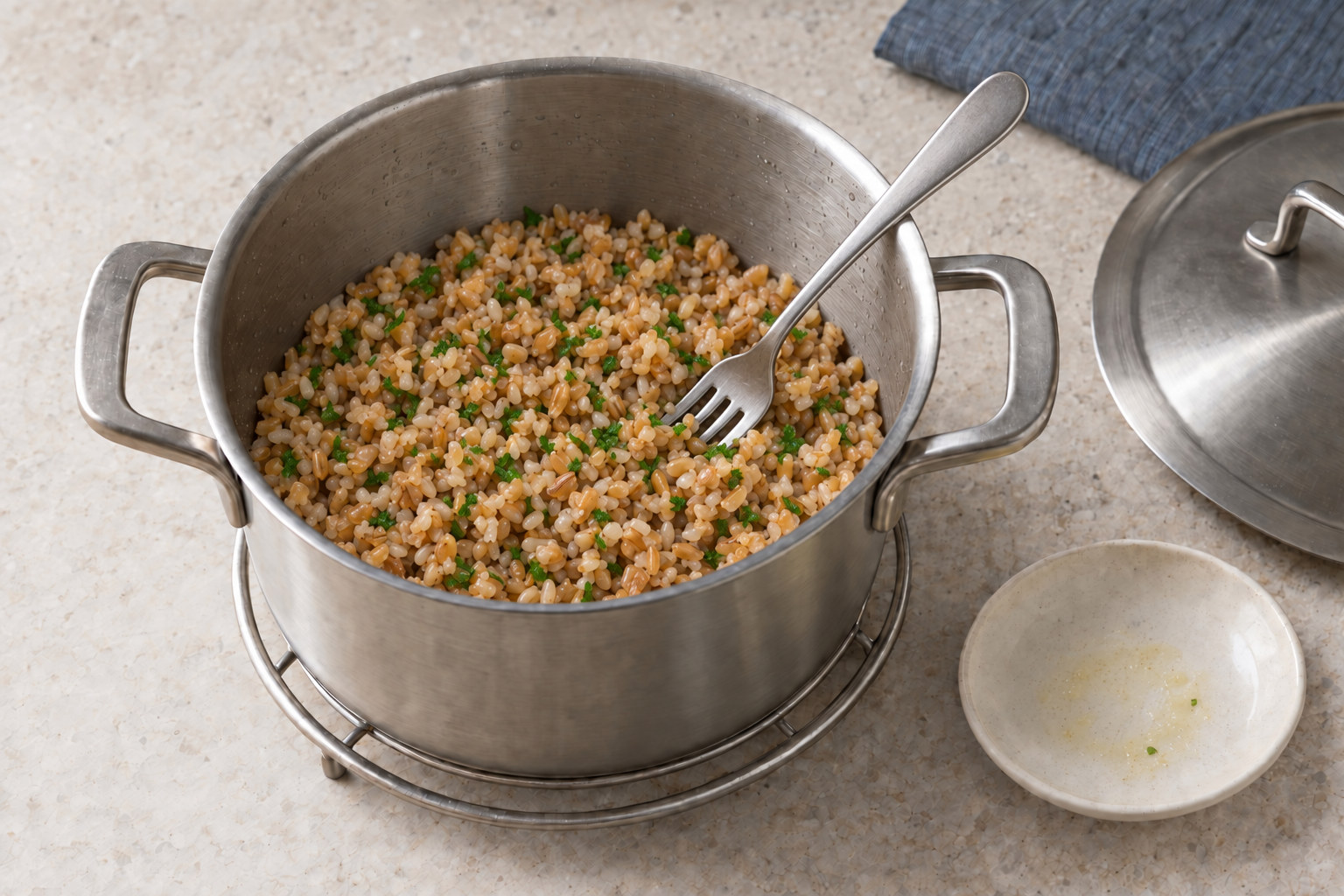
We fluff the cooked, warm bulgur with a fork and stir in the lemon juice and all the finely chopped parsley reserved for the side dish.
The grains stay separate and the herbs stay green.
Finish the juices and slice the roulade
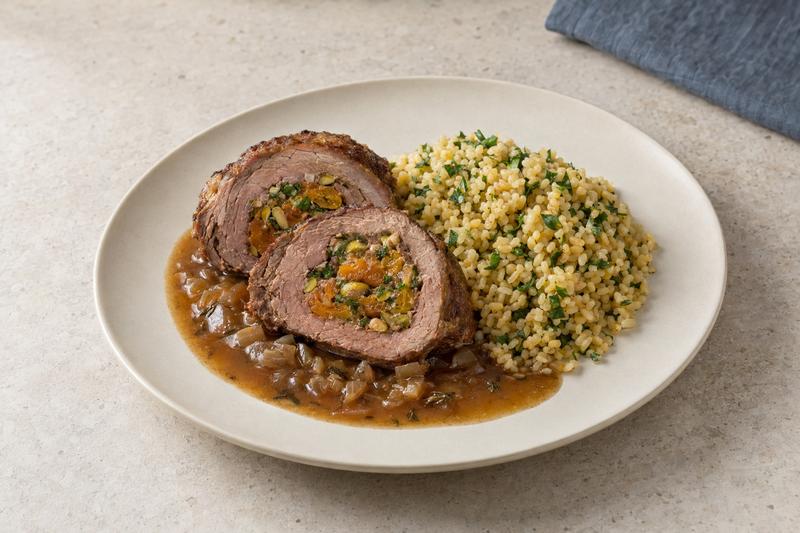
While the meat rests, we remove the thyme stems from the juices and reduce the liquid uncovered for 5–8 minutes. We remove all the string from the roulade. We cut the meat into 2 cm slices and divide it with the lemon bulgur between 2 warmed plates. We spoon over the wine juices.
The slices hold the filling and both the side dish and sauce are hot.
Tips from our kitchen
- We dry the apricots thoroughly after soaking and let the filling cool before rolling up the meat.
- We season the bulgur with lemon and parsley only after cooking and resting it under the lid.
What to watch out for
- We brown the roulade on all sides; for four servings, we brown the two roulades one after the other.
How we serve it
- We remove the string from the rested roulade, slice it and serve with lemon bulgur and the wine juices.
During preparation
- We use a clean, thin probe to measure the temperature, including in the centre of the filling. We keep raw meat and its utensils separate from the finished food.
Our inspiration
Venison with lemon and herbs can replace the usual roast lamb on an Easter table. It reminds us that venison need not be flavoured only with juniper. That fresh seasoning also inspired our fallow deer roulade, which we pair with a fruit filling and lemon bulgur.
Similar recipes
Recipe for 4 people
Step-by-step method
Before we start
While the apricots soak for 15 minutes, we open out the meat into a sheet. We let the filling cool completely before rolling. We start the bulgur when the roulade is almost tender, about 25 minutes before serving. We reduce the juices during the 7-minute meat rest.
Make the apricot filling
We cover the apricots with hot water and leave them to soften for 15 minutes. We drain and dry them, then finely chop them with the pistachios and parsley for the filling. We spread the mixture on a plate and let it cool for 10 minutes; we do not add the soaking water to the filling.
Fill and roll the haunch
We butterfly the two haunch pieces into two continuous sheets, each about 18 × 30 cm. We even them out through cling film to 8 mm thick, then remove the film. We spread half the salt reserved for the meat and all the pepper over the surfaces, add the filling and leave a clear 2 cm border. We roll from the short side into two roulades, each about 18 cm long and 6 cm thick. We tie them with string at 3 cm intervals.
The filling does not spill out, the ends are tucked under and the roulades have even diameters.
Brown the roulades and make the juices
We reserve half a tablespoon of oil for the onion and divide the rest for browning the two roulades. We brown them one after the other, each on all sides for 6–8 minutes in total. We take the meat out. In the reserved oil, we stir and fry the peeled, finely chopped onion for 7–9 minutes. We pour in the wine, add the thyme and simmer for 3 minutes. We add all the stock and the remaining half of the salt reserved for the meat.
The base is golden and the liquid loosens the browned bits.
Braise the roulades
We return both roulades to the pot side by side and cover. We braise over the lowest heat for 75–110 minutes, carefully turning and basting them every 25 minutes. As the liquid evaporates, we add water two tablespoons at a time, up to 220 ml in total. The meat must yield when pierced. In both roulades, we check that the centres of the meat and filling reach at least 70 °C for 2 minutes. If the meat is still tough, we braise it longer and start cooking the bulgur later. We take out the cooked meat and let it rest, loosely covered, for 7 minutes.
The liquid barely bubbles; we do not boil the roulade vigorously.
Cook the bulgur
We add 500 ml water to the bulgur and salt it. We bring it to a gentle simmer, cover tightly and cook over the lowest heat for 12–15 minutes. If the water has been absorbed but the grains are still hard, we add water from the reserve in 20 ml portions, up to 100 ml. Off the hob, we leave it covered to finish cooking for 5 minutes, then stir in the butter.
The grains are tender but not mushy; nothing is catching on the bottom.
Season the bulgur with lemon and parsley
We fluff the cooked, warm bulgur with a fork and stir in the lemon juice and all the finely chopped parsley reserved for the side dish.
The grains stay separate and the herbs stay green.
Finish the juices and slice the roulades
While the meat rests, we remove the thyme stems from the juices and reduce the liquid uncovered for 5–8 minutes. We remove all the string from both roulades. We cut the meat into 2 cm slices and divide it with the lemon bulgur between 4 warmed plates. We spoon over the wine juices.
The slices hold the filling and both the side dish and sauce are hot.