
From the Boxxi kitchen · French technique in the Boxxi kitchen
Sea bass with potato pavé, glazed beetroot and cider butter sauce
Once browned, thin layers of potato become a pavé with golden edges and a tender centre. We serve it with crisp-skinned sea bass, glossy beetroot and a smooth butter sauce with the apple flavour of cider. We prepare the potatoes the day before so they cut neatly the next day.
At least 12 hours in total, including at least 8 hours to chill the pavé. We work over two days; finishing the dish on the second day takes about 65 minutes.
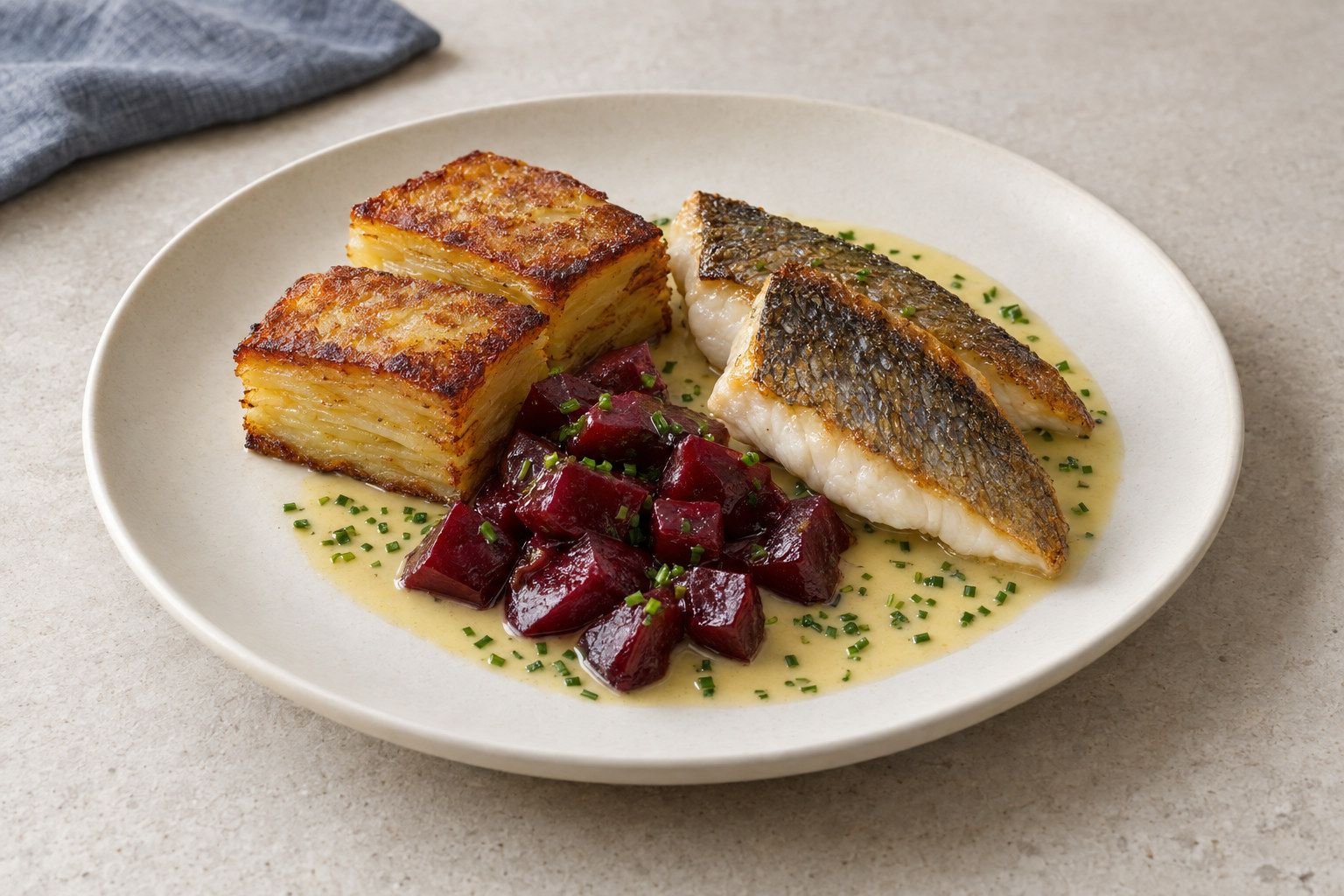
Crisp fish skin and a golden potato crust give way to tender fish and delicate potato layers. Sweet, earthy beetroot meets the acidity of cider and the richness of butter.
Step-by-step method
What you will need
- kitchen scales
- knife, chopping board and fish-bone tweezers
- probe thermometer
- oven and fridge
- tin with an internal base measuring 12 × 18 cm
- mandoline with a hand guard
- baking paper, foil and a flat, stable 1 kg weight
- 28 cm frying pan for the pavé
- 28 cm non-stick frying pan for the fish
- baking tray
- 20 cm saucepan with a lid
- small saucepan, whisk and fine sieve
- container for a gentle water bath
- three hob rings
Before we start
The potato pavé must be completely chilled before the final preparation. On the second day, we start with the beetroot and sauce reduction, then brown and heat the potatoes through. We whisk the butter into the sauce before frying the fish.
Bake the pavé the day before
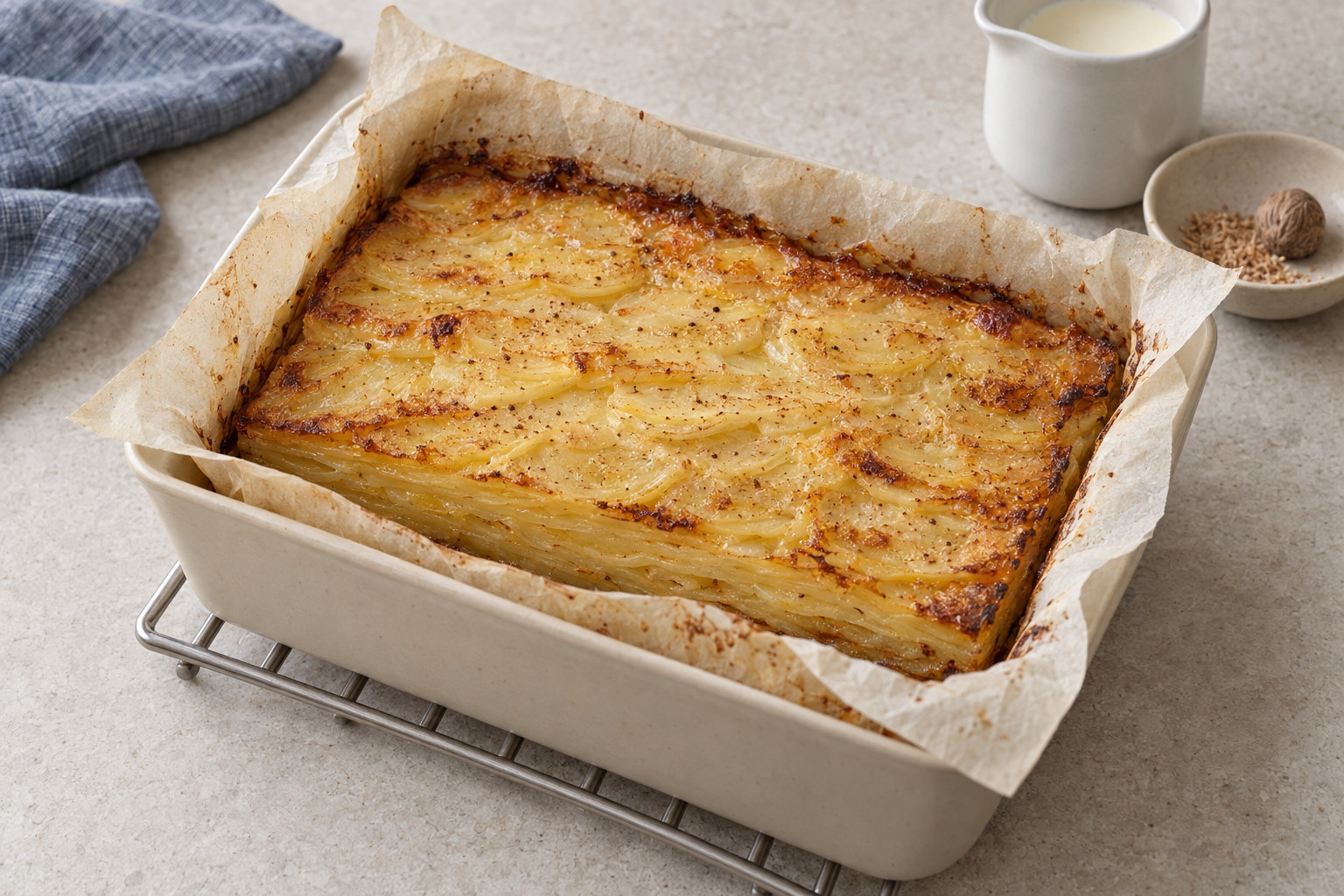
We preheat the oven to 160 °C, conventional heat. We line a tin with an internal base of 12 × 18 cm with baking paper, leaving an overhang. We peel the potatoes and use a mandoline with its hand guard to cut them into 1.5 mm slices, without rinsing them. We toss them with the cream, melted butter, salt and nutmeg. We overlap them in even layers to a depth of about 2.5–3 cm and pour over the remaining cream. We cover with baking paper and foil and bake for 60–75 minutes until completely tender.
The potatoes are tender in every layer, including the centre. A deeper stack would need longer to bake.
Press and chill
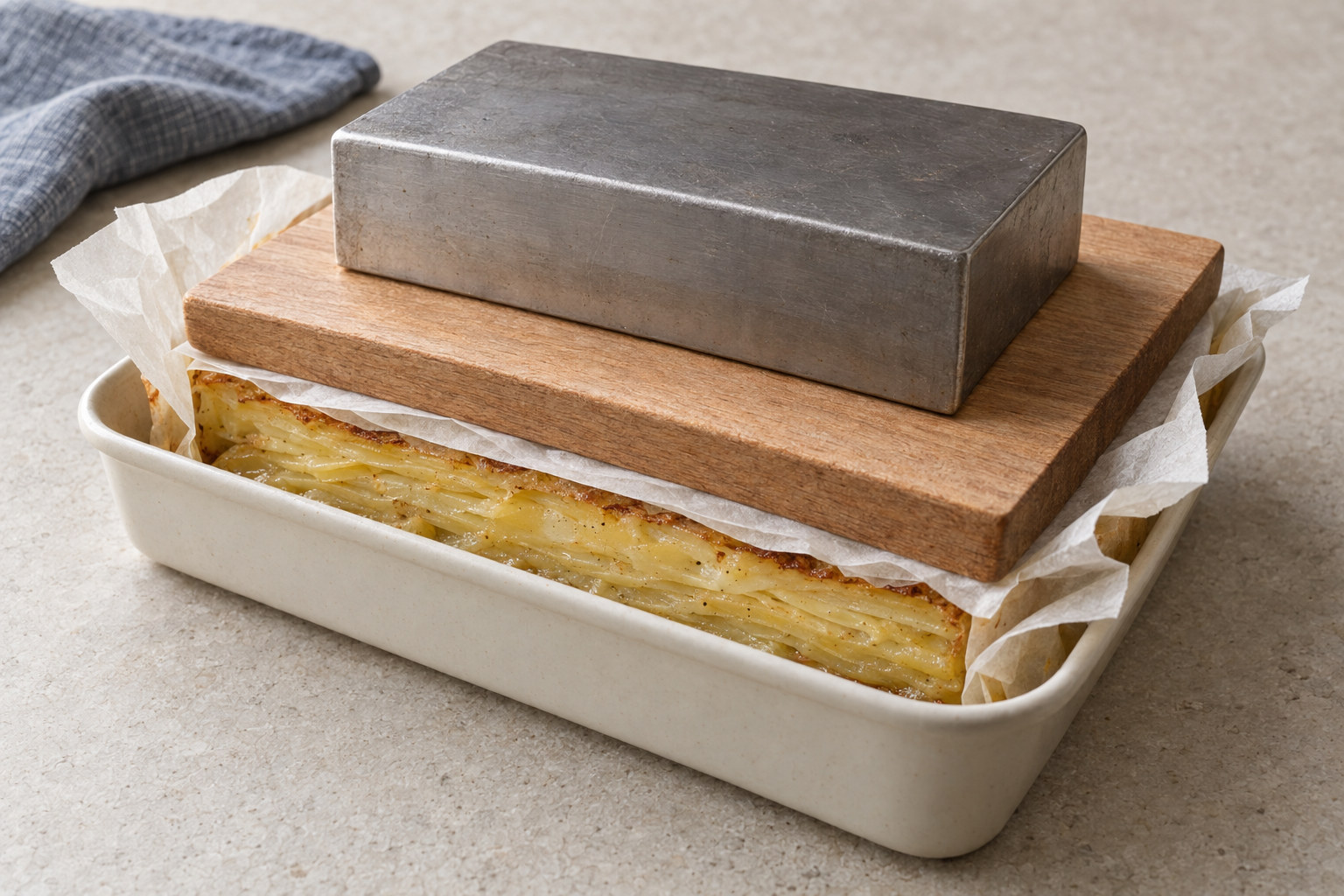
We leave the pavé to cool for 20–30 minutes to let the steam escape. We cover it with clean baking paper and a flat board or another tin, then weigh it down with about 1 kg. We transfer it to the fridge for at least 8 hours to chill completely. The weight must be stable and must not touch the food directly.
The cold layers hold together; the block would fall apart if cut while warm.
Prepare the beetroot and reduction
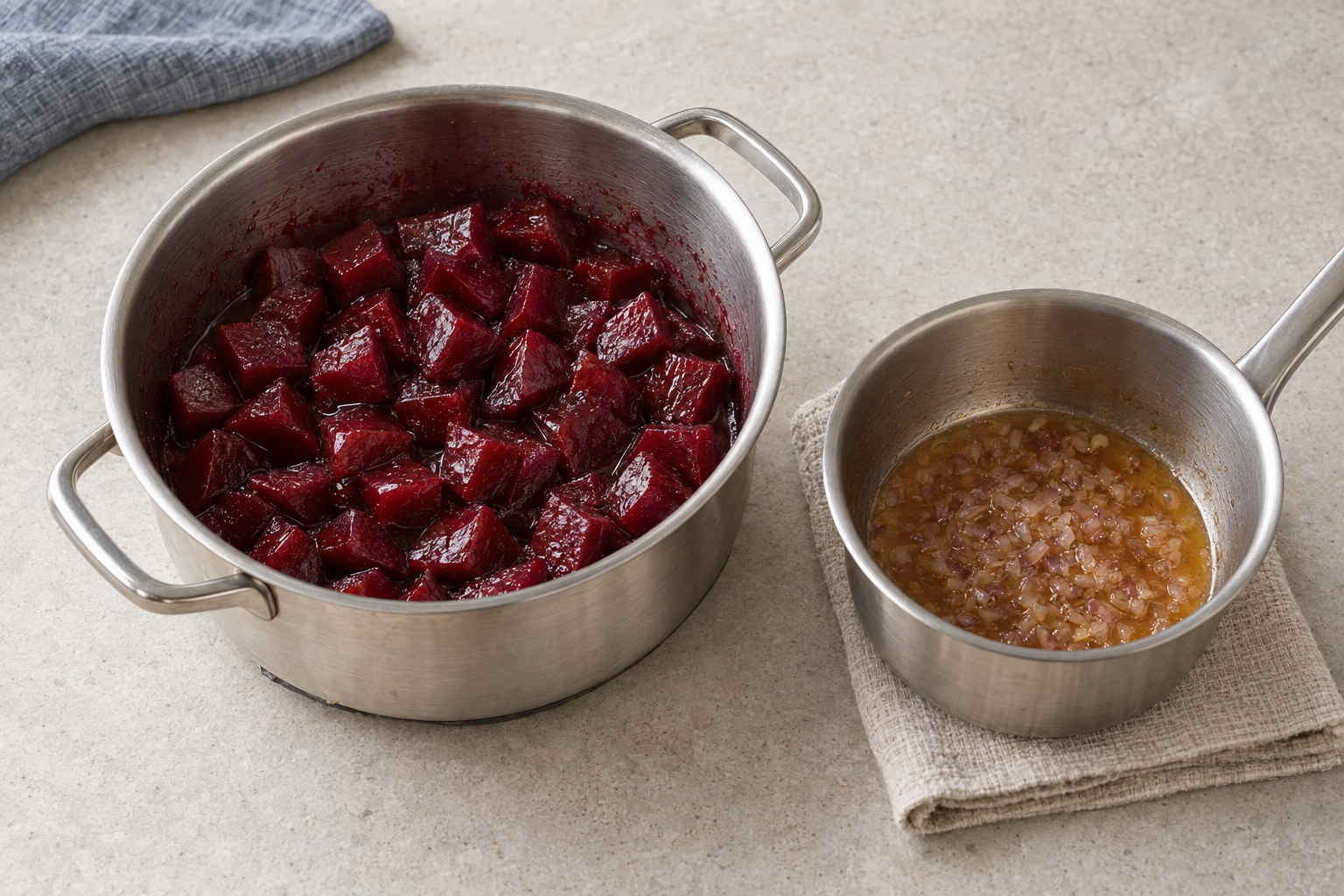
The next day, we peel the beetroot and cut it into 1.5 cm cubes. We simmer it gently with the water, a tbsp of butter and the salt in a covered 20 cm saucepan for 20–25 minutes. We uncover, add the vinegar and honey, and reduce the liquid for 5–8 minutes to a thin glaze. We peel and finely chop the shallot. At the same time, in a small saucepan, we boil the cider, 10 ml of vinegar and the shallot until reduced to about 15 ml of liquid. We strain it and add enough of the measured water to make 25 ml of sauce base, then take it off the heat.
The beetroot is tender with a little bite, with no watery sauce around it. We measure the reduction only after straining.
Brown and heat the pavé through
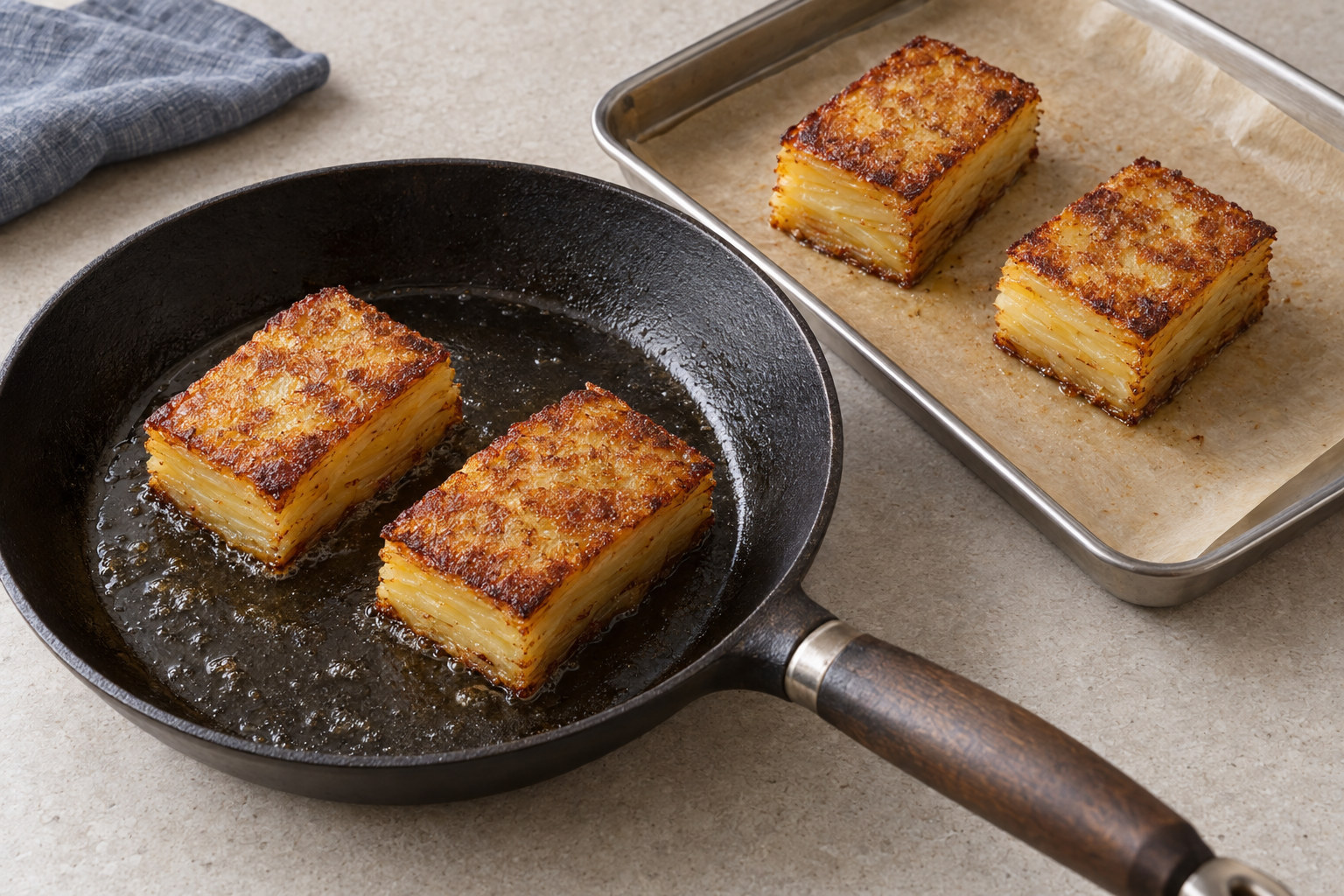
We preheat the oven to 180 °C, conventional heat. We cut the cold pavé into four rectangles measuring 6 × 9 cm. In a 28 cm frying pan with a tbsp of oil, we brown the two broad faces for 3–4 minutes each. We transfer it to a baking tray and heat through in the oven for 18–22 minutes until hot in the centre, checking with a probe thermometer that it reaches at least 74 °C. Meanwhile, we keep the beetroot covered over the lowest heat.
The surface is golden and the centre hot; a quick fry alone would not heat the cold pavé through.
Make the sauce
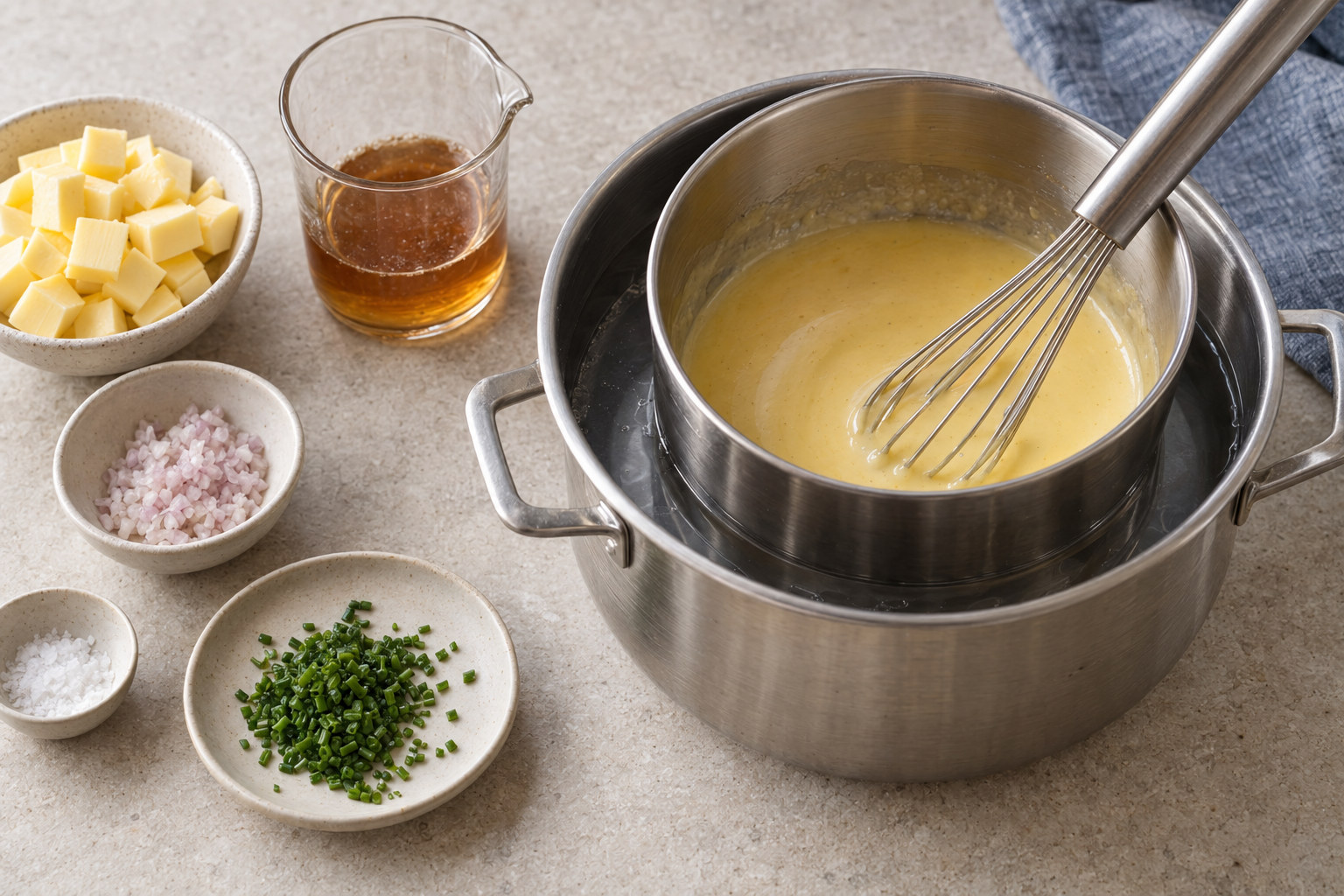
About 15 minutes before the potatoes finish reheating, we prepare a water bath at 45–50 °C. The water should come about halfway up the container holding the sauce. We warm the cider reduction, then turn the heat to its lowest setting. Over 3–4 minutes, we whisk in 70 g of cold butter in small cubes, making sure it does not boil. Straight afterwards, we start heating the fish pan as described in the next step. We season with a pinch of salt and keep the sauce in the gentle water bath at around 45–50 °C for no more than 15 minutes. We rinse, dry and chop the chives, adding them only when serving.
The sauce is smooth and lightly coats a spoon. If oily droplets appear, we take it off the heat immediately and whisk in a tsp of cold water from the measured reserve.
Pan-fry the fish
We pat the fillets dry, halve them crossways and salt them. We heat two tsp of oil in a clean 28 cm non-stick frying pan. We cook the four pieces skin-side down for 5–7 minutes, pressing lightly at the start, then turn and cook for another 1–3 minutes. We test the thickest part with a fork: the flesh should flake easily and no longer be translucent in the centre. If needed, we leave the fish in the pan a little longer. Once the pavé has reached 74 °C, it can wait in the oven, reduced to 80 °C, for no more than 5 minutes if necessary. We serve the fish straight away.
The skin is firm and crisp, and the flesh juicy and evenly cooked through.
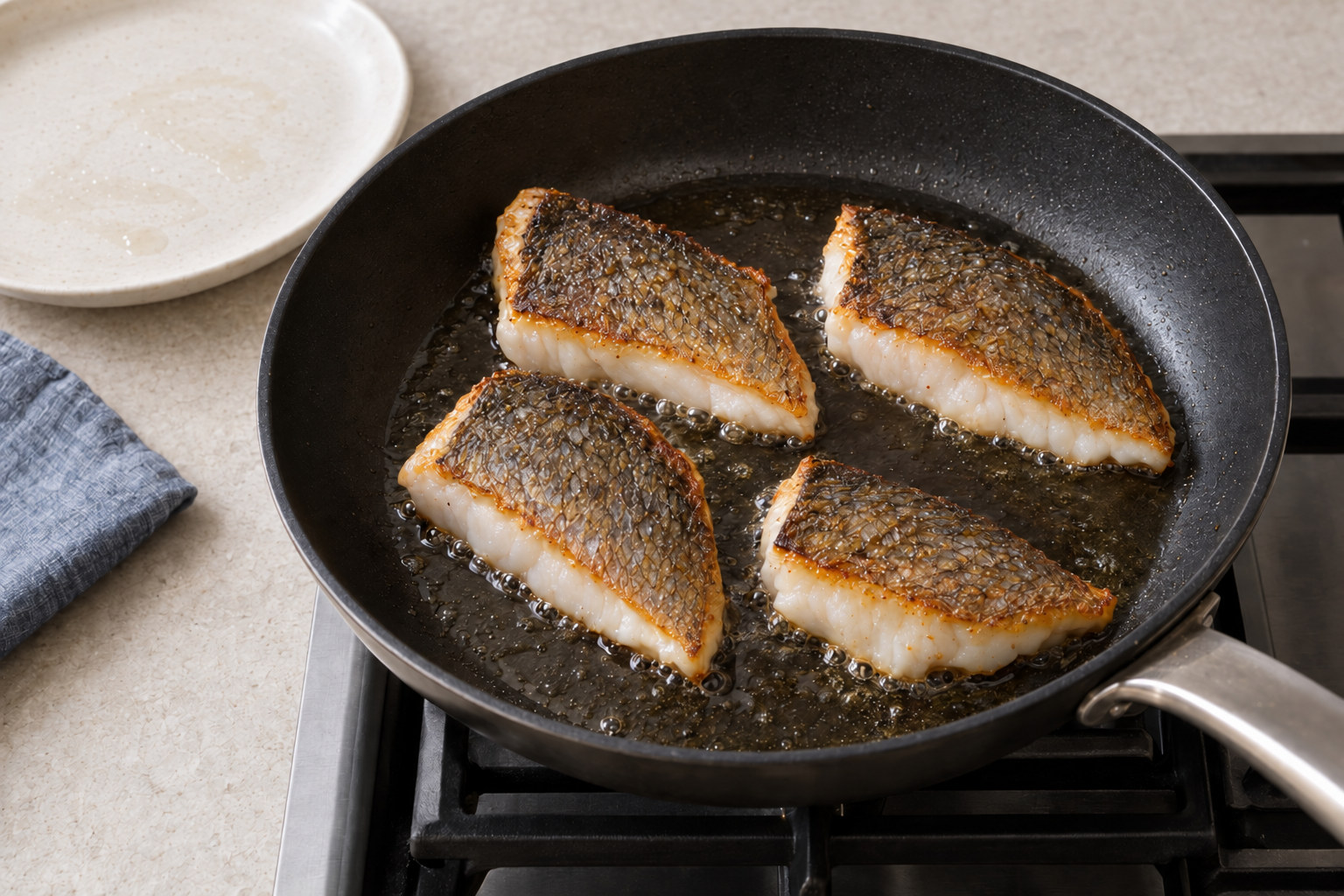
Plate up and serve
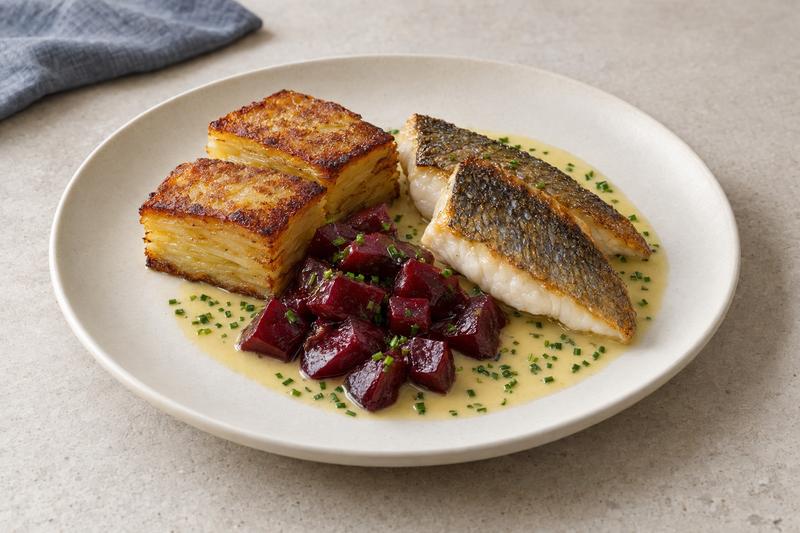
We place two rectangles of potato pavé, half the beetroot and two pieces of fish, skin-side up, on each of the two warmed plates. We pour the sauce around them, not over the skin, and scatter over the chives. We serve without delay.
We do not stir the beetroot into all of the sauce; the butter stays pale and the fish skin dry.
Tips from our kitchen
- We cut the pavé with a sharp knife, heat any small edge trimmings through and serve them alongside.
- We make a small batch of the finished butter sauce just before the meal; the cider reduction can be made the day before and kept chilled.
What to watch out for
- We do not rinse the potato slices: their starch helps the pavé hold together.
- We do not let the butter sauce boil, or the fat will separate.
How we serve it
- We divide the potato pavé, beetroot and fish between warmed plates, pouring the sauce around them to keep the fish skin crisp.
Ingredient swaps
dry cider
the same volume of dry white wine The sauce will taste less of apple. We keep the vinegar and reduce the sauce base to the same volume as with cider.
Ingredient notes
- Sea bass is also known as European sea bass.
- We use the fish from the box and keep the rest for another meal, buying the side dish ingredients separately.
During preparation
- We keep the fish in the fridge for now. We wash utensils used for raw fish before handling the cooked food.
Our inspiration
Chef Charlie Hibbert of Ox Barn in the English Cotswolds describes an autumn garden full of pumpkins, beetroot and herbs. He brings its colours and flavours to the plate in his potato pavé recipe, too. Those crisp layers caught our attention: even everyday potatoes suit a special occasion. We prepare them with sea bass, sweet beetroot and a cider butter sauce, leaving the baking and chilling to the day before.
Similar recipes
Recipe for 4 people
At least 12 hours 30 minutes in total, including at least 8 hours of chilling. We allow about 80 minutes on the second day and brown the pavé in two batches.
Step-by-step method
Before we start
We heat both batches of browned potatoes through together. When frying the fish, we use two pans, the beetroot saucepan and a gentle water bath for the sauce. We arrange everything on the hob in advance.
Bake the pavé the day before
We preheat the oven to 160 °C, conventional heat. We line a tin with an internal base of 18 × 24 cm with baking paper. We peel the potatoes, slice them 1.5 mm thick with a guarded mandoline and, without rinsing, toss them with the cream, melted butter, salt and nutmeg. We carefully layer them to a depth of 2.5–3 cm, then cover with baking paper and foil. We bake at 160 °C for 65–80 minutes, until a thin knife passes through every layer without resistance.
The potatoes are tender in every layer, including the centre. A deeper stack would need longer to bake.
Press and chill
After 20–30 minutes, we cover the pavé, place a flat board on top and weigh it down with a stable weight of about 2 kg. We put it in the fridge for at least 8 hours. We turn out and cut the potatoes only once they have set firmly.
The cold layers hold together; the block would fall apart if cut while warm.
Prepare the beetroot and reduction
We peel the beetroot, cut it into 1.5 cm cubes and cook it with the water, one and a half tbsp of butter and the salt in a covered 24 cm saucepan for 25–30 minutes. We uncover, add the vinegar and honey and reduce the liquid for 7–10 minutes to a thin, glossy glaze around the beetroot. We peel and finely chop the shallot. In another pan, we boil the cider, 15 ml of vinegar and the shallot until reduced to about 25 ml of liquid. We strain it and add enough of the measured water to make 40 ml of sauce base, then take it off the heat.
The beetroot is tender with a little bite, with no watery sauce around it. We measure the reduction only after straining.
Brown and heat the pavé through
We preheat the oven to 180 °C, conventional heat. We cut the pavé into eight rectangles measuring 6 × 9 cm and divide its oil between two batches. In a 30 cm frying pan, we brown the pavé in two batches of four, for 3–4 minutes on each broad face. We transfer both batches to a baking tray and heat them through together at 180 °C for 18–22 minutes, until the centre reaches 74 °C. We keep the beetroot warm under its lid.
The surface is golden and the centre hot; a quick fry alone would not heat the cold pavé through.
Make the sauce
About 15 minutes before the potatoes finish reheating, we prepare a water bath at 45–50 °C. The water should come about halfway up the container holding the sauce. We gently warm the reduction and, away from strong heat, whisk in 120 g of cold butter in cubes over 3–4 minutes. Straight afterwards, we start heating the fish pans as described in the next step. We add 2 pinches of salt and keep the sauce in the gentle water bath at around 45–50 °C for no more than 15 minutes. We rinse, dry and chop the chives, adding them to the sauce only when serving.
The sauce is smooth and lightly coats a spoon. If oily droplets appear, we take it off the heat immediately and whisk in a tsp of cold water from the measured reserve.
Pan-fry the fish
We pat the four fillets dry, halve each crossways and salt them. We heat half the oil reserved for the fish in each of two clean 28 cm frying pans. In each pan, we fry four salted fillet pieces skin-side down for 5–7 minutes, then on the other side for 1–3 minutes. We test the thickest part of each fillet with a fork: the flesh should flake easily and no longer be translucent in the centre. If needed, we leave the fish in the pan a little longer. Meanwhile, we stir the sauce occasionally and make sure the water bath does not boil. The cooked pavé can wait for no more than 5 minutes in the oven, reduced to 80 °C.
The skin is firm and crisp, and the flesh juicy and evenly cooked through.
Plate up and serve
We divide the food between four warmed plates, putting two rectangles of potato pavé, two pieces of fish skin-side up and a quarter of the beetroot on each. We pour the cider butter sauce around the fish and scatter over the chopped chives.
We do not stir the beetroot into all of the sauce; the butter stays pale and the fish skin dry.