
Boxxi original cuisine · Italy
Pea ravioli with roast anchovies and lemon butter
Our thin homemade ravioli are filled with sweet peas, ricotta and lemon zest. We serve them surrounded by a glossy butter sauce with spinach and whole roast anchovies. We save the hands-on work for a day when we have time to shape each parcel and gather at the table as soon as they are cooked.
The time includes resting the dough, draining the cheese, shaping the ravioli and cooking them in batches.
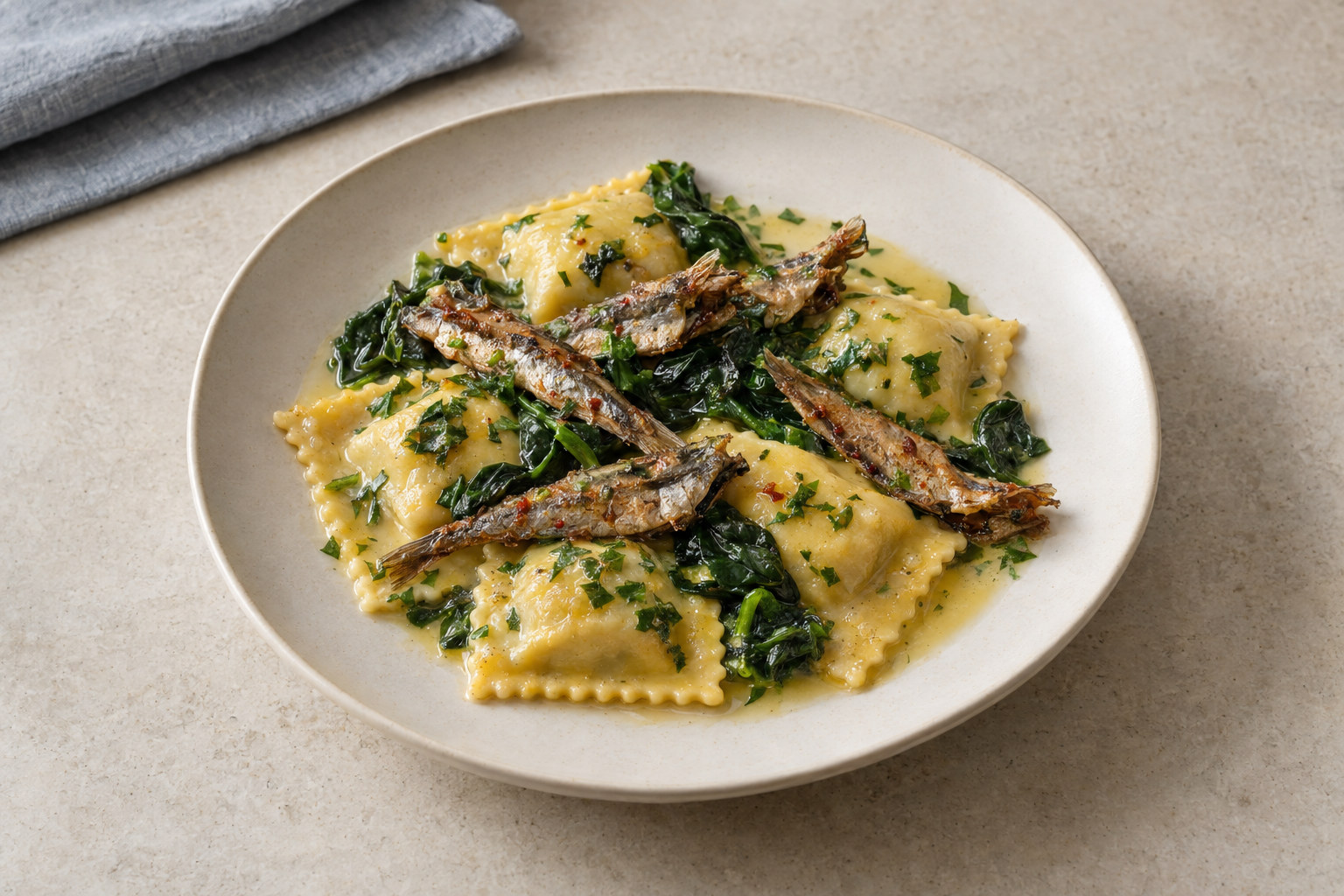
A delicate pea and ricotta filling, lemon butter and tender pasta let the whole roast anchovies shine.
Step-by-step method
What you will need
- scales
- knife and clean chopping board
- sieve
- bowl
- rolling pin and pasta machine
- pastry wheel and ruler
- fine sieve for the ricotta
- 1.5 litre saucepan
- wide pan at least 5 litres, 28 cm in diameter
- slotted spoon
- 28 cm frying pan with lid
- 40 × 30 cm tray for uncooked ravioli
- flat-bottomed 40 × 30 cm tray for cooked ravioli
- baking paper
- oven
- two hobs
Before we start
We make the filling while the dough rests. We cook the ravioli in batches in one pan and heat the fish through only with the final batch.
Make the dough and leave it to rest
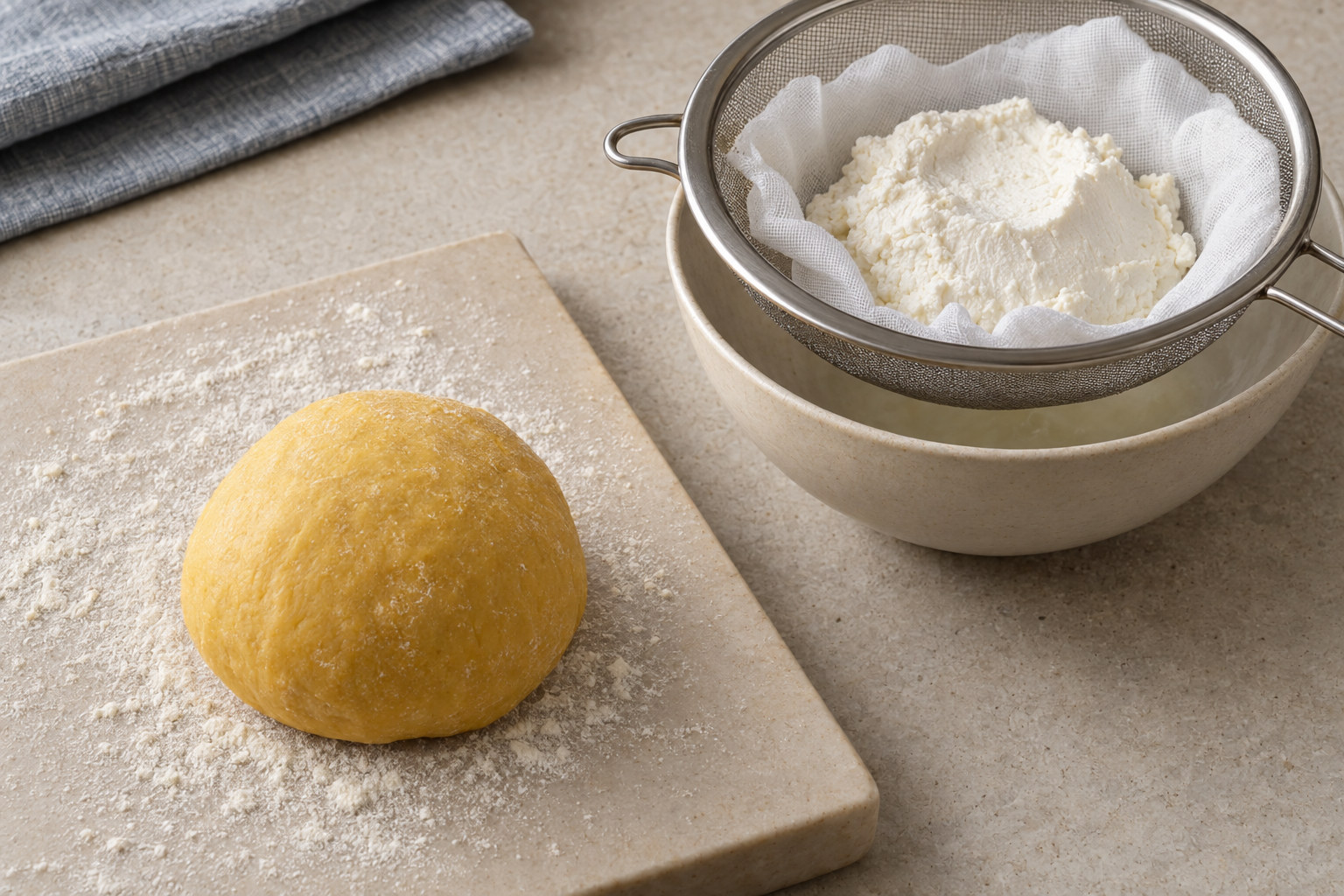
We combine the flour and salt with the egg and knead for 8–10 minutes, until the dough is smooth and firm. Only if it remains crumbly do we add a little of the prepared water drop by drop. We wrap the dough and leave it to rest for 30 minutes. At the same time, we put the ricotta in a fine sieve over a bowl and leave it in the fridge for 30 minutes.
The dough is supple, does not tear and does not leave moisture on our fingers.
Make the pea filling
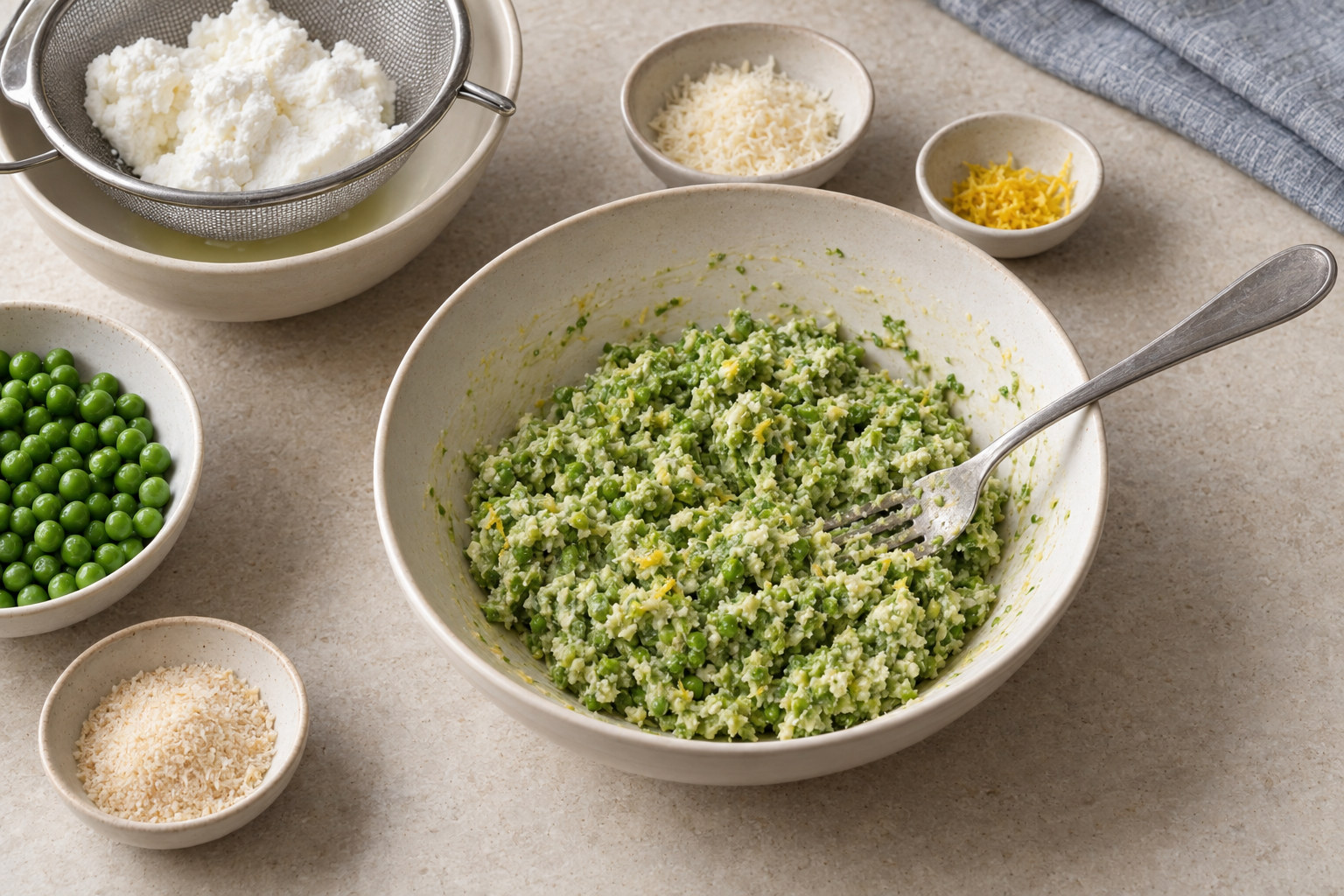
We tip the peas into plenty of boiling water, cook for 3–4 minutes until tender, then drain. We return them to a warm, dry saucepan for 1 minute, stirring so surface moisture evaporates. We mash them finely with a fork and leave them to cool in a shallow bowl for 10 minutes. We finely grate the Parmesan. We add all the drained cheese, Parmesan and lemon zest. For the Espelette anchovies, we add a pinch of salt. For the tomato version, we omit salt from the filling. It should hold in a mound without a puddle. If it is wet, we stir in some of the reserved breadcrumbs, leave it to absorb for 5 minutes and check again. We keep the filling chilled.
The filling is cold, firm and free of loose whey. We do not thin it with water.
Roll out the dough and seal the ravioli
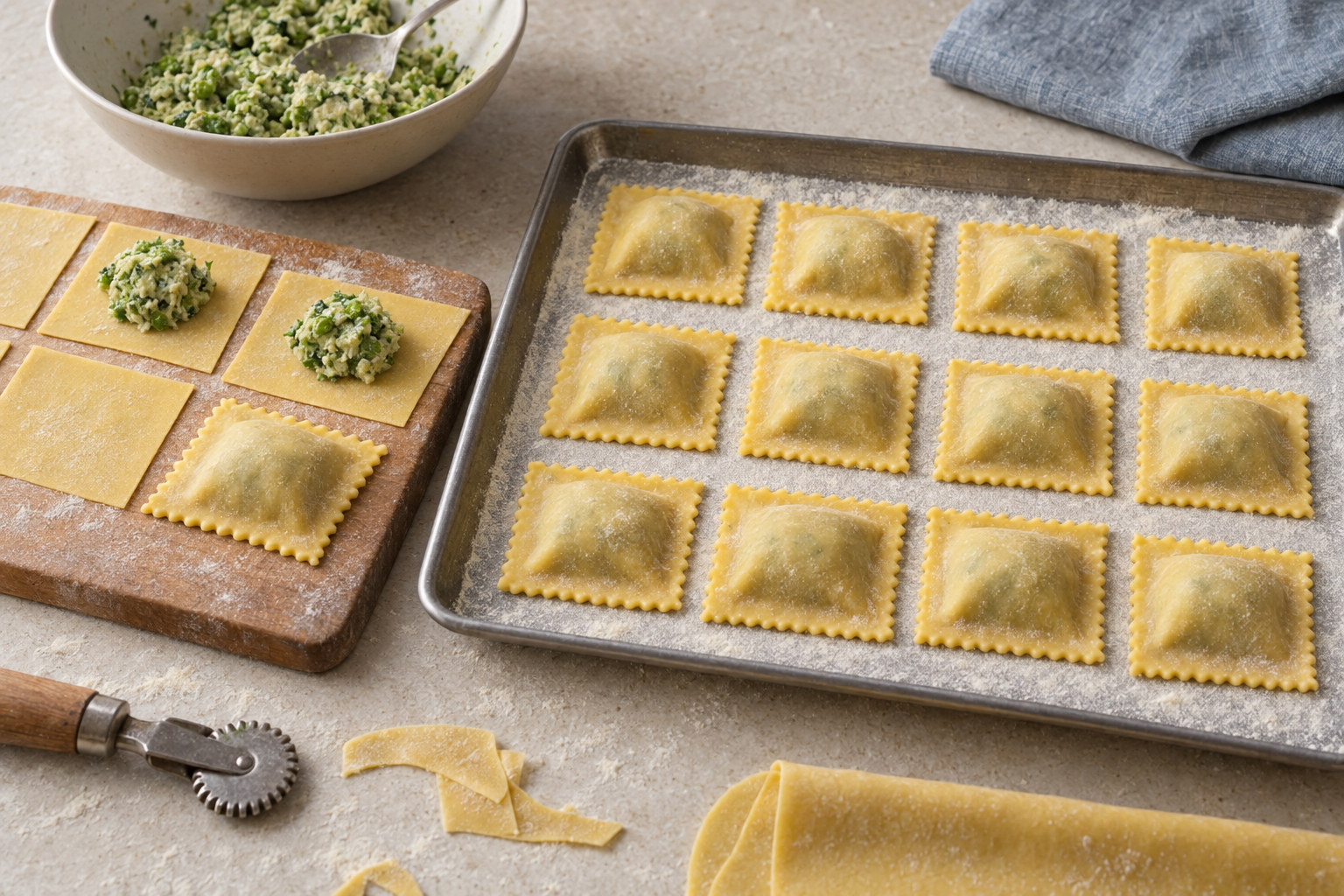
We divide the dough into two pieces. We work with one at a time, keeping the rest covered. On a lightly floured surface, we roll the dough to about 0.8 mm thick and cut out 24 squares measuring 8 × 8 cm. We bring the scraps together once, leave them to rest for 5 minutes and roll them out again. We divide the filling into 12 equal mounds and place them in the centre of half the squares. We cover them with the remaining squares, press out the air around the filling and seal the clean edges firmly, leaving a border at least 1 cm wide. If an edge has dried, we moisten it lightly with a little water on a fingertip. We dust a 40 × 30 cm tray lightly with some of the flour set aside for dusting. We arrange all 12 ravioli on it in three rows of four, with a little space between them. We cover and chill them while we prepare the rest of the meal.
No filling reaches the edges, and no air bubble remains inside.
Make the butter sauce and warm the plates
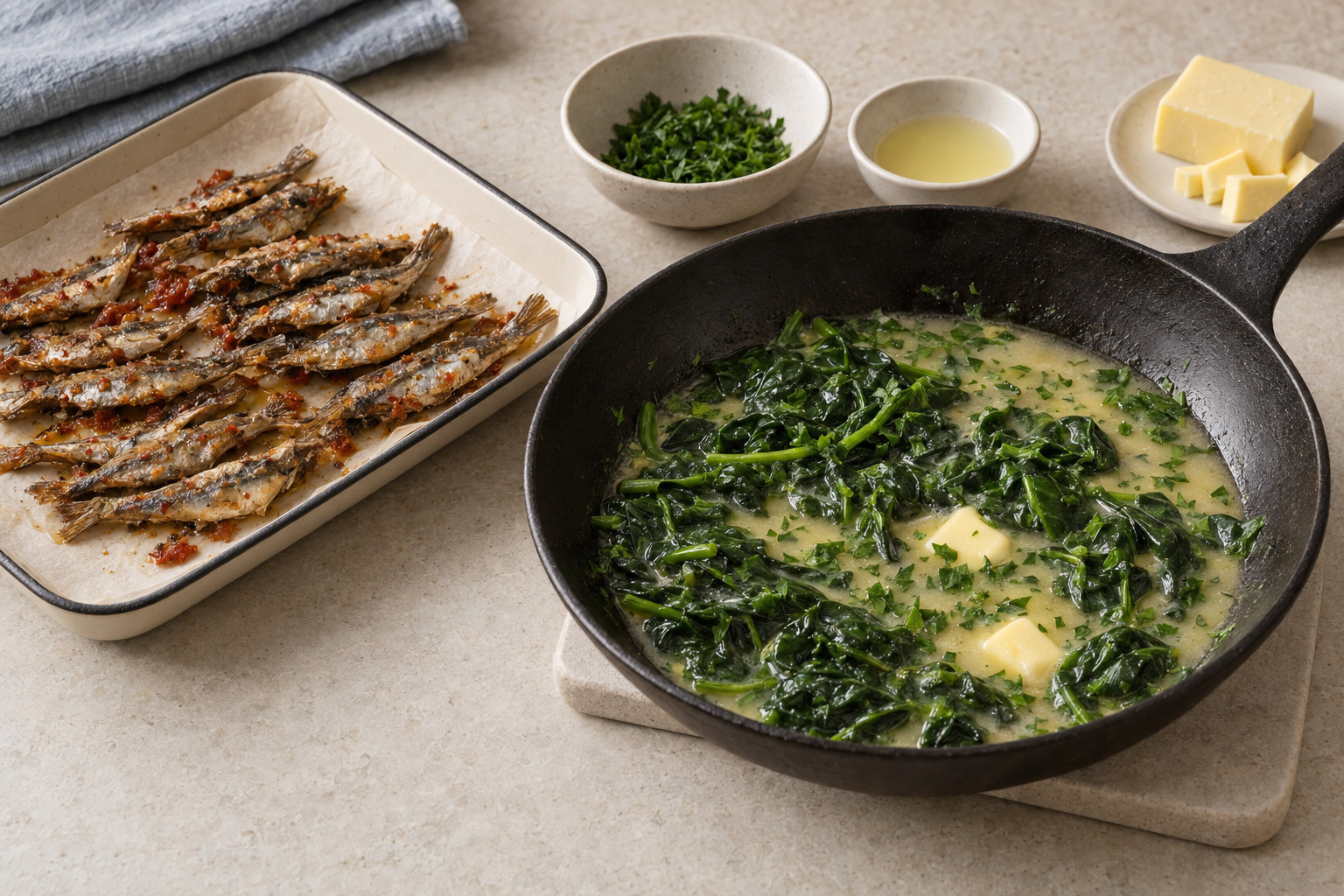
We set the oven to 80 °C and warm the plates in it. We remove them and cover them with a clean tea towel to make room for the tray. We line the tray with baking paper and brush it with 1 teaspoon of butter. We carefully remove all the anchovies from 2 tins. We do not use any free oil in this dish; for the tomato version, we keep all the tomato pieces. We rinse the spinach and parsley, leave them to drain and chop the parsley. In a frying pan, we heat the water for the sauce, whisk in the remaining cold butter and avoid boiling it vigorously. We add the spinach and heat it through for 1–2 minutes. We stir in the lemon juice—2 teaspoons for Espelette or 1 teaspoon for the tomato version—and the chopped parsley. We take the pan off the heat and cover it.
The butter and water form a glossy sauce, and the spinach just wilts.
Cook the ravioli in batches
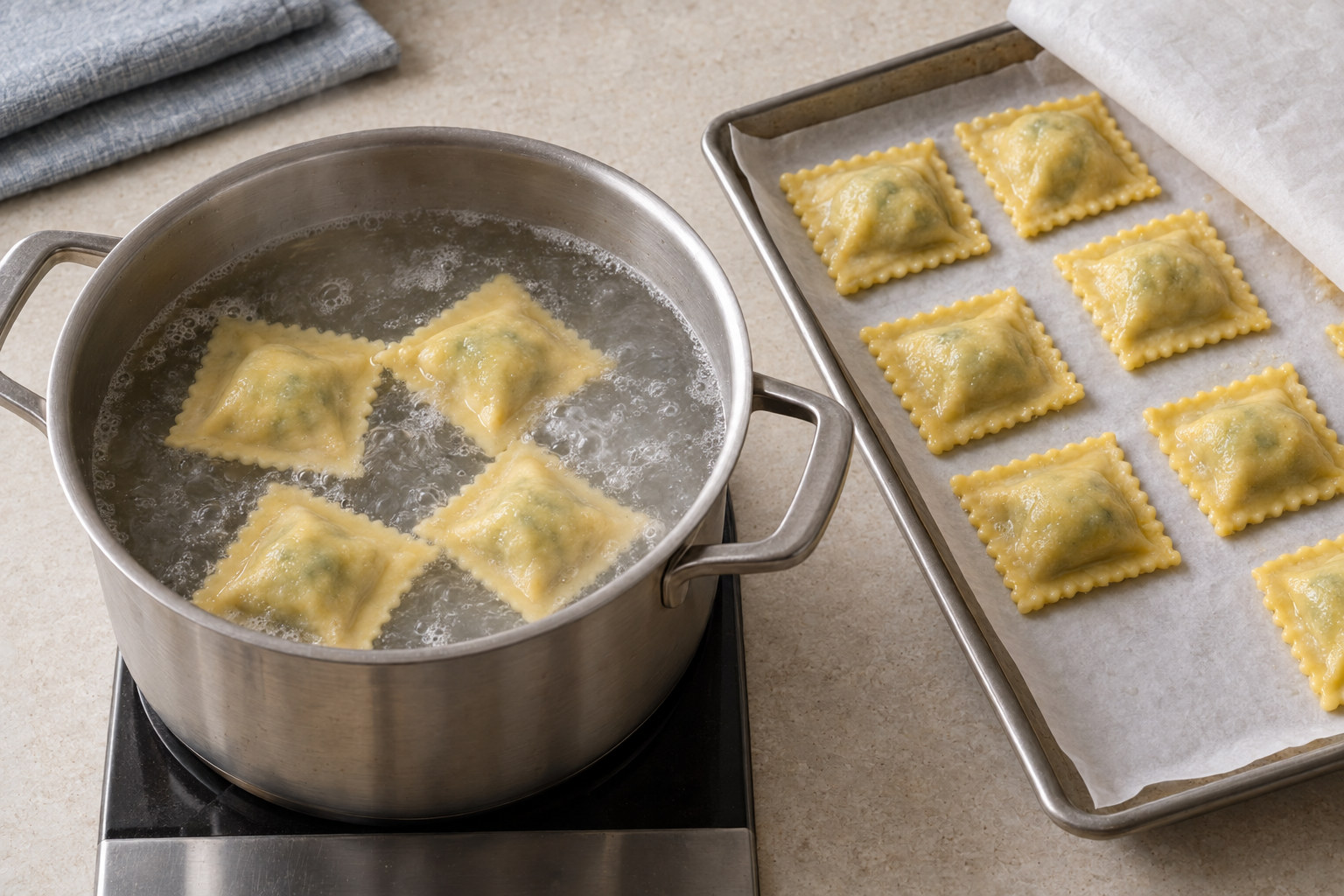
In one wide pan, we bring plenty of water with 2 teaspoons of salt to a gentle boil. We cook the ravioli in three batches of four. We cook the first batch for 3–4 minutes and remove one to check: the edges should be soft and the filling hot through. If the edges are still firm, we cook the batch for another minute. We use the actual cooking time of the first batch to guide the next ones. We arrange the drained ravioli in a single layer on the prepared tray and cover them loosely with baking paper. We keep them in the oven at 80 °C for no more than 15 minutes. While the last batch cooks, we add the fish and any tomatoes to the pan with the spinach. We cover and warm them gently for 2 minutes.
The ravioli float freely in gently simmering water; the edges are soft and the filling is hot.
Serve the ravioli with spinach and fish
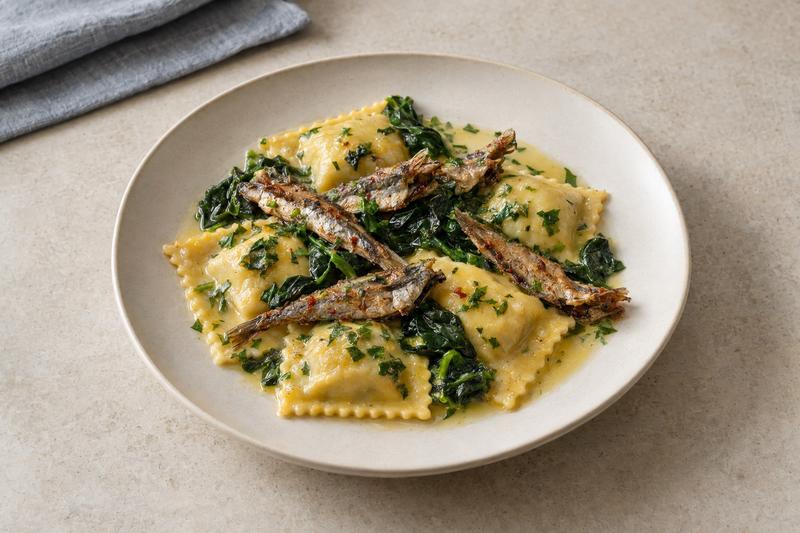
We place six ravioli and an equal share of spinach on each of 2 warmed plates. We divide all the fish evenly over the top and pour over all the lemon-butter sauce from the pan. We serve straight away.
The pasta is tender, the fish is whole and the pea filling stays inside.
Tips from our kitchen
- We keep the pasta edges clean. Filling along the border stops them sealing firmly.
What to watch out for
- We drain the ricotta before filling. If the mixture is too wet, we firm it up as described so it does not leak from the ravioli.
How we serve it
- We place six ravioli on each warmed plate and divide the spinach between them. We top with the whole anchovies, spoon over the lemon-butter sauce and serve straight away.
Ingredient swaps
Ricotta
90 g soft full-fat curd cheese for two portions, 170 g for four; drain it for 30 minutes just like the ricotta The filling will be more tart; we keep the lemon zest.
Baby spinach
140 g tender chard for two portions, 260 g for four; heat through for 3 minutes The greens will have a firmer texture. We add the fish only after the chard has softened.
Ingredient notes
- We use all the whole roast anchovies from two 115 g tins for two people, or four tins for four. The tins also contain olive oil and 0.5% Espelette pepper. We add no other chilli.
- For the alternative, we use the same number of 115 g tins. According to the ingredients, rapeseed oil is their main fat. We transfer the confit tomatoes with the fish. We omit the salt from the pea filling for this version. We add no extra chilli or sugar. We do not substitute salted anchovy fillets for the whole roast fish.
During preparation
- We keep the fish removed from the tins covered in the fridge until needed.
Our inspiration
The ravioli conceal a delicate green pea and ricotta filling, while the whole roast anchovies remain visible on top. To keep the filling inside as they cook, we press the air out around it and seal the clean edges firmly. The sweet peas and saltier fish then come together in each bite.
Similar recipes
Recipe for 4 people
Step-by-step method
Before we start
We make the filling while the dough rests. We cook the ravioli at the same time in two pans and heat the fish through only with the final batch.
Make the dough and leave it to rest
We combine the flour and salt with the eggs and knead for 8–10 minutes, until the dough is smooth and firm. Only if it remains crumbly do we add a little of the prepared water drop by drop. We wrap the dough and leave it to rest for 30 minutes. At the same time, we put the ricotta in a fine sieve over a bowl and leave it in the fridge for 30 minutes.
The dough is supple, does not tear and does not leave moisture on our fingers.
Make the pea filling
We tip the peas into plenty of boiling water, cook for 3–4 minutes until tender, then drain. We return them to a warm, dry saucepan for 1 minute, stirring so surface moisture evaporates. We mash them finely with a fork and leave them to cool in a shallow bowl for 10 minutes. We finely grate the Parmesan. We add all the drained ricotta, Parmesan and lemon zest. For the Espelette anchovies, we add two pinches of salt. For the tomato version, we omit salt from the filling. It should hold in a mound without a puddle. If it is wet, we stir in some of the reserved breadcrumbs, leave it to absorb for 5 minutes and check again. We keep the filling chilled.
The filling is cold, firm and free of loose whey. We do not thin it with water.
Roll out the dough and seal the ravioli
We divide the dough into four pieces. We work with one at a time, keeping the rest covered. On a lightly floured surface, we roll the dough to about 0.8 mm thick and cut out 48 squares measuring 8 × 8 cm. We bring the scraps together once, leave them to rest for 5 minutes and roll them out again. We divide the filling into 24 equal mounds and place them in the centre of half the squares. We cover them with the remaining squares, press out the air around the filling and seal the clean edges firmly, leaving a border at least 1 cm wide. If an edge has dried, we moisten it lightly with a little water on a fingertip. We dust two 40 × 30 cm trays lightly with some of the flour set aside for dusting. We arrange 12 ravioli on each in three rows of four, with a little space between them. We cover and chill them while we prepare the rest of the meal.
No filling reaches the edges, and no air bubble remains inside.
Make the butter sauce and warm the plates
We set the oven to 80 °C and warm the plates in it. We remove them and cover them with a clean tea towel to make room for the trays. We line two trays with baking paper and brush them with 2 teaspoons of butter in total. We carefully remove all the anchovies from 4 tins. We do not use any free oil in this dish; for the tomato version, we keep all the tomato pieces. We rinse the spinach and parsley, leave them to drain and chop the parsley. In a frying pan, we heat the water for the sauce, whisk in the remaining cold butter and avoid boiling it vigorously. We add the spinach and heat it through for 1–2 minutes. We stir in the lemon juice—4 teaspoons for Espelette or 1 tablespoon for the tomato version—and the chopped parsley. We take the pan off the heat and cover it.
The butter and water form a glossy sauce, and the spinach just wilts.
Cook the ravioli in batches
In each of two wide pans, we bring plenty of water with 2 teaspoons of salt to a gentle boil. We cook the ravioli at the same time in three rounds, four pieces in each pan each round. We cook the first batch for 3–4 minutes and remove one from each pan to check: the edges should be soft and the filling hot through. If the edges are still firm, we cook the batch for another minute. We use the actual cooking time of the first batch to guide the next ones. We arrange the drained ravioli in a single layer on the prepared trays and cover them loosely with baking paper. We keep them in the oven at 80 °C for no more than 15 minutes. While the last batch cooks, we add the fish and any tomatoes to the pan with the spinach. We cover and warm them gently for 2 minutes.
The ravioli float freely in gently simmering water; the edges are soft and the filling is hot.
Serve the ravioli with spinach and fish
We place six ravioli and an equal share of spinach on each of 4 warmed plates. We divide all the fish evenly over the top and pour over all the lemon-butter sauce from the pan. We serve straight away.
The pasta is tender, the fish is whole and the pea filling stays inside.