
British-inspired · Great Britain
Beef Wellington with mushroom filling and red wine jus
Everyone at the table gets their own golden Wellington. Beneath the crisp puff pastry lie beef fillet, finely chopped mushrooms and a thin pancake. We serve the red wine jus separately so the pastry crunches beautifully as we cut into it.
The estimated time includes cooling the mushroom filling, briefly chilling the assembled parcels, baking and resting for ten minutes. We complete the preparation on the same day.
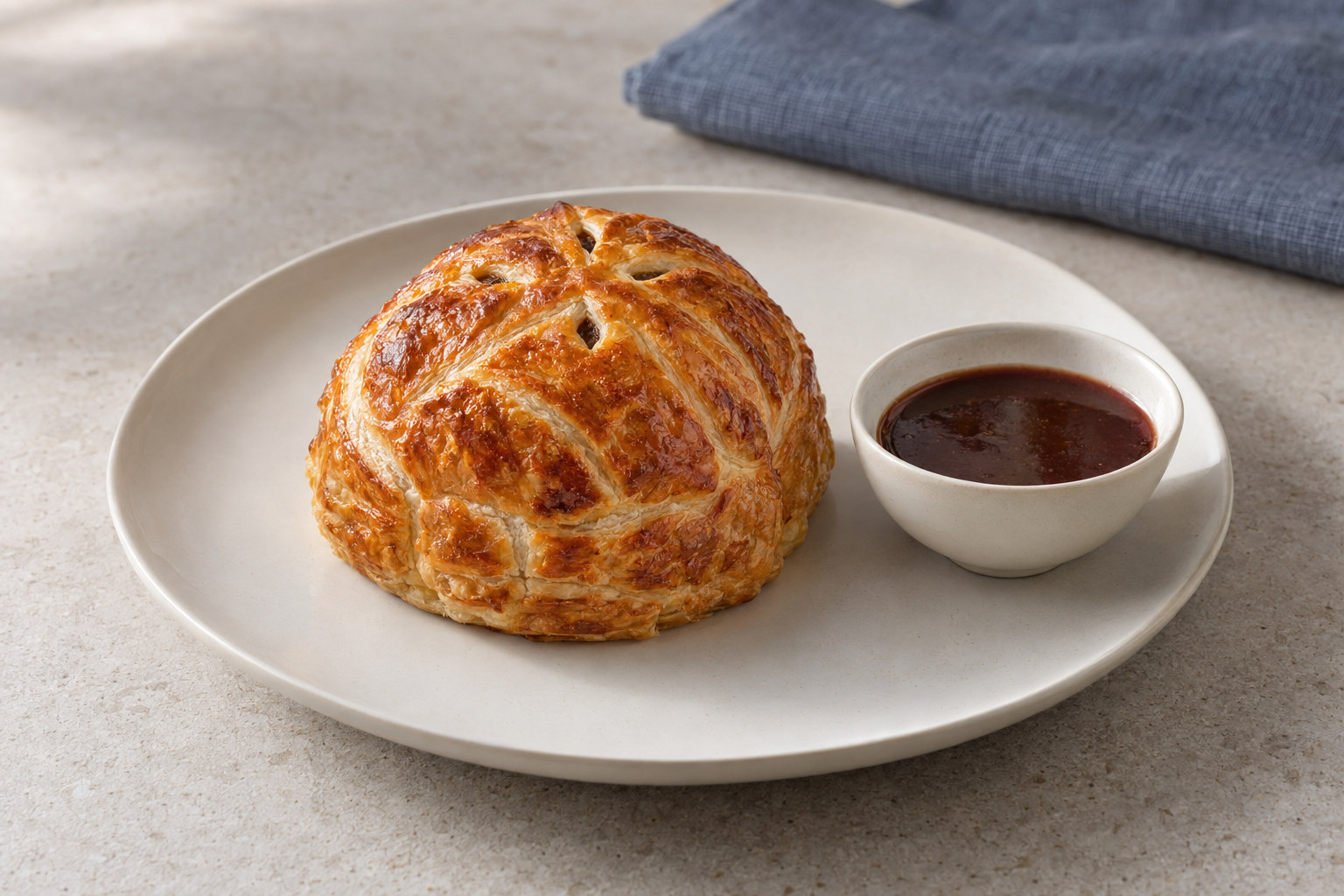
Tender beef fillet, intensely flavoured mushrooms, a thin pancake, crisp puff pastry and red wine jus.
Step-by-step method
What you will need
- 28 cm frying pan
- 24 cm non-stick frying pan
- 16 cm saucepan
- shallow dish for cooling
- rolling pin
- pastry brush
- 30 × 40 cm baking tray
- baking paper
- wire rack
- fine sieve
- oven
- meat thermometer with a thin probe
- kitchen scales
- one chopping board for raw meat and another for cooked food
Before we start
We make two separate parcels, each with a 200 g medallion. Before we spread the duxelles over the pancakes, it must be cold with no excess liquid.
Make the mushroom duxelles
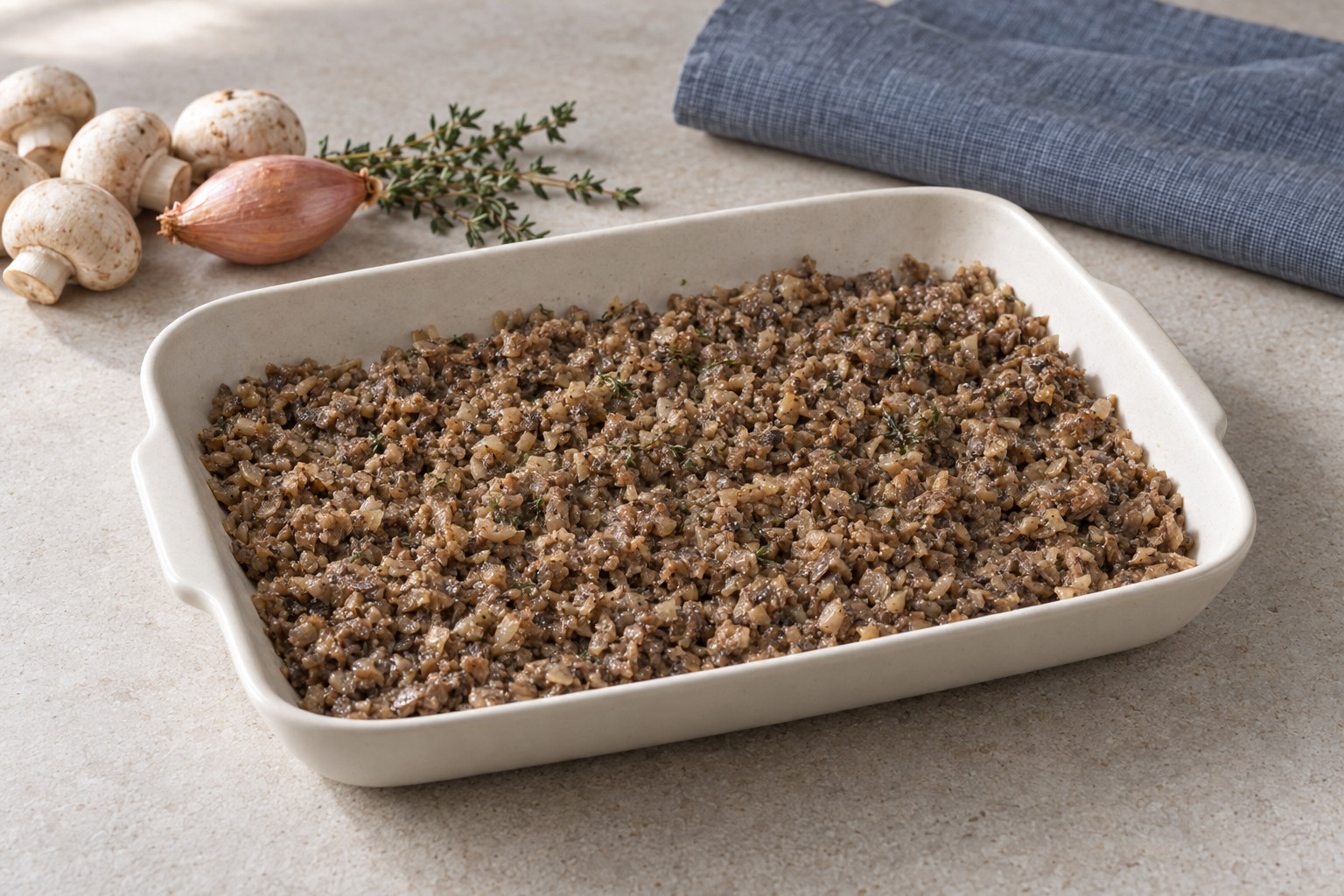
We clean the mushrooms, peel the shallot and chop both finely. We rinse the thyme and strip off the leaves. We soften the shallot in the butter for 3 minutes, then add the mushrooms, thyme leaves and the salt for the filling. We stir in a wide frying pan for 15–20 minutes, until all the excess liquid has evaporated. We spread the mixture in a shallow dish, leave it uncovered for 15 minutes to let the steam escape, then chill it in the fridge to below 20 °C.
The mixture holds together, releases no water when pressed and is no longer warm when we assemble the parcels.
Make the thin pancakes
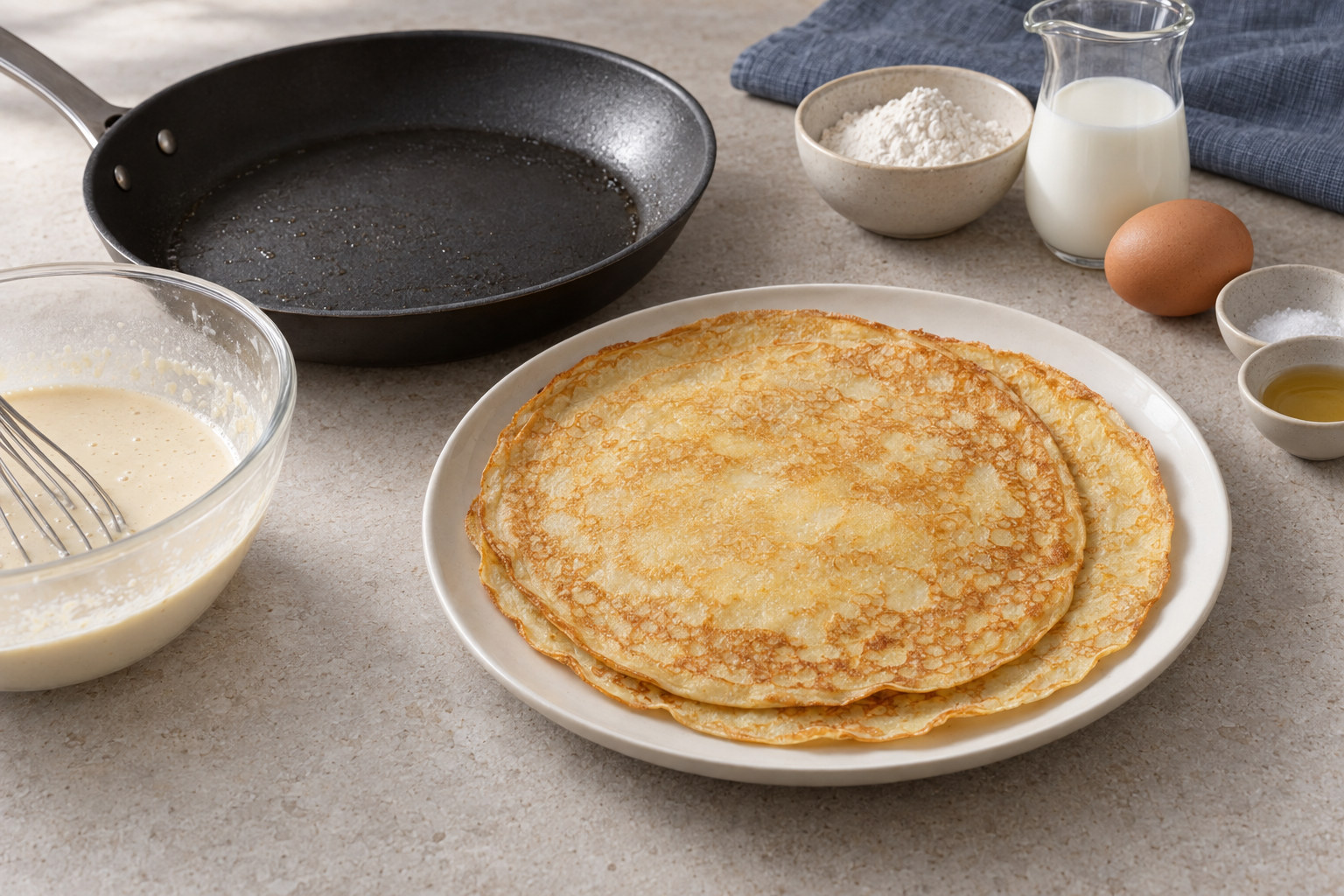
We whisk together the flour, egg, milk, water and salt for the pancakes until smooth. We leave the batter to stand for 10 minutes. In a 24 cm non-stick frying pan brushed with oil, we cook two thin pancakes. We cook each for about 1 minute on the first side and 30 seconds on the second. We lift them out and leave them to cool separately.
The pancakes are thin, pliable and cooked through, with no raw, floury centre.
Briefly sear the medallions
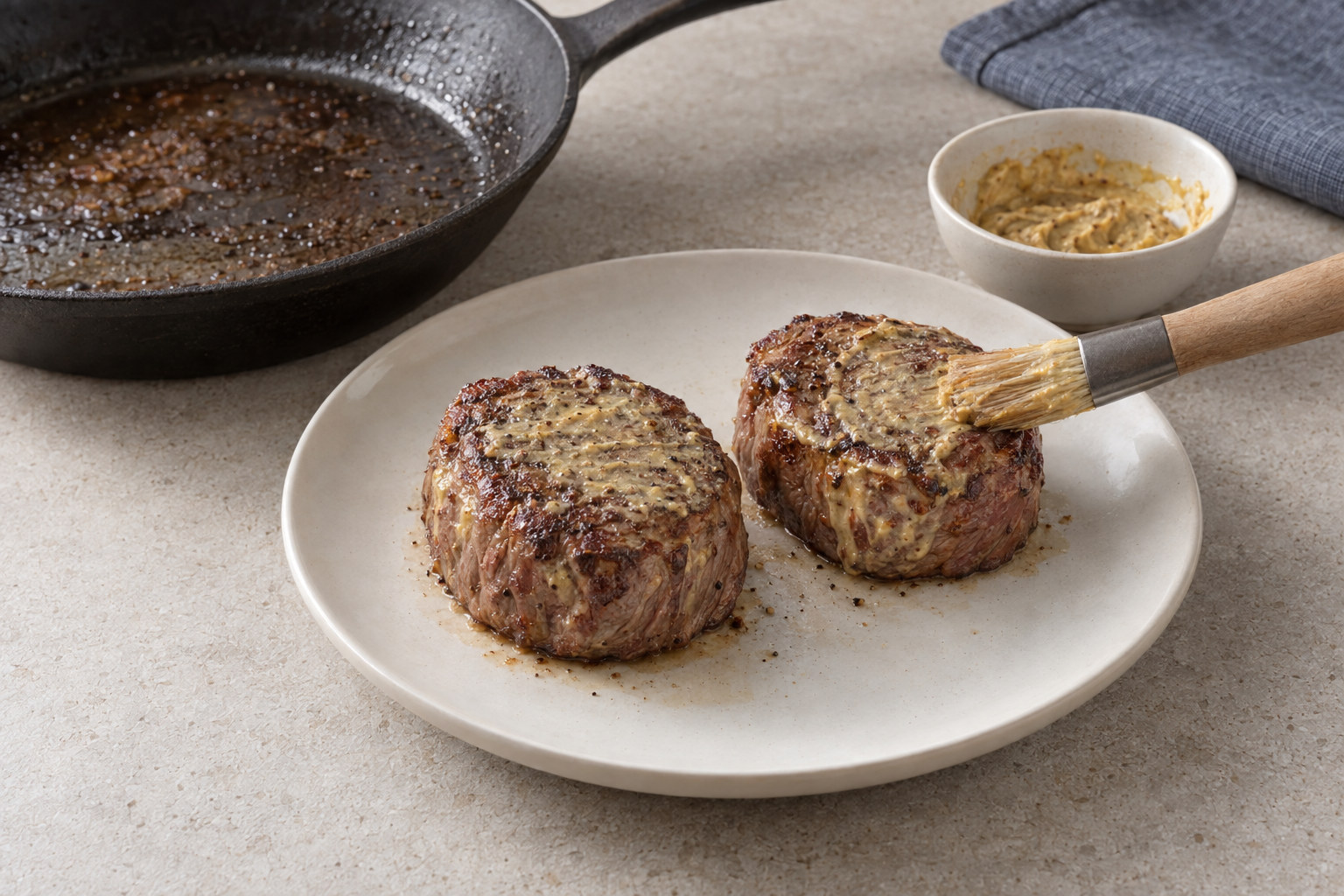
We pat the meat dry and season it evenly with salt and pepper. Using the oil for the meat, we sear the medallions two at a time for just 45–60 seconds on each flat side and briefly around the edges, until the surface has browned. We transfer them to a clean plate, brush with mustard and leave to cool for 10 minutes. The meat is not yet cooked through at this stage. We carry straight on with wrapping and baking; we do not leave it until the next day.
Reduce the red wine jus
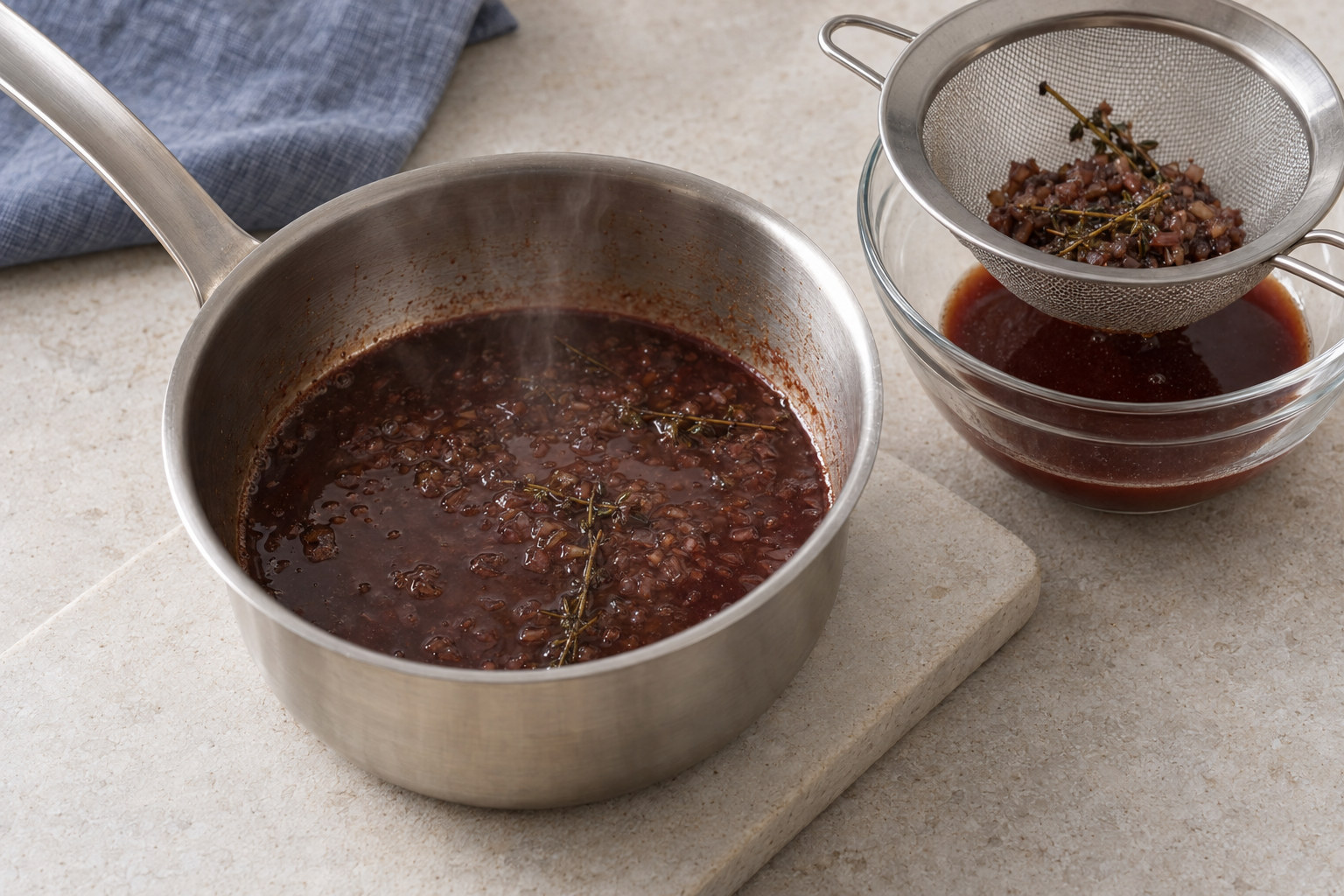
We rinse the thyme. We peel and finely chop the shallot for the jus, then soften it in the oil for 4 minutes. We pour in the wine, add the thyme and reduce to about 40 ml. We add the stock and cook for another 10 minutes, until about 120 ml remains. We strain the jus and keep it warm. We can make the jus while wrapping the meat.
The reduced jus has an intense flavour and runs off a spoon. We whisk in the butter just before serving.
Wrap the individual Wellingtons
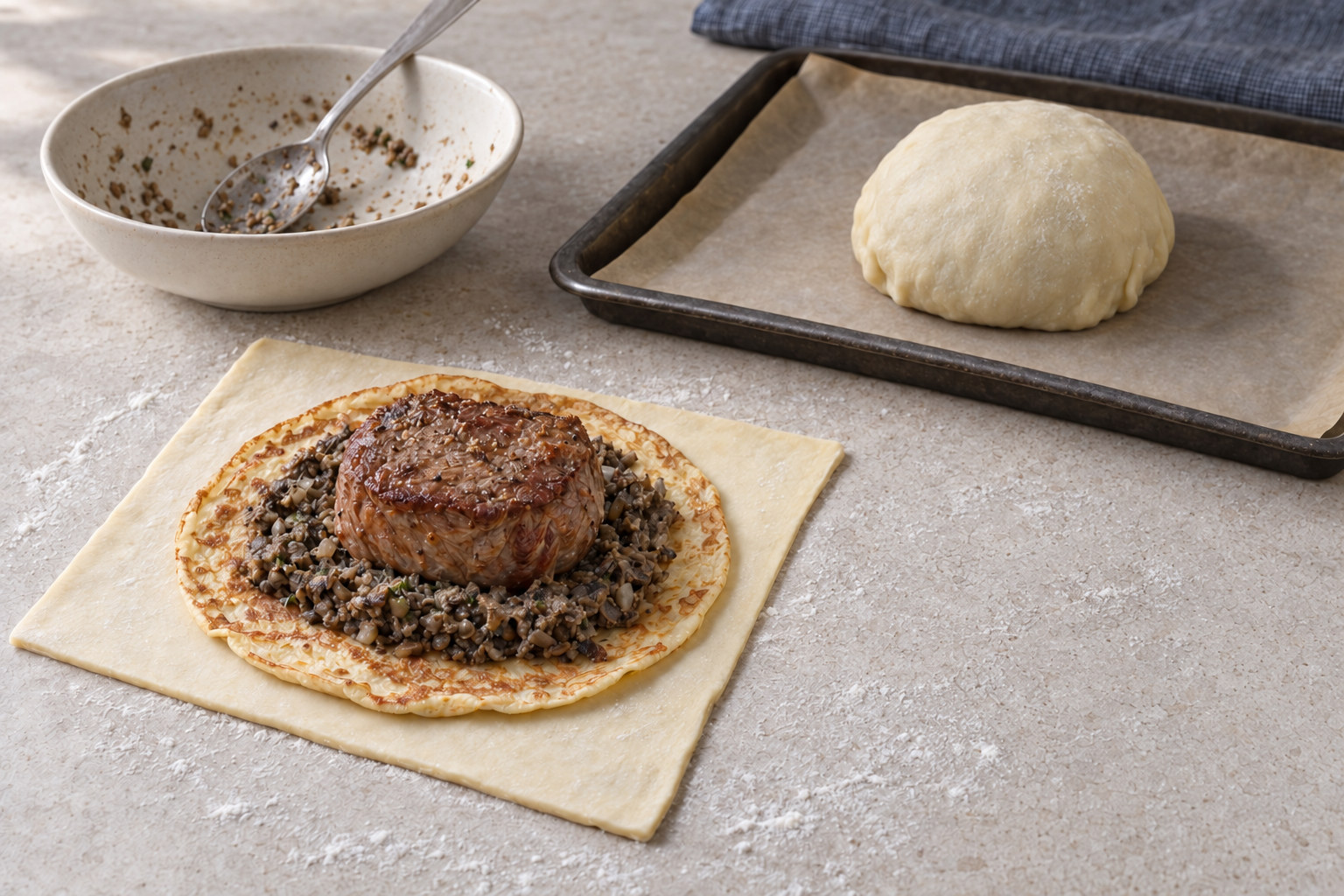
We spread an equal share of duxelles over each cold pancake. We place a medallion in the centre and fold the edges of the pancake around the meat. We lightly dust the puff pastry with flour and divide it into two rectangles about 20 × 25 cm and approximately 3 mm thick. We wrap each pancake-covered medallion in a piece of pastry. We beat the egg for glazing, brush a little over the edge and press the seam firmly together. We leave about 1 cm of overlap and trim away any large excess. We place the parcels seam-side down on baking paper.
The pastry fits snugly without tearing, and there are no thick layers piled up underneath.
Chill and bake the parcels
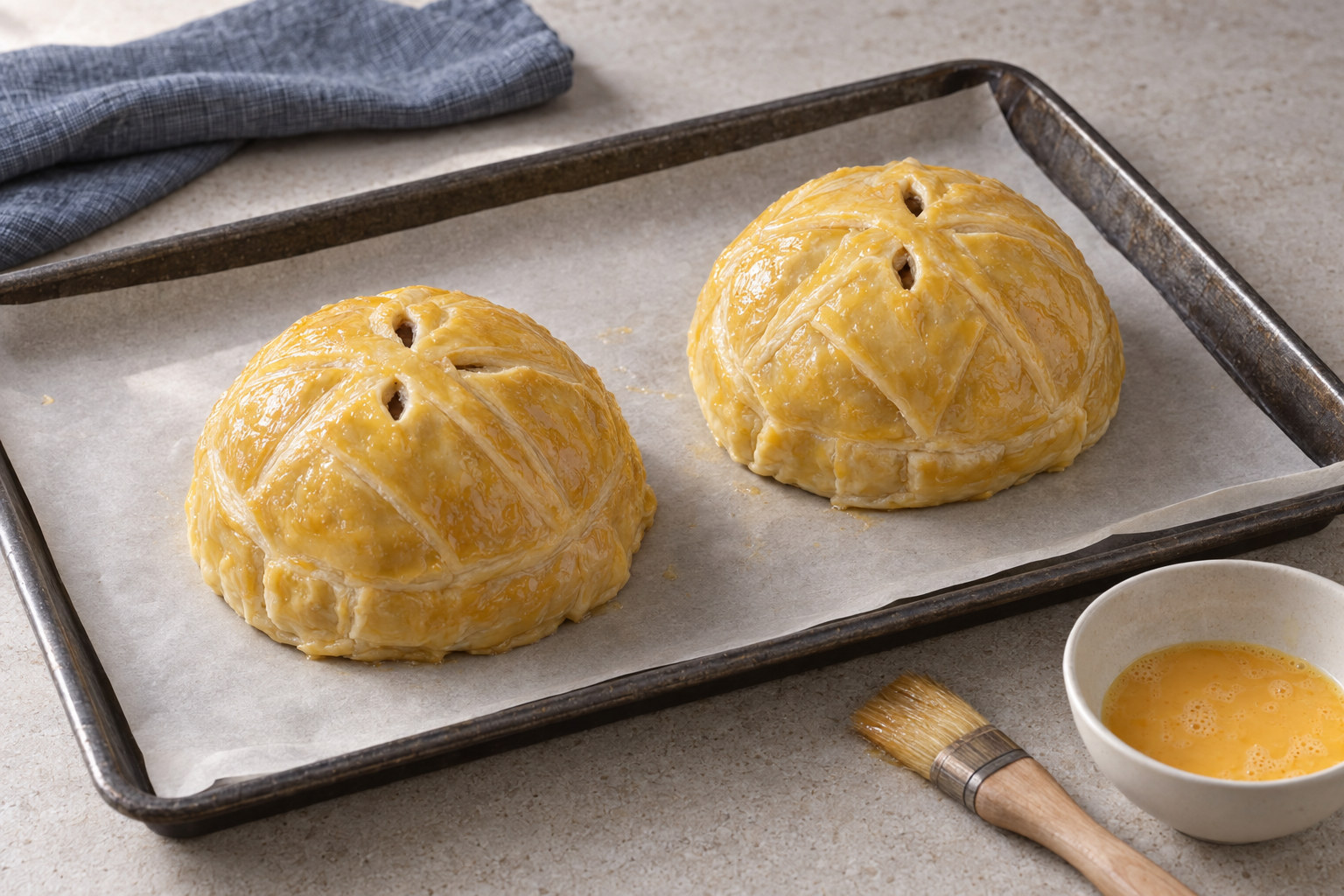
We brush the parcels with the remaining egg and put them in the fridge for 20 minutes. Meanwhile, we thoroughly preheat the oven to 200 °C using conventional top and bottom heat. We make two small steam holes in the top layer of pastry without piercing the meat. We bake for 25–35 minutes. After 22 minutes, we start checking the temperature with a thin probe inserted from the side into the centre of the meat. Every medallion must reach at least 63 °C, and the pastry must be golden and cooked through underneath too. If the tops brown too quickly, we cover them loosely with foil and continue baking until the meat reaches the required temperature.
Rest and serve
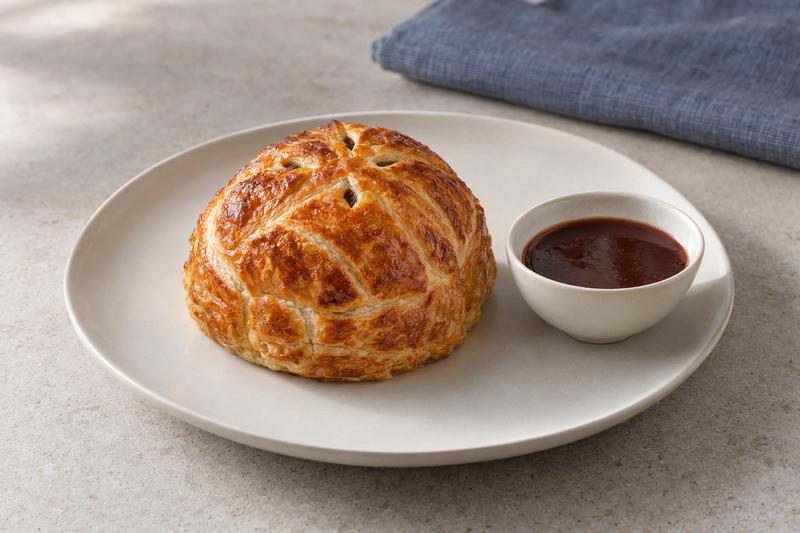
We rest the Wellingtons on a wire rack for 10 minutes without covering them tightly. Off the heat, we whisk the cold butter and the salt for the sauce into the hot jus. We serve one parcel per person, with the jus separately or poured alongside to keep the pastry crisp.
The pastry stays crisp, with no excess liquid escaping when we cut into the parcel.
Tips from our kitchen
- We take the puff pastry out of the fridge as we need it. Warm, soft pastry is difficult to seal.
- If a medallion needs more pastry to enclose it, we reduce the overlap. We do not stretch the pastry so thin that it becomes see-through.
What to watch out for
- We do not wrap the meat with warm or wet mushroom filling, as this would make the pastry soggy.
- We keep the medallions separate rather than combining them into one large roll. We bake each in its own pastry case.
- We do not cover the baked parcels tightly, as trapped steam would soften the pastry.
How we serve it
- We serve one Wellington per person, with the red wine jus separately or poured beside the parcel to keep the pastry crisp.
Ingredient notes
- A pack of Wolowina beef fillet steaks contains two separate 200 g medallions. We use one pack for 2 people and two packs for 4.
During preparation
- We check the centre of every medallion with a clean thermometer probe; the colour of the pastry or meat alone does not tell us whether it is cooked through. We keep raw meat and any utensils used for it separate from the prepared components.
Our inspiration
A crisp Wellington starts with a pan of mushrooms. As they cook, their excess liquid evaporates and they become a thick filling called duxelles, which is less likely to make the pastry soggy. Gordon Ramsay, former head chef at London’s Aubergine restaurant, lets the filling cool in his recipe and chills the other layers before baking too. We take the same care with our individual portions, replacing the Parma ham in his version with a thin pancake.
Similar recipes
Recipe for 4 people
Step-by-step method
Before we start
We make four separate parcels, rather than one large roll. We cook the mushrooms in two frying pans and make the pancakes one at a time. We arrange the parcels on a large baking tray, leaving 5 cm between them.
Make the mushroom duxelles
We clean the mushrooms, peel the shallots and chop both finely. We rinse the thyme and strip off the leaves. We soften the shallots in the butter for 3 minutes, then add the mushrooms, thyme leaves and the salt for the filling. We divide the mixture between two frying pans and stir each for 15–20 minutes, until all the excess liquid has evaporated. We spread it in the prepared shallow dishes, leave it uncovered for 15 minutes to let the steam escape, then chill it in the fridge to below 20 °C.
The mixture holds together, releases no water when pressed and is no longer warm when we assemble the parcels.
Make the thin pancakes
We whisk together the flour, egg, milk, water and salt for the pancakes until smooth. We leave the batter to stand for 10 minutes. In a 24 cm non-stick frying pan brushed with oil, we cook four thin pancakes. We cook each for about 1 minute on the first side and 30 seconds on the second. We lift them out and leave them to cool separately.
The pancakes are thin, pliable and cooked through, with no raw, floury centre.
Briefly sear the medallions
We pat the meat dry and season it evenly with salt and pepper. Using the oil for the meat, we sear the medallions two at a time for just 45–60 seconds on each flat side and briefly around the edges, until the surface has browned. We transfer them to a clean plate, brush with mustard and leave to cool for 10 minutes. The meat is not yet cooked through at this stage. We carry straight on with wrapping and baking; we do not leave it until the next day.
Reduce the red wine jus
We rinse the thyme. We peel and finely chop the shallots for the jus, then soften them in the oil for 4 minutes. We pour in the wine, add the thyme and reduce to about 70 ml. We add the stock and cook for another 15 minutes, until about 210 ml remains. We strain the jus and keep it warm. We can make the jus while wrapping the meat.
The reduced jus has an intense flavour and runs off a spoon. We whisk in the butter just before serving.
Wrap the individual Wellingtons
We spread an equal share of duxelles over each cold pancake. We place a medallion in the centre and fold the edges of the pancake around the meat. We lightly dust the puff pastry with flour and divide it into four rectangles about 20 × 24 cm and approximately 3 mm thick. We wrap each pancake-covered medallion in a piece of pastry. We beat the egg for glazing, brush a little over the edge and press the seam firmly together. We leave about 1 cm of overlap and trim away any large excess. We place the parcels seam-side down on baking paper.
The pastry fits snugly without tearing, and there are no thick layers piled up underneath.
Chill and bake the parcels
We brush the parcels with the remaining egg and put them in the fridge for 20 minutes. Meanwhile, we thoroughly preheat the oven to 200 °C using conventional top and bottom heat. We make two small steam holes in the top layer of pastry without piercing the meat. We bake for 28–38 minutes. After 22 minutes, we start checking the temperature with a thin probe inserted from the side into the centre of the meat. Every medallion must reach at least 63 °C, and the pastry must be golden and cooked through underneath too. If the tops brown too quickly, we cover them loosely with foil and continue baking until the meat reaches the required temperature.
Rest and serve
We rest the Wellingtons on a wire rack for 10 minutes without covering them tightly. Off the heat, we whisk the cold butter and the salt for the sauce into the hot jus. We serve one parcel per person, with the jus separately or poured alongside to keep the pastry crisp.
The pastry stays crisp, with no excess liquid escaping when we cut into the parcel.