
An original recipe · International inspiration
Beef fillet medallions with pea purée and parsley potatoes
Green pea purée with lemon brings sweetness and freshness to tender beef fillet. We serve the medallions with buttery potatoes and parsley; this colourful plate makes a lovely celebratory lunch too.
We cook the potatoes while preparing the meat, and finish the purée while the meat is in the oven or resting.
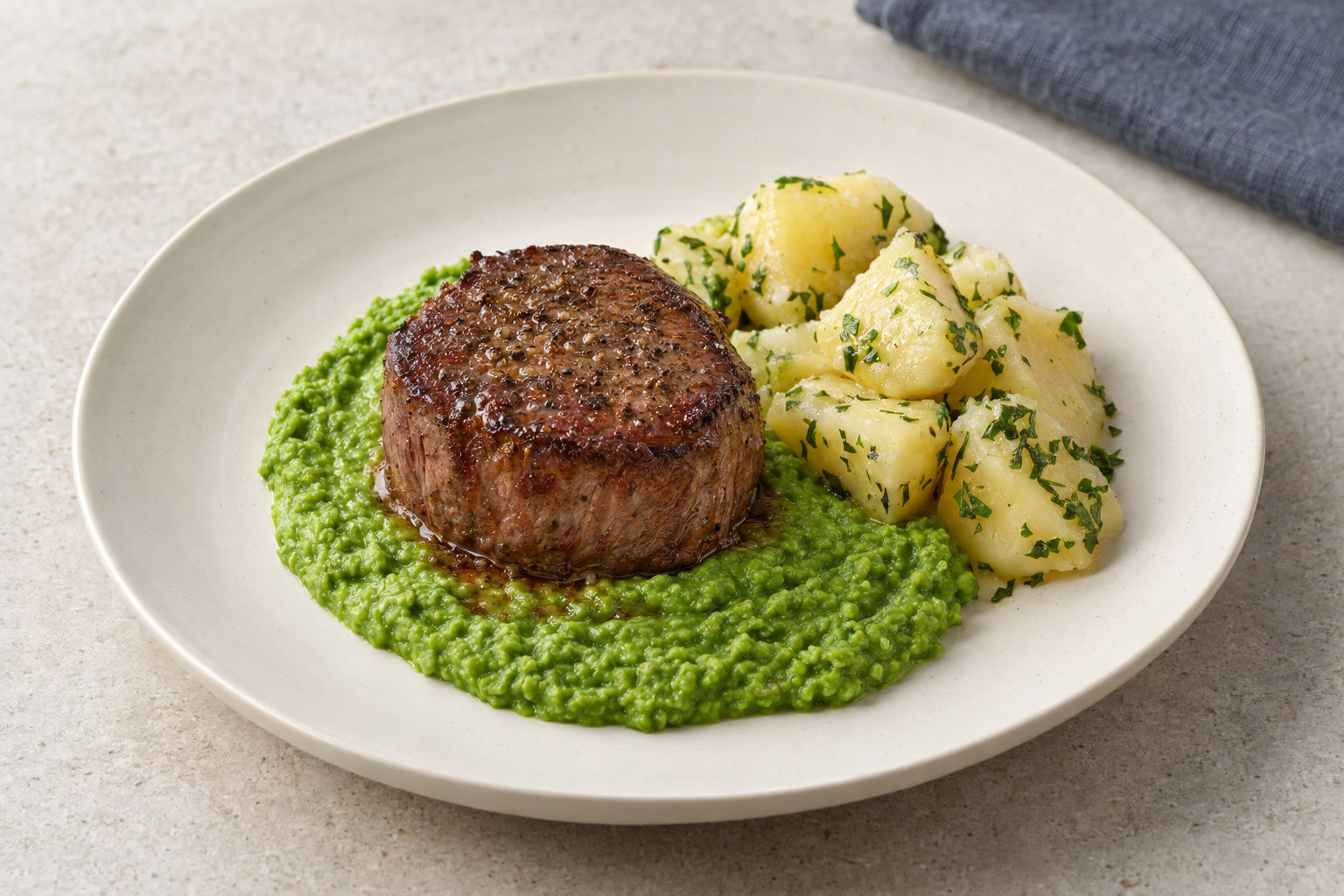
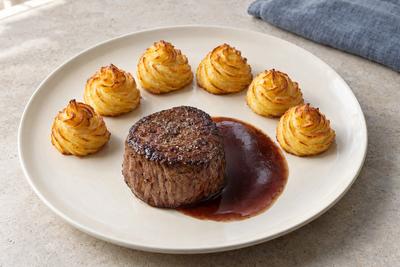
Tender beef fillet, sweet green peas, lemon and buttery potatoes with parsley.
Step-by-step method
What you will need
- 26 cm frying pan
- small baking tray
- oven
- 2.5 litre saucepan
- 14 cm saucepan
- hand blender
- colander
- meat thermometer with a thin probe
- kitchen scales
- one chopping board for raw meat and another for cooked food
Choosing how well to cook your steak
Before cooking, we choose how well we would like our meat done. This guide describes culinary levels of doneness and approximate temperatures at the centre of the meat after resting. These are not pan or oven temperatures or food safety recommendations. For whole beef steaks, the United States Department of Agriculture (USDA) recommends a minimum internal temperature of 63 °C before removing the meat from the heat, followed by at least 3 minutes of resting.
| Doneness | Temperature after resting | What to expect |
|---|---|---|
| Rare | 52 °C | Rare. The centre is red, and the meat is very tender and juicy. |
| Medium Rare | 55 °C | Medium rare. The centre is warm and reddish-pink, and the meat is tender and juicy. |
| Medium | 60 °C | Medium. The centre remains pink, and the meat has a firmer bite. |
| Medium Well | 65 °C | Medium well. Only a faint pink strip remains in the centre; the meat is firmer and less juicy. |
| Well Done | 71 °C | Well done. There is no pink in the centre, and the meat is firm and less juicy. |
- We measure the temperature at the centre of the thickest part of the meat. We insert the probe from the side, avoiding bone and pockets of fat. Colour is only a guide; we rely on the thermometer.
- As a rule, we take the meat off the pan or grill, or out of the oven, when it is 2–3 °C below our chosen temperature after resting. Thick cuts and intense heat can cause a greater temperature rise during resting. We check it regularly and follow the individual recipe.
- We rest the meat for the time given in the recipe. If the temperature stops rising before reaching our chosen value, we briefly return the meat to a gentle heat and check again.
- Cooking times are a guide. If we prefer our meat less well done, we start checking its temperature earlier. For a higher degree of doneness, we allow more time over a gentler heat as needed, so the outside does not burn.
Before we start
Before cooking, we choose our preferred doneness from the table above the method. We put the potatoes on to cook first. When they are nearly tender, we sear two medallions in one frying pan. Depending on their temperature, we either leave each piece to rest or finish it in the oven. We make the purée while the meat is in the oven or resting.
Cook the potatoes
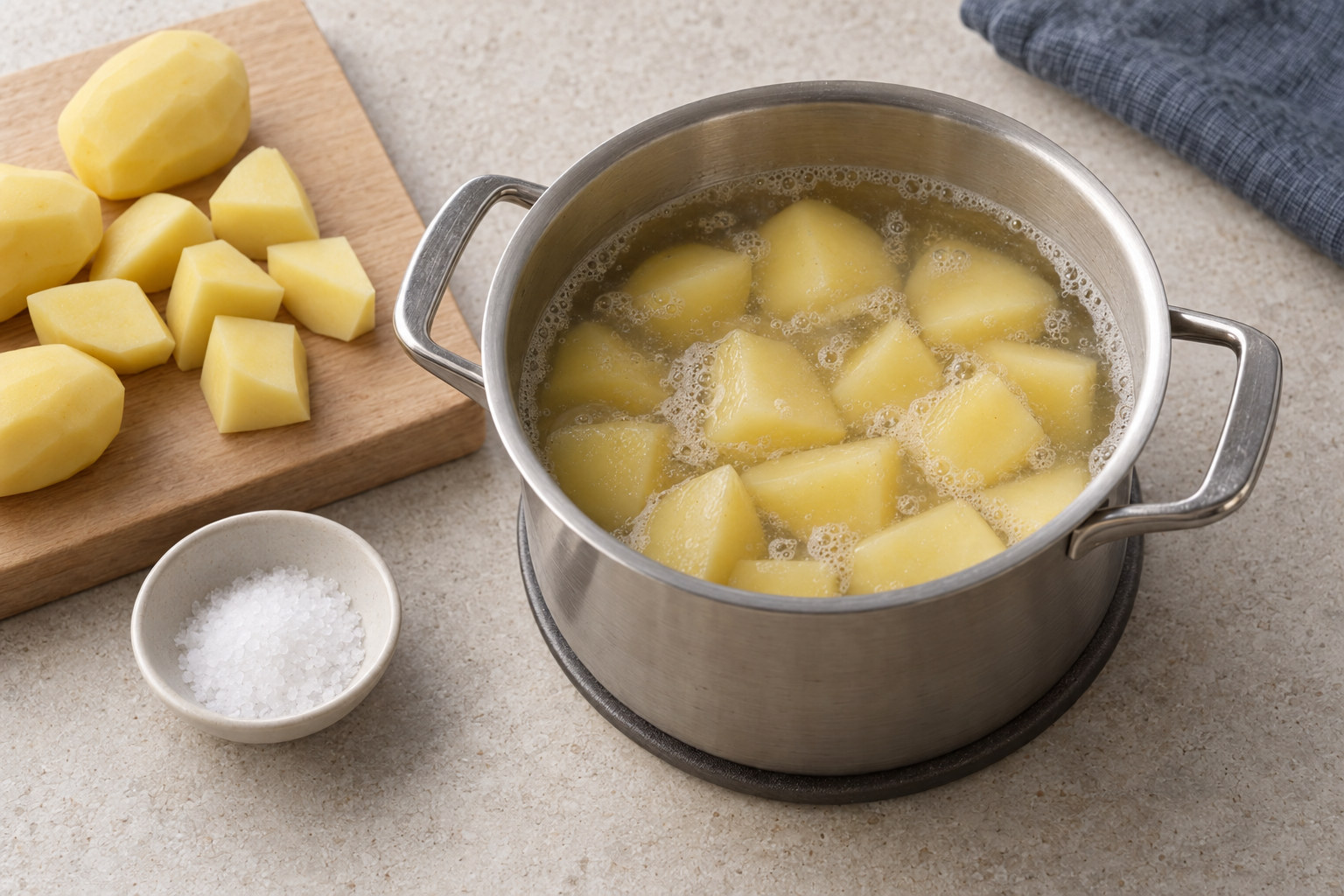
We preheat the oven to 180 °C using conventional top and bottom heat. We peel and wash the potatoes and cut them into pieces about 3 cm across. We cover them with water in a saucepan, add the salt for the cooking water and boil for 18–22 minutes, until a knife slips in easily. We prepare the meat while the potatoes cook, but start searing it only when they are nearly tender. We rinse and chop the parsley. We drain the cooked potatoes, toss with the butter for the potatoes and the parsley, then cover briefly.
The potatoes still hold their shape but are tender in the middle.
Sear the medallions
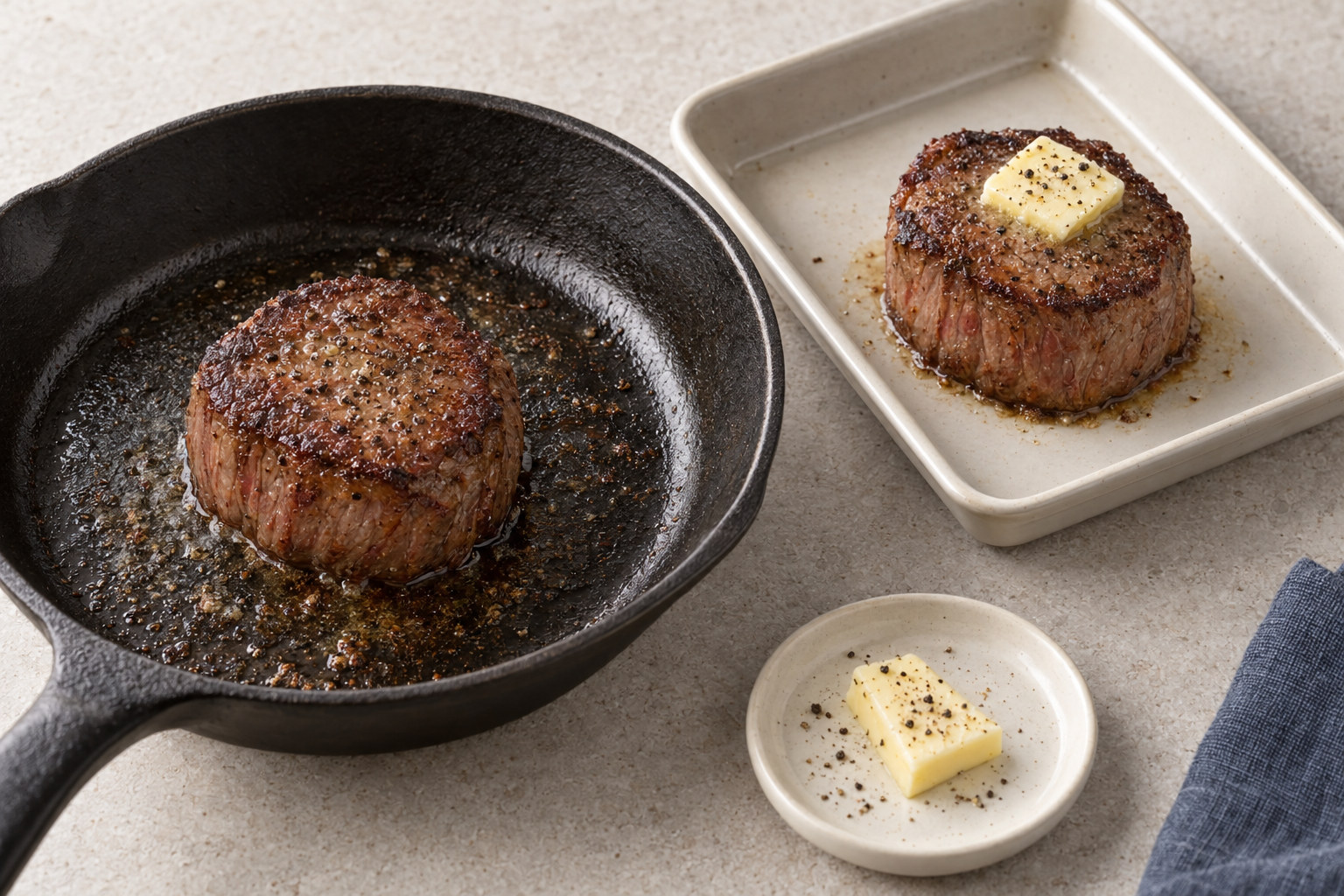
We pat the medallions dry, season all over with salt and pepper and brush with oil. In a frying pan heated over a medium-high heat, we sear two medallions. We cook the first flat side for about 2 minutes. After turning, we start checking the centre temperature; depending on this and the colour of the surface, we cook the second side for approximately another 2 minutes. Using tongs, we briefly hold the edges against the pan. We check each piece and divide the butter for the meat between the medallions. We leave any pieces with a centre temperature approximately 2–3 °C below our chosen final temperature after resting to rest on a clean, lukewarm plate outside the oven. We transfer the rest to a baking tray to finish cooking.
The surface is golden brown; the temperature inside each piece tells us whether it needs to finish in the oven.
Finish the medallions in the oven if needed
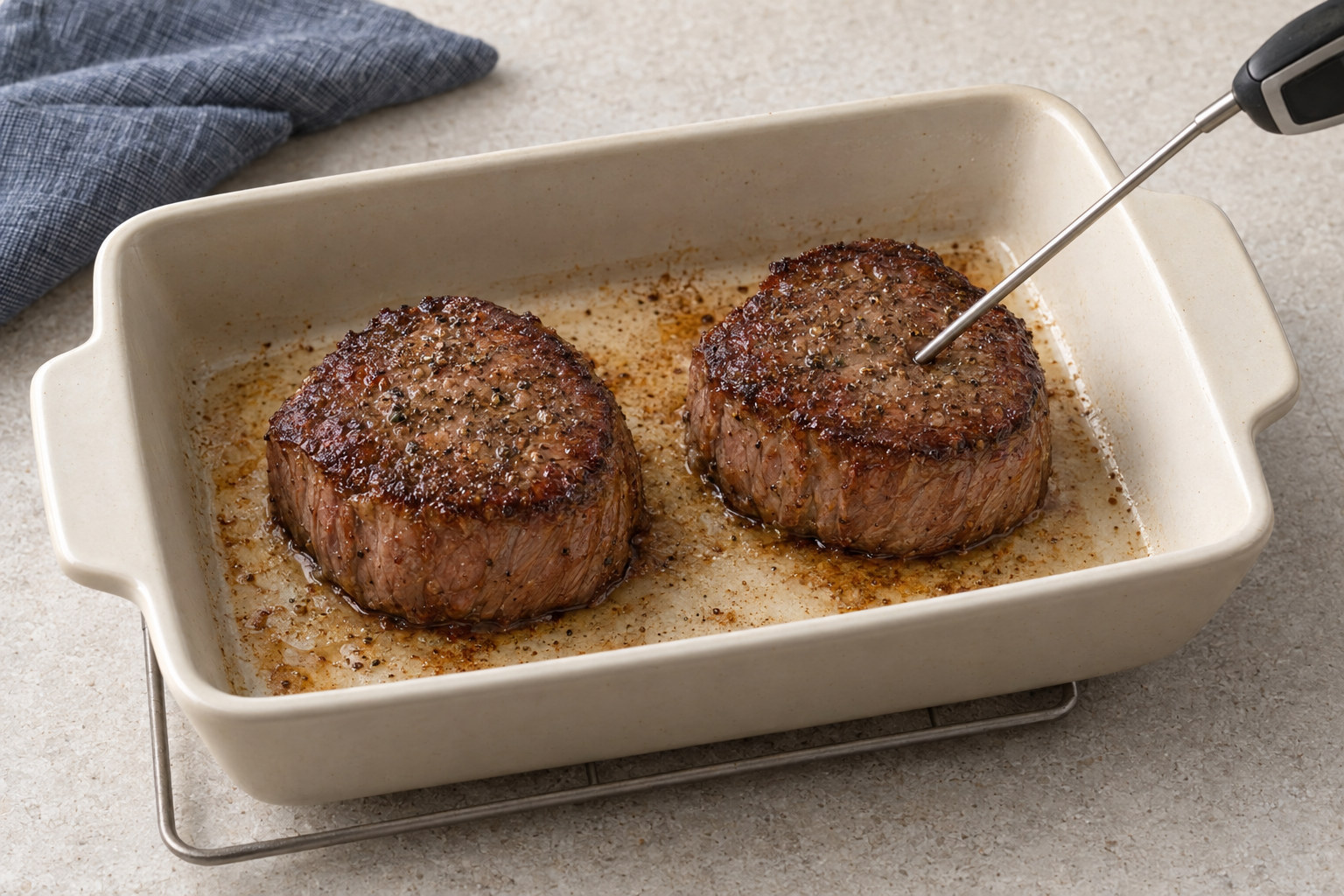
We put any pieces that need more cooking into the oven. As a guide, this takes 8–16 minutes, but it may take less or more time depending on the thickness of the meat and our chosen doneness. We first check the temperature after just 2–3 minutes, then at short intervals. We take each piece out when its centre is approximately 2–3 °C below our chosen final temperature after resting. We rest the meat for 5 minutes on a clean, lukewarm plate outside the oven, continuing to check its temperature. If needed, we finish cooking it briefly over a gentle heat.
The probe reaches the centre, rather than sitting just beneath the seared surface.
Make the pea purée
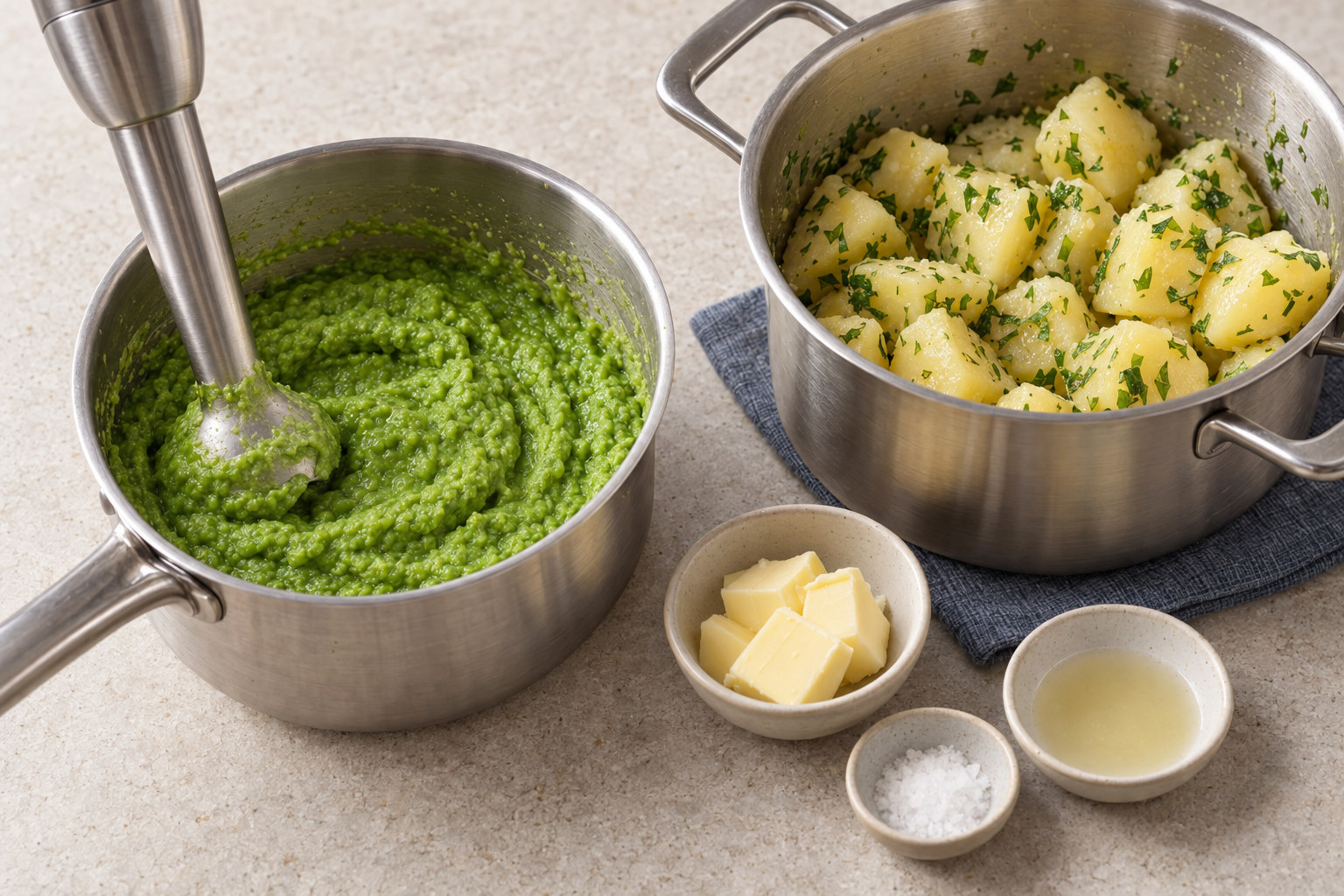
We start making the purée as soon as the meat goes into the oven or is left to rest. We put the peas, water and salt for the purée in a small saucepan. We cover and cook for 3–4 minutes until tender. We add the butter and lemon juice and use a hand blender to blend until smooth, including the cooking liquid. If we have not yet drained and dressed the potatoes, we drain them and toss with the parsley leaves and the butter for the potatoes.
The purée is bright green and holds on a spoon.
Serve with purée and potatoes
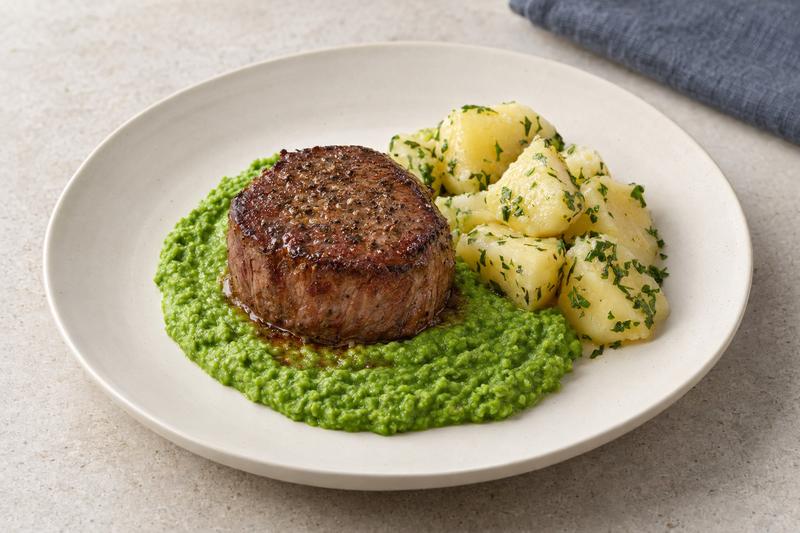
We spread pea purée on each plate, top with one 200 g medallion and add the potatoes. We pour the resting juices over the medallions. We serve.
Tips from our kitchen
- We check each medallion separately, as pieces in the same pack may differ in thickness.
What to watch out for
- We do not press down on the meat with a spatula.
- Once blended, we avoid cooking the purée for too long so it keeps its colour and sweet flavour.
How we serve it
- We serve the medallions on pea purée with parsley potatoes, dividing the resting juices between the portions.
Ingredient notes
- A pack of Wolowina beef fillet steaks contains two separate 200 g medallions. We use one pack for 2 people and two packs for 4.
During preparation
- We check the temperature with a clean probe inserted from the side into the centre of the thickest part of each piece, avoiding pockets of fat. We also check it while the meat rests; colour is only a rough guide. We keep raw meat and the utensils used for it separate from the cooked accompaniments.
Our inspiration
Two medallions of the same weight may not be ready at the same time. Their thickness matters too: a thicker piece takes longer for the heat to reach its centre. A nicely browned surface does not tell us what the meat is like inside. Even with a simple fillet dish like this, a thermometer is more helpful than judging by colour.
Similar recipes
Recipe for 4 people
We sear the meat in two batches and make the purée while the first cooked batch rests or while the meat finishes in the oven. We cook the potatoes at the same time.
Step-by-step method
Choosing how well to cook your steak
Before cooking, we choose how well we would like our meat done. This guide describes culinary levels of doneness and approximate temperatures at the centre of the meat after resting. These are not pan or oven temperatures or food safety recommendations. For whole beef steaks, the United States Department of Agriculture (USDA) recommends a minimum internal temperature of 63 °C before removing the meat from the heat, followed by at least 3 minutes of resting.
| Doneness | Temperature after resting | What to expect |
|---|---|---|
| Rare | 52 °C | Rare. The centre is red, and the meat is very tender and juicy. |
| Medium Rare | 55 °C | Medium rare. The centre is warm and reddish-pink, and the meat is tender and juicy. |
| Medium | 60 °C | Medium. The centre remains pink, and the meat has a firmer bite. |
| Medium Well | 65 °C | Medium well. Only a faint pink strip remains in the centre; the meat is firmer and less juicy. |
| Well Done | 71 °C | Well done. There is no pink in the centre, and the meat is firm and less juicy. |
- We measure the temperature at the centre of the thickest part of the meat. We insert the probe from the side, avoiding bone and pockets of fat. Colour is only a guide; we rely on the thermometer.
- As a rule, we take the meat off the pan or grill, or out of the oven, when it is 2–3 °C below our chosen temperature after resting. Thick cuts and intense heat can cause a greater temperature rise during resting. We check it regularly and follow the individual recipe.
- We rest the meat for the time given in the recipe. If the temperature stops rising before reaching our chosen value, we briefly return the meat to a gentle heat and check again.
- Cooking times are a guide. If we prefer our meat less well done, we start checking its temperature earlier. For a higher degree of doneness, we allow more time over a gentler heat as needed, so the outside does not burn.
Before we start
Before cooking, we choose our preferred doneness from the table above the method. We put the potatoes on to cook first. When they are nearly tender, we sear four medallions in two batches of two. Depending on their temperature, we either leave each piece to rest or finish it in the oven. We make the purée while the first cooked batch rests or while the meat finishes in the oven. We serve each batch after it has rested.
Cook the potatoes
We preheat the oven to 180 °C using conventional top and bottom heat. We peel and wash the potatoes and cut them into pieces about 3 cm across. We cover them with water in a saucepan, add the salt for the cooking water and boil for 18–22 minutes, until a knife slips in easily. We prepare the meat while the potatoes cook, but start searing it only when they are nearly tender. We rinse and chop the parsley. We drain the cooked potatoes, toss with the butter for the potatoes and the parsley, then cover briefly.
The potatoes still hold their shape but are tender in the middle.
Sear the medallions
We pat the medallions dry, season all over with salt and pepper and brush with oil. In a frying pan heated over a medium-high heat, we sear the medallions in two batches of two. We cook the first flat side for about 2 minutes. After turning, we start checking the centre temperature; depending on this and the colour of the surface, we cook the second side for approximately another 2 minutes. Using tongs, we briefly hold the edges against the pan. We check each piece and divide the butter for the meat between the medallions. We leave any pieces with a centre temperature approximately 2–3 °C below our chosen final temperature after resting to rest on a clean, lukewarm plate outside the oven. We transfer the rest to a baking tray to finish cooking. While searing the second batch, we keep the first away from the heat. Before putting any of the first batch in the oven, we check each piece again. If the first batch is already resting, we start making the purée as described in step 4 while searing the second batch.
The surface is golden brown; the temperature inside each piece tells us whether it needs to finish in the oven.
Finish the medallions in the oven if needed
We put any pieces that need more cooking into the oven. As a guide, this takes 8–16 minutes, but it may take less or more time depending on the thickness of the meat and our chosen doneness. We first check the temperature after just 2–3 minutes, then at short intervals. We take each piece out when its centre is approximately 2–3 °C below our chosen final temperature after resting. We rest the meat for 5 minutes on a clean, lukewarm plate outside the oven, continuing to check its temperature. If needed, we finish cooking it briefly over a gentle heat.
The probe reaches the centre, rather than sitting just beneath the seared surface.
Make the pea purée
We start making the purée as soon as the first cooked medallions are resting, or after putting the meat in the oven. We do not wait for both batches to finish. We put the peas, water and salt for the purée in a small saucepan. We cover and cook for 3–4 minutes until tender. We add the butter and lemon juice and use a hand blender to blend until smooth, including the cooking liquid. If we have not yet drained and dressed the potatoes, we drain them and toss with the parsley leaves and the butter for the potatoes. If the second batch of meat needs more time, we keep the remaining purée covered briefly and gently reheat it before serving.
The purée is bright green and holds on a spoon.
Serve with purée and potatoes
We serve each batch after 5 minutes of resting and a final check of doneness. We do not leave the first cooked medallions waiting for the second batch. We spread pea purée on each plate, top with one 200 g medallion and add the potatoes. We pour the resting juices over the medallions.