
Chinese inspiration · China
Homemade jiaozi with heart of rump beef and crisp bottoms
Crisp underneath and soft on top, our homemade jiaozi hold a juicy filling of beef, cabbage and ginger. We take our time rolling and pleating them, then serve the finished dumplings with a piquant vinegar dip, dipping in only the edge.
The estimate includes 45 minutes for the dough to rest, chopping the meat by hand, rolling each wrapper and two successive batches of pan-frying and steaming.
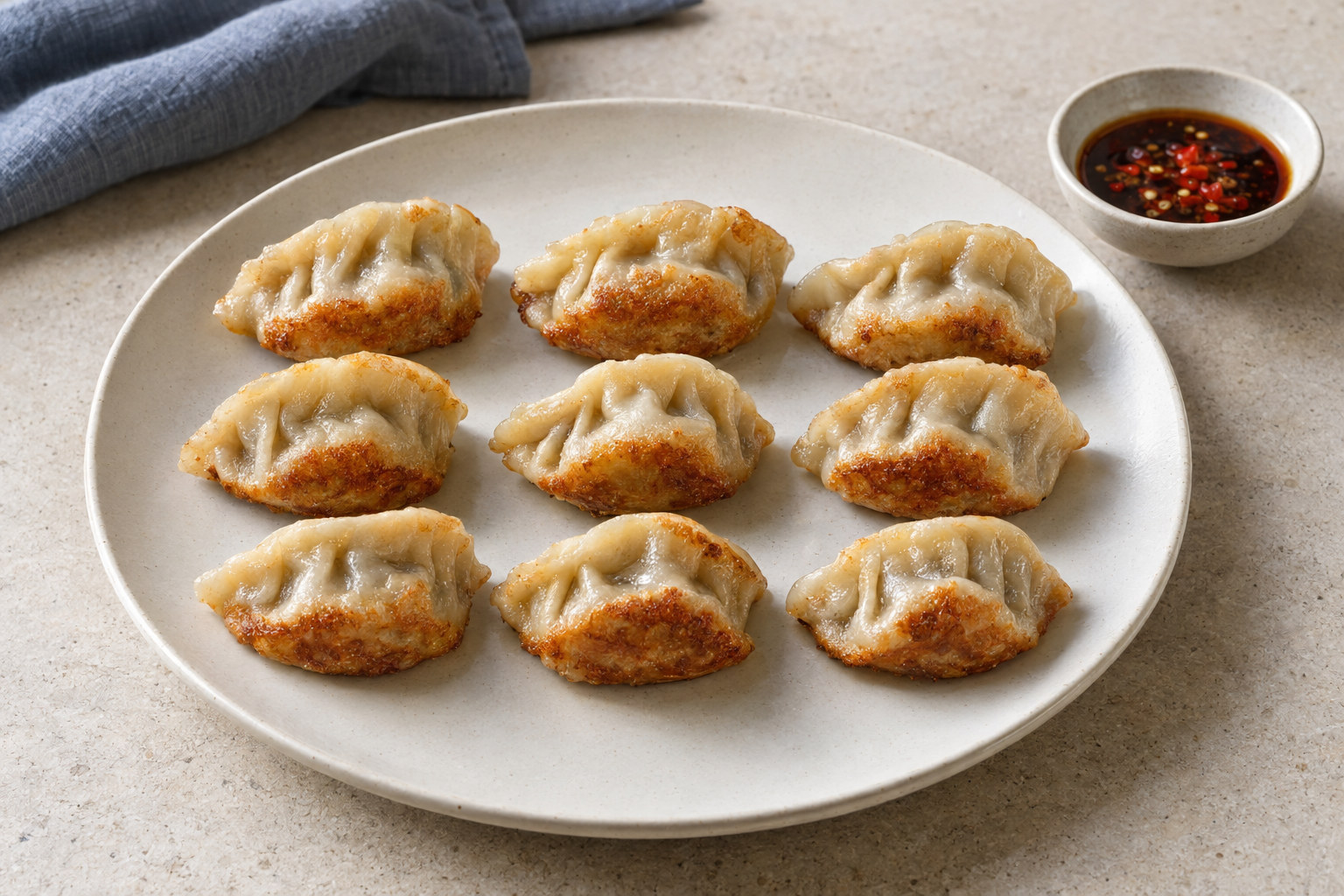
Thin, supple dough, juicy beef with ginger, crisp bottoms and a sharp vinegar dip.
Step-by-step method
What you will need
- 28 cm non-stick frying pan with lid
- small rolling pin
- tray for dumplings
- baking tray
- oven
- fine sieve or clean cloth for squeezing cabbage
- thin-probe thermometer
- kitchen scales
- separate boards for raw meat and cooked food
Before we start
We make 18 dumplings. A 28 cm pan holds nine, so we pan-fry and steam them in two batches. We keep the first batch in the oven at 80 °C for no more than 20 minutes.
Make the dough
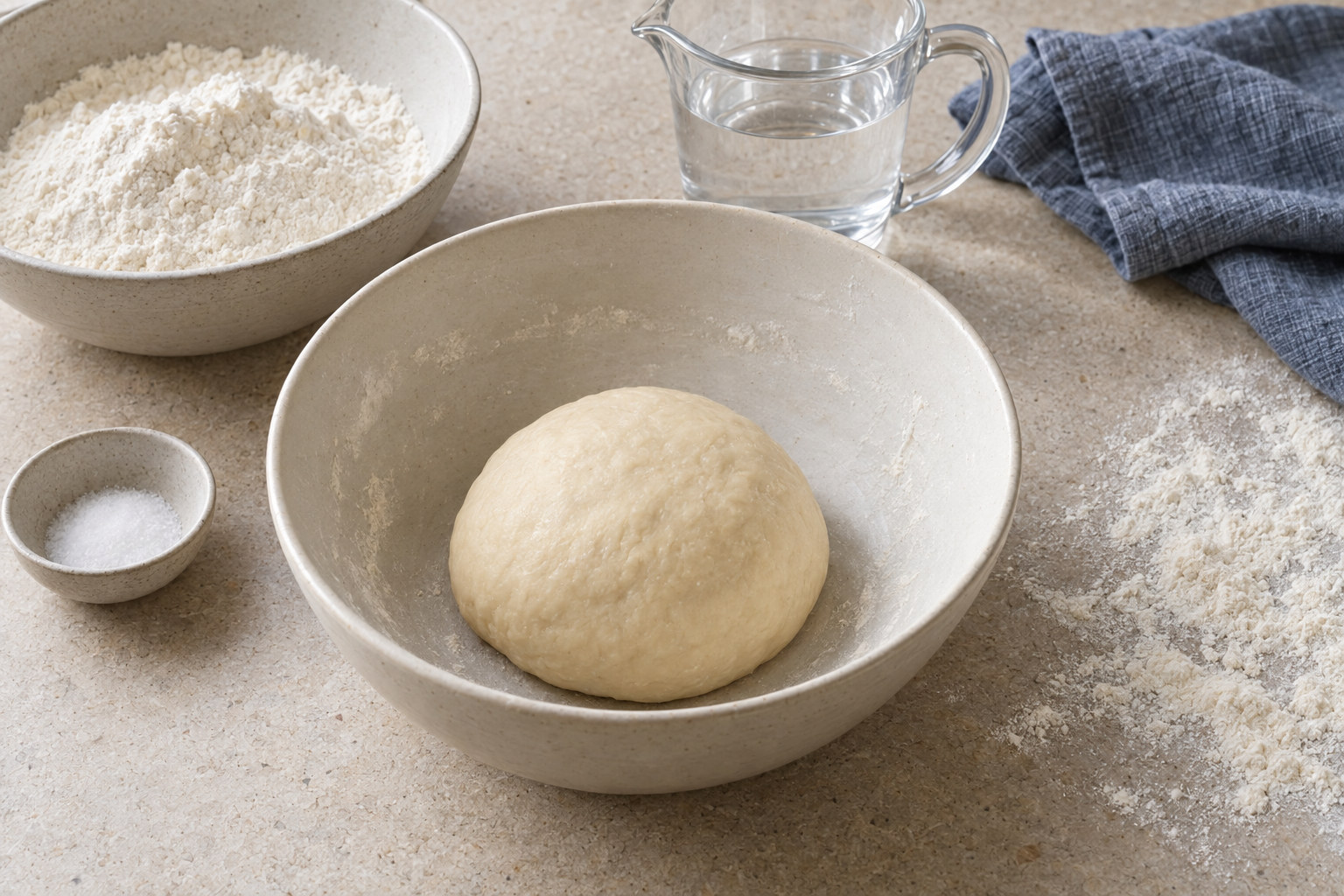
We mix the flour with the salt reserved for the dough. We gradually add 90 ml water and knead for 8 minutes until we have a smooth, firm ball. We cover the dough and leave it to rest for 45 minutes. We set aside the flour for dusting.
The dough is smooth on the surface and does not stick.
Make the beef filling
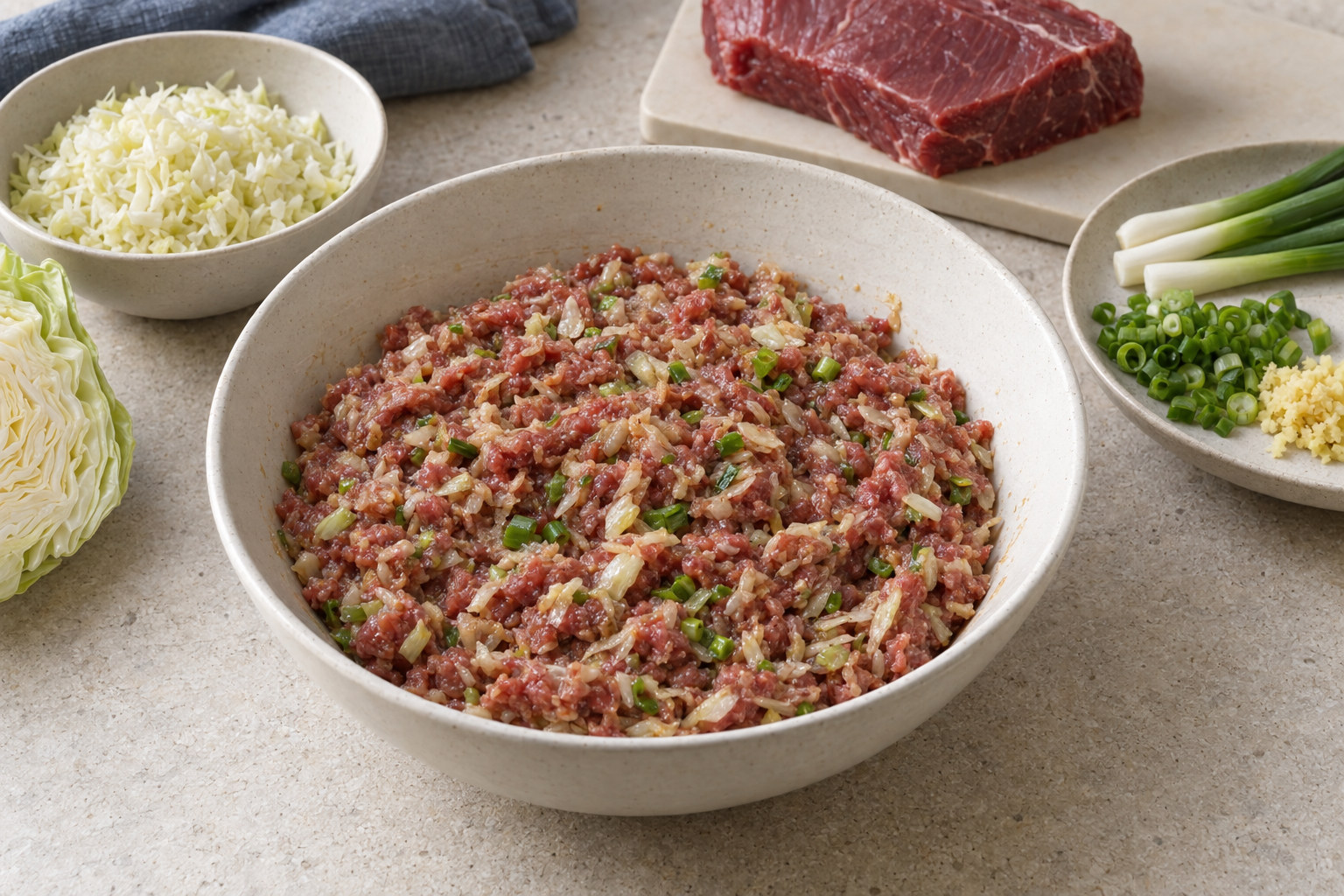
We trim and wash the cabbage and spring onion, and peel the ginger. We finely chop the cabbage, mix it with the salt reserved for it and leave it for 15 minutes. Then we squeeze it thoroughly. We work with cold meat. Using a sharp knife, we chop the heart of rump as finely as minced meat and mix it with finely chopped spring onion, ginger, soy sauce and pepper. We stir vigorously in one direction for 2 minutes. As we stir, we gradually work in the water reserved for the filling, then the rapeseed and sesame oils from the filling list, and finally the squeezed cabbage. We put the filling in the fridge.
The meat absorbs the water and the mixture holds together. No free liquid remains around the filling.
Mix the dip and roll the wrappers
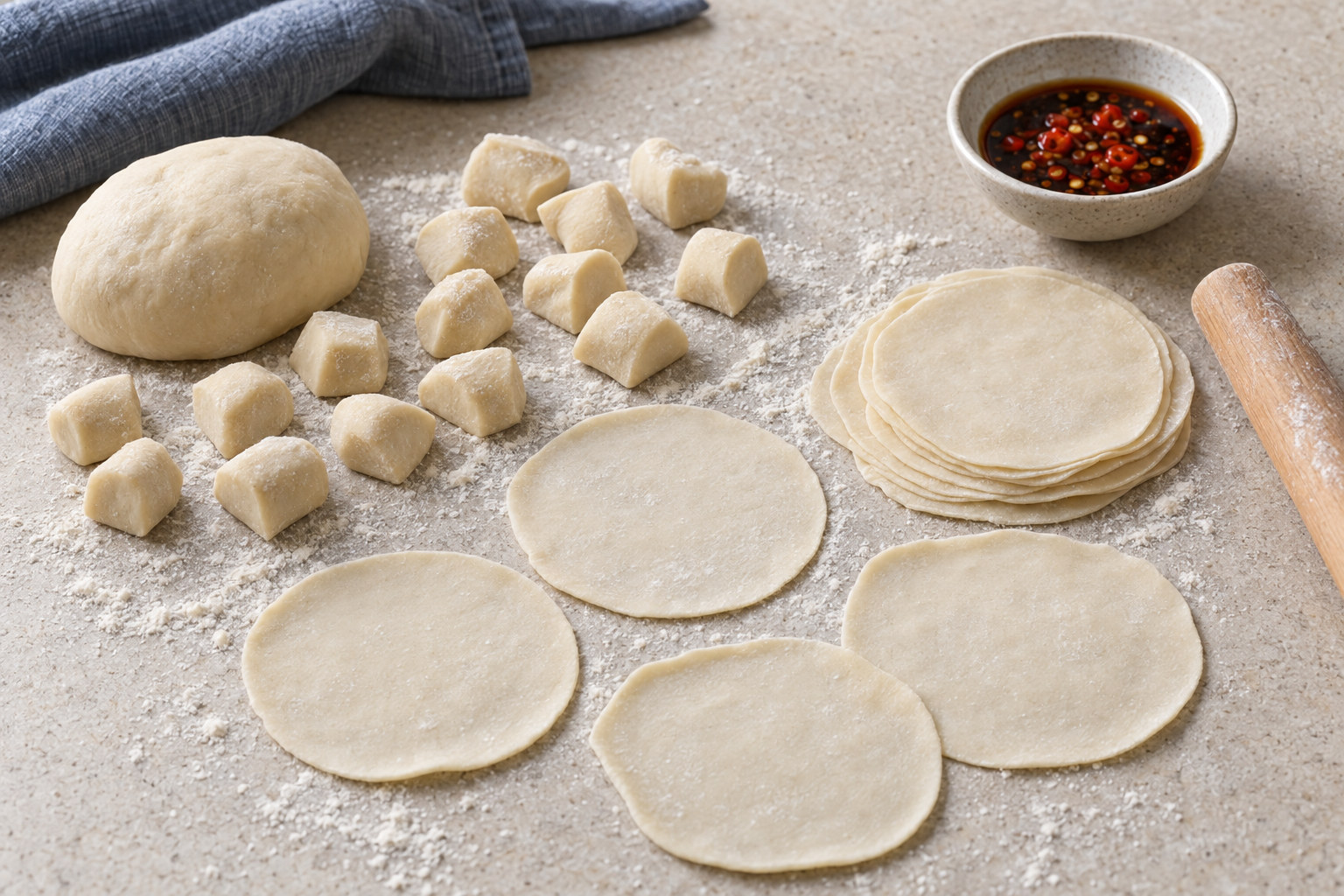
We wash the chilli. We make the dip by mixing the rice vinegar, soy sauce, water and finely chopped chilli. We divide the rested dough into 18 equal pieces. We lightly flour the work surface and roll each piece into a 10 cm round. We leave the centre about 2 mm thick and roll the edges to 1–1.5 mm. We keep the remaining dough covered.
The thin edges are pliable and the thicker centre holds the filling.
Fill and pleat the dumplings
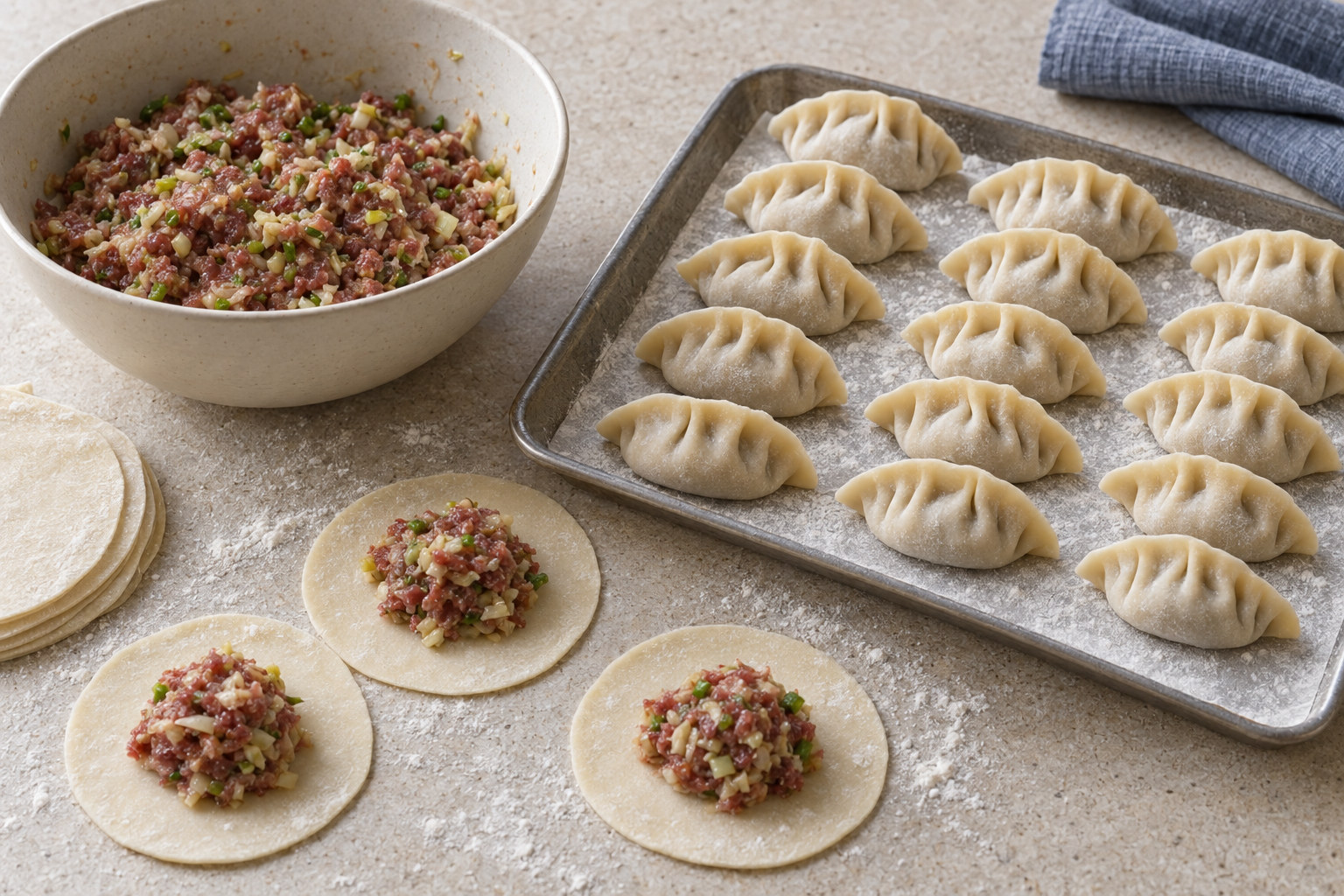
We divide the filling evenly between 18 dough rounds. We place a portion of filling in the middle of each round and fold the dough into a semicircle. We make several pleats along one side of the edge and press them firmly against the smooth side. We make sure the edges stay clean and free of filling. We place the finished dumplings on a lightly floured tray, cover and keep them in the fridge until pan-frying.
The dumplings have flat bottoms and tightly sealed seams. No filling protrudes.
Brown the bottoms and steam the dumplings
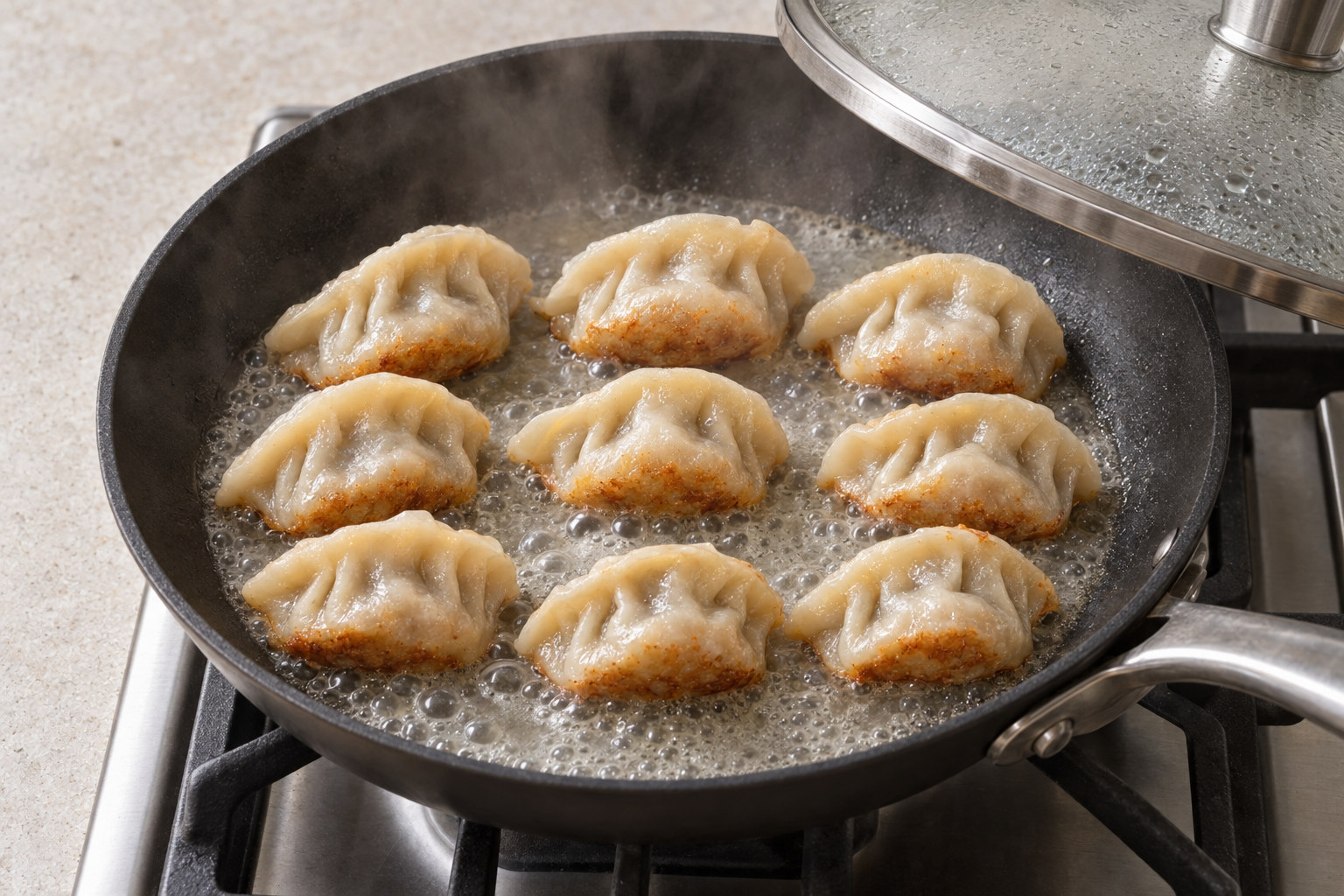
For the first batch of nine dumplings, we heat half the rapeseed oil reserved for pan-frying in the pan. We save the rest for the second batch. We pan-fry the dumplings over a medium heat for 2–3 minutes until the bottoms turn lightly golden. We pour 1 dl water into the pan and cover immediately. We steam at a gentle simmer for 8–10 minutes. With a thin probe, we measure the temperature in the centre of the filling in the largest dumpling: it must reach at least 72 °C. If it is lower, we add a tablespoon of water and continue cooking under the lid until it reaches this temperature.
The colour of the browned bottoms alone does not show whether the filling is cooked.
Crisp the bottoms and cook the next batch
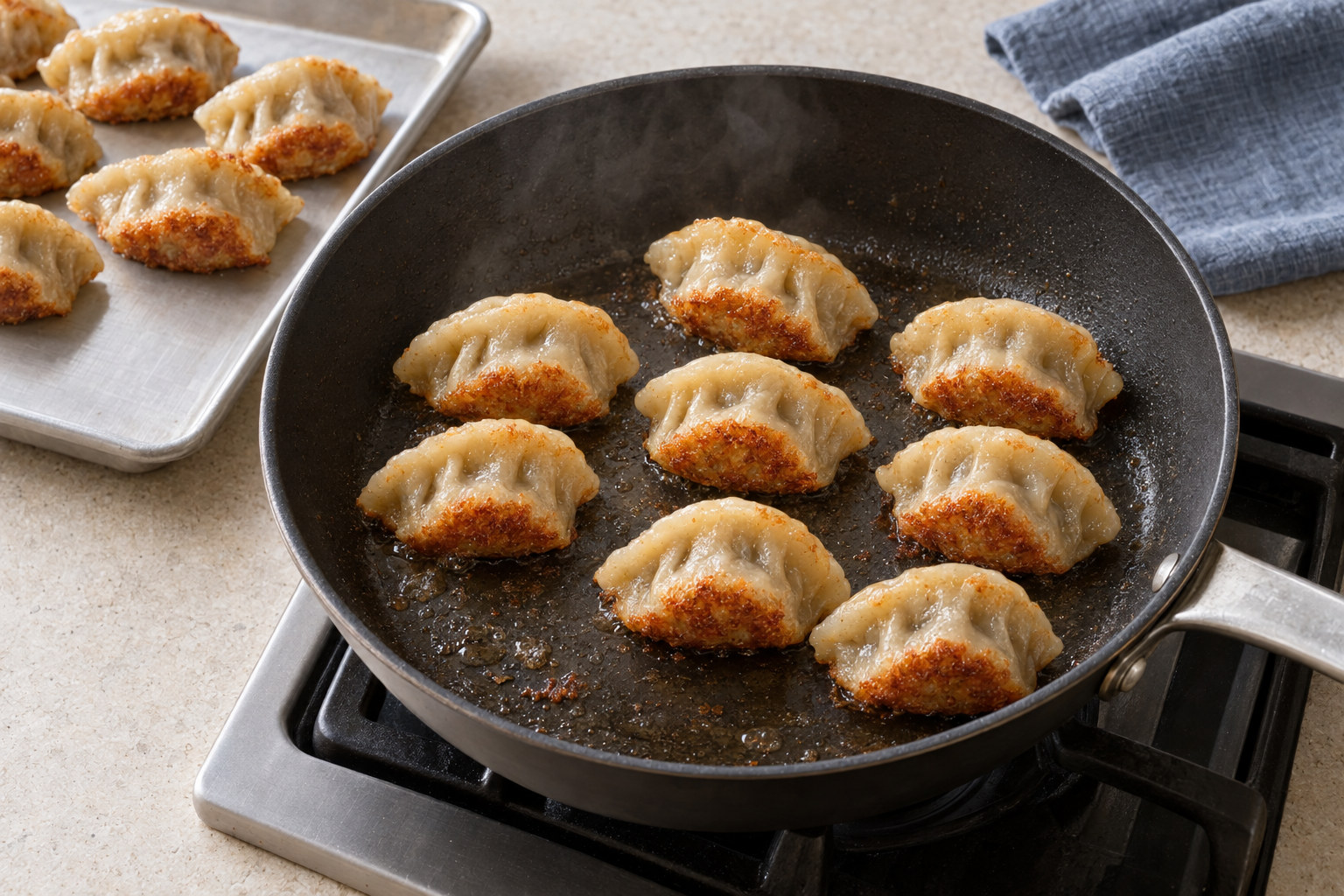
We uncover the pan and let the remaining water evaporate for 1–2 minutes. We pan-fry for another minute until the dumpling bottoms become crisp again. We transfer them to a clean baking tray in an oven heated to 80 °C and leave them there for no more than 20 minutes. We briefly clean the pan and cook the second batch in the same way with the remaining oil and the same amount of fresh water.
The bottoms are golden and dry, while the dough on top stays soft.
Serve with the dip
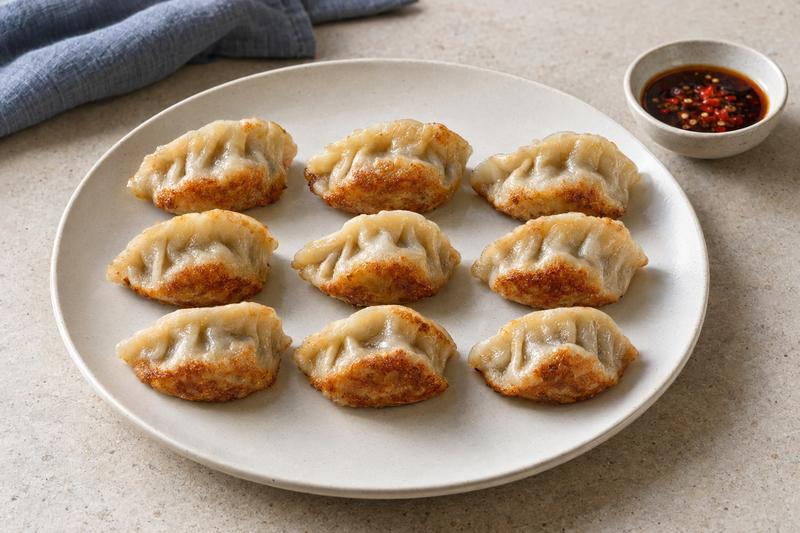
We place nine dumplings on each plate. We serve the dip separately so we can dip only a small part of each dumpling without softening its crisp bottom.
The dumplings hold their shape and the filling is juicy.
Tips from our kitchen
- The heart of rump is lean, so we work the water and oil thoroughly into the filling to keep it juicy.
- We do not overfill the dumplings. We keep the edges clean so they seal firmly when pressed together.
What to watch out for
- We do not taste the filling raw.
- We arrange the dumplings side by side in the pan. We do not shorten the steaming time just because the bottoms have turned golden; we check that the filling is cooked with a probe.
How we serve it
- We serve the dumplings on warmed plates. We pour the dip into a separate bowl so the crisp bottoms do not soften before serving.
Ingredient notes
- We buy Wolowina heart of rump in 300 g packs. It is firmer than fillet steak. We chop it finely for the filling.
- We save the rest of the box for another meal. We provide the side dish and remaining ingredients separately.
During preparation
- With a clean, thin probe, we measure the temperature at the centre of the largest dumpling filling; the colour of the meat alone does not show whether it is cooked. We keep raw meat and used utensils separate from the cooked dumplings and dip.
Our inspiration
Dumplings also carry symbolic meaning during Chinese New Year celebrations. Their shape recalls old gold or silver ingots and expresses a wish for prosperity. Our heart of rump jiaozi add a contrast in the first bite: the underside crunches while the dough above stays soft from the steam.
Similar recipes
Recipe for 4 people
The estimate includes 45 minutes for the dough to rest, chopping the meat by hand and rolling each wrapper. We cook the dumplings in both pans at the same time, in two successive batches per pan.
Step-by-step method
Before we start
We make 36 dumplings. In each of the two pans, we pan-fry and steam two batches of nine; we use the pans at the same time. We keep the raw dumplings for the second batch in the fridge meanwhile.
Make the dough
We mix the flour with the salt reserved for the dough. We gradually add 170 ml water and knead for 8 minutes until we have a smooth, firm ball. We cover the dough and leave it to rest for 45 minutes. We set aside the flour for dusting.
The dough is smooth on the surface and does not stick.
Make the beef filling
We trim and wash the cabbage and spring onion, and peel the ginger. We finely chop the cabbage, mix it with the salt reserved for it and leave it for 15 minutes. Then we squeeze it thoroughly. We work with cold meat. Using a sharp knife, we chop the heart of rump as finely as minced meat and mix it with finely chopped spring onion, ginger, soy sauce and pepper. We stir vigorously in one direction for 2 minutes. As we stir, we gradually work in the water reserved for the filling, then the rapeseed and sesame oils from the filling list, and finally the squeezed cabbage. We put the filling in the fridge.
The meat absorbs the water and the mixture holds together. No free liquid remains around the filling.
Mix the dip and roll the wrappers
We wash the chilli. We make the dip by mixing the rice vinegar, soy sauce, water and finely chopped chilli. We divide the rested dough into 36 equal pieces. We lightly flour the work surface and roll each piece into a 10 cm round. We leave the centre about 2 mm thick and roll the edges to 1–1.5 mm. We keep the remaining dough covered.
The thin edges are pliable and the thicker centre holds the filling.
Fill and pleat the dumplings
We divide the filling evenly between 36 dough rounds. We place a portion of filling in the middle of each round and fold the dough into a semicircle. We make several pleats along one side of the edge and press them firmly against the smooth side. We make sure the edges stay clean and free of filling. We place the finished dumplings on lightly floured trays, cover and keep them in the fridge until pan-frying.
The dumplings have flat bottoms and tightly sealed seams. No filling protrudes.
Brown the bottoms and steam the dumplings
We use both pans at the same time. We divide the oil for pan-frying between all four batches of dumplings. In each pan, we heat some oil for the first batch of nine dumplings, saving the rest for the second. We pan-fry the dumplings over a medium heat for 2–3 minutes until the bottoms turn lightly golden. We pour 1 dl water into each pan and cover immediately. We steam at a gentle simmer for 8–10 minutes. With a thin probe, we measure the temperature in the centre of the filling in the largest dumpling in each pan: it must reach at least 72 °C. If it is lower, we add a tablespoon of water and continue cooking under the lid until it reaches this temperature.
The colour of the browned bottoms alone does not show whether the filling is cooked.
Crisp the bottoms and cook the next batch
We uncover both pans and let the remaining water evaporate for 1–2 minutes. We pan-fry for another minute until the dumpling bottoms become crisp again. We transfer them to a clean baking tray in an oven heated to 80 °C and leave them there for no more than 20 minutes. We briefly clean both pans and cook the second batch in each in the same way. We use the remaining oil and the same amount of fresh water for each pan.
The bottoms are golden and dry, while the dough on top stays soft.
Serve with the dip
We place nine dumplings on each plate. We serve the dip separately so we can dip only a small part of each dumpling without softening its crisp bottom.
The dumplings hold their shape and the filling is juicy.