
Signature cuisine · International inspiration
Beef rump strips with peppers and lemon couscous
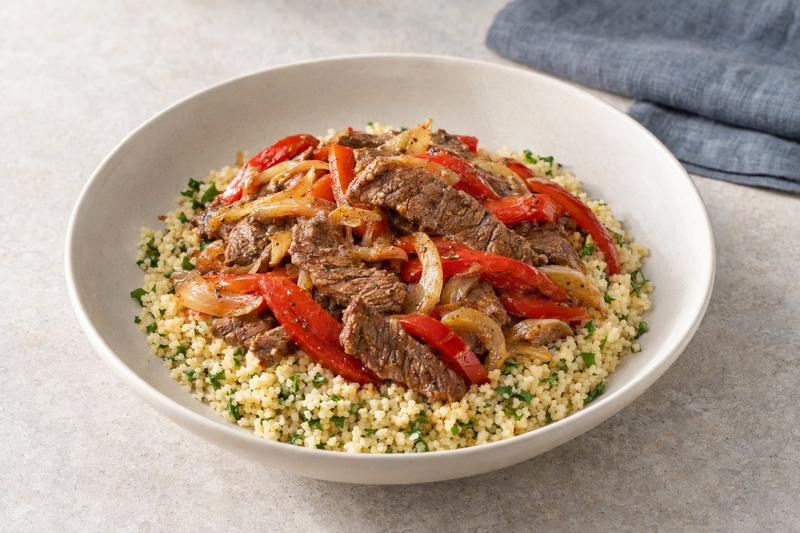
We serve beef strips with browned edges alongside sweet peppers and fluffy couscous scented with lemon and parsley. A little pan juice carries the flavour of the meat into the couscous, too.
We allow time for the couscous to absorb the water and for searing the meat in batches.
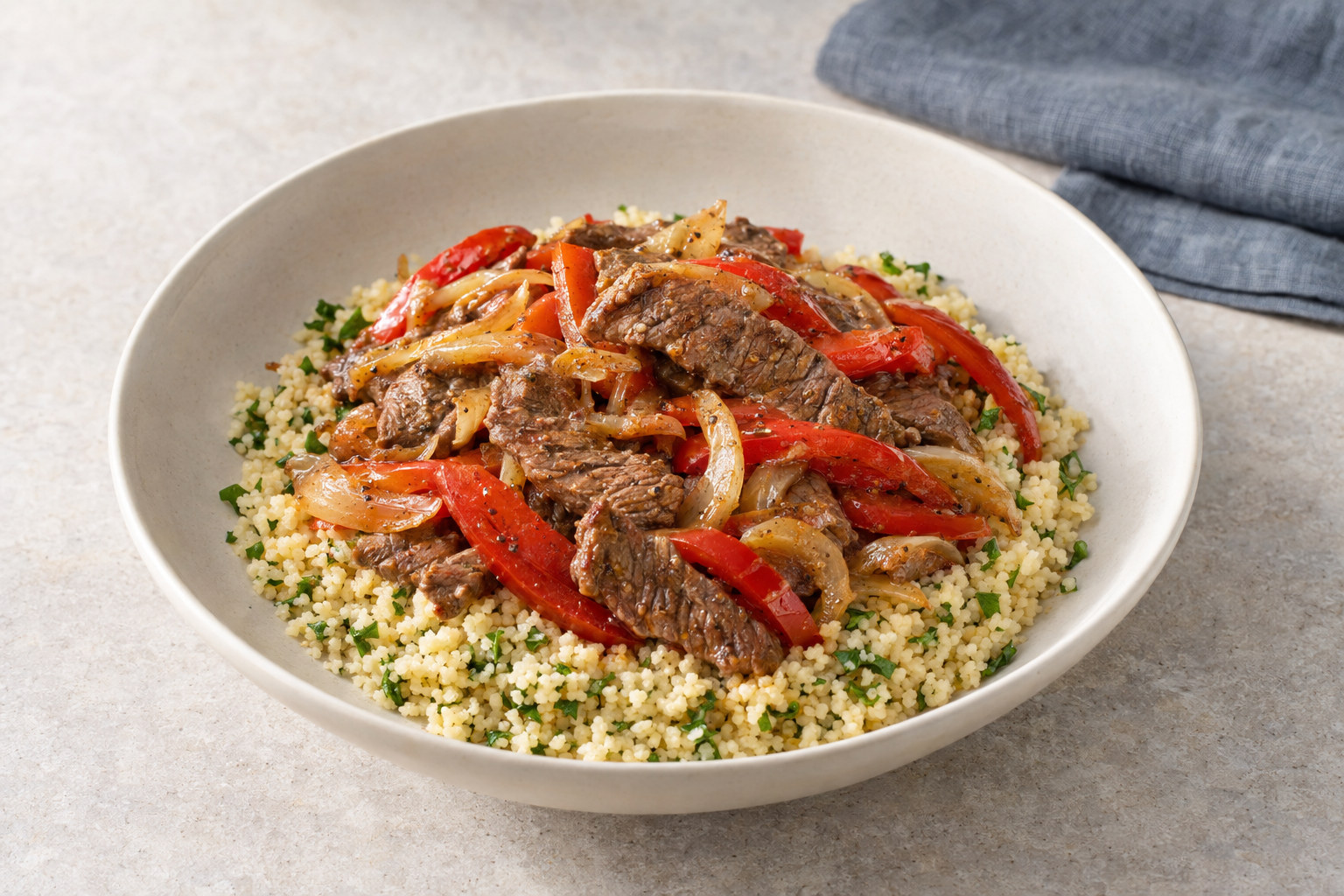
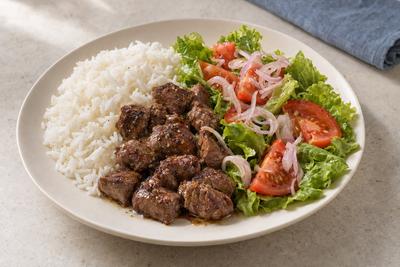
Seared beef, sweet peppers and fluffy couscous with lemon and parsley.
Step-by-step method
What you will need
- 28 cm frying pan
- 1 l heatproof bowl with a plate to cover it
- kettle
- meat thermometer with a thin probe
- kitchen scales
- one chopping board for raw meat and another for cooked food
Before we start
We cut the meat into thin strips and leave the couscous to soak in a bowl while we cook the vegetables.
Slice the meat and vegetables
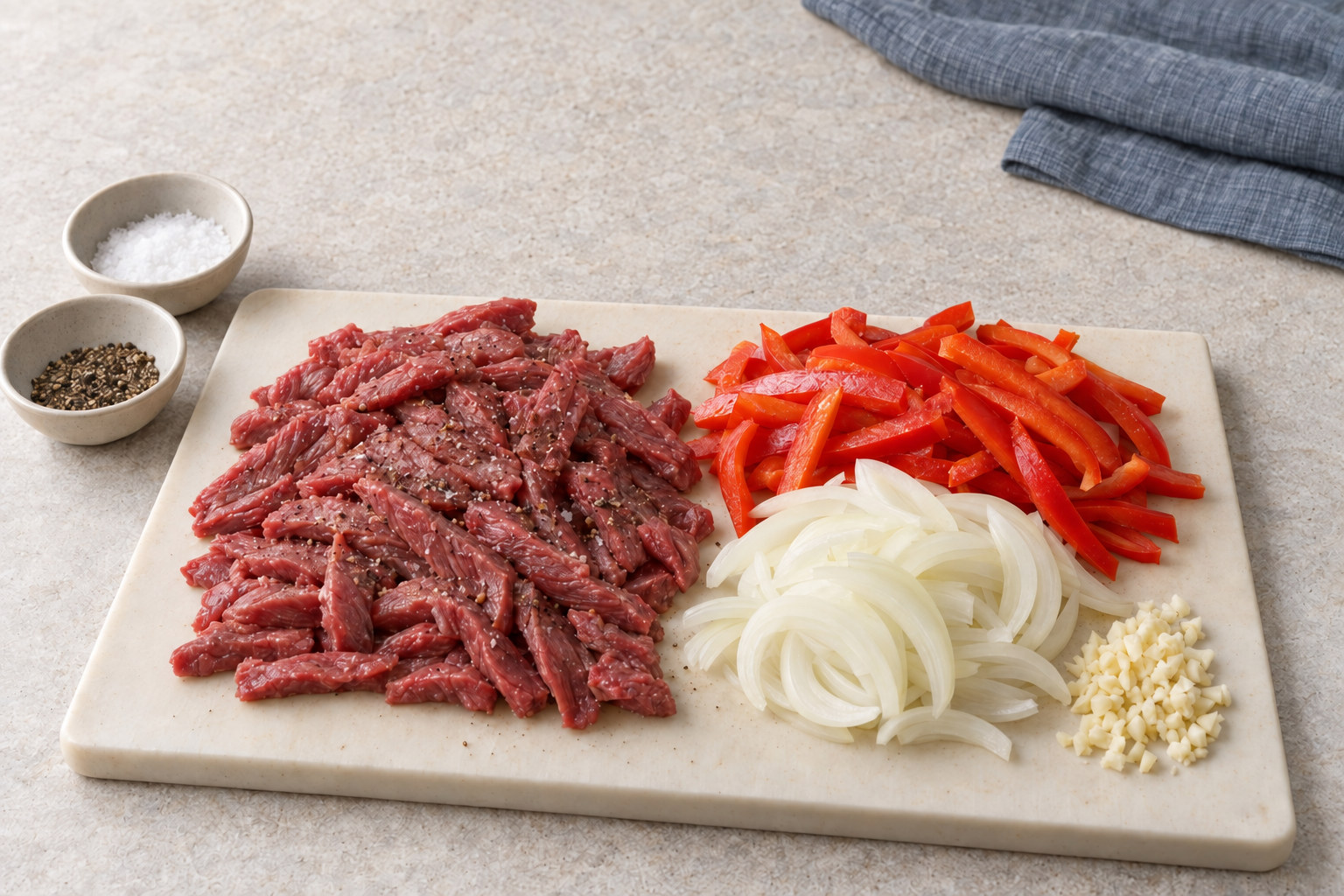
We cut the rump across the grain into strips 3–4 mm thick. We pat them dry and toss them with the salt and pepper reserved for the meat. We wash the pepper and parsley, then peel the onion and garlic. We deseed the pepper and cut it into strips, slice the onion into thin half-moons and chop the garlic.
Prepare the couscous
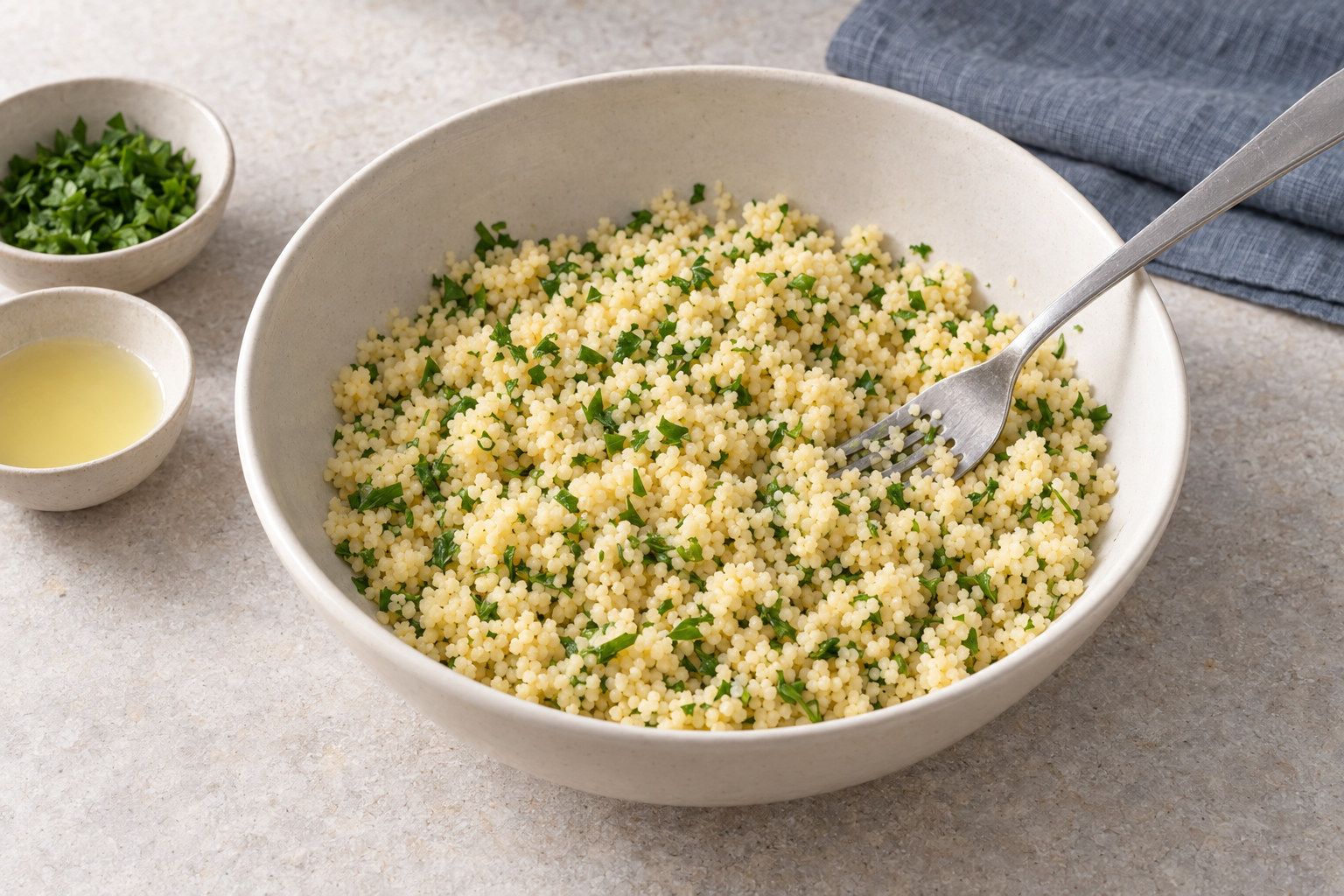
We put the couscous in a heatproof bowl and add the salt and olive oil reserved for it. We pour over 180 ml of boiling water, stir quickly and cover for 8 minutes. We then fluff it with a fork and stir in the lemon juice and chopped parsley.
The couscous has absorbed the water and the grains separate with a fork.
Sauté the vegetables
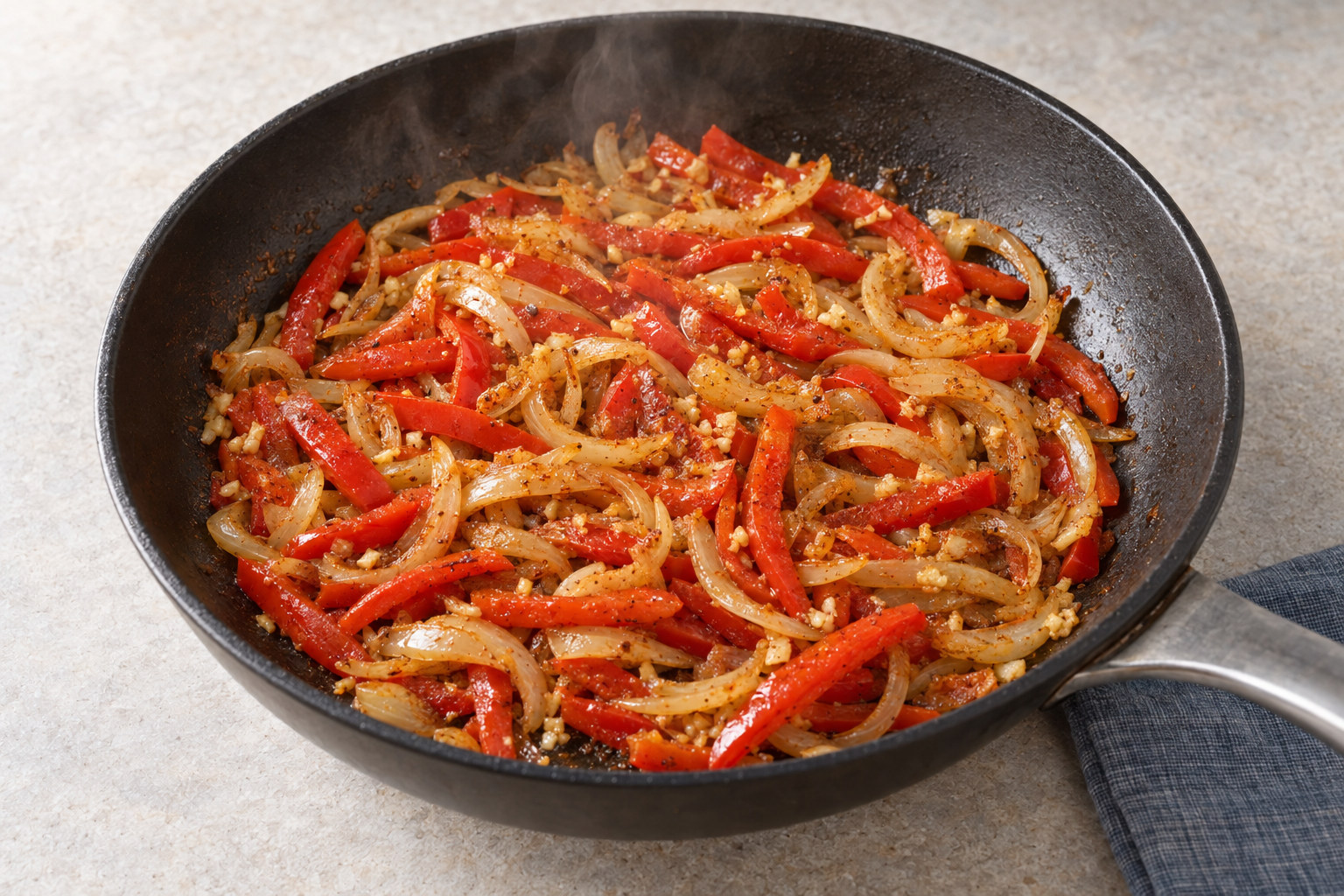
We heat half the rapeseed oil in one frying pan. We sauté the onion and pepper over a medium-high heat for 6–8 minutes, adding the garlic and sweet paprika for the final 20 seconds. We transfer the vegetables to a clean bowl.
The pepper has browned edges but still has some bite.
Sear the rump strips
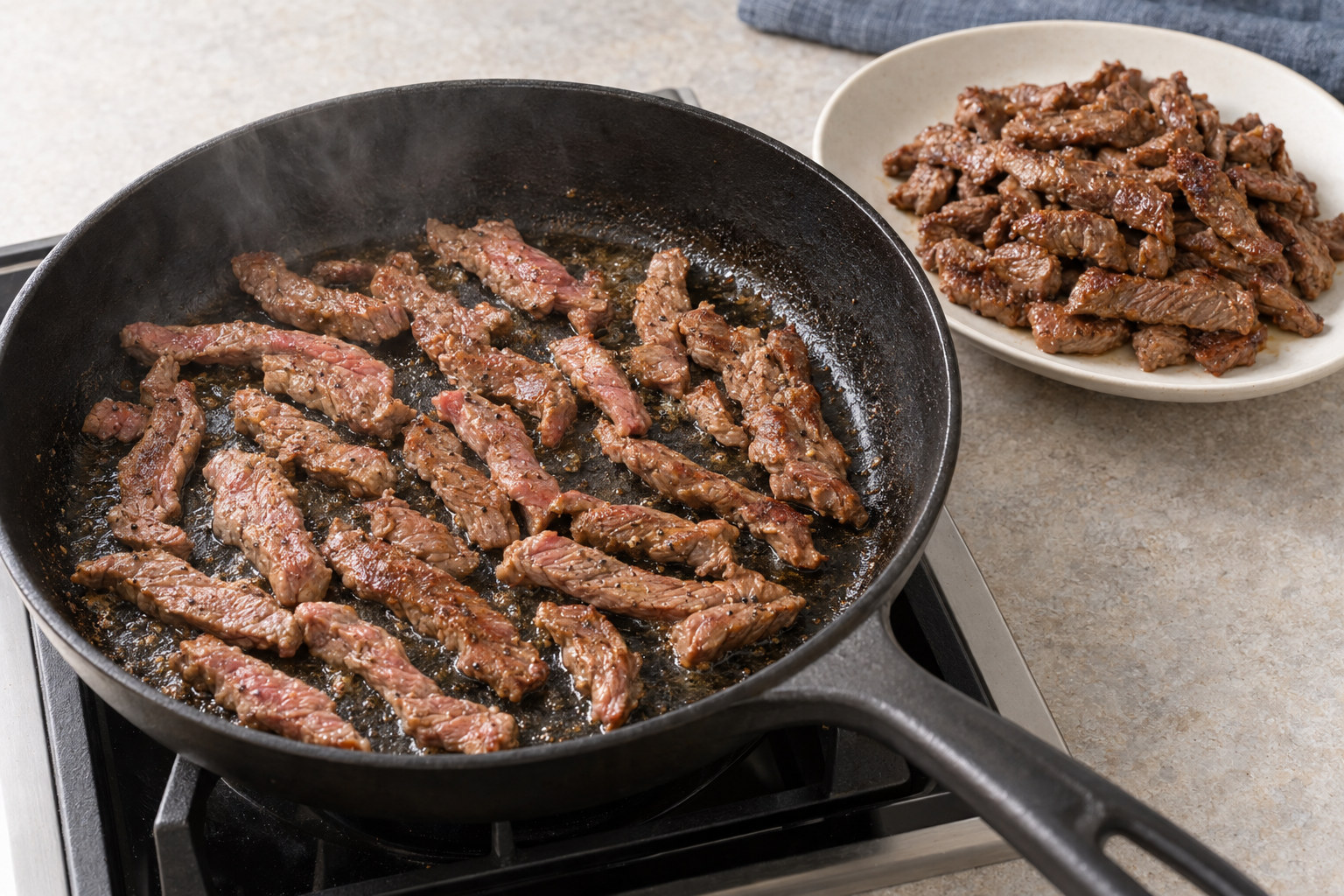
We divide the remaining oil between two batches of meat and sear the meat in 200 g batches. We cook each batch for about 3–4 minutes. We check that the thickest strip has reached at least 72 °C, inserting the thin probe lengthways into its centre. We transfer the cooked meat to a clean plate.
There is space between the strips in the pan and the meat browns quickly.
Combine the meat and vegetables, then serve
We return the vegetables and meat to the pan and add 30 ml of water. We stir for 30–60 seconds to loosen the browned bits. We divide the couscous between 2 plates, add the meat, vegetables and all the juices, and serve.
Only a little juice remains at the bottom of the pan.
Tips from our kitchen
- We use instant couscous that only needs soaking in water. Pearl couscous needs boiling and is not suitable for this method.
- Cutting the meat into thin strips matters more for tenderness than cooking it for longer.
What to watch out for
- We do not dry-fry ground paprika for long.
- If the meat is not browning, we do not add more water. We first remove some and sear it in smaller batches.
How we serve it
- We serve straight away on warmed plates with the lemon couscous.
Ingredient notes
- Wolowina heart of rump comes in 300 g packs. It is firmer than fillet, so we cut it across the grain for quick searing.
During preparation
- We check the meat with a clean, thin probe inserted lengthways into the centre of the thickest strip; colour alone does not tell us how well it is cooked. We keep raw meat and used utensils separate from the cooked sides.
Our inspiration
Searing leaves little browned bits on the bottom of the pan. Loosening them with a splash of water at the end gives us juices for the meat and couscous, without making another sauce. We cook the peppers and onion separately so they can soften without keeping the meat on the heat for too long. On the plate, the juices bring together everything we cooked apart.
Similar recipes
Recipe for 4 people
Step-by-step method
Before we start
We use two pans for 800 g of meat, searing two batches of 200 g in each. We divide the cooked vegetables between both pans.
Slice the meat and vegetables
We cut the rump across the grain into strips 3–4 mm thick. We pat them dry and toss them with the salt and pepper reserved for the meat. We wash the peppers and parsley, then peel the onion and garlic. We deseed the peppers and cut them into strips, slice the onion into thin half-moons and chop the garlic.
Prepare the couscous
We put the couscous in a heatproof bowl and add the salt and olive oil reserved for it. We pour over 340 ml of boiling water, stir quickly and cover for 8 minutes. We then fluff it with a fork and stir in the lemon juice and chopped parsley.
The couscous has absorbed the water and the grains separate with a fork.
Sauté the vegetables
We divide half the rapeseed oil, the onion and peppers between two pans and sauté over a medium-high heat for 6–8 minutes. We add the garlic and sweet paprika for the final 20 seconds, then transfer the vegetables to a clean bowl.
The peppers have browned edges but still have some bite.
Sear the rump strips
We divide the remaining oil between four batches of meat and sear it in 200 g batches, two in each pan. We cook each batch for about 3–4 minutes. We check that the thickest strip has reached at least 72 °C, inserting the thin probe lengthways into its centre. We transfer the cooked meat to a clean plate.
There is space between the strips in the pan and the meat browns quickly.
Combine the meat and vegetables, then serve
We divide the vegetables and meat between both pans and add 25 ml of water to each. We stir for 30–60 seconds to loosen the browned bits. We divide the couscous between 4 plates, add the meat, vegetables and all the juices, and serve.
Only a little juice remains at the bottom of the pan.