
Boxxi original cuisine · European inspiration
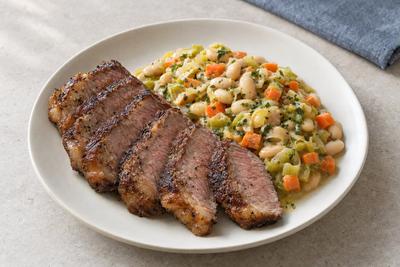
Bone-in rib-eye with bulgur, aubergine and mint yoghurt
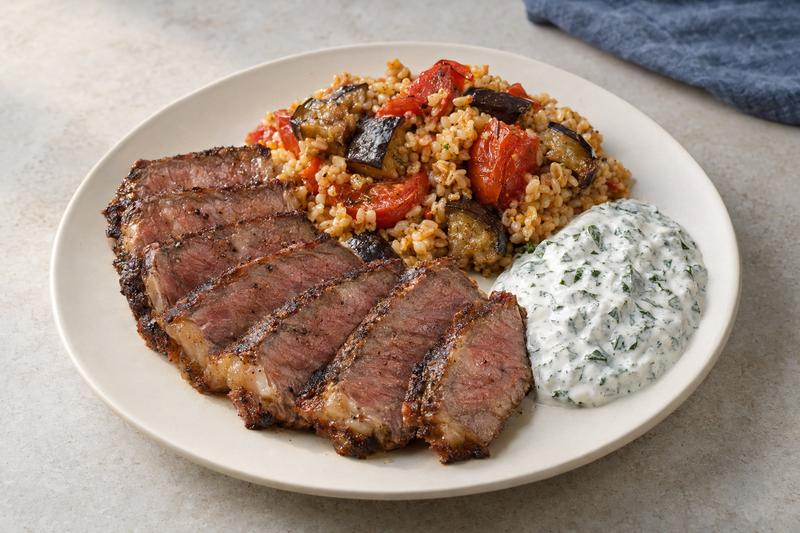
Soft roasted aubergine and tomatoes coat the separate grains of bulgur in their sweet vegetable juices. We add cool mint yoghurt to slices of rib-eye; it refreshes every bite of beef with a seared crust.
We allow 30–40 minutes to roast the vegetables, time for the oven to cool, and then time to cook the meat. We flavour the yoghurt while lowering the oven temperature and cook the bulgur while the meat roasts. Timing depends on meat thickness and chosen doneness; the probe decides. For a steak thicker than 7 cm, we allow another 20–35 minutes of gentle roasting. When serving in stages, we prepare the side dish alongside the meat; finishing portions separately may add 10–15 minutes of active work. We do not keep cooked meat waiting for it.
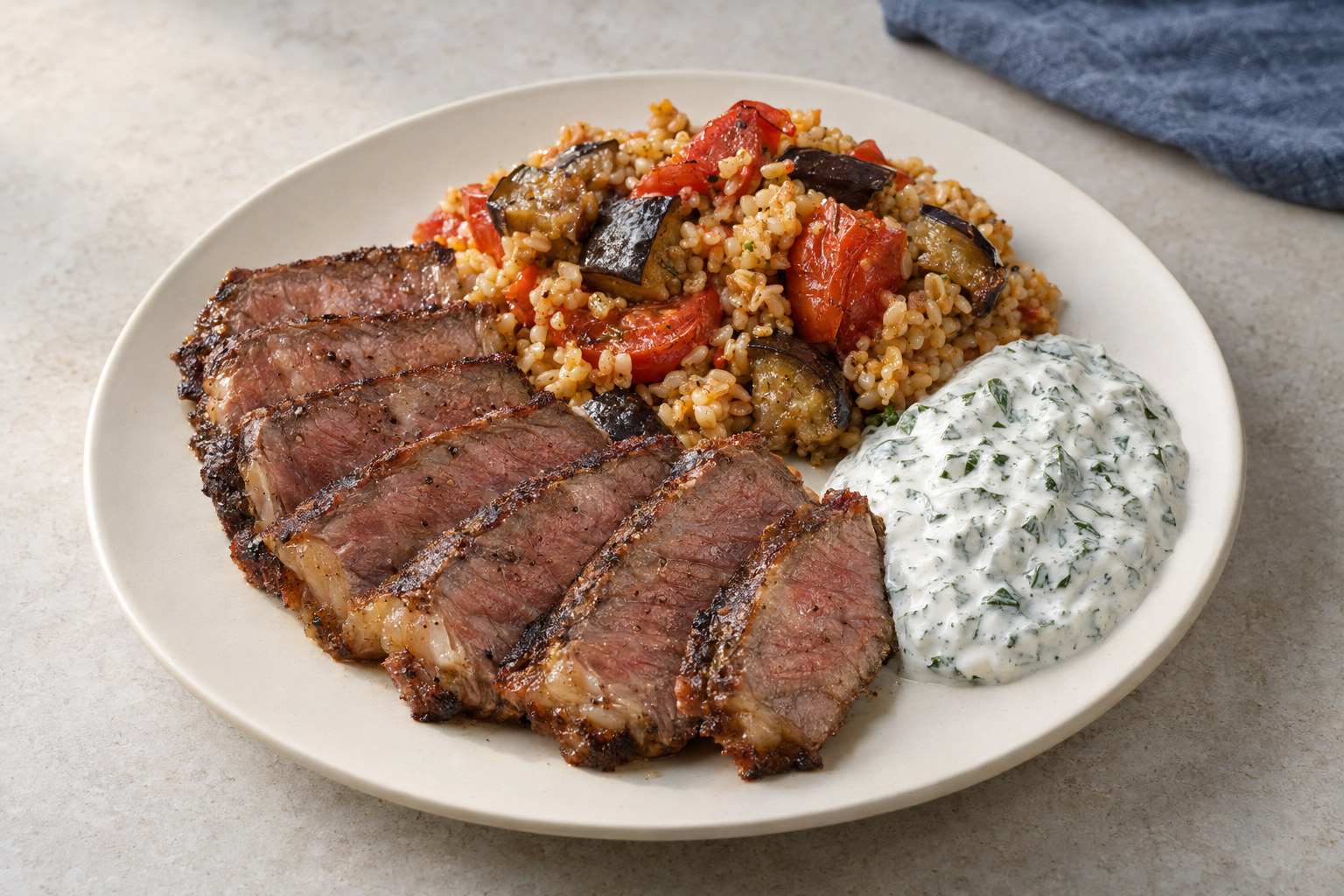
The aubergine absorbs the tomato juices, while mint and lemon bring freshness to the marbled beef.
Step-by-step method
What you will need
- kitchen scales
- knife, clean chopping board and tongs
- thin probe thermometer
- oven with top and bottom heat and one 40 × 30 cm tray with a rack
- two heavy, flat-bottomed pans at least 24 cm wide; plus one broad 30 × 30 cm griddle for a 1000 g Chianina steak
- heatproof plate and foil; the meat must fit flat on the rack and in the pan without overlapping
- 1.5 l pan and wide 2 l bowl
- bowl for the yoghurt
- 3 hob burners
- 2 deep heatproof dinner plates and oven gloves
- kettle of at least 1.7 l and a clean tea towel
- shallow metal dish for the side dish in a layer no more than 2 cm deep
Choosing how well to cook your steak
Before cooking, we choose how well we would like our meat done. This guide describes culinary levels of doneness and approximate temperatures at the centre of the meat after resting. These are not pan or oven temperatures or food safety recommendations. For whole beef steaks, the United States Department of Agriculture (USDA) recommends a minimum internal temperature of 63 °C before removing the meat from the heat, followed by at least 3 minutes of resting.
| Doneness | Temperature after resting | What to expect |
|---|---|---|
| Rare | 52 °C | Rare. The centre is red, and the meat is very tender and juicy. |
| Medium Rare | 55 °C | Medium rare. The centre is warm and reddish-pink, and the meat is tender and juicy. |
| Medium | 60 °C | Medium. The centre remains pink, and the meat has a firmer bite. |
| Medium Well | 65 °C | Medium well. Only a faint pink strip remains in the centre; the meat is firmer and less juicy. |
| Well Done | 71 °C | Well done. There is no pink in the centre, and the meat is firm and less juicy. |
- We measure the temperature at the centre of the thickest part of the meat. We insert the probe from the side, avoiding bone and pockets of fat. Colour is only a guide; we rely on the thermometer.
- As a rule, we take the meat off the pan or grill, or out of the oven, when it is 2–3 °C below our chosen temperature after resting. Thick cuts and intense heat can cause a greater temperature rise during resting. We check it regularly and follow the individual recipe.
- We rest the meat for the time given in the recipe. If the temperature stops rising before reaching our chosen value, we briefly return the meat to a gentle heat and check again.
- Cooking times are a guide. If we prefer our meat less well done, we start checking its temperature earlier. For a higher degree of doneness, we allow more time over a gentler heat as needed, so the outside does not burn.
Before we start
We roast the vegetables before the meat. We serve the side dish warm and the yoghurt cold. With thicker meat, we plan to refrigerate the vegetables and reheat the mixture once later. We compare the thickness of all the steaks beforehand. If they differ by more than 1 cm or we choose different levels of doneness, we serve finished portions in stages. Even steaks of similar thickness may not finish together. We share one 1000 g rib-eye between two people; one 500 g rib-eye is one generous serving.
Roast the aubergine and tomatoes
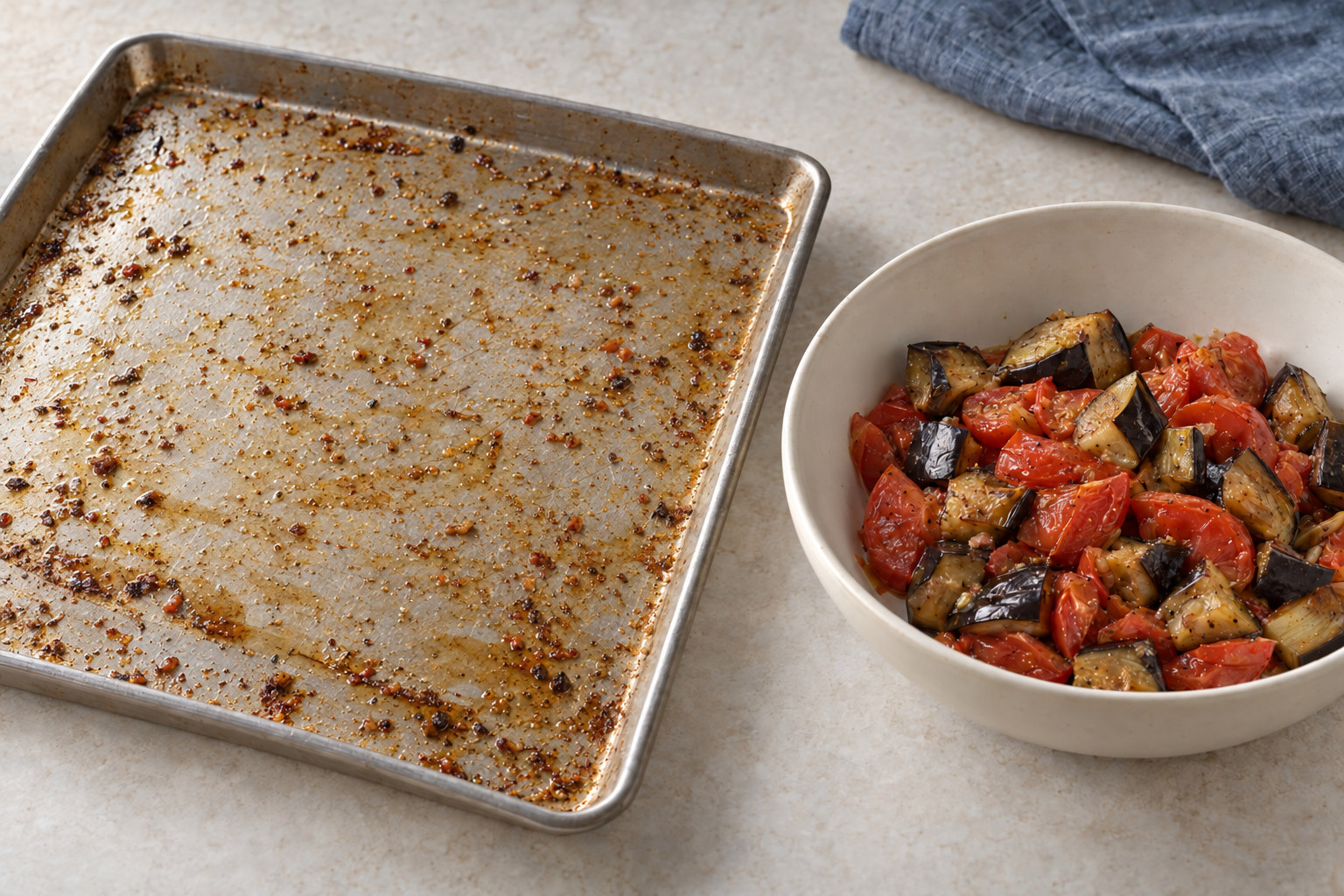
We choose the meat’s doneness using the guide above the method. We use one whole 1000 g Chianina rib-eye for two people. Alternatively, we can use two whole 500 g Ayrshire rib-eyes. Both choices have the same total weight but a different number of steaks and final batches. We set aside 1 teaspoon of ordinary salt for the meat. If finishing with Icelandic salt, we remove one small pinch from it beforehand; we do not change the salt for the sides. We pat the meat dry, season it with the prepared salt and keep it covered in the fridge. We distinguish the main rib-eye muscle from the outer muscle cap separated by fat. We do not judge roasting time by the marbling. We preheat the fan oven to 200 °C. We wash the aubergine and tomatoes and cut off the aubergine stem. We cut the aubergine into 2 cm cubes and the tomatoes into large wedges. We toss them with 1½ tablespoons of oil and most of the salt allocated to the vegetables and bulgur. We spread them in one layer on a 40 × 30 cm tray and roast for 30–40 minutes, stirring halfway through. The aubergine must be soft in the centre. We move the vegetables to a wide bowl. We warm the dinner plates before serving and prepare a separate lukewarm plate for resting the meat. For meat thicker than 5 cm, we let the roasted vegetables cool for 10 minutes, spread them in a shallow metal dish to a depth of no more than 2 cm and put them in the fridge. We reheat them once before serving later.
We roast the vegetables completely before cooking the meat and serve them warm later.
Gently roast the meat
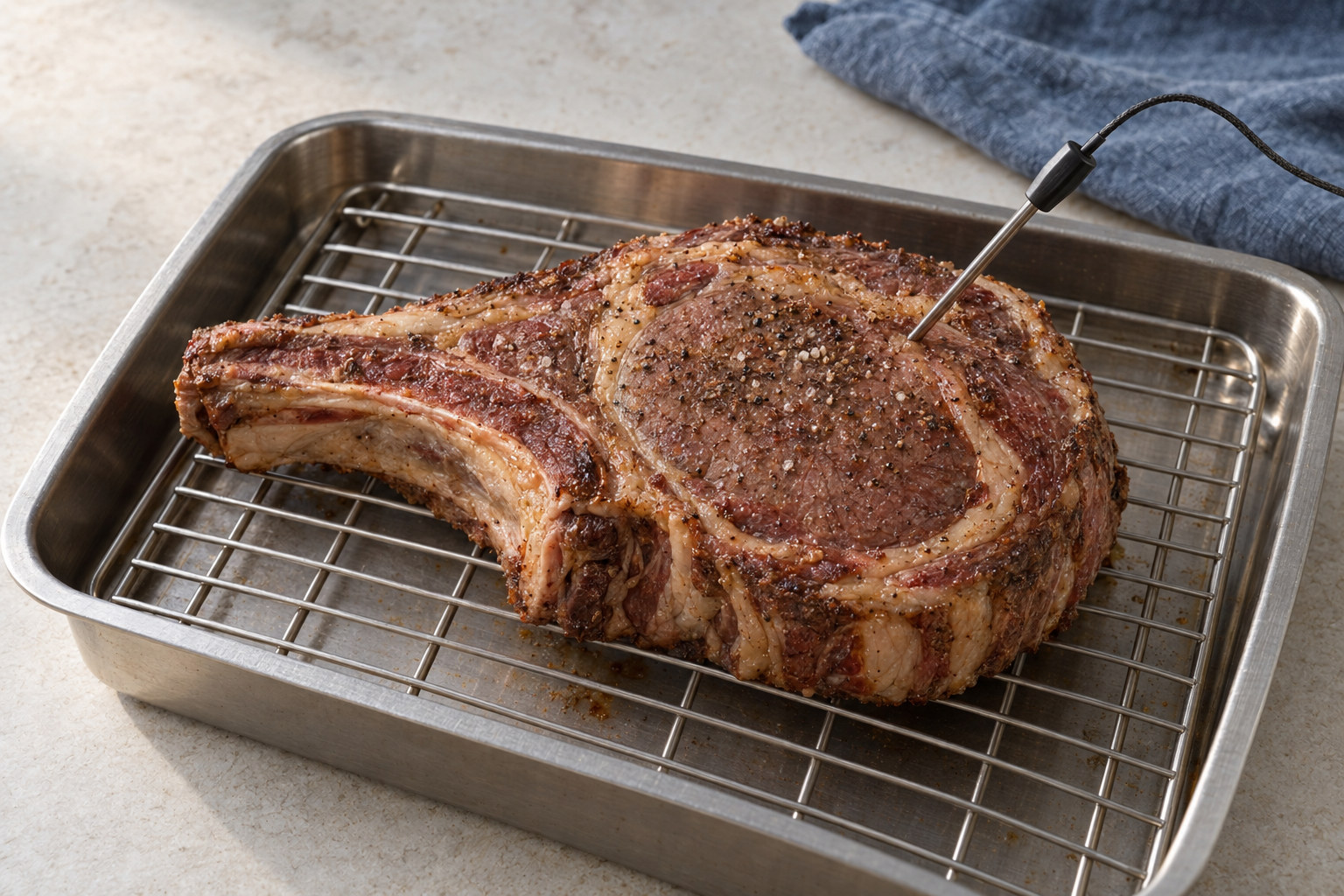
After roasting the vegetables, we switch the oven to 120 °C with top and bottom heat and briefly open it to let hot air out. While it cools to the set temperature, we prepare the mint yoghurt. We rinse the mint and finely chop the leaves. We mix the yoghurt with one pinch of salt, 15 ml of lemon juice and the mint. We cover it and leave it in the fridge. Only then do we put the meat in. We place one 1000 g steak or two 500 g steaks on a rack above the tray, leaving space between steaks and around the edges. For a steak no thicker than 5 cm, we start the bulgur in step 3 now, while the meat roasts. The times are guides: 15–30 minutes for a thickness up to 3 cm, 30–55 minutes for 3–5 cm and 50–80 minutes for 5–7 cm. We monitor the temperature from the start. For a lower doneness, the meat may be ready for the pan sooner; the thermometer decides. We insert the probe from the side into the centre of the thickest part, away from the bone and any gap of fat. With rib-eye, we also measure any separate, thicker muscles and assess each steak individually. We leave a steak thicker than 7 cm whole on the bone and allow another 20–35 minutes of gentle roasting. As it approaches the temperature for removal, we check the centre at intervals of no more than 5 minutes, more often just before it reaches it. For a thicker steak, we start the bulgur in step 3 when the centre of the fastest-heating steak is about 20 °C below the chosen target after resting. We keep watching the meat in the oven. We take the meat out of the oven when its centre is about 8–10 °C below our chosen target after resting, leaving room to sear a crust. For rare, this is about 42–44 °C. The first steak to finish can wait on its rack outside the oven for no more than 10 minutes before searing. If the others need considerably longer, we sear it, rest it and serve it with its share of the side dish. We continue roasting the others at 120 °C.
Cook the bulgur and combine the side dish
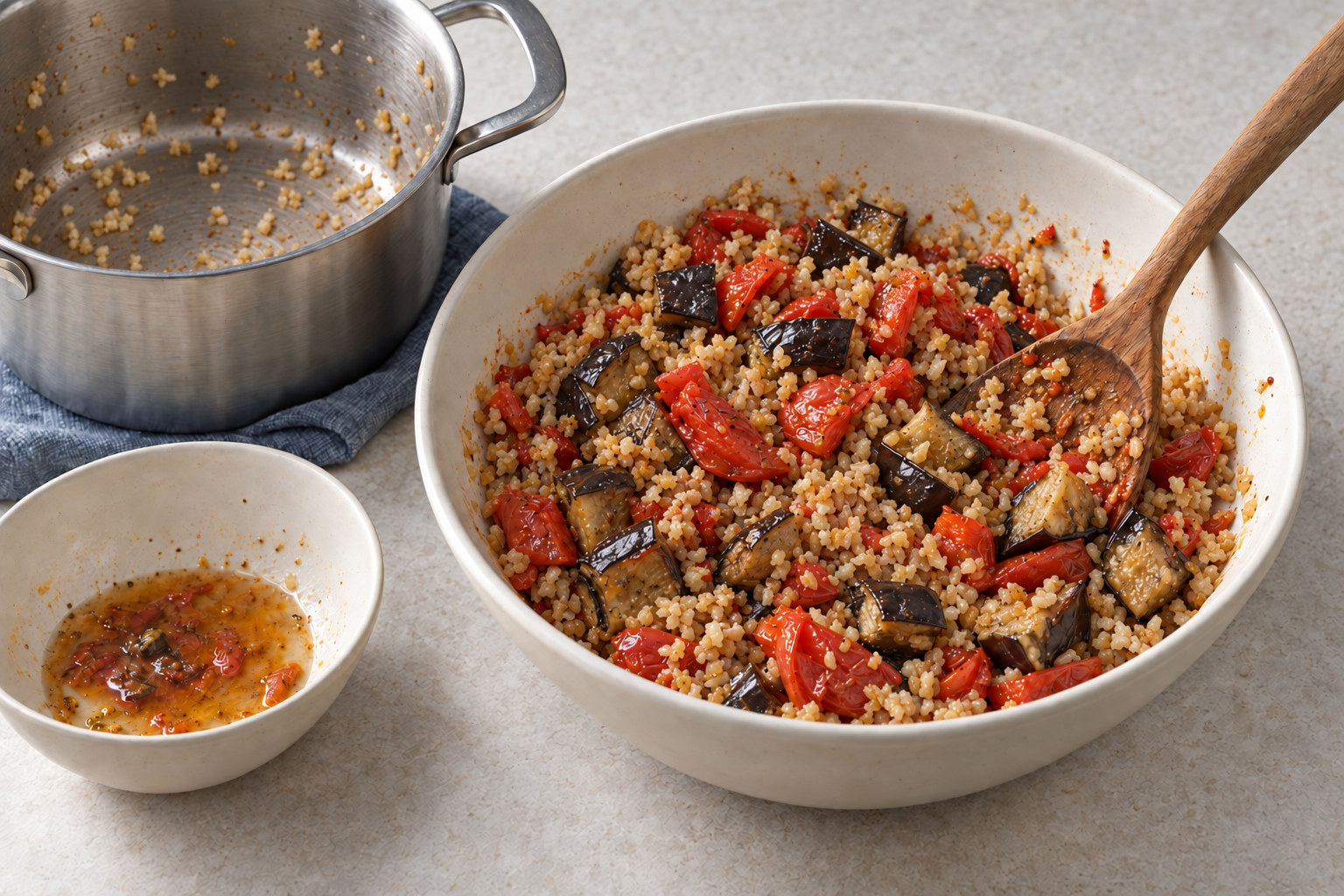
We put the bulgur into a 1.5 l pan, add 260 ml of water and the remaining salt allocated to the vegetables and bulgur. We bring it to a boil, cover it and cook on the lowest heat for 10–12 minutes. We take it off the heat for 10 minutes, then fluff it. If the grains are still firm, we add the reserved water in 10 ml increments, up to 30 ml in total, and cook for another 2–3 minutes. For meat no thicker than 5 cm, we mix the bulgur with the roasted vegetables and all their juices. We spread the mixture in a wide bowl and serve it warm within 90 minutes of finishing the vegetables. For thicker meat, we keep the cooked bulgur covered over the lowest heat so it stays hot. Before we move the first steak from the oven to the pan, we stir in the chilled vegetables. We stir and heat the whole mixture thoroughly until it is hot throughout, then let it cool for 5 minutes. If the meat needs more time, we keep the mixture covered and hot, letting it cool to a warm serving temperature only just before serving. If planning to serve in stages, we divide the bulgur and vegetables before mixing and heating them. We prepare only the portion for the first steak to finish; we spread the next, still unheated portion in a shallow container and put it in the fridge. We do not chill an already reheated portion for another reheating.
The bulgur stays fluffy. We do not add the reserved water automatically.
We finish the steak
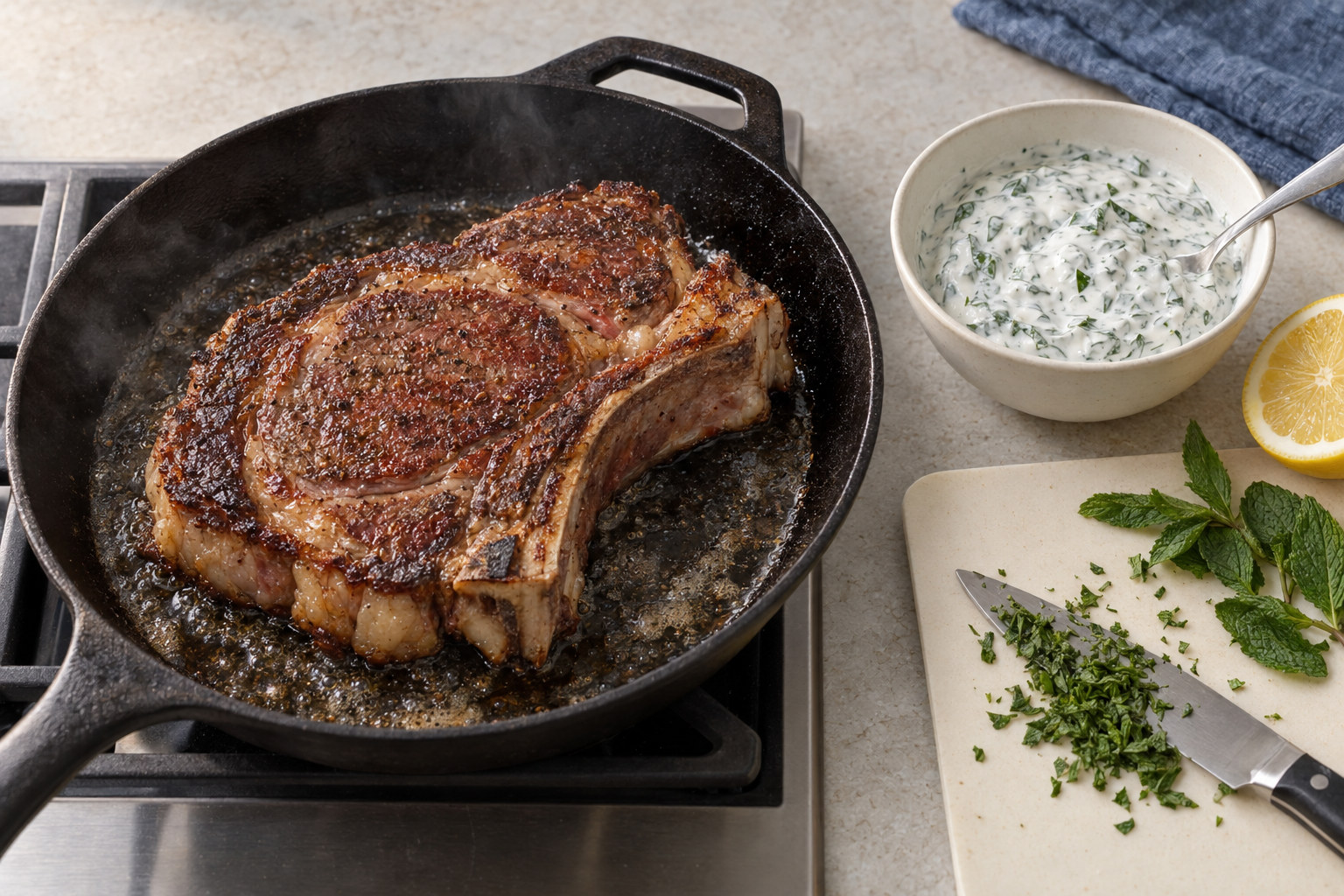
For the 1000 g Chianina, we heat one broad griddle; for two 500 g steaks, we heat two pans. We divide the oil for the meat between the pans and batches used. We follow the doneness chosen in step 1. We sear each broad side for about 2 minutes and press the meaty edges against the pan with tongs for 30 seconds. We measure the temperature of each steak after its first turn. We can shorten the searing of the sides and edges according to the probe. Once a crust forms, we lower the heat and, if needed, continue turning the meat every minute. We usually remove it from the heat when its internal temperature is 2–3 °C below the chosen target after resting. A large, thick steak may continue to rise further, so we watch the probe and remove it earlier if needed. The final 6–10 minutes are only a guide. For higher doneness, we can continue over gentle heat; for lower doneness, we finish earlier. We leave each finished steak to rest for 10 minutes on the prepared lukewarm plate outside the oven, loosely covered. We monitor how far its temperature rises. If it does not reach the chosen doneness after resting, we cook it briefly over gentle heat. Finally, we add pepper to taste.
Serve with bulgur and yoghurt
We cut the meat from the bone and slice it across the grain. We divide it between 2 plates with the bulgur, aubergine and tomatoes. We add the yoghurt beside the meat. When serving in stages, we mix only the portion of bulgur and vegetables for the steak just finished. We reheat it once, thoroughly, until it is hot throughout. We let it cool for 5 minutes and serve. The next portion waits separately in the fridge as described in step 3. We add yoghurt only to the plates we are serving now. If finishing with Icelandic salt, we taste the meat together with the bulgur, vegetables and mint yoghurt. If needed, we scatter one small pinch of Saltverk Icelandic birchwood-smoked flaked salt over the finished meat just before serving. If the bite is already salty enough, we do not add more salt.
Tips from our kitchen
- We use coarse bulgur; fine bulgur needs a different method.
What to watch out for
- We do not measure the temperature against the bone or in a gap of fat.
- We do not stack the steaks or overcrowd the pan. We keep to the stated number of batches.
How we serve it
- We cut the meat from the bone, slice it across the grain and divide it evenly between servings. We serve it with warm bulgur, roasted aubergine and tomatoes, adding the mint yoghurt on the side.
Ingredient swaps
mint
an equal-sized handful of parsley leaves The yoghurt will taste less cooling. We keep the lemon quantity unchanged.
Ingredient notes
- We use a 1000 g Chianina rib-eye, sharing one steak between two people. Before cooking, we measure its thickness and check that it fits in the pan.
- We use 500 g bone-in Ayrshire rib-eye, one generous steak per person. Before cooking, we measure its thickness and check that it fits in the pan.
During preparation
- We use clean utensils for raw and cooked meat. We keep the meat in the fridge until needed.
- We use a probe thermometer to check the centre of the thickest part of each steak, away from the bone and any gap of fat. With rib-eye, we check any separate, thicker muscles as well.
Our inspiration
Coarse bulgur has an advantage alongside roasted aubergine: its grains stay distinct even when coated in vegetable juices. The soft flesh of the aubergine and tomatoes gives the side dish moisture without turning it into a uniform mass. We also serve cool mint yoghurt with lemon alongside the rib-eye to refresh both the warm grain and the seared meat.
Similar recipes
Recipe for 4 people
Step-by-step method
Choosing how well to cook your steak
Before cooking, we choose how well we would like our meat done. This guide describes culinary levels of doneness and approximate temperatures at the centre of the meat after resting. These are not pan or oven temperatures or food safety recommendations. For whole beef steaks, the United States Department of Agriculture (USDA) recommends a minimum internal temperature of 63 °C before removing the meat from the heat, followed by at least 3 minutes of resting.
| Doneness | Temperature after resting | What to expect |
|---|---|---|
| Rare | 52 °C | Rare. The centre is red, and the meat is very tender and juicy. |
| Medium Rare | 55 °C | Medium rare. The centre is warm and reddish-pink, and the meat is tender and juicy. |
| Medium | 60 °C | Medium. The centre remains pink, and the meat has a firmer bite. |
| Medium Well | 65 °C | Medium well. Only a faint pink strip remains in the centre; the meat is firmer and less juicy. |
| Well Done | 71 °C | Well done. There is no pink in the centre, and the meat is firm and less juicy. |
- We measure the temperature at the centre of the thickest part of the meat. We insert the probe from the side, avoiding bone and pockets of fat. Colour is only a guide; we rely on the thermometer.
- As a rule, we take the meat off the pan or grill, or out of the oven, when it is 2–3 °C below our chosen temperature after resting. Thick cuts and intense heat can cause a greater temperature rise during resting. We check it regularly and follow the individual recipe.
- We rest the meat for the time given in the recipe. If the temperature stops rising before reaching our chosen value, we briefly return the meat to a gentle heat and check again.
- Cooking times are a guide. If we prefer our meat less well done, we start checking its temperature earlier. For a higher degree of doneness, we allow more time over a gentler heat as needed, so the outside does not burn.
Before we start
We roast the vegetables before the meat. We serve the side dish warm and the yoghurt cold. With thicker meat, we plan to refrigerate the vegetables and reheat the mixture once later. We compare the thickness of all the steaks beforehand. If they differ by more than 1 cm or we choose different levels of doneness, we serve finished portions in stages. Even steaks of similar thickness may not finish together. We share one 1000 g rib-eye between two people; one 500 g rib-eye is one generous serving.
Roast the aubergine and tomatoes
We choose the meat’s doneness using the guide above the method. We use two whole 1000 g Chianina rib-eyes, each for two people. Alternatively, we can use four whole 500 g Ayrshire rib-eyes. Both choices have the same total weight but a different number of steaks and final batches. We set aside 1¾ teaspoons of ordinary salt for the meat. If finishing with Icelandic salt, we remove two small pinches from it beforehand; we do not change the salt for the sides. We pat the meat dry, season it with the prepared salt and keep it covered in the fridge. We distinguish the main rib-eye muscle from the outer muscle cap separated by fat. We do not judge roasting time by the marbling. We preheat the fan oven to 200 °C. We wash the aubergine and tomatoes and cut off the aubergine stem. We cut the aubergine into 2 cm cubes and the tomatoes into large wedges. We toss them with 2 tablespoons of oil and most of the salt allocated to the vegetables and bulgur. We spread them in one layer on two 40 × 30 cm trays and roast for 30–40 minutes, stirring and swapping the trays halfway through. The aubergine must be soft in the centre. We move the vegetables to a wide bowl. We warm the dinner plates before serving and prepare a separate lukewarm plate for resting the meat. For meat thicker than 5 cm, we let the roasted vegetables cool for 10 minutes, spread them in a shallow metal dish to a depth of no more than 2 cm and put them in the fridge. We reheat them once before serving later.
We roast the vegetables completely before cooking the meat and serve them warm later.
Gently roast the meat
After roasting the vegetables, we switch the oven to 120 °C with top and bottom heat and briefly open it to let hot air out. While it cools to the set temperature, we prepare the mint yoghurt. We rinse the mint and finely chop the leaves. We mix the yoghurt with one pinch of salt, 25 ml of lemon juice and the mint. We cover it and leave it in the fridge. Only then do we put the meat in. We place the meat on racks above the trays. Each 1000 g steak has its own tray; for the 500 g option, we put two steaks on each tray. For a steak no thicker than 5 cm, we start the bulgur in step 3 now, while the meat roasts. The times are guides: 15–30 minutes for a thickness up to 3 cm, 30–55 minutes for 3–5 cm and 50–80 minutes for 5–7 cm. We monitor the temperature from the start. For a lower doneness, the meat may be ready for the pan sooner; the thermometer decides. We insert the probe from the side into the centre of the thickest part, away from the bone and any gap of fat. With rib-eye, we also measure any separate, thicker muscles and assess each steak individually. We pair up four 500 g steaks by similar thickness. We can remove the quicker pair a few minutes earlier and sear it first. We swap the trays halfway through roasting. We leave a steak thicker than 7 cm whole on the bone and allow another 20–35 minutes of gentle roasting. As it approaches the temperature for removal, we check the centre at intervals of no more than 5 minutes, more often just before it reaches it. For a thicker steak, we start the bulgur in step 3 when the centre of the fastest-heating steak is about 20 °C below the chosen target after resting. We keep watching the meat in the oven. We take the meat out of the oven when its centre is about 8–10 °C below our chosen target after resting, leaving room to sear a crust. For rare, this is about 42–44 °C. The first steak to finish can wait on its rack outside the oven for no more than 10 minutes before searing. If the others need considerably longer, we sear it, rest it and serve it with its share of the side dish. We continue roasting the others at 120 °C.
Cook the bulgur and combine the side dish
We put the bulgur into a 2.5 l pan, add 480 ml of water and the remaining salt allocated to the vegetables and bulgur. We bring it to a boil, cover it and cook on the lowest heat for 10–12 minutes. We take it off the heat for 10 minutes, then fluff it. If the grains are still firm, we add the reserved water in 10 ml increments, up to 50 ml in total, and cook for another 2–3 minutes. For meat no thicker than 5 cm, we mix the bulgur with the roasted vegetables and all their juices. We spread the mixture in a wide bowl and serve it warm within 90 minutes of finishing the vegetables. For thicker meat, we keep the cooked bulgur covered over the lowest heat so it stays hot. Before we move the first steak from the oven to the pan, we stir in the chilled vegetables. We stir and heat the whole mixture thoroughly until it is hot throughout, then let it cool for 5 minutes. If the meat needs more time, we keep the mixture covered and hot, letting it cool to a warm serving temperature only just before serving. If planning to serve in stages, we divide the bulgur and vegetables before mixing and heating them. We prepare only the portion for the first steak to finish; we spread the next, still unheated portion in a shallow container and put it in the fridge. We do not chill an already reheated portion for another reheating.
The bulgur stays fluffy. We do not add the reserved water automatically.
We finish the steak
We finish two 1000 g steaks at the same time in two broad pans. We sear four 500 g steaks on the same surfaces in two batches of two. We divide the oil for the meat between the pans and batches used. We follow the doneness chosen in step 1. We sear each broad side for about 2 minutes and press the meaty edges against the pan with tongs for 30 seconds. We measure the temperature of each steak after its first turn. We can shorten the searing of the sides and edges according to the probe. Once a crust forms, we lower the heat and, if needed, continue turning the meat every minute. We usually remove it from the heat when its internal temperature is 2–3 °C below the chosen target after resting. A large, thick steak may continue to rise further, so we watch the probe and remove it earlier if needed. The final 6–10 minutes are only a guide. For higher doneness, we can continue over gentle heat; for lower doneness, we finish earlier. When working in two batches, we put the first finished pair on the prepared lukewarm plate outside the oven and start searing the second pair immediately. After resting, we serve the first pair with its share of the side dish without waiting for the second. We leave each finished steak to rest for 10 minutes on the prepared lukewarm plate outside the oven, loosely covered. We monitor how far its temperature rises. If it does not reach the chosen doneness after resting, we cook it briefly over gentle heat. Finally, we add pepper to taste.
Serve with bulgur and yoghurt
We cut the meat from the bone and slice it across the grain. We divide it between 4 plates with the bulgur, aubergine and tomatoes. We add the yoghurt beside the meat. When serving in stages, we mix only the portion of bulgur and vegetables for the steak just finished. We reheat it once, thoroughly, until it is hot throughout. We let it cool for 5 minutes and serve. The next portion waits separately in the fridge as described in step 3. We add yoghurt only to the plates we are serving now. If finishing with Icelandic salt, we taste the meat together with the bulgur, vegetables and mint yoghurt. If needed, we scatter two small pinches of Saltverk Icelandic birchwood-smoked flaked salt over the finished meat just before serving. If the bite is already salty enough, we do not add more salt.