
Boxxi signature cuisine · European inspiration
Grilled I-bone steak with homemade flatbreads and peppers
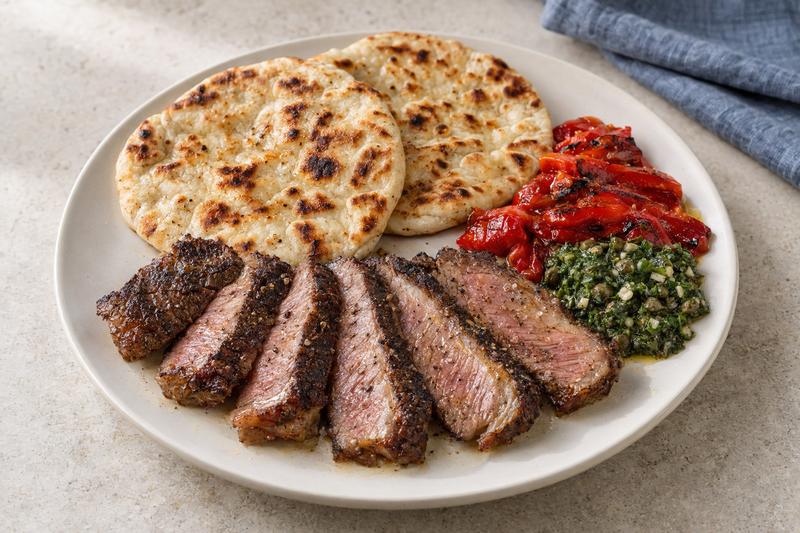
With a soft homemade flatbread, we scoop up a slice of beef, sweet grilled pepper and green caper sauce. The I-bone is the centre of a hearty grilled dinner, worth starting the dough for well ahead of time. Our reward is warm flatbread and smoky grilled meat on one plate.
The total time includes 90–120 minutes for the dough to rise, 20 minutes of resting for the dough balls, heating the grill and cooking the sides and meat. For a steak thicker than 7 cm, we allow another 20–30 minutes. Meat timings are approximate: thickness and chosen doneness may make it ready sooner or later.
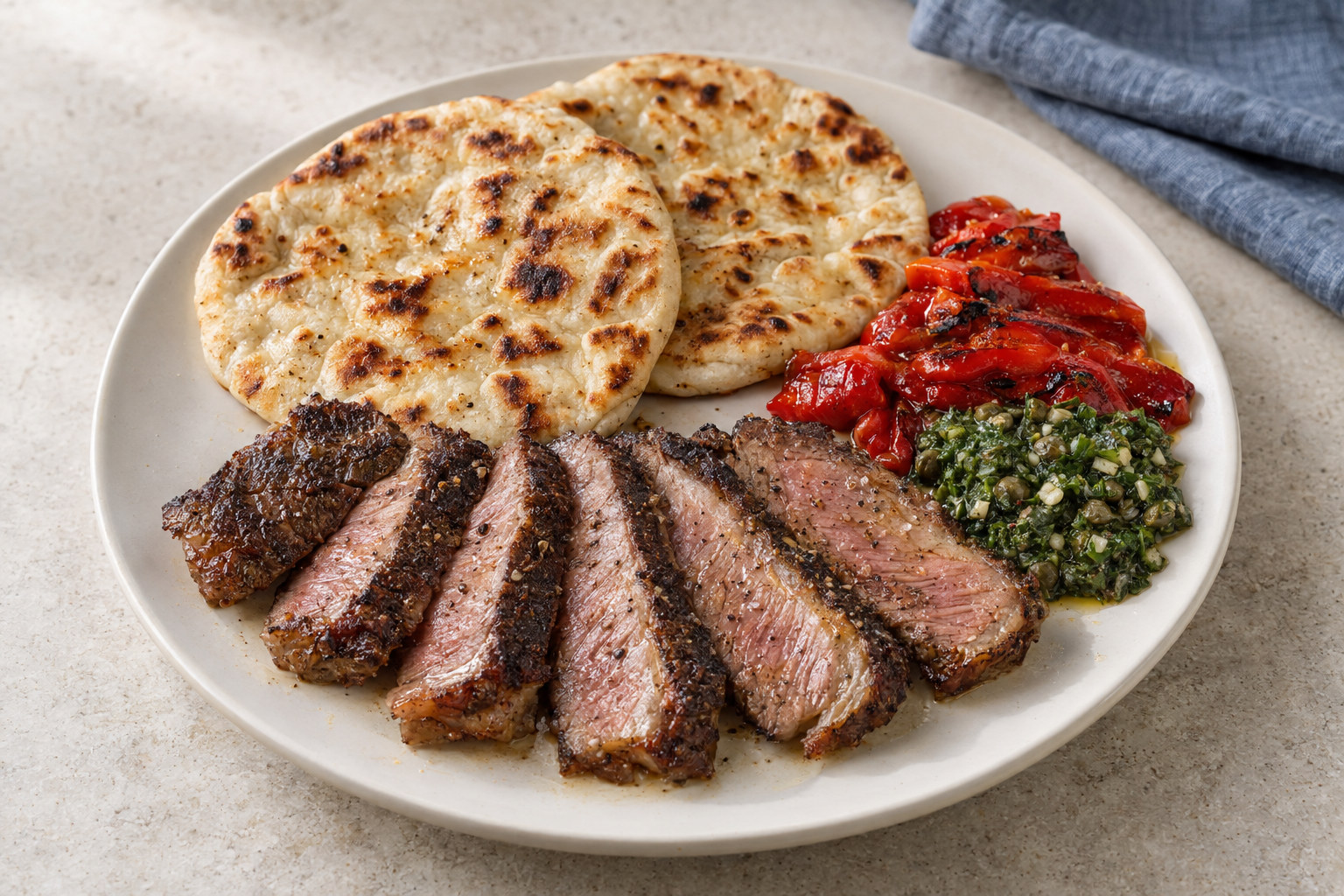
Grilled beef and sweet peppers are accompanied by a parsley sauce with garlic, tart wine vinegar and salty capers.
Step-by-step method
What you will need
- kitchen scales
- thin probe thermometer
- knife, clean board and tongs
- lidded grill with a separate direct-heat zone and indirect area of at least 35 × 30 cm; all steaks fit side by side in the indirect zone
- grill thermometer
- large bowl, rolling pin, two trays and a clean tea towel
- lidded bowl for the peppers
- foil and grill tongs
Choosing how well to cook your steak
Before cooking, we choose how well we would like our meat done. This guide describes culinary levels of doneness and approximate temperatures at the centre of the meat after resting. These are not pan or oven temperatures or food safety recommendations. For whole beef steaks, the United States Department of Agriculture (USDA) recommends a minimum internal temperature of 63 °C before removing the meat from the heat, followed by at least 3 minutes of resting.
| Doneness | Temperature after resting | What to expect |
|---|---|---|
| Rare | 52 °C | Rare. The centre is red, and the meat is very tender and juicy. |
| Medium Rare | 55 °C | Medium rare. The centre is warm and reddish-pink, and the meat is tender and juicy. |
| Medium | 60 °C | Medium. The centre remains pink, and the meat has a firmer bite. |
| Medium Well | 65 °C | Medium well. Only a faint pink strip remains in the centre; the meat is firmer and less juicy. |
| Well Done | 71 °C | Well done. There is no pink in the centre, and the meat is firm and less juicy. |
- We measure the temperature at the centre of the thickest part of the meat. We insert the probe from the side, avoiding bone and pockets of fat. Colour is only a guide; we rely on the thermometer.
- As a rule, we take the meat off the pan or grill, or out of the oven, when it is 2–3 °C below our chosen temperature after resting. Thick cuts and intense heat can cause a greater temperature rise during resting. We check it regularly and follow the individual recipe.
- We rest the meat for the time given in the recipe. If the temperature stops rising before reaching our chosen value, we briefly return the meat to a gentle heat and check again.
- Cooking times are a guide. If we prefer our meat less well done, we start checking its temperature earlier. For a higher degree of doneness, we allow more time over a gentler heat as needed, so the outside does not burn.
Before we start
While the dough rises, we chop the sauce ingredients. We grill the peppers and flatbreads before the meat, cover them and set them aside off the grill. While the steak rests, we briefly rewarm the sides as described in step 5.
We make the dough and prepare the meat
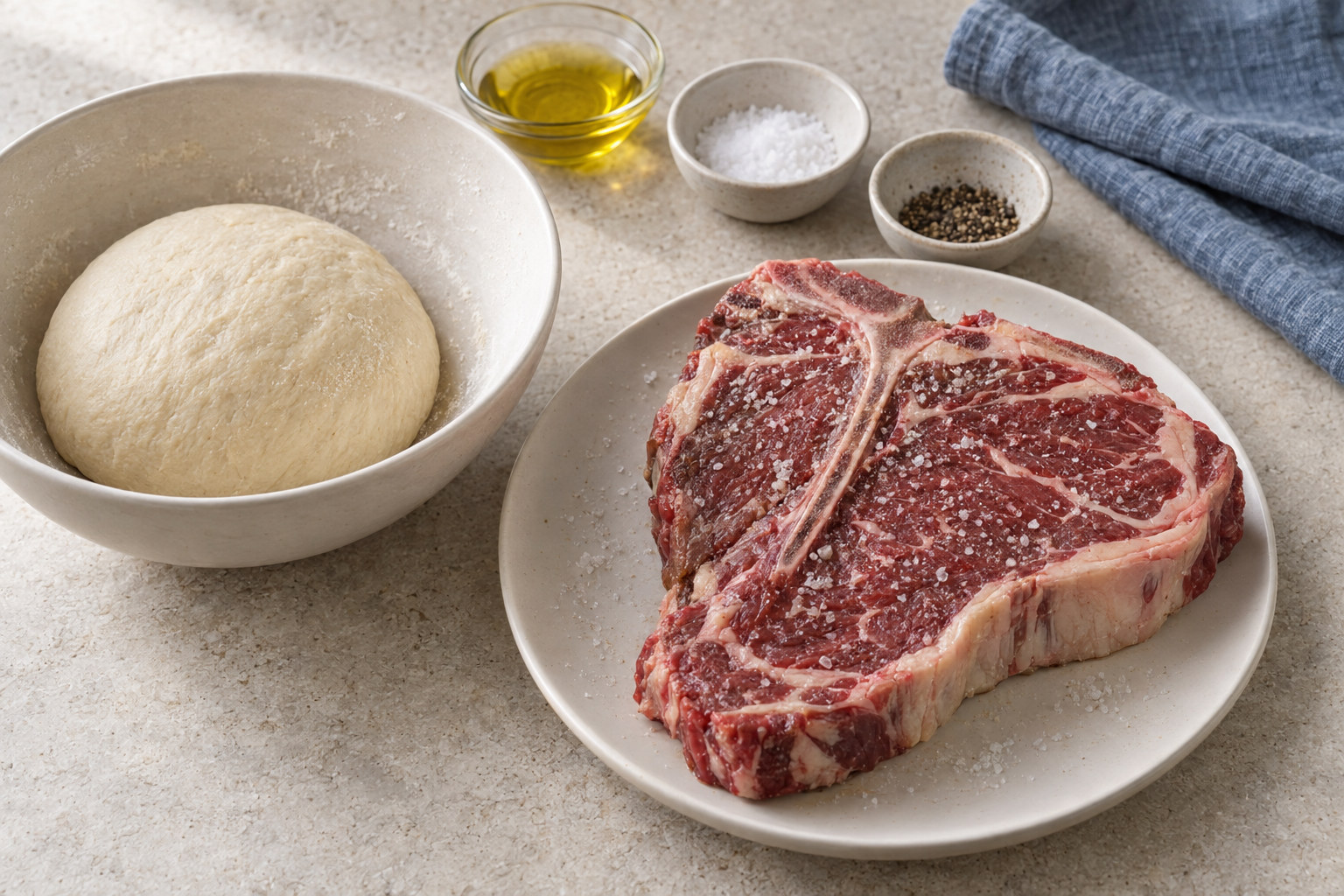
We choose the meat’s doneness from the guide above the method. We combine 180 g flour, 1.5 g yeast, ½ tsp salt, 110 ml water and the 10 ml olive oil intended for the dough. We knead for 8–10 minutes until the dough is elastic. We cover it and leave it to rise at 22–25 °C for 90–120 minutes, until it has almost doubled in size. We use one whole 800 g I-bone steak, Sashi Diamond or Sashi AAA. For the Chianina option, we use one whole 1000 g steak instead; portions will be larger. We pat the meat dry and leave enough room on the grill for the whole steak. We season it with ¾ tsp salt in total, or 1 tsp for Chianina. If we want to finish the meat with Icelandic salt, we omit one small pinch of ordinary salt from this amount. The seasoning of the sides does not change. We keep the meat refrigerated until grilling.
The dough is elastic, with no dry crumbs.
We divide the dough and make the sauce
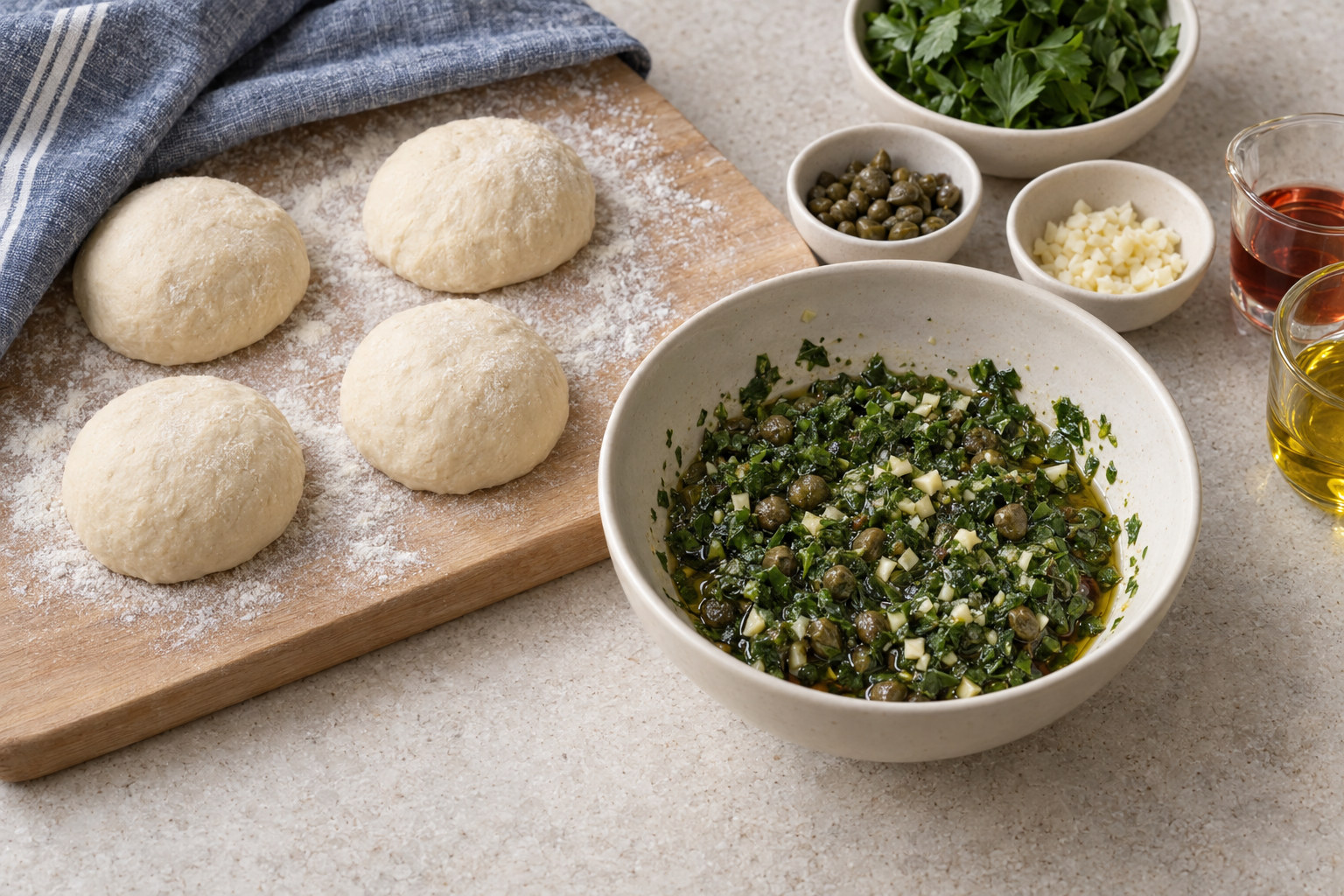
We divide the dough into four equal balls, cover them and leave them to rest for 20 minutes. We wash and dry the parsley, drain the capers and peel the garlic. We chop everything finely and mix it with 15 ml vinegar and 1½ tbsp of the olive oil for the sauce. We add no more salt. We set up the grill with two zones: direct heat over the heat source and indirect heat away from it. When we later cook the meat, we keep the covered grill at 160–180 °C.
Pieces of herbs, capers and garlic remain in the sauce.
We grill the peppers and all the flatbreads
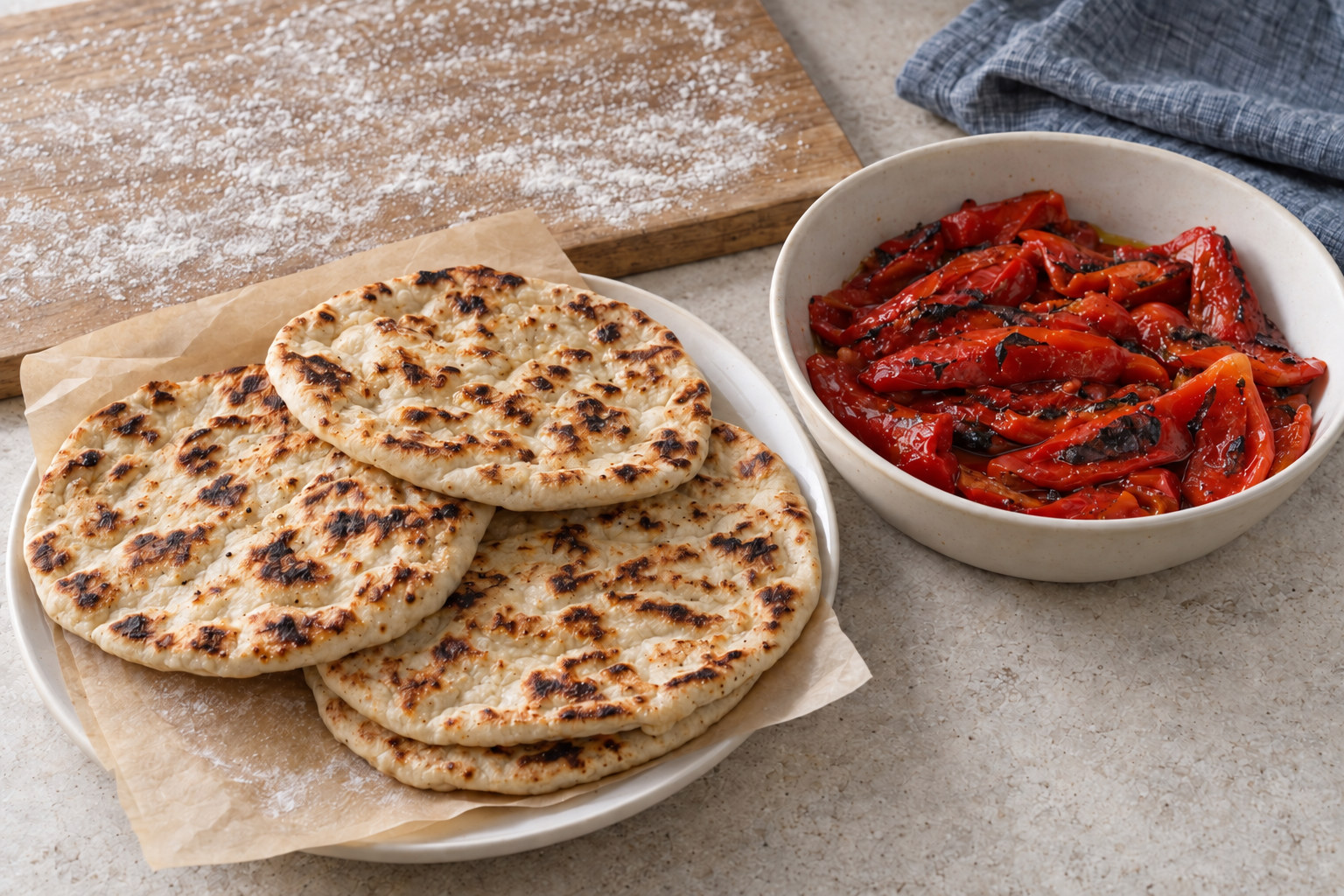
We wash and deseed the peppers and cut them into wide pieces. We brush them with 2 tsp of the olive oil for the peppers. We grill them over direct, medium heat for 8–12 minutes, turning until soft and browned in places. We transfer them to a bowl, season with ¼ tsp salt, cover and set aside off the grill. We dust the work surface little by little with the 12 g flour reserved for dusting. We roll each dough ball into a flatbread about 16 cm across and 3 mm thick, then brush off excess flour. We grill two flatbreads at a time, about 2 minutes on each side. As they finish, we stack the flatbreads under a clean tea towel and keep them covered off the grill. This lets the peppers and flatbreads wait for the steak without drying out on the hot grill. We briefly rewarm them while the meat rests, as described in step 5.
The flatbreads puff up on the grill and are not sticky inside. The peppers are browned but not burnt.
We sear the meat and finish it over indirect heat
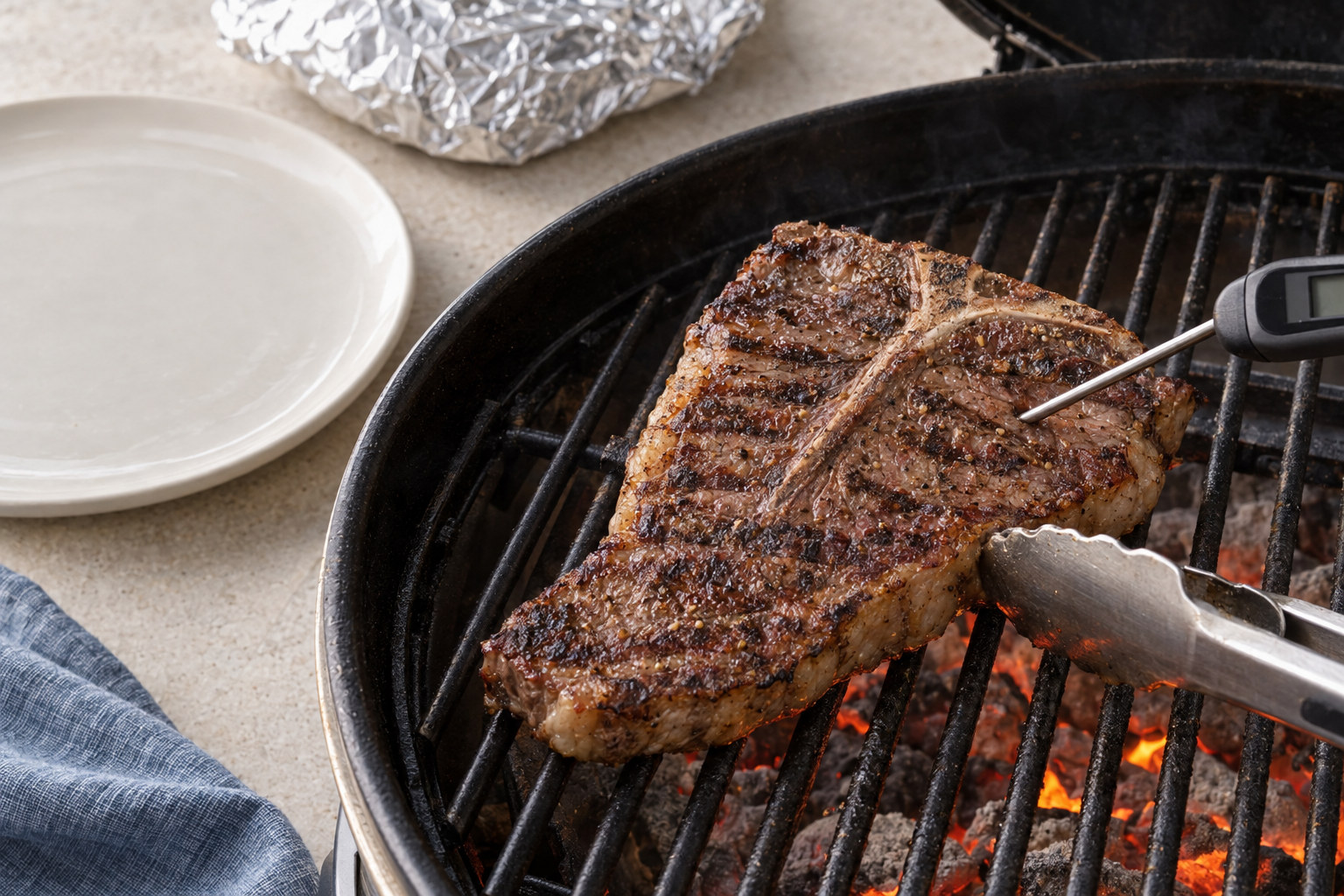
We brush each steak with the rapeseed oil reserved for the meat. We sear it over direct heat for roughly 2–3 minutes on each broad side, briefly holding its meaty edges against the heat with tongs too. We insert the probe from the side into the centre of the thickest part of the meat, avoiding the bone and pockets of fat. If the meat has not yet reached the chosen temperature, we move it to the indirect zone and close the grill. We check the temperature as it cooks, measuring more often as it approaches our target. A thin steak may be ready after searing over direct heat. For a steak 3–5 cm thick, we allow roughly 15–35 minutes over indirect heat; for 5–7 cm, 30–60 minutes; and for a thick Chianina steak, up to 70 minutes. We turn the meat occasionally; if cooking two steaks, we also swap their positions. We usually take each steak off the grill when it is 2–3 °C below the chosen target after resting. We rest it for 8–10 minutes on a clean, lukewarm plate away from the heat, loosely covered with foil. If it has not reached the chosen doneness after resting, we finish it briefly over gentle heat. Finally, we season with pepper to taste.
There is no flame beneath the meat in the indirect zone. Flames from dripping fat cannot reach it either.
We serve the steak with flatbreads and peppers
While the meat rests, we wrap the peppers in foil and place the parcel at the edge of the medium-hot direct zone for 2–3 minutes, turning it from time to time. We rewarm the flatbreads for the portions being served over medium direct heat for about 20–30 seconds on each side and cover them again with the tea towel. We remove the meat from the bone and slice it across the grain. We divide it between 2 plates and add two flatbreads, peppers and green sauce to each portion. For the Icelandic-salt option, we taste the meat together with the sides and green sauce. If needed, we divide one small pinch of Saltverk birch-smoked Icelandic flake salt over the meat just before serving. This replaces the ordinary salt we omitted at the start. If the mouthful is already salty enough, we add no further salt.
Tips from our kitchen
- We cover the cooked flatbreads with a clean tea towel as soon as they leave the grill, then briefly rewarm them for soft, warm bread at serving. If the grill lacks a large enough indirect zone, we choose an oven-based recipe.
What to watch out for
- We do not leave the meat over fierce direct heat throughout cooking.
How we serve it
- We remove the meat from the bone, divide it evenly into portions and serve it with the sides at the same time.
Ingredient swaps
red pepper
the same number of yellow peppers of roughly the same size We use two yellow peppers for two portions or four for four portions. We remove the seeds and grill them just like red peppers.
Ingredient notes
- The pack contains one whole Sashi Diamond BMS 4 steak weighing 800 g. We measure its thickness and dimensions before cooking. The I-bone cut does not include a separate tenderloin.
- The pack contains one whole Sashi AAA BMS 5 steak weighing 800 g. We measure its thickness and dimensions before cooking. The I-bone cut does not include a separate tenderloin.
- The pack contains one whole Chianina IGP steak weighing 1000 g. We measure its thickness and dimensions before cooking. The I-bone cut does not include a separate tenderloin.
During preparation
- We keep the meat refrigerated until cooking. After handling raw meat, we wash our hands and clean the utensils. We use a clean board for the cooked meat.
- We measure the temperature with a clean thermometer in the centre of the meat, away from the bone and pockets of fat. We check each steak separately rather than judging doneness by colour.
Our inspiration
A flatbread can be both a side and a way to scoop up a whole mouthful. Our yeasted dough takes its cue from a recipe by British chef Gill Meller, formerly head chef at River Cottage. In his version, the flatbreads are served with sausage, burrata and herbs. We were drawn to the pairing of soft bread and bold fillings for outdoor dining.
Similar recipes
Recipe for 4 people
Step-by-step method
Choosing how well to cook your steak
Before cooking, we choose how well we would like our meat done. This guide describes culinary levels of doneness and approximate temperatures at the centre of the meat after resting. These are not pan or oven temperatures or food safety recommendations. For whole beef steaks, the United States Department of Agriculture (USDA) recommends a minimum internal temperature of 63 °C before removing the meat from the heat, followed by at least 3 minutes of resting.
| Doneness | Temperature after resting | What to expect |
|---|---|---|
| Rare | 52 °C | Rare. The centre is red, and the meat is very tender and juicy. |
| Medium Rare | 55 °C | Medium rare. The centre is warm and reddish-pink, and the meat is tender and juicy. |
| Medium | 60 °C | Medium. The centre remains pink, and the meat has a firmer bite. |
| Medium Well | 65 °C | Medium well. Only a faint pink strip remains in the centre; the meat is firmer and less juicy. |
| Well Done | 71 °C | Well done. There is no pink in the centre, and the meat is firm and less juicy. |
- We measure the temperature at the centre of the thickest part of the meat. We insert the probe from the side, avoiding bone and pockets of fat. Colour is only a guide; we rely on the thermometer.
- As a rule, we take the meat off the pan or grill, or out of the oven, when it is 2–3 °C below our chosen temperature after resting. Thick cuts and intense heat can cause a greater temperature rise during resting. We check it regularly and follow the individual recipe.
- We rest the meat for the time given in the recipe. If the temperature stops rising before reaching our chosen value, we briefly return the meat to a gentle heat and check again.
- Cooking times are a guide. If we prefer our meat less well done, we start checking its temperature earlier. For a higher degree of doneness, we allow more time over a gentler heat as needed, so the outside does not burn.
Before we start
While the dough rises, we chop the sauce ingredients. We grill the peppers and flatbreads before the meat, cover them and set them aside off the grill. While the steak rests, we briefly rewarm the sides as described in step 5. We compare the thickness of both steaks and the chosen doneness. If they are not ready together, we serve each after resting with its share of the sides. We do not leave the sliced meat waiting for the second steak.
We make the dough and prepare the meat
We choose the meat’s doneness from the guide above the method. We combine 340 g flour, 3 g yeast, 1 tsp salt, 200 ml water and the 20 ml olive oil intended for the dough. We knead for 8–10 minutes until the dough is elastic. We cover it and leave it to rise at 22–25 °C for 90–120 minutes, until it has almost doubled in size. We use two whole I-bone steaks, Sashi Diamond or Sashi AAA, each weighing 800 g. For the Chianina option, we use two whole 1000 g steaks instead; portions will be larger. We pat the meat dry and leave enough room on the grill for both steaks. We season them with 1½ tsp salt in total, or 1¾ tsp for Chianina. If we want to finish the meat with Icelandic salt, we omit two small pinches of ordinary salt from this amount. The seasoning of the sides does not change. We keep the meat refrigerated until grilling.
The dough is elastic, with no dry crumbs.
We divide the dough and make the sauce
We divide the dough into 8 equal balls, cover them and leave them to rest for 20 minutes. We wash and dry the parsley, drain the capers and peel the garlic. We chop everything finely and mix it with 25 ml vinegar and 2 tbsp of the olive oil for the sauce. We add no more salt. We set up the grill with two zones: direct heat over the heat source and indirect heat away from it. When we later cook the meat, we keep the covered grill at 160–180 °C.
Pieces of herbs, capers and garlic remain in the sauce.
We grill the peppers and all the flatbreads
We wash and deseed the peppers and cut them into wide pieces. We brush them with 1 tbsp of the olive oil for the peppers. We grill them over direct, medium heat for 8–12 minutes, turning until soft and browned in places. We transfer them to a bowl, season with ¼ tsp salt, cover and set aside off the grill. We dust the work surface little by little with the 20 g flour reserved for dusting. We roll each dough ball into a flatbread about 16 cm across and 3 mm thick, then brush off excess flour. We grill two flatbreads at a time, about 2 minutes on each side. As they finish, we stack the flatbreads under a clean tea towel and keep them covered off the grill. This lets the peppers and flatbreads wait for the steak without drying out on the hot grill. We briefly rewarm them while the meat rests, as described in step 5.
The flatbreads puff up on the grill and are not sticky inside. The peppers are browned but not burnt.
We sear the meat and finish it over indirect heat
We brush each steak with the rapeseed oil reserved for the meat. We sear it over direct heat for roughly 2–3 minutes on each broad side, briefly holding its meaty edges against the heat with tongs too. We insert the probe from the side into the centre of the thickest part of the meat, avoiding the bone and pockets of fat. If the meat has not yet reached the chosen temperature, we move it to the indirect zone and close the grill. We check the temperature as it cooks, measuring more often as it approaches our target. A thin steak may be ready after searing over direct heat. For a steak 3–5 cm thick, we allow roughly 15–35 minutes over indirect heat; for 5–7 cm, 30–60 minutes; and for a thick Chianina steak, up to 70 minutes. We turn the meat occasionally; if cooking two steaks, we also swap their positions. We usually take each steak off the grill when it is 2–3 °C below the chosen target after resting. We rest it for 8–10 minutes on a clean, lukewarm plate away from the heat, loosely covered with foil. If it has not reached the chosen doneness after resting, we finish it briefly over gentle heat. Finally, we season with pepper to taste.
There is no flame beneath the meat in the indirect zone. Flames from dripping fat cannot reach it either.
We serve the steak with flatbreads and peppers
While the meat rests, we wrap the peppers in foil and place the parcel at the edge of the medium-hot direct zone for 2–3 minutes, turning it from time to time. We rewarm the flatbreads for the portions being served over medium direct heat for about 20–30 seconds on each side and cover them again with the tea towel. We remove the meat from the bone and slice it across the grain. We divide it between 4 plates and add two flatbreads, peppers and green sauce to each portion. If the steaks are ready at different times, we rewarm only half the sides at a time. We serve the rested steak as two portions; we keep the remaining flatbreads and peppers covered off the grill and rewarm them while the second steak rests. For the Icelandic-salt option, we taste the meat together with the sides and green sauce. If needed, we divide two small pinches of Saltverk birch-smoked Icelandic flake salt over the meat just before serving. These replace the ordinary salt we omitted at the start. If the mouthful is already salty enough, we add no further salt.