
Boxxi original cuisine · Japanese inspiration
Homemade udon noodles with omelette, cold dashi and wakame salad
Thick homemade udon noodles have a pleasing springy bite, and their delicate flavour comes through in cold dashi. We add a tender rolled omelette, cucumber and wakame; ginger and rice vinegar bring freshness. We allow several hours for the dough and its rests, and end with a bowl of satisfying hand-cut noodles.
About 4 hours, including an initial 30-minute dough rest and a second rest of 2 hours. We prepare and chill the dashi concurrently.
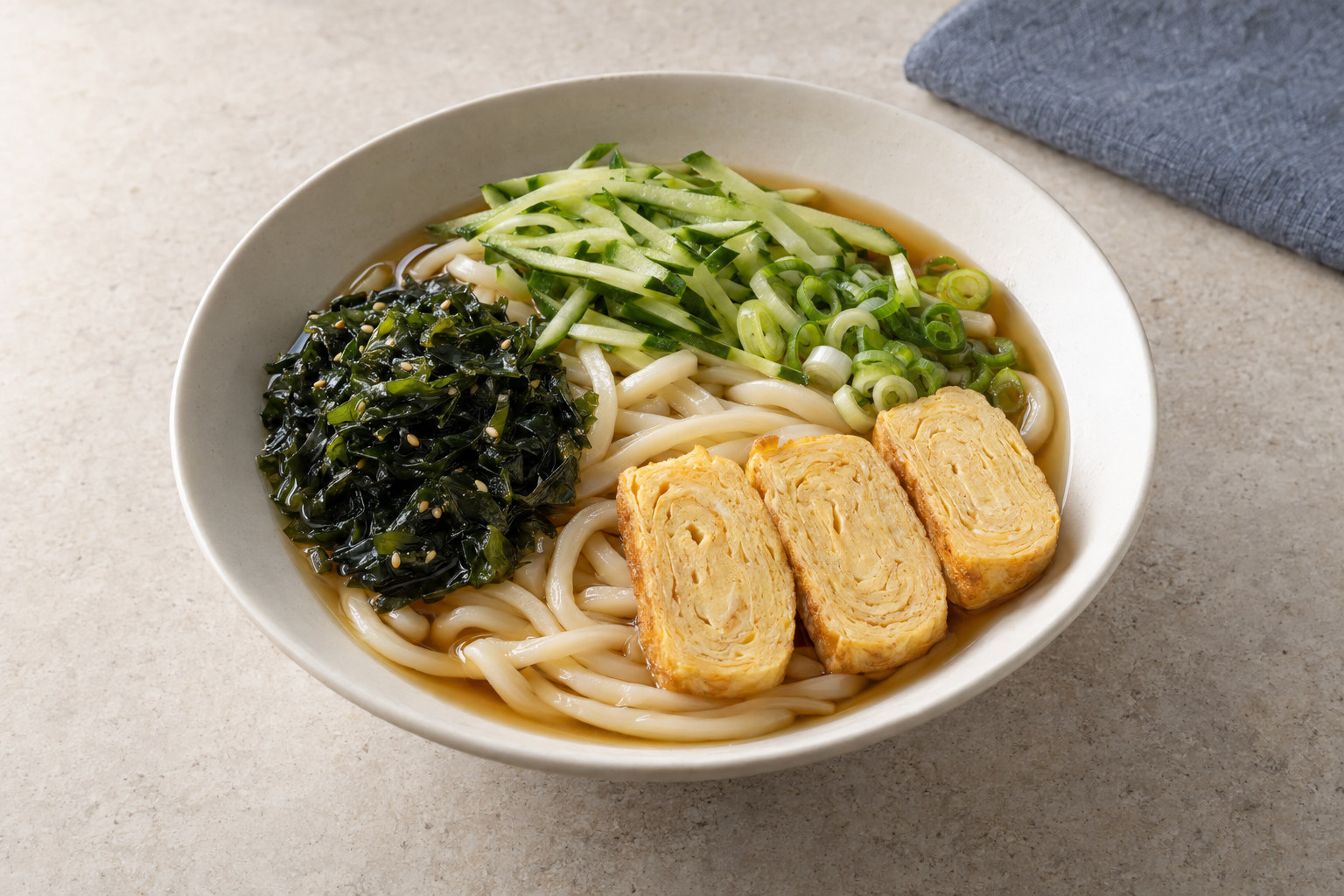
Springy wheat noodles, a gently sweet omelette and the fish flavour of dashi. Cucumber, vinegar and ginger freshen the cold bowl, while wakame adds a sweet-salty sesame bite.
Step-by-step method
What you will need
- kitchen scales
- knife and chopping board
- sturdy food bag
- large bowl
- rolling pin
- long sharp knife
- 40 × 30 cm tray
- 1-litre saucepan
- fine sieve and measuring jug
- metal bowl and container for a cold-water bath
- fridge
- 13 × 18 cm rectangular non-stick pan
- wide spatula
- 5-litre pot
- colander
- two cooking zones
- two wide serving bowls, each at least 1 litre
- clean tea towel to cover the noodles
Before we start
We finish the dashi at the start of the long dough rest so it has time to chill. We cut the noodles before making the omelette but cook them only after it is done.
Make the firm dough
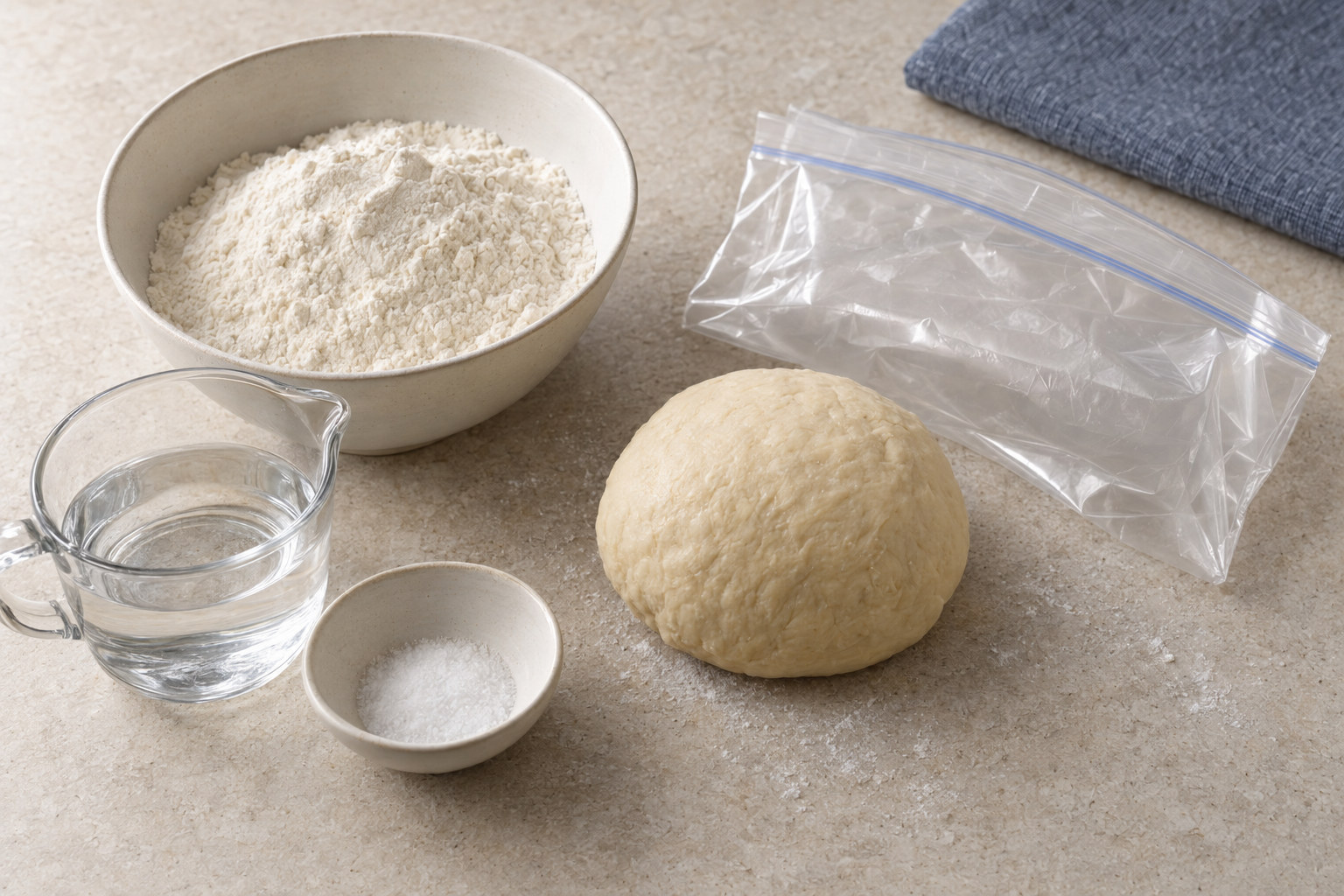
We dissolve 8 g salt completely in 100 ml water. We work it gradually into the flour and press it by hand into a firm ball for about 5 minutes. The dough will be much stiffer than bread dough. We seal it in a sturdy food bag and leave it to rest for 30 minutes.
The dough holds together without sticking. The salt is evenly dissolved in the water.
Knead the dough and leave it to rest
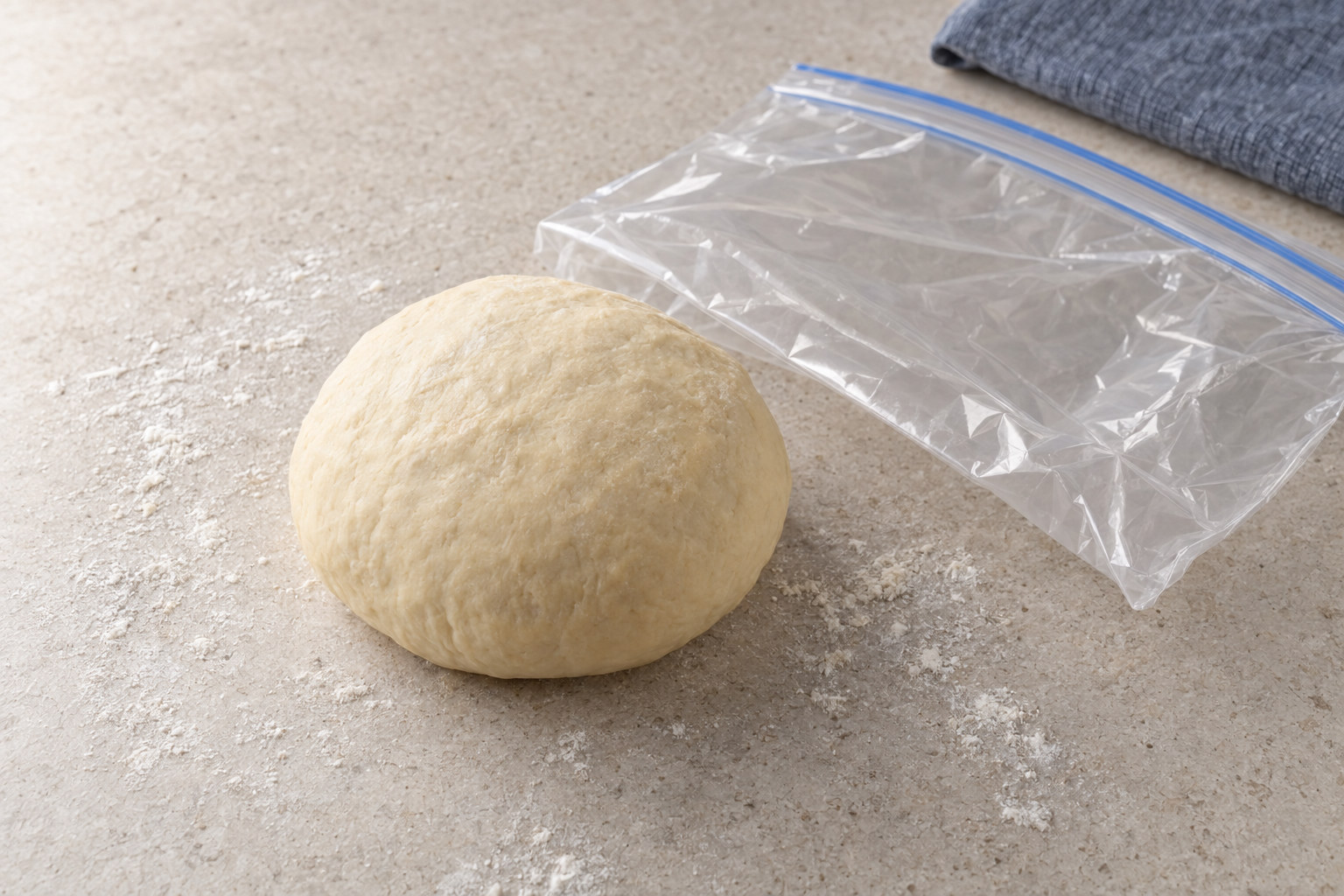
On a clean worktop, we press the dough with the heel of our hand, fold and press it again for 15–20 minutes. If kneading is difficult, we cover it for 5 minutes, then continue. Its surface gradually becomes smoother and more elastic. We then cover it and leave it to rest at room temperature for 2 hours.
After resting, the dough rolls out more easily. We add no extra water just because it is initially stiff.
Make and chill the dashi
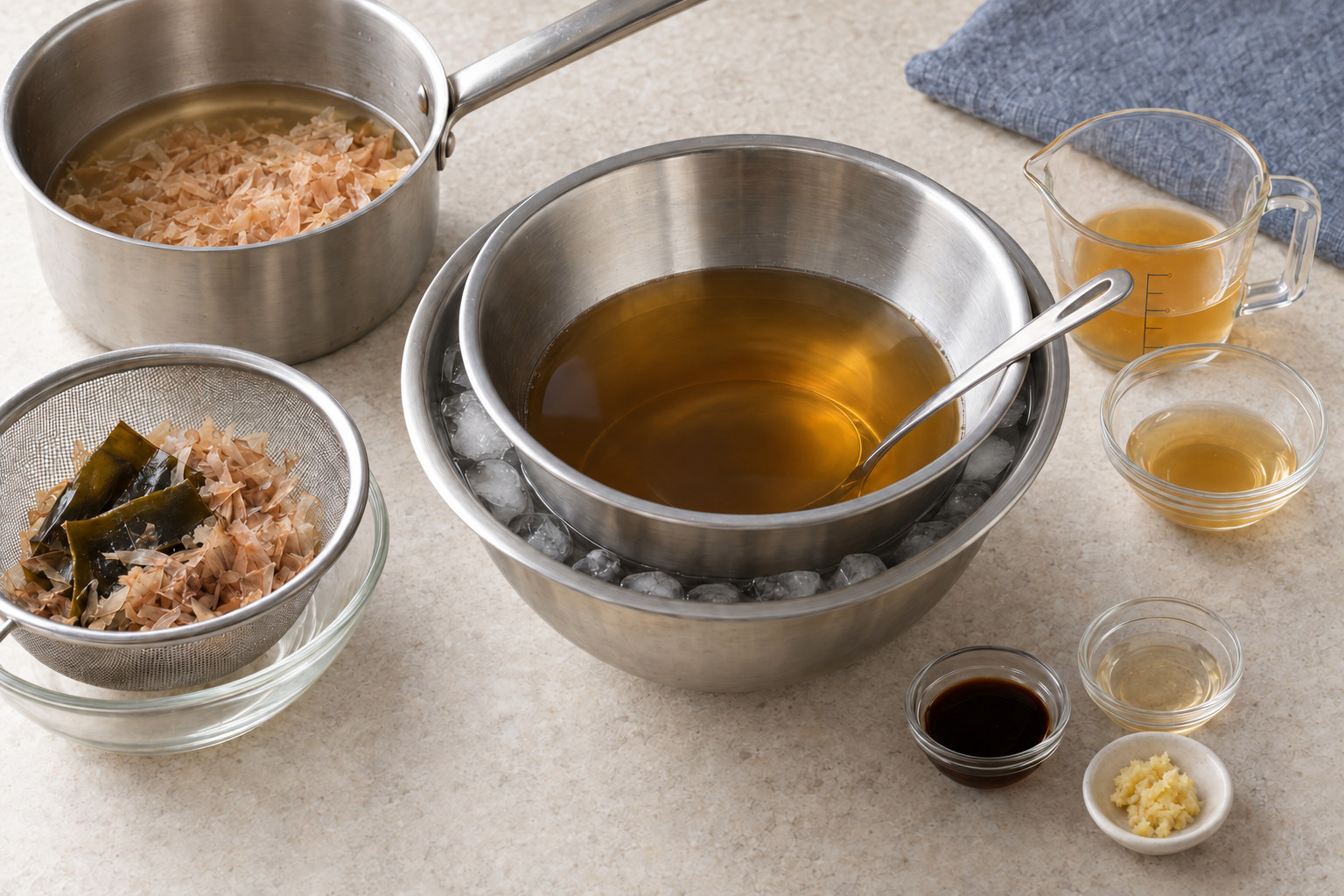
We peel and finely grate the ginger. During the dough rest, we put the kombu in 400 ml water and leave it for 20 minutes. We heat it gently to just below a boil for 10 minutes and remove the kombu. We add the bonito, take it off the heat and steep for 5 minutes. We strain through a fine sieve; we do not add the kombu or bonito to the dish again. We measure 320 ml stock: we briefly reduce any excess or top up a shortfall from the measured reserve. We set aside 20 ml for the omelette. We mix the remaining 300 ml with two teaspoons of soya sauce and one tablespoon of vinegar and 3 g finely grated ginger. We cool it in a metal bowl set in a cold-water bath for 20 minutes, stirring occasionally, then cover and refrigerate.
The dashi is clear, delicate and not bitter; the kombu was not boiled hard. We also keep the reserved stock for the omelette chilled.
Roll out and cut the noodles
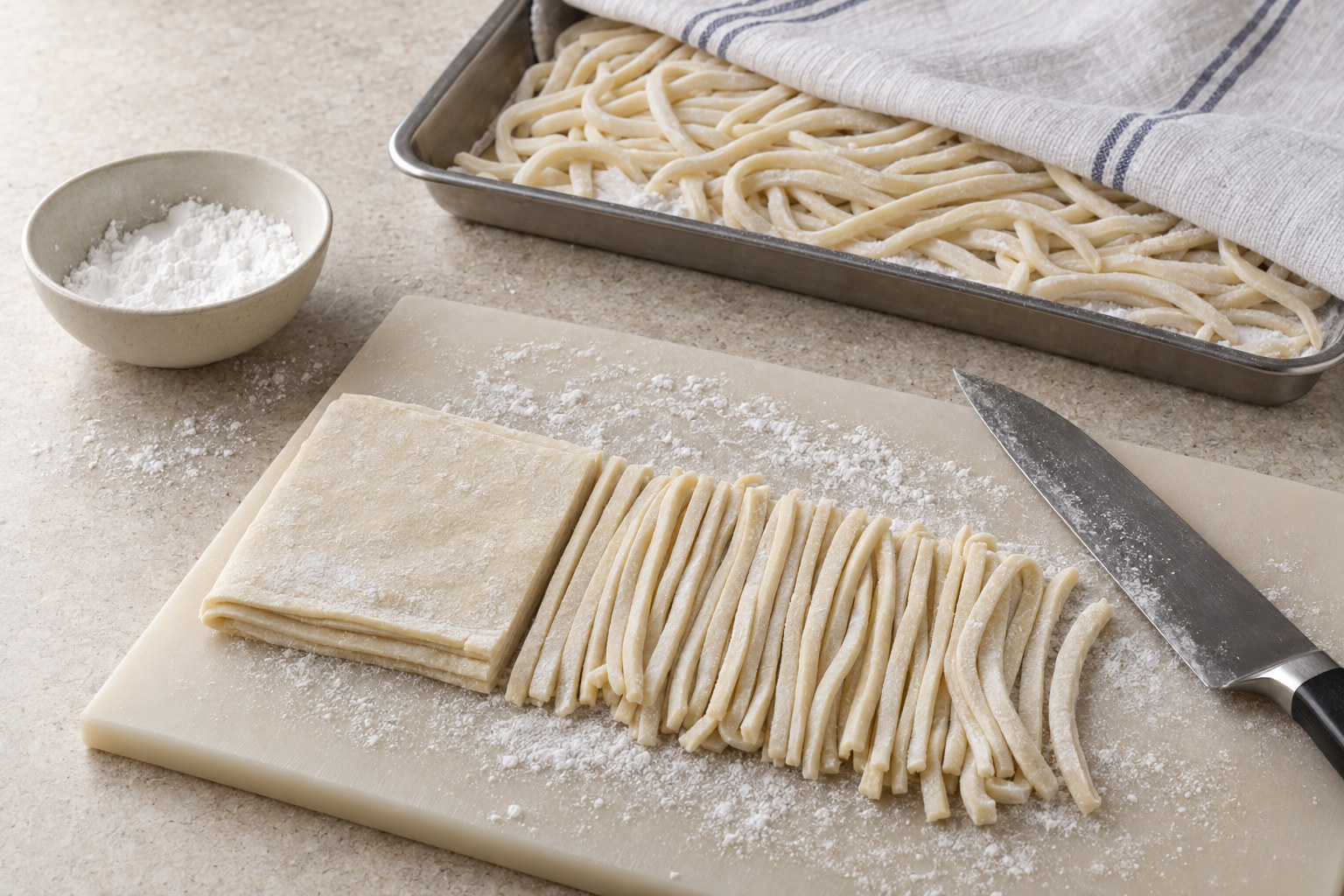
We roll the dough out with a little of the dusting cornflour to about 28 × 30 cm and 3 mm thick. We dust the surface lightly with cornflour, fold the sheet loosely into thirds and use a sharp knife to cut 3 mm strips. We unfold them, gently shake off excess cornflour and lay them on a tray under a clean tea towel.
The noodles are evenly thick and do not stick together at the folds. If the sheet springs back, we cover it for another 5 minutes to relax.
Roll the omelette
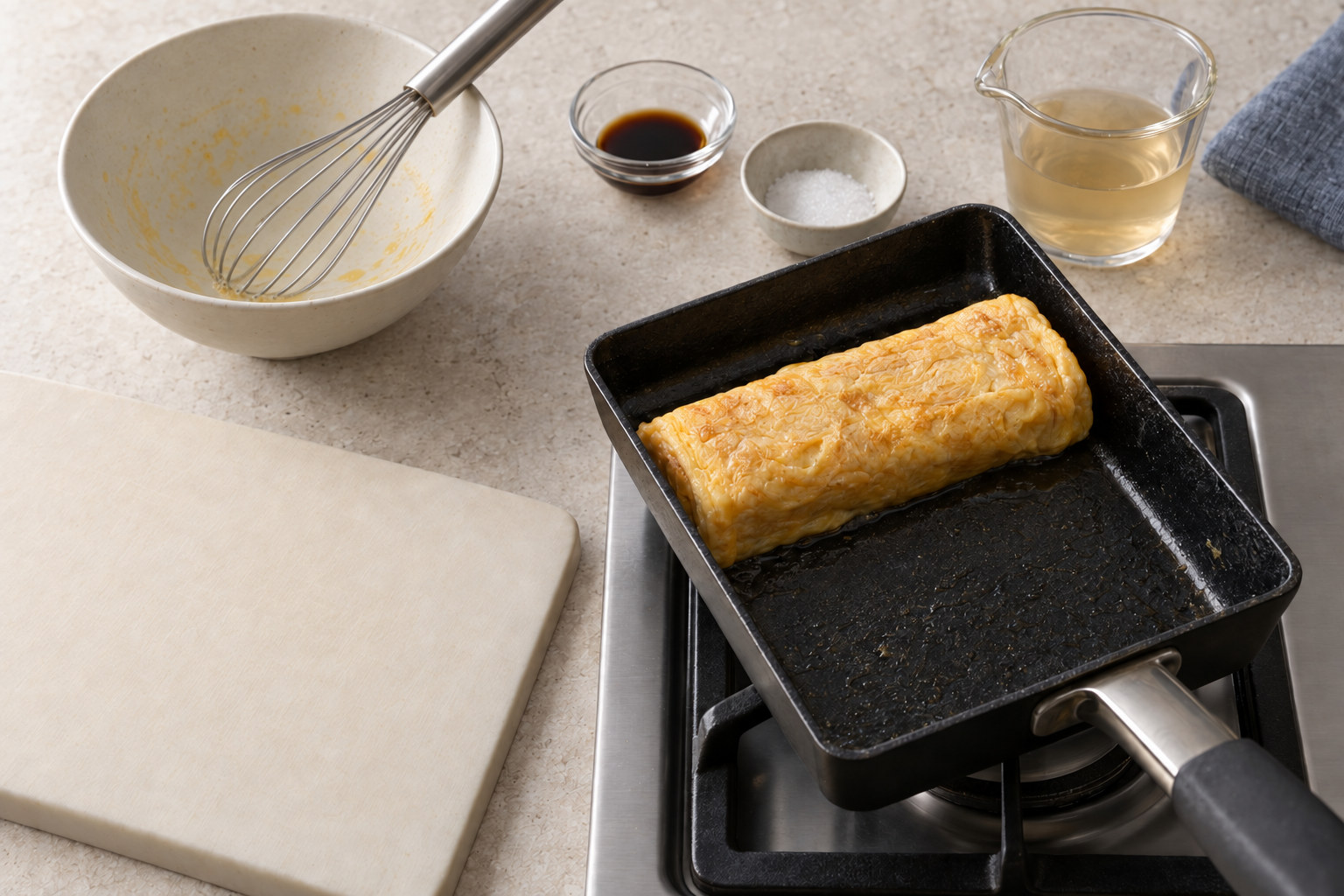
We gently mix the eggs with 20 ml reserved dashi, sugar and half a teaspoon of soya sauce. We heat a 13 × 18 cm rectangular pan over medium heat and lightly coat it with some of the measured teaspoon of oil. We pour in a quarter of the mixture and tilt to spread it. Once the underside has set but the top is still tender, we roll it from the far edge towards us with a wide spatula. We move the roll back, lightly oil the exposed pan and pour in another quarter, lifting the roll so some flows underneath. We repeat until all four pours are used. Over low heat, we cook the roll for another 30 seconds on each of its two broad sides until no liquid egg remains inside. We transfer it to a clean board.
The omelette holds its layers, stays tender and releases no raw egg when cut. We leave the finished roll on a clean board for no more than 40 minutes before serving, loosely covering it while it waits.
Cook the noodles and slice the omelette and vegetables
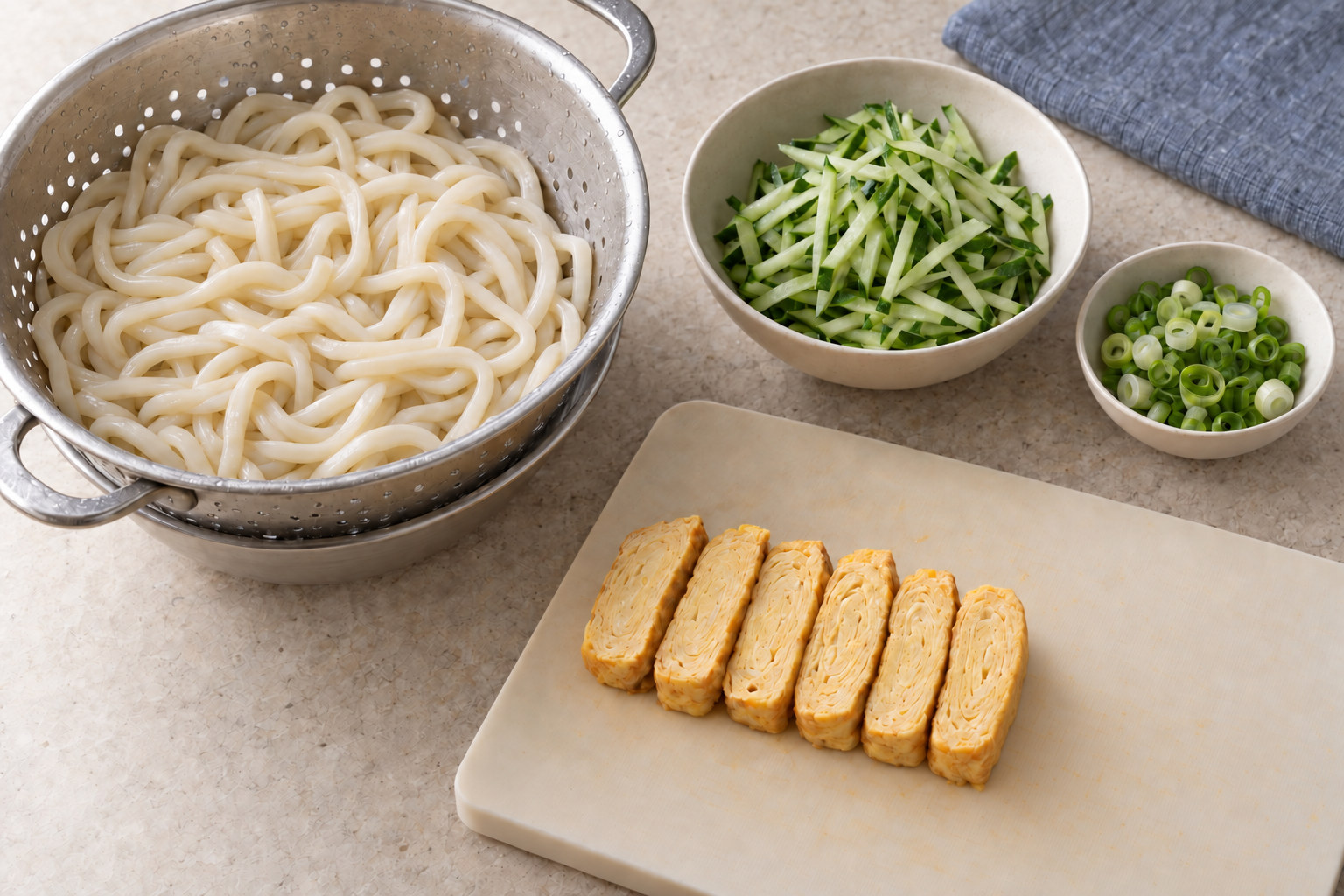
We wash the cucumber and spring onion. While making the omelette, we heat plenty of unsalted water in a 5-litre pot. We let the finished roll cool briefly and cut it into six evenly thick slices. We cut the cucumber into thin matchsticks and the spring onion into rings. We add the noodles to a full boil, gently separate them and cook for 10–14 minutes until springy with no hard floury centre. We drain, gently rub them under cold running water and leave to drain for 2 minutes.
The noodles are cold and springy-tender; rinsing has removed surface starch and some of the salt from the dough.
Serve the cold noodle bowls
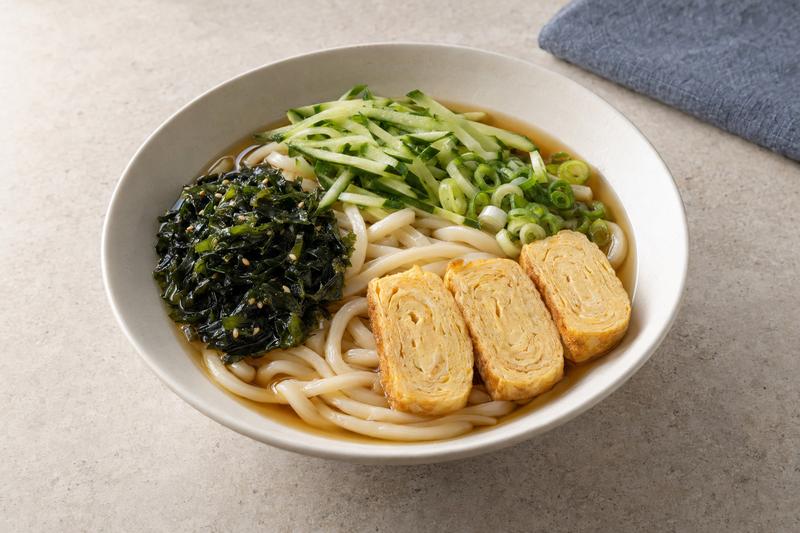
We divide the noodles between two wide bowls. We add the chilled seasoned dashi, all the cucumber and spring onion. We top each bowl with three omelette slices and a separate mound of 100 g wakame. We serve immediately.
The wakame and stock are cold; the omelette no longer steams or warms the prepared salad.
Tips from our kitchen
- If the dough relaxes slowly, we let it rest longer; we add no more water.
What to watch out for
- We do not salt the noodle cooking water.
- We do not boil the kombu for a long time.
- We pour the egg mixture into the pan in thin layers so we can roll it gradually. A large pour would make a thick omelette without delicate layers.
How we serve it
- We place omelette slices, cucumber and spring onion on the noodles with chilled stock. We add the wakame as a separate mound in the bowl.
Ingredient notes
- We use the ready-made salad, not dried seaweed. The product already contains sesame, soya and seasoning; we weigh out 100 g per serving. We need one pack for two servings and two packs for four.
During preparation
- We keep the ready-made wakame salad covered in the fridge and take it out only when serving. We follow the use-by date on the pack. We do not cook this seasoned product.
Our inspiration
Time does some of the work for homemade udon. We knead the firm dough thoroughly, then give it a long rest so it rolls out more easily. The thick noodles stay pleasantly springy even after chilling. We serve them in a cold bowl with a delicate omelette and dashi so their flavour is not lost under a heavy sauce.
Similar recipes


Recipe for 4 people
About 4 hours 35 minutes; we knead two dough balls and make the omelettes one after another, then cook all the noodles at once.
Step-by-step method
Before we start
We roll out each dough ball separately. We heat the noodle water while making the omelettes. We slice the omelettes and vegetables before cooking the noodles.
Make the firm dough
We dissolve the salt in 200 ml water and work it evenly into the flour. We divide the stiff mixture into two equal balls; we press each firmly so no dry flour remains. We put each into a separate food bag, seal it and leave the dough to rest for 30 minutes.
The dough holds together without sticking. The salt is evenly dissolved in the water.
Knead the dough and leave it to rest
We knead the two dough balls by hand, one after the other, for 25–30 minutes in total. We press with the heel of our hand and fold; if the dough is too stiff, we cover it for 5 minutes between kneading. Once smooth, we cover both balls and leave them to rest for 2 hours.
After resting, the dough rolls out more easily. We add no extra water just because it is initially stiff.
Make and chill the dashi
We peel and finely grate the ginger. We leave the kombu in 750 ml water for 20 minutes, then heat it slowly for 10 minutes until nearly boiling and remove it. We steep the bonito off the heat for 5 minutes and strain. We adjust the volume to 600 ml: we reduce any excess or top up a shortfall with some of the reserved water. We set aside 40 ml for the omelettes. We add four teaspoons of soya sauce, five teaspoons of vinegar and 5 g finely grated ginger to the remaining 560 ml. We chill it in a wide metal bowl in a cold-water bath for 20 minutes, then cover and refrigerate.
The dashi is clear, delicate and not bitter; the kombu was not boiled hard. We also keep the reserved stock for the omelette chilled.
Roll out and cut the noodles
We roll each dough ball into a sheet about 28 × 30 cm and 3 mm thick. We dust lightly with the prepared cornflour as we roll. We loosely fold the dusted sheets into thirds, cut them into 3 mm strips and unfold. We spread them over two trays and cover with a tea towel. We cook all the noodles together.
The noodles are evenly thick and do not stick together at the folds. If the sheet springs back, we cover it for another 5 minutes to relax.
Roll the omelette
We mix the eggs with 40 ml reserved dashi, sugar and a teaspoon of soya sauce. We divide the mixture into two equal portions. In a 13 × 18 cm pan, we make two rolls in succession, using a teaspoon of oil and four thin egg layers for each. We roll the set first layer, move it to the far edge and, after oiling the exposed pan, pour the next quarter both under the roll and onto the free surface. We repeat until the portion is used, then cook each broad side over low heat for another 30 seconds. We make the second roll the same way.
The omelette holds its layers, stays tender and releases no raw egg when cut. We leave the finished rolls on a clean board for no more than 40 minutes before serving, loosely covering them while they wait.
Cook the noodles and slice the omelette and vegetables
We wash the cucumber and spring onions. While rolling the omelettes, we bring plenty of unsalted water to the boil in an 8-litre pot. We cut each finished roll into six slices, the cucumber into thin matchsticks and the spring onions into rings. We add all the noodles to the boiling water, separate them and cook for 10–14 minutes according to their actual thickness. We rinse under cold running water and leave to drain for 2 minutes.
The noodles are cold and springy-tender; rinsing has removed surface starch and some of the salt from the dough.
Serve the cold noodle bowls
We divide all the cold noodles, dashi, cucumber and spring onion between four bowls. We place three omelette slices and 100 g wakame in each. We serve immediately.
The wakame and stock are cold; the omelette no longer steams or warms the prepared salad.