
From the Boxxi kitchen · Japan – inspired by pressed sushi from Kansai
Pressed tuna sushi with omelette and homemade gari
Red tuna, white rice and yellow omelette make neat layers that we turn out and cut into small squares. Crisp cucumber and homemade gari, sweet-and-sour pickled ginger, accompany the delicate sushi. We prepare the ginger several hours ahead and assemble the sushi just before serving.
Includes 20 minutes for the pickling liquid to cool, at least 4 hours for the gari to pickle and 10 minutes for the pressed sushi to firm up. We prepare the rice towards the end of the waiting time.
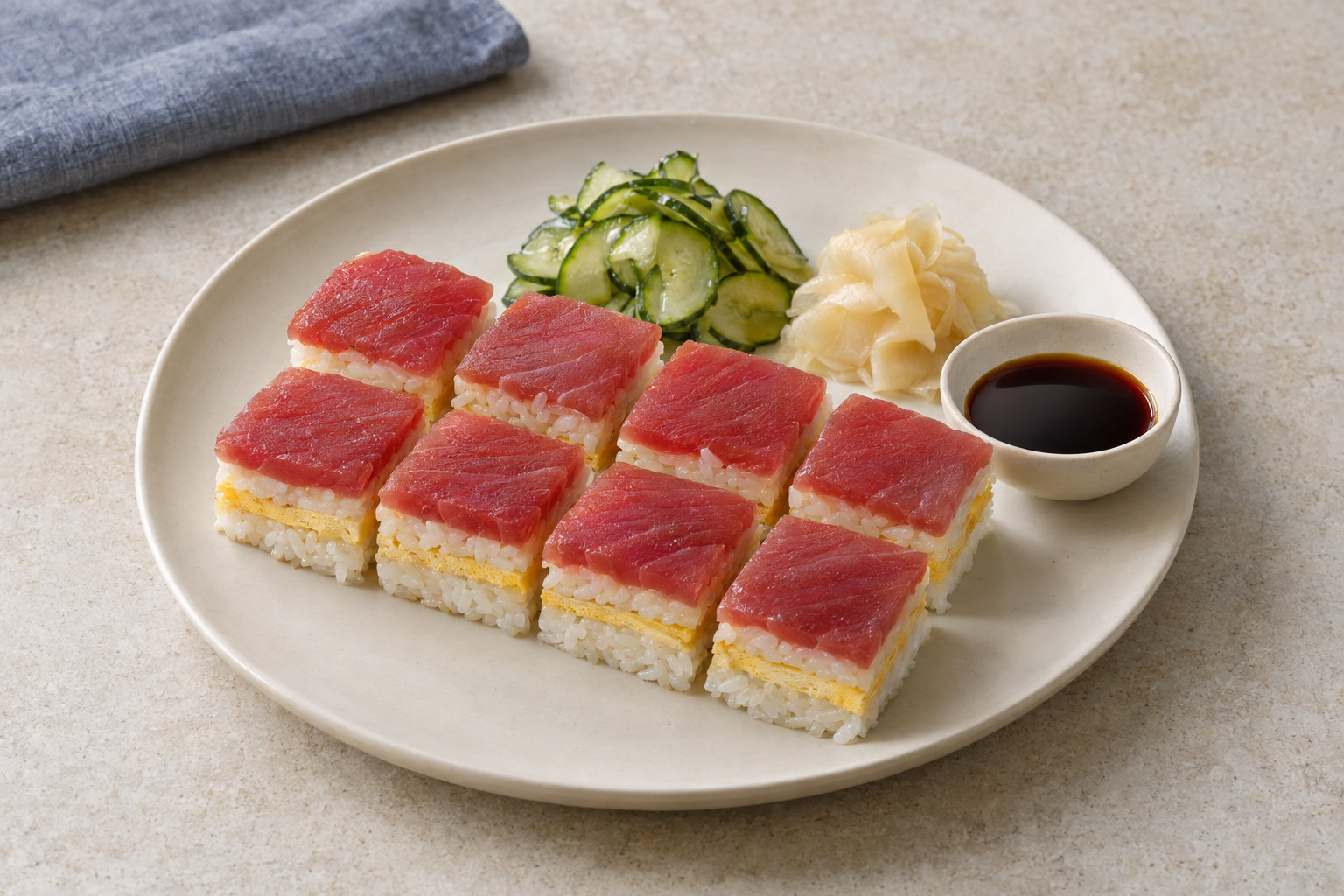
Delicate tuna, sweet omelette and lightly tangy rice; cucumber brings crunch and pickled ginger a pleasant kick.
Step-by-step method
What you will need
- scales
- sharp knife and two clean chopping boards
- probe thermometer
- small 1 l saucepan and a heatproof bowl for the gari
- 1.5 l saucepan with a tight-fitting lid
- fine sieve, peeler and spatula
- 20 cm non-stick frying pan
- one 18 × 18 × 4 cm mould
- flat 18 × 18 cm board, cling film
- shallow 30 × 25 cm dish
- fridge and two hob rings
Before we start
We make the gari first. We start preparing the rice 120 minutes before serving and make the omelette while it cooks; we slice the tuna only just before assembling.
Slice and blanch the ginger
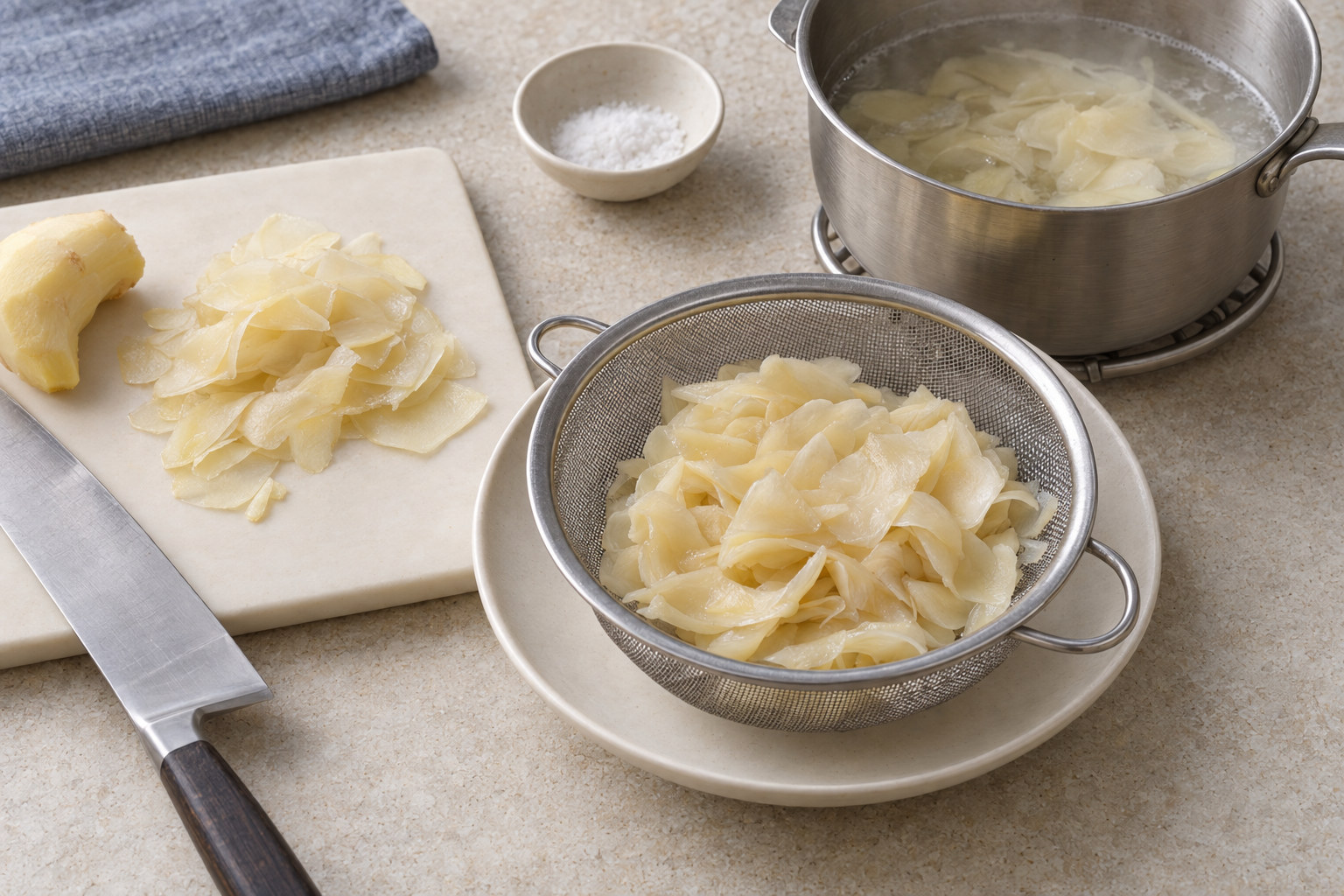
We peel the ginger and shave it into translucent slices no more than 0.5 mm thick, toss with two pinches of salt and leave to stand for 5 minutes. We boil it in plenty of water for 3 minutes, drain and spread it in a sieve for 5 minutes, then gently squeeze it with a clean hand.
The very thin slices bend easily. Blanching mellows the heat of ordinary mature ginger.
Leave the gari to pickle
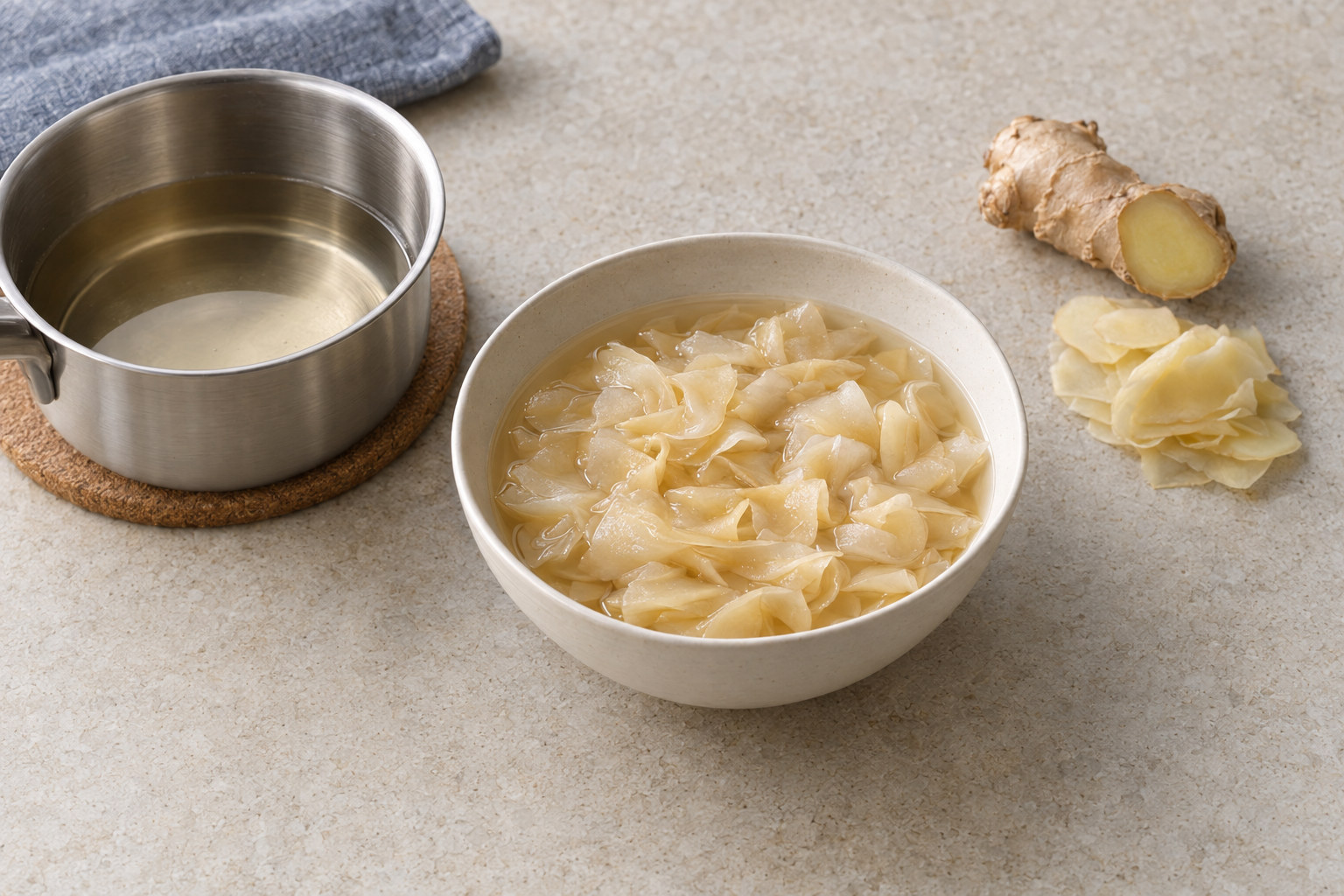
In a small saucepan, we heat 50 ml rice vinegar with 5 teaspoons of sugar and a pinch of salt just until the sugar and salt dissolve. We put the ginger in a small heatproof bowl, pour over the pickling liquid, leave to cool for 20 minutes, then cover and refrigerate for at least 4 hours.
The slices are submerged in the pickling liquid. We make a small batch for this meal, not a supply for long-term storage.
Cook the rice
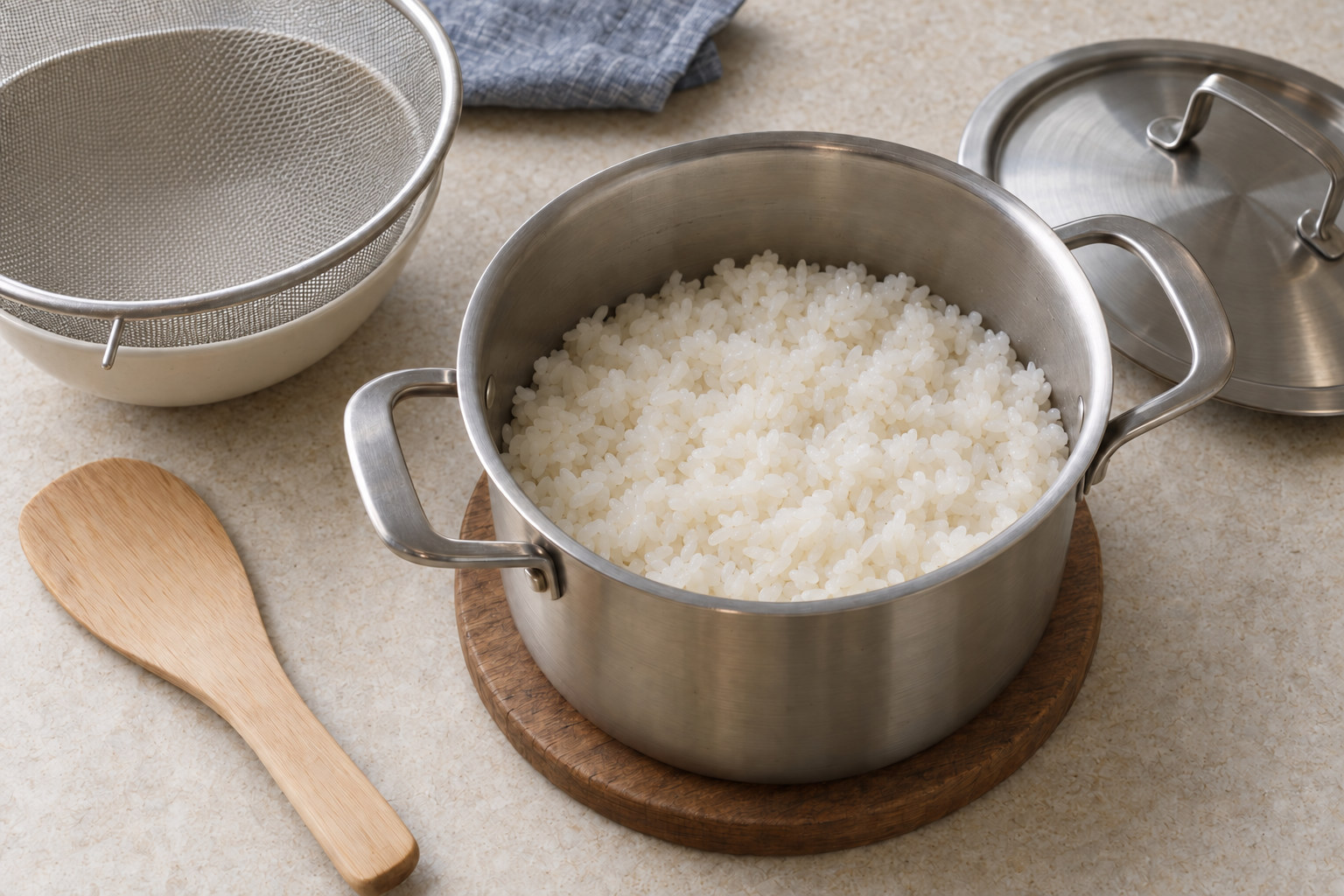
About 120 minutes before serving, we rinse the rice thoroughly. We soak it in plenty of water for 20 minutes, strain and leave to drain for 5 minutes. We transfer the drained rice to a saucepan and add 220 ml fresh water. We bring to the boil with the lid on, cook over the lowest heat for 12 minutes and leave off the heat for 10 minutes to finish steaming.
Season and cool the rice
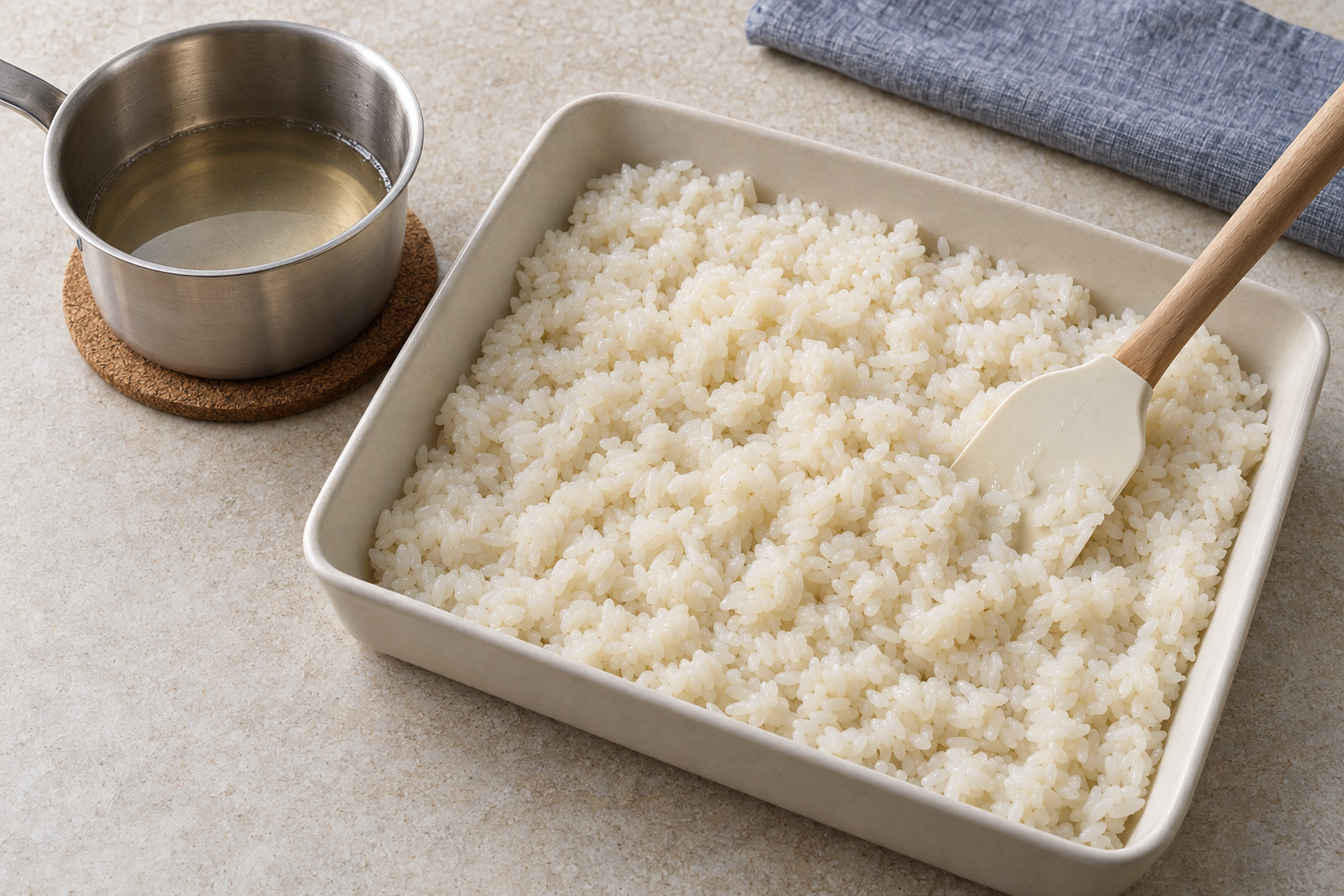
We heat 30 ml vinegar with 3 teaspoons of sugar and ¼ teaspoon of salt until the sugar and salt dissolve. We spread the hot rice in a 30 × 25 cm dish and fold in the seasoning with cutting motions of a spatula. We leave it to cool to no more than 25 °C over 15–20 minutes, then cover lightly.
The grains hold their shape without turning mushy. We later place the fish only on cool rice.
Make the omelette sheets and prepare the cucumber
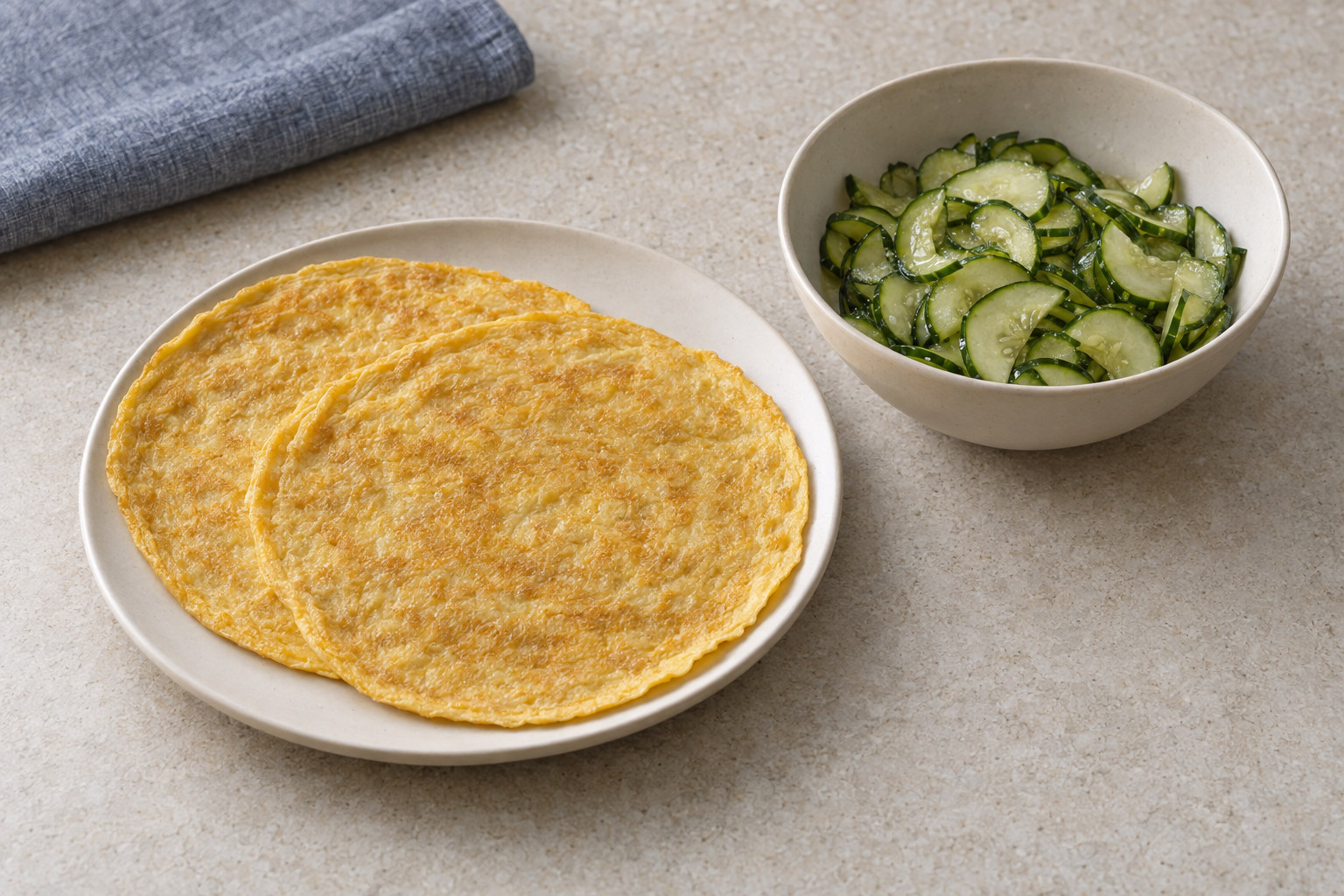
We whisk the eggs with two teaspoons of water, one and a half teaspoons of sugar and half a teaspoon of soy sauce. In a 20 cm non-stick frying pan, we cook 2 thin omelettes of equal size, dividing the oil between them. We cook each over a medium-low heat for about 60–90 seconds, turn and cook for another 20–30 seconds until no liquid egg remains. We lay them on a clean plate and leave to cool for 10 minutes. Meanwhile, we wash the cucumber, cut it into half-moons and mix with the vinegar, sugar and salt set aside for it.
The omelette is cooked through and soft, and the cucumber stays crisp.
Slice the tuna and line the mould
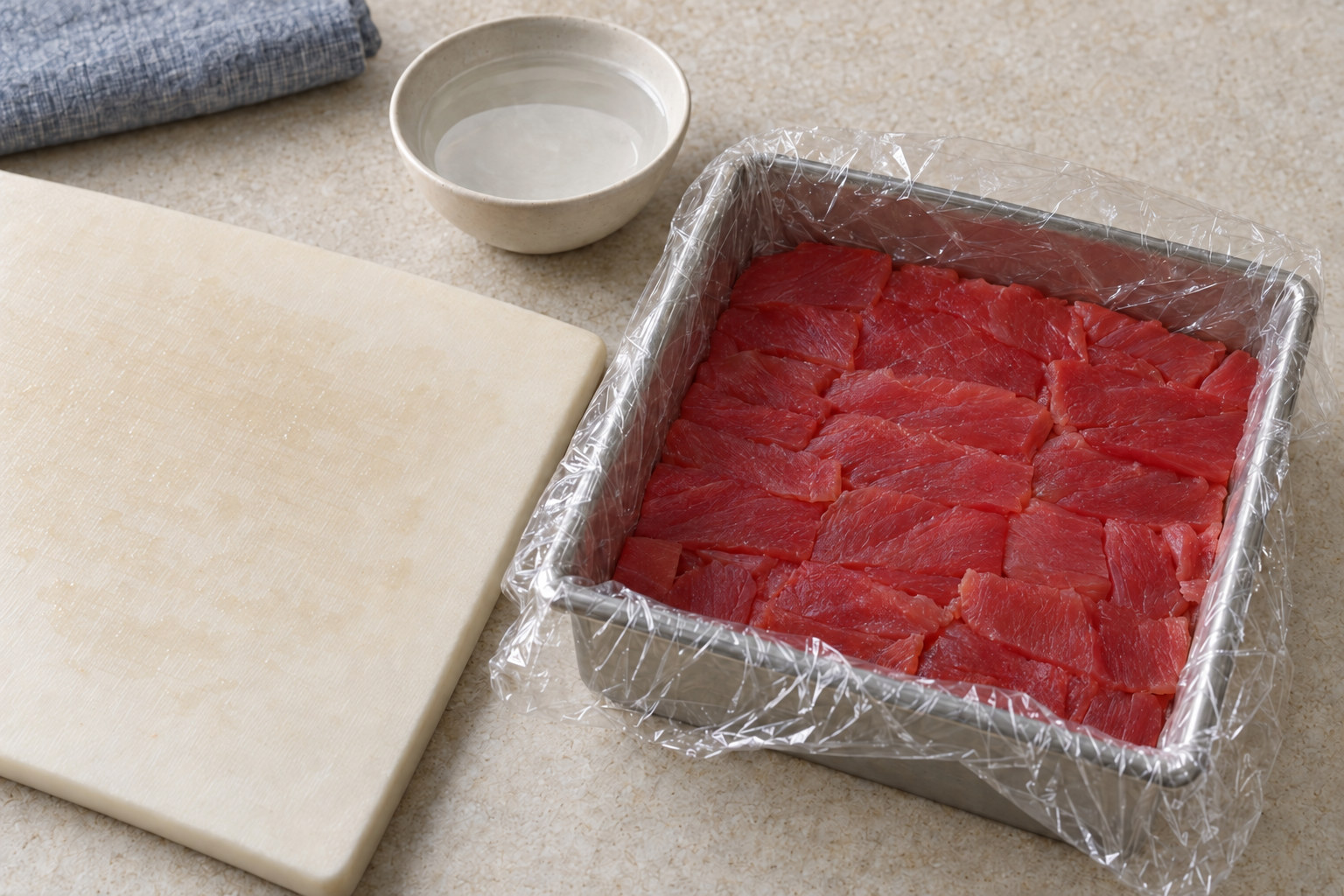
We prepare one mould with an internal base of 18 × 18 cm and at least 4 cm deep. We line it with cling film, leaving plenty of overhang. We pour water with a little rice vinegar into a small bowl for dampening our hands and knife. We cut the chilled tuna across the grain into slices 4 mm thick. We spread all 300 g evenly over the base in a continuous layer about 9 mm thick, filling the gaps with smaller pieces.
We use all the prepared slices and smaller trimmings, arranging them in an even layer right to the edges of the mould.
Layer and briefly press the sushi
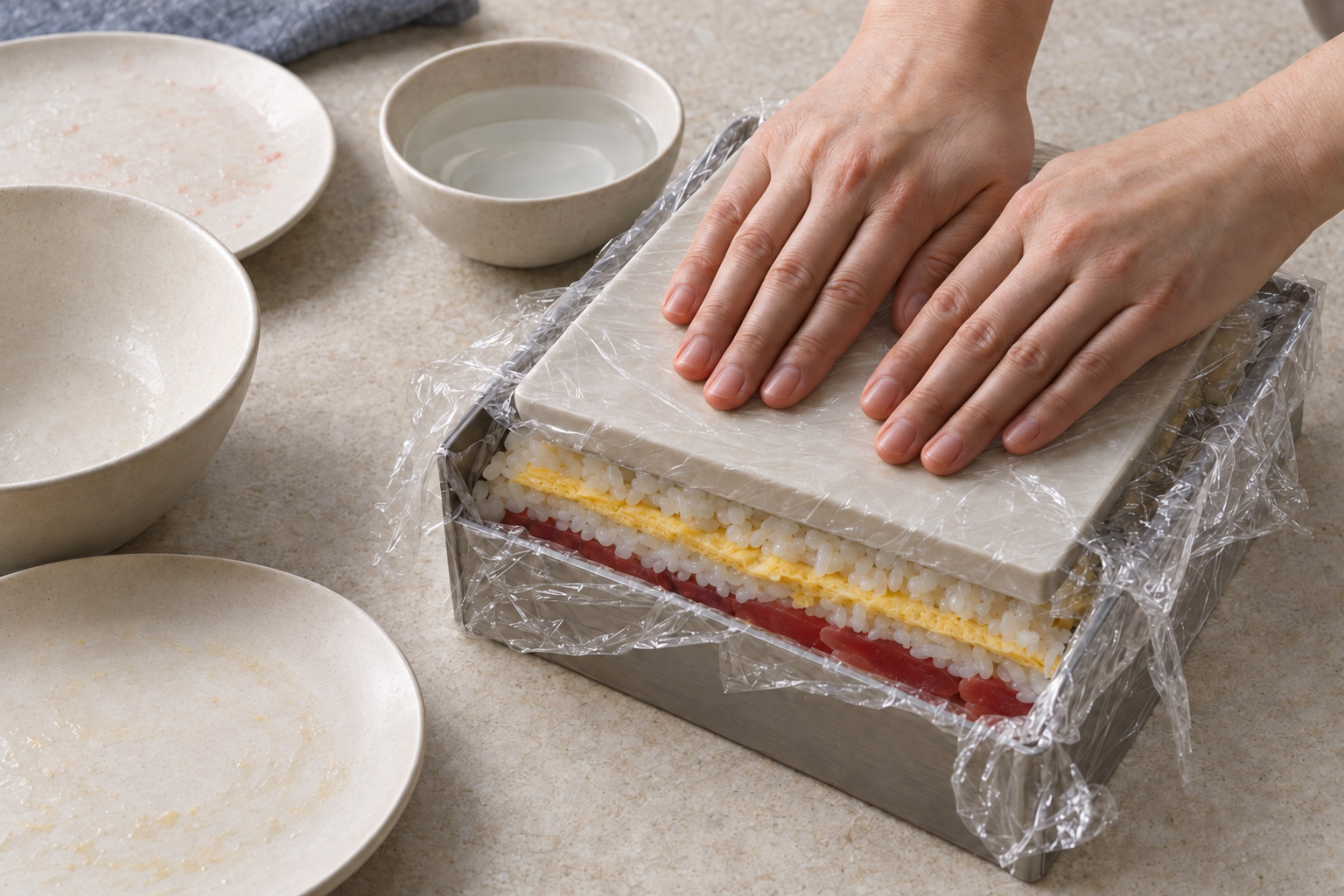
We divide the rice in half. We place the first half on the fish and smooth it into the corners with a damp hand. We cut the omelettes into wide strips and arrange them over the whole surface, filling the edges with smaller pieces. We add the second half of the rice. We fold over the film and press with a flat board for 60 seconds, firmly enough to bind the layers. We leave in the fridge for 10 minutes to firm up.
We press with a clean, flat board, without squeezing juices out of the fish or crushing the rice into a paste.
Turn out and cut
We invert the mould onto a clean chopping board, turn out the sushi and peel away the film, so the fish is on top. We cut the 18 × 18 cm block into a 4 × 4 grid, making 16 squares, each 4.5 cm across. After each cut, we clean the knife and lightly dampen it with the prepared water and vinegar.
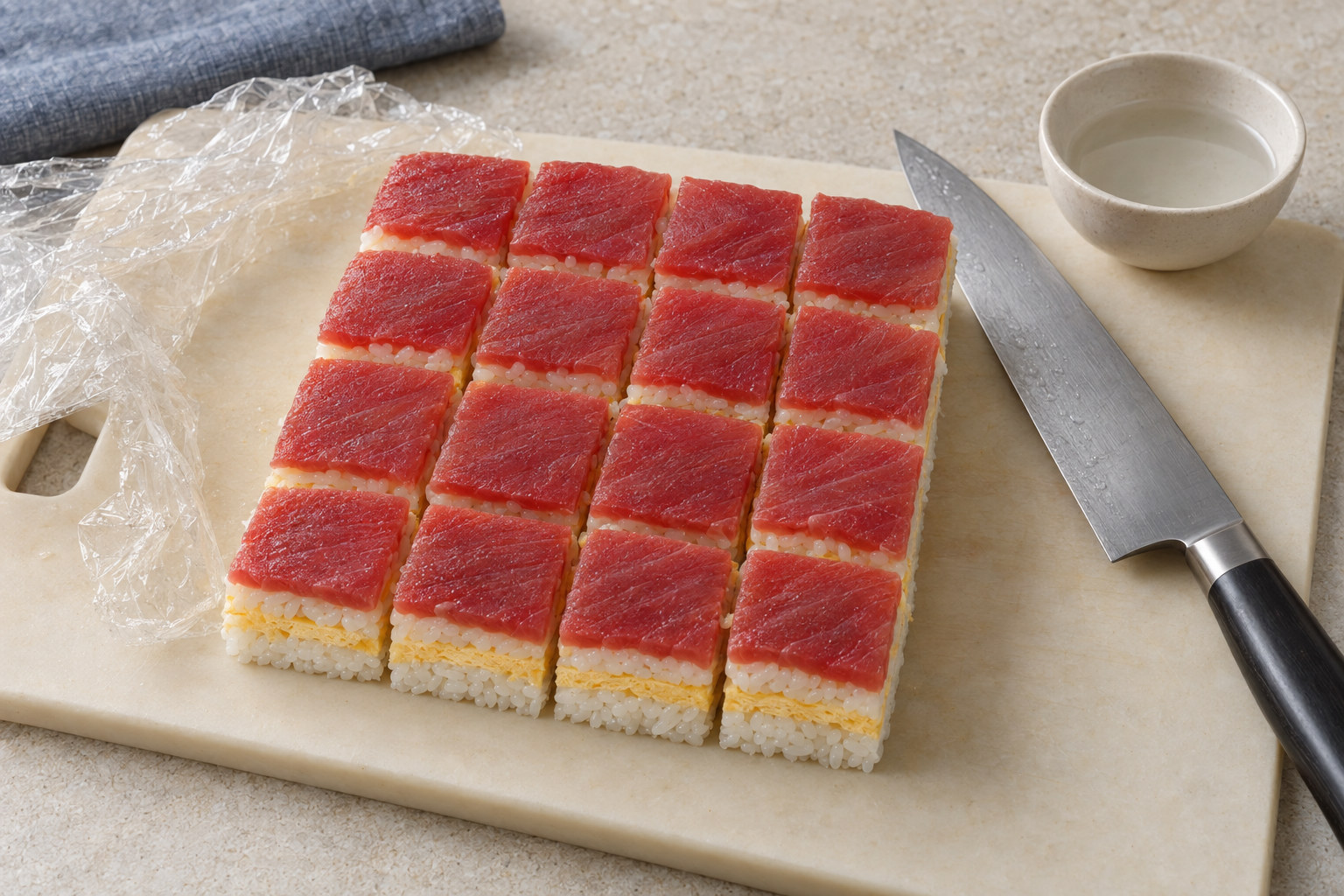
Serve eight pieces per person
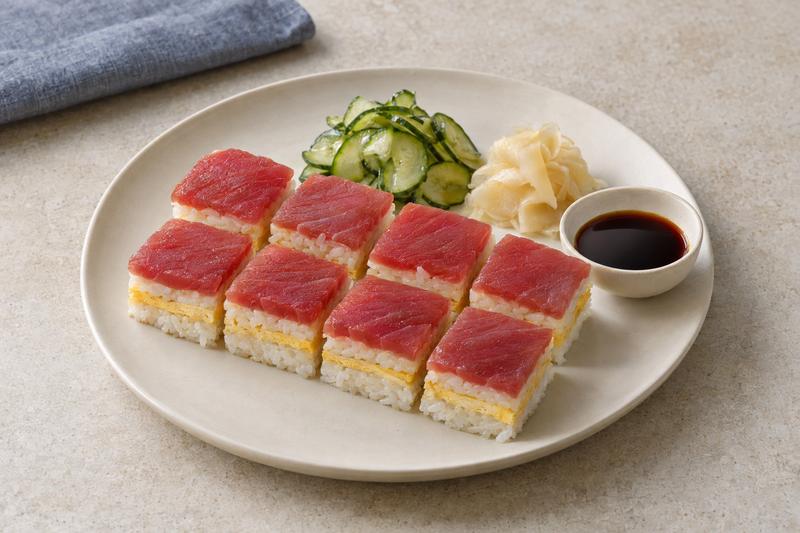
We place eight squares on each of two plates and divide all the drained cucumber and gari between them. We serve the soy sauce in separate small bowls, a teaspoon per person. We serve the sushi as soon as it is cut.
We eat the gari between mouthfuls and do not pour its pickling liquid into the rice.
Tips from our kitchen
- We use unseasoned rice vinegar; a ready-made sweet sushi seasoning would change the balance of sugar and salt.
- We let the rice cool before assembling, but we do not prepare it the day before.
- We fill the corners when pressing so the end pieces hold together as well as those in the middle.
What to watch out for
- Gari made from ordinary ginger will not naturally turn pink.
- We do not combine raw fish with hot rice or pour sauce over it before cutting.
How we serve it
- We serve eight pieces of sushi per person with pickled ginger and cucumber, with soy sauce in a small bowl beside the plate.
Ingredient swaps
Square sushi mould
One rigid container with an internal base of 18 × 18 cm for two people, or two identical containers for four; we line them with cling film. We use the overhanging film to turn out the sushi; a flexible container will not hold straight edges.
Homemade gari
40 g drained shop-bought gari for two people or 70 g for four We omit the entire homemade gari ingredient group and its steps. The total time falls to about 120 minutes for two people or 140 minutes for four.
Ingredient notes
- RED tuna is a marinated, skinless yellowfin tuna fillet. It is sold in a 1 kg pack; we do not salt the fish separately.
During preparation
- We keep the tuna in the fridge at no more than 4 °C until the final stage, use clean utensils and serve the finished dish immediately. For pregnant people, young children and those with weakened immune systems, we choose a fully cooked recipe.
Our inspiration
Pressed sushi, or oshizushi, takes its shape from a box called an oshibako. At home, we can use a rigid container lined with cling film and a flat board for pressing. This simple tool brings the layers together, showing off the colours of the fish, rice and omelette when cut.
Similar recipes
Recipe for 4 people
Step-by-step method
Before we start
We make the gari first. We start preparing the rice 140 minutes before serving and make the omelette while it cooks; we slice the tuna only just before assembling.
Slice and blanch the ginger
We peel the ginger and shave it into translucent slices no more than 0.5 mm thick, toss with ¼ teaspoon of salt and leave to stand for 5 minutes. We boil it in plenty of water for 3 minutes, drain and spread it in a sieve for 5 minutes, then gently squeeze it with a clean hand.
The very thin slices bend easily. Blanching mellows the heat of ordinary mature ginger.
Leave the gari to pickle
In a small saucepan, we heat 85 ml rice vinegar with eight and a half teaspoons of sugar and two pinches of salt just until the sugar and salt dissolve. We put the ginger in a small heatproof bowl, pour over the pickling liquid, leave to cool for 20 minutes, then cover and refrigerate for at least 4 hours.
The slices are submerged in the pickling liquid. We make a small batch for this meal, not a supply for long-term storage.
Cook the rice
About 140 minutes before serving, we rinse the rice thoroughly. We soak it in plenty of water for 20 minutes, strain and leave to drain for 5 minutes. We transfer the drained rice to a saucepan and add 400 ml fresh water. We bring to the boil with the lid on, cook over the lowest heat for 14 minutes and leave off the heat for 10 minutes to finish steaming.
Season and cool the rice
We heat 50 ml vinegar with 5 teaspoons of sugar and ½ teaspoon of salt until the sugar and salt dissolve. We spread the hot rice in two 30 × 25 cm dishes and fold in the seasoning with cutting motions of a spatula. We leave it to cool to no more than 25 °C over 15–20 minutes, then cover lightly.
The grains hold their shape without turning mushy. We later place the fish only on cool rice.
Make the omelette sheets and prepare the cucumber
We whisk the eggs with four teaspoons of water, two and a half teaspoons of sugar and a teaspoon of soy sauce. In a 20 cm non-stick frying pan, we cook 4 thin omelettes of equal size, dividing the oil between them. We cook each over a medium-low heat for about 60–90 seconds, turn and cook for another 20–30 seconds until no liquid egg remains. We lay them on a clean plate and leave to cool for 10 minutes. Meanwhile, we wash the cucumber, cut it into half-moons and mix with the vinegar, sugar and salt set aside for it.
The omelette is cooked through and soft, and the cucumber stays crisp.
Slice the tuna and line the mould
We prepare two identical moulds, each with an internal base of 18 × 18 cm and at least 4 cm deep. We line them with cling film, leaving plenty of overhang. We pour water with a little rice vinegar into a small bowl for dampening our hands and knife. We cut the chilled tuna across the grain into slices 4 mm thick. We spread 300 g evenly over the base of each mould in a continuous layer about 9 mm thick, filling the gaps with smaller pieces.
We use all the prepared slices and smaller trimmings, arranging them in an even layer right to the edges of the mould.
Layer and briefly press the sushi
We divide the rice into four equal parts. We place one part on the fish in each mould and smooth it into the corners with a damp hand. We cut the omelettes into wide strips and arrange the strips from two omelettes in each mould, using the smaller pieces to fill the edges of the same mould. We cover each mould with another part of the rice. We fold over the film and press with a flat board for 60 seconds, firmly enough to bind the layers. We leave in the fridge for 10 minutes to firm up.
We press with a clean, flat board, without squeezing juices out of the fish or crushing the rice into a paste.
Turn out and cut
We turn out each mould in turn onto a clean chopping board and peel away the film, so the fish is on top. We cut each 18 × 18 cm block into a 4 × 4 grid, making 32 squares in total, each 4.5 cm across. After each cut, we clean the knife and lightly dampen it with the prepared water and vinegar.
Serve eight pieces per person
We place eight squares on each of four plates and divide all the drained cucumber and gari between them. We serve the soy sauce in separate small bowls, a teaspoon per person. We serve the sushi as soon as it is cut.
We eat the gari between mouthfuls and do not pour its pickling liquid into the rice.