
From the Boxxi kitchen · Italy, our own way of layering fresh pasta
Homemade open lasagne with trout, fennel and saffron
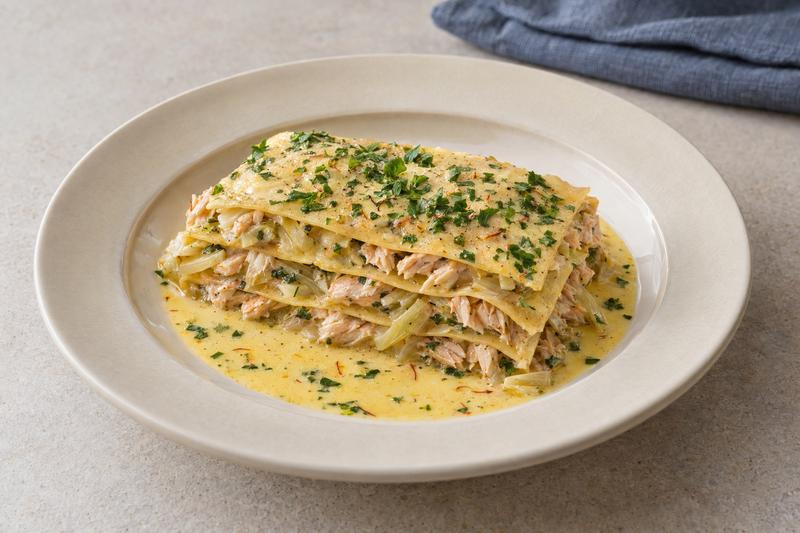
We tuck baked trout and tender fennel between thin sheets of homemade lasagne. Saffron gives the cream sauce a delicate golden colour, while lemon lightens it. We assemble each serving on the plate, leaving the layers on show and keeping the fish in large, juicy flakes.
The dough rests for 30 minutes while we make the sauce. We allow plenty of time for rolling it out and cooking the pasta in two batches at the end.
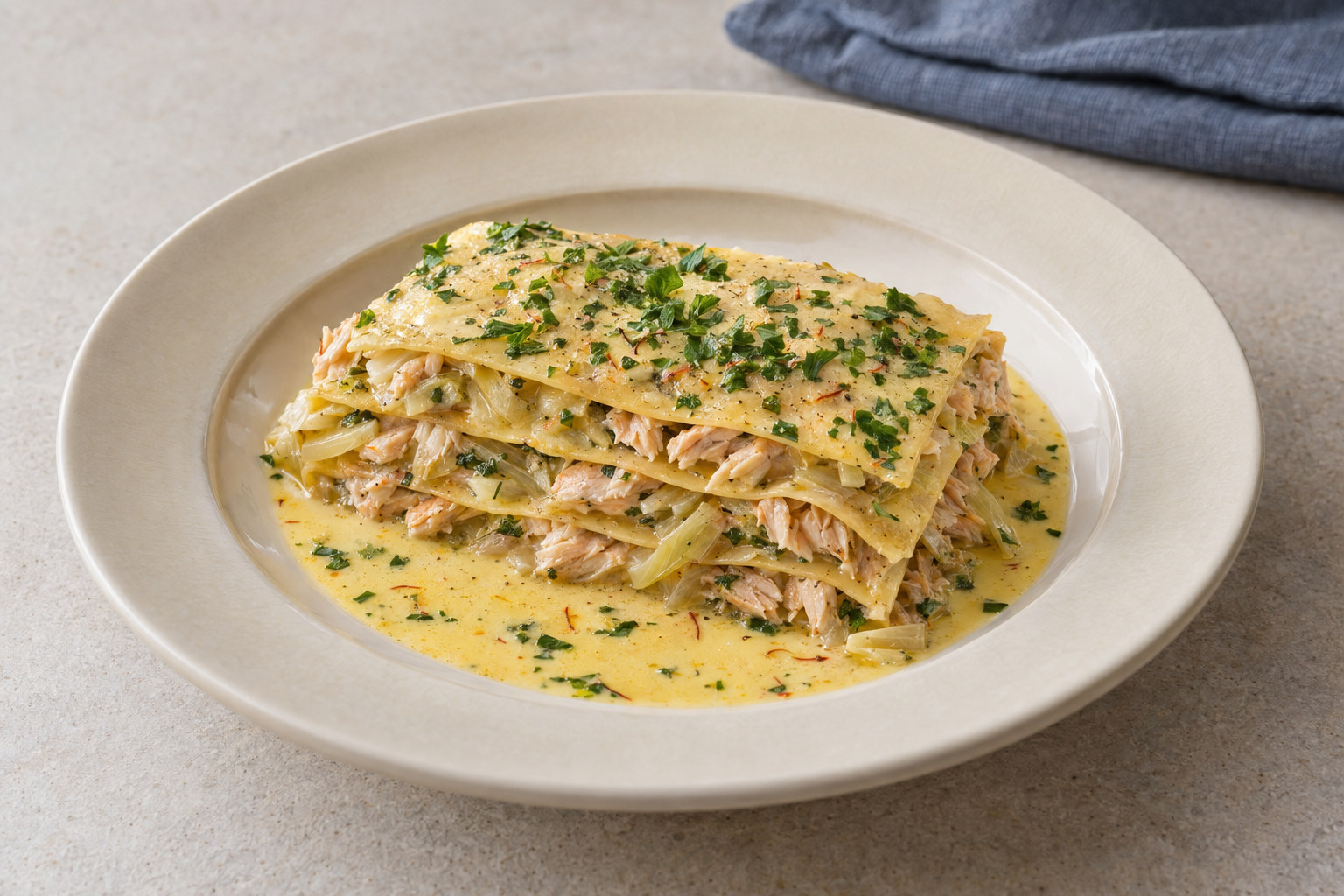
Delicate saffron, sweet fennel, lemon and juicy flakes of fish.
Step-by-step method
What you will need
- kitchen scales
- knife, chopping board, fish-bone tweezers
- probe thermometer
- pasta machine or rolling pin
- clean tea towels
- 24 cm frying pan with a lid
- oven and 30 × 40 cm baking tray
- 5 l saucepan
- wide slotted spoon
- warm plates
Before we start
We finish the sauce before rolling out the dough and put the fish in the oven once the sheets are ready.
Knead the dough
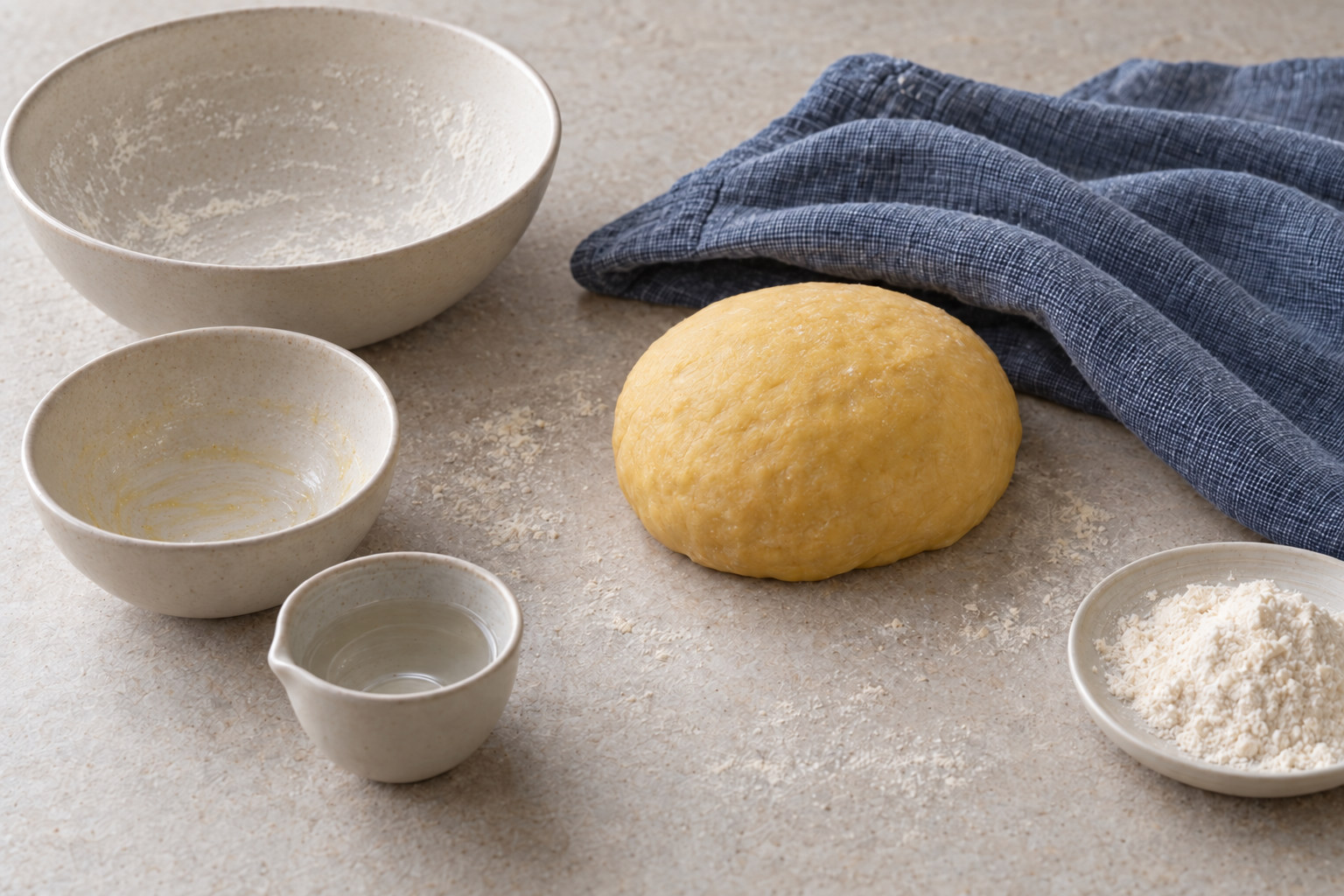
We combine the flour and eggs and knead for about 10 minutes to make a smooth, firm dough. If it crumbles, we dampen our hands and keep kneading. We wrap it and leave it to rest for 30 minutes.
The dough is smooth and elastic, without sticking to our fingers.
Braise the fennel and make the sauce
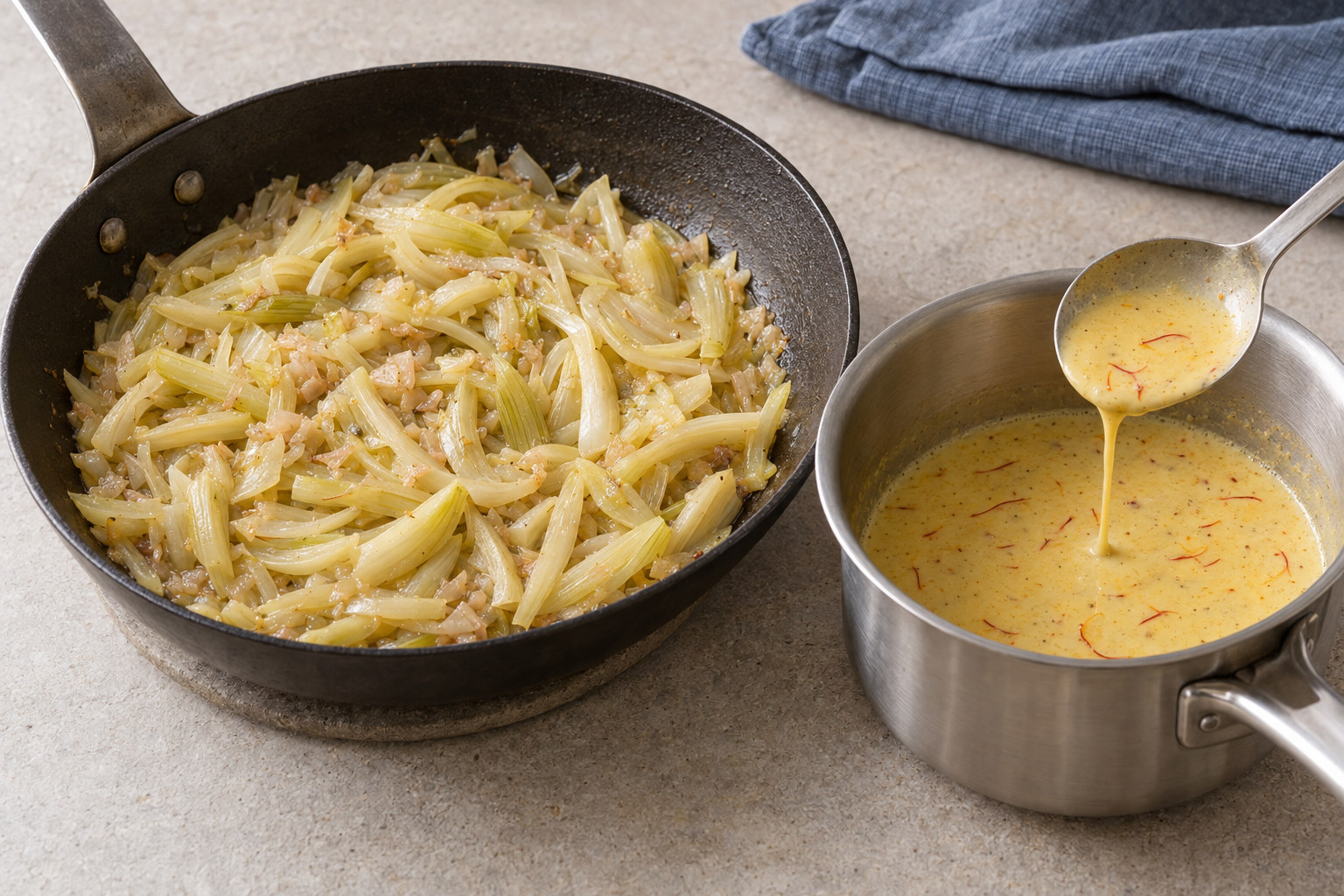
We wash the fennel and cut out the tough core, then peel the shallot. We pour 1 dl hot water over the saffron. In a 24 cm frying pan, we soften the finely chopped shallot in two tbsp butter for 3 minutes, then add the fennel, cut into 2 mm slices, and a quarter tsp salt. We pour in 70 ml wine, let it bubble away for 2 minutes and add the saffron water. We cover and braise for 15 minutes. We lift out the fennel, pour 120 ml cream into the cooking juices and reduce for 5–7 minutes to approximately 150 ml sauce.
The fennel is tender and the sauce coats a spoon.
Roll out thin sheets
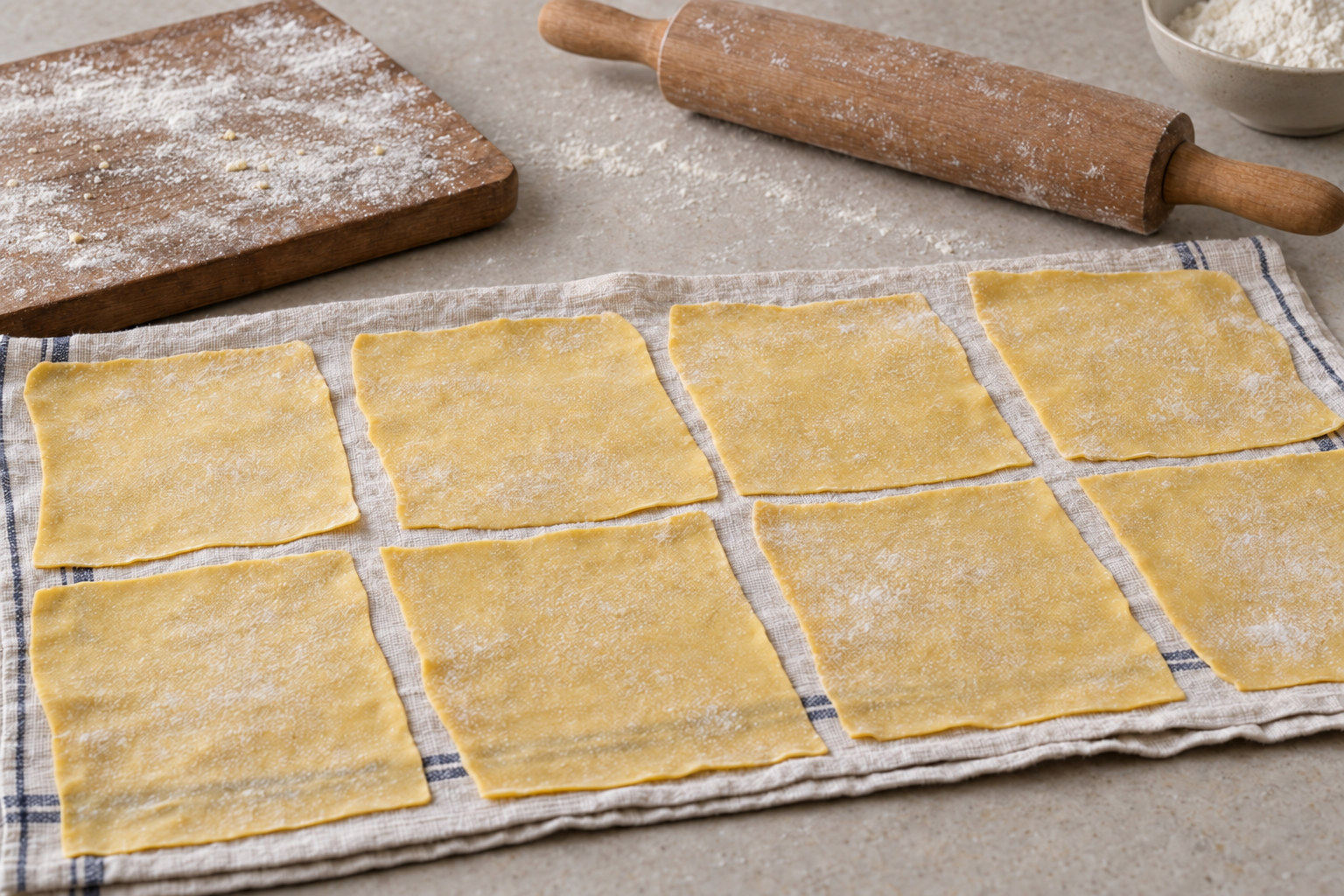
We divide the dough into 8 pieces and roll each one out on a lightly floured surface to a sheet approximately 12 × 18 cm and 1 mm thick. The edges need not be perfectly straight. We spread the sheets out on clean tea towels and cover them to keep them from drying out.
The sheets are an even thickness and are not stacked without a dusting of flour between them.
Bake the fish and bring the water to the boil
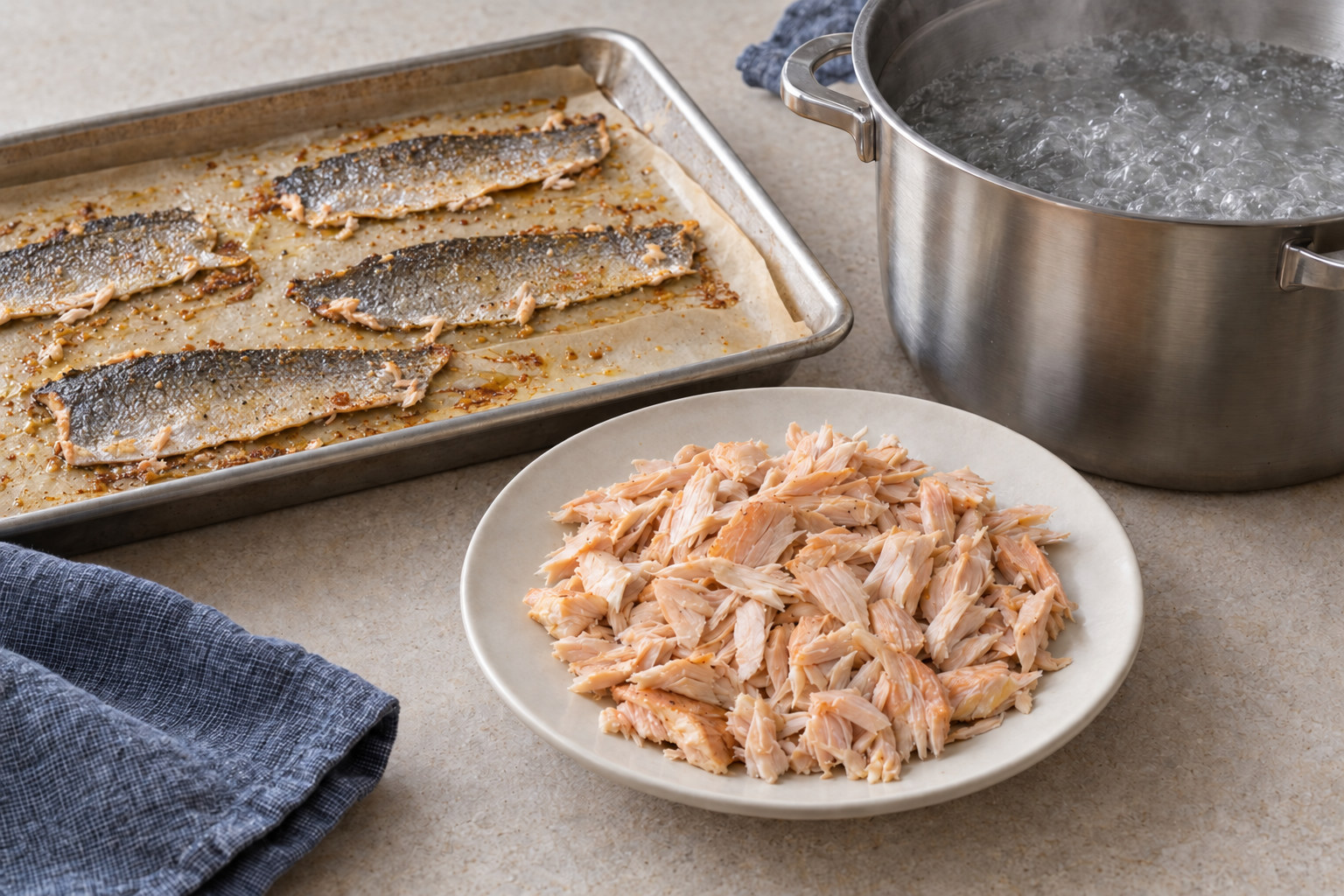
We preheat the oven to 180 °C, conventional heat. We remove any bones with tweezers, salt the fish, brush it with a tsp oil and bake skin-side down on a tray for 12–16 minutes, until the thickest part reaches 63 °C. Meanwhile, we bring salted water to the boil in a 5 l saucepan. We remove the skin from the cooked fish and break all the flesh into large flakes.
The water is boiling before the fish comes out of the oven, and the plates are ready.
Cook the pasta and assemble the servings
We wash, dry and chop the parsley. We return the sauce to a low heat and add the lemon juice and fennel. We divide both the fish and fennel into two servings, then divide each serving into three for the three layers of filling. We cook the eight pasta sheets in two batches of 4 for 2–3 minutes. We lift the first batch onto two warm plates lightly coated with sauce: on each plate, we put a sheet, a third of that serving's fish and fennel, and a second sheet. While the second batch cooks, we add the second third of the filling. We then add a third sheet, the last third of the filling and a fourth sheet. We pour over the remaining sauce and scatter with parsley; the first batch waits only for the second batch to cook.
We lift the sheets with a wide slotted spoon and keep them from sticking together.
Tips from our kitchen
- We first steep the saffron in a little warm liquid to release its aroma. We use it sparingly, as it should complement the fish.
What to watch out for
- Too much saffron will overpower the delicate flavour of the trout.
How we serve it
- On each warmed plate, we alternate four pasta sheets with three layers of trout and fennel. We pour over the saffron sauce, scatter with parsley and serve immediately.
Ingredient swaps
Saffron
We leave out the saffron and add finely grated lemon zest to the sauce: ½ tsp for two servings or 1 tsp for four. This makes a pale lemon version, rather than reproducing the aroma of saffron.
Fennel
The white and pale green parts of 1 medium leek for 2 servings or 2 leeks for 4 servings. We slice them into thin strips and braise for 8–10 minutes. The filling will be sweeter, without the aniseed aroma.
Ingredient notes
- A 500 g pack contains 3–4 skin-on fillets. We use 500 g for two people or 1000 g for four. We leave the skin out of the lasagne after cooking, dividing the fish evenly between the servings.
During preparation
- We use a separate chopping board for raw fish and wash our hands and utensils before handling ready-to-eat food. Before cooking, we remove any remaining bones with tweezers. We heat the thickest part of the fish to at least 63 °C, taking the reading away from any bone.
Our inspiration
Tagliatelle, lasagne and filled tortellini can all begin with the same combination of flour and eggs. A rolling pin and knife then shape the dish. We leave our dough in broad, thin sheets with room for the fish and fennel between them; slightly uneven edges are no problem when we assemble the layers on the plate.
Similar recipes
Recipe for 4 people
We roll out sixteen sheets in stages; two saucepans allow us to serve all four portions together.
Step-by-step method
Before we start
We line up four plates for serving and bring the water to the boil in both saucepans at the same time.
Knead the dough
We combine the flour and eggs and knead for about 10 minutes to make a smooth, firm dough. If it crumbles, we dampen our hands and keep kneading. We wrap it and leave it to rest for 30 minutes.
The dough is smooth and elastic, without sticking to our fingers.
Braise the fennel and make the sauce
We wash the fennel and cut out the tough cores, then peel the shallots. We pour 160 ml hot water over the saffron. In a 28 cm frying pan, we soften the finely chopped shallots in three tbsp butter for 4 minutes, then add the fennel, cut into 2 mm slices, half a tsp salt and 120 ml wine. We let it bubble away for 3 minutes, add the saffron water, cover and braise for 15–18 minutes. We lift out the fennel, pour in 210 ml cream and reduce for 8–10 minutes to 270 ml sauce.
The fennel is tender and the sauce coats a spoon.
Roll out thin sheets
We divide the dough into 16 pieces. We lightly dust the worktop as we go, using the 25 g flour set aside for dusting, and roll out sheets approximately 12 × 18 cm and 1 mm thick. We work in stages and spread the finished sheets between clean tea towels.
The sheets are an even thickness and are not stacked without a dusting of flour between them.
Bake the fish and bring the water to the boil
We preheat the oven to 180 °C fan. We remove any bones with tweezers, spread the fish skin-side down over two baking trays and brush with a total of two tsp oil, then season with a total of three-quarters of a tsp salt. We bake for 14–18 minutes, swapping the trays halfway through. As soon as the fish goes into the oven, we start heating water in two 5 l saucepans, adding half the salt set aside for cooking the pasta to each so that the water is boiling in time. Once the thickest part of the fish reaches 63 °C, we take the fillets out, remove the skin and break the flesh into large flakes.
The water is boiling before the fish comes out of the oven, and the plates are ready.
Cook the pasta and assemble the servings
We wash, dry and chop the parsley. We warm the sauce with the lemon juice and fennel. We cook 4 sheets in each of the two saucepans at the same time for 2–3 minutes, then cook a second batch in the same way. Each warm plate receives 4 pasta sheets, a quarter of the fish and fennel and a quarter of the sauce. We divide the filling evenly between the layers and add the parsley at the end.
We lift the sheets with a wide slotted spoon and keep them from sticking together.