
From the Boxxi kitchen · Mediterranean-inspired
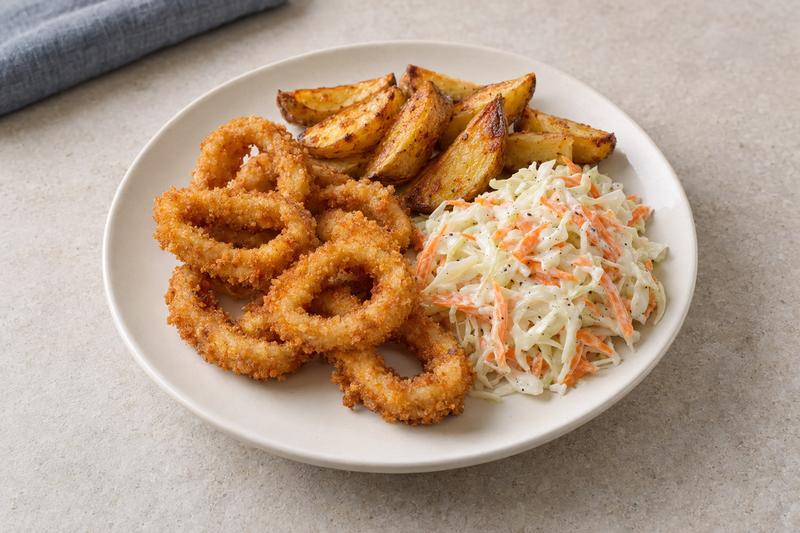
Crisp squid rings with potatoes and coleslaw
We serve golden squid rings with skin-on roast potatoes and fresh coleslaw. Yoghurt, lemon and a little mustard lighten each mouthful; we keep the slaw alongside so the batter stays crisp.
We roast the potatoes first and make the slaw while they cook. We fry the rings at the end; the total time includes all batches.
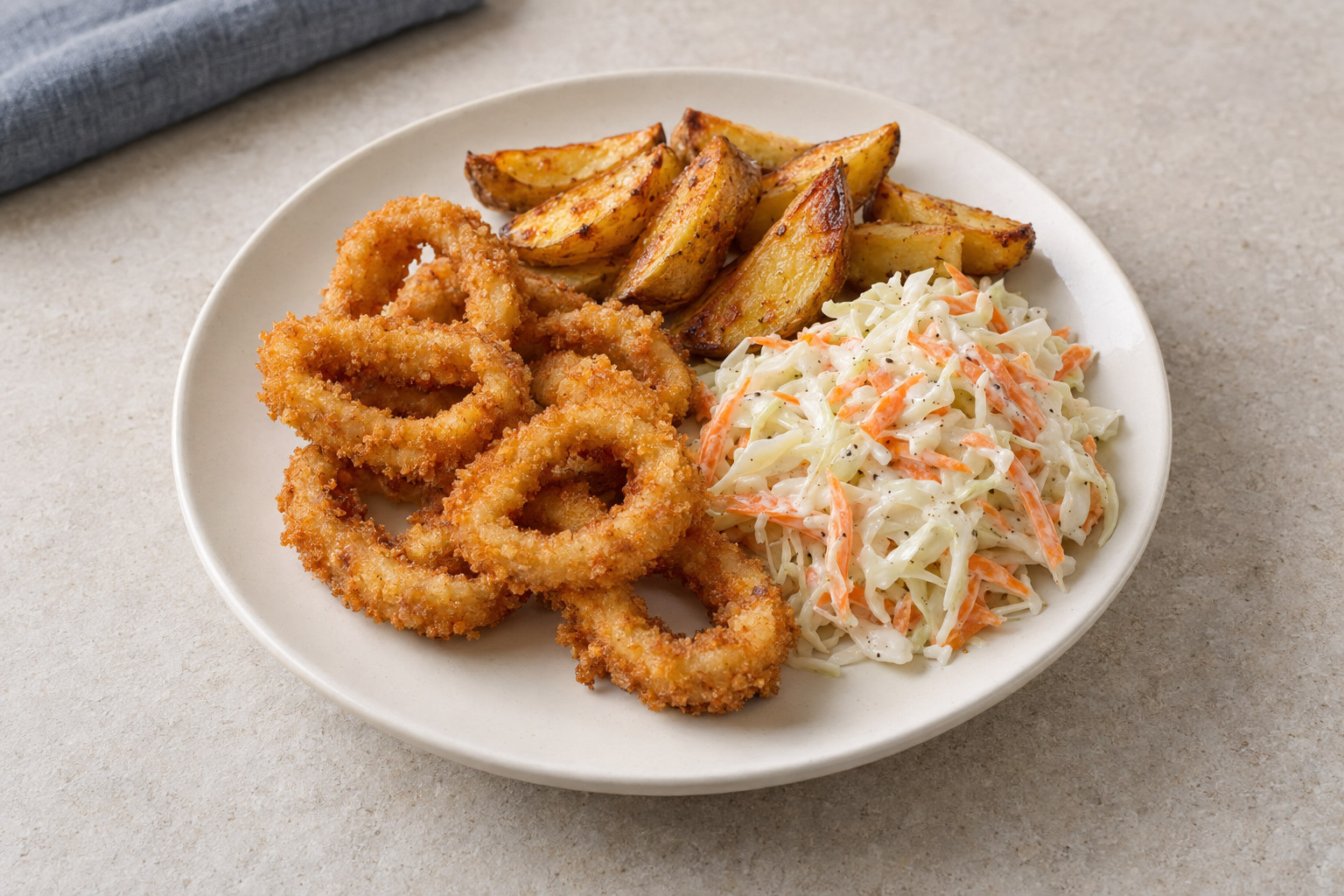
Crisp batter and roast potatoes are complemented by juicy cabbage and carrot in a lightly tangy yoghurt dressing.
Step-by-step method
What you will need
- kitchen scales
- knife and chopping board
- measuring jug
- probe thermometer
- deep 4 l pan, 22 cm in diameter, for frying
- thermometer suitable for hot oil
- slotted spoon
- wire rack over a 40 × 30 cm baking tray
- oven
- grater
- 1 baking tray, 40 × 30 cm, for the potatoes
- salad bowl
Before we start
We finish the slaw before heating the oil. Once we start frying, we leave the chopping and dressing aside.
Roast the potatoes
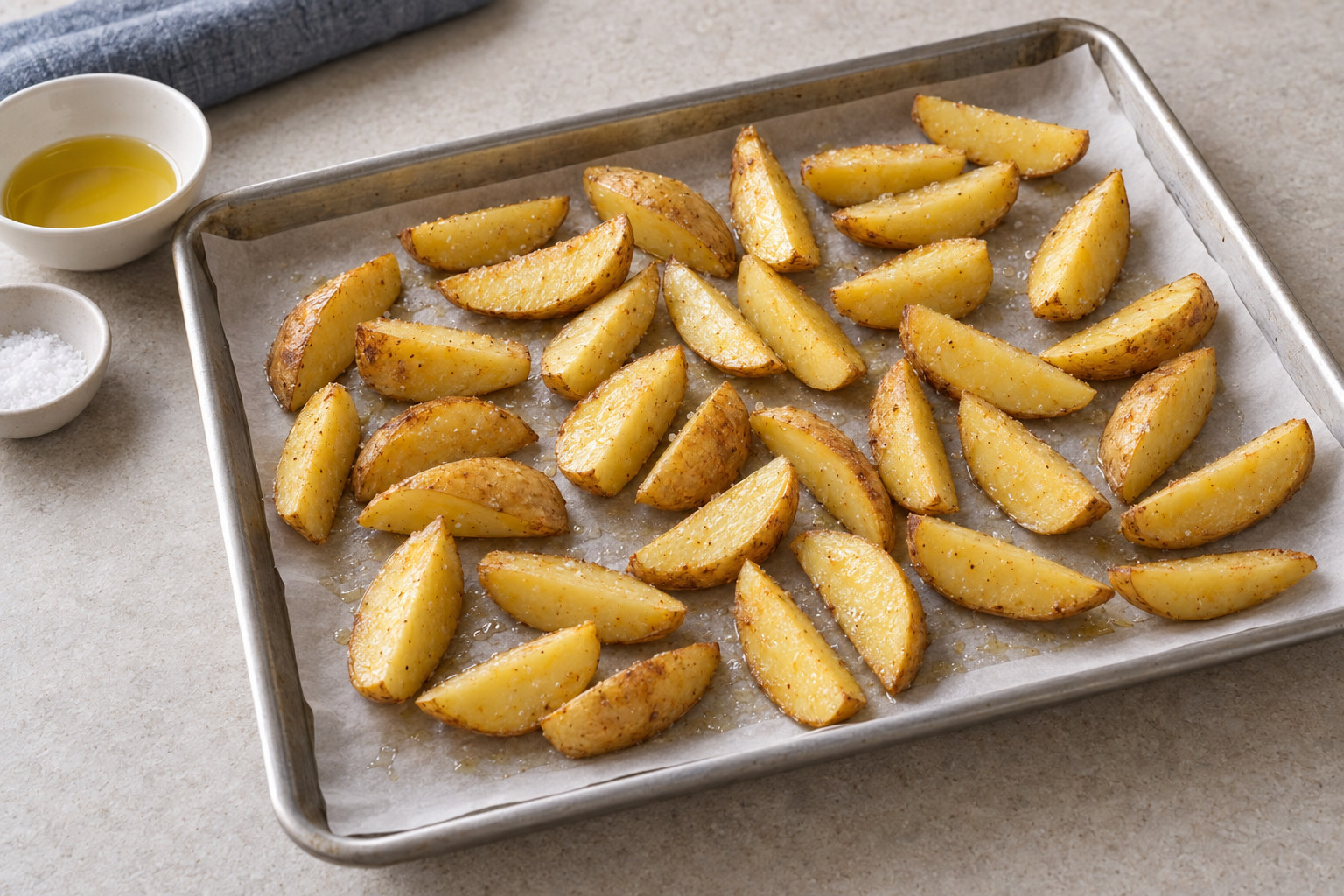
We preheat the oven to 210 °C with top and bottom heat. We wash the potatoes thoroughly and cut them into 1.5 cm wedges, leaving the skins on. We toss with two teaspoons of oil and a quarter of a teaspoon of salt, spread in a single layer on one baking tray and roast for 30–40 minutes, turning halfway through.
The potatoes have soft centres and golden edges; the variety also affects cooking time.
Mix the crisp slaw
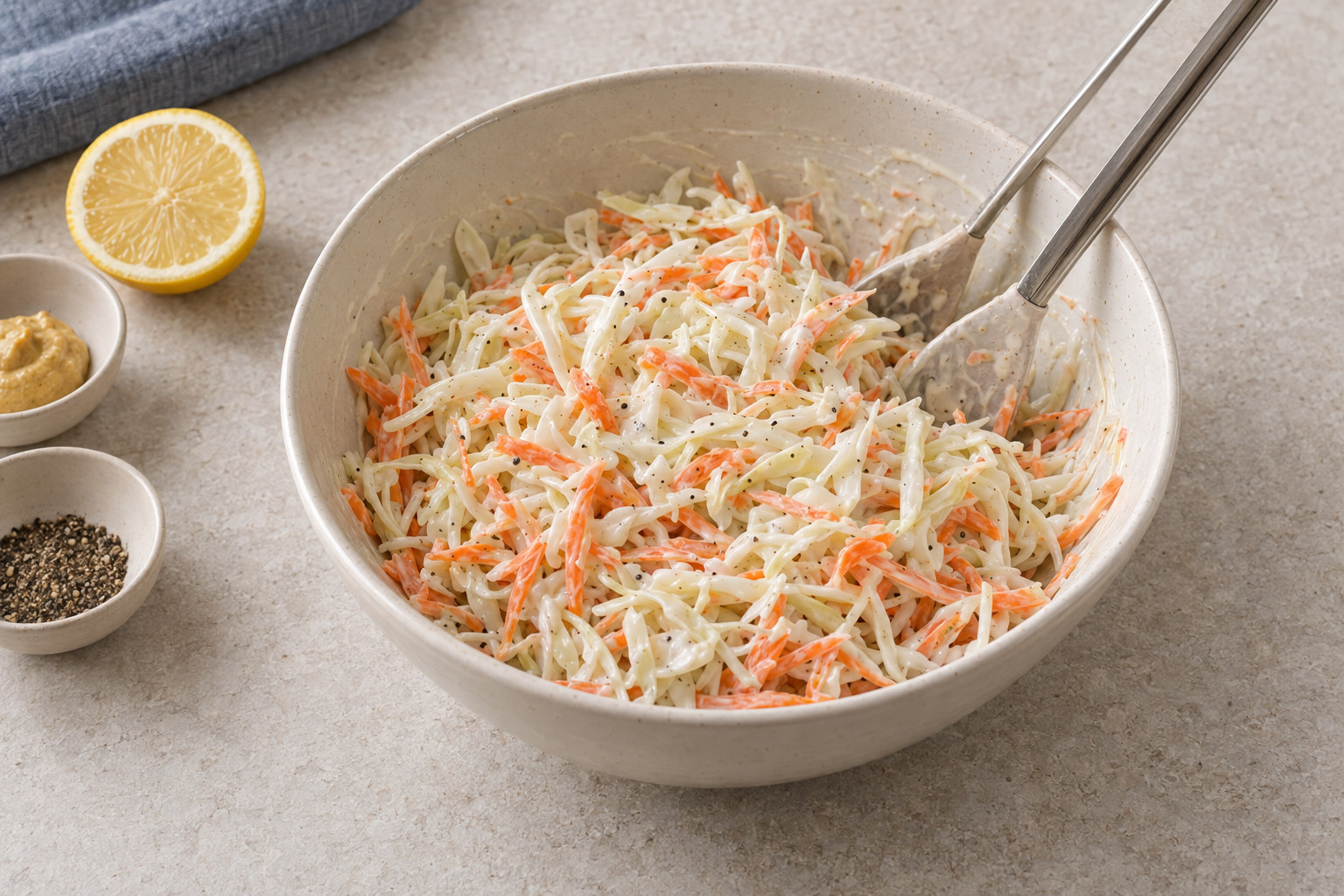
We wash the cabbage and cut out the tough core, then peel the carrot. We finely shred the cabbage and coarsely grate the carrot. We mix the yoghurt with a tablespoon of lemon juice, mustard and pepper, stir in the vegetables, then cover and chill. We do not add any extra salt to the slaw.
We do not pour water over the vegetables or squeeze them until soft; they should have a pleasant crunch.
Finish the squid rings
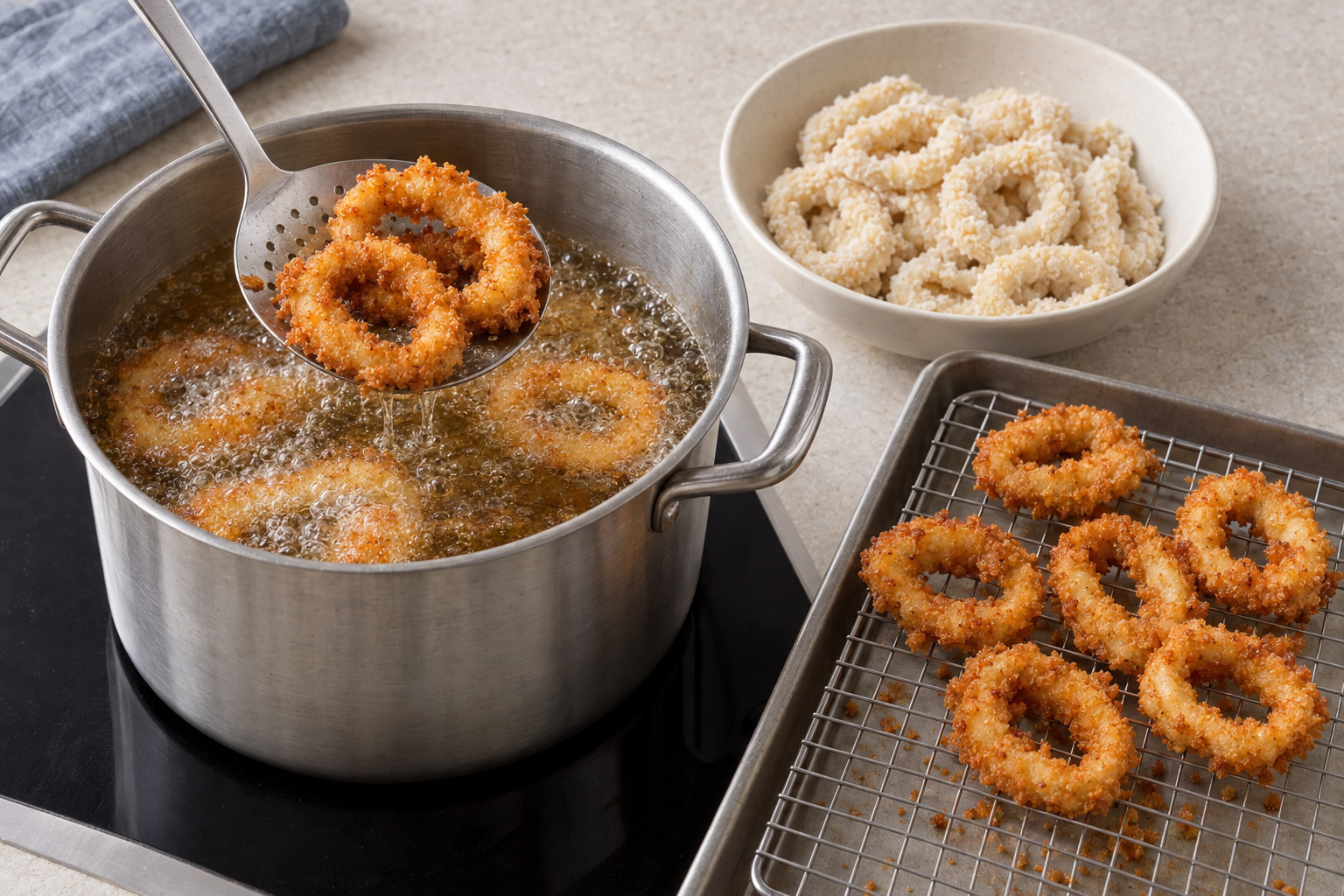
Once the potatoes are cooked, we turn the oven down to 100 °C and briefly open the door. We leave the potatoes inside. In a 4 l pan, 22 cm in diameter, we heat 1200 ml oil to 175 °C. We divide the rings into 2 batches of no more than 200 g; they should float freely in the oil, and we separate any rings that have stuck together. We fry each batch for about 3–5 minutes, turning during cooking. Between batches, we reheat the oil to 175 °C. We check that the centre of the first thicker piece reaches at least 63 °C, adjusting the frying time if required by the label. We lift the cooked rings onto a wire rack over a baking tray with a slotted spoon and keep them uncovered in the oven at 100 °C. No more than 12 minutes must pass between cooking the first batch and serving. After frying, we leave the oil to cool in the pan.
The rings have a golden, dry and crisp coating and are hot right through.
Serve the rings with potatoes and slaw
We divide the rings and potatoes evenly between 2 plates. We add all the slaw alongside so the yoghurt does not soften the coating. We serve as soon as the final batch is ready.
Tips from our kitchen
- We do not add any extra flour or batter.
What to watch out for
- Overcrowding the pan sharply lowers the oil temperature and the coating starts absorbing fat.
How we serve it
- We put the rings and potatoes on plates and add the slaw alongside so the yoghurt dressing does not get underneath the crisp coating. We serve as soon as the final batch is fried.
Ingredient swaps
Dijon mustard
The same amount of mild yellow mustard The slaw will be milder; the mustard allergen remains.
Ingredient notes
- We use pre-fried battered squid rings from a 500 g pack. When finishing the cooking, we also follow the instructions on the supplied label.
During preparation
- We put the rings into the oil with a dry surface and no excess water. We fill the pan no more than one-third full with oil and never leave it unattended while frying.
Our inspiration
In Madrid, fried squid in bread is one of the city’s specialities, found around Plaza Mayor too. That simple pairing of hot, crisp coating and tender squid inspired us. Here, we serve it on a plate with roast potatoes and coleslaw.
Similar recipes
Recipe for 4 people
Step-by-step method
Before we start
We finish the slaw before heating the oil. Once we start frying, we leave the chopping and dressing aside.
Roast the potatoes
We preheat the fan oven to 200 °C. We wash the potatoes thoroughly and cut them into 1.5 cm wedges, leaving the skins on. We toss with one and a half tablespoons of oil and half a teaspoon of salt, spread between two baking trays, half on each in a single layer, and roast for 30–40 minutes. Halfway through, we turn the potatoes and swap the trays between oven shelves.
The potatoes have soft centres and golden edges; the variety also affects cooking time.
Mix the crisp slaw
We wash the cabbage and cut out the tough core, then peel the carrots. We finely shred the cabbage and coarsely grate the carrots. We mix the yoghurt with five teaspoons of lemon juice, mustard and pepper, stir in the vegetables, then cover and chill. We do not add any extra salt to the slaw.
We do not pour water over the vegetables or squeeze them until soft; they should have a pleasant crunch.
Finish the squid rings
Once the potatoes are cooked, we turn the oven down to 100 °C and briefly open the door. We leave the potatoes inside. In a 6 l pan, 26 cm in diameter, we heat 2000 ml oil to 175 °C. We divide the rings into 4 batches of no more than 200 g; they should float freely in the oil, and we separate any rings that have stuck together. We fry each batch for about 3–5 minutes, turning during cooking. Between batches, we reheat the oil to 175 °C. We check that the centre of the first thicker piece reaches at least 63 °C, adjusting the frying time if required by the label. We lift the cooked rings onto a wire rack over a baking tray with a slotted spoon and keep them uncovered in the oven at 100 °C. No more than 20 minutes must pass between cooking the first batch and serving. After frying, we leave the oil to cool in the pan.
The rings have a golden, dry and crisp coating and are hot right through.
Serve the rings with potatoes and slaw
We divide the rings and potatoes evenly between 4 plates. We add all the slaw alongside so the yoghurt does not soften the coating. We serve as soon as the final batch is ready.