
French-inspired · From the Boxxi kitchen
Savoury mille-feuille with prawns, dill and tomato salad
Three crisp, buttery pastry layers sandwich a cool dill cream packed with prawns. We make this savoury mille-feuille when we want to take care with the presentation too. Tomatoes and radishes add juiciness and freshness. The homemade pastry takes most of the work, but rewards us with delicate layers that crackle when cut.
The time includes four folds of the pastry, at least 105 minutes of chilling, baking and cooling the layers. We bake all the layers in one batch. Further chilling if the butter softens will add to the time.
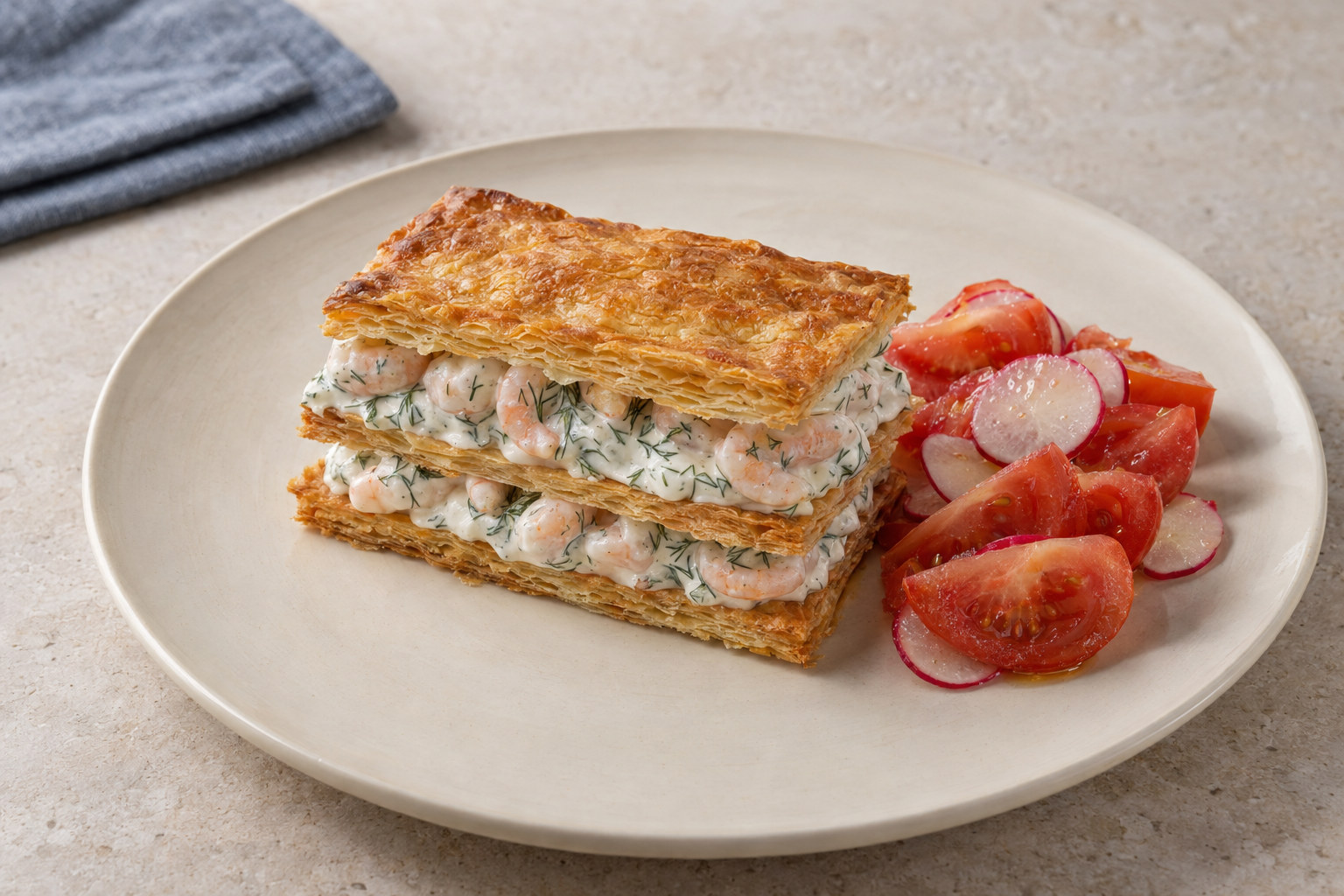
Crisp, buttery pastry, delicate prawns with dill and lemon, and a juicy tomato salad with radishes.
Step-by-step method
What you will need
- two flat baking trays, 40 × 30 cm
- baking paper
- rolling pin
- ruler
- cooling rack
- a 2 l bowl
- an oven
- space in the fridge for the pastry and filling
- kitchen scales
- a measuring jug
- a knife and chopping board
Before we start
We chill the pastry between folds. We make the filling during the final chill and keep it in the fridge. We bake one batch of six layers. We assemble only once the pastry has cooled completely.
Bring the pastry together
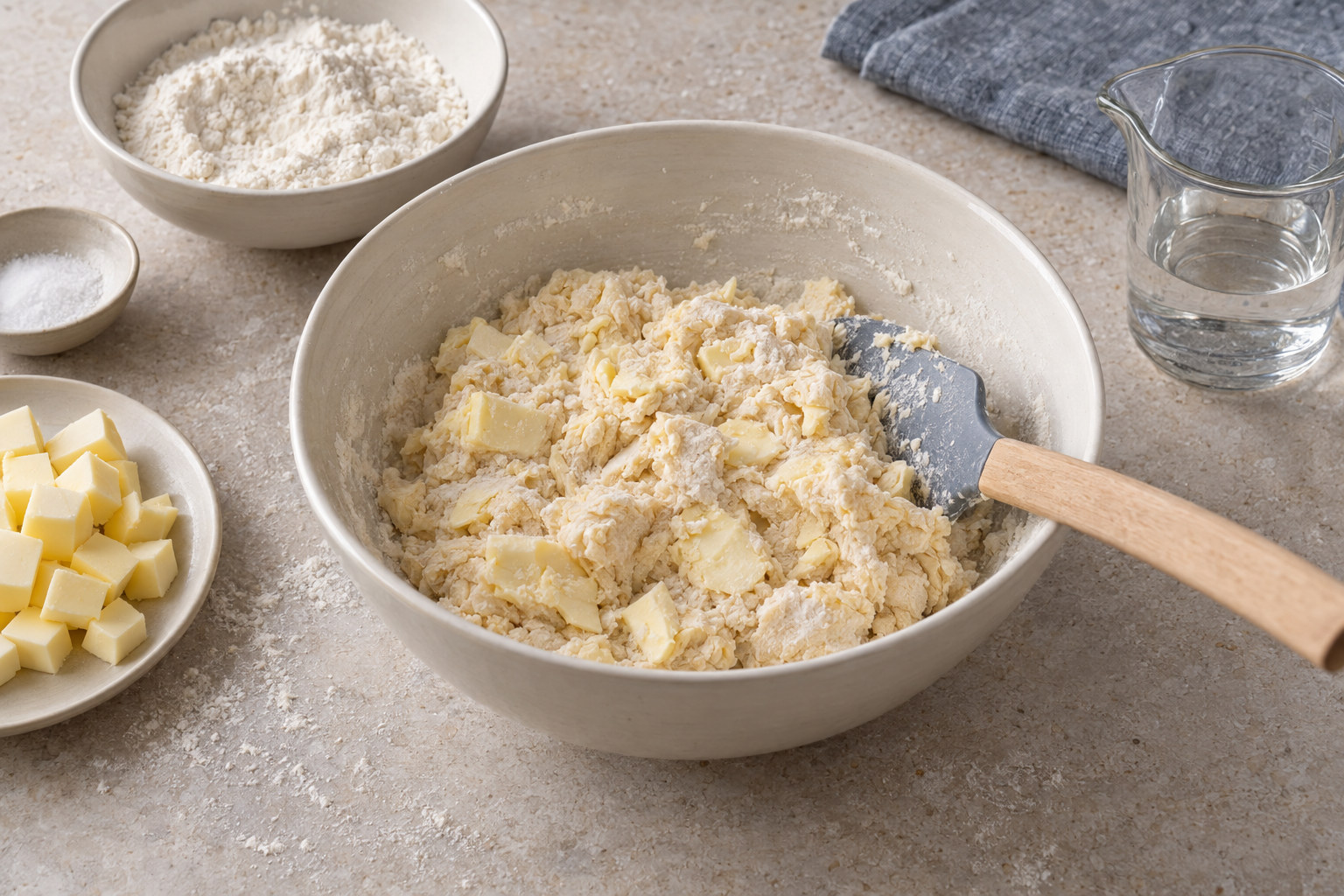
We mix 120 g flour with the salt. We add the butter, cut into 1 cm cubes, and briefly flatten the pieces with our fingers in the flour. Visible flakes of butter should remain in the dough. We pour in 60 ml cold water and use a spatula just to bring the mixture together. We do not knead until smooth. We wrap the dough and chill for 30 minutes.
Cold pieces of butter are still visible in the pastry and the surface is not greasy.
Fold and chill
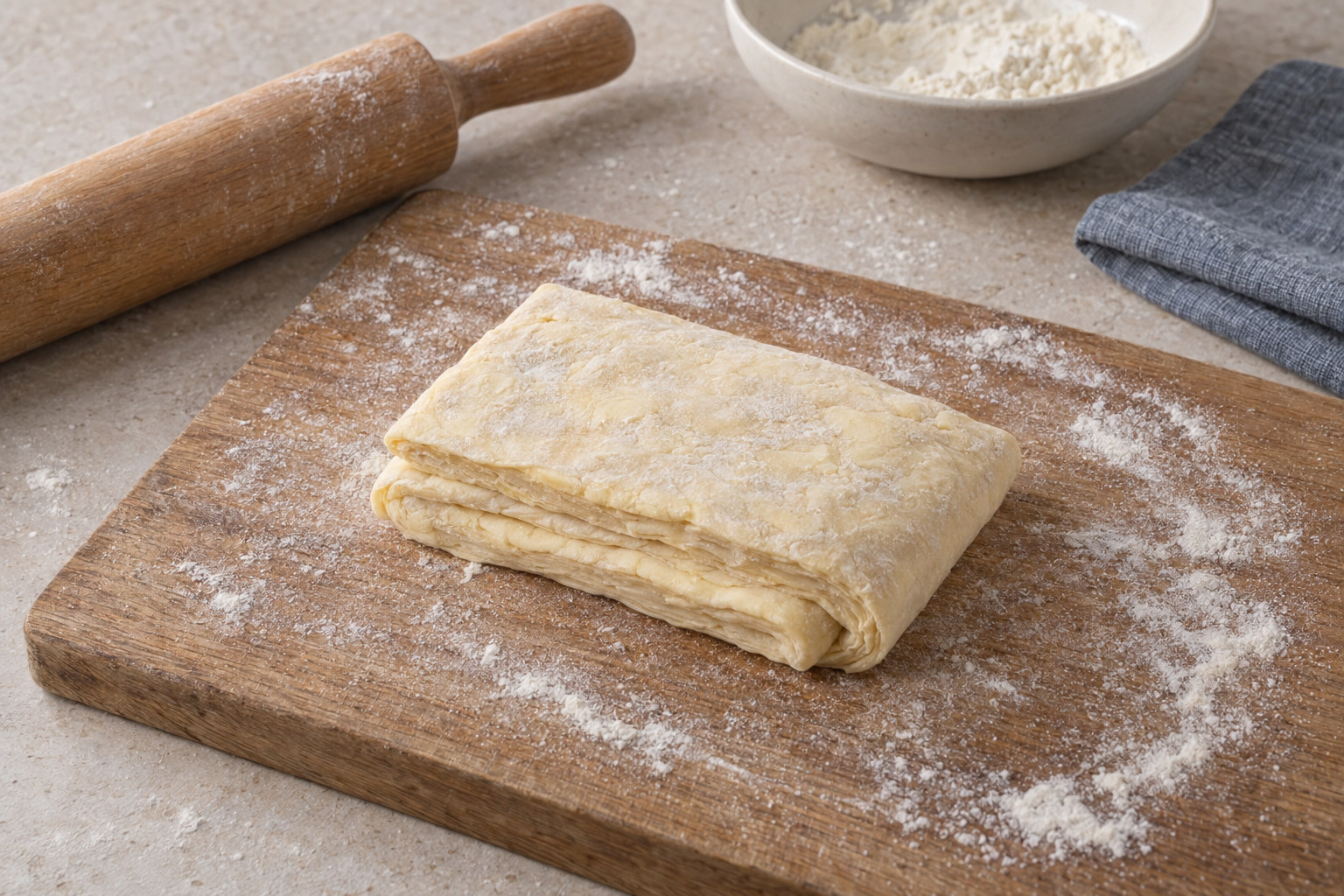
On a lightly floured surface, we roll the dough into a rectangle about 15 × 30 cm. We fold the shorter sides in thirds over one another like a letter, turn it a quarter turn, then roll it out and fold it again. We chill for 25 minutes. We repeat the same two folds once more and chill for another 30 minutes. We use the flour for dusting sparingly: we add only enough to stop the dough sticking and we brush off the excess. If the butter starts to soften or the dough springs back, we stop and chill it for an extra 10 minutes.
We give the pastry four simple folds; we do not squash the butter layers with warm hands.
Cut the pastry layers
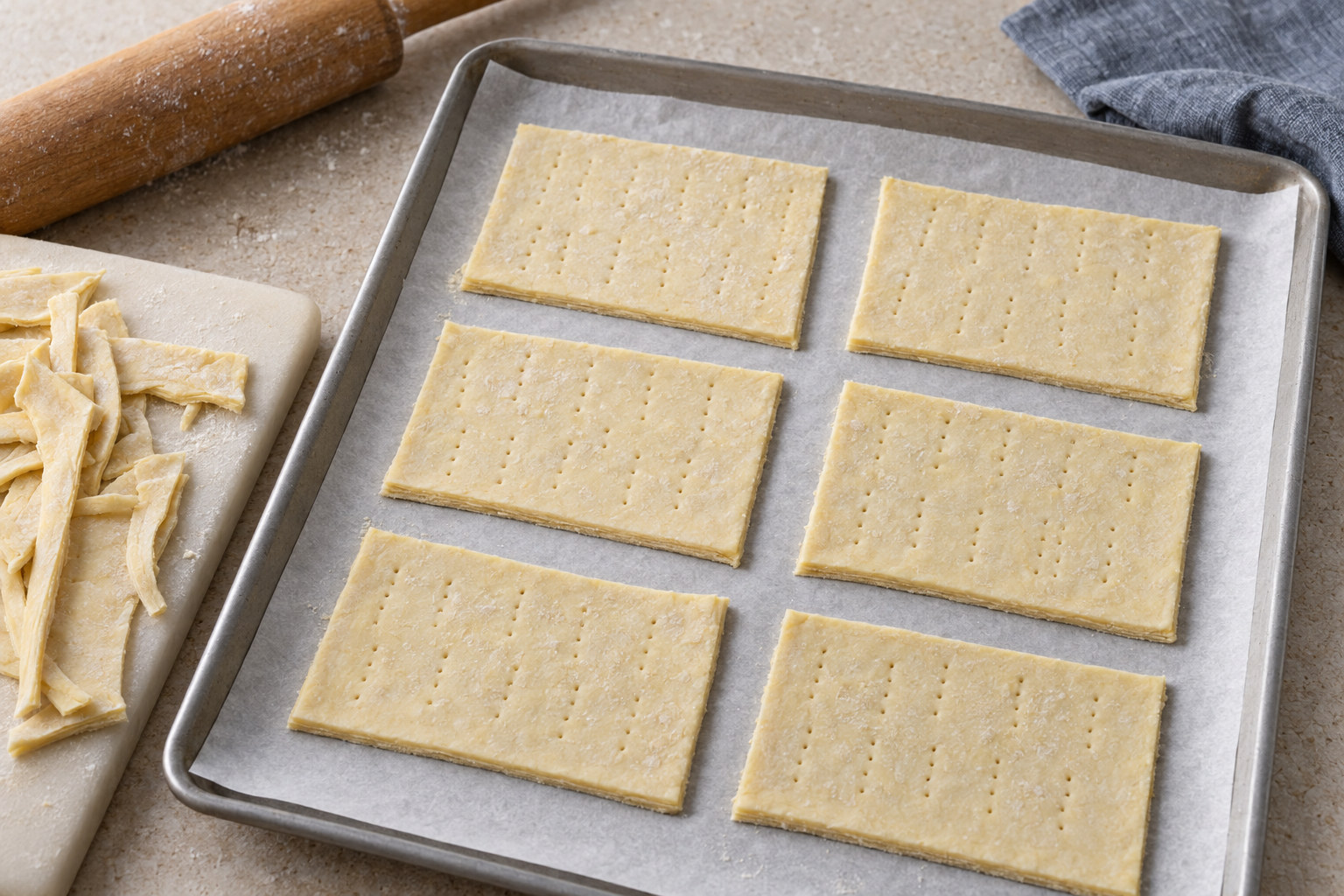
We roll the dough to about 27 × 27 cm and 3 mm thick. We cut six neat 12 × 8 cm rectangles, cutting straight down with a sharp knife. We keep the trimmings separate; we do not knead them into the main layers. This gives us six layers. We prick them with a fork and chill on baking paper for another 20 minutes. Meanwhile, we preheat the oven to 200 °C with top and bottom heat.
Each serving has three equal-sized layers; compressed edges would rise unevenly.
Bake the pastry until crisp
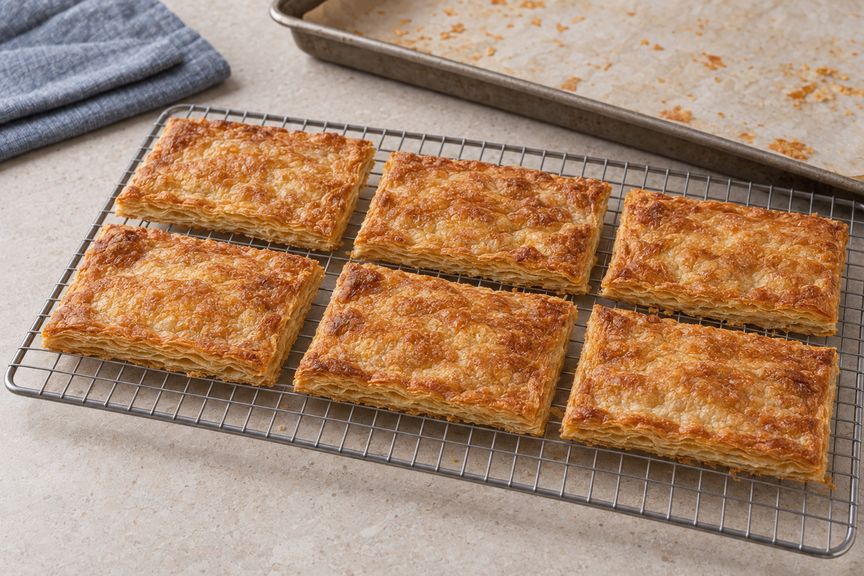
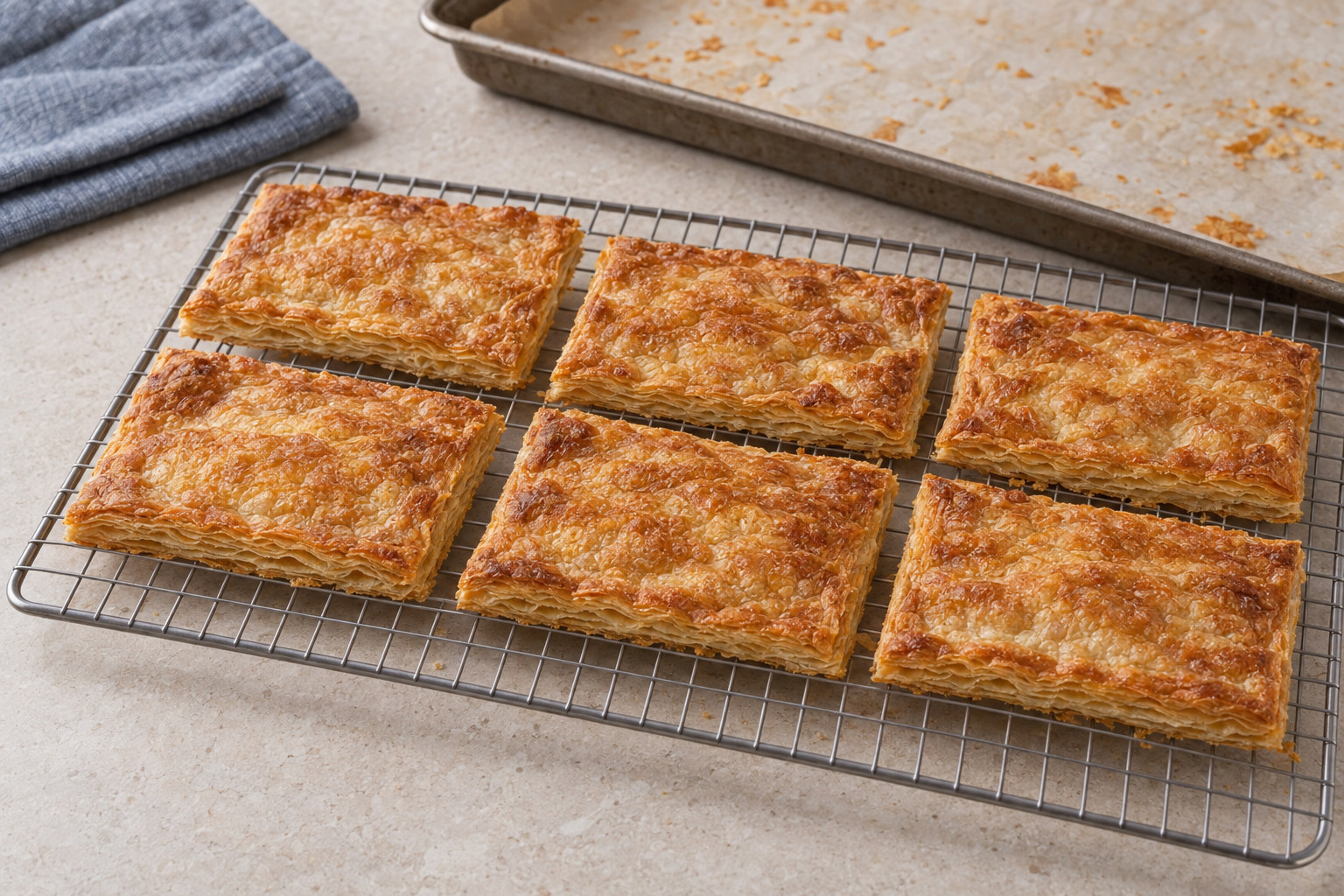
We arrange the six layers on a 40 × 30 cm tray with at least 2 cm between them. We cover with baking paper and a second light, flat tray. We bake for 20 minutes, remove the top tray and paper, then bake for a further 8–12 minutes until evenly golden, adding another 3–5 minutes if needed. We transfer them to a rack and leave them to cool completely for at least 20 minutes. We bake the trimmings separately after the main layers, or we keep them covered in the fridge for another use.
The pastry is dry in the centre too and crisps as it cools; it does not feel greasy or doughy.
Mix the filling
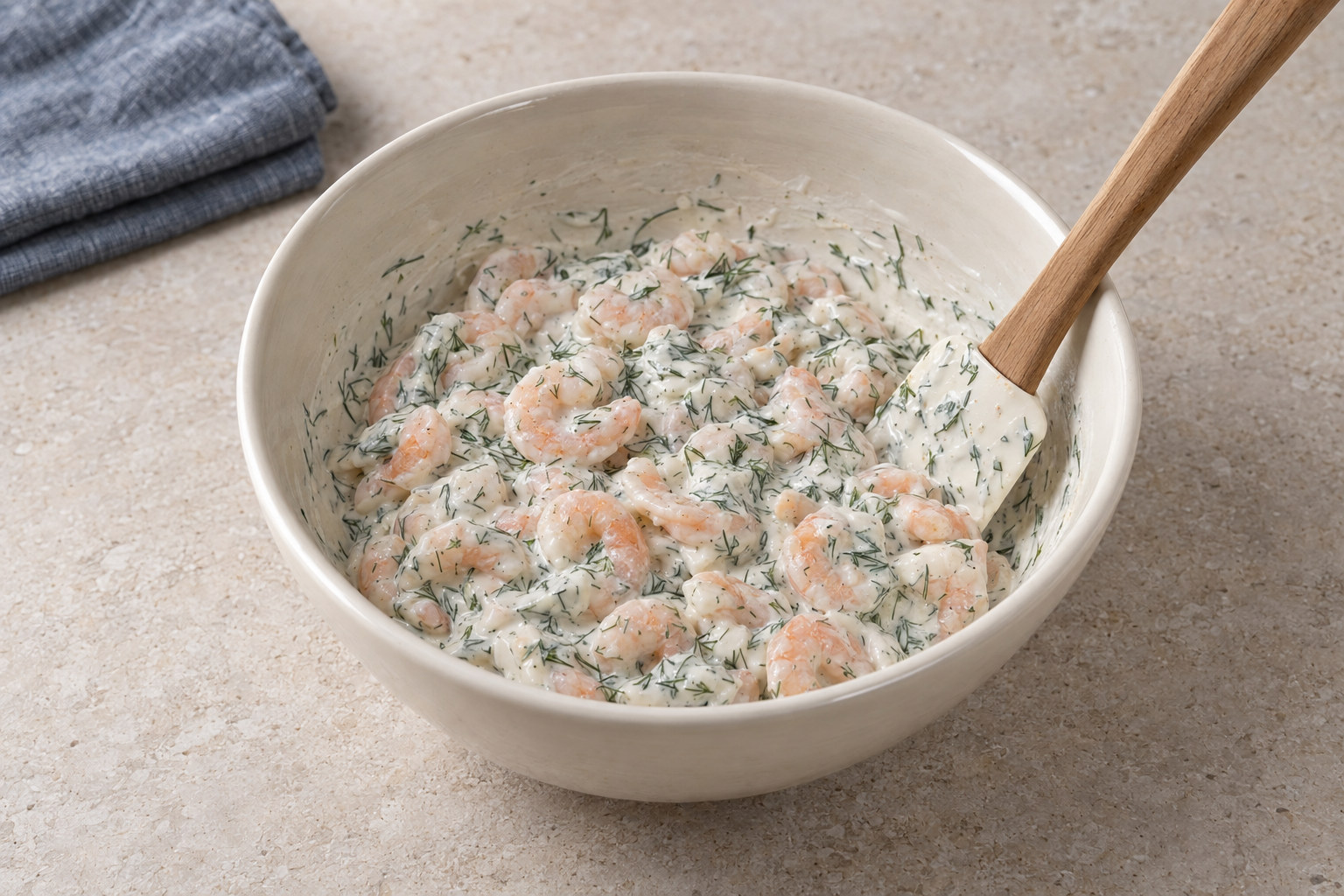
We wash, dry and finely chop the dill. While the pastry chills, we gently mix the crème fraîche, yoghurt, 2 teaspoons of lemon juice, dill and pepper. We pat the prawns dry, fold them into the cream and refrigerate the filling, covered. We do not add salt.
The thick filling holds on a spoon; surface moisture on the prawns would quickly make the pastry soggy.
Assemble and serve
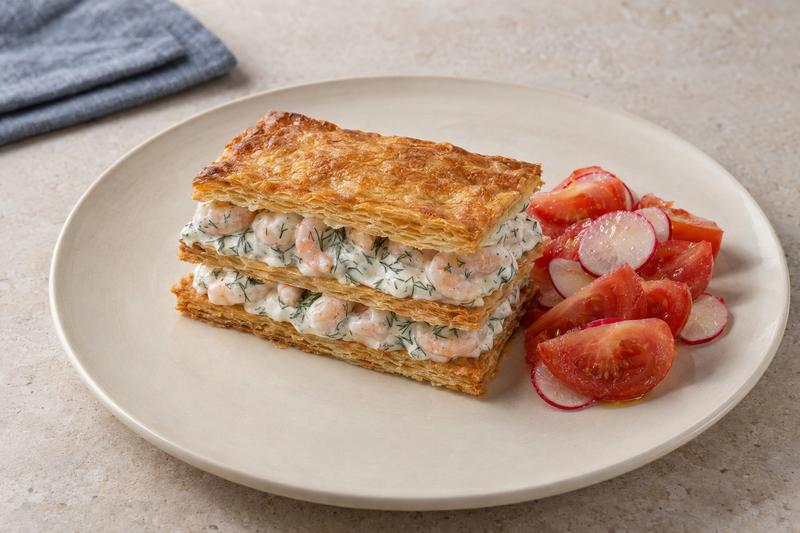
We wash the tomatoes and radishes and trim the leaves and roots from the radishes. We cut the tomatoes into wedges and the radishes into thin slices, then we toss them with the oil and lemon juice for the salad. We place one cold pastry layer on each plate and divide half the filling between the two plates. We add a second pastry layer and the remaining filling, then top each portion with a third layer without pressing down. We divide the salad between the plates and serve immediately.
Tips from our kitchen
- We assemble the pastry and filling just before serving so the baked layers do not soften from the moisture.
What to watch out for
- Warm butter blends into the flour, giving us crumbly pastry instead of distinct layers.
How we serve it
- For each serving, we stack three cooled pastry layers with the prawn filling between them. We serve the salad alongside and serve the mille-feuille straight away while the pastry is crisp.
Ingredient swaps
Dill
the same amount of finely chopped chives The filling takes on a delicate onion flavour.
Ingredient notes
- We use only cooked, peeled prawns. They contain 1.5 g salt per 100 g, so we take their saltiness into account when seasoning.
During preparation
- We keep the prawn filling in the fridge while working with the pastry and serve it cold. We do not put the filling on warm pastry.
Our inspiration
Our first mille-feuille pastry need not look perfect. We leave the cold butter in flat pieces; as we roll and fold, it gradually spreads between the layers of dough. That is why we pause between folds and return the pastry to the fridge. This patience gives us baked layers that crack under the knife and hold the cool prawn filling.
Similar recipes

Recipe for 4 people
The time includes four folds of the pastry, at least 105 minutes of chilling, baking and cooling the layers. For four servings, we bake the layers in two batches. Further chilling if the butter softens will add to the time.
Step-by-step method
Before we start
We chill the pastry between folds. We make the filling during the final chill and keep it in the fridge. We bake two batches of six layers; the first batch cools on a rack while the second bakes. We assemble only once the pastry has cooled completely.
Bring the pastry together
We mix 240 g flour with the salt. We add the butter, cut into 1 cm cubes, and briefly flatten the pieces with our fingers in the flour. Visible flakes of butter should remain in the dough. We pour in 120 ml cold water and use a spatula just to bring the mixture together. We do not knead until smooth. We wrap the dough and chill for 30 minutes.
Cold pieces of butter are still visible in the pastry and the surface is not greasy.
Fold and chill
We divide the dough into two equal pieces. On a lightly floured surface, we roll each into a rectangle about 15 × 30 cm. We fold the shorter sides in thirds over one another like a letter, turn it a quarter turn, then roll it out and fold it again. We chill for 25 minutes. We repeat the same two folds once more and chill for another 30 minutes. We use the flour for dusting sparingly: we add only enough to stop the dough sticking and we brush off the excess. If the butter starts to soften or the dough springs back, we stop and chill it for an extra 10 minutes.
We give the pastry four simple folds; we do not squash the butter layers with warm hands.
Cut the pastry layers
We roll each piece to about 27 × 27 cm and 3 mm thick. We cut six neat 12 × 8 cm rectangles from each, cutting straight down with a sharp knife. We keep the trimmings separate; we do not knead them into the main layers. We now have twelve layers; we keep six in the fridge for the second batch. We prick the layers with a fork and chill on baking paper for another 20 minutes. Meanwhile, we preheat the oven to 200 °C with top and bottom heat.
Each serving has three equal-sized layers; compressed edges would rise unevenly.
Bake the pastry until crisp
We arrange six layers on a 40 × 30 cm tray with at least 2 cm between them. We cover with baking paper and a second light, flat tray. We bake for 20 minutes, remove the top tray and paper, then bake for a further 8–12 minutes until evenly golden, adding another 3–5 minutes if needed. We transfer them to a rack and leave them to cool completely for at least 20 minutes. We bake the second batch in the same way, leaving the first batch uncovered on the rack. We bake the trimmings separately after the main layers, or we keep them covered in the fridge for another use.
The pastry is dry in the centre too and crisps as it cools; it does not feel greasy or doughy.
Mix the filling
We wash, dry and finely chop the dill. While the pastry chills, we gently mix the crème fraîche, yoghurt, 1 tablespoon of lemon juice, dill and pepper. We pat the prawns dry, fold them into the cream and refrigerate the filling, covered. We do not add salt.
The thick filling holds on a spoon; surface moisture on the prawns would quickly make the pastry soggy.
Assemble and serve
We wash the tomatoes and radishes and trim the leaves and roots from the radishes. We cut the tomatoes into wedges and the radishes into thin slices, then we toss them with the oil and lemon juice for the salad. We place one cold pastry layer on each plate and divide half the filling between the four plates. We add a second pastry layer and the remaining filling, then top each portion with a third layer without pressing down. We divide the salad between the plates and serve immediately.